
REVIEW · FOOD & DRINK
African Food and Storytelling Tour Cape Town City Centre
Cape Town’s best meals may hide in plain sight. This two-to-three-hour walk links Somali, Cape Malay, and West African food with the city’s public squares, small businesses, and complicated past. I like the way it takes you beyond polished tourist streets, and I like the shared meals, which turn unfamiliar dishes into a social experience. One thing to consider: you need a moderate level of fitness and an open mind about walking through busy inner-city areas.
The tour also looks at how gentrification and migration shape Cape Town. That gives the afternoon more weight than a standard tasting tour. You may hear from guides such as Dennis, Tawanda, Sifiso, or Fez, depending on the departure, but the guiding team can vary. Come hungry, because the food is substantial enough that one person had to cancel dinner afterward.
In This Review
- Key points to know before booking
- What makes this Cape Town food walk different
- Starting at Church Square and Jan Hendrik Hofmeyr
- Somali food and the first warm meal
- The Old Post Office, Cape Malay snacks, and second-hand books
- Grand Parade and Nelson Mandela’s balcony
- Adderley Street’s old Flower Market
- Greenmarket Square and Cape Town’s West African community
- The second warm meal: West African food from Mali
- Methodist Mission, tea, and a final pause
- How much food do you actually receive?
- Price, timing, and practical value
- Who will enjoy this most?
- Best time to schedule the tour
- Should you book the African Food and Storytelling Tour?
- FAQ
- Where does the tour begin?
- Does the tour end where it begins?
- How long does the experience last?
- How many people can join the tour?
- What food is included?
- Is this only a food tour?
- Do I need to be physically fit?
- Is transportation included after the tour?
- What happens if the weather is poor?
- What is the cancellation policy?
Key points to know before booking
- Eight city-centre stops: The route connects Church Square, the Grand Parade, Greenmarket Square, the Flower Market, the Old Post Office, and community businesses.
- Three main food experiences: You receive two warm shared meals, one snack tasting, and warm and cold drinks.
- A small group format: The maximum is 10 people, which suits a conversational tour rather than a large walking procession.
- Food from across Africa: Expect Somali, Cape Malay, Creole, and West African flavours, including a meal inspired by Mali.
- A history and city-life focus: The tour discusses public space, informal trading, entrepreneurship, migration, and the effects of gentrification.
- A useful first-day activity: Book it early in your Cape Town stay so you can return to the food businesses, spice shop, book sellers, or restaurants you discover.
What makes this Cape Town food walk different
Many food tours focus on dishes, recipes, and restaurant interiors. This one uses food as a way into the city itself. You walk through old public spaces, stop at small African-owned businesses, and hear how food traditions survive and change in Cape Town.
That approach suits me because Cape Town’s central district can look familiar at first glance. A grand square, a shopping centre, or a market may seem like a quick photo stop. With a guide, those places become clues to colonial rule, political change, migration, informal trade, and present-day city life.
The food is not simply handed over as a sample. You learn who prepares it, where the traditions come from, and how different African communities have made a place for themselves in the city centre. That personal connection is the real point.
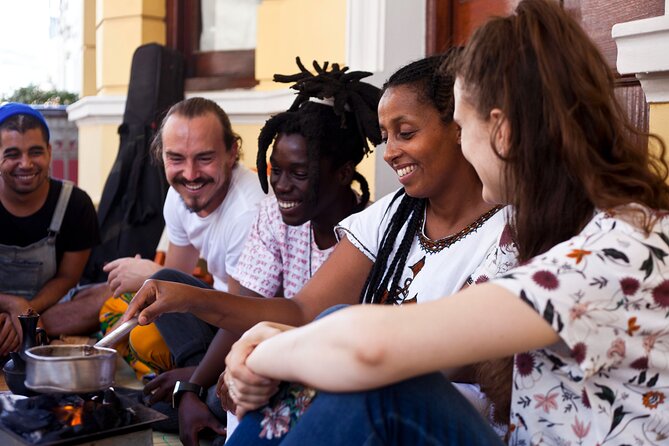
The small group matters, too. With no more than 10 people, you can ask questions without shouting across a crowd. Guides have been praised for telling stories, explaining architecture and South African history, and making the group feel as if it is being shown around by friends.
More Food Tours in Cape Town
- Cape Town: Full-Day Winelands Tour with Wine Tastings & Food
★ 4.9 · 1,288 reviews - The Cape Town Essentials Food Tour
★ 5.0 · 385 reviews - From Cape Town: Winelands Full Day Tour and Wine Tasting
★ 4.5 · 364 reviews
Starting at Church Square and Jan Hendrik Hofmeyr
The tour begins at the statue of Jan Hendrik Hofmeyr on Church Square, across from McDonald’s where Parliament and Spin Street meet. Pay close attention to the address when you book. There is another Church Square in Woodstock, and arriving at the wrong one would make for a poor start.
Church Square is described as South Africa’s second-oldest public square. It is a fitting opening because the guide uses it to explain that this is not only a meal-based outing. You begin with a look at public space, memory, and the way Cape Town’s centre has changed.
Allow about 15 minutes here. There is no admission charge, and the stop works mainly as a welcome and orientation. You meet the guide, learn how the afternoon will work, and get the first sense of the themes connecting the walk.
Somali food and the first warm meal
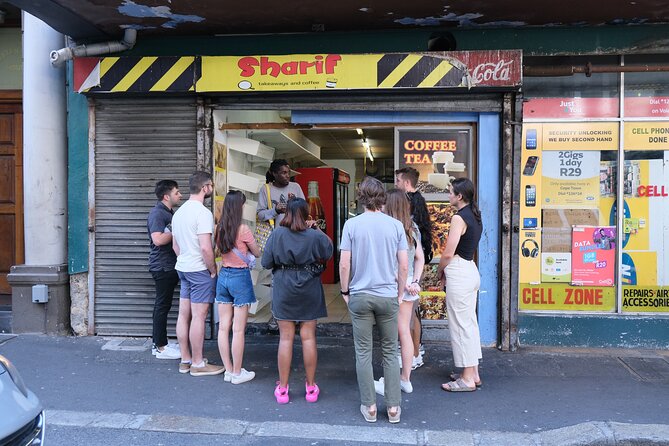
The first food stop introduces Somali food culture. You share a warm East African meal and taste signature Somali dishes with spiced tea.
The exact dishes are not specified, so you should not book this expecting a fixed menu. That is normal for a small-business food walk, where availability can change. The useful promise is the style of eating: shared food, conversation, and an explanation of what makes Somali flavours distinctive.
You have about 20 minutes here, though the timing can stretch with a curious group. I like this placement in the route. It gets food into the experience early, but it also shows that Cape Town’s African food story reaches well beyond the cuisines most often presented to visitors.
If you are nervous about unfamiliar food, the shared format helps. You can look, ask questions, and try smaller portions rather than ordering a full dish on your own. The tour is built for discovery, not for a formal restaurant meal.
The Old Post Office, Cape Malay snacks, and second-hand books
At the Golden Acre Shopping Centre, the tour visits the historic Old Post Office and pauses for Cape Malay or Creole snacks. You may also browse second-hand books.
This is one of the route’s more unusual combinations. The guide connects a colonial-era public building with present-day vendors and small businesses. Food becomes a prompt for discussing how old city spaces are reused and who gets to earn a living in them.
The snack tasting is not one of the two warm meals, but it adds variety. Cape Malay food is closely tied to Cape Town’s layered cultural identity, while the Creole reference widens the conversation beyond a single local tradition.
The books are a nice extra rather than a guaranteed shopping session. You might find something worth taking home, and one person came away with interesting used books and fresh spices. Bring a little room in your day bag if you enjoy small, practical souvenirs.
You spend about 20 minutes here. The stop may feel brief if you want to browse carefully, so treat any purchases as an optional bonus rather than the main purpose.
Something quite different:
- Wine Tour: Paarl, Franschhoek & Stellenbosch incl 3 wineries
★ 5.0 · 3,940 reviews - Cape Town: Hop-On Hop-Off Bus Tour with Optional Cruise
★ 4.8 · 3,929 reviews - Cape Town: Cape of Good Hope & Penguins Day Tour with Pickup
★ 4.7 · 3,362 reviews - Zipline Cape Town – From Foot of Table Mountain Reserve
★ 5.0 · 3,179 reviews
Grand Parade and Nelson Mandela’s balcony
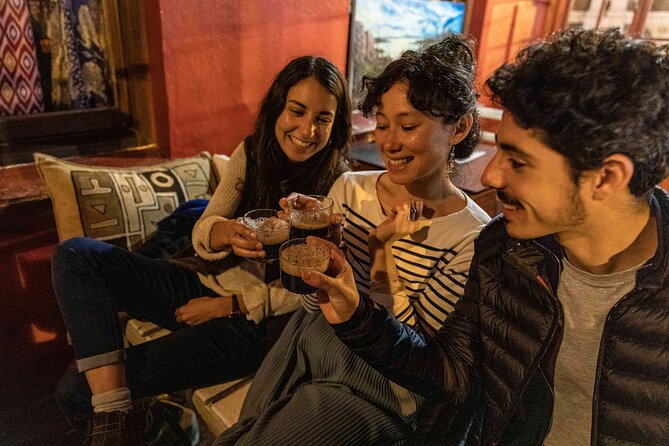
The walk continues to the Grand Parade, described as South Africa’s oldest public square. Here, the guide discusses the square’s role in city life and pauses near the balcony at City Hall where Nelson Mandela made his first public address after his release from prison.
This is a powerful historical pause, but the tour does not treat the site as a frozen monument. You also hear about informal food vendors who trade in the square today and about their daily experience of doing business in the city centre.
That pairing is important. Political history can feel remote when it is presented only through dates and famous names. Connecting Mandela’s balcony with people selling food nearby brings the past into the present.
This stop lasts about 15 minutes and is free. You will spend more time listening and looking than eating, so it gives your stomach a break before the next set of food stops.
Adderley Street’s old Flower Market
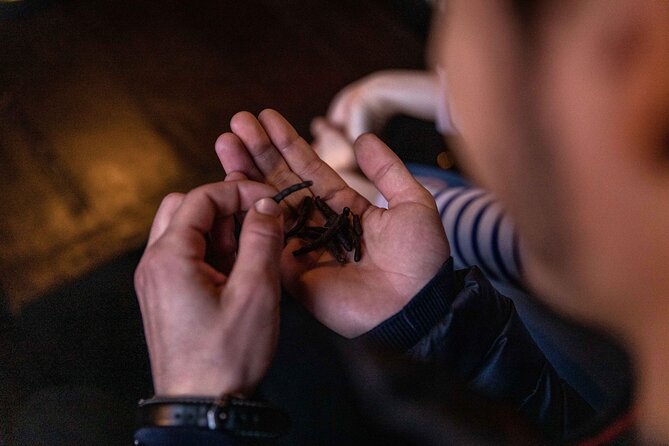
On Adderley Street, you walk through what is described as the oldest flower market in Southern Africa and greet its vendors. The stop takes about 15 minutes.
The market adds a different texture to the route. After public squares and food businesses, you see a long-running form of street commerce that depends on local vendors and daily trade. It is a reminder that Cape Town’s centre is not only a place for offices, monuments, and visitors.
Do not expect a long shopping stop or a guided flower-arranging session. The value is in seeing the market as part of the city’s working life and meeting the people who keep it going.
Greenmarket Square and Cape Town’s West African community
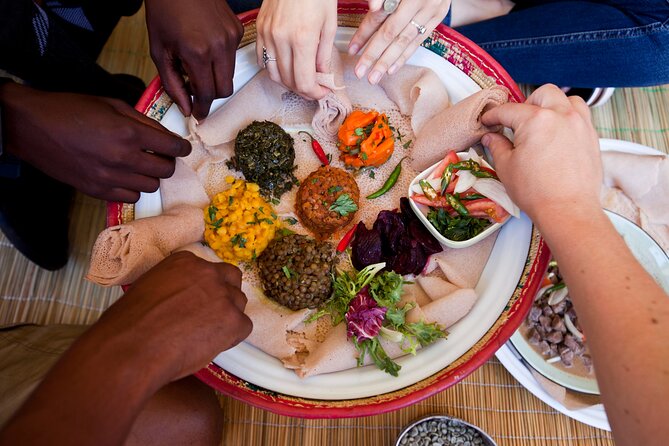
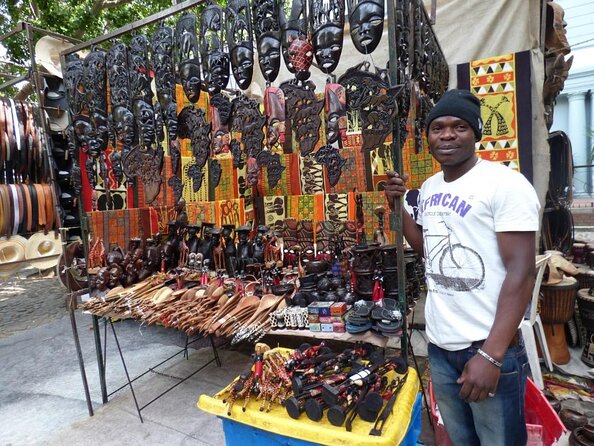
Greenmarket Square is both part of the route and the final endpoint. It is described as Cape Town’s third-oldest public square and a meeting place for informal African traders and entrepreneurs.
Here, you can browse souvenirs if you wish and begin looking more closely at the city’s West African community. The route may pass a Senegalese tailor known for African textiles, making this a useful stop if you are interested in fabrics, clothing, and handmade items.
Keep your shopping expectations sensible. The tour offers an opportunity to browse, not a dedicated retail appointment. You should also remain aware of your belongings in any busy market setting, as you would in a city square anywhere.
Greenmarket Square gives the food and stories a wider frame. You see how migration, trade, clothing, and food overlap. The businesses here are not decorative additions to the city. They are part of how people build livelihoods and community.
The second warm meal: West African food from Mali
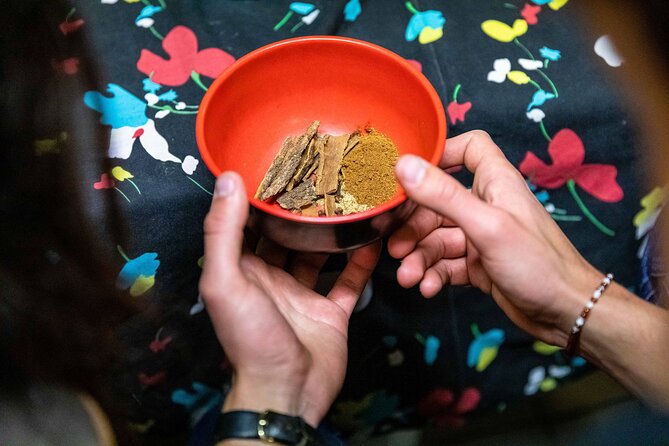
The next food stop introduces West African cuisine, with a warm shared meal inspired by Mali. The guide also explains how food can bring people together across different communities.
This is the largest scheduled food stop, at around 30 minutes. Along with the Somali meal, it gives you two proper tastings rather than a series of tiny bites. That helps explain the price and also means you should not eat a large meal beforehand.
The menu is not specified in advance, so the experience is better for people who enjoy some uncertainty. You may taste food you would not have found through a basic internet search or felt confident ordering alone.
The contrast between the East African and West African meals is one of the tour’s strengths. You are not being told that African food is one single thing. You are shown differences in ingredients, preparation, flavour, and cultural background, while also hearing how these traditions meet in Cape Town.
Methodist Mission, tea, and a final pause
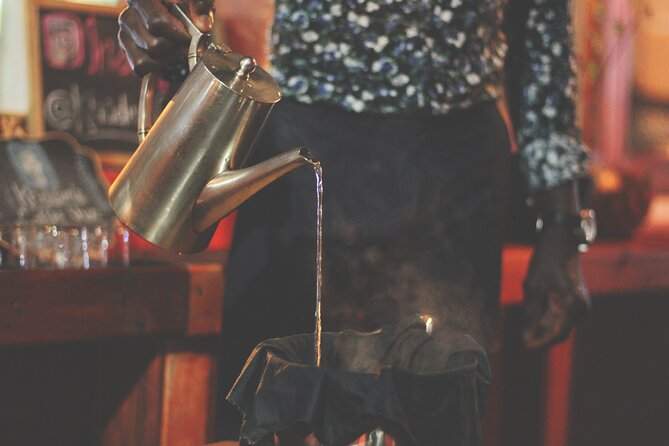
The final scheduled stop is the Methodist Mission, a welcoming community space with a long connection to activism and social justice. You pause for tea or coffee and a treat while reflecting on the stories of the city centre.
This is a thoughtful way to end the food portion. After two warm meals and a snack, you probably will not want another large plate. A hot drink and small treat let the group slow down and discuss what the guide has raised.
The stop lasts about 20 minutes. It also reinforces the tour’s wider purpose. You are not only collecting food memories. You are considering who lives and works in the inner city, how communities support one another, and how public places carry several meanings at once.
The tour ends on foot at Greenmarket Square. From there, you can walk to your next destination or arrange your own transport. An Uber is recommended because parking in the city centre is limited.
How much food do you actually receive?
The experience includes eight stops, three food experiences, two warm shared meals, one snack tasting, and warm and cold beverages. That is a generous amount for a two-to-three-hour walk.
The food is shared rather than presented as a private multi-course meal. You may not receive a complete serving of every dish for yourself, but you get enough variety to understand the cuisines and decide what you might seek out later.
I would plan this as a late breakfast, lunch, or early afternoon activity rather than squeezing it between two full meals. Several people found the portions and drinks ample, and one person had no appetite left for dinner.
Food preferences and allergies deserve advance attention. The supplied details do not promise vegetarian, vegan, halal, or allergy-specific alternatives. Ask the provider before booking if this matters to you.
Price, timing, and practical value
The price is $92.02 per person. That is more than you would pay for a casual meal, but you are paying for much more than food. The cost also covers guiding, local introductions, several tastings, two warm shared meals, drinks, and a carefully connected walking route.
I see the strongest value in access. You may pass restaurants, vendors, book sellers, and textile businesses that you would hesitate to enter without someone familiar with the area. The guide helps you understand what you are seeing and gives you places to return to later.
The tour is usually booked about 41 days in advance, so popular dates may fill early. A mobile ticket makes entry simple, and confirmation arrives when you book.
The route takes two to three hours, though individual stops have estimated times ranging from 15 to 30 minutes. You should be ready to walk between locations and remain on your feet for much of the afternoon. A moderate fitness level is recommended.
The group limit of 10 is another part of the value. It keeps the experience personal and makes it easier to speak with the guide and ask about food, politics, history, or business.
Who will enjoy this most?
You should consider this tour if you:
- Want African food beyond the most familiar Cape Town dishes
- Like walking tours that connect food with politics and city life
- Prefer small businesses and informal eateries to polished tourist venues
- Enjoy asking questions and trying shared dishes
- Want to explore the central district with a local guide
- Are happy to let the menu and route retain some flexibility
It may not suit you if you want a restaurant-based tasting with exact menus, long seated meals, or a relaxed pace with very little walking. It is also not the best match if you need confirmed dietary arrangements and the provider cannot meet them.
The tour has received a 5 out of 5 rating from 61 ratings, with 100 percent recommending it. The praise focuses on the food, guide storytelling, local businesses, and the chance to visit places you would likely miss alone. One four-star assessment still found the guide friendly and the experience worthwhile, which suggests the main appeal is strong even if it may not be perfect for every taste.
Best time to schedule the tour
I would book this near the beginning of your Cape Town stay. You may discover restaurants, spice sellers, book shops, textile businesses, and food stalls worth revisiting.
An early booking also gives you more flexibility if the date changes. Free cancellation is available up to 24 hours before the start time. Changes or cancellations inside 24 hours are not refunded, and the experience may be canceled for poor weather or because too few people book. In those cases, you are offered another date or experience, or a full refund.
The meeting point deserves special care. Use Church Square at 0A Spin Street in Cape Town City Centre, not the Church Square in Woodstock.
Should you book the African Food and Storytelling Tour?
Yes, if you want food to open a door into Cape Town’s communities and city spaces. The combination of Somali, Cape Malay, Creole, and West African food gives you plenty to taste, while the stops at Church Square, the Grand Parade, the Flower Market, Greenmarket Square, and Methodist Mission give the walk a clear sense of place.
I especially recommend it for curious eaters who want practical introductions to small African-owned businesses. Book it early, arrive at the correct Church Square, wear comfortable shoes, and leave dinner plans flexible.
Skip it if you want a fixed menu, a luxury dining experience, or minimal walking. For everyone else, $92.02 buys a useful introduction to the food, people, and working city behind Cape Town’s postcard views.
FAQ
Where does the tour begin?
It begins at Church Square at 0A Spin Street in Cape Town City Centre, near the statue of Jan Hendrik Hofmeyr.
Does the tour end where it begins?
No. The walk ends at Greenmarket Square in Cape Town City Centre.
How long does the experience last?
The tour lasts approximately two to three hours.
How many people can join the tour?
The maximum group size is 10 people.
What food is included?
You receive two warm shared meals, one snack tasting, and warm and cold beverages. The food includes Somali, Cape Malay, Creole, and West African influences, with the second warm meal connected to Mali.
Is this only a food tour?
No. The experience also covers public spaces, history, entrepreneurship, informal food trading, migration, and the effect of gentrification on city life.
Do I need to be physically fit?
You should have a moderate level of physical fitness because this is a walking tour between several city-centre stops.
Is transportation included after the tour?
No. The tour ends on foot at Greenmarket Square, and you arrange your own onward transport. An Uber is recommended because parking in the city centre is limited.
What happens if the weather is poor?
If poor weather causes a cancellation, you are offered a different date or experience, or a full refund.
What is the cancellation policy?
You can cancel at least 24 hours before the start time for a full refund. Cancellations or changes made less than 24 hours before the start time are not refunded.
Just added in Cape Town
- Sunset Safari Big 5 Aquila with Snacks and Wine Tasting★ 5.0 · 12 reviews
- Explore Atlantis Sand Dunes with a 1hour 30mins sandboarding tour★ 5.0 · 5 reviews
- Private Tour to 20 Wine Tasting in Stellenbosch and Franschhoek★ 5.0 · 11 reviews
- Robben Island, Kirstenbosch wine tasting Tour★ 5.0 · 10 reviews
- Photoshoot in Cape Town’s most Gorgeous Locations★ 5.0 · 2 reviews
- Zip Line and Wine from Cape Town★ 5.0 · 14 reviews
- Private Transfer from Cape Town International Airport★ 5.0 · 4 reviews
- 1 Hour Cape Town City Center Photoshoot Experience★ 5.0 · 19 reviews
Food & Drink, compared.

Full-Day Winelands Tour with Wine Tastings & Food
Read our review →
Hartbeespoort: 2-Hour Dam Cruise with South African Food
Read our review →


Stellenbosch & Franschhoek 20 Wine Tasting + Lunch Shared Tour
Read our review →

Browse the lists this tour appears in