REVIEW · CAPE TOWN TOURS
Cape Town: Afrikaans Culture And Making Traditional Biltong
Biltong tells a story worth tasting. In a private voorkamer, or lounge, in Three Anchor Bay, you spend 90 minutes learning how South Africa’s favorite dried-meat snack connects Khoisan food traditions, the Great Trek, Afrikaans culture, and everyday hospitality. I like the small setting, with no bus-sized crowd or rushed tasting line. I also like that you do more than sample food: you prepare your own biltong sticks.
The tasting, coffee, dried fruit, preserves, and homemade karringmelkbeskuit give the session plenty of flavor. The history and language talk add meaning to what you eat, and the relaxed music helps keep the class social rather than formal. The main drawback is practical: the property has cats, so this is not suitable if you have animal allergies, and wheelchair users cannot take part.
In This Review
- Key points to know before booking
- A 90-minute taste of South African home life
- Starting with drinks, snacks, and a friendly welcome
- How Khoisan techniques shaped biltong
- Tasting several types, including a vegan choice
- Making your own biltong sticks
- Afrikaans language, folk music, and local sayings
- Why the small group improves the experience
- Is $42 good value in Cape Town?
- Who will enjoy this biltong class most?
- Booking advice for a busy Cape Town itinerary
- Should you book Soutie’s Biltong Sticks Class?
- FAQ
- How long does the biltong experience last?
- How much does it cost?
- Where does the experience take place?
- What language is the session conducted in?
- What food and drinks are included?
- Do I get to make biltong?
- Can vegans take part?
- Is the experience suitable for people with animal allergies or wheelchair users?
Key points to know before booking
- Biltong is the main event: Taste several varieties, including a vegan option, then learn about meat cuts, grades, spices, curing, and storage.
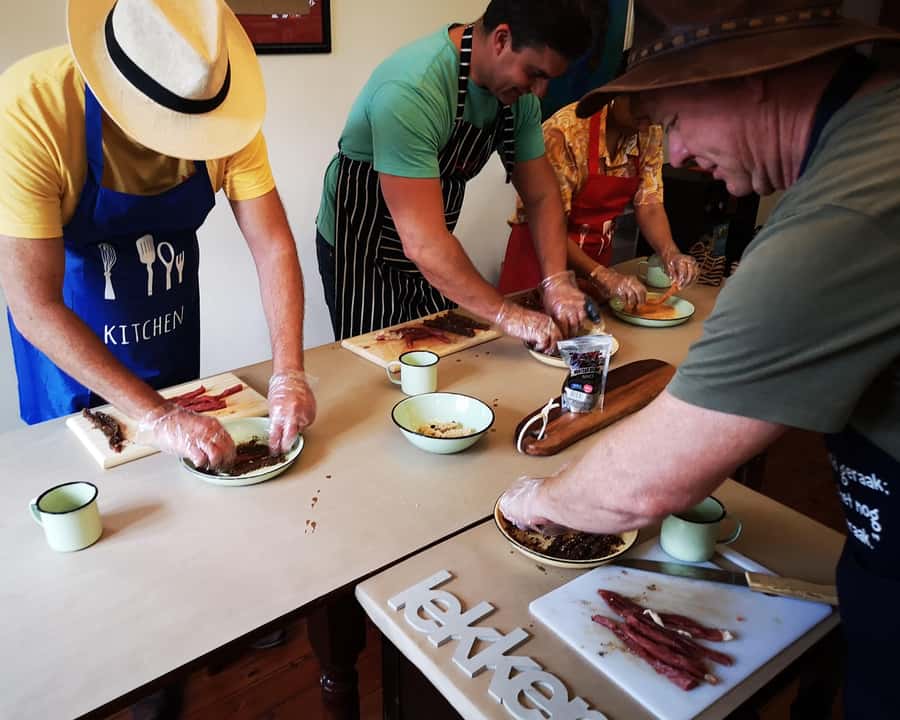
- You make biltong sticks: Aprons, knives, and visual aids are supplied for the hands-on part of the session.
- Afrikaans culture shapes the experience: Learn how Afrikaans developed from European, Asian, and African language influences.
- The setting is personal: The class takes place in a home-style voorkamer at Unit 5, 165 High Level Road in Three Anchor Bay.
- The food goes beyond meat: Expect a refreshing drink, dried fruit, preserves, strong moerkoffie, and buttermilk rusks.
- The group stays small: A maximum of eight people makes it easier to ask questions and get help with the preparation.
A 90-minute taste of South African home life
This is not a full-day food tour. It is a compact cultural session that fits neatly between Cape Town sightseeing plans. At $42 per person, the price is reasonable if you value instruction, tasting, and participation rather than simply buying a packet of biltong from a shop.
You meet at Unit 5, 165 High Level Road in Three Anchor Bay. The experience is conducted in English, and the group is limited to eight people. That number matters here. Biltong making involves handling ingredients and tools, and a small group gives you a better chance to see the demonstrations and ask questions.
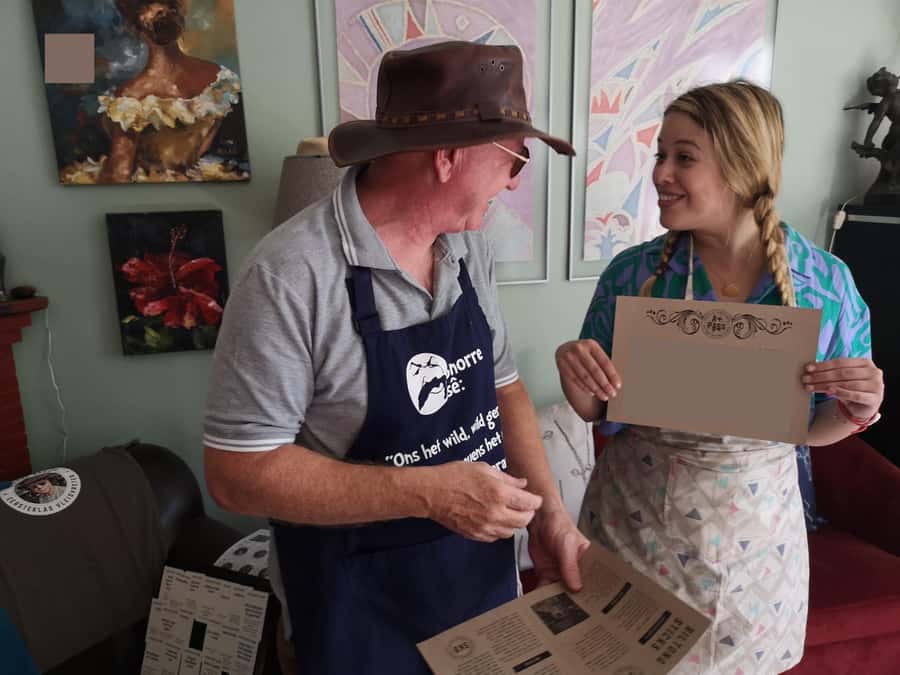
The tone is informal. You enter a voorkamer, a lounge traditionally associated with welcoming people into a South African home. That setting helps separate this activity from a standard commercial tasting. You are not only hearing facts about biltong. You are being introduced to food, language, music, sayings, and hospitality in the same room.
A few more in Cape Town
- Wine Tour: Paarl, Franschhoek & Stellenbosch incl 3 wineries
★ 5.0 · 3,940 reviews - Cape Town: Hop-On Hop-Off Bus Tour with Optional Cruise
★ 4.8 · 3,929 reviews - Cape Town: Cape of Good Hope & Penguins Day Tour with Pickup
★ 4.7 · 3,362 reviews
Starting with drinks, snacks, and a friendly welcome
The session begins with a refreshing drink served in an iconic bottle, along with local snacks. This opening is useful because it sets the mood before the more detailed biltong discussion begins. You can settle in, look around, and start asking questions without feeling that you need to know anything in advance.
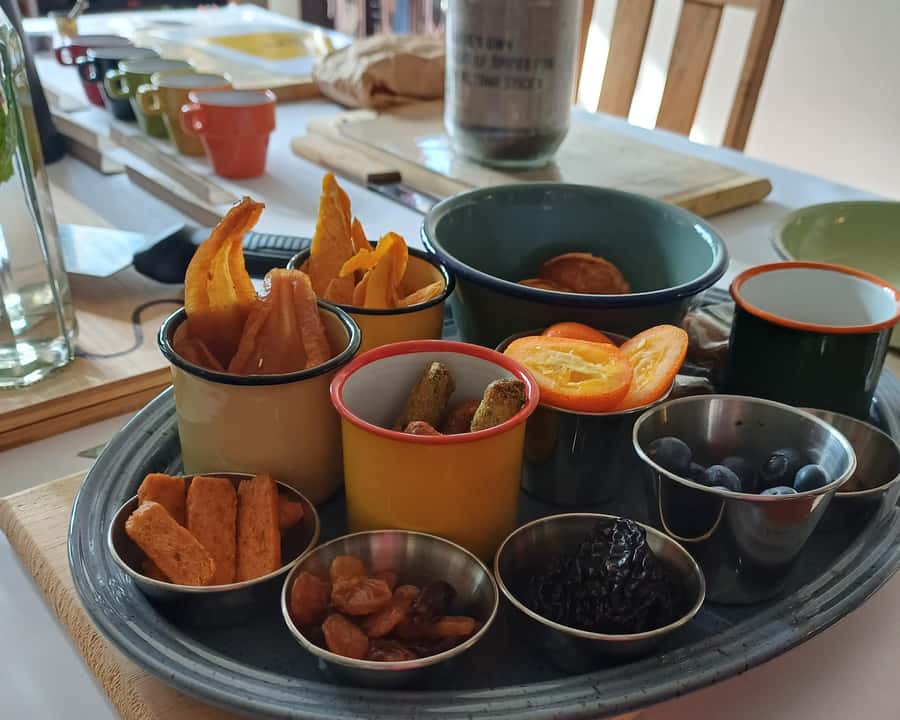
The extra foods are an important part of the experience. Dried fruit and preserves give you something sweet and tangy beside the salty, savory biltong. Later, the strong moerkoffie arrives in a rustic tin mug with homemade karringmelkbeskuit, a crisp buttermilk rusk traditionally served with coffee.
The coffee and rusk pairing is not just filler between activities. It gives the class a taste of a familiar South African snack ritual. If you enjoy trying the everyday foods people serve at home, this part may be just as interesting as the meat preparation.
How Khoisan techniques shaped biltong
The cultural talk begins with air-dried meat and the Khoisan hunter-gatherers. The important point is simple: preserving meat by drying it allowed food to last longer without modern refrigeration. The session connects that early method with the later development of biltong.
You then hear how Great Trek pioneers added the spice mixture that helped create the style of biltong known around South Africa today. This gives the snack a wider story. It is not presented as a dish with one simple origin. Instead, you see how local food practices and later influences combined over time.
That context makes the tasting more rewarding. You are not only comparing salty strips of meat. You are learning why drying, curing, spices, transport, and storage all matter. The explanation also helps you understand why biltong is more than a packaged snack picked up at an airport or supermarket.
Tasting several types, including a vegan choice
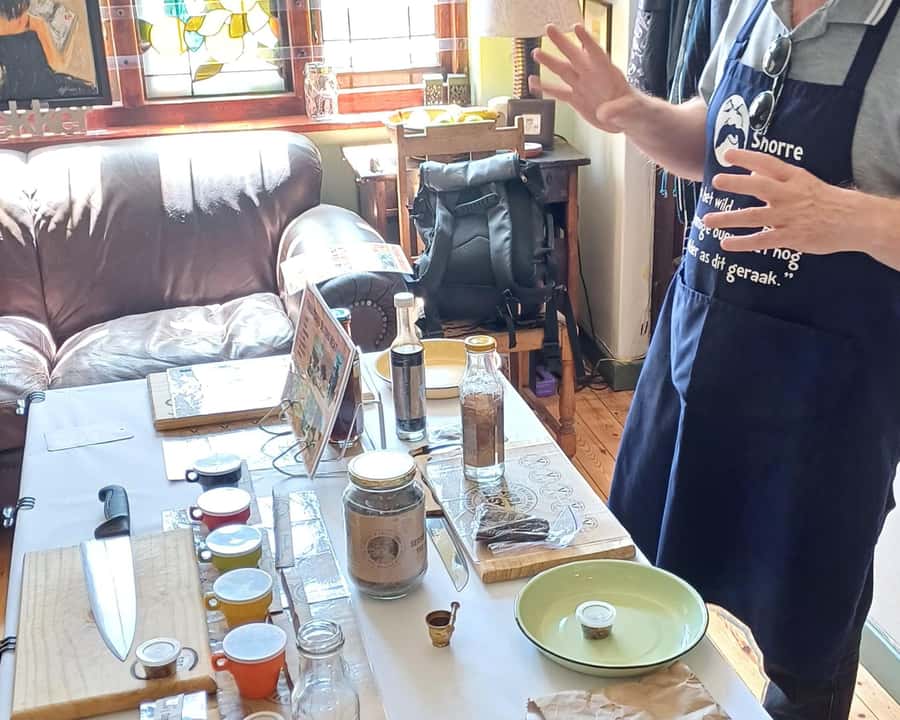
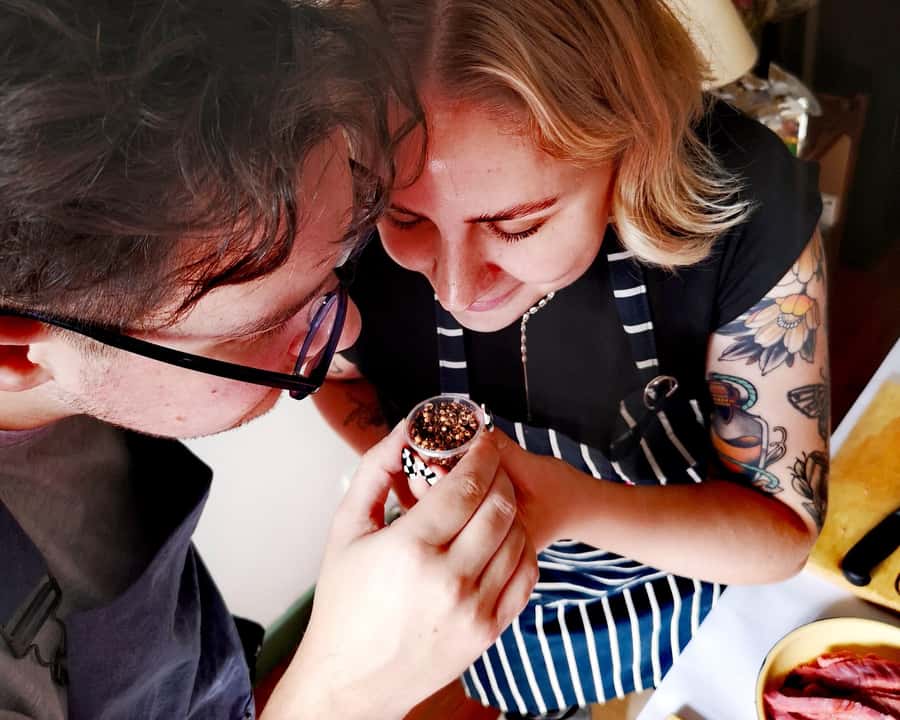
The tasting gives you the chance to compare different kinds of biltong. The precise selection can vary, but the class covers the qualities that make one piece different from another. You learn about the cut and grade of meat, the spice blend, and the curing process.
For many people, this will be the most immediately enjoyable part. You can test your own preferences instead of assuming that all biltong tastes the same. Some pieces may appeal to you because of their texture, while others may be more interesting for their seasoning or degree of dryness.
A vegan biltong option is also available. Vegans can be accommodated by prior arrangement, so you should mention this before booking rather than arriving and hoping for an alternative. That makes the activity more welcoming to mixed groups, especially when one person does not eat meat.
The tasting is also a useful introduction if you have never tried biltong. You do not need to arrive as a specialist. The class explains what you are eating and how it is made, which takes away some of the guesswork.
Something quite different:
- Zipline Cape Town – From Foot of Table Mountain Reserve
★ 5.0 · 3,179 reviews - Cape Town: Table Mountain Cable Car, Hop-On Hop-Off Bus Tour
★ 4.6 · 3,157 reviews - Cape Point and Boulder’s Penguins Full Day Tour
★ 5.0 · 3,118 reviews - From Cape Town: Cape Point & Boulders Beach Full-Day Tour
★ 4.8 · 3,032 reviews
Making your own biltong sticks
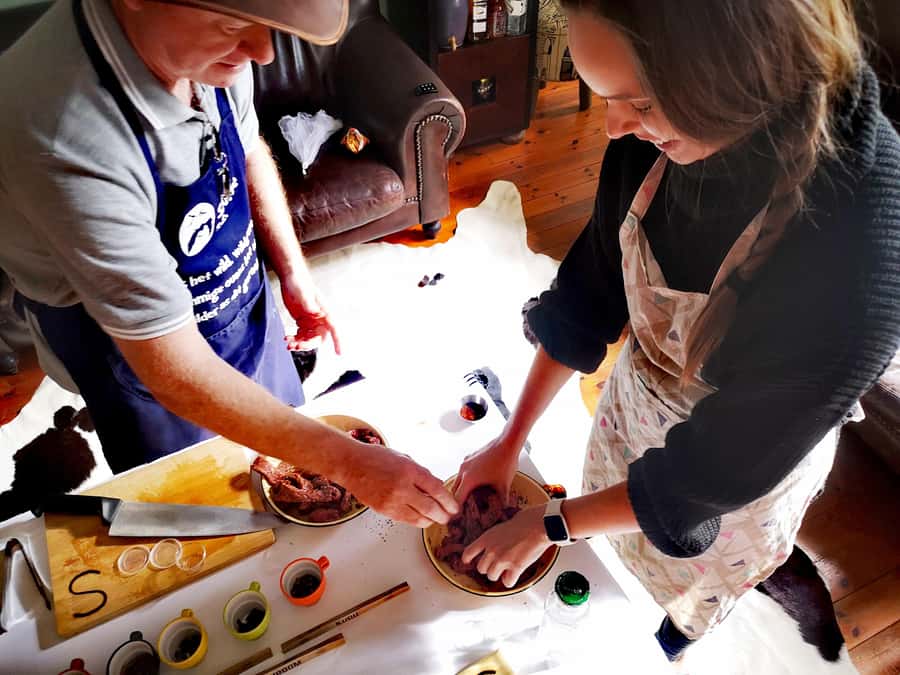
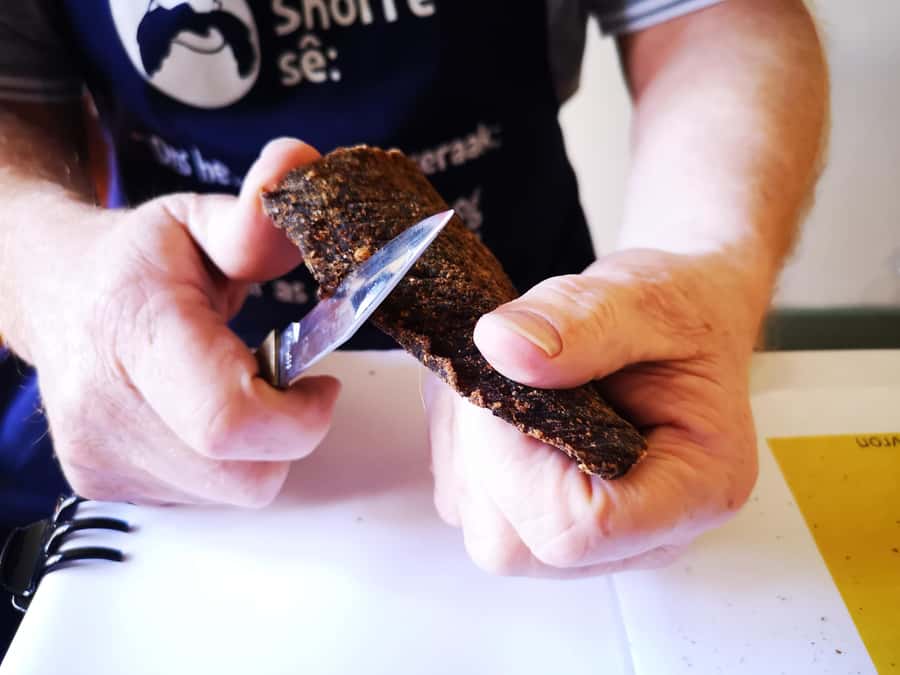
The hands-on preparation is the strongest reason to choose this class instead of a basic food tasting. You learn how to select the right cut and grade, prepare the meat, use the spice blend, and understand the curing and storage stages. The class also lets you prepare biltong sticks yourself.
Aprons and knives are provided, along with visual aids. That equipment means you do not need to bring anything special beyond comfortable clothing. You should still expect to work with food and handle a knife under instruction, so a relaxed approach is best.
The practical section turns a familiar snack into a process you can remember. You see that biltong depends on several choices, not one magic seasoning. The cut, texture, spices, drying, and storage all play a part. Even if you never make biltong at home, you will have a better idea of what you are buying later in your trip.
You take home a sample of your biltong sticks. Extra biltong, souvenirs, and T-shirts are not included, but they may be available to buy. Bring cash if you want to purchase additional snacks or merchandise.
Afrikaans language, folk music, and local sayings
The class moves beyond food into the origins of Afrikaans. You learn that the language developed through a blend of European, Asian, and African influences. This is a valuable part of the session because it places Afrikaans culture in a wider South African setting rather than treating it as a single European import.
The music helps keep this section light. Boeremusiek, or folk music, and familiar Afrikaans songs create a relaxed background while you listen to stories and sayings. You may pick up a few expressions that are useful conversation starters during the rest of your time in South Africa.
Expect tall tales and humor along with the facts. The approach is informal, so you should enjoy it most if you like personal stories and cultural details that do not fit neatly into a museum label. If you prefer a tightly scripted lecture, the loose style may feel less predictable.
The strongest part of this cultural section is the connection between language, food, and hospitality. You are not studying Afrikaans in isolation. You are hearing it alongside music, snacks, coffee, and stories in a home-style setting.
Why the small group improves the experience
The maximum group size is eight people. For a 90-minute class, that is a practical limit. A larger group could make the tasting feel like a queue and make the knife work harder to follow. Here, the smaller format should give you more room to watch, ask questions, and take part.
The small group also suits the tone of the voorkamer. This is meant to feel intimate and social. The hosts have been praised for warm hospitality, humor, and clear explanations, which are especially useful during the preparation section.
The experience received a perfect rating from four verified bookings, with repeated praise for the food, interaction, hospitality, and the amount participants learned. The comments describe it as fun as well as informative. That combination is important: the activity has enough substance to justify the price, but it does not sound like a formal class where you simply sit and listen.
Is $42 good value in Cape Town?
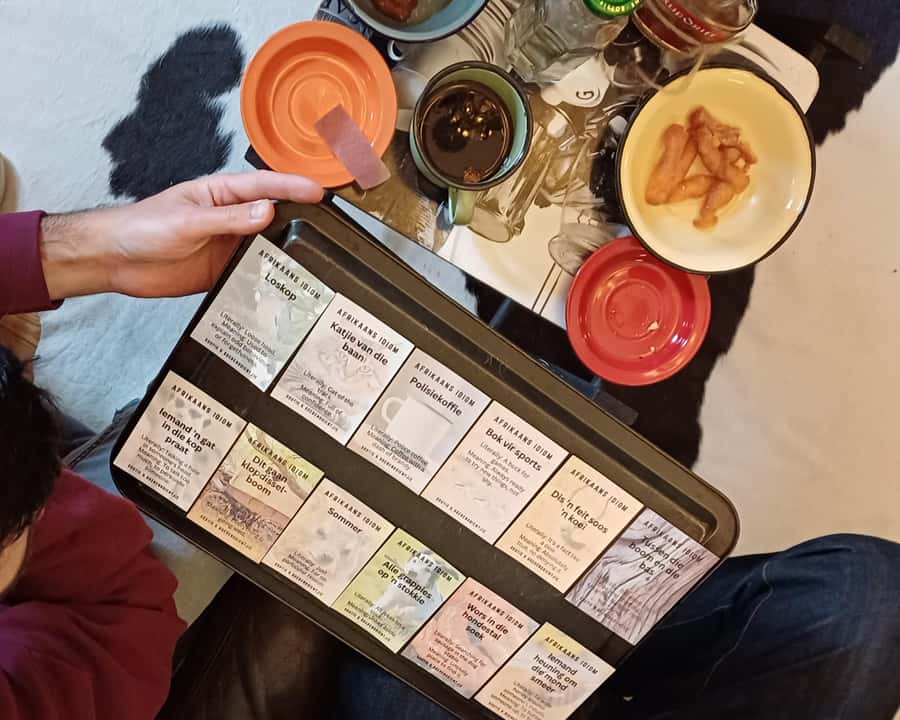
At $42 per person, you are paying for more than a snack plate. The fee covers a refreshing drink, biltong tasting, the cultural discussion, coffee, karringmelkbeskuit, dried fruit, preserves, equipment, instruction, and the hands-on biltong-stick activity.
I see the best value in the personal format. You get direct guidance, a small group, and something you prepare yourself. A shop tasting would probably cost less, but it would not provide the story of biltong, the Afrikaans language section, or the chance to make the snack.
The price makes more sense if you are curious about South African food and culture, not just looking for a quick bite. It is also a useful choice when your itinerary is full. Ninety minutes is long enough for several activities but short enough to fit around other Cape Town plans.
You should budget extra cash if you want more biltong, souvenirs, or a T-shirt. Those items are not part of the listed price.
Who will enjoy this biltong class most?
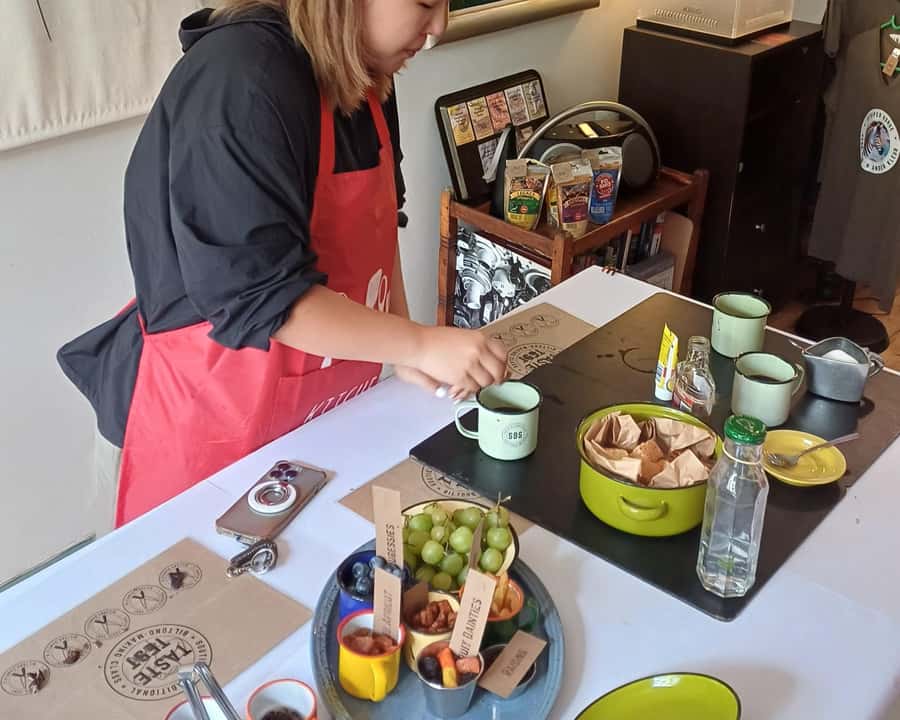
This activity suits food lovers, curious first-time visitors, and anyone who prefers meeting local people in a small setting. It also works well for families because the session is short, hands-on, and accessible to a range of ages, provided everyone can manage the physical setting and food preparation.
It is a good pick for mixed-interest groups. One person can focus on meat and spices, another on language and music, and another on the snacks. Vegans can join if the hosts receive advance notice.
You may want to skip it if you have animal allergies. Cats live on the property, and the experience is specifically listed as unsuitable for people with animal allergies. It is also not suitable for wheelchair users.
Bring a camera, wear comfortable clothes, and carry cash. The camera is useful for remembering the setting and preparation, while comfortable clothing makes the practical part easier. No special equipment is required because aprons and knives are supplied.
Booking advice for a busy Cape Town itinerary
The session lasts 90 minutes, but you should allow enough time to reach Three Anchor Bay at Unit 5, 165 High Level Road. Check the available starting times when booking because the exact schedule is not fixed in the activity details.
You can cancel up to 24 hours before the start for a full refund. The reserve-now-and-pay-later option also allows you to hold a place without paying immediately, which is helpful when your Cape Town plans are still changing.
Because the group is capped at eight, advance booking is sensible if your dates are fixed. Vegans should arrange their food option ahead of time. Anyone sensitive to cats should choose another activity.
Should you book Soutie’s Biltong Sticks Class?
Book it if you want a short, personal introduction to South African food and Afrikaans culture, with plenty of tasting and a real activity to take part in. The strongest features are the small group, the hands-on biltong sticks, the generous range of snacks, and the friendly mix of history, music, language, and humor.
Skip it if you only want a quick biltong purchase, need wheelchair access, or have an animal allergy. For everyone else, $42 is a fair price for 90 minutes of food, stories, instruction, and a take-home sample in a relaxed Cape Town setting.
FAQ
How long does the biltong experience last?
The experience lasts 90 minutes.
How much does it cost?
The price is $42 per person.
Where does the experience take place?
It takes place at Unit 5, 165 High Level Road in Three Anchor Bay, Cape Town, South Africa.
What language is the session conducted in?
The instructor conducts the experience in English.
What food and drinks are included?
You receive a refreshing drink, biltong to taste, coffee, homemade karringmelkbeskuit, dried fruit, and preserves.
Do I get to make biltong?
Yes. You take part in an interactive session to prepare biltong sticks. Aprons, knives, and visual aids are provided.
Can vegans take part?
Vegans can be accommodated by prior arrangement. You should contact the provider before booking or attending.
Is the experience suitable for people with animal allergies or wheelchair users?
No. Cats live on the property, and the activity is not suitable for people with animal allergies or wheelchair users.
Just added in Cape Town
- Sunset Safari Big 5 Aquila with Snacks and Wine Tasting★ 5.0 · 12 reviews
- Explore Atlantis Sand Dunes with a 1hour 30mins sandboarding tour★ 5.0 · 5 reviews
- Private Tour to 20 Wine Tasting in Stellenbosch and Franschhoek★ 5.0 · 11 reviews
- Robben Island, Kirstenbosch wine tasting Tour★ 5.0 · 10 reviews
- Photoshoot in Cape Town’s most Gorgeous Locations★ 5.0 · 2 reviews
- Zip Line and Wine from Cape Town★ 5.0 · 14 reviews
- Private Transfer from Cape Town International Airport★ 5.0 · 4 reviews
- 1 Hour Cape Town City Center Photoshoot Experience★ 5.0 · 19 reviews
Cape Town Tours, compared.

Wine Tour: Paarl, Franschhoek & Stellenbosch incl 3 wineries
Read our review →

Cape of Good Hope & Penguins Day Tour with Pickup
Read our review →
Zipline Cape Town – From Foot of Table Mountain Reserve
Read our review →
Table Mountain Cable Car, Hop-On Hop-Off Bus Tour
Read our review →
Cape Point and Boulder’s Penguins Full Day Tour
Read our review →