
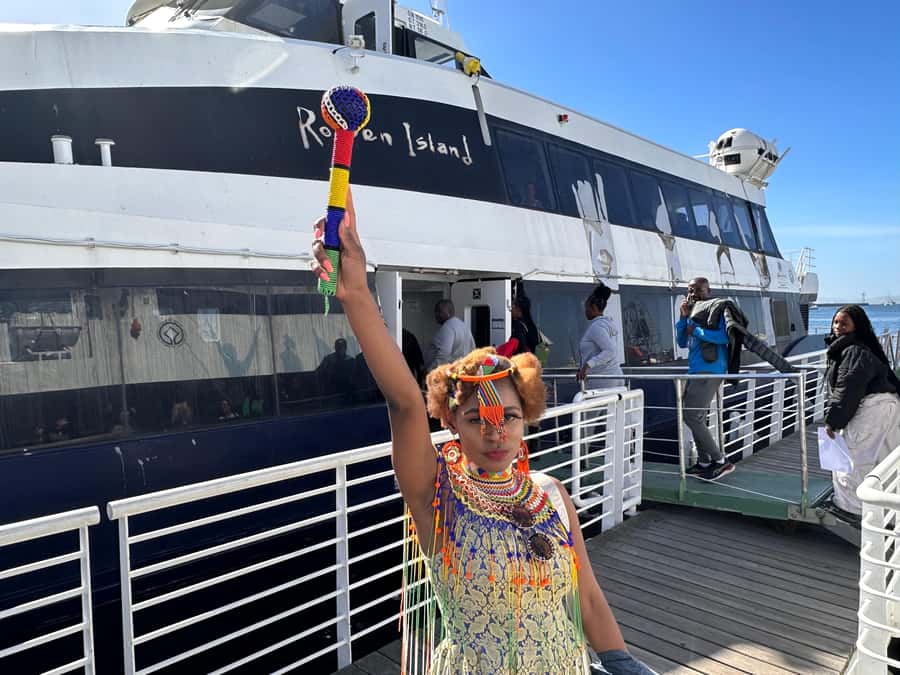
REVIEW · ROBBEN ISLAND TOURS
Cape Town: Robben Island Ferry Ticket and Guided Prison Tour
History has a human voice here. I like the former-prisoner guide, whose firsthand account gives the prison tour an emotional force that a standard museum visit cannot match. I also like the ferry crossing and island bus tour, which place Mandela’s cell within the wider story of apartheid. The main drawback is that this is a shared, tightly scheduled outing, and the island bus section can feel rushed.
At $79 per person, this four-hour trip is a fair buy if Robben Island is high on your Cape Town list. You skip the ticket-selling line, but you still queue to board the boat, and you must reach the Nelson Mandela Gateway yourself. Bring your passport or ID, a coat for the boat, and patience for a busy public attraction.
In This Review
- Key details before you go
- Starting at the Nelson Mandela Gateway
- The ferry crossing to Robben Island
- The island bus tour before the prison
- Entering the prison with a former inmate
- Nelson Mandela’s cell and the long walk to freedom
- How the four-hour schedule works
- Is $79 good value?
- Practical advice for a more meaningful visit
- Who should book this Robben Island tour?
- Should you book it?
- FAQ
- How long does the Robben Island tour take?
- Where does the tour start and end?
- Does skip-the-line mean I can board immediately?
- Is the ferry ticket included?
- Who leads the prison tour?
- What should I bring?
Key details before you go

- A former political prisoner leads the prison portion, turning the visit from a building tour into a personal account of life under apartheid.
- Nelson Mandela’s cell is the emotional high point, but the island tour also covers other political prisoners, prison buildings, and the island’s wider past.
- The ferry is shared and weather-dependent, with a crossing listed at roughly 30 minutes each way, though conditions can make the trip longer or rougher.
- The island tour uses a bus before the prison walk, giving you a broad view of Robben Island before focusing on Mandela’s incarceration.
- Skip-the-line means no ticket-purchase queue, not instant boarding. You still wait with other passengers at the departure area.
- The meeting point is the Nelson Mandela Gateway, and there is no hotel pickup or drop-off.
Starting at the Nelson Mandela Gateway

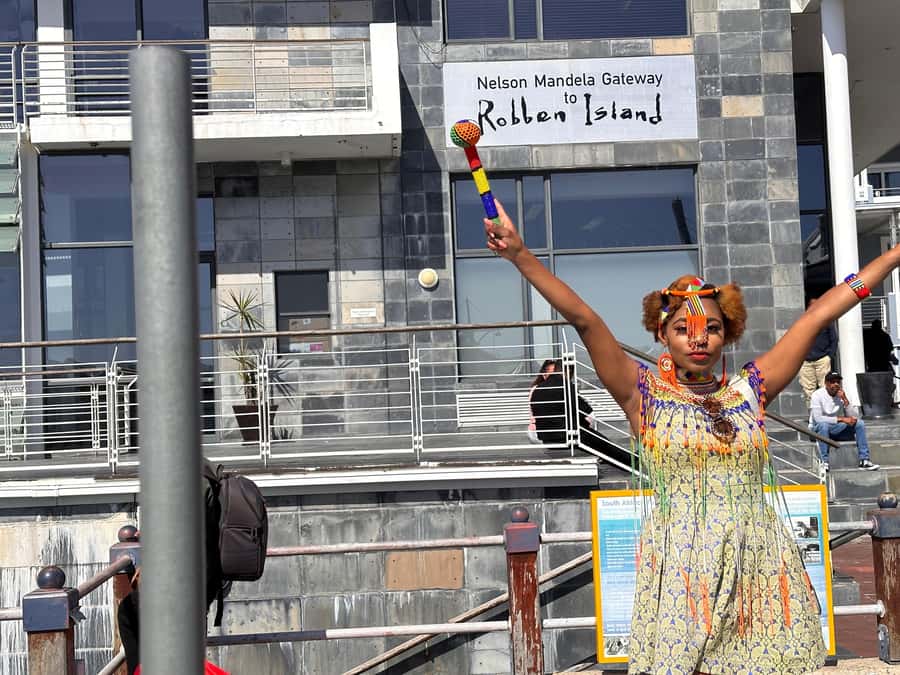
Your outing begins at the Nelson Mandela Gateway to Robben Island, at Cape Town’s waterfront. You do not get hotel transportation, so allow enough time to reach the gateway and find the boat departures line.
The meeting instructions are simple once you know them: proceed directly to the boat departures queue. In practice, the waterfront has several buildings, walkways, staff members, and security points, so the exact location is not always obvious. A useful bearing is the swing bridge and the grey and burgundy building nearby. If you are unsure, ask staff or security rather than wandering until boarding begins.
Your ticket is normally sent by WhatsApp, iMessage, or email, so enter your country code and mobile number correctly when booking. Keep the message easy to find. You may also need to show a passport or ID card, and a copy is accepted according to the tour information.
The skip-the-line benefit saves you from buying a ticket at the counter, which matters when departure queues are long. It does not give you a private entrance, reserved ferry seat, or freedom to arrive at the last second. You still join the boarding queue with everyone else.
This experience is offered for international visitors, meaning non-South Africans. South African citizens are encouraged to buy directly from Robben Island. That distinction is important because the advertised $79 price should not be treated as a universal local fare.
More Robben Island tours:
- Cape Town: Robben Island Ferry Tour with 1-Way Hotel Pickup
★ 4.2 · 1,380 reviews - Cape Town: Robben Island Ferry Ticket and Townships Tour
★ 4.5 · 400 reviews - Cape Town: Robben Island Ferry with Prison Ticket and Tour
★ 4.0 · 324 reviews
The ferry crossing to Robben Island
The boat ride is part of the experience, not just a transfer. The published crossing takes about 30 minutes, while some departures can take closer to 45 minutes depending on the vessel and sea conditions. The return crossing is included.
The ferry can be fully enclosed and crowded. On calmer days, you may prefer to sit outside for the views, but bring a coat because the wind across Table Bay can be chilly even when Cape Town feels warm. If you are prone to seasickness, sit where you can see the horizon and carry whatever personal remedy normally helps you. One particularly practical suggestion is simple: keep your eyes on the horizon if the water turns rough.
The views give you a useful sense of Robben Island’s separation from Cape Town. The prison was not hidden in a remote desert. It was visible from the city, yet the water made escape and easy contact nearly impossible. That physical distance helps explain the island’s power as a place of confinement.
The crossing may also bring small surprises. Seals have been spotted along the route, and whales have occasionally been seen. These sightings are not part of the guaranteed program, so treat them as luck rather than a promised wildlife cruise.
Once you dock, follow the flow toward the Robben Island Museum area. The shared nature of the trip becomes clear here. You will join other passengers for the island bus and the prison walk, rather than moving through the site with a private guide.
The island bus tour before the prison

The first major tour section takes place on a bus. This is an important part of the visit because Robben Island is more than Mandela’s former cell. The bus gives you a wider view of the island’s buildings, prison grounds, and other sites before you enter the main prison complex.
Your bus guide explains how the island functioned and places the prison within South Africa’s political past. The strongest guides tell the story in a clear, narrative style, with enough detail to help you picture daily life rather than simply reciting dates. Yasien Mohammed has been singled out for a captivating presentation, while other guides named during recent visits include Troyer and Talent.
The bus portion usually lasts about an hour, though the full island segment varies with transport and staffing. It can include brief stops, and one recorded itinerary included roughly ten minutes for coffee and a look at penguins. That stop may feel short when several buses arrive at once. Queues can build, and you may have little time to linger or take photographs.
This is one of the tour’s less polished areas. Some buses have been described as old, small-windowed, or in need of cleaning. A faulty address system can make it hard to hear the guide from the rear seats, which is a real problem on a tour built around spoken history. If you can choose a seat, staying nearer the front may help you hear more clearly.
That said, the quality of the guide can make a large difference. Strong commentary turns ordinary buildings into evidence of a system designed to control and silence political opponents. You also learn that the island’s story includes figures such as Robert Sobukwe, not only Nelson Mandela. That broader view keeps the visit from becoming a single-person memorial.
Entering the prison with a former inmate

The prison walk is the heart of the experience. After the bus tour, you enter the prison complex and meet a former political prisoner who guides you through key areas.
This is not a theatrical performance. The power comes from hearing a person describe conditions from direct experience. Guides such as Monde, Terrence, and Sipho have been praised for combining painful memories with warmth, patience, and occasional humor. Their role gives you a human scale for the suffering caused by apartheid’s prison system.
You may hear about the treatment of Black political prisoners and the harsh conditions used to punish people who opposed segregation. The details can be difficult, but the guide helps connect the physical surroundings with the choices made by the government of the time. The prison walls are stark; the personal explanation is what gives them meaning.
The talk can be emotional and, at times, difficult to hear. The prison group may be large, and sound does not always carry well. One guide may repeat points or speak less clearly than another, so your experience depends partly on where you are standing and how many people surround you. Move closer when the group shifts, while leaving room for others.
A useful feature of this section is the chance to ask questions. Guides have answered questions about their own imprisonment, the prison compound, and daily conditions. I would listen first, then ask concise questions when the guide opens the floor. This is a place for respect rather than rapid-fire sightseeing.
The former-inmate tour normally takes about an hour. That is enough time to understand the prison without turning the visit into an exhausting full-day program. Still, the schedule is shared and controlled by the island operation, so you cannot extend a conversation indefinitely or revisit every room at your own pace.
A few more in Cape Town
- Wine Tour: Paarl, Franschhoek & Stellenbosch incl 3 wineries
★ 5.0 · 3,940 reviews - Cape Town: Hop-On Hop-Off Bus Tour with Optional Cruise
★ 4.8 · 3,929 reviews - Cape Town: Cape of Good Hope & Penguins Day Tour with Pickup
★ 4.7 · 3,362 reviews - Zipline Cape Town – From Foot of Table Mountain Reserve
★ 5.0 · 3,179 reviews
Nelson Mandela’s cell and the long walk to freedom
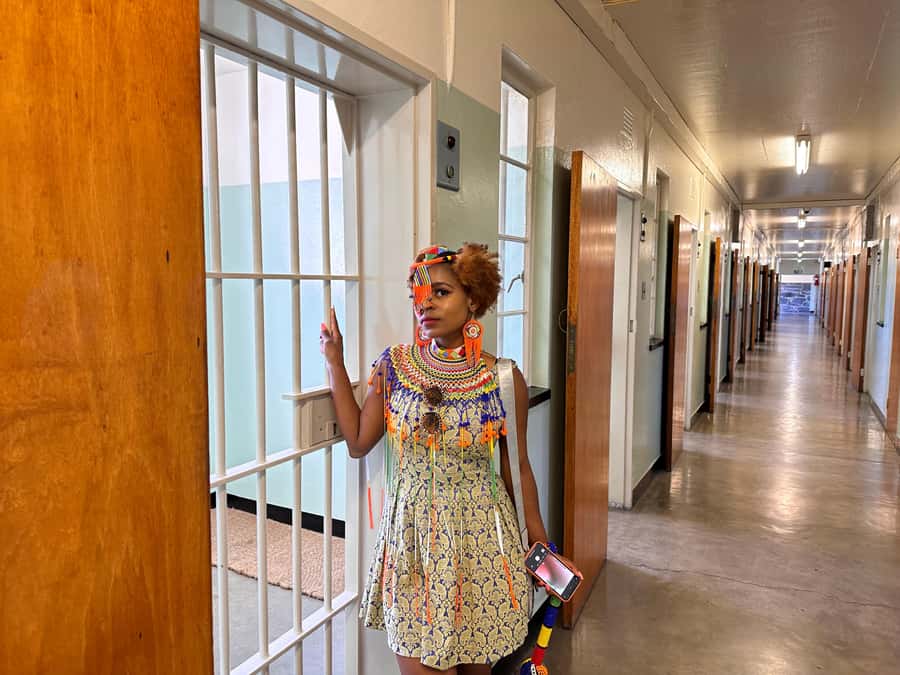
Nelson Mandela’s cell is the stop most people expect, and it deserves its place as the emotional center of the tour. Seeing the small room where he spent more than 25 years makes the scale of his imprisonment immediate.
The visit does not suggest that Mandela suffered alone. The prison tour places his story beside those of many political prisoners who endured similar oppression. That is one reason the experience is stronger than a simple celebrity landmark. You are not only looking at where one famous man lived. You are confronting the system that held thousands of people.
The phrase long walk to freedom has special force here. You physically walk through the prison, listen to someone who was held there, and then return across the water to a city that once represented the power the prisoners opposed. The route is modest, but the history attached to it is immense.
Some of the most affecting moments come from the contrast between official control and personal resilience. The bus guide explains the wider operation of the island, while the former prisoner describes what that system felt like from inside. Together, the two perspectives give you both structure and human detail.
The tour can also broaden your understanding of South Africa’s transition to democracy. The island does not offer a tidy story with a single hero and a quick ending. It shows repression, resistance, endurance, and the long process that led to a new South Africa.
How the four-hour schedule works
The advertised duration is four hours, with the Robben Island portion listed at about 3.5 hours. That includes the return ferry, the island bus tour, and the prison walk.
A typical sequence looks like this:
- You meet at the Nelson Mandela Gateway.
- You join the boat departures line.
- You take the shared ferry to Robben Island.
- You transfer to a bus for the island tour.
- You visit the prison on foot with a former inmate.
- You return by ferry to Cape Town.
The schedule is well suited to a half-day in Cape Town. You still have room to plan another activity before or after it, but do not book something immediately afterward if missing a connection would cause trouble. Weather can cancel the outing, with a full refund offered in that situation, and sea conditions or island transport issues can affect timing.
The operation is not always perfectly smooth. Transport and staffing delays have occurred, and crowded bus queues can reduce time at short stops. Staff have generally worked to keep the main prison visit on track, which is the part you most want to protect.
Is $79 good value?
At $79, you are paying for return transport, museum entry, the island bus tour, and the former-prisoner-led prison visit. There is no food, drink, hotel pickup, or private guiding included.
I consider the price reasonable for an international visitor who values convenience. The ticket is already arranged, the ferry is included, and the most important interpretive element is built into the visit. Buying transport, admission, and a separate guide on your own would not necessarily save much, and it could create more chances to miss the departure.
The value is strongest if you want context rather than a quick photograph of Mandela’s cell. You receive two kinds of interpretation: a bus guide explaining the island as a whole and a former inmate explaining prison life firsthand. That combination is the reason I would choose this over a basic ferry ticket alone.
The value is weaker if you dislike shared tours, crowded boats, or fixed schedules. The older buses and occasional audio problems also make the $79 price feel less generous if you cannot hear the commentary. You are paying for access and human stories, not polished luxury transport.
Practical advice for a more meaningful visit

Wear comfortable shoes because the prison section is on foot. Bring a coat for the ferry, even if the weather at the waterfront seems mild.
Keep your passport or ID card available. A copy is accepted, but the requirement still applies. Also keep your digital ticket accessible on your phone, since the provider sends it through WhatsApp, iMessage, or email.
Arrive with time to find the correct queue. The confusing part is often not the ferry itself but locating the right meeting point among the waterfront buildings. Ask for the Nelson Mandela Gateway to Robben Island and then look for the boat departures line.
If you are sensitive to seasickness, prepare before boarding and sit where you can see the horizon. The crossing is short, but the boat can be crowded and rough.
Give the guides your full attention. The island bus has an address system that may not work perfectly, especially toward the rear, and the prison guide may be speaking to a large group. Stand close enough to hear without blocking anyone.
You should also set your expectations for the island’s physical upkeep. Some sections, paving, and buildings show signs of maintenance strain. That can be disappointing at a major national site, but it does not erase the importance of what you are seeing.
Who should book this Robben Island tour?
I would book it if you are in Cape Town for the first time and want a serious look at apartheid and South Africa’s path to democracy. It suits anyone interested in Nelson Mandela, political history, human rights, or places where the past is still felt through personal testimony.
Older children and teenagers can follow the visit well if they are ready for difficult subject matter. The accounts of prison conditions are sobering, but the tour’s clear storytelling and manageable four-hour length make it easier to absorb than a long lecture.
I would hesitate only if you need a private, flexible experience or have a very tight schedule. The ferry, bus, and prison tour all operate as shared activities. Weather can cancel the trip, and queues or transport delays may take some control out of your hands.
Should you book it?
Yes, if Robben Island matters to you and you want more than independent sightseeing. The former political prisoner is the key reason to go. Mandela’s cell is powerful, but the firsthand account helps you understand the many people and experiences behind the famous name.
Book this tour when you can spare a full half-day, then arrive early at the Nelson Mandela Gateway with your identification and ticket ready. If you accept the crowded ferry, shared bus, and occasional rough edges, the visit offers serious value and a lasting connection to South Africa’s recent past.
FAQ
How long does the Robben Island tour take?
The full activity lasts about four hours. The Robben Island portion is listed at roughly 3.5 hours, including the boat cruise, island bus tour, and prison visit.
Where does the tour start and end?
It starts and ends at the Nelson Mandela Gateway to Robben Island in Cape Town. Hotel pickup and drop-off are not included.
Does skip-the-line mean I can board immediately?
No. You skip the ticket-purchase line, but you still join the queue to board the shared ferry.
Is the ferry ticket included?
Yes. Return Robben Island ferry tickets are included in the price.
Who leads the prison tour?
A former political prisoner leads the prison section. A separate guide leads the island bus tour.
What should I bring?
Bring a passport or ID card. A copy is accepted. You should also bring a coat for the ferry and keep your digital ticket available on your phone or email.
Just added in Cape Town
- Sunset Safari Big 5 Aquila with Snacks and Wine Tasting★ 5.0 · 12 reviews
- Explore Atlantis Sand Dunes with a 1hour 30mins sandboarding tour★ 5.0 · 5 reviews
- Private Tour to 20 Wine Tasting in Stellenbosch and Franschhoek★ 5.0 · 11 reviews
- Robben Island, Kirstenbosch wine tasting Tour★ 5.0 · 10 reviews
- Photoshoot in Cape Town’s most Gorgeous Locations★ 5.0 · 2 reviews
- Zip Line and Wine from Cape Town★ 5.0 · 14 reviews
- Private Transfer from Cape Town International Airport★ 5.0 · 4 reviews
- 1 Hour Cape Town City Center Photoshoot Experience★ 5.0 · 19 reviews
Robben Island Tours, compared.

Robben Island Ferry Tour with 1-Way Hotel Pickup
Read our review →
Robben Island Ferry with Prison Ticket and Tour
Read our review →

Robben Island Tour including Pick Up & Drop Off from Cape Town
Read our review →
Robben Island Ferry Ticket and Guided Prison Tour
Read our review →
Robben Island Experience: Pre-Booked Ticket & Return Transfers
Read our review →
Robben Island Tour – Hotel Pick-Ups & stops at interesting places pre/post tour
Read our review →Browse the lists this tour appears in