REVIEW · CAPE TOWN TOURS
Catch your first waves in Cape Town
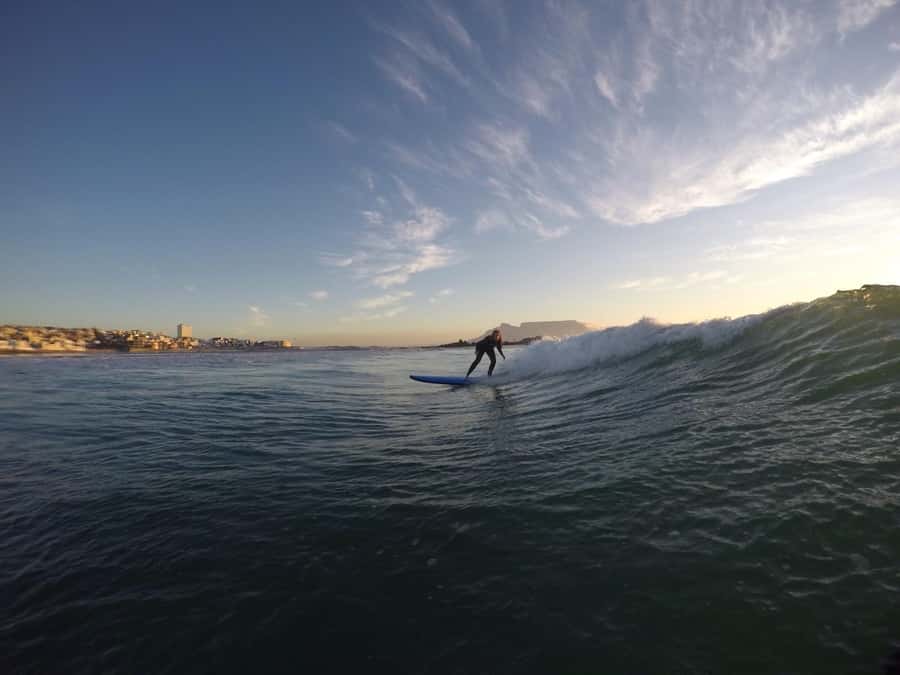
Your first wave may be closer than you think. This 90-minute Cape Town surf lesson at Big Bay gives beginners a clear starting point, with hands-on coaching in pop-up technique, wave reading, steering, paddle form, and surf safety. I especially like the private format, which works for solo surfers, families, or groups of up to six.
I also like that the lesson is built around catching a real wave, not just standing on a board for a photo. The main consideration is transport: you must reach Eden on the Bay yourself, and weekend parking can take extra time. Ocean conditions can also affect the lesson.
In This Review
- Key points before you book
- Why Big Bay makes a useful first surf stop
- The first 15 minutes: board handling and surf basics
- The pop-up lesson: the main reason to book
- Reading waves and learning when to paddle
- Steering left and right once you stand
- What the 90-minute format really gives you
- Equipment, clothing, and what you need to carry
- Getting to Eden on the Bay without a rushed start
- Is $52 good value for a first surf lesson?
- Who will get the most from this lesson?
- Booking flexibility and changing sea conditions
- Should you book the Big Bay surf lesson?
- FAQ
- Where does the surf lesson meet?
- How long does the lesson last?
- Is transport included?
- Is surfing experience required?
- What equipment is included?
- Can children take part?
Key points before you book
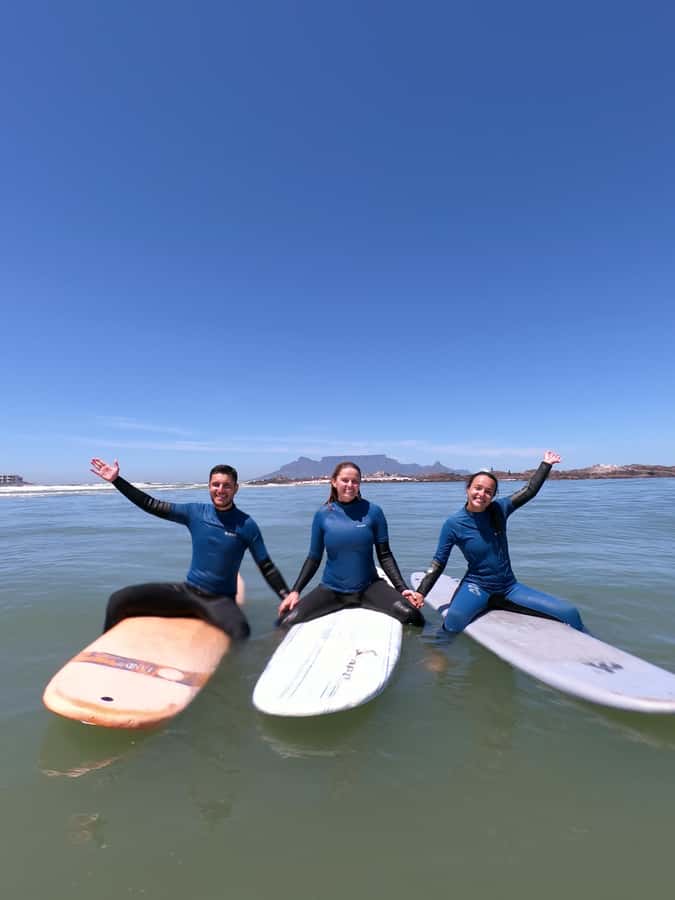
- Private coaching for up to six people: Book solo for one-on-one instruction, or keep your family and friends together in a private group.
- A lesson built around the pop-up: You learn the movement that takes you from lying on the board to standing in one smooth action.
- Big Bay meeting point: Find Surf Life Surf School near the grass area in the large Eden on the Bay parking lot.
- Board and wetsuit included: A surfboard and 4/3mm wetsuit are provided for the 90-minute session.
- Beginner-friendly, but not for non-swimmers: No previous surf experience is required, though you need to be comfortable in the water.
- Strong customer feedback: The activity has a five-star rating from 23 reviews, with praise focused on friendly instruction, helpful coaching, and the thrill of catching waves.
Why Big Bay makes a useful first surf stop
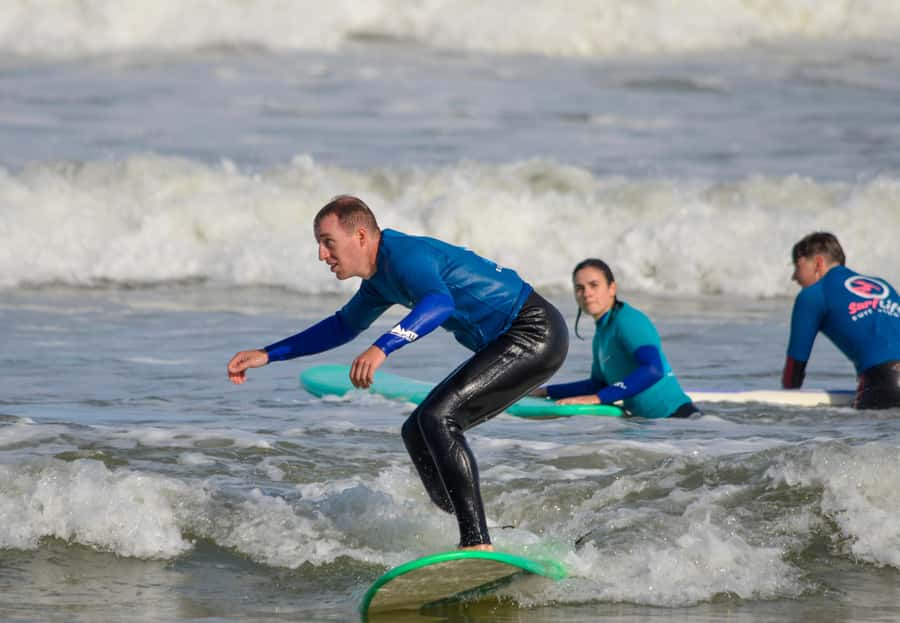
Big Bay, in Bloubergstrand, is one of the better-known surfing areas around Cape Town. Your meeting point is Eden on the Bay, a shopping and beach area with a large parking lot, a KFC, and a lifesaving club nearby.
That setup is practical. You are not being sent to a vague stretch of coast with no obvious landmark. Look for the grass area in the parking lot and keep an eye out for the Surf Life Surf School vehicle.
The beach location also makes the lesson easy to combine with other time in the area. You can arrive early, get your bearings, and allow time for parking before changing into your wetsuit. I would not cut it close, especially on a weekend. The instructions ask you to arrive 15 minutes early, and parking may take another 5 to 15 minutes when Eden on the Bay is busy.
The ocean itself is the reason to come, but it is also the main variable. This is an outdoor surf lesson, so conditions matter. The session runs throughout the year, but it is cancelled only if the ocean is too rough for surfing or if there is lightning. That means a cloudy or cool day does not automatically stop the lesson.
A few more in Cape Town
- Wine Tour: Paarl, Franschhoek & Stellenbosch incl 3 wineries
★ 5.0 · 3,940 reviews - Cape Town: Hop-On Hop-Off Bus Tour with Optional Cruise
★ 4.8 · 3,929 reviews - Cape Town: Cape of Good Hope & Penguins Day Tour with Pickup
★ 4.7 · 3,362 reviews
The first 15 minutes: board handling and surf basics
The session starts with an overview of your surfboard and how to handle it both on land and in the water. This may sound basic, but it is useful instruction. A large beginner board can feel awkward, and poor handling can waste energy or create a safety problem in the waves.
You will be shown how to manage the board as you move through the water. That matters because a beginner often spends as much effort wrestling with the board as paddling. Learning where to hold it and how to move with it gives you a calmer start.
The instructor also covers surf safety. You can expect guidance on how to handle your equipment through the waves, along with basic awareness of where and when to move. The lesson is not just a quick attempt to stand up. It gives you a framework for staying in control.
If you have surfed before, the instructor assesses your current ability at the beginning. That is a welcome touch. You do not need to repeat every beginner exercise if your pop-up is already developing, and you can get help with the part of surfing that is holding you back.
The pop-up lesson: the main reason to book
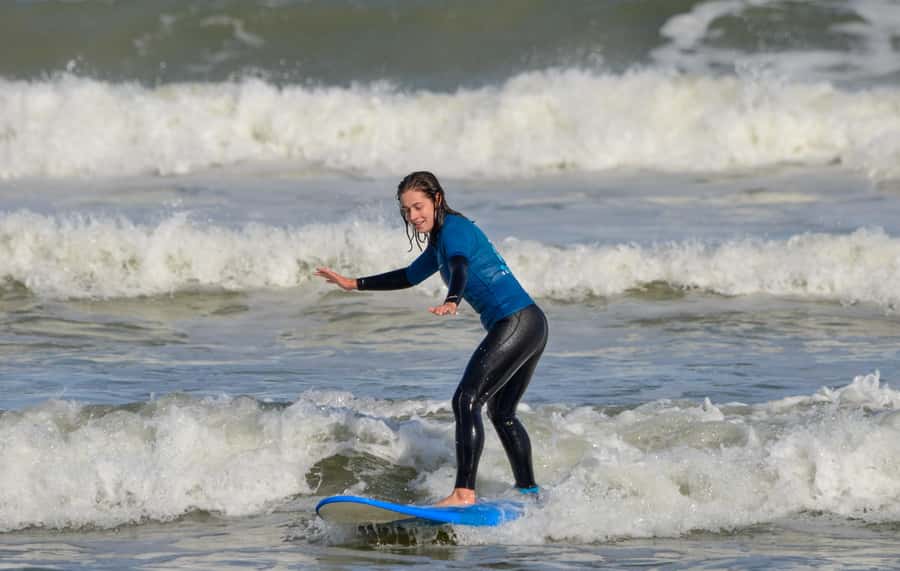
The central skill is a winning pop-up technique, a term the school uses for the movement that has helped hundreds of students catch their first wave. In plain terms, this is the fast transition from lying on your stomach to standing in a stable surf position.
For a new surfer, the pop-up often feels like the hardest part. You need to move quickly, place your feet correctly, keep your weight balanced, and avoid pushing yourself into a crouch that collapses as soon as the board moves. A small mistake can send you back into the water before the wave has even started.
The lesson focuses on making that movement more effective. You will work on the technique rather than simply being told to stand up and try again. That kind of correction is where private coaching can be valuable, since the instructor can watch your exact movement and explain what to change.
I like the practical goal here. You are not being promised advanced surfing in 90 minutes. You are being given a simple skill that can help you catch a first wave and build from there.
Reading waves and learning when to paddle
Standing up is only one part of catching a wave. You also need to know which waves are worth trying and when to begin paddling.
The lesson includes wave reading, with guidance on where and when to catch waves. This helps you understand the timing of a wave instead of paddling at random. For beginners, that can make the ocean feel much less confusing.
You will also work on using your paddle energy well. Paddling too early can leave you tired before the wave reaches you. Paddling too late can mean the wave passes underneath. The coaching aims to strengthen your technique and help you use your effort at the right moment.
That is one of the better features of this activity. Many first-time surfers focus so hard on standing that they overlook the approach. Learning to position yourself, paddle with purpose, and recognise a rideable wave gives you a more complete first lesson.
The results can vary because the sea is never fully predictable. You may catch several waves, or you may spend more time practising the setup. One recent participant reported catching some waves, seeing a seal, and receiving helpful instruction. The seal is not part of the tour promise, of course, but it shows that the session takes place in a real coastal setting rather than an artificial practice area.
Something quite different:
- Zipline Cape Town – From Foot of Table Mountain Reserve
★ 5.0 · 3,179 reviews - Cape Town: Table Mountain Cable Car, Hop-On Hop-Off Bus Tour
★ 4.6 · 3,157 reviews - Cape Point and Boulder’s Penguins Full Day Tour
★ 5.0 · 3,118 reviews - From Cape Town: Cape Point & Boulders Beach Full-Day Tour
★ 4.8 · 3,032 reviews
Steering left and right once you stand
The lesson does not stop at the pop-up. You are also taught how to steer left and right on a wave.
For a first-time surfer, steering may seem ambitious, but even a basic understanding helps. A board that goes straight is easier to control, yet learning how your body position affects direction gives you a better chance of staying on the wave. It also keeps you from treating the board as a rigid platform.
The instructor can help you focus on the next useful step for your ability. A complete beginner may concentrate on standing and staying balanced. Someone with a few earlier lessons may work on turning, paddle strength, or timing.
That adjustment is important in a private lesson. A mixed public class often has to move at one general pace. Here, a solo participant can request one-on-one coaching, and a private group can keep the session focused on its own needs.
If you are booking alone and specifically want one-on-one instruction, state that when booking. The private group format does not automatically mean every solo booking has the same coaching arrangement unless you request it.
What the 90-minute format really gives you
Ninety minutes is long enough to cover the basics and spend meaningful time in the water, but it is not a full-day surf course. You should arrive with a realistic goal: learn the fundamentals, receive useful corrections, and try to catch your first waves.
The schedule includes instruction on equipment, safety, the pop-up, wave reading, paddling, steering, and equipment handling. That is a fair amount to cover, so the lesson will likely feel active rather than leisurely.
The length also suits families and friends who want a short activity without giving up half a day. Children can take part from the stated minimum age of 8, and the activity lists no fitness requirement. Still, the school does not accept non-swimmers, and all participants need to complete an indemnity form before the lesson.
Parents must sign the form for children aged 18 or younger. Children under 6 are specifically listed as unsuitable, while the booking requirements give the minimum age as 8. Because those age notes do not match perfectly, I would confirm the age rule before booking for a child between 6 and 7.
Equipment, clothing, and what you need to carry
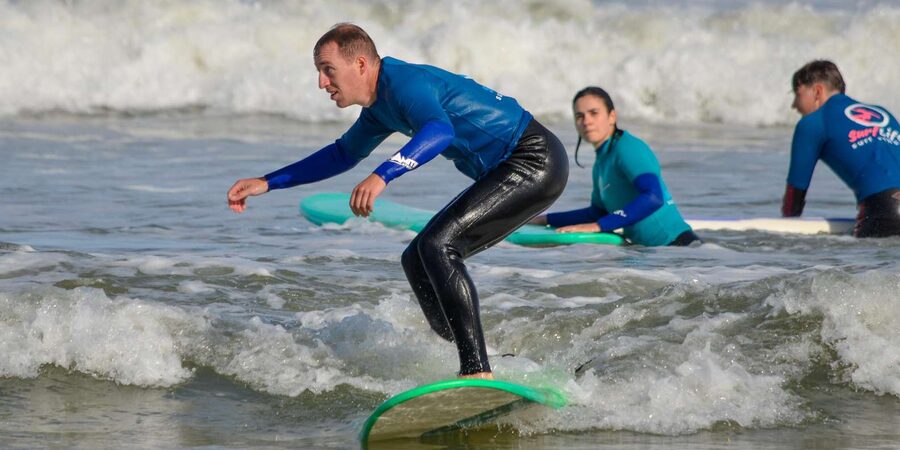
The price includes a surfboard and a 4/3mm wetsuit for the lesson. That is important in Cape Town, where the water can feel cold even on a warm day. You do not need to bring your own board or wetsuit.
Wear swimwear under the wetsuit. Bring a towel and a dry set of swimwear for changing afterward. You should also pack sunscreen, a reusable bottle of water, and warm clothes if you tend to feel cold.
The supplied information includes a long list of useful personal items, including a hat, sunglasses, a jacket, weather-appropriate clothing, a daypack, a hair tie, and any emergency medication such as an asthma pump or Epipen. Sunscreen and water are not included, so bring your own.
Leave valuable items at your accommodation if you can. There is an option to leave a phone, car keys, or a small bag in the Surf Life vehicle, but this is at your own risk. The school does not accept responsibility for damage or loss.
Non-paying spectators can watch from the beach but cannot join the lesson. That works well for a parent or friend who wants to see the session without getting into the water.
Getting to Eden on the Bay without a rushed start
Transport is not included. You need to arrive by Uber or rental car, and the suggested travel allowance is 35 to 45 minutes, depending on traffic. Add extra time for parking.
The meeting point is the large parking lot at Hang Ten Drive, Eden on the Bay, in Big Bay. Meet the Surf Life team on the grass area. The nearby KFC and lifesaving club give you useful reference points, and the Surf Life vehicle should help you identify the group.
If you use an Uber, allow enough time to get out, gather your belongings, and find the meeting area. If you drive, do not assume a weekend arrival will be quick. The parking lot fills up, and finding a bay can take 5 to 15 minutes.
This is a small but important cost consideration. The $52 price per person covers instruction, a board, and a wetsuit, but not your ride to Big Bay. If you are already staying nearby or have a rental car, the value is stronger. If you need a longer Uber journey, include that in your total budget.
Is $52 good value for a first surf lesson?
At $52 per person, the lesson offers a reasonable package for a 90-minute private-group experience. You receive qualified surf instruction, equipment, and a wetsuit, which saves you from renting the main gear separately.
The private format adds value for couples, families, and groups of friends. You can keep your own group together, and the instructor can adapt the coaching to the participants in front of them. A solo surfer who requests one-on-one coaching gets the most personalised version of the session.
The price is less attractive if you are only looking for a quick beach activity and do not care about learning technique. It also does not cover transport, food, drinks, towels, or sunscreen. You should treat this as an instruction-focused experience, not an all-inclusive outing.
The five-star rating from 23 reviews supports the value, especially for beginners. The praise centres on friendly instructors, strong teaching, and actual time in the waves. A Danish participant called out the instruction and the amount of time spent surfing, while a Swiss family booked again after their children learned a lot and had fun on their first attempt. Those are useful signs for anyone choosing a first lesson for children or a group.
Who will get the most from this lesson?
I would choose this for a first-time surfer who wants more than a casual attempt at standing on a board. The pop-up and wave-reading focus gives you useful skills to carry into a future lesson.
It also suits a family or group of friends who want their own session. With a maximum of six people, the group remains small enough for individual correction, though the exact amount of attention each person receives depends on the group size.
The lesson can also help someone who has already tried surfing but still struggles with the basics. The instructor assesses your ability and recommends what to focus on, which may include improving your pop-up, paddle technique, timing, or steering.
You need to be a swimmer and comfortable enough for a water-based activity. The experience is not suitable for pregnant women, people with back or heart problems, vertigo, respiratory issues, recent surgery, high blood pressure, motion sickness, seasickness, a cold, or other listed medical concerns. If one of these applies to you, ask a medical professional before taking part.
The activity is offered in Afrikaans and English. Alcohol and drugs, intoxication, littering, nudity, fireworks, and explosive substances are not allowed. Unaccompanied minors are also not accepted.
Booking flexibility and changing sea conditions
You can cancel up to 24 hours before the lesson for a full refund. The reserve-now-and-pay-later option lets you hold a place without paying immediately, which is useful when your Cape Town schedule is still changing.
The bigger uncertainty is the sea. Lessons run all year, but the school may cancel if the ocean becomes too rough or lightning makes the conditions unsafe. Since the activity depends on weather and sea conditions, keep some flexibility in your itinerary if catching a lesson is important to you.
I would avoid placing this on the final morning of a short Cape Town visit. A weather change could leave you without another chance to reschedule, even though the cancellation terms themselves are generous.
Should you book the Big Bay surf lesson?
Book it if you want a focused first step into surfing, especially if the idea of learning a proper pop-up appeals to you. The included board and wetsuit keep the planning simple, while the private format gives solo participants, families, and small groups a more personal lesson.
You should also book if you value coaching over a quick photo opportunity. The lesson covers the parts that make catching a wave possible: equipment handling, safety, paddling, timing, wave reading, standing, and basic steering.
Think twice if you are a non-swimmer, have one of the listed medical conditions, or cannot allow extra time for transport and parking. Also confirm the age rule for children aged 6 or 7, since the information gives both 8 as the minimum age and under 6 as unsuitable.
For most fit beginners who can reach Big Bay comfortably, $52 is a fair price for 90 minutes of instruction and equipment. The strongest reason to choose this lesson is its clear purpose: helping you catch your first real wave with better technique and less guesswork.
FAQ
Where does the surf lesson meet?
Meet the Surf Life Surf School team on the grass area in the large parking lot at Eden on the Bay, Hang Ten Drive, Big Bay, Bloubergstrand. The nearby KFC and lifesaving club are useful landmarks. Look for the Surf Life Surf School vehicle.
How long does the lesson last?
The surf lesson lasts 90 minutes.
Is transport included?
No. You must arrange your own transport by Uber or rental vehicle. Allow about 35 to 45 minutes for travel, depending on traffic, and extra time to find parking at Eden on the Bay.
Is surfing experience required?
No previous experience is required. If you have taken lessons before, the instructor assesses your current ability and helps you focus on the next part of your technique.
What equipment is included?
A surfboard and a 4/3mm wetsuit are included for the lesson, along with instruction from a qualified surf instructor.
Can children take part?
The booking information lists a minimum age of 8. A separate safety note says the activity is not suitable for children under 6, so confirm the age requirement directly before booking for a child aged 6 or 7. Parents must sign the indemnity form for anyone aged 18 or younger.
Just added in Cape Town
- Sunset Safari Big 5 Aquila with Snacks and Wine Tasting★ 5.0 · 12 reviews
- Explore Atlantis Sand Dunes with a 1hour 30mins sandboarding tour★ 5.0 · 5 reviews
- Private Tour to 20 Wine Tasting in Stellenbosch and Franschhoek★ 5.0 · 11 reviews
- Robben Island, Kirstenbosch wine tasting Tour★ 5.0 · 10 reviews
- Photoshoot in Cape Town’s most Gorgeous Locations★ 5.0 · 2 reviews
- Zip Line and Wine from Cape Town★ 5.0 · 14 reviews
- Private Transfer from Cape Town International Airport★ 5.0 · 4 reviews
- 1 Hour Cape Town City Center Photoshoot Experience★ 5.0 · 19 reviews
Cape Town Tours, compared.

Wine Tour: Paarl, Franschhoek & Stellenbosch incl 3 wineries
Read our review →

Cape of Good Hope & Penguins Day Tour with Pickup
Read our review →
Zipline Cape Town – From Foot of Table Mountain Reserve
Read our review →
Table Mountain Cable Car, Hop-On Hop-Off Bus Tour
Read our review →
Cape Point and Boulder’s Penguins Full Day Tour
Read our review →