
REVIEW · CITY TOURS
Johannesburg: Downtown Walking Tour Including Ponte City building
Johannesburg rewards the curious visitor. This 3.5-hour walking tour links Maboneng, Hillbrow, and Newtown with local stories about music, politics, art, architecture, and everyday life. I like the chance to see four parts of the inner city in one outing, and I especially like the access to Ponte City and its 51st-floor drink stop. The main thing to consider is that this is not a light sightseeing stroll. Some parts of downtown are troubled, and you need to stay with the guide and remain alert.
I also like that the tour gives you context instead of just a string of photo stops. Guides such as Sean, Max, Julian, Magugu, Tye, Franck, and others have been praised for their clear explanations and friendly manner. Pickup, private transportation, lunch, bottled water, gratuities, and Ponte entry are included, but alcoholic drinks are not.
In This Review
- Key Points Before You Book
- Why Downtown Johannesburg Needs a Guide
- Starting at DlalaNje and Entering Ponte City
- Hillbrow Tower and the Changing Johannesburg Skyline
- Windybrow and Apartheid-Era Housing
- Maboneng, Jewel City, and Street-Level Culture
- From Maboneng Toward Newtown
- The Top of Africa Viewing Deck
- What the Guides Add
- Safety, Walking, and Group Size
- Is $52.03 a Fair Price?
- Who Should Book This Experience?
- Final Recommendation
- FAQ
- Where does the Johannesburg Downtown Walking Tour take place?
- How long does the tour last?
- Is Ponte City included?
- Is lunch included?
- Are alcoholic drinks included?
- How many people can join the tour?
- Can I cancel for a full refund?
Key Points Before You Book
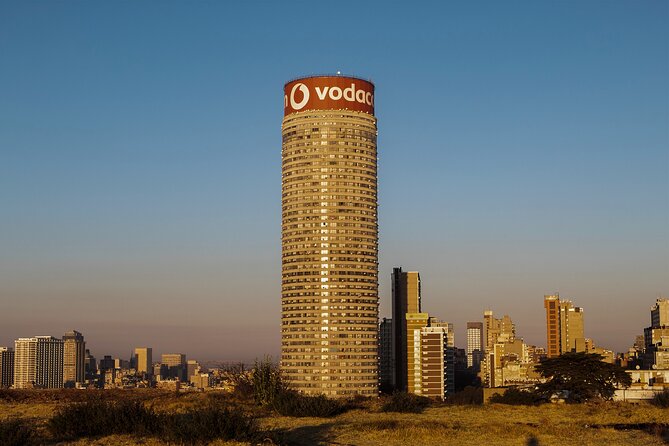
- Ponte City is the centerpiece: Spend time inside Johannesburg’s famous cylindrical tower and enjoy a drink on the 51st floor.
- Four suburbs in one outing: The route connects areas from Maboneng toward Newtown, giving you a broad introduction to downtown.
- History comes through people and buildings: Expect discussion of apartheid-era housing, government segregation, urban decay, music, politics, and local culture.
- The guide matters: Sean, Max, Julian, Magugu, Tye, and Franck have all been singled out for humor, patience, local insight, and a reassuring presence.
- Useful early in your stay: The tour can help you understand the city before exploring parts of Johannesburg on your own.
- Good value for a half-day: At $52.03 per person, the price includes several practical extras, not just the guiding.
Why Downtown Johannesburg Needs a Guide
Johannesburg is not a city you understand from a single museum or viewpoint. Its inner city has layers of wealth, government control, migration, decline, renewal, and daily life packed into a relatively compact area.
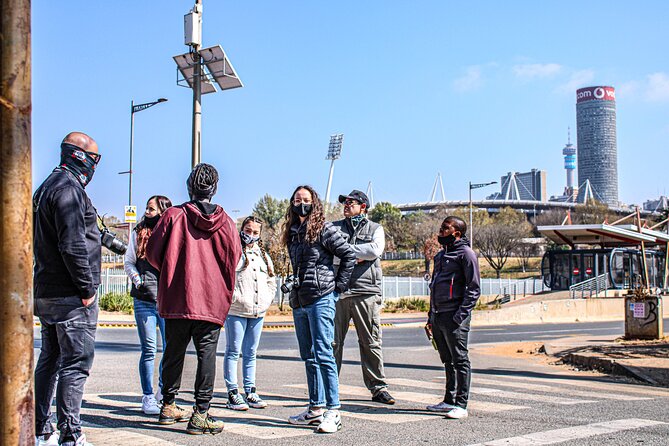
That is why a guide helps. You might pass a grand building without knowing what it once represented, or see a busy street without understanding how apartheid shaped housing and movement. This tour connects those details. The guide explains what you are seeing while you move between neighborhoods, rather than saving all the history for a long speech at the end.
I like this format for a first visit because it helps you get your bearings quickly. You are not spending the whole day in one district. Instead, you move through four suburbs and see how their character changes. Music, street art, architecture, and local transport provide a more rounded picture than a standard monument tour.
The experience also has a practical edge. Several people have found the guides useful for planning independent exploration afterward. That makes the tour a good starting point if you want to return to Maboneng, Newtown, or another downtown area later in your trip.
More Walking Tours in Pretoria
- Pretoria: Cullinan Surface Diamond Mine Walking Tour
★ 4.5 · 58 reviews - Soweto walking tour with a taxi ride
★ 4.5 · 42 reviews - Elephant Walk Guided Half Day Tour from Johannesburg
★ 5.0 · 26 reviews
Starting at DlalaNje and Entering Ponte City
The tour begins at DlalaNje, a community center connected to the Ponte City experience. The opening introduction sets the tone and explains why this location matters.
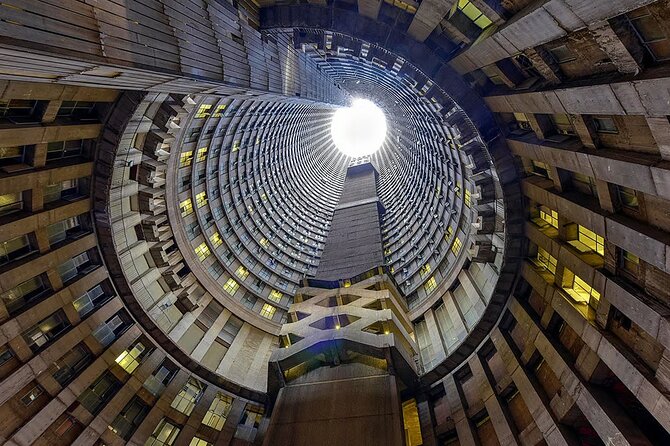
Ponte City is not simply a tall building. Its unusual round form makes it one of Johannesburg’s most recognizable structures, but the important part is what the building reveals about the city around it. The guide takes you through its earlier years of grand design and opulence, followed by government segregation, social pressure, economic change, and urban decline.
You hear how the building’s fortunes shifted over time. That story is useful because it pushes beyond the easy image of Johannesburg as either a success story or a dangerous city. Ponte has passed through difficult periods, yet it has also shown resilience. The building’s changing fortunes mirror wider changes in the inner city.
The tour spends about two hours at this main portion of the experience, with admission included. That gives the guide time to explain the building’s context instead of rushing you through a quick photo stop.
One of the most memorable details is the drink on the 51st floor. It gives the visit a pause and offers a high view over Johannesburg. The included drink is not described as alcoholic, and alcoholic beverages are specifically excluded, so plan on a nonalcoholic refreshment unless you purchase something separately.
Ponte City can be powerful, but it may not suit someone looking only for polished attractions. The material deals with oppression, decay, and difficult economic conditions. I would approach this part with respect and patience. It is a place where the past is not neatly packaged.
Hillbrow Tower and the Changing Johannesburg Skyline
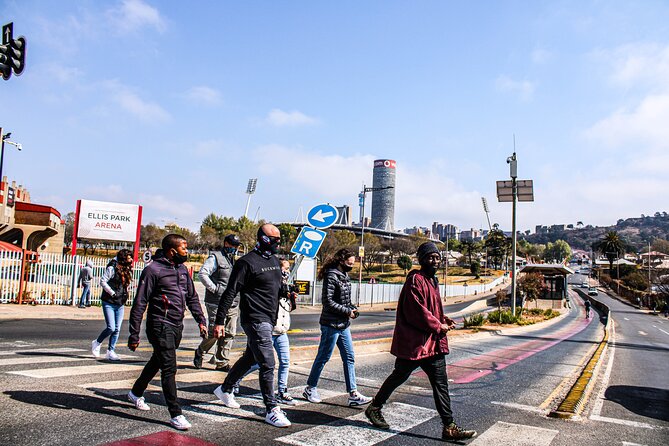
The itinerary also provides context about the Hillbrow Tower, one of the most familiar markers on the Johannesburg skyline. The tower helps you understand the scale of the inner city and the role of major infrastructure in shaping the area.
The information provided does not promise entry to the Hillbrow Tower itself. Think of this as a guided explanation and viewing point rather than a separate tower visit.
The tower is useful as a reference during the walk. It helps you connect the streets below with the broader city. A guide can point out how the skyline changed as districts rose, declined, and began to attract new investment.
This is also where the tour’s architectural focus becomes clear. You are not only looking at old buildings. You are learning how buildings reflect public policy, economic shifts, and social division. That makes the experience more useful than a simple list of landmarks.
Windybrow and Apartheid-Era Housing
Windybrow provides another important stop. Here, the guide explains housing in the area during apartheid.
This is one of the tour’s strongest historical elements because housing policy affected nearly every part of life. Where people could live, work, and travel was controlled by a system of racial separation. Seeing that history through a specific building and neighborhood makes it easier to grasp than a short textbook explanation.
The guide’s role is especially important here. The experience is designed as a chronological journey, so the story moves from early prosperity to government red-lining, social oppression, urban decline, and the city’s efforts to adapt. You get a sense of cause and effect rather than disconnected facts.
If you have little background on South African history, this can serve as a compact introduction. If you already know the basics, the neighborhood setting adds physical detail to what you have read.
Something quite different:
- Hartbeespoort: 2-Hour Dam Cruise with South African Food
★ 4.4 · 621 reviews - Hartbeespoort: Predator Safari with a Guide
★ 4.8 · 267 reviews - Soweto Half Day Tour
★ 5.0 · 231 reviews - Johannesburg and Soweto tour
★ 5.0 · 231 reviews
Maboneng, Jewel City, and Street-Level Culture
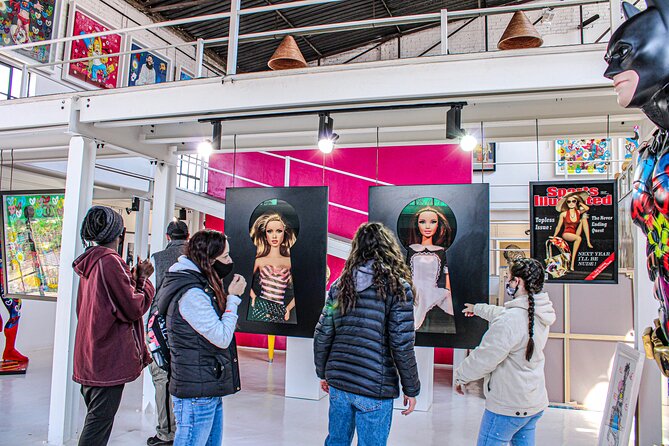
Maboneng is one of the areas that makes this tour appealing to first-time visitors. It is associated with cafés, art, design, street art, and renewed interest in the inner city. The route also includes Jewel City, another district connected with urban change and redevelopment.
The important point is that the tour does not present Maboneng as the whole story of Johannesburg. You see an area with creative energy and new businesses, but you also learn how redevelopment and gentrification affect the city. That contrast gives the neighborhood more meaning.
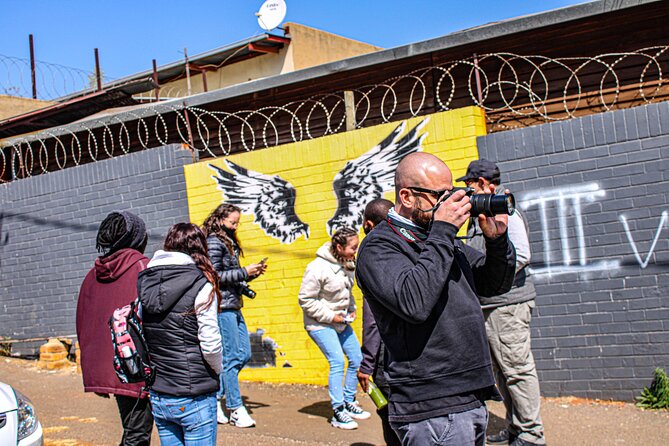
Fox Street is part of this portion of the experience. It is a good place to look for murals, design details, cafés, and the visual mix that makes the area appealing for photography. The guide adds stories about local music and culture, so the walk is not limited to architecture.
Some tours include a local taxi ride or other local transport experience. The exact use of transport may vary, but this detail matters because it adds a practical look at how people move through the city. It also breaks up the walking and gives you another way to understand downtown.
I would bring a phone or camera, but do not let photography distract you from the guide. The best details may be the ones that are not obvious in a picture: a story about a street, a change in building use, or an explanation of why a district developed as it did.
From Maboneng Toward Newtown
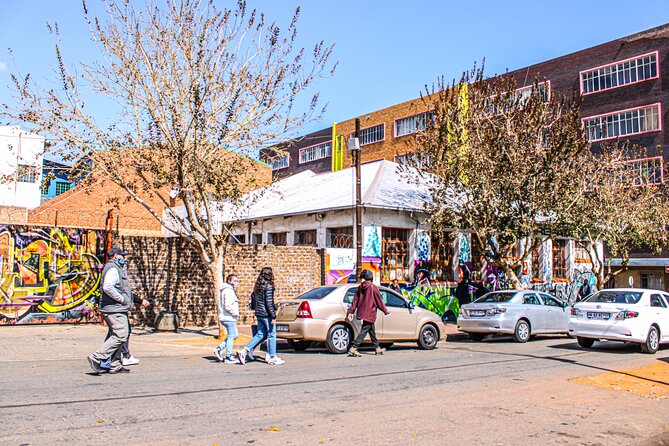
The route continues toward Newtown, giving you a chance to compare another part of central Johannesburg with Maboneng and Hillbrow.
Newtown is tied to the city’s arts, culture, and public life. The tour uses the movement between neighborhoods to discuss music, politics, art, and architecture. You are not simply ticking off four suburbs. You are comparing how different parts of the inner city function and how their identities have changed.
This is one reason the tour works well at the beginning of a Johannesburg visit. After three and a half hours, you have a mental map of several central districts. You may not know every street, but you will have a better sense of where Maboneng fits, how Hillbrow connects to the rest of downtown, and why Newtown matters.
The drawback is that the route covers a lot of ground. If you prefer a slow, highly detailed walk through one neighborhood, this may feel quick. Its strength is range, not a long stay at every location.
The Top of Africa Viewing Deck
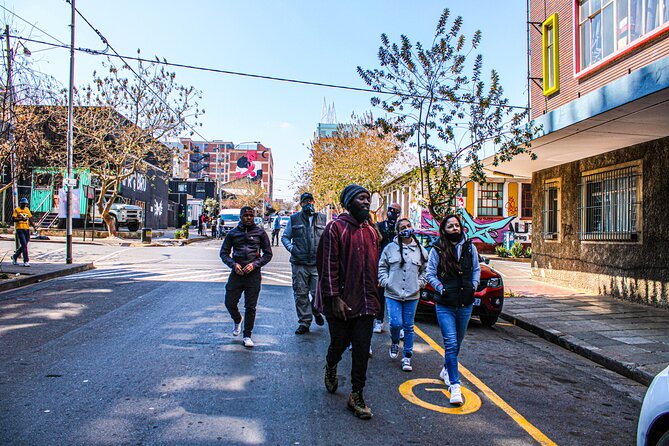
The tour highlights photo opportunities from the Top of Africa viewing deck. This gives you a high viewpoint over Johannesburg and offers a different perspective after the street-level walking.
The view matters because much of the tour concerns the inner city’s changing form. From above, you can better appreciate the concentration of buildings, the city’s scale, and the relationship between major landmarks. It also gives you a quiet moment after the more demanding historical sections.
Do not expect the viewing deck to replace a full city sightseeing program. Its value is that it comes as part of a broader day, paired with local stories and neighborhood walking. You get the view after gaining some understanding of what lies below.
What the Guides Add
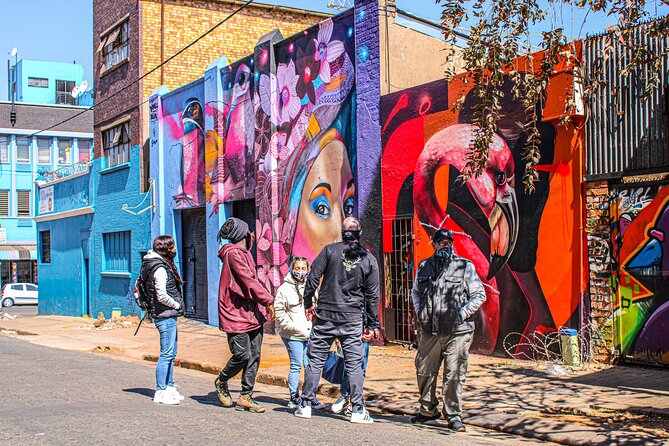
The strongest part of this experience is the human element. Sean is repeatedly praised for being engaging, professional, funny, and able to explain South African and Johannesburg history in a short time. Max is described as a strong guide for making the walk memorable and helping people understand the city.
Julian and Magugu have been praised for providing detailed explanations while helping people feel safe in an area with a difficult reputation. Franck is noted for patience and for answering questions about Johannesburg and South African history. Tye and his team are associated with the Maboneng and Jewel City portion of the route.
Guide quality can vary on any scheduled experience, but the pattern here is clear: you should expect a guide who does more than recite dates. The best moments come when you ask questions. Ask about a building, a street, local transport, music, or the changes you see around you. This tour has enough flexibility for conversation to improve the experience.
I would also tell you not to judge the tour by the pace of one guide alone. The route covers a large area and includes serious subjects. A lively guide can make the time pass quickly, but you still need to pay attention to instructions and stay close to the group.
Safety, Walking, and Group Size
The tour accepts a maximum of 20 people. That is small enough for a guide to speak with the group, although a full group will feel less personal than the occasional private or two-person outing.
The walking takes place in downtown Johannesburg, including areas with a reputation for safety concerns. The guide provides local direction, and several participants have appreciated feeling comfortable with guides who explained where they were going. Still, you should remain with the group and follow the guide’s advice.
The activity is described as suitable for most people, and service animals are allowed. It is near public transportation, and private transportation is included. The information does not give a precise walking distance or state the accessibility of every building, so ask the operator if stairs, uneven surfaces, or particular mobility needs are important to you.
Good weather is required. Wear comfortable shoes, carry the provided water, and dress for a half-day outdoors. The schedule is approximately three hours and 30 minutes, although one main section is listed as about two hours. Allow room for walking, transport, introductions, and stops.
Is $52.03 a Fair Price?
At $52.03 per person, the tour is not the cheapest way to walk around downtown, but the price includes more than a guide. Ponte entrance, private transportation, lunch, bottled water, and gratuities are included.
That package gives the tour good value if you want a structured introduction and do not want to arrange each part yourself. You are paying for access, local interpretation, transportation support, food, and the time needed to connect several districts.
The value is lower if you mainly want a short walk through Maboneng or a quick city view. In that case, the three-and-a-half-hour format may be more than you need. But for a first visit, I think the range of subjects and neighborhoods justifies the price.
The tour is also usually booked well ahead, with an average booking time of 59 days. That suggests you should reserve early if your schedule is fixed, especially if you want a particular date.
Who Should Book This Experience?
I would recommend it to first-time visitors who want a clear introduction to Johannesburg’s inner city. It suits people who like history, architecture, local culture, street art, and honest discussion of difficult subjects.
It is also a good fit if you want to explore downtown later on your own but would prefer initial guidance. The route gives you useful orientation without pretending that every neighborhood has the same character.
You may want a different activity if you dislike walking, feel uncomfortable discussing apartheid and urban decline, or want a polished sightseeing experience with minimal local context. The tour is curious and direct, not glossy.
Free cancellation is available up to 24 hours before the start time for a full refund. Changes or cancellations within 24 hours are not refunded, and poor weather may lead to a new date or a full refund.
Final Recommendation
Book this tour if you want Johannesburg explained from the street up. The combination of Ponte City, Hillbrow Tower, Windybrow, Maboneng, Jewel City, and Newtown gives you more than a landmark checklist. It shows how politics, housing, music, architecture, and business have shaped the city.
I especially recommend taking it near the start of your stay. You will leave with a better sense of downtown, a high view from the Top of Africa deck, and a clearer idea of which areas you want to explore further. Just bring comfortable shoes, an open mind, and enough time to listen.
FAQ
Where does the Johannesburg Downtown Walking Tour take place?
The experience focuses on Johannesburg’s downtown area and includes Maboneng, Hillbrow, Jewel City, and Newtown. The supplied location field lists Pretoria, so confirm the exact meeting or pickup details when booking.
How long does the tour last?
The tour lasts approximately three hours and 30 minutes. The Ponte City portion is listed as taking about two hours.
Is Ponte City included?
Yes. Entrance to Ponte City is included in the tour price, along with a drink on the building’s 51st floor.
Is lunch included?
Yes. Lunch is included in the listed tour package.
Are alcoholic drinks included?
No. Alcoholic beverages are not included.
How many people can join the tour?
The maximum group size is 20 people.
Can I cancel for a full refund?
Yes. You can cancel at least 24 hours before the scheduled start time for a full refund. Cancellations or changes made within 24 hours are not refunded, and poor weather may result in a different date or a full refund.
Just added in Pretoria
- Kruger National Park 2 Days 1 Night Magical Safari from Johannesburg Private★ 5.0 · 5 reviews
- All inclusive BIG 5 Kruger 2 Day Safari from Johannesburg★ 5.0 · 11 reviews
- BIG 5 Kruger 3 Days Safari from Johannesburg★ 4.5 · 7 reviews
- Johannesburg guided city tour★ 4.5 · 4 reviews
- Johannesburg,Soweto and Apartheid Museum full-day tour★ 5.0 · 7 reviews
- Shuttle Transfer from Gauteng to Greater Kruger★ 5.0 · 19 reviews
- Johannesburg and Apartheid museum tour★ 5.0 · 5 reviews
- Johannesburg & Pretoria Photo Tour★ 4.0 · 4 reviews
City Tours, compared.
Cape Town Hop-On Hop-Off City Tour with Optional Cruise
Read our review →
Jo’berg in 1 Day: Soweto, Apartheid Museum & City Tour
Read our review →
Cape Town City Pass: Save Over 50% on 80+ Top Attractions
Read our review →
Hop-On Hop-Off Bus, City Tour and Apartheid Museum
Read our review →

From Sun City: Pilanesberg National Park 3-Hour Game Drive
Read our review →
Browse the lists this tour appears in