
REVIEW · LION PARK TOURS
Rhino and Lion Park Guided Tour from Johannesburg
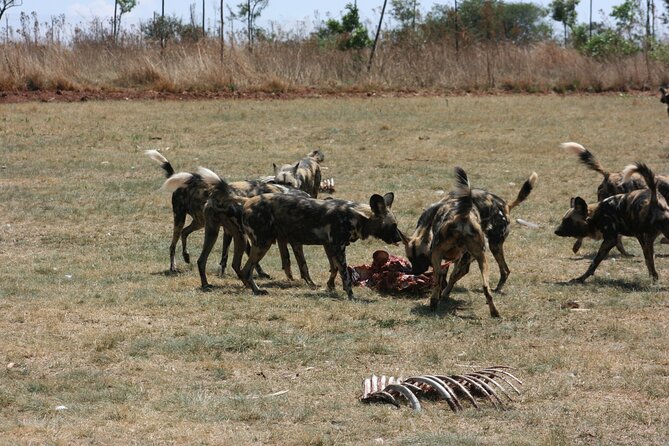
Wild animals make a short morning count. This guided visit to the 1,200-hectare Rhino and Lion Nature Reserve gives you a quick, convenient taste of South African wildlife within the Cradle of Humankind World Heritage Site. I like the included hotel pickup and drop-off, and I like the small group limit of 12 people, which should make it easier to hear your guide and get a clear view from the vehicle. The main drawback is the short three-hour schedule, so you should not expect the same wide-ranging safari experience as a full-day reserve visit.
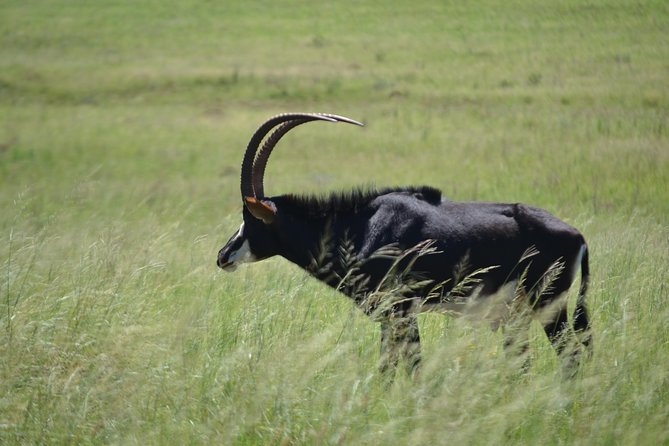
I also like the mix of open-park animals and managed breeding areas. You may see rhino, lion, buffalo, cheetah, wild dog, hippo, and crocodile, then finish with Bengal and Siberian tigers, jaguars, and white lions. Keep in mind that wildlife sightings are never guaranteed, and the cub interaction costs extra.
In This Review
- Key points to know before booking
- A compact safari inside the Cradle of Humankind
- The 8:30 a.m. pickup keeps the day open
- Driving through the 1,200-hectare reserve
- Predator camps and close views of big cats
- The breeding centre and nursery walk
- What the guide adds to a short tour
- Is $86.55 good value?
- Who will enjoy this most?
- Practical tips for a smoother morning
- Should you book the Rhino and Lion Park tour?
- FAQ
- How long does the Rhino and Lion Park tour last?
- What time does the tour start?
- Is hotel pickup included?
- What is included in the price?
- Are food and drinks included?
- How many people can join the tour?
- Can I cancel for a full refund?
Key points to know before booking
- The tour begins at 8:30 a.m. and lasts about three hours, making it a useful morning activity from Pretoria or the Johannesburg area.
- A closed, air-conditioned Ulysses vehicle carries you through the reserve and predator camps.
- More than 700 animals live across the 1,200-hectare park, including white rhino, lions, buffalo, cheetahs, wild dogs, hippos, and crocodiles.
- The breeding centre adds unusual big cats, including Bengal and Siberian tigers, jaguars, and white lions.
- Hotel pickup and drop-off are included, along with a driver-guide and admission.
- The group is capped at 12 people, and previous feedback especially praised the guide George for his friendly manner and useful information.
A compact safari inside the Cradle of Humankind
This tour works because it combines three things that can be awkward to arrange separately: transport, wildlife viewing, and a guide who explains what you are seeing. For $86.55 per person, you are paying for roughly three hours, park admission, a driver-guide, and hotel transfers.
I see this as a convenient introductory safari, not a substitute for a multi-day wildlife trip. The reserve is large enough to offer a varied animal collection, but the schedule is tight. You will spend part of your time driving through the park, part viewing predator areas, and part walking through the breeding centre and nursery area.
The setting also gives the outing extra interest. The Cradle of Humankind is a World Heritage Site, so your visit is not only about taking animal photographs. You also get a chance to connect wildlife conservation with a place recognized for its importance to human origins.
The experience is particularly useful if you are staying in Pretoria or near Johannesburg and want a simple morning plan. You do not need to organize a rental car, work out park access, or guess where the animals are kept. The driver-guide handles the route and provides information along the way.
More lion park visits:
- Pretoria: Pretoria City and Lion Park Tour
★ 4.8 · 41 reviews - Rhino & Lion Park from Johannesburg
★ 4.5 · 7 reviews - Rhino and Lion Park Guided Tour from Pretoria, THURSDAYS & SUNDAYS
★ 4.5 · 4 reviews
The 8:30 a.m. pickup keeps the day open
The stated start time is 8:30 a.m. Hotel pickup and drop-off are included, which is a real advantage in an area where arranging transport can add time, cost, and uncertainty.
Because the outing lasts about three hours, you should still have most of the day available afterward. That makes it easier to pair with another Pretoria or Johannesburg activity, although the tour operator should confirm the exact pickup area for your hotel when you book.
The price includes transport, a guide, and admission, but food and drinks are not included. Eat before pickup or bring what you need, since no meal is part of the stated arrangement. This is a small but important point for families, especially with an early start.
The maximum group size is 12. That is not a private tour, but it is far more manageable than a large bus outing. A smaller group can make it easier to ask questions, hear animal explanations, and get a better position when the vehicle pauses.
Driving through the 1,200-hectare reserve
The main portion of the tour takes place in a closed, air-conditioned Ulysses vehicle. You drive through the park and predator camps while your guide points out animals and explains the role of conservation.
The closed vehicle is a practical choice. It offers protection from the elements and should be comfortable during a warm or dusty day. It also gives families a more contained setting, particularly when viewing large predators.
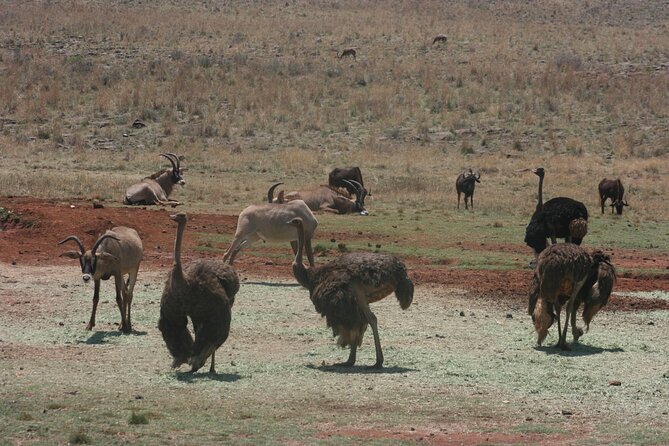
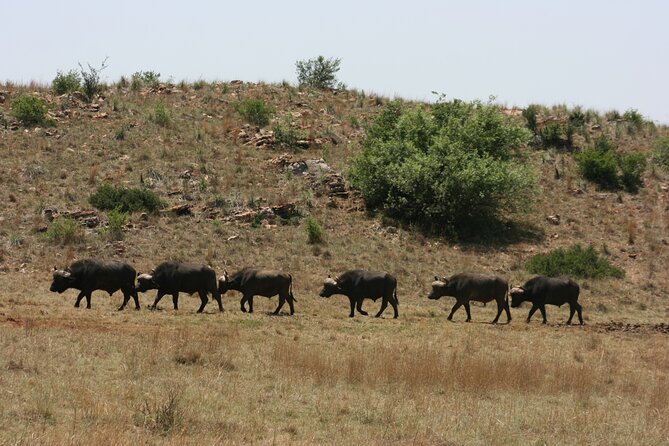
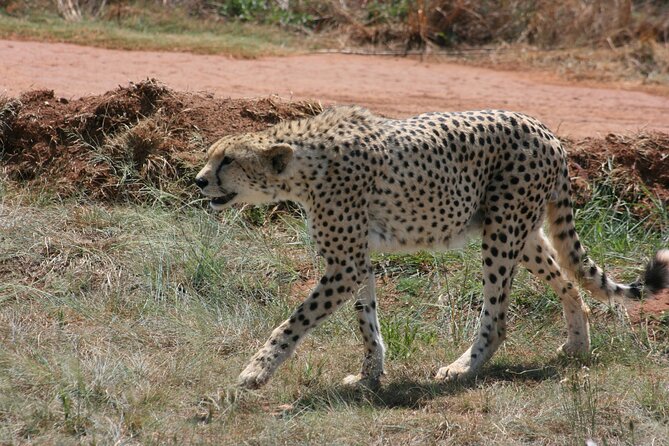
The park covers 1,200 hectares and holds more than 700 animals. That does not mean you will see every species during a three-hour visit, but the list is broad enough to give the outing variety. The reserve includes white rhino, lions, buffalo, cheetahs, wild dogs, hippos, and crocodiles.
You may also encounter springbok, zebra, wildebeest, and white lions. These species were specifically seen during one morning outing, along with wild dogs and several other animals. That gives you a useful sense of the range, but it is best to treat any sighting as a possibility rather than a promise.
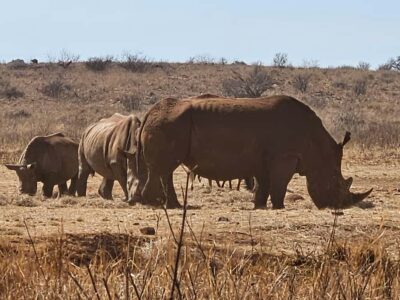
Wildlife viewing has its honest uncertainties. One morning, a rhino appeared only near the end of the drive, after the group had started to think it might miss out. That is a good reminder to keep watching until you are back at the exit. The final sighting can be the one you remember most.
Predator camps and close views of big cats
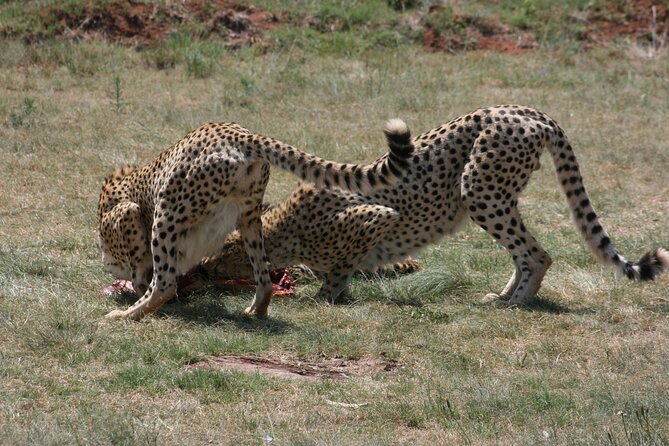
The predator areas are likely to be the most exciting part for many families. The reserve is home to lions and cheetahs, while the breeding centre houses Bengal and Siberian tigers, jaguars, and white lions.
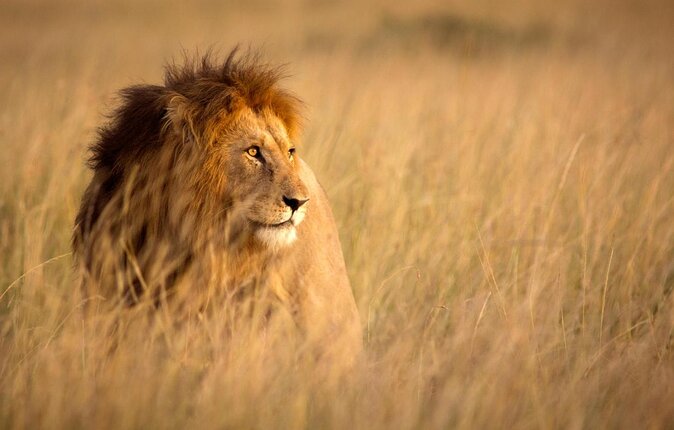
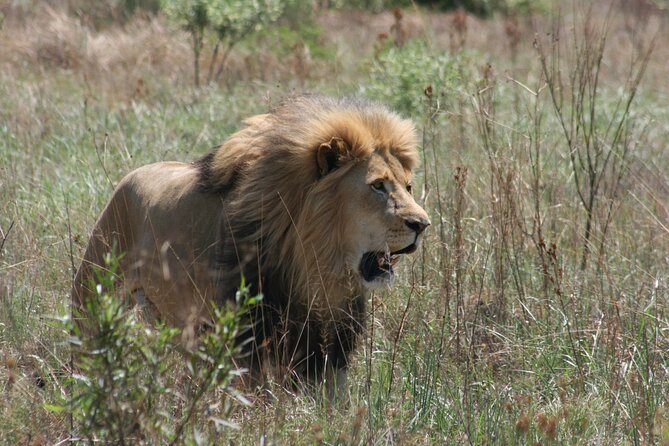
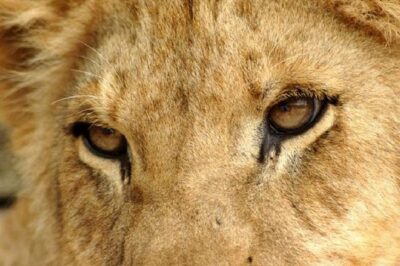
One especially praised part of the experience is the chance to see lions at close range. The vehicle allows you to photograph them without needing to approach on foot, and a guide can help explain what you are seeing. If you have never been near a lion, even a short viewing can make the morning feel worthwhile.
The phrase close range needs a little common sense. You are still in a vehicle, and the animals remain wild or carefully managed animals. Do not expect an uncontrolled encounter, and do not assume that every predator will come close on every visit.
The breeding centre also changes the tone of the tour. The open park gives you a sense of animals living across a larger area, while the centre lets you see species that may be difficult to find during a normal drive. Bengal and Siberian tigers, jaguars, and white lions are unusual sights in one short outing.
For photography, this is probably the most productive part of the experience. The vehicle and breeding areas offer structured viewing, and the concentration of big cats means you have several strong subjects to look for. Still, bring realistic expectations. Animal positions, light, and visibility will vary.
A few more in Pretoria
- Hartbeespoort: 2-Hour Dam Cruise with South African Food
★ 4.4 · 621 reviews - Hartbeespoort: Predator Safari with a Guide
★ 4.8 · 267 reviews - Soweto Half Day Tour
★ 5.0 · 231 reviews - Johannesburg and Soweto tour
★ 5.0 · 231 reviews
The breeding centre and nursery walk
The driving portion ends with a walk through the breeding centre and nursery area. This gives you a chance to leave the vehicle, stretch your legs, and see the park’s managed breeding work at closer range.
The centre houses big cats and other animals, including Bengal and Siberian tigers, jaguars, and white lions. The nursery area is aimed at younger animals, and cub interaction may be available for a small additional fee.
That optional cub activity deserves careful thought. It may appeal to families and visitors hoping for close photographs, but it is not part of the included price. Ask about the current cost and arrangements before agreeing to it.
The walk also helps explain that this is not only a drive through open habitat. The park combines wildlife viewing with breeding and conservation work. If you want a purely wild safari, the managed centre may feel less authentic. If your priority is seeing a wide range of animals in a limited time, it adds real value.
What the guide adds to a short tour
A three-hour wildlife visit depends heavily on the guide. You need someone who can keep the drive moving, point out animals, explain conservation, and make the short schedule feel full without rushing you.
George received especially warm praise for being friendly and informative. His approach is a useful example of what you should hope for from this type of outing: clear explanations, a pleasant manner, and enough local knowledge to make the animals more than a series of quick photographs.
The tour also introduces the Big 5 and discusses conservation efforts. The Big 5 term refers to lion, leopard, elephant, rhino, and buffalo, although the supplied details do not confirm that every one of those animals is present or seen during this visit. The practical value is that you get some context about animal protection rather than simply ticking species off a list.
I like this educational element because it gives meaning to the drive. You learn why breeding centres exist, how wildlife parks manage animals, and why conservation is part of the experience. The short time means the information will be introductory, but it should still help you understand the reserve better.
Is $86.55 good value?
At $86.55 per person, this is not the cheapest way to spend a morning, but the price covers several expenses that can add up quickly. You receive hotel pickup and drop-off, admission, a driver-guide, and a three-hour park visit.
The value is strongest if you do not have a car or prefer not to arrange a self-drive visit. It is also strong for families, since transport and park entry are handled together and the vehicle is enclosed and air-conditioned.
A private tour would usually offer more flexibility, but this experience is limited to 12 people rather than being sold as a large coach excursion. That smaller group helps balance the cost.
The value is weaker if you want a long safari with extended time waiting for animals. Three hours gives you a sample of the reserve and its animals, but it cannot provide the slow pace or broad coverage of a full-day wildlife trip.
I would judge the price fairly: good value for convenience and variety, less compelling if your only goal is maximum time in the wild. The included transfers are especially helpful for a short holiday when you want to avoid losing half a day to transport planning.
Who will enjoy this most?
This tour suits families, first-time wildlife watchers, and anyone with only one morning available. The enclosed vehicle, short duration, and variety of animals make it approachable for children and for visitors who do not want a long, demanding safari.
It is also a good choice if you are staying in Pretoria and want an organized outing without renting a car. The World Heritage Site setting adds another reason to choose it over a simple city activity.
Photographers will appreciate the chance to see lions, white lions, tigers, jaguars, and other animals in a concentrated setting. The close lion sighting described by one participant shows why this can produce memorable images, even on a short schedule.
You may want something else if you are an experienced safari visitor seeking remote wilderness, long drives, or a strong chance of seeing a particular species. The reserve offers a broad animal list, but no responsible operator can guarantee exact sightings.
Practical tips for a smoother morning
Arrive ready for an early start. Since pickup begins at 8:30 a.m., have breakfast before you leave or bring food and water, as meals and drinks are not included.
Keep your camera ready during the entire drive. The rhino sighting that appeared near the end shows why you should not put your camera away once you think the main action is over.
Expect both vehicle time and walking time. The drive takes you through the park and predator camps, then the breeding centre and nursery area require a walk. Comfortable shoes are sensible, even though the supplied details do not specify the walking distance.
If you want to interact with cubs, budget extra for that option. It is not included in the $86.55 price, and the additional fee is described only as small, not as a fixed amount.
The tour accepts most people, and confirmation is provided when you book. If you have a specific mobility concern, contact the operator before paying, since the information provided does not explain the vehicle or breeding-centre access in detail.
Free cancellation is available if you cancel at least 24 hours before the local start time. A cancellation or change made less than 24 hours before departure is not refundable, so watch the deadline carefully.
Should you book the Rhino and Lion Park tour?
I would book this tour if you want an easy, family-friendly introduction to South African wildlife, especially when hotel transport matters. The best reasons are the manageable three-hour format, the enclosed air-conditioned vehicle, the variety of animals, and the chance to see big cats in both the reserve and breeding centre.
I would skip it if you want a full-day safari or a purely wild setting. The park includes managed breeding areas, the schedule is short, and sightings remain unpredictable.
For many visitors based in Pretoria or Johannesburg, though, the balance is sensible. You get a guided wildlife outing, conservation context, and a chance to see animals such as lions, rhino, wild dogs, and tigers without spending an entire day on the road.
FAQ
How long does the Rhino and Lion Park tour last?
The tour lasts approximately three hours.
What time does the tour start?
The stated start time is 8:30 a.m.
Is hotel pickup included?
Yes. Hotel pickup and drop-off are included in the tour.
What is included in the price?
The price includes a driver-guide, hotel pickup and drop-off, and admission to the park.
Are food and drinks included?
No. Food and drinks are not included.
How many people can join the tour?
The tour has a maximum group size of 12 people.
Can I cancel for a full refund?
Yes, if you cancel at least 24 hours before the experience start time. Cancellations made less than 24 hours before the start are not refunded.
Just added in Pretoria
- Roar through the bush Quadbike Safari Adventure near Johannesburg★ 5.0 · 3 reviews
- Rhino & Lion Park from Johannesburg★ 4.5 · 7 reviews
- Rhino and Lion Park Guided Tour from Pretoria, THURSDAYS & SUNDAYS★ 4.5 · 4 reviews
- Pretoria Sightseeing Day Trip from Johannesburg★ 4.0 · 25 reviews
- Pretoria city half day tour★ 4.5 · 17 reviews
- Cycling in a Forest close to Johannesburg and Pretoria★ 5.0 · 5 reviews
- Pretoria Tour – Voortrekker Monument, Union Buildings, Pretoria★ 5.0 · 22 reviews
- Cullinan diamond Mine Day Tour (surface tour)★ 5.0 · 12 reviews
Lion Park Tours, compared.
Half Day Lion Park tour from Johannesburg or Pretoria
Read our review →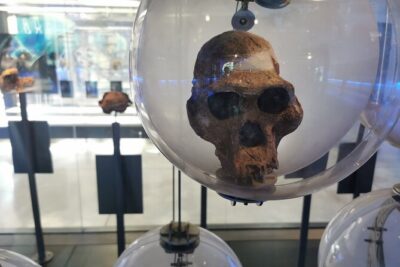
Cradle of Humankind, Caves or Maropeng, Rhino and Lion Park
Read our review →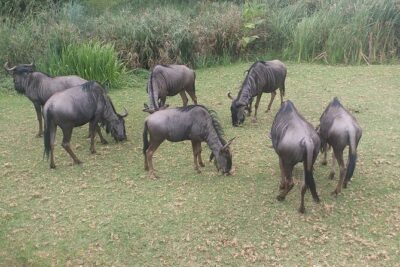
Captivating Safari Lion Park Experience (Half Day Guided Tour)
Read our review →
Private Rhino and Lion Park, Cradle Caves or Maropeng Museum
Read our review →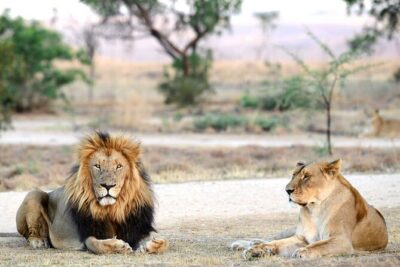
Private 5-Hour Lion Park Tour from Johannesburg or Pretoria
Read our review →
Full Day -Tala Game Reserve, Natal Lion Park, Phezulu From Durban
Read our review →
Half Day Tala Game Reserve & Natal Lion Park from Durban
Read our review →Browse the lists this tour appears in