
REVIEW · CHEETAH ENCOUNTERS
Ann Van Dyk Cheetah Centre Tour from Johannesburg or Pretoria
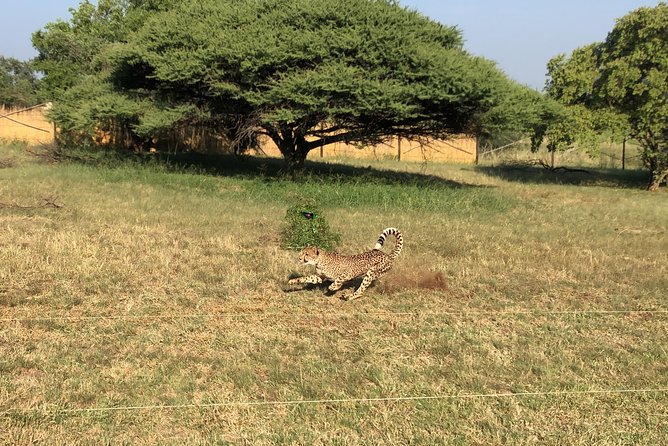
Cheetahs at full speed are unforgettable. The Ann Van Dyk Cheetah Centre offers a close look at cheetahs, African wild dogs, vultures, caracals, brown hyenas, servals, antelope, meerkats, ostriches, and other rescued animals in the Magaliesberg region. I like the easy hotel pickup and the serious conservation work, including breeding and rewilding programmes that reach well beyond a simple animal encounter. I also like that the guide explains animal biology, behavior, and survival in the wild rather than just pointing out cages.
The main drawback is the travel time. Although the experience itself is described as about three hours, the drive from Johannesburg can take roughly two hours each way, especially with traffic. The $225.67 price per person is not a bargain, but it includes transport, admission, activities, taxes, and bottled water, which makes it more reasonable if you do not have a car.
In This Review
- Key points to know before booking
- What the Ann Van Dyk Centre is really about
- The drive from Johannesburg or Pretoria
- Choosing a weekend cheetah run or weekday visit
- The guided tour and its animal encounters
- Why the wild dogs may be the surprise highlight
- How the experience feels in a group
- Is $225.67 a fair price?
- Photography, comfort, and practical preparation
- Who should book this tour?
- Cancellation and booking details
- Final verdict: book it for conservation, not a quick photo stop
- FAQ
- How long is the Ann Van Dyk Cheetah Centre tour?
- Does the tour include hotel pickup and drop-off?
- Is lunch included?
- What happens during a weekend visit?
- What happens during a weekday visit?
- What animals can you see at the centre?
- Is there a minimum age?
- Is there a minimum height?
- What is the cancellation policy?
Key points to know before booking
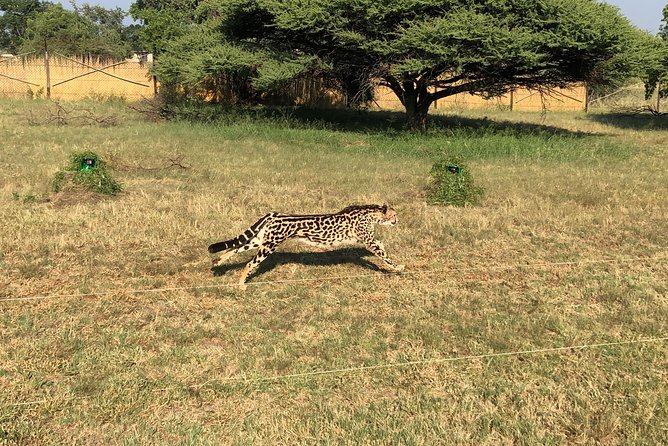
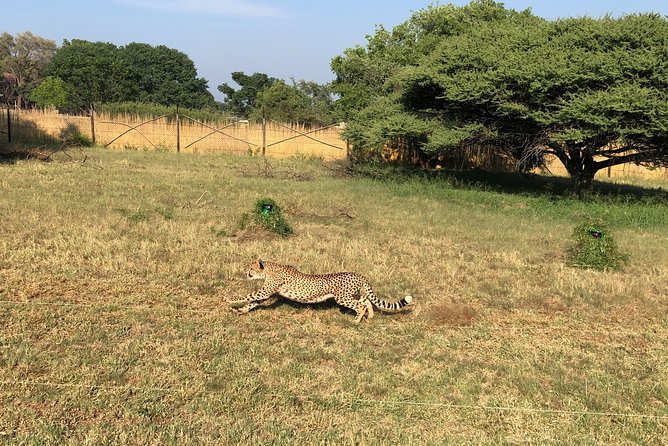
- Weekend cheetah runs: Weekend visits may include the dramatic sight of a cheetah running at speed.
- Weekday animal interaction: Weekday programmes include a cheetah interaction inside a spacious enclosure instead of the run.
- Conservation beyond cheetahs: The centre also supports African wild dogs, vultures, caracals, brown hyenas, servals, and other rescued animals.
- Pickup from two cities: Hotel or port pickup and return transportation are offered in Johannesburg and Pretoria.
- Small maximum group: The tour accepts no more than 15 people, though the exact group size can vary.
- Age and height rules: Children must be at least 7 years old and at least 1.2 metres tall, and they must be with an adult.
What the Ann Van Dyk Centre is really about
The centre began in 1971 with a cheetah breeding programme. That original purpose still shapes the visit, but the work now covers several species and several kinds of conservation.
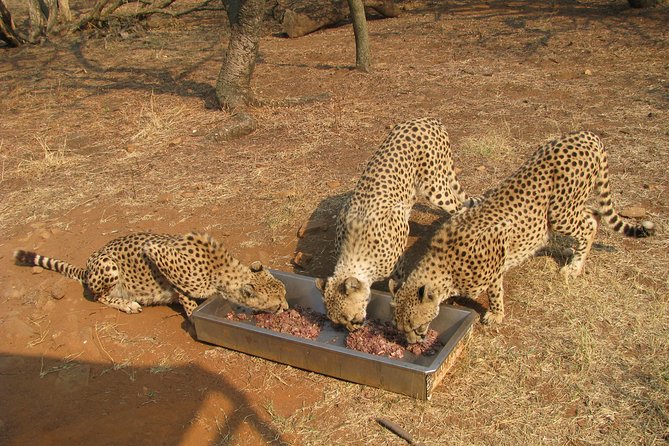
Cheetahs are the obvious stars. You can learn how their bodies, hunting style, and behavior help them survive, as well as why their future remains uncertain. The centre’s breeding work is linked with efforts to return cheetahs to the wild, and one programme has reintroduced more than 800 cheetahs, according to the information provided for the tour.
That figure gives the visit useful context. You are not simply seeing a fast, beautiful cat behind a fence. You are seeing part of a long-running attempt to protect genetic diversity and rebuild wild populations.
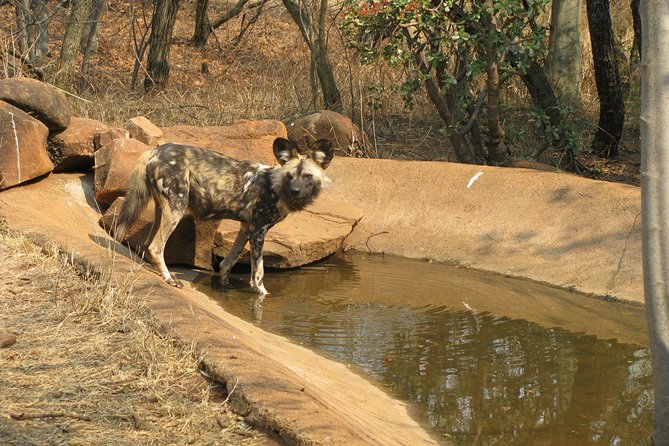
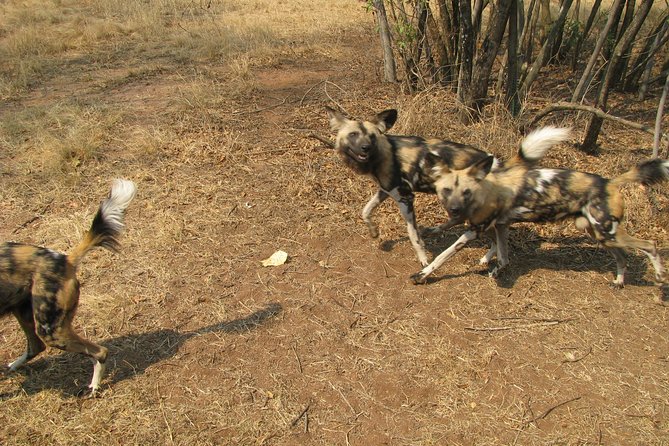
The African wild dogs add another strong reason to come. These painted dogs are among the most striking animals at the centre, and the programme supports larger rewilding projects. During feeding activities, the dogs may follow the safari vehicle and appear to chase it. That gives you a vivid sense of their speed and pack energy, though you should remember that this is a managed animal encounter, not a wild safari sighting.
The centre also houses animals that cannot safely return to the bush. These include injured or poorly treated animals that need permanent care. That explains why the experience can sometimes feel partly like a wildlife sanctuary and partly like a zoo. If you expect every animal to be roaming freely, you may find the setting less natural than a national park.
Still, the centre’s purpose matters. Releasing an animal that cannot hunt, avoid danger, or adapt to the wild would not be a humane choice. The rescued animals provide an educational role while receiving a safe home.
More cheetah encounters:
- Ann van Dyk Cheetah Centre
★ 4.5 · 15 reviews - Ann Van Dyk Cheetah Centre Tour from Johannesburg or Pretoria
★ 5.0 · 8 reviews - From Johannesburg: Cheetah Tour
★ 5.0 · 4 reviews
The drive from Johannesburg or Pretoria
The tour includes round-trip transport, so you can leave the rental-car question behind. That is a real benefit in Gauteng, where unfamiliar roads and traffic can make a day trip tiring.
The pickup area covers hotels and ports in both Johannesburg and Pretoria. The drive offers a change from the city, with the Magaliesberg Mountains adding a scenic backdrop as you approach the centre. Bottled water is included, a small detail that becomes useful during a warm day outside.
You should plan carefully around the timing. The advertised visit is about three hours, but the journey from Johannesburg has been described as approximately two hours each way. Traffic can affect the total day, especially on Johannesburg freeways. One guide, Francois, received praise for using back roads to reduce delays, but no route can remove all traffic risk.
Pretoria is the more practical base if the centre is a priority. It is closer to the attraction, and it also puts you nearer other sights in the region, including an elephant sanctuary and Pilanesberg Game Reserve. From Johannesburg, the tour can still make sense if you want door-to-door transport and do not plan to rent a car, but do not treat it as a quick city outing.
The drive is best viewed as part of a full day rather than a short half-day errand. Bring a camera, keep your schedule flexible, and avoid booking an important evening activity too soon after your expected return.
Choosing a weekend cheetah run or weekday visit
The timing of your visit changes the central feature of the programme.
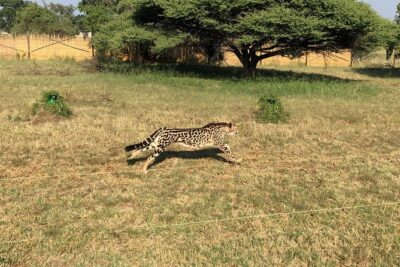
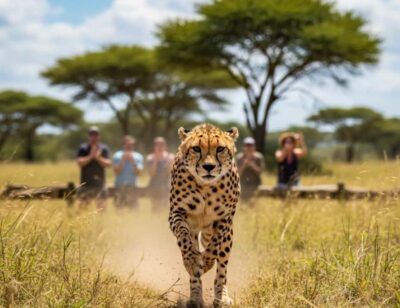
On weekends, you may watch a cheetah run. This is the choice for anyone who wants to see the animal’s famous speed in action. A cheetah standing quietly is already impressive, but a run gives you a better sense of how different this predator is from other big cats. The moment is likely to be brief, so pay attention rather than spending the entire time adjusting your camera.
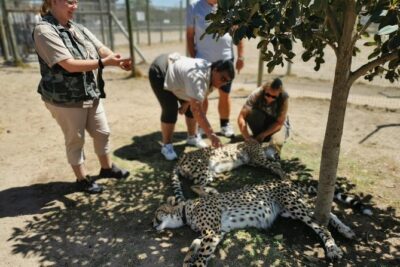
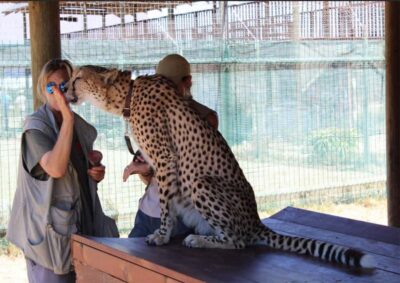
On weekdays, the programme includes a cheetah interaction in a spacious enclosure. This offers a closer look at the animal and may give you more time to observe behavior and hear explanations from the staff. It is not the same as a run, but it can be a better fit if you prefer a calmer educational encounter.
The information provided does not specify the exact days or times for every programme. Check the available departure option before booking, especially if the cheetah run is the reason you are going.
The centre is also known for king cheetahs, whose unusual coat pattern makes them especially appealing to photographers. These animals are not a separate species, but the distinctive markings make them easy to remember during the visit.
The guided tour and its animal encounters
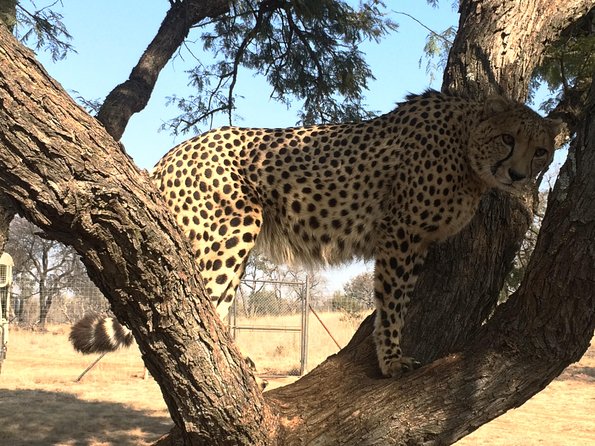
The guided centre visit covers cheetah and wild dog breeding programmes, along with other conservation efforts. The guide discusses biology, behavior, and conservation status, so the experience has more substance than a quick photo stop.
The quality of the guide can shape the whole outing. Guides named in the feedback include Francois, Nicole, and Wilson. Nicole was praised for explaining animal facts in a warm, memorable way, while Wilson was noted for the calm authority he showed during feeding. Another guide was described as charismatic and highly informative.
You may see a broad range of animals during the centre programme:
- Cheetahs, including king cheetahs
- African wild dogs
- Brown hyenas
- Caracals
- Servals
- African wild cats
- Vultures and other large bird species
- Antelope and wildebeest
- Meerkats
- Ostriches
The exact animals and viewing order can change. Some were added to the centre over time, and not every species will hold your attention in the same way. The cheetahs and painted dogs are the main draw, while the other residents help show how conservation centres care for animals with different needs.
The bird programme adds variety. Vultures are not as immediately popular as cheetahs, but they play an important role in African ecosystems and are useful subjects for a guide’s conservation talk. Caracals and servals also give you a chance to learn about smaller predators that are often overlooked beside the big cats.
A few more in Johannesburg
- From Johannesburg: Pilanesberg Nature Reserve Game Safari
★ 4.8 · 1,327 reviews - Johannesburg: Hop-On Hop-Off Bus with Optional Soweto Tour
★ 4.6 · 985 reviews - Soweto /Johannesburg and Apartheid Museum Guided Full Day Tour
★ 5.0 · 932 reviews - Johannesburg Hop-On Hop-Off City Tour with Soweto Option
★ 4.5 · 768 reviews
Why the wild dogs may be the surprise highlight
Many people book this tour for cheetahs and leave remembering the African wild dogs. Their coloring, social behavior, and group movement make them fascinating to watch.
The centre’s wild dog work connects with larger rewilding projects. That gives the encounter a practical purpose, not just an entertainment angle. If feeding takes place from a safari vehicle, the dogs may run after the vehicle as they follow the food. You get a sense of their athletic ability and coordinated hunting style, although the situation remains controlled.
I would make time for the wild dog explanation rather than treating it as an extra. The cheetah is the famous animal here, but the painted dogs may offer the more unusual sight, especially if you have never seen them before.
How the experience feels in a group
The maximum group size is 15 people. That is small enough for a guided wildlife visit to feel manageable, though it does not guarantee a private tour.
Some departures may be much smaller. One booking involved only a couple, two naturalists, a jeep driver, and the pickup representative. That kind of arrangement can feel almost private and allows more room for questions and photography.
On the other hand, a solo visitor may prefer a small group with other people rather than a nearly private outing. If you are traveling alone, ask about the expected group size if that matters to you. The group discount option may also help families or friends booking together, but the exact saving is not provided.
Children must be accompanied by an adult. The minimum age is 7, and the minimum height is 1.2 metres. These limits matter because some parts of the programme involve close animal viewing and vehicle-based activities.
Is $225.67 a fair price?
At $225.67 per person, this is a premium day trip. You are paying for more than admission to the centre. The price includes hotel or port pickup and drop-off, all entrance fees, activities, taxes, and bottled water.
That package has real value if you are staying in Johannesburg or Pretoria without a car. Hiring a vehicle, navigating unfamiliar roads, paying fuel costs, and arranging admission separately could make a self-guided visit less convenient. The guide also adds interpretation that you would miss by arriving alone.
The value is weaker if you only want a short look at cheetahs or if you already have transport. The long drive from Johannesburg means a large part of your day is spent in the vehicle, and lunch is not included. Food and other drinks are also at your own cost.
The tour is connected with Mmilo Tours, and donations or sponsorship are not included in the price. You can support the centre separately if its work matters to you, but do not assume that a donation is built into the booking.
I see the cost as easier to justify for wildlife enthusiasts, first-time visitors to South Africa, and people who value guided conservation work. It is harder to justify for someone seeking a low-cost animal attraction.
Photography, comfort, and practical preparation
You should bring a camera with enough memory and battery power. The animals provide strong photo opportunities, especially the cheetahs, king cheetahs, wild dogs, and birds.
The best photographs may not come from the fastest action. A quiet cheetah encounter can give you time to watch posture, facial markings, and movement. During a run, the action may be over before you are ready, so enjoy the sight first and photograph second.
Wear comfortable clothing for an outdoor animal visit. The supplied information does not specify detailed dress rules, meal arrangements, or weather procedures, so check the day’s conditions before leaving. Bottled water is supplied, but lunch is not.
The natural setting beneath the Magaliesberg Mountains adds a pleasant sense of place. It is not the same as a national park, and you should not expect a free-roaming safari. The centre offers managed access, education, breeding work, and permanent care for rescued animals.
Who should book this tour?
I would recommend it most strongly to people who love cats, conservation, and unusual African wildlife. It is also a good choice for a first day in South Africa, when a pickup service and an organized route can make things simpler.
Families can consider it if children meet both the age and height requirements. Older children who are interested in animals may get a lot from the guide’s explanations, though the long drive could test their patience.
The tour is less suitable if you want a traditional game drive with wild animals moving freely across a large reserve. It is also not ideal if you have only a few hours available from Johannesburg, since the transport time may take up much of the day.
The centre’s work is the strongest reason to go. You can see animals that support breeding and rewilding programmes, as well as rescued animals that cannot return to nature. That purpose gives the visit more weight than a standard photo attraction.
Cancellation and booking details
You can cancel for a full refund if you do so at least 24 hours before the start time. Cancellations made less than 24 hours before departure are not refunded, and changes inside that period are not accepted.
Confirmation is normally issued at booking. If you book within two days of travel, confirmation may take up to 48 hours and depends on availability. Since the tour is often booked well ahead, planning early is sensible, particularly if you want a weekend cheetah run.
Final verdict: book it for conservation, not a quick photo stop
I would book this tour if you want a guided introduction to cheetahs and African wild dogs, and if hotel transport is worth paying for. The best parts are the strong animal interpretation, the chance to see a cheetah run on a weekend, and the centre’s long-term breeding and rewilding work.
I would skip it if your main goal is a traditional safari or if the $225.67 cost feels too high for a day involving a long drive. Before booking, confirm the weekday or weekend programme, check the pickup time, and allow plenty of room in your schedule for traffic.
For the right visitor, this is a thoughtful wildlife outing with more purpose than spectacle. The cheetahs may bring you there, but the wild dogs, rescued animals, and conservation story can make the trip worthwhile.
FAQ
How long is the Ann Van Dyk Cheetah Centre tour?
The centre experience is listed as approximately three hours. The total day can be longer because transport from Johannesburg or Pretoria is included, and the drive from Johannesburg may take about two hours each way.
Does the tour include hotel pickup and drop-off?
Yes. Hotel or port pickup and return transportation are included in Johannesburg and Pretoria.
Is lunch included?
No. Lunch, food, and drinks other than the supplied bottled water are not included.
What happens during a weekend visit?
Weekend visits may include a cheetah run. Check the selected departure details to confirm that the run is offered on your chosen date.
What happens during a weekday visit?
Weekday visits include a cheetah interaction inside the animals’ spacious enclosure.
What animals can you see at the centre?
The centre may include cheetahs, king cheetahs, African wild dogs, brown hyenas, caracals, servals, African wild cats, vultures, other large birds, antelope, wildebeest, meerkats, and ostriches.
Is there a minimum age?
Yes. Children must be at least 7 years old and must be accompanied by an adult.
Is there a minimum height?
Yes. The minimum height is 1.2 metres.
What is the cancellation policy?
You can cancel at least 24 hours before the experience for a full refund. Cancellations or changes made less than 24 hours before the start time are not accepted for a refund.
Just added in Johannesburg
- Pretoria Capital City Tour Experience★ 5.0 · 24 reviews
- 4 Day Kruger National Park Tour★ 5.0 · 30 reviews
- Johannesburg e-scooter experience★ 5.0 · 38 reviews
- Johannesburg Street Art & Museum Walking or E-scooter Tour★ 4.5 · 10 reviews
- Big 5 Safari Experience at Pilanesberg National Park★ 5.0 · 16 reviews
- Drakensberg Mountains. Tugela Gorge and Amphitheater Hike★ 5.0 · 7 reviews
- Apartheid Museum Tour from Johannesburg★ 4.5 · 14 reviews
- Arrival Private Transfer: Tambo Airport JNB to Johannesburg in Business Car★ 4.0 · 5 reviews
Cheetah Encounters, compared.
Cheetah Outreach Tour Somerset West, Gordon’s Bay and Strand Beaches
Read our review →
Ann Van Dyk Cheetah Centre Tour from Johannesburg or Pretoria
Read our review →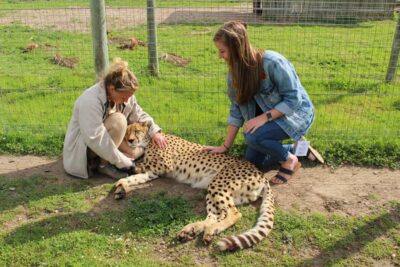
Cape Town Giraffe House, Cheetah Encounter and Wine Tasting Tour
Read our review →
Browse the lists this tour appears in