

REVIEW · SOWETO TOURS
Half-Day Walking Tour in Soweto
Soweto tells its story in public.
This five-hour walking tour connects major landmarks with everyday community life, led by a guide who lives in Soweto. I like the direct contact with local people, and I like that the route moves beyond famous names to places such as Orlando East and a youth project in Kliptown. The possible drawback is the full itinerary: eight stops in about five hours can feel brisk, especially if you want long museum visits.
I also like the low price, $32 per person, which includes snacks and covers a broad section of Soweto. You should know that admission to Mandela House is not included, and there is no WiFi on board. The tour begins and ends at the Soweto Hotel & Conference Centre in Kliptown, so plan your transport carefully.
In This Review
- Key points to know before you book
- Why a walking tour is a good way to see Soweto
- Walter Sisulu Square and the Freedom Charter
- Orlando Towers, murals, and a jolt of color
- Orlando East and the original matchbox homes
- Hector Pieterson Memorial and the 1976 uprising
- Vilakazi Street, Mandela, Tutu, and local color
- Soweto Brewing Company and a local taste
- The Shalk community project in Kliptown
- Mandela House and the final historical chapter
- Is $32 a fair price?
- Who should book this Soweto walk?
- Practical details before you go
- Should you book it?
- FAQ
- How long does the Soweto walking tour last?
- Where does the tour begin?
- Where does the tour end?
- What is included in the tour price?
- Is admission to Mandela House included?
- How many people can join the tour?
- Is the tour suitable for most people?
- Can I cancel the tour for a full refund?
Key points to know before you book
- A local guide leads the way: Your guide lives in Soweto, giving the walk a personal connection to the area.
- Eight stops cover major ground: You visit Walter Sisulu Square, Orlando Towers, Orlando East, the Hector Pieterson Memorial, Vilakazi Street, Soweto Brewing Company, a Kliptown community project, and Mandela House.
- History and daily life share the route: The tour links the Freedom Charter and the 1976 uprising with markets, soccer culture, local food, art, and youth programs.
- Mandela House costs extra: Entry to the house is not included, while the other listed stops have no admission charge.
- The group may be large: The maximum is 60 people, so the feel may range from an intimate walk to a sizable group outing.
- The booking is flexible until 24 hours before: You can cancel for a full refund up to one day before the start time, subject to the weather policy.
Why a walking tour is a good way to see Soweto

Soweto is not a single monument. It is a large urban area made up of communities with different stories, landmarks, and rhythms. A walking tour helps you connect those pieces instead of seeing only one famous address from a vehicle window.
The route gives you history first, then adds the human scale. You hear about political change at Walter Sisulu Square, see the striking Orlando Towers, walk through Orlando East, and reach the memorial that recalls the 1976 student uprising. Later, Vilakazi Street, a brewery, and a community project show how Soweto is also a place of food, business, music, sport, and local initiative.
I find that mix more useful than a sightseeing route made only of monuments. You get the major names, but you also see how they fit into ordinary life.
The tour is described as suitable for all ages and designed around different needs. Still, this is a five-hour walking experience, so you should be comfortable spending much of the day on foot. The schedule includes several 30 to 40 minute stops, which means the pace is organized rather than leisurely.
More Walking Tours in Johannesburg
- Soweto: Walking Tour with a Local Guide and Lunch
★ 4.9 · 648 reviews - Soweto Walking Tour with Lunch
★ 5.0 · 288 reviews - Johannesburg: Local Food Tasting Guided Walking Tour
★ 4.7 · 192 reviews
Walter Sisulu Square and the Freedom Charter

The tour begins at Walter Sisulu Square, a key place in the story of democratic South Africa. This is where the Congress of the People adopted the Freedom Charter in 1955, setting out a vision for a country based on equal rights and public participation.
Your guide can explain why the square matters beyond its name. It represents an early, organized statement of what the future South Africa could become, long before the end of apartheid. That gives the tour a strong opening because you begin with political ideas rather than simply taking photographs.
The square also has a daily fruit and vegetable market. This detail matters. It keeps the site connected to local life instead of leaving it frozen as a history lesson. You might see the area as both a civic landmark and a working public space.
You have about 40 minutes here. That is enough time for an introduction, some explanation, and a look around, but probably not enough for a slow, independent study of every feature. Admission is free.
Orlando Towers, murals, and a jolt of color
The Orlando Towers are among Soweto’s most recognizable sights. Originally associated with the Orlando power station, the towers now carry large murals that advertise businesses and depict aspects of township life.
At 40 minutes, this stop gives you time to look up, take photographs, and hear how the towers became a landmark. Their height makes them easy to spot, but the painted surfaces are what give them their modern identity.
The towers are also used for bungee jumping and free fall. You are not told that either activity is part of the walking tour, so do not book this route expecting an included adrenaline activity. Think of it as a sightseeing stop where extreme sports happen to share the setting.
For me, Orlando Towers add visual variety after the more serious opening at Walter Sisulu Square. The murals also point to a wider fact about Soweto: public spaces can carry history, business, art, and entertainment at the same time.
Orlando East and the original matchbox homes
Orlando East offers a different kind of history. This section of Soweto still has some of the first brick homes built in the township, often called matchbox houses because of their simple, compact form.
The stop lasts about 30 minutes. That is not long, but it gives you a chance to understand the physical character of an early township neighborhood. The houses are important because they show how residents were housed during the apartheid era, when urban planning and movement were controlled by race.
Orlando East is also tied to soccer, especially Orlando Pirates, one of Soweto’s biggest football clubs. That connection helps broaden your view. Soweto is not only a place associated with protest and political struggle. It also has a powerful sporting identity that shapes local pride.
This is a stop where your guide’s local knowledge matters greatly. The houses may look simple at first glance, but their meaning comes from the story around them. Listen for the connection between the buildings, the neighborhood, and the people who made a life there.
More Soweto tours:
- Johannesburg: Hop-On Hop-Off Bus with Optional Soweto Tour
★ 4.6 · 985 reviews - Soweto /Johannesburg and Apartheid Museum Guided Full Day Tour
★ 5.0 · 932 reviews - Johannesburg Hop-On Hop-Off City Tour with Soweto Option
★ 4.5 · 768 reviews - Half-Day Tour of Soweto Tour
★ 4.5 · 712 reviews
Hector Pieterson Memorial and the 1976 uprising
The Hector Pieterson Memorial is one of the most important stops on the route. It recalls the Soweto uprising of 1976, when school students protested the forced introduction of Afrikaans as a language of instruction.
The protest became a turning point in the international story of apartheid. Young people challenged an education policy that represented a much wider system of racial control, and the events in Soweto helped bring greater pressure on the South African government.
You have around 40 minutes here. This is a place where the guide’s explanation can help you understand the sequence of events and why the uprising still carries such force. The subject is difficult, so expect the tone to become more serious.
I would not rush this stop emotionally, even if the timetable is firm. Give yourself time to read, listen, and think. The tour’s strength is that it places this memorial within the neighborhoods where the events took place, rather than treating the uprising as a distant chapter in a textbook.
Vilakazi Street, Mandela, Tutu, and local color
Vilakazi Street is one of Soweto’s best-known addresses. It is famous for having been home to two Nobel Peace Prize winners: Nelson Mandela and Archbishop Desmond Tutu.
Mandela’s former house is here, and the street also offers restaurants, arts and crafts, musicians, and traditional dancers. At roughly one kilometer long, it is more than a photo stop. It is a social and commercial area where you can pause, buy something local, and take in the atmosphere.
The tour allows about one hour, the longest stop on the schedule. That extra time makes sense. You need it to walk along the street, hear its history, browse the stalls, and decide if you want a refreshment.
The main practical point is to keep your expectations clear. Vilakazi Street combines heritage and commerce. Some people will enjoy that mix because it makes the history feel close to present-day life. Others may prefer a quieter historical site. I see its activity as part of the point: important homes sit beside places where people eat, shop, perform, and meet.
Soweto Brewing Company and a local taste
The stop at Soweto Brewing Company lasts about 30 minutes. You get the chance to taste local Soweto beer and take a special tour of the brewery.
This is a welcome change of pace after the memorial and historic streets. A local drink gives you another way to understand place, especially when the producer is connected to the community being visited. The stop also lets you rest before the final part of the route.
Snacks are included in the tour price, but the details of those snacks are not specified. The beer tasting and brewery visit are described as part of the stop, while no separate admission charge is listed.
If you do not drink alcohol, check with the operator about what alternatives are available. The provided details confirm the local beer tasting, but they do not specify a nonalcoholic option.
The Shalk community project in Kliptown
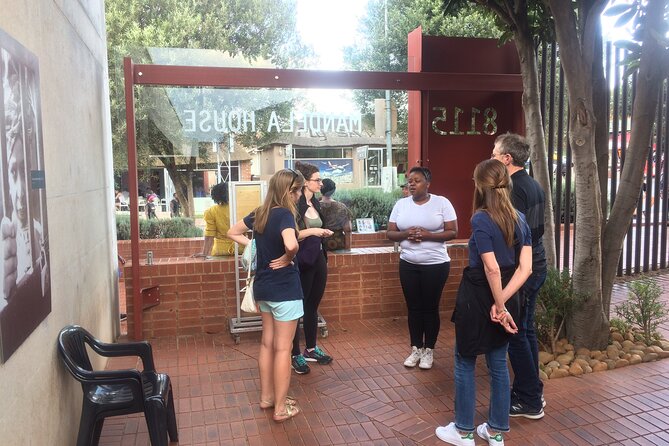
At 58 Beacon Road, the tour visits a local community project known as The Shalk. The project supports young people and children in Kliptown through daycare and afternoon programs.
This stop brings the tour back to present-day community work. Instead of only hearing about political leaders or major events, you see an example of local people addressing practical needs for children and families.
The visit is scheduled for about 30 minutes. You will have an opportunity to interact with children and learn about the programs, but you should approach this part with care and respect. It is a working community project, not simply a photo opportunity.
I consider this one of the route’s most distinctive elements. Many sightseeing programs stay with famous landmarks. This one includes a place focused on young people and daily support, giving you a fuller sense of how communities build their own solutions.
Mandela House and the final historical chapter
Mandela House is the final listed stop, with about 30 minutes set aside for the visit. The house on Vilakazi Street is closely tied to Nelson Mandela’s struggle against apartheid and his personal story.
Admission is not included, so you should budget separately if you want to enter. The listed itinerary does not give the admission price, so check the current cost before booking or before the day of the tour.
The 30-minute allocation suggests a focused visit rather than an extended museum session. If you want to read every display at length, you may need more time than the group schedule allows. Still, placing Mandela House near the end works well because the earlier stops have already introduced the political and social setting.
The tour then returns to the starting point at the Soweto Hotel & Conference Centre. That return matters if you are arranging a taxi or connecting with another activity.
Is $32 a fair price?
At $32 per person, this tour offers a lot of coverage for a modest price. You receive about five hours with a local guide, eight stops, snacks, a brewery visit, and access to a route that links political history with current community life.
Most listed stops have no admission charge. The extra cost to remember is Mandela House, since entry there is not included. The price also does not include WiFi on board, though this is a walking tour and WiFi is unlikely to be the main reason you book it.
The biggest value comes from the guide and the structure. Without local context, Walter Sisulu Square, matchbox houses, the towers, and the memorial could feel like separate sights. With an organized route, you get a connected story.
The possible tradeoff is group size. The maximum is 60 people, which is large for a walking tour. A group that size may make personal conversation with the guide harder and could affect how closely you can gather at each stop. On the other hand, the operator may run a smaller group on your date, but that is not guaranteed.
The tour has a current rating of 4.9 out of 5 from 38 ratings, with 100 percent recommendation shown in the supplied information. The strongest praise centers on the guide being friendly and informative, along with the chance to see local life beyond gated communities and suburbs while feeling safe. I would treat those points as the tour’s main strengths.
Who should book this Soweto walk?
You should consider it if you want a broad first look at Soweto rather than a single museum visit. It suits people who want major political landmarks, local neighborhoods, food and drink, and a community project in one half-day.
It also works well if you are visiting Johannesburg with limited time. The route gathers several important places into one organized outing, and the included mobile ticket makes the booking easy to carry on your phone.
Solo participants may find the format useful. The experience has been described as comfortable for someone joining alone, with a friendly guide and a strong sense of safety. Families and mixed-age groups may also appreciate that the tour is designed for all ages.
I would hesitate if you want a slow museum tour, a very small group, or a long, unstructured visit at each stop. The schedule is full, and the group limit of 60 is worth noting. You should also be comfortable with the weather, since the activity requires good conditions and may be rescheduled or refunded if poor weather causes cancellation.
Practical details before you go
The meeting point is the Soweto Hotel & Conference Centre on Union Avenue in Kliptown, Soweto. The tour returns there at the end, so your arrival and departure arrangements can use the same location.
Confirmation is provided at booking. Service animals are allowed, public transportation is nearby, and most people can participate. The activity is weather-dependent, and changes made within 24 hours of the start time are not accepted.
You can cancel for a full refund up to 24 hours before the start time. If you cancel inside that period, the payment is not refunded. That rule is simple, but check the local start time carefully.
Should you book it?
I would book this tour if you want history with a human scale. The route does not stop at Mandela and the 1976 uprising. It adds markets, soccer, painted towers, a local brewery, and a youth project, giving you a wider view of Soweto.
The best reason to choose it is the local guide who lives in Soweto. The strongest value comes from hearing how the landmarks connect to the community around them. Just allow for a brisk schedule, remember that Mandela House costs extra, and keep the 60-person maximum in mind.
If those limits suit you, $32 is a sensible price for a substantial introduction to Soweto.
FAQ
How long does the Soweto walking tour last?
The tour lasts approximately five hours.
Where does the tour begin?
It begins at the Soweto Hotel & Conference Centre, Union Avenue, Kliptown, Soweto, 1808, South Africa.
Where does the tour end?
The activity ends back at the meeting point.
What is included in the tour price?
Snacks are included.
Is admission to Mandela House included?
No. Admission to Mandela House is not included in the tour price.
How many people can join the tour?
The tour has a maximum capacity of 60 participants.
Is the tour suitable for most people?
Yes. The activity is described as suitable for all ages, and most people can participate. Service animals are allowed, and the meeting area is near public transportation.
Can I cancel the tour for a full refund?
Yes. You can cancel at least 24 hours before the start time for a full refund. Cancellations made less than 24 hours before the start time are not refunded. If poor weather causes the tour to be canceled, you will be offered another date or a full refund.
Just added in Johannesburg
- Sun City Day Tour From Johannesburg★ 4.5 · 6 reviews
- Soweto Township Tours★ 4.5 · 6 reviews
- Historical and Cultural Interactive Experience of Soweto★ 5.0 · 7 reviews
- Soweto and Lunch Tour★ 5.0 · 2 reviews
- Soweto and Johannesburg & Apartheid Museum★ 5.0 · 44 reviews
- Full-Day Soweto Apartheid Museum and Lunch★ 5.0 · 16 reviews
- Soweto & Johannesburg And Apartheid Museum Private★ 5.0 · 9 reviews
- Full Day Soweto & Johannesburg City Tour★ 4.5 · 2 reviews
Soweto Tours, compared.

Soweto /Johannesburg and Apartheid Museum Guided Full Day Tour
Read our review →

Jo’berg in 1 Day: Soweto, Apartheid Museum & City Tour
Read our review →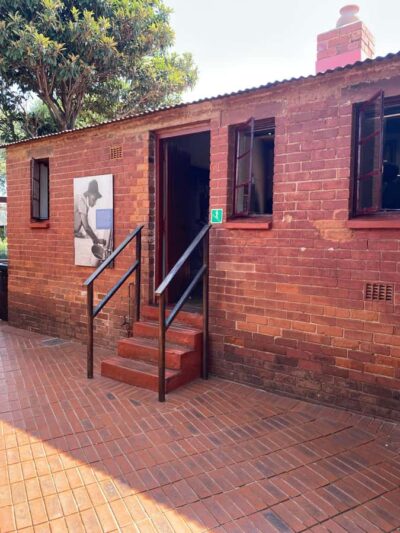
Full-Day Tour with Soweto and Apartheid Museum
Read our review →
Full-Day Soweto, Apartheid Museum and Lunch Tour
Read our review →
Half Guided Day Tour of Soweto And Apartheid Museum
Read our review →Browse the lists this tour appears in