

REVIEW · SOWETO TOURS
Soweto Walking Tour with Lunch
History lives here. This four-hour Soweto walking tour puts you on the streets where the 1976 uprising unfolded, with a guide raised in the township to explain what happened and why it still matters. I especially like the local perspective and the chance to connect major South African history with ordinary homes, streets, and communities. The kota lunch at Orlando Towers is another welcome touch.
The main tradeoff is simple: this is a serious history tour, not a sightseeing stroll with constant shopping time. You walk between several sites, entry to Mandela House is extra, and hotel pickup and drop-off are not included. The meeting-point instructions also need careful checking before you go, since choosing the wrong point has caused delays.
In This Review
- Key points to know before booking
- Why Soweto deserves a place in your Johannesburg plans
- Meeting at Hector Pieterson Memorial
- Following the 1976 route on Moema Street
- Vilakazi Street and two Nobel laureates
- Mandela House: the one paid entry
- Tutu House and the meaning of local leadership
- Baragwanath Road and Soweto beyond the famous names
- Orlando Towers and a proper kota lunch
- The guide makes or breaks this experience
- Timing, meeting points, and what to bring
- Is the $40.26 price good value?
- Who will get the most from this walk?
- Should you book the Soweto Walking Tour with Lunch?
- FAQ
- How long does the Soweto walking tour last?
- What is included in the tour price?
- Is hotel pickup and drop-off included?
- Is entry to Mandela House included?
- Where does the tour begin?
- Where does the tour finish?
- Can I choose a morning or afternoon tour?
- Is the tour suitable for most people?
Key points to know before booking

- Hector Pieterson begins the story: The tour opens at the memorial and museum linked to the 1976 Soweto uprising.
- A guide from Soweto adds meaning: Maweza, also called Mawesa in some tour details, is praised for combining local experience with a strong grasp of apartheid-era and present-day issues.
- Vilakazi Street links two Nobel Peace Prize winners: You visit the neighborhood where Nelson Mandela and Desmond Tutu lived.
- You walk through more than famous landmarks: The route includes Moema Street, Baragwanath Road, and an informal settlement, giving you a wider view of Soweto.
- The kota lunch is included: You finish at Orlando Towers with a filling local burger-style sandwich and bottled water.
- Plan for a four-hour outing: Morning and afternoon departures help you fit the walk around the rest of your Johannesburg plans.
Why Soweto deserves a place in your Johannesburg plans
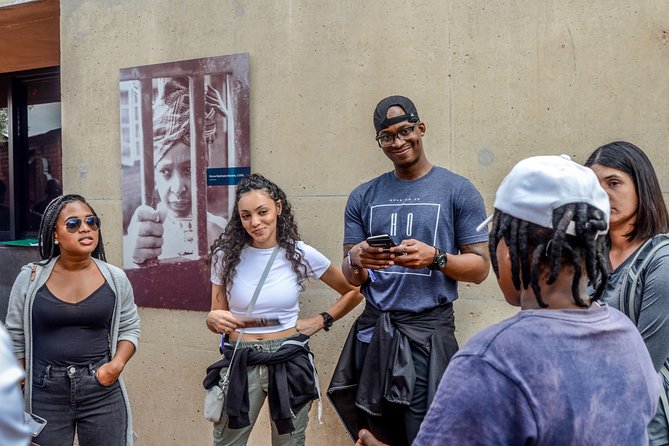
Soweto is not simply a collection of political landmarks. It is a large township with a layered past, and this tour works best when you want to understand the people and events behind the headlines.
The area became a major center of opposition to apartheid. In 1976, school students protested the forced use of Afrikaans in education. The uprising was met with police violence, and the death of Hector Pieterson became one of the defining images of the struggle.
You will hear about that history at the places where it happened, rather than only inside a museum. That matters. A street, a house, or a row of modest homes can make the past feel less distant and more human.
The tour also looks at Soweto today. The walk includes formal residential streets, historic homes, and an informal settlement. You are not shown only the polished version of the township. You get a sense of social differences within Soweto and hear about continuing problems such as unemployment and difficult living conditions.
That balance is one of the strongest reasons to book. The experience does not treat Soweto as a backdrop for photographs. It connects political history with daily life.
More Walking Tours in Johannesburg
- Soweto: Walking Tour with a Local Guide and Lunch
★ 4.9 · 648 reviews - Johannesburg: Local Food Tasting Guided Walking Tour
★ 4.7 · 192 reviews - Johannesburg: City Centre Walking Tour
★ 4.8 · 152 reviews
Meeting at Hector Pieterson Memorial
The tour starts at the Hector Pieterson Museum and Memorial. You spend about 30 minutes discussing the Soweto uprising, its student organizers, and its effect on the anti-apartheid struggle.
The museum is an appropriate starting point because Hector Pieterson’s story gives the wider political conflict a personal face. He was a young student killed during the 1976 protests. The famous photograph of his body being carried through the streets helped show the outside world what was happening in Soweto.
Your guide sets the basic timeline here before you begin walking. Maweza has received especially strong praise for explaining difficult material clearly and adding personal and family experiences connected with apartheid. That can make this opening talk more than a standard history lecture.
You should expect the subject matter to be upsetting at points. This is not a light introduction to the township, and that is part of its value. Give yourself room to listen and ask questions.
Admission to this stop is listed as free. The walking tour itself provides the interpretation, so the quality of the guide matters greatly. On this route, that appears to be a major strength.
Following the 1976 route on Moema Street
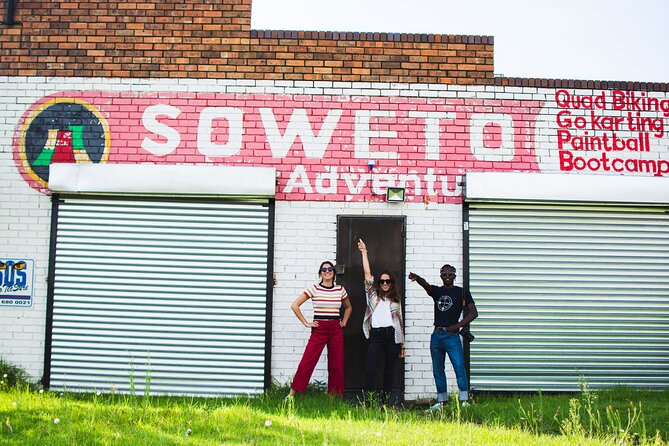
From the museum, you walk for roughly 20 minutes along Moema Street. Here, the guide explains the route taken by young protesters, the shooting, local living conditions, and what followed the uprising.
This part of the walk helps you place the events on an actual street. Instead of hearing only dates and political slogans, you see the kind of setting in which students gathered and police action unfolded.
I like this stop because it slows the story down. The museum gives you the broad picture. Moema Street brings you closer to the physical setting and the human scale of the event.
The route is not only about the past. The guide also connects the uprising to the longer effort that eventually ended apartheid. You may find the discussion more thought-provoking than a standard sightseeing stop, especially if you want to understand how youth protest helped change national politics.
Wear comfortable shoes. The tour is described as a walking experience lasting about four hours, and the route includes several distinct areas rather than one compact museum complex.
Vilakazi Street and two Nobel laureates
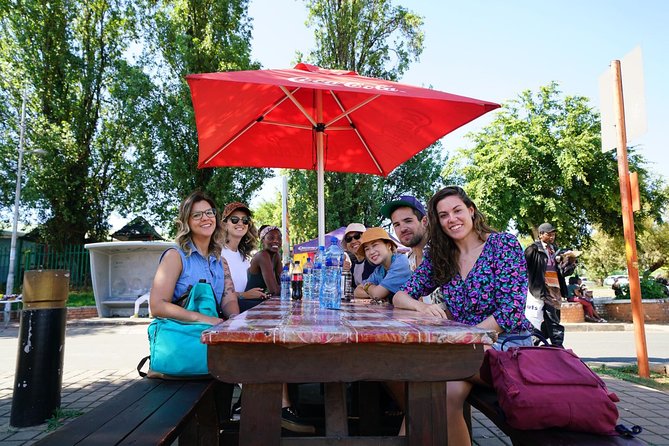
The next stop is Vilakazi Street, where Nelson Mandela and Archbishop Desmond Tutu both lived. The visit itself is short, about 10 minutes, but the location carries unusual weight.
Few streets are associated with two Nobel Peace Prize winners. Here, the guide explains the importance of Mandela and Tutu, along with the role their homes played in Soweto’s public memory.
You will have a chance to see Mandela’s house from the outside before the separate house visit. The street is also one of the most recognizable places in Soweto, so it naturally attracts people who want photographs.
This is where the tour can feel more crowded or commercial than the residential sections. One useful tip from the experience feedback is to avoid expecting a long shopping break here. The walk is designed around history and community, not browsing every vendor.
If you want time to buy crafts, snacks, or souvenirs, bring cash and ask your guide when a short pause is possible. The schedule is fairly full, and the route does not promise dedicated vendor time.
More Soweto tours:
- Johannesburg: Hop-On Hop-Off Bus with Optional Soweto Tour
★ 4.6 · 985 reviews - Soweto /Johannesburg and Apartheid Museum Guided Full Day Tour
★ 5.0 · 932 reviews - Johannesburg Hop-On Hop-Off City Tour with Soweto Option
★ 4.5 · 768 reviews - Half-Day Tour of Soweto Tour
★ 4.5 · 712 reviews
Mandela House: the one paid entry
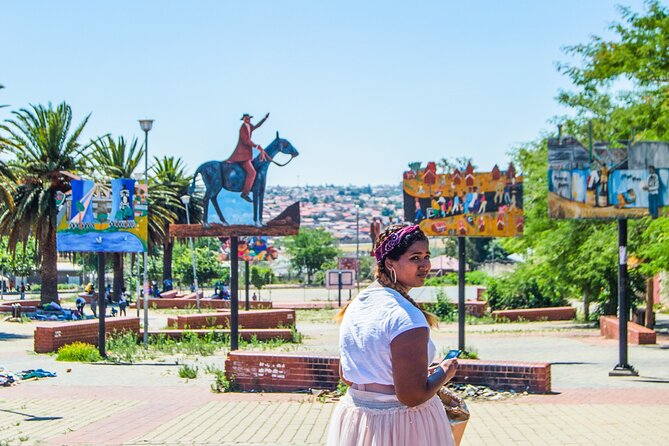
The tour allows about 20 minutes at Mandela House. This is the former home of Nelson and Winnie Mandela and one of the most important addresses in Soweto.
The entry fee is not included, so budget for an additional cost. The tour details do not state the exact admission price, so you should check it before setting out.
The house adds a domestic dimension to Mandela’s story. You are not only hearing about a national leader in government or prison. You are visiting the place connected with his family life and his years in Soweto.
Twenty minutes is enough for a focused visit, but it is not a long museum session. If you want to study every display at length, you may find the stop brief. The advantage is that the tour keeps moving and leaves room for the wider township walk.
Tutu House and the meaning of local leadership
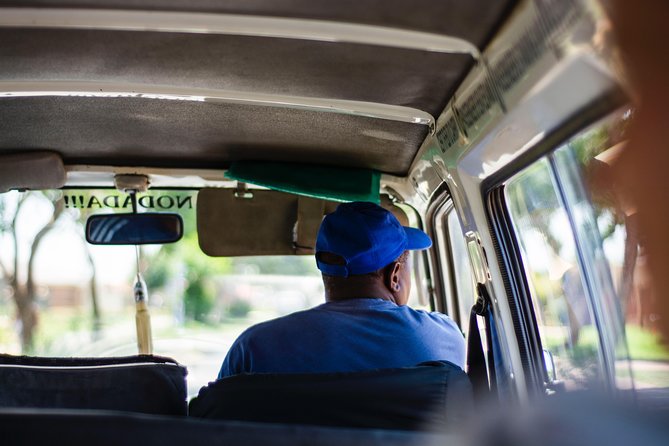
The route then passes Tutu House, associated with Archbishop Desmond Tutu. You spend about 10 minutes here.
The guide discusses Tutu’s opposition to apartheid through religion and his importance in South Africa’s political and moral life. Together with Mandela House, this stop shows how Vilakazi Street became linked with two very different but closely connected forms of leadership.
Mandela represented organized political resistance and later national reconciliation. Tutu used his position in the church to challenge injustice and speak for human rights. Hearing about both in the same neighborhood gives the street more meaning than a quick photo stop.
This is another brief section, so listen closely. The value comes from the guide’s explanation, not from a long list of displays.
Baragwanath Road and Soweto beyond the famous names
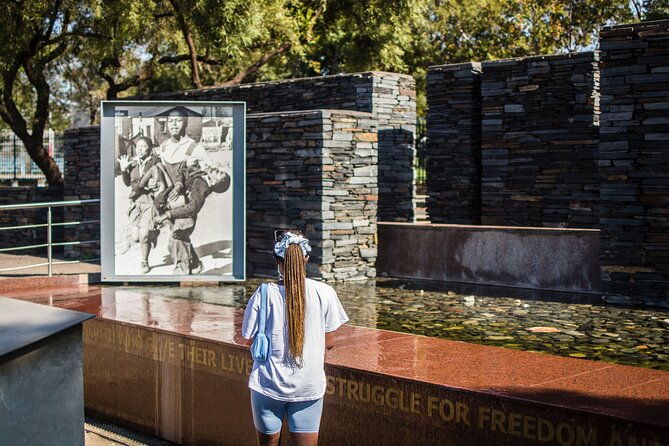
The walk continues to Baragwanath Road for about 30 minutes. This section introduces the first formal houses that helped form the township known as Soweto.
It is an important change of pace. After the museum and famous political homes, you see the built environment that shaped everyday life. The guide can explain how Soweto developed and how different parts of the township reflect different social conditions.
One of the most valuable aspects of the walk is that it does not stop at Mandela and Tutu. You also hear about the range of communities within Soweto, including differences between more established residential areas and informal housing.
A later part of the walk includes an informal settlement. The guide’s role is especially important here. Several strong comments about the experience describe the visit as respectful and safe, with a handoff to another guide for part of the route. That change suggests care in moving through different community spaces.
You should still behave thoughtfully. Ask before photographing people, avoid treating poverty as a spectacle, and follow your guide’s instructions. The point is to understand how people live, not to collect dramatic images.
Orlando Towers and a proper kota lunch
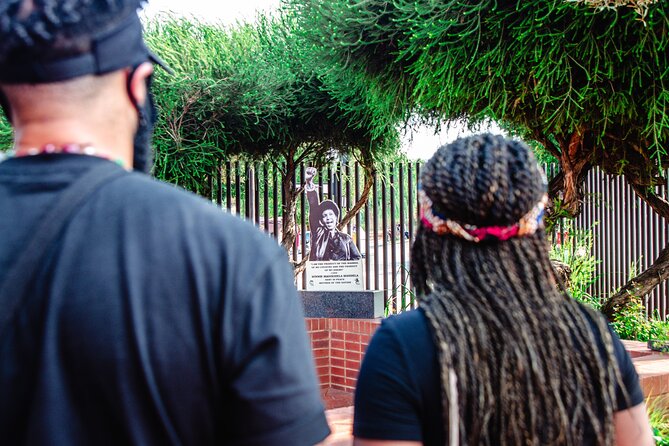
The final stop is Orlando Towers, where you spend about an hour. The towers provide a memorable setting for photographs, and this is where lunch is served.
A kota is a local sandwich made in the style of a substantial burger. It is described as filling, and you should arrive ready to eat. Bottled water is included as well.
I like the way lunch comes at the end. By then, you have spent several hours walking, listening, and thinking. A warm, substantial local meal makes the experience feel grounded in everyday Soweto rather than ending with another formal monument.
The towers also give the tour a lighter final note. After the difficult material at Hector Pieterson and the informal settlement, you have time for photos and food.
The lunch is not a full restaurant meal with a long menu. If you have dietary restrictions, ask about the ingredients before booking or at the start of the tour. The supplied details identify the meal as a local burger, or kota, but do not list substitutions.
The guide makes or breaks this experience
The most praised part of the tour is the guiding. Maweza is repeatedly described as friendly, clear, considerate, and strongly informed about Soweto, apartheid, South African politics, and present-day problems.
That combination matters. A guide can recite dates, but a local guide can also explain how the township is understood by people who live there. Maweza is described as being born and raised in Soweto, and several comments point to personal stories and family experiences that add texture to the history.
You may also meet a second guide during part of the walk. One account describes a young guide shadowing the main guide, while another mentions a transfer to Sylvester for a section in a different area. Be prepared for more than one local host, and carry a little cash if you wish to thank individual guides separately.
The maximum group size is listed as 100 people. That is a large possible ceiling for a walking tour, though the actual group may be smaller. The experience details include examples of groups of only a few people, so the size can vary.
If you want a very private walk, confirm the group arrangement before booking. If you are comfortable in a shared group, the standard format should make the experience accessible to more people.
Timing, meeting points, and what to bring
You can choose a morning or afternoon departure. The four-hour length makes this practical for a Johannesburg visit, but do not schedule a tight activity immediately afterward.
Hotel pickup and drop-off are not included. You need to reach the meeting point yourself, and public transportation is available nearby. Mobile tickets are supported, and confirmation is provided when you book.
Pay close attention to the meeting instructions. The booking process may present three possible meeting points, while the guide uses only one. That mismatch has caused at least one group to arrive late. Check the final confirmation and contact the provider if the location is unclear.
For the walk, I would bring:
- Comfortable walking shoes
- Sun protection and water
- A phone with the mobile ticket available
- Some cash for optional purchases or guide tips
- Space in your schedule for a late finish
The tour includes bottled water, but additional items and costs are your responsibility. Entry to Mandela House is also extra.
The tour is listed as suitable for most people. It was also described as manageable for elderly relatives when the guide adjusted the pace and offered personal attention. Still, you should consider your own comfort with several hours of walking and standing.
Is the $40.26 price good value?
At $40.26 per person, the price is reasonable if you want history, guiding, and lunch in one half-day experience.
The value comes mainly from the guide and the access to several different parts of Soweto. You are not paying only to see Vilakazi Street or take a photo at Orlando Towers. You are paying for the explanations that link the sites together, plus the local meal and bottled water.
The price does not cover transportation to the meeting point, Mandela House admission, or other purchases. Those extras can raise the final cost, so include them in your budget.
I would not choose this tour only for a quick sightseeing checklist. You get better value if you are willing to listen, walk, ask questions, and think about how apartheid shaped both public history and private life.
A 4.9 rating from 288 ratings and a 98 percent recommendation figure indicate very strong satisfaction. The repeated praise centers on the guide, the educational content, the safe feeling during the walk, and the quality of the kota lunch. The main caution is not about the core experience. It is about meeting-point confusion and limited time for vendors.
Who will get the most from this walk?
I would recommend this tour to first-time visitors to Johannesburg who want a clear introduction to Soweto. It also suits families with older children and teenagers, especially those studying civil rights, protest movements, or modern African history.
A 15-year-old joined one group and enjoyed the experience, which suggests the material can work for teenagers when presented well. The guide’s storytelling and the movement between real locations help break up the more serious historical discussion.
This tour also suits you if you prefer local food and community context over a bus-only sightseeing circuit. You see the township on foot, meet local guides, and hear about present-day life as well as apartheid.
You may want a different option if you have limited mobility, dislike walking, or want a relaxed food tour. The route is built around walking and serious discussion. It is also not ideal if your main goal is shopping, since time with vendors is limited.
Free cancellation is available up to 24 hours before the start time. Changes or cancellations within 24 hours are not accepted for a refund, and the cut-off uses local time.
Should you book the Soweto Walking Tour with Lunch?
Yes, I would book it if you want a thoughtful introduction to Soweto and can spare four hours. The strongest reason is Maweza’s local voice, supported by clear explanations of the uprising, Mandela’s home, Tutu’s role, and life in Soweto today.
Book with three expectations: you will walk, the subject can be difficult, and the tour is not a shopping outing. Confirm the meeting point, carry cash, allow extra money for Mandela House, and leave time for the kota lunch at Orlando Towers.
For a first visit to Johannesburg, this is a useful and human way to understand why Soweto matters.
FAQ
How long does the Soweto walking tour last?
The tour lasts approximately four hours.
What is included in the tour price?
The tour includes a local kota sandwich lunch and bottled water.
Is hotel pickup and drop-off included?
No. Pickup and drop-off are not included. You need to reach the meeting point yourself.
Is entry to Mandela House included?
No. Admission to Mandela House is not included in the tour price.
Where does the tour begin?
The tour begins at the Hector Pieterson Museum and Memorial.
Where does the tour finish?
The tour finishes at Orlando Towers, where the group has lunch and time for photographs.
Can I choose a morning or afternoon tour?
Yes. Morning and afternoon tour options are available.
Is the tour suitable for most people?
The tour information says most people can participate. It is a walking experience lasting about four hours, so you should consider your ability to walk and stand for that length of time.
More Lunch Experiences in Johannesburg
- Full-Day Soweto, Apartheid Museum and Lunch Tour
★ 5.0 · 410 reviews - Soweto: Guided Bicycle Tour with Lunch
★ 4.9 · 292 reviews - Johannesburg and Soweto Apartheid Full Day Tour w/Lunch
★ 4.9 · 219 reviews - Guided Bicycle Tour of Soweto with Lunch
★ 5.0 · 180 reviews
Just added in Johannesburg
- Soweto half day Tour★ 5.0 · 54 reviews
- Hiking In the Magaliesberg,Wildlife hike an hour fromJohannesburg★ 5.0 · 11 reviews
- Full-Day Apartheid Museum and Soweto Tour★ 5.0 · 10 reviews
- Full-Day Cradle of Human Kind and caves private★ 4.5 · 10 reviews
- Full day Soweto & Apartheid Museum Tour★ 5.0 · 3 reviews
- Pilanesberg National Park Safari in Open Vehicle from Johannesburg★ 5.0 · 6 reviews
- Full-Day Soweto Apartheid Museum & Johannesburg Tour★ 5.0 · 4 reviews
- Weekend in Johannesburg★ 5.0 · 2 reviews
Soweto Tours, compared.
Soweto /Johannesburg and Apartheid Museum Guided Full Day Tour
Read our review →

Jo’berg in 1 Day: Soweto, Apartheid Museum & City Tour
Read our review →
Full-Day Tour with Soweto and Apartheid Museum
Read our review →
Full-Day Soweto, Apartheid Museum and Lunch Tour
Read our review →
Half Guided Day Tour of Soweto And Apartheid Museum
Read our review →Browse the lists this tour appears in