
REVIEW · SOWETO TOURS
Guided Bicycle Tour of Soweto with Lunch
Soweto is best understood at street level. This four-hour bicycle tour lets you cover more ground than a walking visit while staying close to the homes, schools, stadiums, memorials, and busy roads that shaped the township. I especially like the local history told through family stories and the stop at a former women’s hostel, which gives needed attention to the women who fought apartheid. The included kota sandwich is another strong point: filling, informal, and tied to everyday Soweto food culture.
The main catch is the bicycle itself. Several riders found the hills hard work, particularly on single-speed bikes. Some recent bikes have gears, but you should still expect a proper workout. You will also need to reach the meeting point in Orlando West yourself, since hotel pickup and drop-off are not included.
The guides are the heart of the experience. Themba, Thabo, Temba, Mulalo, Thato, and Murulla Mohuma have all led memorable outings, with particular praise for their warmth, local insight, flexibility, and care around traffic. The group limit of 15 keeps the ride fairly personal, though the experience will depend somewhat on which guide leads your departure.
In This Review
- Key points before you book
- Why a bicycle is a smart way to see Soweto
- Phomolong: starting with family stories
- Mzimhlophe and the women who kept Johannesburg running
- Lillian Mgoyi’s home and the 1956 women’s march
- Hector Pieterson Museum and the 1976 youth uprising
- Orlando Stadium and Soweto’s sporting identity
- Mandela House and Vilakazi Street
- The kota lunch: simple, big, and practical
- Guides, safety, and the feel of the ride
- Morning or afternoon, and getting to the start
- Who should book this Soweto bicycle tour?
- Should you book it?
- FAQ
- How long does the Soweto bicycle tour last?
- How much does the tour cost?
- What food is included?
- Is bicycle equipment provided?
- Is entry to Mandela House included?
- Where does the tour start and finish?
- Is hotel pickup included?
- How many people can join the tour?
Key points before you book

- Four hours on a bicycle: You see more of Soweto than you could on foot, but the route includes hills and requires moderate effort.
- Women’s anti-apartheid history: The former Mzimhlophe women’s hostel and Lillian Mgoyi’s home broaden the story beyond the best-known male leaders.
- Landmark-packed route: Stops include the Hector Pieterson Memorial, Orlando Stadium, Mandela House, Vilakazi Street, and Orlando’s streets.
- A genuine local lunch: The included kota is a large, deep-filled sandwich known for being hearty rather than delicate.
- Small-group format: A maximum of 15 people allows the guide to keep the group together and answer questions.
- Plan your own transport: The tour begins and ends at 7346 Kumalo Street in Orlando West, with no pickup or drop-off included.
Why a bicycle is a smart way to see Soweto
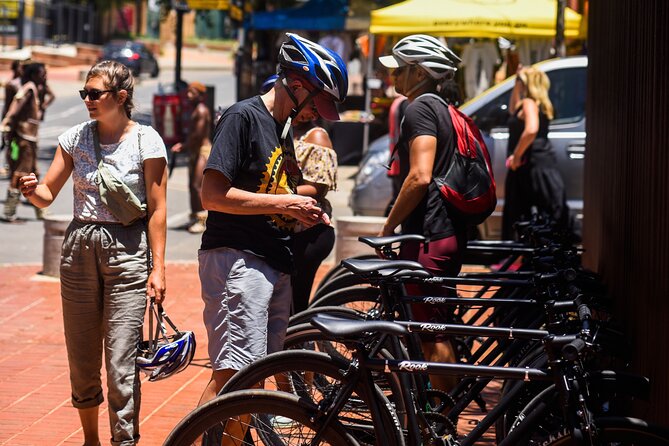
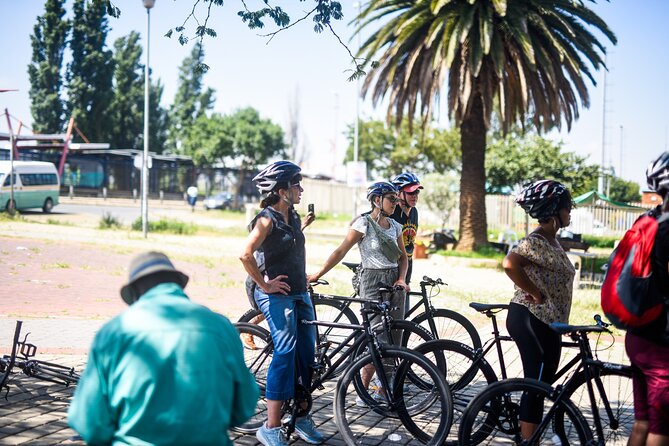
Soweto is too spread out for a short walking tour to cover comfortably. A bicycle gives you a wider view of the township and lets you move between neighborhoods, memorials, and major landmarks without sitting behind a car window.
You still experience the streets at a human pace. You can hear the guide while riding, greet people along the way, and notice the ordinary details between the headline sights. Several riders described locals waving and calling hello as the group passed, which adds a friendly, social feel to the outing.
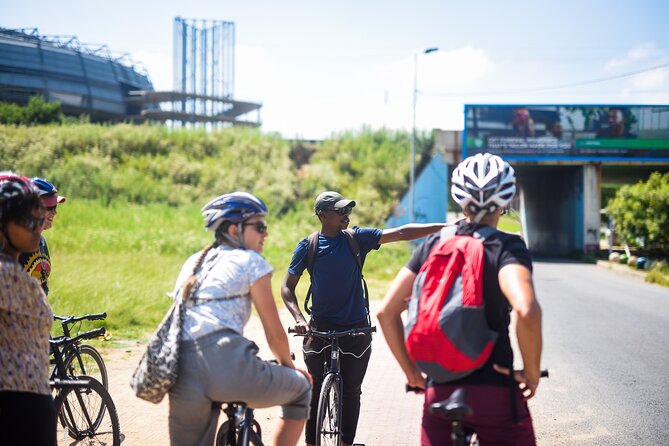
The route is not flat. You will ride up and down hills, and some bikes may be single speed. One rider called the route a good workout, while another felt the bicycles needed more gears. More recent feedback says upgraded bikes with gears were available, making climbs easier, but you should not book this expecting a gentle pedal.
I would bring sunscreen, a cap, and water-friendly clothing. Bottled water is included, but sun protection remains your responsibility. If you are comfortable with a few hours of casual cycling and occasional effort, the physical side should be manageable. If hills are a serious concern, ask about the bike setup when booking.
More Soweto tours:
- Johannesburg: Hop-On Hop-Off Bus with Optional Soweto Tour
★ 4.6 · 985 reviews - Soweto /Johannesburg and Apartheid Museum Guided Full Day Tour
★ 5.0 · 932 reviews - Johannesburg Hop-On Hop-Off City Tour with Soweto Option
★ 4.5 · 768 reviews
Phomolong: starting with family stories
The first stop at Phomolong sets the tone. Instead of beginning with a long lecture on dates and political figures, the guide shares stories about family generations and explains how apartheid affected ordinary households.
This is useful because apartheid was not only a subject for museums. It shaped where people could live, where they worked, how families were separated, and how daily choices were controlled. A local guide can connect those broad policies with the streets you are actually riding through.
You should pay attention to how the guide describes change in Soweto today. The purpose is not to reduce the township to suffering or struggle. The tour tries to show a living community, with its own neighborhoods, routines, pride, and current identity.
Mzimhlophe and the women who kept Johannesburg running
At Mzimhlophe, you visit the only former women’s residential hostel in Soweto included on this route. It once housed domestic workers employed in Johannesburg’s suburbs.
This stop is one of the tour’s most important. Apartheid-era work patterns depended heavily on Black women serving white households, often while living away from their own families. A women’s hostel helps you understand that system from the workers’ side, rather than seeing apartheid only through speeches, prisons, and famous political leaders.
Allow about 30 minutes here. The stop is not just another photo opportunity. It gives the guide room to discuss women’s working lives, family separation, and the social effects of the pass laws. I value this part because it corrects the usual focus on a short list of male heroes.
Lillian Mgoyi’s home and the 1956 women’s march

The visit to Lillian Mgoyi’s home on Nkungu Street brings the women’s story into sharper focus. Mgoyi was an anti-apartheid activist and president of the Women’s League. She helped lead a march of 20,000 women to the Union Buildings in Pretoria.
The protest opposed the requirement that women carry passbooks under the apartheid pass laws. Those documents were used to control movement and employment, so resistance to them was a direct challenge to state power.
The stop lasts about 10 minutes, but its importance is larger than its length suggests. You are not simply hearing a name in a museum. You are connecting a national movement with a specific home and neighborhood. This is the kind of detail that makes the history easier to remember.
A few more in Johannesburg
- Soweto: Walking Tour with a Local Guide and Lunch
★ 4.9 · 648 reviews - Full-Day Soweto, Apartheid Museum and Lunch Tour
★ 5.0 · 410 reviews - Soweto: Guided Bicycle Tour with Lunch
★ 4.9 · 292 reviews - Soweto Walking Tour with Lunch
★ 5.0 · 288 reviews
Hector Pieterson Museum and the 1976 youth uprising
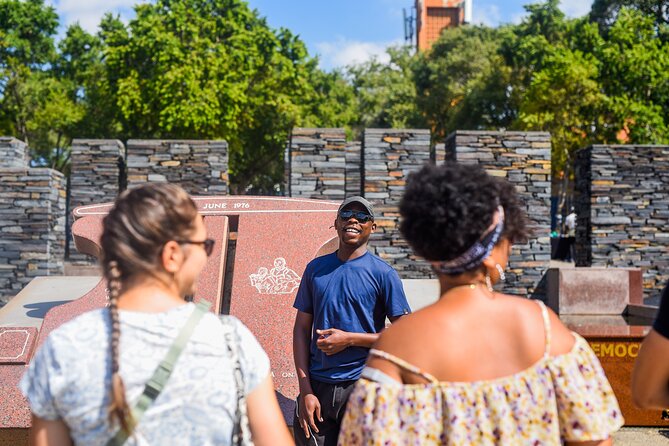
The Hector Pieterson Museum and Memorial focuses on the 1976 youth uprising. The events began when students protested the forced use of Afrikaans in schools, and the uprising became a major turning point in the struggle against apartheid.
The museum stop lasts around 30 minutes. Expect a serious change of mood here. The earlier stops deal with work, family, and organized resistance. This one centers on young people, state violence, education, and the way images of the uprising reached the world.
If you prefer a tour that keeps history light, this section may feel heavy. It should. The guide’s explanation helps place the memorial in the wider story, but you will want to give the site your full attention rather than rushing through for photographs.
Orlando Stadium and Soweto’s sporting identity
Orlando Stadium represents another side of Soweto’s public life. The venue dates to 1959 and was rebuilt at a cost of R280 million. It now has room for 37,139 people, including hospitality suites, conference facilities, a gymnasium, and an auditorium.
The stadium is closely linked with Orlando Pirates, one of South Africa’s major football clubs and the 1995 CAF Champions League winners. It has also hosted major sporting and entertainment events.
The scheduled visit lasts about 10 minutes. It is a quick exterior and neighborhood look rather than a full stadium tour, and admission is not included. Still, the stop matters because football is part of Soweto’s identity, not an unrelated add-on for sports fans.
The supplied route information also mentions an Orlando Police Department stop. Its description refers to Orlando, Florida, including American police staffing details, so that wording is clearly out of place in a Soweto program. Treat this as a possible itinerary error and ask the operator what you will see there. Do not build your expectations around the description provided.
Mandela House and Vilakazi Street
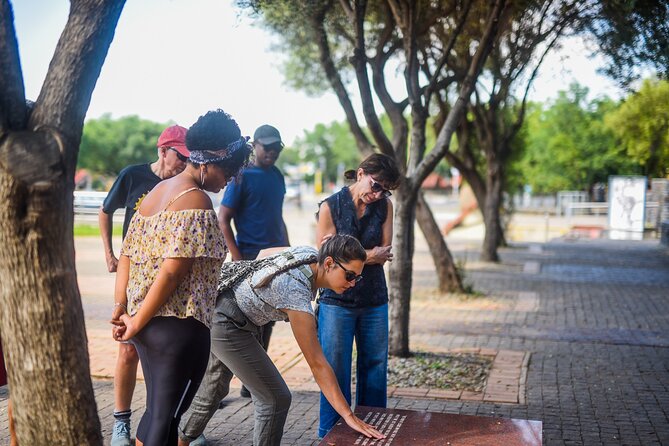
Mandela House is the best-known stop on the route. Nelson Mandela lived in this modest house on Vilakazi Street, and the interior gives the political story a domestic setting.
Entry costs R60 and is not included in the tour price. That extra fee is worth factoring into your budget, especially if you are comparing this outing with a larger sightseeing package. The scheduled visit lasts about 30 minutes.
Vilakazi Street adds another layer. It is famous for being associated with two Nobel Peace Prize winners, Nelson Mandela and Desmond Tutu. Few streets have such a direct link to South Africa’s political story, and the tour gives you time to ride through it rather than simply stop for a quick roadside photograph.
One guide began the outing near an espresso shop owned by the grandson of the person after whom Vilakazi Street was named, then finished with the kota and Mandela House. That exact sequence may vary, but it shows how the tour can connect major landmarks with local people and small businesses.
The kota lunch: simple, big, and practical
Lunch is a local burger called a kota. It is a deep-filled sandwich and, by all accounts, a generous meal. This is not a polished restaurant lunch, and that is part of its appeal.
The kota gives you a taste of everyday township food while also serving a practical purpose. Cycling uphill works up an appetite, and a light snack would not be enough after several hours on the road. Some outings may also offer access to drinks from Soweto Brewery, but extra items and costs are not included.
The lunch is one of the better inclusions in the $45.70 price. You receive the bicycle, helmet, bottled water, and a substantial local meal, while the guide provides transport between the historic stops under your own power. You still pay separately for Mandela House and anything else you buy, but the basic package is fairly priced for a half-day activity.
Guides, safety, and the feel of the ride
The strongest part of this experience is the guide. Themba is repeatedly praised for being funny, patient, careful, and able to explain Soweto from a local point of view. Thabo is also described as friendly and reassuring, while Temba adjusted the plan when someone wanted to visit the cooling towers.
That flexibility can make a big difference. A good guide will balance the planned route with the group’s pace, explain why a place matters, and notice when someone is struggling on a hill. Themba also included teenagers in the conversation and handed out sweets for local children, a small gesture that helped younger participants connect with the community.
You should still ride responsibly. Stay with the group, follow the guide’s directions, and be ready for uneven effort between stops. The tour is described as safe and welcoming, but cycling through an active township is not the same as riding on a closed recreation path.
The maximum group size is 15. That is small enough for questions and personal attention, though a larger departure may take longer to regroup on hills or at crossings.
Morning or afternoon, and getting to the start
You can choose a morning or afternoon departure, which makes it easier to fit the ride around other Johannesburg plans. Since the activity lasts about four hours and returns to its starting point, leave enough time before your next fixed booking.
The meeting point is 7346 Kumalo Street, Orlando West, Johannesburg, 1804. Pickup and drop-off are not included, although the meeting point is near public transportation. Check your route carefully and allow time to arrive before the start.
Confirmation is provided at booking, and mobile tickets are accepted. The activity ends back at the meeting point, so you will not need to arrange a second pickup across town.
Who should book this Soweto bicycle tour?
I would recommend it to you if you want history, local food, and active sightseeing in one outing. It suits people who prefer seeing a place through neighborhoods and personal stories instead of only visiting formal museums.
It is also a good choice for families with older children and teenagers who may find a bicycle more engaging than a long vehicle tour. Guides such as Themba have made a point of including younger riders in the conversation.
You should think twice if you dislike hills, have trouble cycling for several hours, or want a fully passive tour. The single-speed bicycle issue has not disappeared entirely, and even geared bikes will not remove the climbs.
The 97 percent recommendation rate and 4.8 rating from 181 ratings suggest a reliably strong experience, but the clearest pattern is that the guide matters enormously. Ask about current bicycles and the expected route if physical comfort is important to you.
Should you book it?
Book this tour if you want to see Soweto at street level and are willing to work for the view. The best parts are the local guides, the women’s history at Mzimhlophe and Lillian Mgoyi’s home, the 1976 uprising context, and the simple pleasure of ending with a kota.
At $45.70, it offers good value for four hours of guiding, equipment, water, lunch, and several major sites. Add R60 for Mandela House, arrange your own transport to Orlando West, and prepare for hills. You can cancel for a full refund up to 24 hours before the start time, but cancellations within 24 hours are not refunded.
FAQ
How long does the Soweto bicycle tour last?
The tour lasts approximately four hours.
How much does the tour cost?
The listed price is $45.70 per person.
What food is included?
A local burger called a kota is included for lunch.
Is bicycle equipment provided?
Yes. The tour includes a bicycle and helmet, along with bottled water.
Is entry to Mandela House included?
No. Entry to Nelson Mandela House costs R60 and is paid separately.
Where does the tour start and finish?
It starts at 7346 Kumalo Street, Orlando West, Johannesburg, 1804, and ends back at the same meeting point.
Is hotel pickup included?
No. Pickup and drop-off are not included. The meeting point is near public transportation.
How many people can join the tour?
The activity has a maximum group size of 15 people.
Just added in Johannesburg
- Pretoria Capital City Tour Experience★ 5.0 · 24 reviews
- 4 Day Kruger National Park Tour★ 5.0 · 30 reviews
- Johannesburg e-scooter experience★ 5.0 · 38 reviews
- Johannesburg Street Art & Museum Walking or E-scooter Tour★ 4.5 · 10 reviews
- Big 5 Safari Experience at Pilanesberg National Park★ 5.0 · 16 reviews
- Drakensberg Mountains. Tugela Gorge and Amphitheater Hike★ 5.0 · 7 reviews
- Apartheid Museum Tour from Johannesburg★ 4.5 · 14 reviews
- Arrival Private Transfer: Tambo Airport JNB to Johannesburg in Business Car★ 4.0 · 5 reviews
Soweto Tours, compared.
Soweto /Johannesburg and Apartheid Museum Guided Full Day Tour
Read our review →

Jo’berg in 1 Day: Soweto, Apartheid Museum & City Tour
Read our review →
Full-Day Tour with Soweto and Apartheid Museum
Read our review →
Full-Day Soweto, Apartheid Museum and Lunch Tour
Read our review →
Half Guided Day Tour of Soweto And Apartheid Museum
Read our review →Browse the lists this tour appears in