
REVIEW · ROBBEN ISLAND TOURS
Cape Town: Robben Island ferry ticket plus Guided Tour
The past is waiting offshore. This four-hour Robben Island visit combines a scenic 30-minute ferry ride with a guided tour of the former maximum-security prison, led by an ex-prisoner. I like the personal stories from someone who lived through the island’s political prison years, and I like that the tour includes Nelson Mandela’s actual cell. The main drawback is uneven organization, with reports of faulty QR codes, delayed ticket support, cramped buses, and long waits for the return boat.
You meet at the Nelson Mandela Gateway, not at your hotel, and should arrive at least 30 minutes before departure. The $71 price is fair if the ferry, museum entry, island transport, and ex-inmate guide all run as planned. It feels less worthwhile if ticket problems leave you sorting out the basics yourself.
In This Review
- Key points to know before you book
- Why Robben Island matters beyond the famous cell
- From the Nelson Mandela Gateway to the open water
- The 30-minute ferry ride across Table Bay
- The island tour and its compact bus ride
- The leprosy graveyard and the island’s difficult chapters
- The Lime Quarry and Robert Sobukwe’s house
- Inside the maximum-security prison
- Nelson Mandela’s cell, the moment many people expect
- Is $71 a fair price?
- Who will get the most from this four-hour visit?
- Booking tips that can save the morning
- Should you book the Robben Island ferry and guided tour?
- FAQ
- How long does the Robben Island tour take?
- How long is the ferry ride to Robben Island?
- Where do I meet the tour?
- How early should I arrive?
- Is the tour conducted in English?
- Is Nelson Mandela’s prison cell included?
- What other places are visited on Robben Island?
- What identification do I need?
- Can I cancel the booking or pay later?
Key points to know before you book
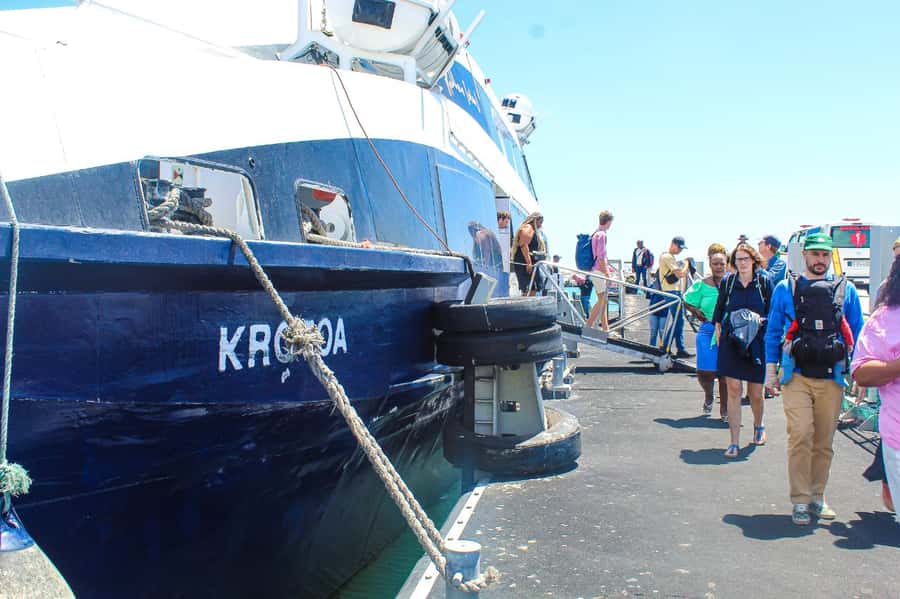
- The ferry takes about 30 minutes each way, with views of Cape Town and Table Mountain from the water.
- An ex-prisoner leads the island tour, adding first-hand detail that a standard museum visit cannot provide.
- Nelson Mandela’s prison cell is included, along with the maximum-security prison and several other island sites.
- You go straight to the boat-departure queue, but you still need valid identification and should arrive early.
- The tour is in English, and one recent complaint described the prison guide as speaking too quickly to follow easily.
- Recent booking problems matter, including a QR code that did not work and tickets that were reportedly never received.
Why Robben Island matters beyond the famous cell
Robben Island is not simply a place to check off because Nelson Mandela spent 18 years there. The island tells a wider story about apartheid, political imprisonment, exile, forced labor, illness, and the people who resisted South Africa’s former government.
That wider view is important. Mandela’s cell is the most famous stop, but focusing only on it reduces the island to one room and one name. The tour also takes you to the Lime Quarry, Robert Sobukwe’s house, the leprosy graveyard, and the prison complex. Each stop adds a different piece to the story.
I find the ex-prisoner guide especially valuable here. A former inmate can explain the prison from personal experience, not just from a display panel or a prepared script. The tone may also surprise you. One recent experience was praised for stressing unity and forgiveness rather than concentrating only on punishment and suffering.
That message does not erase the cruelty of the prison system. It gives the visit a human ending. You are not simply shown a place of pain and sent back to Cape Town. You hear how someone who had every reason to remain bitter chose to speak about reconciliation.
More Robben Island tours:
- Cape Town: Robben Island Ferry Ticket and Guided Prison Tour
★ 4.1 · 1,792 reviews - Cape Town: Robben Island Ferry Tour with 1-Way Hotel Pickup
★ 4.2 · 1,380 reviews - Cape Town: Robben Island Ferry Ticket and Townships Tour
★ 4.5 · 400 reviews
From the Nelson Mandela Gateway to the open water
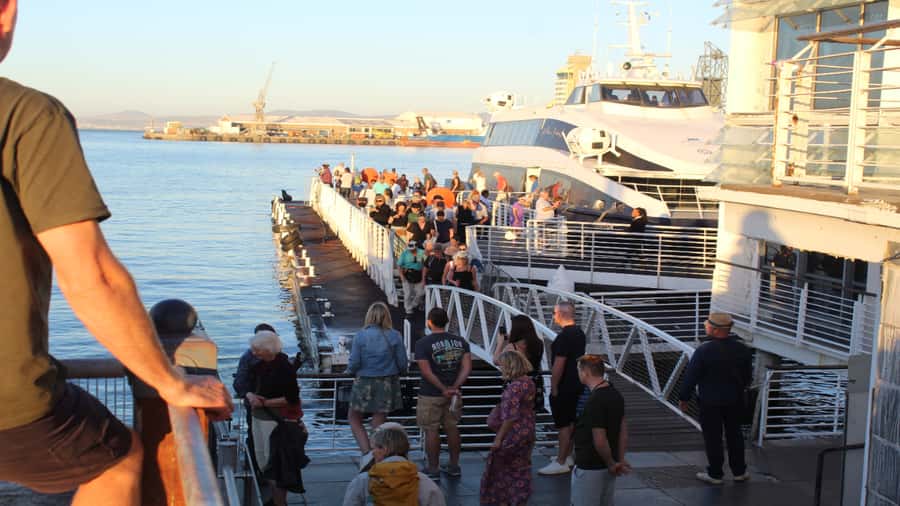
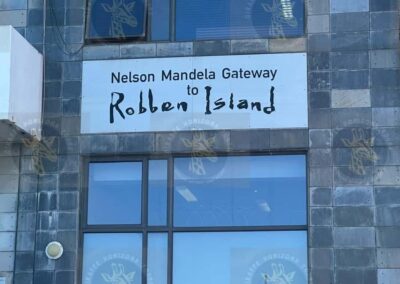
The meeting point is the Nelson Mandela Gateway to Robben Island. You are responsible for reaching it yourself, since hotel pickup and drop-off are not included.
Arrive at least 30 minutes before your scheduled departure. This is more than a cautious suggestion. The ferry is the central link in the day, and missing it could disrupt the entire visit. Have your passport or ID card ready, or bring a copy if that is what you have available. Children also need identification, and their dates of birth must be included when you book.
The skip-the-ticket-line feature is meant to simplify the start. You head directly to the queue for boat departures instead of spending extra time at the ticket office. Still, skip-the-line does not mean skip every check. You must have the booking information and identification needed for entry.
The experience provider is Flamboyant Travel & Tours. Recent booking experiences have not been perfectly consistent. One person reported that a QR code failed, while another said tickets were never received. That makes it sensible to check your confirmation well before departure and contact the provider if anything looks wrong.
The 30-minute ferry ride across Table Bay
The crossing to Robben Island takes about 30 minutes. It gives you time to shift from Cape Town sightseeing to a more serious visit.
The best part is the view. You can look back toward Table Mountain and the Cape Town waterfront, then watch the city grow smaller as the boat moves away. The return journey offers the same coastal scenery from a different angle, and the changing distance helps put the island’s separation into physical terms.
The ferry is transportation, not a sightseeing cruise with a long commentary program. You should think of it as a useful and scenic part of the visit rather than a separate attraction. The trip can also set the tone for the island. You leave a busy city and arrive at a place whose isolation was part of its purpose.
Allow some flexibility in your expectations. The published duration is four hours, but the day can feel longer if there is a wait for the return boat. One recent complaint described a 30-minute delay before boarding the ferry back to Cape Town. You may want to avoid booking another tightly timed activity immediately afterward.
The island tour and its compact bus ride
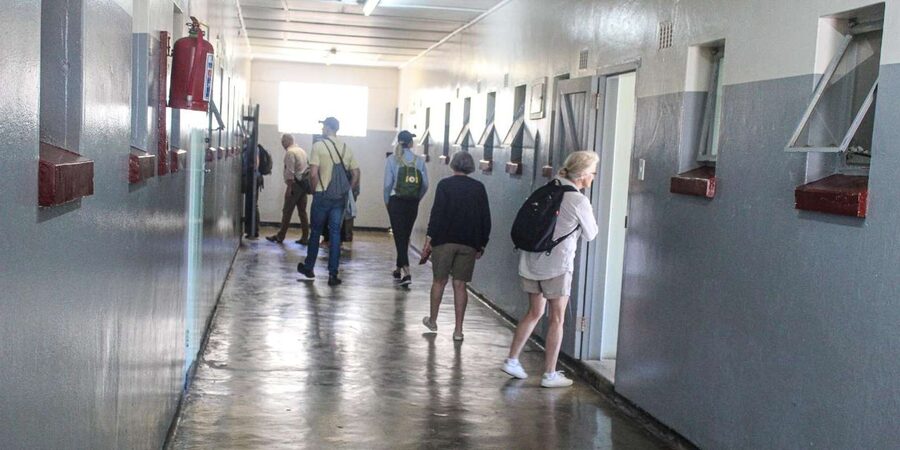
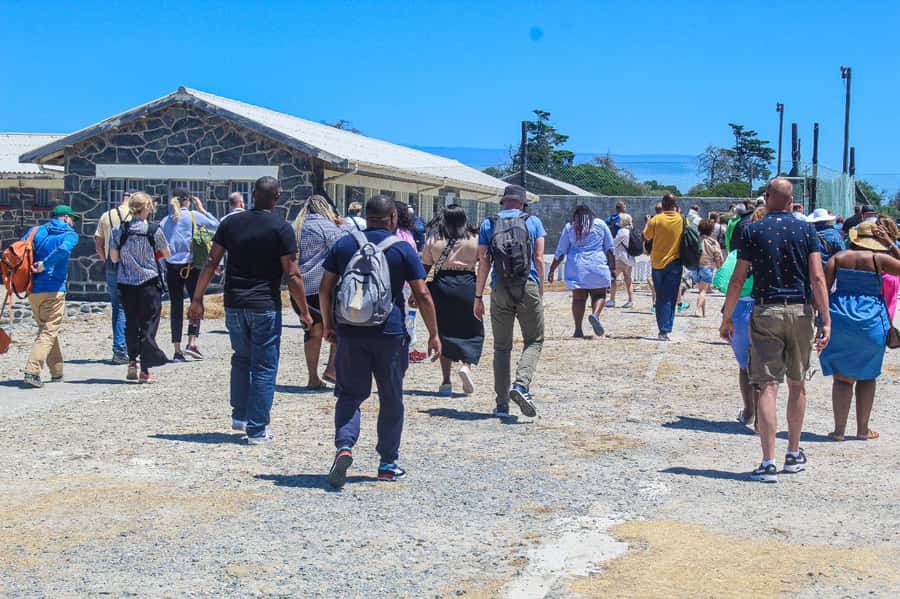
After arriving on Robben Island, you join a guided tour of the museum and prison area. The island portion includes transportation by bus, which is practical because the sites are spread out.
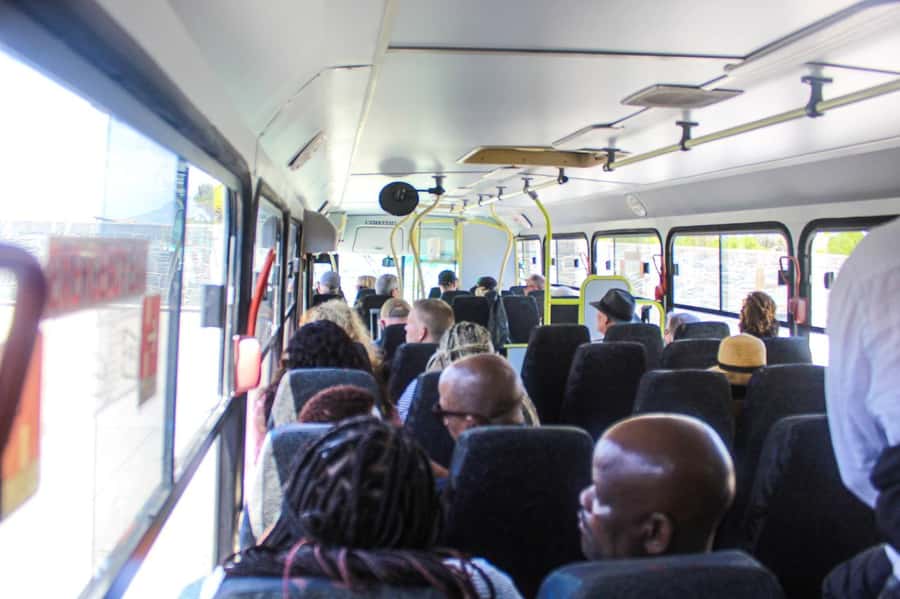
The bus can be crowded. A recent visitor found the seating very tight and the vehicle too full, so do not expect a spacious private transfer. This is a shared excursion built around moving a large group through a fixed route.
That arrangement has a benefit: you cover more of the island than you would on foot within the four-hour schedule. It also has a cost. You have less freedom to stop for as long as you wish, and your comfort depends partly on how full the bus is.
The standard of the spoken tour can also vary. The language is English, but one person found the prison guide’s speech too fast to understand. If English is not your first language, stay close to the guide and ask for repetition when needed. The experience is much more useful when you can follow the details rather than simply move from room to room.
An earlier report praised the bus guide, so the quality is not uniformly poor. The practical point is that the live guiding is one of the tour’s biggest strengths when it works well, and one of its biggest weaknesses when the delivery is rushed.
A few more in Cape Town
- Wine Tour: Paarl, Franschhoek & Stellenbosch incl 3 wineries
★ 5.0 · 3,940 reviews - Cape Town: Hop-On Hop-Off Bus Tour with Optional Cruise
★ 4.8 · 3,929 reviews - Cape Town: Cape of Good Hope & Penguins Day Tour with Pickup
★ 4.7 · 3,362 reviews - Zipline Cape Town – From Foot of Table Mountain Reserve
★ 5.0 · 3,179 reviews
The leprosy graveyard and the island’s difficult chapters
The leprosy graveyard is one of the stops that prevents the visit from becoming only a political prison tour. It points to an earlier and different use of the island, when people affected by leprosy were sent there.
The stop can feel quieter and less immediately dramatic than the prison. That is precisely why it matters. Robben Island’s story did not begin with apartheid, and its past cannot be reduced to Mandela’s imprisonment. The graveyard reminds you that the island has long been used to separate people from the mainland.
You should expect the visit to move quickly through several locations. This is not a long private walk with time for silent reflection at every site. The value comes from the way the guide connects separate places into one account of the island.
The Lime Quarry and Robert Sobukwe’s house
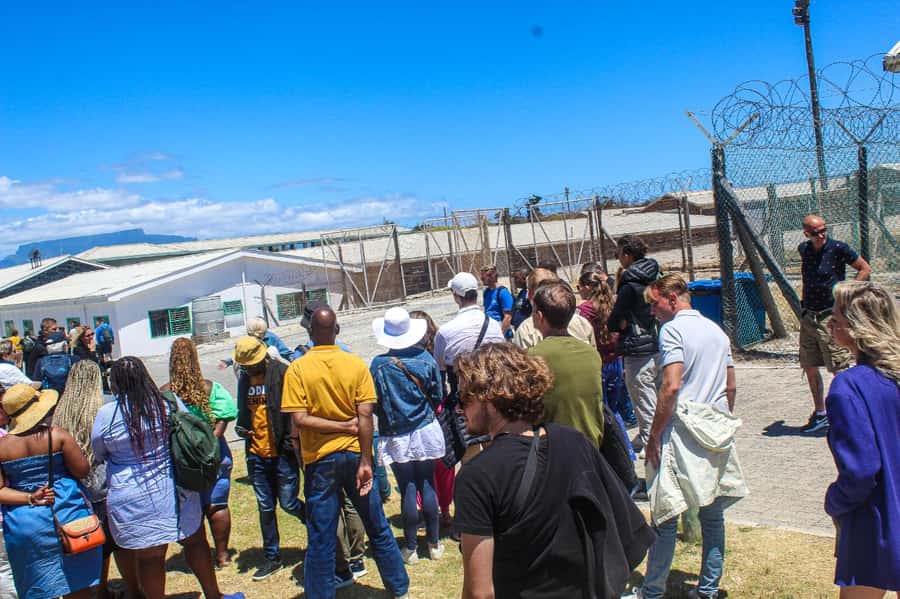
The Lime Quarry is another major stop. It is linked to the forced labor endured by political prisoners, including Mandela and others who were made to work there.
The quarry has particular weight because it shows how prison punishment extended beyond locked cells. The work itself, the harsh conditions, and the treatment of prisoners form part of the story. The site gives physical shape to facts that can otherwise remain abstract.
Robert Sobukwe’s house adds another layer. Sobukwe was a major anti-apartheid figure who was held separately under special restrictions. His house helps show that political imprisonment did not follow one simple pattern. Different prisoners faced different forms of control, isolation, and confinement.
I appreciate these stops because they broaden the visit. If your only goal is to photograph Mandela’s cell, you may find the additional sites slow the pace. If you want to understand why Robben Island became such a powerful symbol, they are essential.
Inside the maximum-security prison
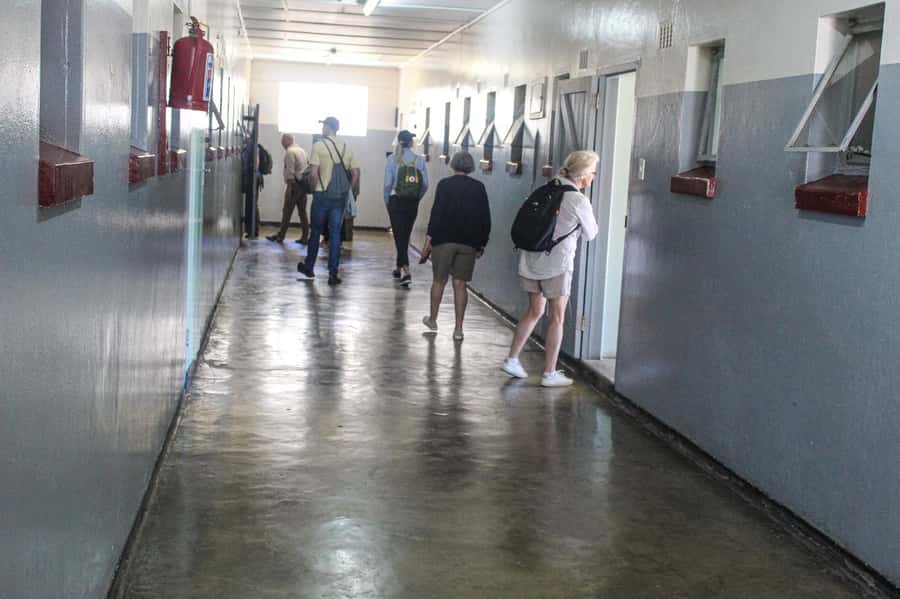
The maximum-security prison is the emotional center of the tour. Here you move from the island’s broader story into the controlled world of cells, corridors, rules, and political detention.
The prison visit is guided in English by a former inmate. That first-hand perspective is the experience’s strongest feature. A personal account can explain not only what a space looked like, but what it meant to live under its restrictions.
The quality of this part depends heavily on the guide’s pace and clarity. A recent complaint described the presentation as too fast and difficult to understand. That is a serious concern because the spoken explanation is not a minor extra. It is the main way the prison’s rooms and routines are given meaning.
You may also be part of a sizable group, which can make it harder to hear. Stay near the guide when possible, and do not hesitate to ask for a slower explanation. The tour is advertised as English-language, but that should still mean clear English.
Nelson Mandela’s cell, the moment many people expect
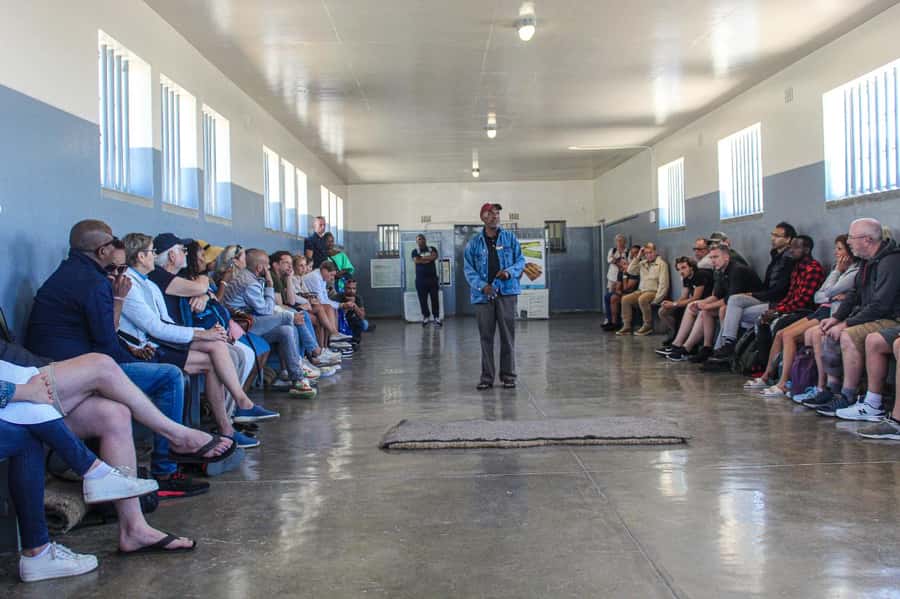
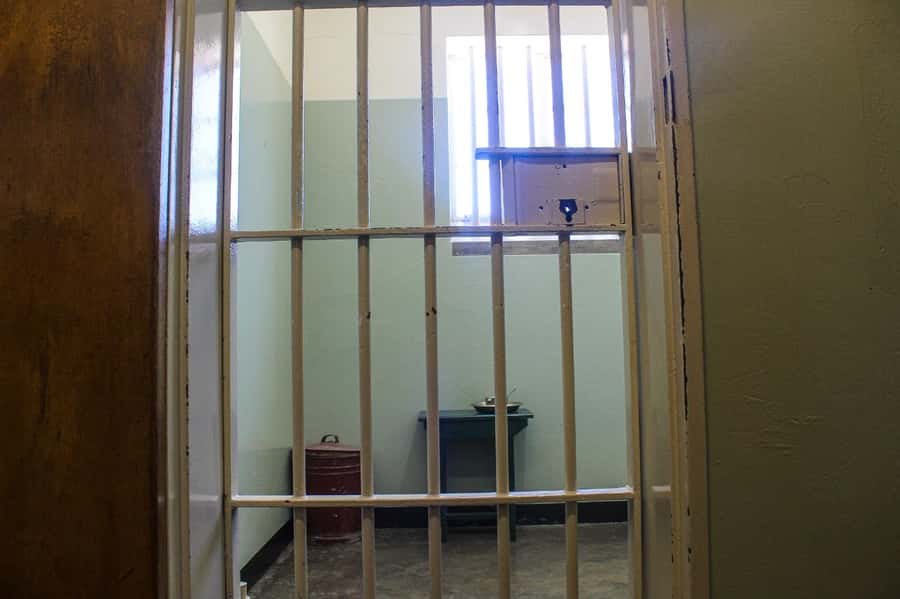
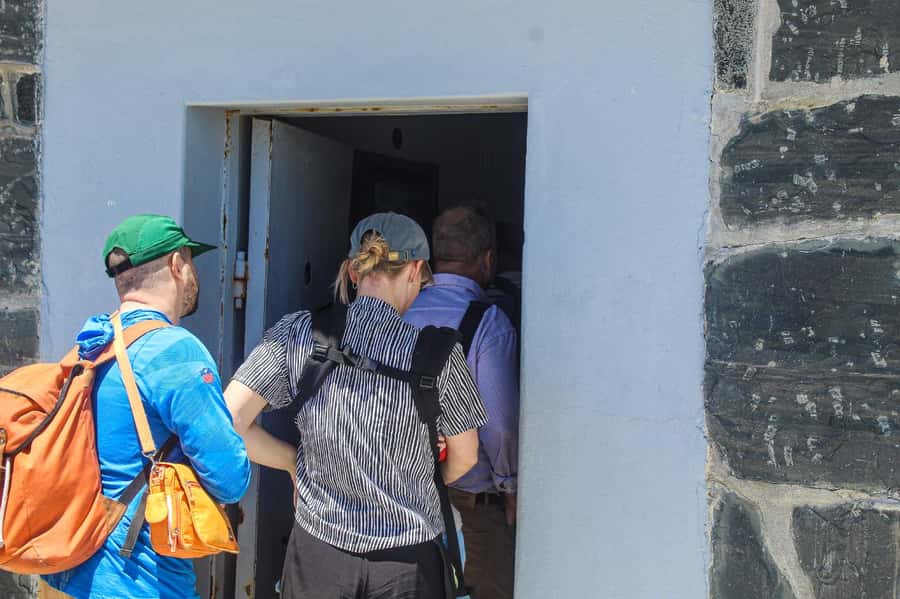
The visit to Nelson Mandela’s cell is the stop most people picture before they arrive. It is a small, plain room, and its power comes from the contrast between its modest size and the global importance of the person who spent years there.
Do not expect a grand memorial chamber. The cell is effective because it is restrained. You are shown the actual place where Mandela was held, rather than a recreated exhibit designed to produce a dramatic effect.
The cell also works best after the other stops. By the time you reach it, you have seen the prison system, learned about other political prisoners, and visited sites tied to the island’s earlier uses. Mandela’s room then becomes part of a larger story, not the entire story.
For many people, this will be the moment they remember most. I would still encourage you to listen closely during the less famous sections. The Lime Quarry and Sobukwe’s house may not attract the same attention, but they help explain the political world around Mandela.
Is $71 a fair price?
At $71 per person, this is not a cheap half-day outing. The cost covers the ferry to and from Robben Island, admission to the Robben Island Museum, island transport, and the guided tour with an ex-inmate.
That package has solid value if you want the full organized experience. You do not need to arrange the ferry and museum entry separately, and the personal guide adds something that a self-guided visit cannot match.
The price feels less attractive when the basic logistics fail. If your ticket does not arrive, your QR code does not scan, or you spend a long time waiting without clear help, the convenience you paid for disappears. This is why checking your confirmation early is important.
The tour suits you best if Robben Island is a priority and you want a direct, scheduled visit from Cape Town. It is less suitable if you need a private vehicle, a relaxed pace, or guaranteed control over how long you spend at each site.
Who will get the most from this four-hour visit?
I would recommend it most strongly to people interested in South African history, apartheid, civil rights, and personal accounts of political imprisonment. The former-prisoner guide gives the experience emotional force, while the different island stops provide a broader setting.
Families can also find value here, but children need valid identification, and the subject matter is serious. The crowded bus and fast-moving schedule may be tiring for younger children.
This is a good choice if you are staying in Cape Town and want a half-day activity with a clear structure. It is not ideal if you dislike group transport or need a guaranteed quick return. The stated duration is four hours, but the return ferry wait can add time.
Wear comfortable clothes and shoes. Bring your passport or ID card, with a copy accepted according to the tour information. Food and drinks are not included, so plan accordingly without assuming refreshments are part of the package.
The tour is offered in English only. If you need another language, this experience does not provide that option.
Booking tips that can save the morning
Include every traveler’s full name, surname, and nationality when making the reservation. For children, include the date of birth as well.
Check your ticket and QR code before the day of departure. If you have not received the required material, do not wait until you are standing at the gateway. Recent problems with missing tickets and invalid QR codes show why this check matters.
Keep your booking details and identification easy to reach. The skip-the-ticket-line arrangement can save time, but only if the staff can confirm your reservation.
The activity allows free cancellation up to 24 hours before departure for a full refund. You can also reserve now and pay later, which is useful if your Cape Town plans are still shifting.
Should you book the Robben Island ferry and guided tour?
Book it if you want Robben Island’s key sites in one organized four-hour visit, especially the former-prisoner guide and Mandela’s cell. The ferry views, museum admission, and island transport make the $71 reasonable when the operation runs smoothly.
Go in with practical expectations. The bus may be cramped, the prison guide may speak quickly, and the return ferry may involve a wait. Confirm your tickets early, arrive 30 minutes ahead, bring identification, and leave room in your schedule afterward.
I would choose this experience for its human perspective and historical importance, not for comfort or polished customer service. If the provider handles your booking properly, it can be a moving and worthwhile half-day. If you need dependable communication and a roomy, leisurely outing, you may want to consider those risks before paying.
FAQ
How long does the Robben Island tour take?
The activity duration is four hours. This includes the ferry ride, the island visit, and the return journey, although a wait for the return boat may add extra time.
How long is the ferry ride to Robben Island?
The ferry ride takes about 30 minutes each way.
Where do I meet the tour?
Go directly to the boat-departure queue at the Nelson Mandela Gateway to Robben Island. Hotel pickup and drop-off are not included.
How early should I arrive?
You should arrive at least 30 minutes before your scheduled departure time.
Is the tour conducted in English?
Yes. The live tour guide language is English.
Is Nelson Mandela’s prison cell included?
Yes. The visit includes the cell where Nelson Mandela was held.
What other places are visited on Robben Island?
The tour includes the leprosy graveyard, Lime Quarry, Robert Sobukwe’s house, and the maximum-security prison.
What identification do I need?
Bring a valid passport or ID card. A copy is accepted according to the tour information, and children must also bring identification.
Can I cancel the booking or pay later?
You can cancel up to 24 hours in advance for a full refund. The reserve-now, pay-later option lets you hold a place without paying immediately.
Just added in Cape Town
- Sunset Safari Big 5 Aquila with Snacks and Wine Tasting★ 5.0 · 12 reviews
- Explore Atlantis Sand Dunes with a 1hour 30mins sandboarding tour★ 5.0 · 5 reviews
- Private Tour to 20 Wine Tasting in Stellenbosch and Franschhoek★ 5.0 · 11 reviews
- Robben Island, Kirstenbosch wine tasting Tour★ 5.0 · 10 reviews
- Photoshoot in Cape Town’s most Gorgeous Locations★ 5.0 · 2 reviews
- 1 Hour Cape Town City Center Photoshoot Experience★ 5.0 · 19 reviews
- Zip Line and Wine from Cape Town★ 5.0 · 14 reviews
- Private Transfer from Cape Town International Airport★ 5.0 · 4 reviews
Robben Island Tours, compared.

Robben Island Ferry Ticket and Guided Prison Tour
Read our review →
Robben Island Ferry Tour with 1-Way Hotel Pickup
Read our review →
Robben Island Ferry with Prison Ticket and Tour
Read our review →

Robben Island Tour including Pick Up & Drop Off from Cape Town
Read our review →
Robben Island Ferry Ticket and Guided Prison Tour
Read our review →
Robben Island Experience: Pre-Booked Ticket & Return Transfers
Read our review →Browse the lists this tour appears in