
REVIEW · ROBBEN ISLAND TOURS
Cape Town: Robben Island ferry ticket with guided tour
History feels close on Robben Island. This four-hour outing combines a scenic ferry ride from the V&A Waterfront with a guided visit to the prison where Nelson Mandela was held during Apartheid. I like the former political prisoner guide, whose firsthand account gives the island a human voice, and I like the chance to see Mandela’s actual cell rather than only read about it. The main drawback is organization: recent departures have been cancelled without much notice, and the island bus tour can feel rushed and crowded.
You’ll also see the Lime Quarry, Robert Sobukwe’s house, and the leprosy graveyard, each adding another piece to South Africa’s difficult past. The ferry views of Table Mountain are a fine bonus, but this is not a relaxed sightseeing cruise. You need to be ready for a serious history lesson, changing sea conditions, and a fairly tightly managed schedule.
In This Review
- Key points to know before you book
- Why Robben Island matters beyond Mandela’s cell
- Starting at the Nelson Mandela Gateway
- The 30-minute ferry ride across Table Bay
- The island tour and its serious tone
- The Lime Quarry and the work imposed on prisoners
- Robert Sobukwe’s house and the island’s wider story
- The leprosy graveyard and earlier uses of the island
- Entering the maximum-security prison
- Why the former-prisoner guide changes the experience
- Is $74 fair value for four hours?
- Who will enjoy this tour most?
- Practical tips for a smoother visit
- Should you book the Robben Island tour?
- FAQ
- Where does the Robben Island tour start?
- How long does the full experience last?
- How long is the ferry ride to Robben Island?
- Is the ferry ticket included?
- Is a prison tour included?
- Who leads the guided tour?
- What places do you see on Robben Island?
- Is hotel pickup included?
- Is food included?
- What should you bring?
- Is the tour wheelchair accessible?
- Can you cancel the booking?
Key points to know before you book
- A former inmate leads the island story: The live English guide shares personal knowledge of prison life during Apartheid.
- Mandela’s cell is the emotional center: The stop is brief but carries enormous historical weight.
- The ferry ride takes about 30 minutes each way: You get open-water views of Cape Town and Table Mountain.
- The island tour includes several important sites: Expect the leprosy graveyard, Lime Quarry, Robert Sobukwe’s house, and the maximum-security prison.
- The bus portion may feel crowded: You might not be able to leave the bus at every stop, and an aisle seat can limit your view.
- The meeting point is easy to identify: Go to the Nelson Mandela Gateway beside the Clocktower at the V&A Waterfront.
Why Robben Island matters beyond Mandela’s cell
Robben Island is best understood as a place of imprisonment, resistance, and political control, not simply as a Nelson Mandela attraction. Mandela’s cell is the name most people recognize, but the wider island visit shows that many people were imprisoned there and that Apartheid operated through a much larger system than one famous prisoner.
The tour helps you connect the political story to physical places. The maximum-security prison shows where political prisoners were confined. The Lime Quarry points to the hard labor prisoners carried out. Robert Sobukwe’s house recalls a different form of political detention, while the leprosy graveyard shows that the island’s use stretched back long before the Apartheid prison era.
I appreciate this broader approach because it keeps the visit from becoming a single famous photograph. Mandela’s cell matters, but it gains meaning when you see it as part of the wider prison complex and the island’s long, uneasy past.
The live guide is central to the experience. An ex-prisoner can describe the institution from personal experience in a way a recorded audio track cannot. You may notice that the delivery feels direct rather than polished. That is part of the value. This is testimony tied to a real place.
More Robben Island tours:
- Cape Town: Robben Island Ferry Ticket and Guided Prison Tour
★ 4.1 · 1,792 reviews - Cape Town: Robben Island Ferry Tour with 1-Way Hotel Pickup
★ 4.2 · 1,380 reviews - Cape Town: Robben Island Ferry Ticket and Townships Tour
★ 4.5 · 400 reviews
Starting at the Nelson Mandela Gateway
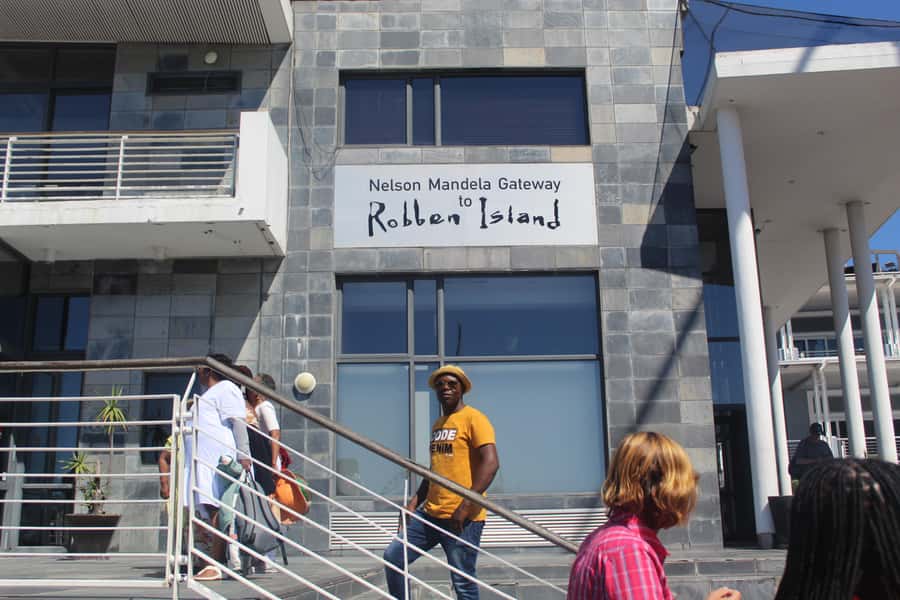
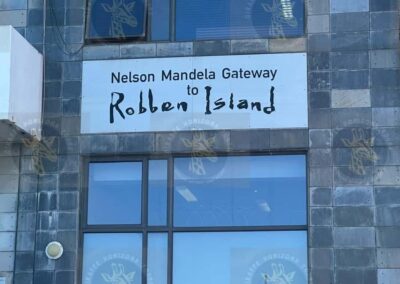
You make your way to the V&A Waterfront, beside the Clocktower, for the ferry to Robben Island. The building is called the Nelson Mandela Gateway to Robben Island and serves as both the meeting point and departure area.
Plan to arrive with enough time to find the entrance and get organized. The supplied details do not give a required arrival time, so you should check your booking confirmation for the exact departure. The tour lasts about four hours from the gateway and returns to the same place.
The waterfront setting makes this meeting point convenient if you are already spending time around the harbor. It also means you are not getting hotel pickup. You are responsible for reaching the gateway yourself, so allow extra time if you are coming from elsewhere in Cape Town.
Bring a passport or ID card. A jacket is also wise, even if the day begins warm. The ferry ride is exposed to wind, and conditions on the water can feel cooler than they do on shore. Comfortable clothes and shoes will serve you better than anything formal.
The 30-minute ferry ride across Table Bay

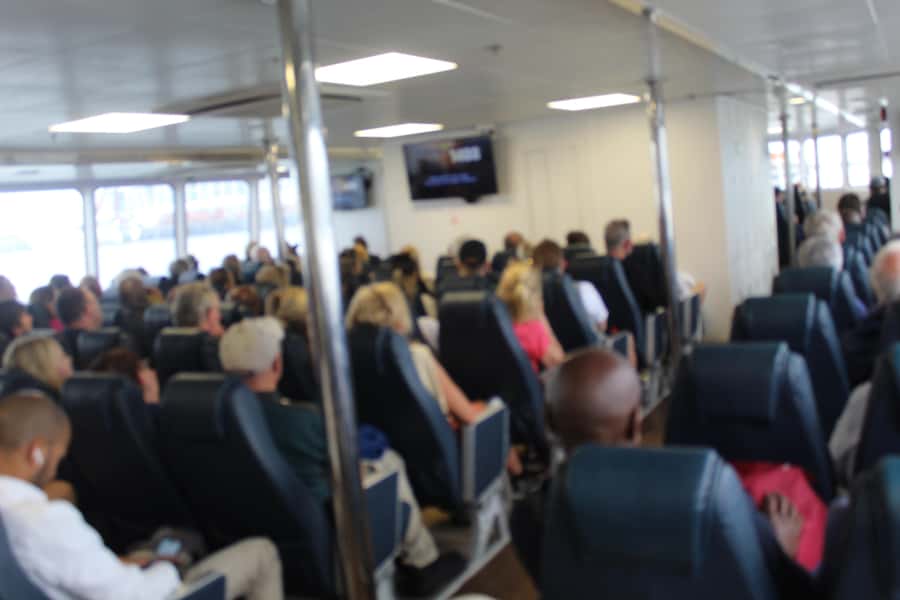
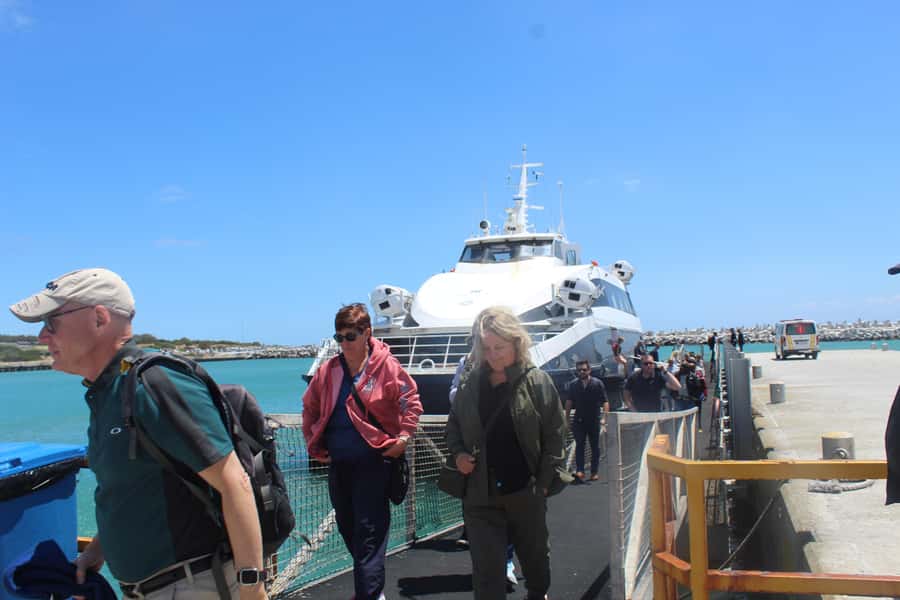
The ferry crossing takes roughly 30 minutes. During that time, you can look back toward Cape Town and Table Mountain, which gives you a useful sense of the island’s separation from the city.
The views are one of the tour’s pleasant extras. On the outward journey, the city gradually recedes. On the return, Table Mountain and the waterfront come back into view. The ride gives the visit a physical sense of distance: Robben Island was close enough to be seen from Cape Town, yet far enough offshore to make escape difficult.
This is not a sightseeing cruise with commentary as its main purpose. The ferry gets you to the island. Still, the coastal views make the transport feel like part of the experience rather than a tedious transfer.
If you are prone to seasickness, take that warning seriously. The activity is specifically not suitable for people who regularly become sick on boats. A jacket is useful for comfort, but the supplied information does not specify any onboard food service, so do not count on lunch during the crossing.
The island tour and its serious tone
After arriving, the guided island visit begins. Much of the sightseeing is connected by bus, allowing you to cover several sites during the four-hour schedule.
That arrangement is practical, but it has a clear trade-off. Recent feedback describes the bus as overcrowded, with some people unable to see well from aisle seats. You may also find that you cannot get off the bus at every stop. If you want plenty of time for photographs or quiet reflection, this format may feel too quick.
The guide’s information remains the strongest part of the island circuit. One recent account called the tour informative but rushed, with the guide moving quickly through the explanations. I would approach the outing as a structured introduction to Robben Island, not as a slow, independent walk.
The tone is serious. The places you see are tied to forced confinement, political struggle, illness, and hard labor. That can make the schedule feel emotionally dense as well as physically busy. Give yourself a little quiet time after returning to the waterfront if you can.
A few more in Cape Town
- Wine Tour: Paarl, Franschhoek & Stellenbosch incl 3 wineries
★ 5.0 · 3,940 reviews - Cape Town: Hop-On Hop-Off Bus Tour with Optional Cruise
★ 4.8 · 3,929 reviews - Cape Town: Cape of Good Hope & Penguins Day Tour with Pickup
★ 4.7 · 3,362 reviews - Zipline Cape Town – From Foot of Table Mountain Reserve
★ 5.0 · 3,179 reviews
The Lime Quarry and the work imposed on prisoners
The Lime Quarry is one of the most important stops because it represents the labor system imposed on prisoners. It is not simply an old industrial site. It helps you understand the physical work and harsh conditions connected to imprisonment on the island.
Your guide explains the site as part of the island’s political prison story. The stop may be viewed from the bus or during a brief visit, depending on the way the day is organized. Since the tour can be tightly timed, do not expect a long walk around every location.
Even a short explanation here adds useful context. Without it, a quarry can look like another historic ruin. With the guide’s account, it becomes part of the story of punishment and control.
Robert Sobukwe’s house and the island’s wider story
Robert Sobukwe’s house adds an important chapter that is separate from Mandela’s story. The stop reminds you that political imprisonment affected several major figures and movements during Apartheid.
The house is especially useful for readers who know Mandela but have less background on other opponents of the Apartheid state. You may not get a long visit inside, but its inclusion keeps the tour from treating Robben Island as a one-person memorial.
This is one reason I would recommend reading a little about South African history before you go. The guide supplies the main narrative, but even a small amount of preparation will help you understand why particular names and places matter.
The leprosy graveyard and earlier uses of the island
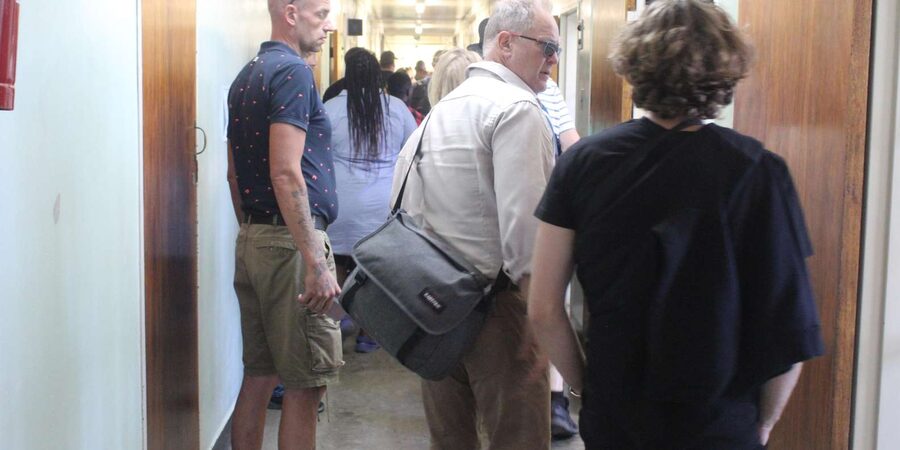
The leprosy graveyard shows that Robben Island had a history before it became known worldwide as a political prison. It points to the island’s use as a place of isolation for people with leprosy.
This stop changes the scale of the visit. You are not looking only at the Apartheid period. You are seeing how the island was repeatedly used to separate people from mainland society.
The site is also a reminder to pay attention to the full tour rather than rushing toward Mandela’s cell. The famous prison story attracts most of the attention, but these earlier sites help explain why the island became associated with removal and confinement.
Entering the maximum-security prison
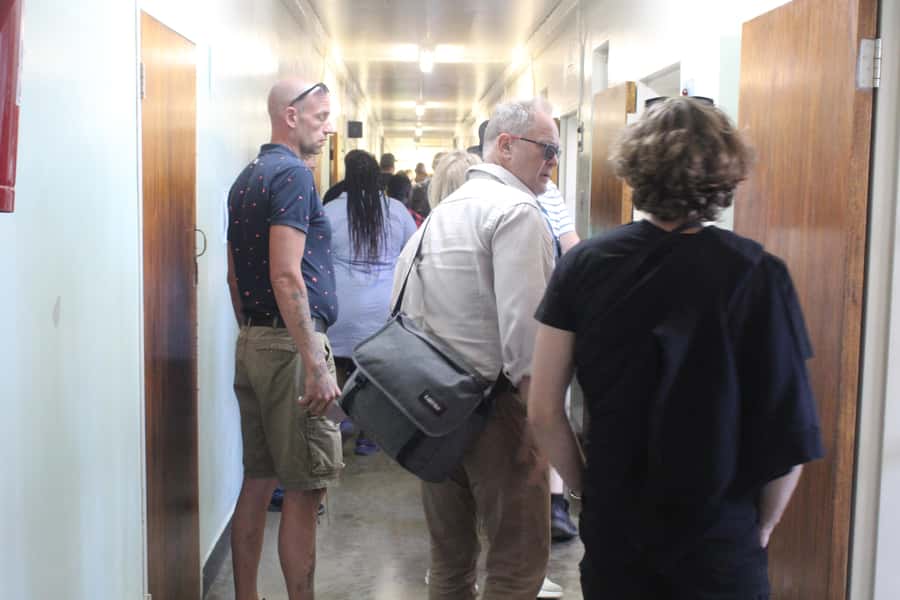
The maximum-security prison is the central setting for the political prisoner story. Here, the guide connects the buildings and cells to the daily reality of imprisonment during Apartheid.
The tour reaches its most anticipated point at Nelson Mandela’s former cell. It is a modest space, and that modesty is part of what makes it affecting. You are not entering a grand memorial. You are seeing the small physical setting in which Mandela spent many years.
The stop may be short, especially on a busy departure, but it does not need much decoration. The cell carries the meaning. The guide’s explanation gives it context, while the surrounding prison grounds show that Mandela’s confinement was part of a wider system.
I would not expect a private or silent visit. The bus schedule and group movement can make the prison feel busy. Even so, the cell is the moment most people come to see, and the tour delivers it.
Why the former-prisoner guide changes the experience

The guide is not simply there to point out buildings. The most valuable feature is the firsthand connection to prison life. Hearing from someone who was held there can make the history more immediate and less abstract.
That personal account also gives the tour an authority that a general city guide may not have. You are listening to someone connected directly to the prison’s past, while standing in the place where events occurred.
The guide speaks English, and the activity includes a live guide rather than a self-guided audio visit. If you want the full value of the tour, stay attentive even when the bus is moving and the schedule feels hurried. The explanations are the part you cannot recreate by walking around the island alone.
The experience is not designed as entertainment. You may find the narration plain, direct, or emotionally heavy. That is appropriate here. The island’s story does not need theatrical treatment.
Is $74 fair value for four hours?
At $74 per person, the price is reasonable if you want the ferry, island transportation, prison visit, and live historical guide combined in one half-day outing. You are paying for access to a place that is difficult to visit independently, plus the former-prisoner perspective that gives the sites meaning.
The value is strongest for first-time visitors to Cape Town who want a clear introduction to Robben Island without arranging each part themselves. The ferry ticket and island tour are included, so you are not building the visit from separate components.
The price feels less attractive if you expect a leisurely, small-group experience. The bus can be crowded, and the schedule may feel rushed. Food and lunch are not included, and hotel transportation is also left out. Budget for your own meal before or after the tour and your own transport to the V&A Waterfront.
The booking terms add useful flexibility. You can cancel up to 24 hours ahead for a full refund, and you can reserve now while paying later. That helps if your Cape Town plans are still shifting.
Still, allow room in your itinerary for operational changes. One recent booking for a 9 AM departure was cancelled without notice and had to be moved to another time. That is a serious inconvenience, especially if you have a tightly packed day or a flight afterward.
Who will enjoy this tour most?
I would recommend this experience to you if you want history explained on site and you value personal testimony. It suits first-time visitors, students of South African history, and anyone who wants to understand more than Mandela’s public image.
It is also a good choice if you prefer a fixed half-day plan. The route, ferry, island visit, and prison tour are arranged for you, with the same gateway used at the start and end.
You may want to think twice if you dislike boats, crowded buses, or tightly managed group tours. The island portion is not built around wandering at your own pace. People who need frequent stops or plenty of personal space may find the format tiring.
The tour is wheelchair accessible, which makes it a practical option for many people with mobility needs. The supplied information does not provide detailed accessibility arrangements for each stop, so you should confirm any specific requirements before booking.
Practical tips for a smoother visit
- Bring your passport or ID card, since it is listed as required.
- Wear comfortable clothes and take a jacket for the ferry.
- Check the exact departure time before leaving for the waterfront.
- Keep your schedule flexible in case a departure changes.
- Do not plan a flight or important appointment immediately after the four-hour window.
- If you are prone to seasickness, choose a different Cape Town activity.
- Listen closely during the bus sections because the guide may move quickly.
- Treat the outing as a historical visit first and a scenic ferry ride second.
Should you book the Robben Island tour?
Book it if Robben Island is important to you and you want the meaning of its buildings explained by someone with a personal connection to the prison. The former-inmate guide, Mandela’s cell, and the ferry views make this a powerful four-hour visit.
Book with realistic expectations. The organization has not always been smooth, and the bus circuit may feel crowded or rushed. Keep your plans flexible, bring a jacket and identification, and do not expect lunch or hotel pickup.
For most first-time Cape Town visitors, I think the historical value justifies the $74 price. This is not the most relaxed excursion, but it gives you access to one of South Africa’s most important places and helps you understand why its story still matters.
FAQ
Where does the Robben Island tour start?
It starts at the Nelson Mandela Gateway to Robben Island at the V&A Waterfront, beside the Clocktower.
How long does the full experience last?
The activity lasts about four hours, including the ferry ride, island tour, prison visit, and return ferry.
How long is the ferry ride to Robben Island?
The ferry ride to the island takes about 30 minutes. You return to Cape Town by ferry at the end of the visit.
Is the ferry ticket included?
Yes. The ferry ticket to Robben Island is included in the activity.
Is a prison tour included?
Yes. The experience includes a tour of Robben Island and the maximum-security prison, including Nelson Mandela’s former cell.
Who leads the guided tour?
A live English-speaking guide leads the visit. The guide is a former political prisoner who shares firsthand accounts of life during Apartheid.
What places do you see on Robben Island?
The tour includes the leprosy graveyard, Lime Quarry, Robert Sobukwe’s house, the maximum-security prison, and Nelson Mandela’s former cell.
Is hotel pickup included?
No. You must make your own way to the Nelson Mandela Gateway at the V&A Waterfront. Hotel pickup and drop-off are not included.
Is food included?
No. Food and lunch are not included in the price.
What should you bring?
Bring a passport or ID card, a jacket, and comfortable clothes. The activity is not suitable for people prone to seasickness.
Is the tour wheelchair accessible?
Yes. The activity is listed as wheelchair accessible. For specific access needs at individual stops, confirm the arrangements before booking.
Can you cancel the booking?
Yes. You can cancel up to 24 hours in advance for a full refund. You can also reserve now and pay later.
Just added in Cape Town
- Sunset Safari Big 5 Aquila with Snacks and Wine Tasting★ 5.0 · 12 reviews
- Explore Atlantis Sand Dunes with a 1hour 30mins sandboarding tour★ 5.0 · 5 reviews
- Private Tour to 20 Wine Tasting in Stellenbosch and Franschhoek★ 5.0 · 11 reviews
- Robben Island, Kirstenbosch wine tasting Tour★ 5.0 · 10 reviews
- Photoshoot in Cape Town’s most Gorgeous Locations★ 5.0 · 2 reviews
- Zip Line and Wine from Cape Town★ 5.0 · 14 reviews
- Private Transfer from Cape Town International Airport★ 5.0 · 4 reviews
- 1 Hour Cape Town City Center Photoshoot Experience★ 5.0 · 19 reviews
Robben Island Tours, compared.

Robben Island Ferry Ticket and Guided Prison Tour
Read our review →
Robben Island Ferry Tour with 1-Way Hotel Pickup
Read our review →
Robben Island Ferry with Prison Ticket and Tour
Read our review →

Robben Island Tour including Pick Up & Drop Off from Cape Town
Read our review →
Robben Island Ferry Ticket and Guided Prison Tour
Read our review →
Robben Island Experience: Pre-Booked Ticket & Return Transfers
Read our review →Browse the lists this tour appears in