
REVIEW · WHALE WATCHING
Hermanus: Boat Based Whale Watching Experience
Whales can make the ocean feel suddenly small. This 90-minute boat trip from Hermanus New Harbour takes you into Walker Bay to look for southern right whales and other marine life in open water. I like the respectful approach to the animals and the chance to see Hermanus from offshore. I also like the roomy boats, wide upper deck, and crew members who explain what you are seeing instead of simply pointing at a fin.
The main caution is the sea itself. Conditions can turn rough, and several people found the ride hard if they were prone to seasickness. Whale sightings are never guaranteed either, especially near the end of the season. Still, with a rating of 4.4 from 1,180 reviews and regular reports of whales, dolphins, seals, and calves, this is one of the most worthwhile ways to meet the marine life around Hermanus.
In This Review
- Quick points before you book
- Arriving at Hermanus New Harbour
- Leaving the harbour for Walker Bay
- Finding whales without chasing them
- Dolphins, seals, seabirds, and surprise sightings
- What the guides add to the trip
- The upper deck, seating, and photography
- How rough is the sea?
- Is $93 a fair price?
- The best time to go
- Who should book this trip?
- FAQ
- Where does the whale-watching boat leave from?
- How early should I arrive?
- How long is the boat trip?
- What wildlife might I see?
- Can I go onto the upper deck?
- What should I wear?
- Is the trip suitable for children and all ages?
- Should you book the Hermanus whale trip?
Quick points before you book
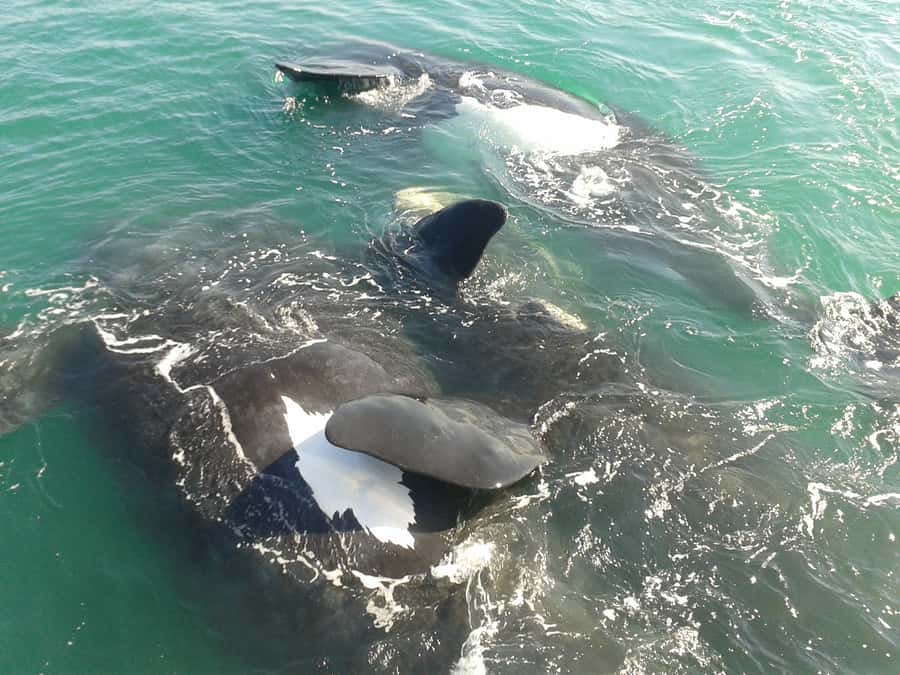
- Mother-and-calf sightings are a major highlight: Southern right whales are often seen with young calves, sometimes close to the boat or breaching in the distance.
- The upper deck offers the best views: When weather allows, you can get unobstructed views from above, though access may be delayed until whales are found in poor conditions.
- The crew puts animal welfare first: The boat stops and disengages its engines near whales, giving you time to watch without chasing them.
- Dolphins can steal the show: Large pods, including reports of hundreds of dolphins, are possible on the way out or back.
- September and October are strong choices: Sightings can continue later, but late November and December may bring fewer whales as they migrate away.
- Bring serious warm clothing: Wind, spray, and moving water can make the boat feel much colder than Hermanus on shore.
Arriving at Hermanus New Harbour
Your meeting point is Hermanus New Harbour, where you should arrive about 30 minutes before departure. After entering the harbour, look for the orange building on the right. That is where you check in and receive your physical ticket on the day.
There is a small harbour entrance fee of R5, payable when you enter. It is not included in the tour price, so keep a little cash available rather than arriving empty-handed.
The early arrival is useful, not just administrative. You have time to find the right building, use the facilities before boarding, and ask about the sea conditions. Coffee is provided on arrival, which is a welcome touch on a chilly morning.
The activity is run in English, and the crew gives a safety briefing before departure. That briefing matters because this is a real ocean trip, not a calm harbour cruise. You will need flat shoes and clothing that can handle wind and changing weather.
More Whale Watching Trips in Hermanus
- Hermanus: Whale and Dolphin Watching Boat Trip
★ 4.6 · 807 reviews - Whale Watching from Gansbaai
★ 5.0 · 327 reviews - Boat Based Whale Watching from Hermanus
★ 4.5 · 205 reviews
Leaving the harbour for Walker Bay
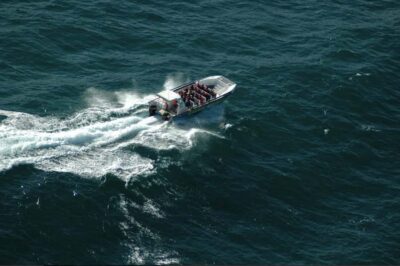
Once everyone is aboard, the vessel heads out from Hermanus New Harbour. The ride itself gives you a different view of the town and Western Cape coast. From the water, the harbour, shoreline, and surrounding hills take on a broader scale, and the journey becomes part of the experience rather than dead time before the whales appear.
The boat is described as comfortable and fast, with an upper deck that has been praised for its size. Some boats are arranged with tables rather than narrow rows of seats, which can work well for families and groups who want to sit together. The boat layout also gives you room to move when a whale appears on one side.
In calm conditions, you may be allowed onto the top deck before departure. If the sea or wind is rough, the crew may keep everyone below until the whales have been located. That rule may disappoint photographers at first, but it is sensible. A moving upper deck can be slippery and exposed, and the crew is clearly balancing good views with basic safety.
The supplied information gives the trip a duration of 90 minutes, while the operating details describe it as lasting about 1.5 to 2 hours. Allow roughly two hours for the full outing, including the safety briefing and time on the water. That gives you a more realistic buffer when planning lunch, a drive, or another activity in Hermanus.
Finding whales without chasing them
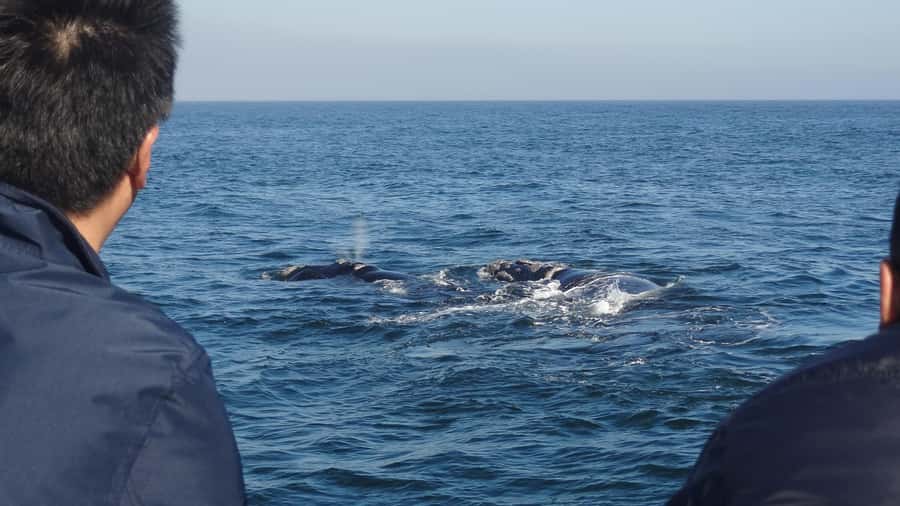
The crew searches the bay and uses its experience to spot blows, backs, and movement at the surface. Guides have been praised for identifying whales from far away and for explaining the different types you might see. Philip and Peter are among the guides specifically praised for their clear explanations and friendly manner, though the crew on your departure may be different.
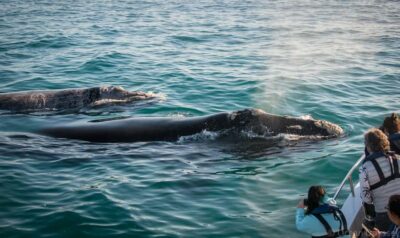
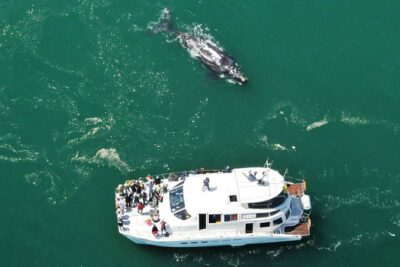
Once whales are found, the vessel can move closer under the operating rules described for the trip. It then stops, and the engines are disengaged to reduce the risk of injury from the propellers. This changes the mood onboard. Instead of racing after the animals, you sit with the boat quiet and wait to see what the whales choose to do.
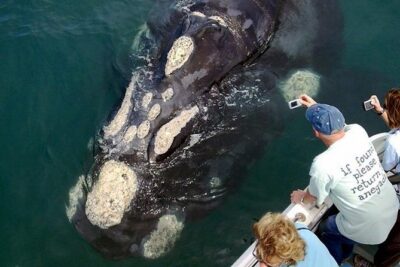
That is one of the strongest parts of the experience. A whale might surface several times, roll near the boat, or approach out of curiosity. You are not promised a close approach, but the method gives the animals space and gives you time to watch their behavior.
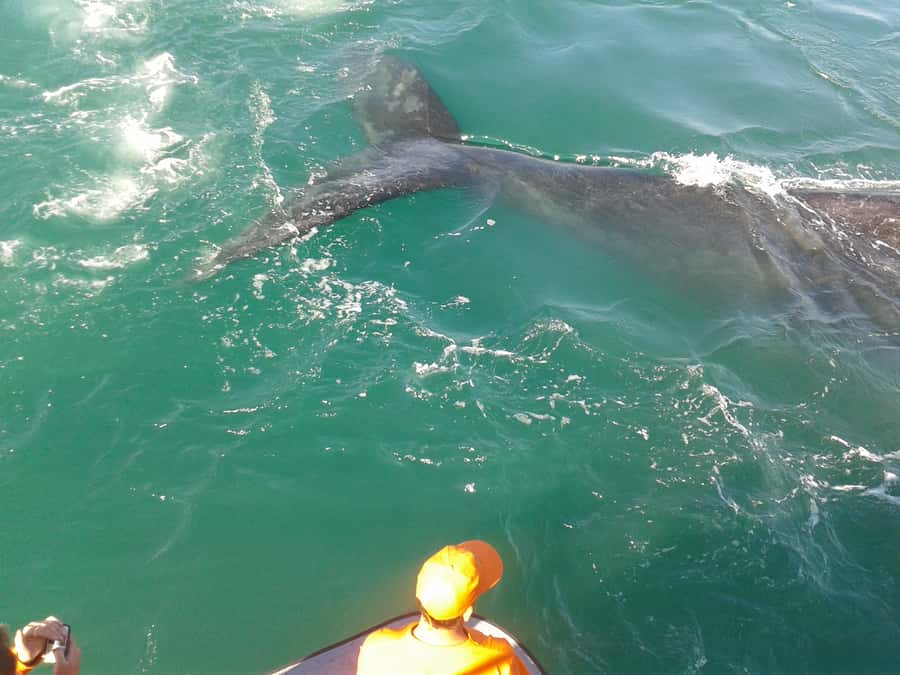
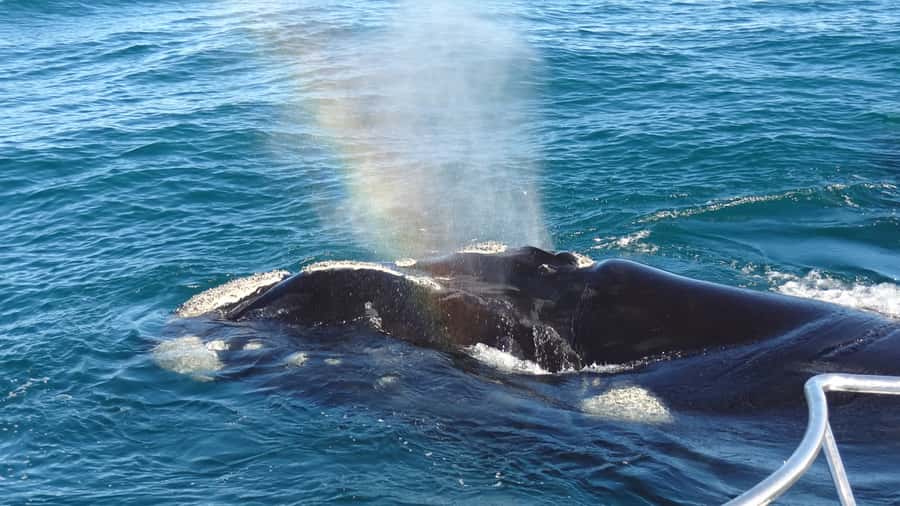
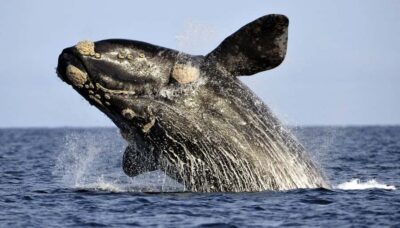
You may see a Southern right whale lifting its head, blowing a plume of mist, showing its broad back, or raising a tail before sinking out of sight. The quiet gaps are part of whale watching. A good crew helps you understand that the next sighting may come from a different direction, so keep scanning rather than staring at one fixed patch of water.
Several trips have recorded mothers with calves, including a calf estimated at around four meters long. Other sightings have included whales breaching in the distance, multiple groups near the surface, and even a rare white calf with its mother. These are special events, not standard promises, but they show the range of encounters possible in the bay.
Dolphins, seals, seabirds, and surprise sightings
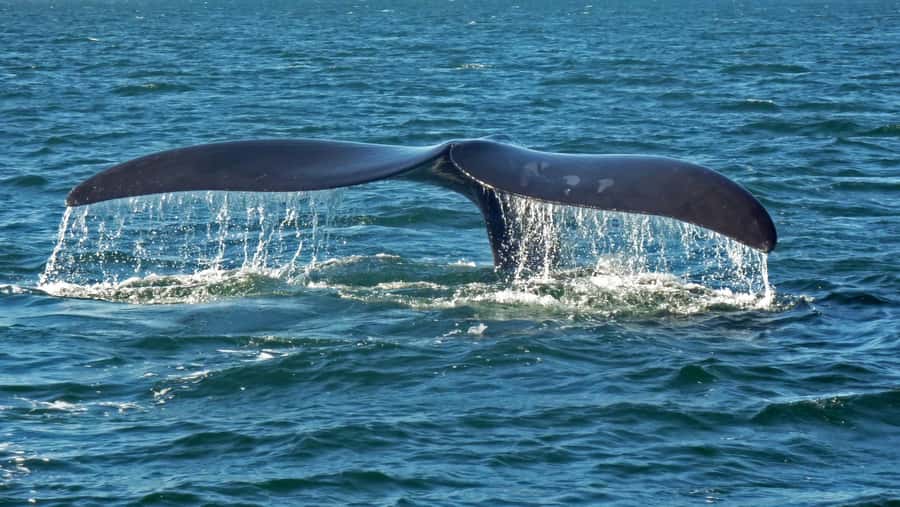
Whales are the main reason to book, but the wider marine life can make the outing feel full even when the whales remain distant. Dolphins are especially common in the recorded sightings, with reports ranging from a few animals to huge groups and even hundreds moving together.
A pod of dolphins can change the pace of the trip. You may see them cutting across the water, travelling beside the boat, or gathering in a dense group. They are quicker and less predictable than whales, so have your camera ready before the guide calls them out.
Seals and seabirds are also part of the possible mix. One outing included a sunfish surfacing beside the boat, a memorable reminder that the bay can offer surprises beyond the main attraction. You might also spend stretches simply watching the water and birds while the crew searches.
Not every trip includes every species. One outing produced whales but no dolphins, while another saw many dolphins after the whales had moved away. That is normal for a wildlife trip, and it is why I would judge the experience by the quality of the search and the crew’s handling of the animals, not only by a checklist.
Something quite different:
- From Hermanus or Cape Town: Shark Cage Diving Experience
★ 4.7 · 684 reviews - Half-Day White Shark Cage Diving from Gansbaai
★ 4.5 · 310 reviews - Shark Cage Diving
★ 3.5 · 221 reviews - Shark Cage Diving – Adventure Meets Conservation!
★ 5.0 · 196 reviews
What the guides add to the trip
The guide is more than a voice naming species. The best part of the commentary is the link between what you see and how the animals behave. The crew explains which whales may be present, answers questions, and points out details that are easy to miss from a distance.
The opening presentation helps set expectations before you leave. You learn what types of whales might be in the bay and what kind of sightings are realistic for the time of year. That is useful because it keeps the trip from turning into a simple race to find the largest animal.
Reports from the boat describe guides as friendly, experienced, passionate, and patient. That combination matters when the same questions come up repeatedly during the day. A good guide can keep the mood upbeat during a quiet spell without making exaggerated promises.
The crew has also been praised for organizing the boat well and keeping the focus on the whales. On some departures, multiple guides have helped locate animals from different parts of the boat. If you are photographing, listen closely to the calls from the crew, since a whale may surface behind you or on the opposite side.
The upper deck, seating, and photography
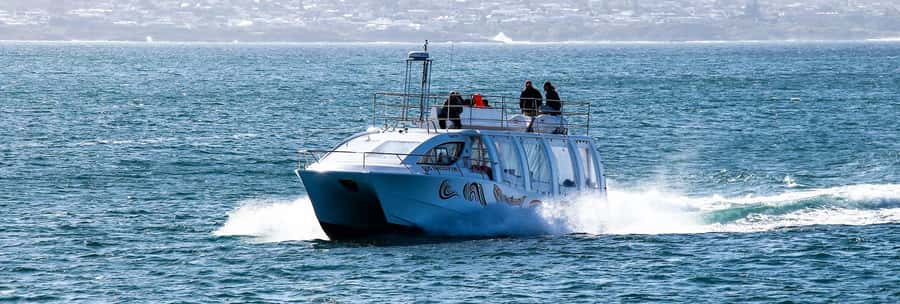
The upper deck is the prime viewing spot when conditions permit. It gives you a wider angle over the bay and makes it easier to follow whales that surface at a distance. People who had access to it described the views as excellent, especially when the boat was not crowded.
The deck may not be open before departure in poor weather. The crew can allow access after whales are found, once the conditions are judged safer. You should not count on spending the full trip upstairs, particularly if the wind is strong or the waves are high.
Photography is rewarding but not simple. The boat moves, the animals surface briefly, and spray can reach the deck. Morning trips may offer gentler water, while afternoon conditions can become rougher, making sharp photographs harder. A fast camera and a protective cover are useful, but neither can replace patience.
Keep your phone or camera secure and wear a jacket even on a sunny day. The most important picture may be the one you take with your eyes, since a whale can appear beside the vessel and disappear before you frame it.
How rough is the sea?
This is the practical issue you should take seriously. The boat operates on the ocean, and several accounts describe high waves or seasickness. If you often feel unwell on boats, this trip may be less enjoyable than a land-based whale-watching option from the cliffs around Hermanus.
The operator requires warm clothing, a windbreaker or jacket, a sun hat, sunscreen, and weather-appropriate layers. Bring all of them. Hermanus can feel pleasant on land while the open water is cold and windy.
Flat shoes are important for grip on the boat. Loose sandals are a poor choice, especially if you plan to move between decks. The activity is suitable for all ages, but children and older passengers should be comfortable with boat movement and changing weather.
Trips are weather permitting. A cancellation or change caused by conditions is not a flaw in the experience, but it is a reason to avoid planning your entire day around a tight connection immediately afterward.
Is $93 a fair price?
At $93 per person, this is not a casual harbour ride, but the price is reasonable if you value a properly crewed wildlife trip. It includes the 1.5 to 2-hour boat outing, a live English-speaking guide, water onboard, and coffee on arrival. The separate R5 harbour entrance charge is small, but you should still include it in your budget.
The value comes from the combination of boat quality, crew attention, and time spent looking for animals in their natural setting. A sighting is not staged, and the crew cannot promise a whale breaching beside the boat. What you are paying for is access to the bay, a safe vessel, experienced eyes, and a respectful way to watch.
The trip can feel especially worthwhile when several species appear together. Whales, dolphins, and seals have all been seen on the same outing, and some departures have included all three possible whale types. On quieter days, you may see only distant whales or dolphins, so keep your expectations realistic.
The operator also offers free cancellation up to 24 hours before departure and a reserve-now, pay-later option. Those terms are useful when your route depends on weather, though you should still check the exact starting time before booking.
The best time to go
The strongest whale sightings in the supplied trip reports cluster around August, September, and October. September departures have produced mothers with calves, all three possible whale types, and large dolphin pods. October has also brought close southern right whale sightings and breaching.
November can still be excellent. Several November trips saw whales, calves, seals, and dolphins, including a mother with a four-meter calf. But the season is beginning to wind down.
By late November and December, whales may have started migrating away. One December trip had no whales but did find many dolphins, while another late-season trip eventually located whales after a longer search. If whales are your top priority, I would choose August through October when your schedule allows. If you are visiting later, book for the full marine experience rather than a guaranteed whale encounter.
Who should book this trip?
I would recommend it to you if you want a close look at ocean wildlife and are comfortable with uncertainty. It suits families, couples, photographers, and anyone who prefers an active outing to a viewpoint on shore.
It is also a good fit if you care about animal welfare. The practice of stopping the boat and disengaging the engines near whales allows you to watch without a noisy chase. The crew’s repeated emphasis on keeping distance adds real value.
You may want to reconsider if you are highly prone to seasickness, dislike cold wind, or need a guaranteed wildlife sighting. The boat is roomy, but it is still a boat. Weather and animal behavior control the day.
FAQ
Where does the whale-watching boat leave from?
The trip departs from Hermanus New Harbour in the Western Cape. After entering the harbour, go to the orange building on the right-hand side.
How early should I arrive?
Arrive 30 minutes before the scheduled departure. Your physical ticket is provided when you check in on the day.
How long is the boat trip?
The advertised duration is 90 minutes. The operating details describe the boat outing as lasting about 1.5 to 2 hours, so allow roughly two hours overall.
What wildlife might I see?
Possible sightings include whales, dolphins, seals, and seabirds. A sunfish has also been seen on one outing, but no particular species is guaranteed.
Can I go onto the upper deck?
In good weather, you may be allowed onto the upper deck before departure. In less favorable conditions, access may be delayed until whales have been found.
What should I wear?
Wear warm clothing, a windbreaker or jacket, flat shoes, and weather-appropriate layers. A sun hat and sunscreen are also recommended.
Is the trip suitable for children and all ages?
Whale watching is suitable for all ages. However, the boat can encounter rough water, so anyone prone to seasickness should consider that before booking.
Should you book the Hermanus whale trip?
Yes, if you are ready for a real wildlife outing rather than a guaranteed show. The strongest reasons to book are the spacious boats, wide upper deck, careful approach to whales, and crew members who take time to explain what you are seeing.
Choose September or October for the best chance of busy whale activity, and arrive dressed for cold wind even on a sunny day. If the sea is rough or the season is late, you may see fewer whales, but dolphins, seals, seabirds, and the sheer scale of Walker Bay can still make the trip worthwhile. At $93, I consider it a good value for a well-run boat experience, provided you accept the two rules of whale watching: nature sets the schedule, and the ocean can be bumpy.
More Boat Trips in Hermanus
- Big 5 Sea Safari Boat Ride of Gansbaai or Walker Bay
★ 4.3 · 17 reviews - Gansbaai: Shark Cage Diving and Shark Viewing Boat Trip
★ 4.9 · 14 reviews - Cape Town: Hermanus Whale Watching Shared Boat & Penguins
★ 3.3 · 6 reviews - Cape Town: Hop-On Hop-Off Bus Tour with Optional Cruise
★ 4.8 · 3,929 reviews
Just added in Hermanus
- Hermanus & Overberg Birding★ 5.0 · 3 reviews
- Vineyard Safari and Wine Tasting in Hermanus with Guide★ 4.5 · 11 reviews
- Hermanus Food and Culture Tour★ 5.0 · 2 reviews
- Hemel-en-Aarde Wine Tour★ 5.0 · 2 reviews
- Hermanus Land based Whale Tour with Dave de Beer★ 5.0 · 24 reviews
- Ziplining Elgin★ 5.0 · 6 reviews
- Morning Fatbike Dune Tour★ 5.0 · 33 reviews
- Guided Shark Cage Diving with Hookah Air Supply in Gansbaai★ 4.5 · 41 reviews
Whale Watching, compared.

Browse the lists this tour appears in