
REVIEW · PENGUIN TOURS
Whale, Dolphin & Penguin Island Cruise
Wildlife comes first on this calm Algoa Bay outing. This small-group cruise uses a twin-engine catamaran and a slower pace, giving you time to watch dolphins ride the bow waves, scan for whales, and learn about the bay from conservation-minded crew. I like the personal feel and the strong focus on animal welfare. I also like that the operator supports tree planting to balance the cruise’s carbon footprint. The main drawback is simple: wildlife is wild, and whale sightings are seasonal rather than guaranteed.
The four-hour trip leaves once a day at 8 a.m. from the Nelson Mandela Bay Yacht Club in Port Elizabeth, now commonly called Gqeberha. With a maximum of 20 people, you have a much better chance of hearing the crew and getting a clear view than on a large sightseeing boat. Sea conditions can be choppy, though, and a rainy day may make photography and comfort harder.
In This Review
- Key points to know before you book
- Setting out from Port Elizabeth Harbour at 8 a.m.
- Humpback whales from June through early December
- Dolphins all year, from small pods to huge groups
- St. Croix Island and the African penguins
- Seals, seabirds, and the surprise sightings
- Why the conservation approach matters
- What the four hours feel like
- Is $185.19 a fair price?
- Who should book this cruise?
- Practical details before you leave
- Should you book the Whale, Dolphin & Penguin Island Cruise?
- FAQ
- Where does the cruise start and finish?
- What time does the cruise begin?
- How long is the experience?
- How many people can join the boat?
- When can I see humpback whales?
- When are southern right whales most likely?
- Can I cancel for a full refund?
Key points to know before you book
- Whales are seasonal: Humpbacks appear from June through early December, while southern right whales are most likely close to shore from July through September.
- Dolphins are the most dependable sighting: Indo-Pacific bottlenose dolphins can be seen all year, often in groups of 10 to 400.
- St. Croix Island is a major stop: The island supports an endangered African penguin colony, although numbers have fallen sharply.
- The boat carries no more than 20 people: That makes this a quieter, more personal cruise than a large harbor excursion.
- The crew puts conservation at the center: Expect explanations about animal behavior, threats, and the wider Algoa Bay ecosystem.
- Plan around the sea, not your watch: The trip needs suitable weather, and sightings can never be promised.
Setting out from Port Elizabeth Harbour at 8 a.m.
You meet at the Nelson Mandela Bay Yacht Club, at Dom Pedro Jetty in Port Elizabeth Harbour. The listed start time is 8 a.m., followed by a short safety briefing before the boat heads into Algoa Bay.
That early departure works well for a wildlife trip. You get a full morning on the water, and the outing has enough time to search different parts of the bay instead of rushing to one island and back. Since the cruise runs only once a day, you should arrive ready and avoid treating the start time as flexible.
The boat is a twin-engine catamaran. That design provides two useful benefits: it offers room for a small group, and it gives the skipper a practical platform for moving around the bay in search of wildlife. The vessel is described as clean and well maintained, and strong attention is given to safety.
The limit of 20 people matters. A small boat cannot guarantee animals, but it can improve the quality of the sighting. You are more likely to hear an explanation, ask a question, and move to a good viewing position without a crowd blocking your view.
More Boat Trips in Port Elizabeth
- Port Elizabeth: River Cruise on the Sundays River
★ 4.6 · 112 reviews - Port Elizabeth: Sandboarding with Short Boat Trip
★ 4.7 · 62 reviews - Shore Excursion Cruise Ships Port Elizabeth, Addo Elephant Park
★ 5.0 · 24 reviews
Humpback whales from June through early December
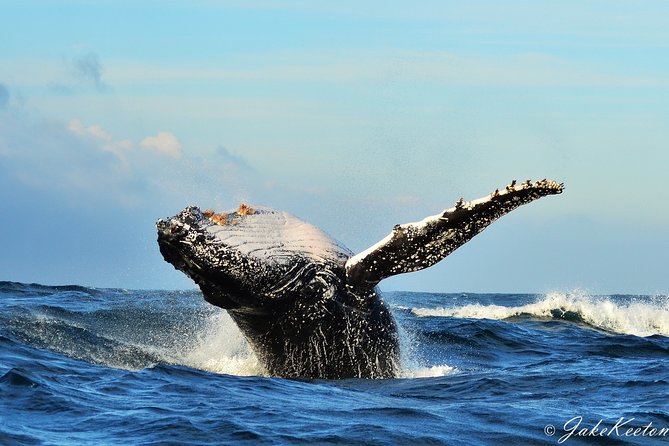
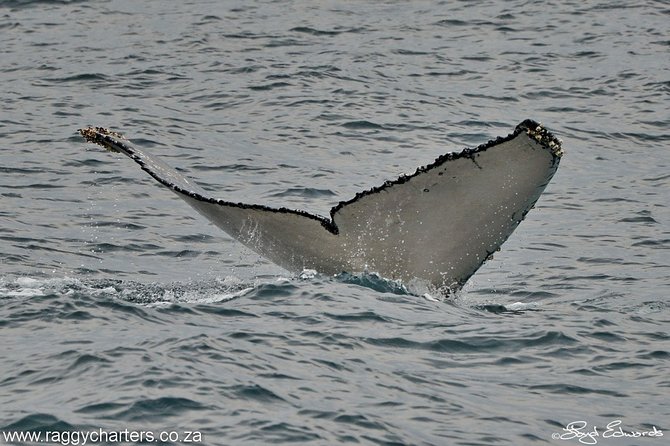
The whale calendar is one of the most useful details to understand before paying for this cruise. Humpback whales can be seen in Algoa Bay from June to early December as they move along the coast toward breeding grounds farther up the east coast of Africa.
From October, some humpbacks begin their return journey. Females may be accompanied by calves, which can make a sighting especially memorable, though there is no promise that you will see a mother and young whale on a particular departure.
Southern right whales are most likely close to shore from July through September. That gives you two different whale possibilities during the main winter and early spring period, but the exact timing still depends on the animals and the sea.
The boat’s slower pace is a real advantage here. Whale watching is not a race to a fixed viewing point. You need time to scan the water, watch for a blow, and allow the skipper to approach carefully without chasing the animal. The crew’s role is not just to point out a fin. They explain what you are seeing and why the species uses the bay.
Keep expectations sensible. A whale may surface close to the boat, or it may remain distant and brief. One of the strongest accounts from this outing describes a mother and baby humpback, while another reports a whale close to the boat. Those are excellent possibilities, not a guarantee.
Dolphins all year, from small pods to huge groups
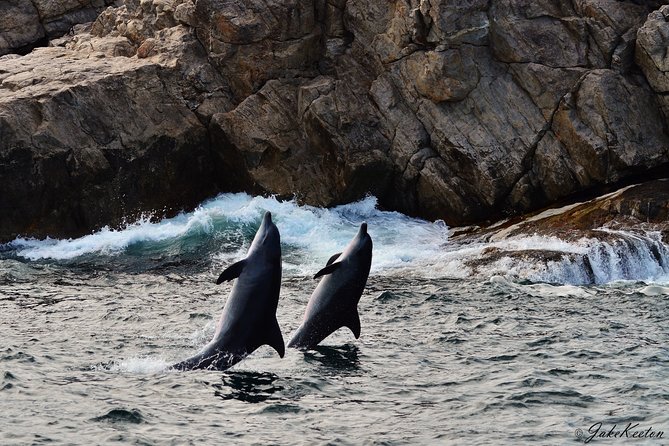
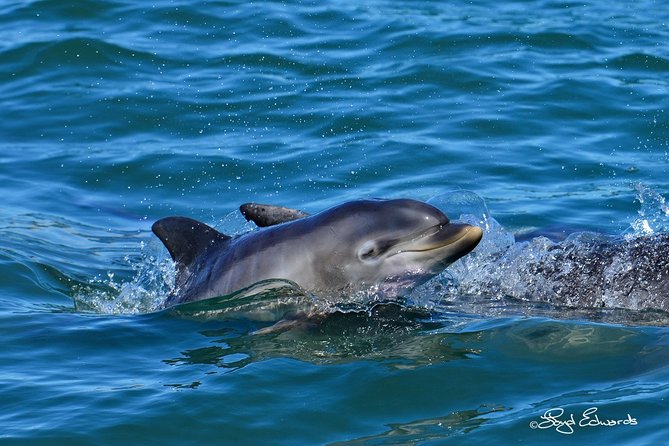
Dolphins are the best reason to consider this cruise outside whale season. Indo-Pacific bottlenose dolphins live in or pass through the bay throughout the year, often in groups ranging from 10 to 400.
They are frequently found in shallow water near beaches or around St. Croix Island. When conditions are right, they may approach the boat and ride in the bow waves. That behavior gives you the kind of close, active sighting that works well for photographs, though you still need patience and a fast camera.
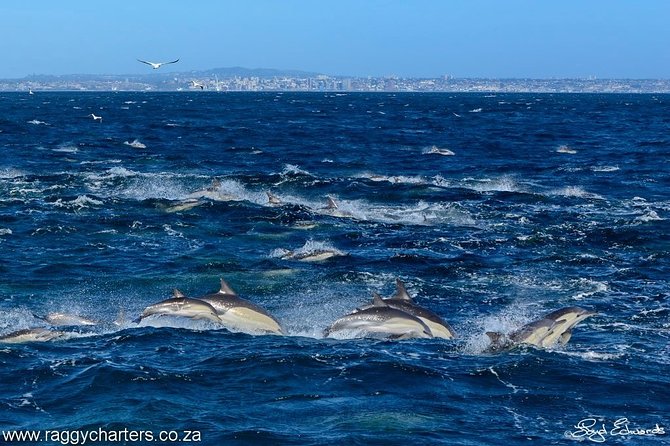
Common dolphins are another possibility. They may gather in groups of 1,000 to 2,000 and travel at high speed farther offshore, especially where baitfish are present. Seeing a large pod move as one body across the sea can be more dramatic than a close look at a single animal.
Algoa Bay also has humpback dolphins, although they are less routinely seen. The range of species gives the crew plenty to discuss, even when the day’s main target does not appear.
The practical point is that you are not booking only a whale hunt. Dolphins are seen all year, and the bay can produce several kinds of marine life on one morning. Several outings have included dolphins, seals, penguins, and whales, while one group saw about 200 dolphins. The exact number changes from day to day, but the odds of an interesting dolphin encounter appear stronger than the odds of a whale sighting outside whale season.
St. Croix Island and the African penguins
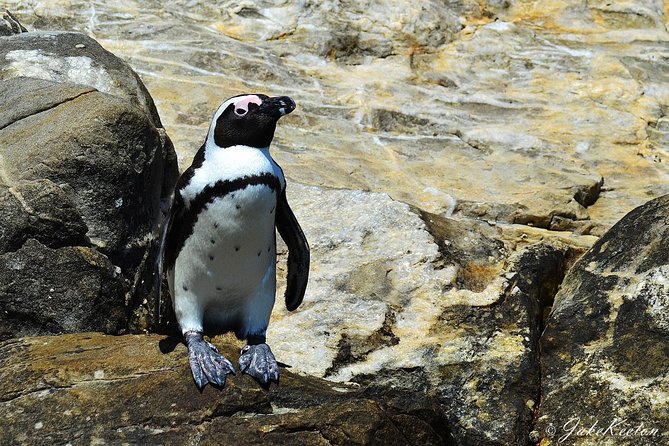
St. Croix Island is the emotional center of the trip. It is home to an endangered African penguin colony, once described as numbering about 12,000 birds and as the largest breeding colony in Africa.
The conservation situation is serious. The colony has lost 70 percent of its population in 10 years. That fact changes the way you should view the stop. This is not simply a photo opportunity with cute birds. It is a chance to see a threatened species in its natural setting while learning about the pressure facing the colony.
You view the penguins from the boat rather than walking through the colony. That limits how close you can get, but it also keeps the encounter less intrusive. You might see birds on the island, in the water, or hunting for fish. During the main breeding period from March to May, chicks may be visible from the boat.
The number of penguins can vary. One account points out that there are fewer birds now, partly because of overfishing. That is an important warning for anyone expecting a solid black-and-white carpet across the island. You may see fewer penguins than old photographs suggest, but the sighting carries more weight because the species is under pressure.
St. Croix and Brenton Island also support African black oystercatchers, white-breasted cormorants, and Cape cormorants. The islands are part of Addo Elephant National Park, allowing rangers to patrol the area. That protected status adds useful context to the cruise: the crew is showing you a living ecosystem, not just a single headline species.
More penguin trips:
- Cape Town: Cape of Good Hope & Penguins Day Tour with Pickup
★ 4.7 · 3,362 reviews - Cape Point and Boulder’s Penguins Full Day Tour
★ 5.0 · 3,118 reviews - From Cape Town: Cape Point & Boulders Beach Full-Day Tour
★ 4.8 · 3,032 reviews - Cape of Good Hope & Boulder Penguins Full-Day Tour from Cape Town
★ 5.0 · 2,347 reviews
Seals, seabirds, and the surprise sightings
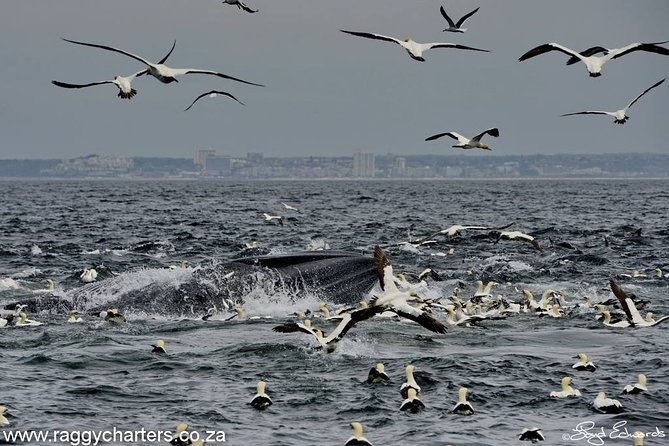
The bay can offer much more than the three animals in the tour name. Possible sightings include Cape fur seals, Bryde’s whales, minke whales, sharks, Cape gannets, terns, petrels, skuas, shearwaters, albatrosses, and several other pelagic birds.
This variety is one reason I would not judge the trip only by its whale count. A morning can still be worthwhile if dolphins are active, penguins are feeding, seals are resting, and seabirds are working the surface.
Past outings have included seals sunning themselves, penguins swimming out to feed, and even a hammerhead shark. Those less predictable sightings are a bonus, not part of a fixed schedule. The crew can search and explain, but it cannot control what appears in the water.
Birdwatchers should pay attention to the open sea as well as the islands. Cape gannets and pelagic birds may be easier to spot when baitfish are moving through the bay. The guide’s explanation helps you notice behavior, not just species names. A flock wheeling over the water can tell you something about feeding activity below.
Why the conservation approach matters
The cruise is built around a slower, lower-pressure style of wildlife watching. A small group gives the skipper more room to make careful choices, and the conservationist crew explains the ecosystem rather than treating the animals as props.
I especially like the tree-planting campaign, which is intended to balance the cruise’s carbon footprint. No boat trip is impact-free, but this effort shows that the operator is trying to address its environmental cost.
The conservation message also makes the trip more honest. You learn that African penguin numbers have fallen, that overfishing affects food supplies, and that protected islands still need active care. The result is a better understanding of why a close wildlife encounter should be handled with restraint.
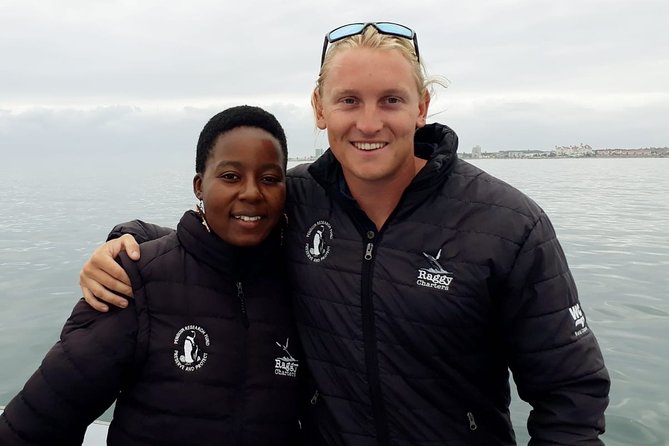
Crew members have been praised for clear safety attention, careful boat handling in choppy conditions, and strong explanations of animal behavior. Jake is one crew member specifically named for sharing local marine knowledge and helping make the journey memorable. The full crew is involved rather than leaving all the talking to one guide.
What the four hours feel like
The trip lasts about four hours, including the briefing, time spent searching the bay, viewing marine animals, and returning to the harbor. It is long enough to cover several areas without turning into a full-day expedition.
The pace is intentionally relaxed. You may spend time waiting, scanning, and repositioning the boat. That can feel quiet compared with a fast sightseeing trip, but it is the right rhythm for wildlife. The reward comes when a dolphin pod appears or a whale surfaces after a stretch of empty water.
The sea may be smooth, rainy, or choppy. One outing took place in heavy rain and still produced dolphins and penguins. Another was praised for the skipper’s handling in rougher conditions. Even so, you should dress for changing weather and accept that comfort depends partly on the day.
The tour requires suitable weather. If poor conditions force a cancellation, you can choose another date or receive a full refund. If the minimum number of people is not reached, the same options apply.
Is $185.19 a fair price?
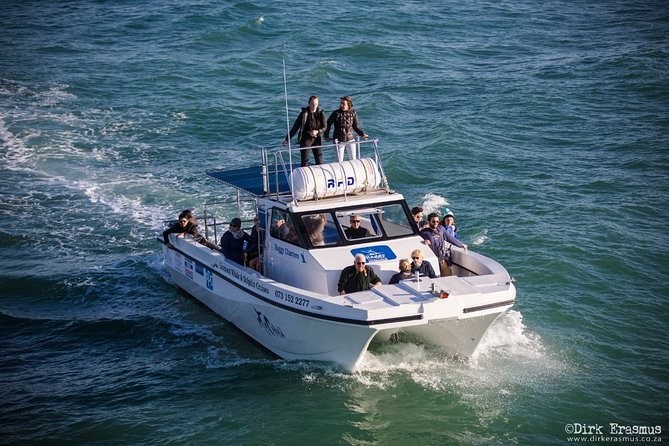
At $185.19 per person, this is not the cheapest way to spend a morning in Port Elizabeth. The value comes from the combination of a small maximum group, a four-hour outing, a specialist crew, and the chance to see several marine species in one bay.
You are paying for time and attention, not simply transport. On a crowded boat, an animal may appear on the wrong side of the vessel while you struggle to hear the guide. A maximum of 20 people gives this cruise a more personal feel and makes questions and photographs easier.
There is also a useful comparison for cruise-ship passengers. Booking directly can cost much less than taking a cruise excursion, and the same boats may be used. If you are staying in the area or can reach the harbor yourself, compare the direct price with any packaged shore excursion before booking.
The price makes the most sense for people who care about the quality of the wildlife experience. If your only goal is a guaranteed penguin photograph, this is a risky purchase because conditions and animal behavior vary. If you value marine education, responsible viewing, and a relaxed boat ride, the cost is easier to justify.
Who should book this cruise?
I would choose this outing if you want a focused marine wildlife experience rather than a quick harbor ride. It suits couples, families, photographers, birdwatchers, and anyone interested in conservation.
There is no stated age restriction, and life jackets are available for all ages. People with disabilities can join if they can board with assistance from family and crew. You should make your own decision based on health and fitness, since this is a boat trip in open water and sea conditions can change.
The cruise is especially appealing during the main whale period from June through early December, with July through September offering the best stated chance for southern right whales near shore. March through May may be attractive if seeing penguin chicks matters most.
I would be more cautious if you dislike boats, get motion sick, need a guaranteed timetable, or are visiting on a very tight schedule. The trip runs only once a day, starts at 8 a.m., and can be affected by weather.
Practical details before you leave
The meeting point is the Nelson Mandela Bay Yacht Club at Dom Pedro Jetty, Port Elizabeth Harbour, Gqeberha Central. The cruise returns to the same place, which makes planning your morning simpler.
Confirmation is provided when you book, and the meeting point is near public transportation. Free cancellation is available if you cancel at least 24 hours before the start time. Cancellations made later are not refunded, and changes inside that window are not accepted.
Bring the right mindset as much as the right clothing. You may see whales, dolphins, penguins, seals, or seabirds, but no wildlife cruise can promise a particular animal. The best approach is to enjoy the bay as a whole and let the rarer sightings be a bonus.
Should you book the Whale, Dolphin & Penguin Island Cruise?
Yes, if you want a small, conservation-focused boat trip with a strong chance of dolphins and a real possibility of whales, penguins, seals, and seabirds. The crew’s safety care, detailed explanations, and calm handling receive especially strong praise, and the 20-person limit gives the outing a personal feel.
Book during the relevant wildlife seasons if whales are your priority. Choose March through May if African penguin chicks are important to you, and remember that the colony has declined sharply. If you can accept uncertain sightings, changing sea conditions, and an early start, this is one of the better ways to experience Algoa Bay without turning wildlife into a hurried checklist.
FAQ
Where does the cruise start and finish?
It starts and ends at the Nelson Mandela Bay Yacht Club, Dom Pedro Jetty, Port Elizabeth Harbour, Gqeberha Central, South Africa.
What time does the cruise begin?
The cruise begins at 8 a.m. after a short briefing.
How long is the experience?
The cruise lasts approximately four hours.
How many people can join the boat?
The maximum group size is 20 people.
When can I see humpback whales?
Humpback whales can be seen in Algoa Bay from June through early December. They begin returning from October, sometimes with calves.
When are southern right whales most likely?
Southern right whales can be seen close to shore from July through September.
Can I cancel for a full refund?
Yes. You can cancel for a full refund up to 24 hours before the experience starts. Poor weather or failure to reach the minimum number of participants may also result in a different date or a full refund.
More Whale Watching Trips in Port Elizabeth
- Hermanus: Boat Based Whale Watching Experience
★ 4.4 · 1,180 reviews - Hermanus: Whale and Dolphin Watching Boat Trip
★ 4.6 · 807 reviews - From Cape Town: Hermanus Whale Watching Boat Trip
★ 4.4 · 378 reviews - Plettenberg Bay: Whale Watching Boat Cruise
★ 4.4 · 362 reviews
Just added in Port Elizabeth
- Sunrise Safari – through Addo Park to Schotia reserve★ 4.5 · 6 reviews
- Schotia Private Game Reserve Safari★ 4.7 · 35 reviews
- Private Addo Elephant National Park Half Day Tour★ 5.0 · 4 reviews
- Private Addo & Schotia Full Day Tour★ 5.0 · 3 reviews
- Port Elizabeth:Kragga Kamma Private game reserve safari★ 4.8 · 3 reviews
- Port Elizabeth:2-Day Schotia Safaris & Addo Wildlife Reserve★ 4.0 · 4 reviews
- Port Elizabeth: Sundays River Cruise and Kragga Kamma★ 4.8 · 7 reviews
- Port Elizabeth tuk-tuk tour, experience the natural beauty.★ 4.8 · 33 reviews
Penguin Tours, compared.
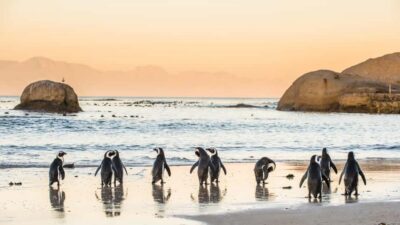
Cape of Good Hope & Penguins Day Tour with Pickup
Read our review →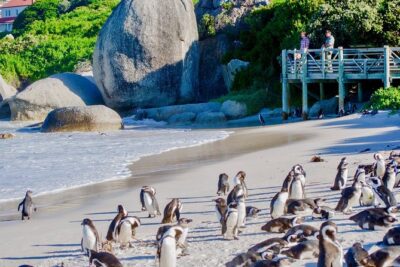
Cape Point and Boulder’s Penguins Full Day Tour
Read our review →
Cape of Good Hope & Boulder Penguins Full-Day Tour from Cape Town
Read our review →
Table Mountain, Penguins & Cape Point Small Group Tour Cape Town
Read our review →
Cape Town Tour: Table Mountain, Penguins & Cape Point+Pickup
Read our review →
Table Mountain, Cape Point, & Penguins Group Tour
Read our review →Browse the lists this tour appears in