
REVIEW · CITY TOURS
Johannesburg: City of Gold Guided Tour
Gold still shapes the city. This four-hour tour gives you a fast, useful introduction to Johannesburg, from the Top of Africa views to the street life of Maboneng, Braamfontein, Newtown, Hillbrow, and Melville. I like the small group size, limited to 10 people, and I like the chance to meet locals and expats in Melville. The main drawback is that the schedule is packed, so you should expect a broad city overview rather than long visits at each stop.
I also like the choice of pickup points across Rosebank, Hyde Park, Melville, Parktown, Sandton, and Randburg. That makes the tour easier to fit into a Johannesburg stay. Keep in mind that lunch is optional, entrance fees are not included, and the tour involves walking, so comfortable shoes matter.
In This Review
- Key points to know before booking
- A four-hour introduction to the City of Gold
- Starting from six convenient pickup areas
- Seeing Johannesburg from the Top of Africa
- Mandela Square and Nelson Mandela’s public legacy
- A traditional African herb market
- Maboneng, Braamfontein, and Newtown
- Hillbrow and the city’s restless energy
- Melville conversations with locals and expats
- Optional Constitutional Hill and Apartheid Museum visits
- What the $130 price really covers
- Lunch, walking, and what to bring
- Cancellation and planning details
- Who should book this Johannesburg tour?
- Should you book the City of Gold Guided Tour?
- FAQ
- How long does the Johannesburg City of Gold Guided Tour last?
- What language is the tour conducted in?
- How many people are in the group?
- Where can pickup take place?
- Where can the tour end?
- Is lunch included?
- Are entrance fees included?
- Can I cancel the tour?
Key points to know before booking
- Top of Africa views: Look across Johannesburg from one of the city’s best-known high points.
- Five distinct city areas: Maboneng, Braamfontein, Newtown, Hillbrow, and Melville each offer a different view of Johannesburg.
- Mandela Square and an herb market: Connect Nelson Mandela’s public legacy with a traditional African market experience.
- Small French-speaking group: The tour is limited to 10 participants and includes a live guide in French.
- Optional cultural stops: Constitutional Hill and the Apartheid Museum can be added, though entrance fees are extra.
- Flexible hotel pickup: Meet at the reception area, or outside at the scheduled time if your guide cannot enter the property.
A four-hour introduction to the City of Gold
Johannesburg can feel confusing at first. It is not one compact old town with all the main sights gathered around a central square. The metropolitan area is made up of many nodes and neighborhoods, each with a different mood and past.
That is why I see value in a guided overview like this. In four hours, you get a sense of how the city fits together. You move from a high-rise viewpoint to public spaces, markets, creative districts, and neighborhoods shaped by migration and change.
Johannesburg’s identity comes from the gold rush that transformed the region. Even today, a few determined people search for small pieces of gold. The city has grown into South Africa’s largest, with more than 12 million people in its wider metropolitan area.
You will not understand all of Johannesburg in half a day. You can, however, get useful bearings and decide which areas deserve more of your time.
A few more in Johannesburg
- From Johannesburg: Pilanesberg Nature Reserve Game Safari
★ 4.8 · 1,327 reviews - Johannesburg: Hop-On Hop-Off Bus with Optional Soweto Tour
★ 4.6 · 985 reviews - Soweto /Johannesburg and Apartheid Museum Guided Full Day Tour
★ 5.0 · 932 reviews
Starting from six convenient pickup areas
The tour includes pickup from Rosebank, Hyde Park, Melville, Parktown, Sandton, or Randburg. Your guide meets you at the reception area at the scheduled time. If the guide cannot enter the hotel, wait outside at the agreed time.
This arrangement is practical, but you should take the meeting point seriously. A city tour with several stops has little spare time, and a late start can shorten the time available for neighborhoods and optional visits.
The return options cover the same six areas: Sandton, Randburg, Parktown, Rosebank, Hyde Park, and Melville. That gives you a reasonable chance of ending near your accommodation rather than arranging a second ride across the city.
The tour lasts four hours. Because the route includes several districts, expect time in the vehicle between stops along with walking. If you have back problems, this may not be a good fit. Everyone should bring water, sunscreen, and shoes suitable for walking.
Seeing Johannesburg from the Top of Africa
The tour begins with one of its clearest visual moments: the Top of Africa building. From above, Johannesburg makes more sense. You can see the scale of the city and appreciate how far its urban districts spread.
This stop is especially useful early in your visit because it gives you a mental map. Later, when you pass through areas such as Newtown or Hillbrow, you have a better sense that these are parts of one large, connected city rather than isolated attractions.
Bring a camera. The view is one of the tour’s strongest photo opportunities, and the elevated position offers a perspective you cannot get from street level.
There is one practical limitation. The tour price does not include entrance fees to attractions. If entering the Top of Africa building requires a separate ticket at the time of your visit, that cost is extra. Ask about current fees when booking so the $130 price does not catch you by surprise.
Mandela Square and Nelson Mandela’s public legacy
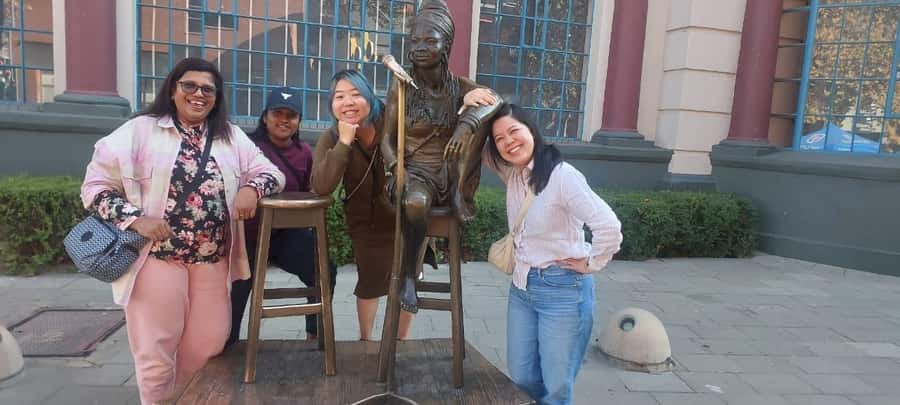
Mandela Square offers a more polished and formal side of Johannesburg. The square is linked with Nelson Mandela’s legacy and gives your guide a natural place to explain his role in the country’s public life.
I like this stop because it connects a major national figure with the city you are seeing around you. It is not only a photo stop. It provides a chance to think about how Mandela’s name is remembered in modern South Africa and how public spaces help shape that memory.
The square also adds contrast to the rest of the route. After seeing Johannesburg from above, you move into a public gathering place with a different feel from the older and more street-oriented districts later in the day.
Do not expect a long museum visit here. The tour’s purpose is to place Mandela Square within a wider city story, not to make it the only focus.
Something quite different:
- Johannesburg Hop-On Hop-Off City Tour with Soweto Option
★ 4.5 · 768 reviews - Full Day Ultimate Pilanesberg National Park Safari from Johannesburg or Pretoria
★ 4.5 · 718 reviews - Half-Day Tour of Soweto Tour
★ 4.5 · 712 reviews - Soweto: Walking Tour with a Local Guide and Lunch
★ 4.9 · 648 reviews
A traditional African herb market
The stop at a traditional African herb market adds a more local, everyday element to the day. Markets can tell you about health practices, commerce, and cultural traditions in ways that formal monuments cannot.
Your guide can help explain what you are seeing and put the market into context. This is a useful reason to choose a guided tour rather than simply driving past the area. Without local interpretation, the market might seem like a quick colorful stop. With explanation, it becomes part of Johannesburg’s living culture.
You should approach this visit with respect and curiosity. It is not a staged attraction designed only for photographs. Listen, ask sensible questions, and avoid treating the people and products as props.
The information provided does not specify what products are sold or whether purchases are expected. Bring a camera if you want to record the setting, but focus first on observing and listening.
Maboneng, Braamfontein, and Newtown
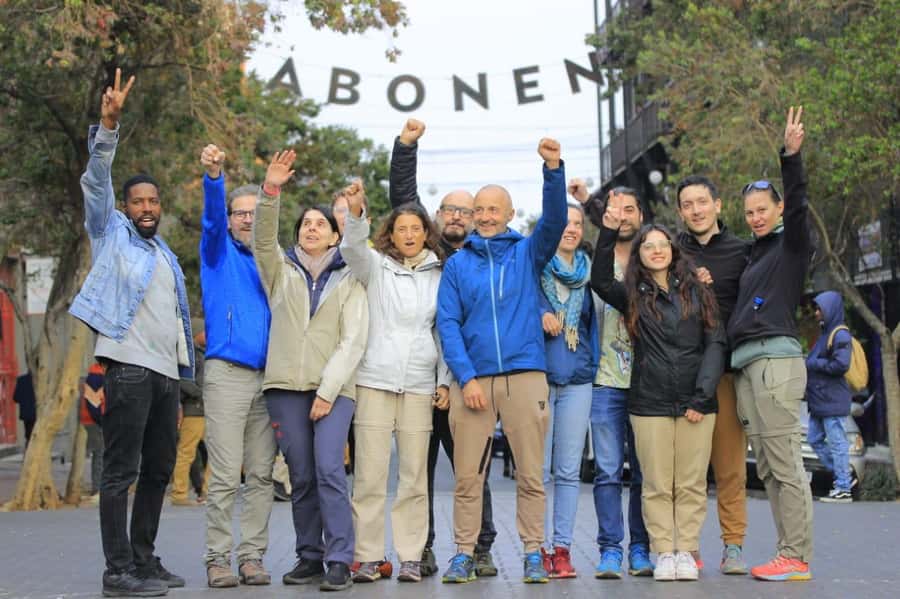
The tour visits three districts known for creative energy and changing city life: Maboneng, Braamfontein, and Newtown. Each area gives you another piece of Johannesburg.
Maboneng is associated with arts, food, and new urban activity. It is a useful place to see how parts of the inner city are being reshaped. You might find galleries, cafés, public art, and renovated spaces alongside older buildings and ordinary city life. The point is not to label the area as simply new or old. Johannesburg often puts both together on the same block.
Braamfontein brings another kind of city atmosphere. It is one of the stops where you can see younger, more social urban life. The tour does not promise a long independent exploration, so use the time to watch how people use the streets and listen to your guide’s explanation.
Newtown adds an arts and culture angle. Together, these three areas help you understand that Johannesburg is not only a business center. It is also a place where music, art, food, commerce, and local communities meet.
Because the tour covers several districts in one morning or afternoon, your stops may be brief. If one neighborhood interests you most, ask your guide for suggestions about returning later. That is one of the best uses of a city overview.
Hillbrow and the city’s restless energy
Hillbrow is known for its energy and for the strong impression it can make on first-time visitors. The tour includes the district as part of its effort to show Johannesburg beyond the polished commercial zones.
Your guide is important here. Hillbrow should not be reduced to a quick photograph or a simple story about danger and disorder. It is a lived-in part of the city, and a local guide can help you see the people, movement, and urban pressures in a more balanced way.
Stay with the group and follow the guide’s instructions. The supplied information does not promise free time for wandering, and this is not the place to split off on your own during a tight schedule.
I value the inclusion of Hillbrow because it keeps the tour from presenting Johannesburg as only a skyline, shopping district, and set of renovated arts spaces. You see a harder, more complicated side of the city. That makes the overall experience more honest.
Melville conversations with locals and expats
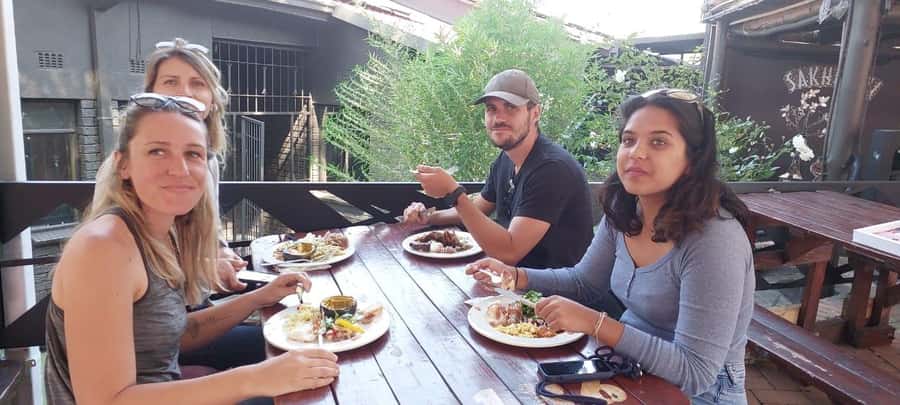
Melville is the final neighborhood named in the route, and it brings a social, multicultural note to the tour. You have an opportunity to engage in conversation with locals and expats, which can be one of the most memorable parts of a short city visit.
This is where the tour can feel less like sightseeing and more like an exchange. You are not only looking at buildings. You are hearing how people connect with Johannesburg as a home, a workplace, or a place they chose to live.
The amount of conversation will depend on timing and the people available, so do not treat it as a guaranteed discussion with a particular person. Still, the opportunity is valuable. A few direct conversations can give you a better sense of daily life than another viewpoint ever could.
Melville is also one of the pickup and drop-off areas. If you are staying there, the tour is especially convenient. If not, it is still a useful final stop because it adds a personal note after the city’s larger historical and architectural themes.
Optional Constitutional Hill and Apartheid Museum visits
Constitutional Hill and the Apartheid Museum are optional additions. They can add serious historical context to the city, but you should confirm how they affect the four-hour schedule and what entrance fees apply.
Neither attraction is included in the tour price. The supplied details do not specify the extra cost or the exact amount of time allocated to either site, so ask before committing to the option.
I would treat these visits as a priority for anyone who wants more than a general city introduction. Johannesburg’s neighborhoods make more sense when you understand the political and social forces that shaped South Africa.
At the same time, adding both sites to a route that already includes many districts may make the day feel rushed. If you prefer a slower visit, consider using this tour for the city overview and arranging a separate visit to the museum or Constitutional Hill.
What the $130 price really covers
The price is $130 per person. That is not a bargain-priced hop-on bus, but the comparison is not quite fair. You are paying for a four-hour guided route, hotel-area pickup and drop-off, a small group of no more than 10 people, and a French-speaking guide.
The value is strongest if you want context and transport between several areas. A private car or separately arranged guide could cost more, while visiting all these districts independently would take planning and local transport decisions.
The price is less attractive if you want long stops, included meals, or admission to major attractions. Lunch is not included, though the guide can stop at a local restaurant if you select or request that option. Entrance fees are also extra.
For the best value, use the tour as your Johannesburg orientation. Note the neighborhoods that interest you, then return to one or two later with more time.
Lunch, walking, and what to bring
Lunch is an optional stop at a local restaurant. Since it is not included, you should ask about the arrangement before the tour begins. A food stop can make the day more comfortable, especially if your starting time overlaps with a meal, but it will also use part of the four-hour schedule.
Wear comfortable shoes. Walking is part of the experience, and the route includes markets, public spaces, and neighborhoods rather than only vehicle-based sightseeing.
Bring:
- Water, especially on hot days
- Sunscreen
- A camera
- Comfortable walking shoes
Smoking is not allowed during the activity. The tour is not suitable for people with back problems.
The small group format is a real advantage. With up to 10 participants, it should be easier to hear the guide, ask questions, and keep the group together in busy areas. The language is French, so confirm that it suits you before booking.
Cancellation and planning details
You can cancel up to 24 hours before the tour for a full refund. The reserve-now-and-pay-later option also helps if your Johannesburg plans are still shifting.
Starting times depend on availability. Since the tour is only four hours, choose a time that leaves room for your other plans and possible traffic delays. The pickup area list is generous, but your exact meeting instructions still matter.
I would confirm three things before paying: the tour start time, the meeting location at your hotel, and the cost of optional attractions. Those details affect how smoothly the day runs.
Who should book this Johannesburg tour?
I would recommend this tour to first-time visitors who want a broad introduction without arranging several separate outings. It suits anyone interested in city history, public life, neighborhood change, and local conversation.
It is also a good match for French-speaking visitors who prefer to ask questions in French. The group limit of 10 keeps the experience more personal than a large coach tour.
You may want another option if you dislike moving quickly, need a fully accessible activity, or want to spend half a day at one museum. The route covers a lot, and that means each stop receives only part of the four-hour schedule.
Should you book the City of Gold Guided Tour?
Book it if you want to see several sides of Johannesburg in one organized outing. The Top of Africa viewpoint, Mandela Square, the herb market, Hillbrow, the creative districts, and conversations in Melville create a useful first picture of the city.
Skip it if your priority is a long museum visit, included lunch, or a slow walk through one neighborhood. For most first-time visitors, though, the $130 cost can be fair value, especially when small-group transport, French guiding, and hotel-area pickup are important.
Use the tour to get your bearings, then return to the places that catch your interest. That is the smartest way to make a four-hour city introduction work for you.
FAQ
How long does the Johannesburg City of Gold Guided Tour last?
The tour lasts four hours.
What language is the tour conducted in?
The live tour guide is French-speaking.
How many people are in the group?
The tour is limited to 10 participants.
Where can pickup take place?
Pickup is available from Rosebank, Hyde Park, Melville, Parktown, Sandton, and Randburg.
Where can the tour end?
Drop-off is available in Sandton, Randburg, Parktown, Rosebank, Hyde Park, and Melville.
Is lunch included?
No. Lunch is not included, but a stop at a local restaurant is available if you select or request that option.
Are entrance fees included?
No. Entrance fees for attractions are not included. Constitutional Hill and the Apartheid Museum are optional visits.
Can I cancel the tour?
Yes. You can cancel up to 24 hours in advance for a full refund. You can also reserve now and pay later.
Just added in Johannesburg
- Pretoria Capital City Tour Experience★ 5.0 · 24 reviews
- 4 Day Kruger National Park Tour★ 5.0 · 30 reviews
- Johannesburg e-scooter experience★ 5.0 · 38 reviews
- Johannesburg Street Art & Museum Walking or E-scooter Tour★ 4.5 · 10 reviews
- Big 5 Safari Experience at Pilanesberg National Park★ 5.0 · 16 reviews
- Drakensberg Mountains. Tugela Gorge and Amphitheater Hike★ 5.0 · 7 reviews
- Apartheid Museum Tour from Johannesburg★ 4.5 · 14 reviews
- Arrival Private Transfer: Tambo Airport JNB to Johannesburg in Business Car★ 4.0 · 5 reviews
City Tours, compared.
Cape Town Hop-On Hop-Off City Tour with Optional Cruise
Read our review →
Jo’berg in 1 Day: Soweto, Apartheid Museum & City Tour
Read our review →
Cape Town City Pass: Save Over 50% on 80+ Top Attractions
Read our review →
Hop-On Hop-Off Bus, City Tour and Apartheid Museum
Read our review →

From Sun City: Pilanesberg National Park 3-Hour Game Drive
Read our review →
Browse the lists this tour appears in