REVIEW · GUIDED
Long March to Freedom Guided Tour
History walks beside you here. The Long March to Freedom guided tour in Century City offers a clear, moving way to meet the people who fought for South Africa’s freedom, from the 1700s to Freedom Day in April 1994. I like the life-size bronze statues, which make the past feel personal rather than distant, and I like the chance to pair serious history with Table Mountain photo views. The main consideration is that the visit lasts about 1.5 hours, so you will get a focused introduction rather than a full study of every person and event.
At only $5 per person, this is an unusually good-value cultural stop in Cape Town. You need to arrange your own transport and bring water, sun protection, and comfortable shoes. The private group format may also appeal if you prefer asking questions at your own pace.
In This Review
- Key points to know before you go
- A 350-year walk toward freedom
- Meeting the people behind the history
- Why the exhibition was created
- The route through Century City
- Table Mountain in the background
- What the guide adds
- Is $5 good value?
- Who will enjoy this tour most?
- Practical advice for a better visit
- Should you book the Long March to Freedom tour?
- FAQ
- Where is the Long March to Freedom exhibition?
- How long does the guided tour last?
- How much does the tour cost?
- Is transport included?
- Is the tour conducted in English?
- Is the exhibition wheelchair accessible?
- What should I bring?
- Can I cancel the booking?
Key points to know before you go
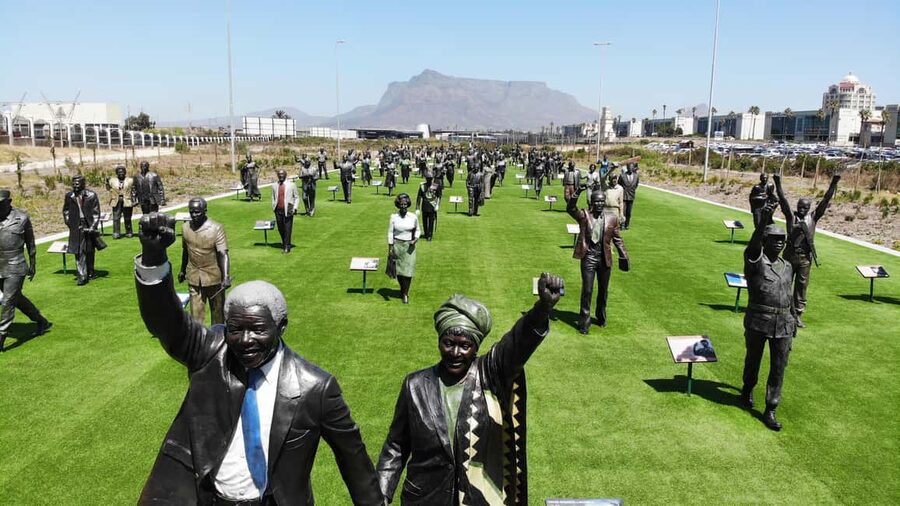
- The statues move forward: Each figure is shown in walking motion, creating the impression of a long march toward democracy.
- The story covers 350 years: The collection begins with Autshumato, also known as Herry die Strandloper, and ends with the freedom struggle of the late twentieth century.
- You meet major and lesser-known figures: Nelson Mandela appears alongside people such as Annie Silinga, Ida Fiye Mntwana, King Moshoeshoe I, Helen Joseph, and Joe Slovo.
- The setting adds a strong visual layer: You can take photos and videos with Table Mountain behind the bronze figures.
- The tour is short but purposeful: Expect about 1.5 hours of guided walking and sightseeing.
- The collection is still growing: More statues may be added over time, so the exhibition can change.
A 350-year walk toward freedom
The Long March to Freedom is not simply a row of statues. It is arranged as a march through South Africa’s struggle against oppression, beginning in the early 1700s and moving forward to the birth of democracy.
The figures are positioned as if they are walking. That detail gives the exhibition its central idea. You are not looking at a collection of motionless monuments lined up for inspection. You are watching a symbolic procession of people who challenged colonial power, racial injustice, and apartheid.
The route begins with Autshumato, leader of the Goringhaikonas, also known as Herry die Strandloper. He lived from 1625 to 1663 and is described as the first political prisoner sent to Robben Island for defying a European power. Beginning with him gives the tour a longer view of South African resistance. The freedom struggle did not begin in the twentieth century, and this opening helps make that point.
From there, the story moves through rebel chiefs and revered kings before reaching the better-known activists of the 1980s and 1990s. You will see how the exhibition links different periods instead of treating apartheid as an isolated chapter.
The collection is described as containing 100 life-size bronze statues and also refers to 101 iconic individuals. Since the exhibition is expected to grow, the exact number may change. The important point is the range of people represented, and the way the collection brings many names together in one place.
A few more in Cape Town
- Wine Tour: Paarl, Franschhoek & Stellenbosch incl 3 wineries
★ 5.0 · 3,940 reviews - Cape Town: Hop-On Hop-Off Bus Tour with Optional Cruise
★ 4.8 · 3,929 reviews - Cape Town: Cape of Good Hope & Penguins Day Tour with Pickup
★ 4.7 · 3,362 reviews
Meeting the people behind the history
The strongest part of the visit is the human scale. At life size, the statues are large enough to command attention but close enough for you to study the faces, clothing, posture, and small sculpted details.
Nelson Mandela is here, as you would expect, but the exhibition does not stop with the most famous name. You also meet Joe Slovo, Helen Joseph, Annie Silinga, Ida Fiye Mntwana, and King Moshoeshoe I. Each person represents a different part of the long fight for freedom.
That variety matters. South Africa’s history is often reduced to a handful of familiar figures. A guided visit helps you see the wider group of organizers, leaders, activists, and community figures who helped push the country toward change.
I especially like the way the walking poses give each figure a sense of purpose. The effect is symbolic, but not hard to understand. Everyone is moving forward, even though the historical periods and political struggles differ.
The statues also encourage a more personal response. You can face a person rather than simply read a name in a book. That makes the guide’s explanations important. The bronze figures catch your eye, but the stories give them meaning.
Why the exhibition was created
The exhibition grew from an idea connected to Dali Tambo, a television personality and the son of anti-apartheid politician Oliver Tambo.
After visiting his father’s grave, Dali Tambo reflected on the fact that Oliver Tambo did not have a statue in the country. The idea then expanded. Instead of creating a monument for one important person, the project became a way to honor many people who fought for South Africa’s freedom.
That origin gives the exhibition a clear purpose. It is not only about placing famous figures on pedestals. It is about remembering a broad group of people as real individuals.
The guiding message is that freedom fighters should not be reduced to faces in history books. The statues give physical form to that idea. You see people with different roles, backgrounds, and periods of influence standing together in one long procession.
Your guide will explain this concept as you walk. That context is valuable because the display might otherwise look like a large sculpture collection without a clear thread. The guide connects the figures and explains why the march begins where it does.
The route through Century City
The visit begins at the Long March to Freedom exhibition in Century City, Cape Town. The entrance is opposite the car park, which is the key meeting point detail to know before you arrive.
The tour combines a guided walk, sightseeing, and a photo stop. Plan on about 1.5 hours. That is enough time to hear the main story and look closely at the statues, but you should not expect a full lecture on every individual.
Because the tour is offered as a private group, the experience can feel more personal than a large scheduled walk. The guide speaks English, and an expert site guide leads the visit. If a particular person or period interests you, a private format may make it easier to focus your attention.
The route is wheelchair accessible. You should still wear comfortable shoes, since the experience involves walking and standing outdoors. A sun hat, sunscreen, and water are sensible choices. Cape Town’s sun can be strong even when the air feels pleasant.
Smoking is not allowed. Food and drinks are not included, so bring water and plan any meal separately.
Something quite different:
- Zipline Cape Town – From Foot of Table Mountain Reserve
★ 5.0 · 3,179 reviews - Cape Town: Table Mountain Cable Car, Hop-On Hop-Off Bus Tour
★ 4.6 · 3,157 reviews - Cape Point and Boulder’s Penguins Full Day Tour
★ 5.0 · 3,118 reviews - From Cape Town: Cape Point & Boulders Beach Full-Day Tour
★ 4.8 · 3,032 reviews
Table Mountain in the background
The setting gives the exhibition a memorable visual feature. You can take photos and videos with Table Mountain as a backdrop, placing the bronze figures against one of Cape Town’s best-known views.
This photo opportunity is more than a quick extra. It shows the contrast between the physical beauty of the city and the difficult history explained by the statues. You might take a picture of Mandela or another figure with the mountain behind them, but the image works best when you also remember the struggle represented by the pose.
Bring a camera or phone, and leave a little time for photos during the visit. The experience includes the opportunity, but it does not suggest that every stop is a dedicated photo session. The guide’s storytelling remains the main purpose.
Sun protection matters here. A hat and sunscreen will make the outdoor portion more comfortable, particularly if you are sensitive to direct sun.
What the guide adds
A self-guided walk through the statues would still offer plenty to see, but the guide gives the exhibition its shape.
You will learn about the individuals, the political periods they represent, and the reason they appear in a forward-moving procession. The guide also explains how the exhibition developed and why its creators wanted to honor many freedom fighters rather than only one or two famous leaders.
This is especially useful for people who know Nelson Mandela’s story but want a wider understanding of South Africa’s liberation history. The guide can place less familiar figures into the larger narrative and show how the struggle developed over centuries.
The tour is in English. If English is not your first language, the statue format may help because the visual details remain clear even when some historical terms take extra concentration.
One verified booking from France described the activity as extremely interesting and beautiful, with excellent staff, and called it one of the best experiences of that stay. That praise fits the strongest features here: the care shown in the sculptures, the human stories, and the quality of the welcome. Still, one short tour cannot cover every political debate or personal biography in full.
Is $5 good value?
Yes, for most visitors, the price is the easiest part of the decision. At $5 per person, you receive a guided cultural experience, access to a major sculpture collection, and time for photos with Table Mountain behind you.
The value is strongest if you want a meaningful activity that does not take an entire day or require a major budget. You can fit it into a Cape Town sightseeing plan without giving up a full morning or afternoon.
The price does not include transport, food, or drinks. That matters if you are staying far from Century City or planning to rely on a paid transfer. The exhibition itself is inexpensive, but you should calculate the full outing based on how you will get there.
The private group format adds value for people who prefer a smaller, more direct experience. It may be less important to you if you simply want to walk through the collection quickly and read at your own pace.
Who will enjoy this tour most?
I would recommend it to anyone interested in South African history, human rights, political change, or public sculpture. It is also a useful stop for visitors who want something beyond the usual city viewpoints and shopping areas.
Families with older children may find the life-size figures easier to engage with than a long indoor museum display. The walking arrangement gives the visit a clear visual structure, while the guide supplies the background.
It also suits visitors with limited time. The tour lasts about 1.5 hours, so you can give the subject proper attention without committing a whole day.
You may want more time if you already know a great deal about the liberation struggle. The collection includes many people, and a short guided visit cannot explore each biography in detail. In that case, treat it as a strong overview and a way to decide which names you want to study later.
The attraction is wheelchair accessible, which broadens its appeal. Comfortable shoes remain a good idea for everyone because the visit includes walking and standing.
Practical advice for a better visit
Arrive ready for an outdoor walk. Comfortable shoes, a sun hat, sunscreen, water, and a camera are the most useful items to bring.
Give yourself a moment at the beginning to understand the route. The figures are arranged as a historical march, so the order matters. Try not to rush straight to the most famous statues.
Listen for the names you do not recognize. The exhibition’s real strength is its wider cast, not only the famous leaders. If you only photograph Mandela and leave, you will miss much of the point.
Use the private format to ask questions. You might want to ask how the collection chooses people, how the statues are made, or how the timeline moves from early resistance to the 1994 democratic transition. The supplied information confirms that the collection will grow, so the exhibition is not fixed forever.
Keep food and drinks separate from the booking. Neither is included, and smoking is not permitted at the exhibition.
The booking terms are flexible. You can cancel up to 24 hours before the tour for a full refund, and you can reserve now while paying later. The activity is valid for one day, with starting times based on availability.
Should you book the Long March to Freedom tour?
Book it if you want an affordable, focused introduction to South Africa’s liberation story and appreciate the chance to see history represented by human-scale sculpture. The combination of 350 years of history, a private English-speaking guide, and Table Mountain views gives the visit more weight than its low price suggests.
Skip it only if your schedule is too tight for a 1.5-hour stop, or if you are looking for a long, highly detailed historical course. This is a guided overview, not an all-day study program.
For $5, I think it is an easy recommendation for history-minded visitors, families with older children, and anyone who wants a thoughtful change from standard Cape Town sightseeing. Bring water, wear comfortable shoes, and pay attention to the lesser-known names. They are a major part of what makes this march worth taking.
FAQ
Where is the Long March to Freedom exhibition?
The exhibition is in Century City, Cape Town, in South Africa’s Western Cape. The entrance is opposite the car park.
How long does the guided tour last?
The guided visit lasts about 1.5 hours and includes walking, sightseeing, and a photo stop.
How much does the tour cost?
The tour costs $5 per person.
Is transport included?
No. Transportation to and from the exhibition is not included.
Is the tour conducted in English?
Yes. The tour has a live English-speaking guide.
Is the exhibition wheelchair accessible?
Yes. The activity is listed as wheelchair accessible.
What should I bring?
Bring comfortable shoes, a sun hat, sunscreen, water, and a camera.
Can I cancel the booking?
Yes. You can cancel up to 24 hours in advance for a full refund. You can also reserve now and pay later.
Just added in Cape Town
- Sunset Safari Big 5 Aquila with Snacks and Wine Tasting★ 5.0 · 12 reviews
- Explore Atlantis Sand Dunes with a 1hour 30mins sandboarding tour★ 5.0 · 5 reviews
- Private Tour to 20 Wine Tasting in Stellenbosch and Franschhoek★ 5.0 · 11 reviews
- Photoshoot in Cape Town’s most Gorgeous Locations★ 5.0 · 2 reviews
- Robben Island, Kirstenbosch wine tasting Tour★ 5.0 · 10 reviews
- Zip Line and Wine from Cape Town★ 5.0 · 14 reviews
- Private Transfer from Cape Town International Airport★ 5.0 · 4 reviews
- 1 Hour Cape Town City Center Photoshoot Experience★ 5.0 · 19 reviews
Guided, compared.

Robben Island Ferry Ticket and Guided Prison Tour
Read our review →
Soweto /Johannesburg and Apartheid Museum Guided Full Day Tour
Read our review →



Little Brak River: Botlierskop Guided Game Drive
Read our review →