
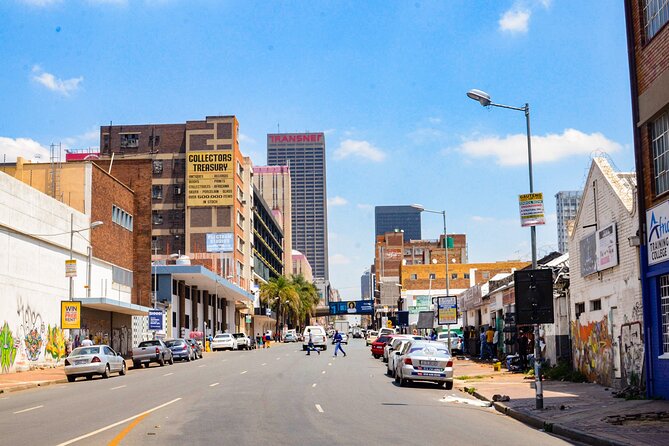
REVIEW · SOWETO TOURS
Soweto by Tuk-Tuk
Soweto is best seen at street level. This 2.5-hour tuk-tuk tour covers far more ground than a walking visit, while local guide Mulalo Mphuma connects major sites with personal stories and clear historical context. I like the easy access to Orlando West, Orlando East, Vilakazi Street, the Hector Pietersen Museum, and several contrasting neighborhoods. I also like that a local lunch and bottled water are included.
The main consideration is the pace. The tour packs a lot into two and a half hours, including a stop at Mandela House, a museum visit, neighborhood walks, and lunch at Chaf Pozi. If you want long museum visits or plenty of unhurried time at each stop, this may feel brisk. The private format is a strong plus, since only your group takes part.
In This Review
- Key points at a glance
- Why a tuk-tuk is a smart way to see Soweto
- Starting in Orlando West
- Mandela House and Vilakazi Street
- Orlando East, Orlando West, and the wider township
- Hector Pietersen Museum and the Soweto uprising
- Lunch at Chaf Pozi and the kota tasting
- The guide makes the difference
- What the $53.77 price includes
- Timing, meeting point, and practical advice
- Who will enjoy this Soweto tour most
- Should you book Soweto by Tuk-Tuk?
- FAQ
- Where does the Soweto by Tuk-Tuk tour start?
- Where does the tour end?
- How long does the tour last?
- How much does the tour cost?
- Is the tour private?
- Is lunch included?
- Is bottled water included?
- Is Mandela House admission included?
- Who leads the tour?
- Can I cancel for a full refund?
Key points at a glance

- Ride through Soweto by tuk-tuk: You cover more ground than on foot and get an open-sided view of the streets and neighborhoods.
- Meet at Orlando West: The tour begins at Moema Street and Rampa Street, in the heart of Soweto’s best-known historic area.
- Visit Mandela House: The former home of Nelson Mandela is included, with about 30 minutes allocated and admission covered.
- Walk Vilakazi Street: See the street associated with Nelson Mandela and Archbishop Desmond Tutu, two Nobel Peace Prize recipients.
- Explore more than the famous sights: The route includes Orlando East, an informal settlement, a former women’s hostel, and the family home of anti-apartheid activist Mama Lilian Ngoyi.
- Finish with local food: Lunch at Chaf Pozi, near the Soweto towers, includes a taste of the kota, a popular local sandwich.
Why a tuk-tuk is a smart way to see Soweto
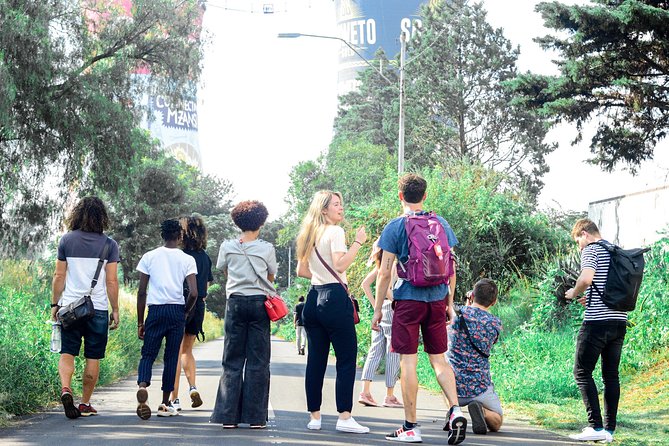
Soweto is a large township made up of distinct areas, and the tuk-tuk solves a simple problem: distance. You can visit Orlando West, Orlando East, Vilakazi Street, the museum area, and other neighborhoods without spending the whole tour walking between them.
The open vehicle also keeps the ride connected to the surroundings. You are not sealed behind tinted windows, so streets, homes, shops, and public spaces remain part of the experience. At the same time, you have a seat and private transportation between stops.
I would choose this format if you want a broad first look at Soweto rather than one long visit to a single museum. It also suits anyone who prefers a local guide to handle the route while explaining what you are seeing.
The tour is private, which matters here. You can ask questions, pause for clarification, and follow the guide’s explanation without trying to keep up with a large group. The experience is still short, though, so do not expect every stop to receive the same amount of time.
More Soweto tours:
- Soweto Half Day Tour
★ 5.0 · 231 reviews - Johannesburg and Soweto tour
★ 5.0 · 231 reviews - Johannesburg Full-Day Tour(Soweto/Jo-Burg & Apartheid Museum)
★ 5.0 · 110 reviews
Starting in Orlando West
The meeting point is at Moema Street and Rampa Street in Orlando West. This is a useful starting place because Orlando West is closely tied to Soweto’s political and social story, and the tour begins by placing that story in its setting rather than treating the township as a collection of isolated attractions.
The guide introduces the establishment of Soweto from 1886 and explains how the township fits into the wider history of Johannesburg and South Africa. That opening context helps the later stops make sense. You are not simply ticking off a famous house or museum. You are learning how different parts of Soweto developed and how residents challenged apartheid rule.
The tour also includes a walk through the township. That walking time gives you a closer look than the tuk-tuk alone can provide. Since the route includes both Orlando West and Orlando East, you get a sense of how the two areas differ and why both matter.
Mandela House and Vilakazi Street
Mandela House is the clearest headline stop. The house is included in the price, and the planned visit lasts about 30 minutes. That is enough time for a focused look, though it is not a leisurely museum session.
For many people, this will be the emotional center of the tour. Nelson Mandela’s former home links the wider political story to a specific address and neighborhood. I appreciate that the tour does not treat the house as the whole story. It uses the stop as one part of a wider route through Soweto.
After or around the house visit, the guide takes you along Vilakazi Street. This street is known for housing the former homes of Nelson Mandela and Archbishop Desmond Tutu, making it associated with two Nobel Peace Prize recipients. The guide explains why the street became such an important place and how its residents contributed to the fight against apartheid.
This is also a good place to ask questions. If you want to understand how political leadership connected with ordinary township life, Vilakazi Street gives the guide a natural setting for that discussion. The available timing suggests you should expect a walk and explanation rather than a long stop at every building.
Orlando East, Orlando West, and the wider township
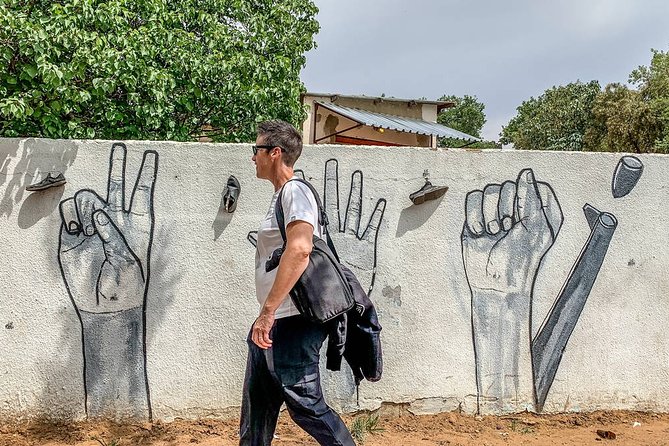
One of the tour’s better features is its effort to move beyond the most photographed part of Soweto. You visit Orlando East and Orlando West, described as two areas where political figures lived and resistance to apartheid took shape.
Orlando East is presented as the site of Soweto’s first formal houses. That detail helps you read the township through its built environment. The route is not only about famous names. It also looks at how housing developed and at the challenges that remain.
The tour includes a visit to an informal settlement. This may be uncomfortable, but it is important. Soweto is not a single postcard version of South Africa, and a responsible visit should show more than the historic streets and tourist stops. The guide’s role is especially important here, since local explanation can provide context that a quick drive-by cannot.
You also visit a former women’s hostel and the family home of Mama Lilian Ngoyi, an anti-apartheid activist. These stops widen the story beyond Mandela and Tutu. They point to the role of women and community organizers in opposing apartheid.
Because the route covers several kinds of places, the tour offers more social and political context than a simple landmark transfer. The tradeoff is that some stops may be brief. You are getting range, not an exhaustive study of each location.
A few more in Pretoria
- Hartbeespoort: 2-Hour Dam Cruise with South African Food
★ 4.4 · 621 reviews - Hartbeespoort: Predator Safari with a Guide
★ 4.8 · 267 reviews - Ultimate Johannesburg Tour
★ 5.0 · 200 reviews - Johannesburg: Pretoria and Cullinan Diamond Mine Tour
★ 4.7 · 165 reviews
Hector Pietersen Museum and the Soweto uprising
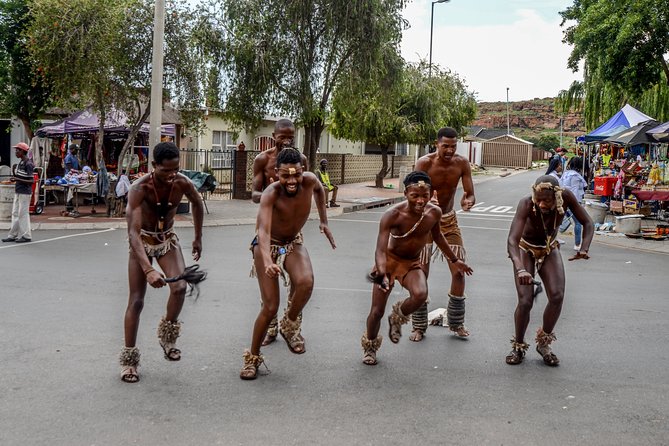
The Hector Pietersen Museum marks one of the most important turning points in the history of apartheid. It is associated with the Soweto uprising, and the tour explains what happened in the area and why the event mattered.
This stop adds needed weight to the visit. Mandela House shows where one major political figure lived. Vilakazi Street links prominent leaders with the township. The Hector Pietersen Museum points to the youth-led resistance and the wider public struggle.
The supplied details do not specify a separate admission fee for this museum, so you should confirm any entry arrangements when booking or before the tour begins. Mandela House admission is specifically included, while other additional costs are not.
The museum visit also reinforces why the guide’s interpretation matters. A short stop can introduce the key facts, but you may want more time if this period is your main reason for coming to Soweto. If you have a strong interest in the uprising, ask how much time the schedule allows inside the museum.
Lunch at Chaf Pozi and the kota tasting
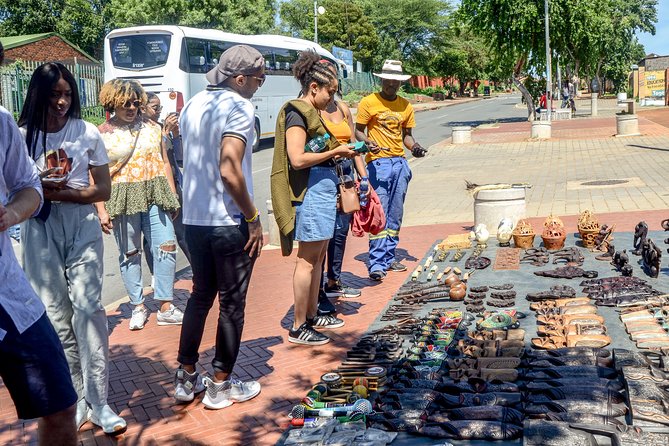
Lunch is served at Chaf Pozi, located between the famous Soweto towers. The setting gives the meal a strong sense of place, and the food is local rather than a generic restaurant lunch.
You also get a taste of the kota, a well-known local sandwich. The included lunch makes the price easier to assess, since you are not paying for transportation and then adding a separate meal. Bottled water is included as well.
I like this part of the tour because food turns the visit from a history lesson into a more rounded introduction to daily life. You are given a chance to pause, eat, and experience something associated with local township culture.
Do keep the schedule in mind. Lunch is part of a short tour that also includes several historic stops. If you prefer to linger over a meal, the timetable may not give you much extra space. Personal expenses and additional items are not included, so anything beyond the planned local lunch is yours to pay for.
The guide makes the difference

The strongest praise for this experience centers on the guide, especially Mulalo Mphuma. The available comments describe him as offering clear local knowledge, personal stories, and a route that reaches different parts of Soweto rather than stopping only at the main attractions.
One especially useful detail is that he shares some of his own story while explaining the contrast between neighborhoods. That can make the history feel less abstract. You are not only hearing dates and political events. You are hearing how the guide understands the place where he lives and works.
Communication also appears to be a strength. The tour company is One Day Africa, and the experience is private, so you have a direct setting for questions and conversation. I would use that advantage. Ask about the history of the neighborhoods, the women’s hostel, the uprising, or how the tour connects Orlando East and Orlando West.
The guide also points out local stores and restaurants along the way. That adds small, ordinary details to a route otherwise dominated by major historical sites.
What the $53.77 price includes
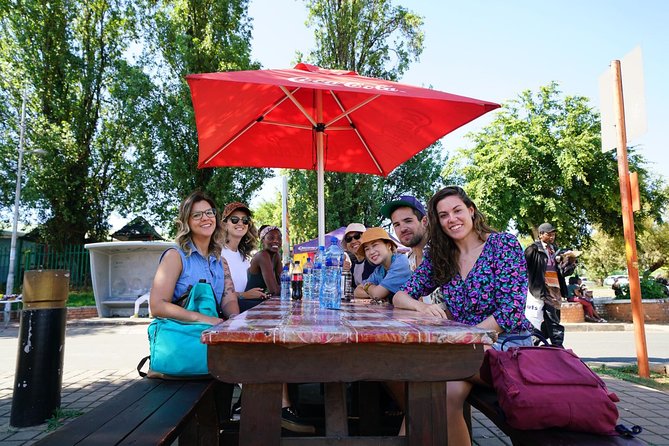
At $53.77 per person, the tour is not the cheapest way to see a few Soweto landmarks. Its value comes from the combination of private transportation, a driver-guide, local lunch, bottled water, and admission to Mandela House.
You are also paying for a route that links several areas. A basic visit to one attraction would cost less, but it would not provide the same coverage or the same local explanation.
The private format improves the value for couples, families, or small groups who want a guide focused on them. For a solo participant, the per-person price may feel higher because there is no group to spread the private arrangement across. Still, the inclusion of lunch and transportation helps balance that cost.
I would consider it good value if you want a compact introduction to Soweto and prefer not to plan the route yourself. It is less compelling if you already know the township well or want to spend most of your time inside one museum.
Timing, meeting point, and practical advice
The tour lasts approximately two hours and 30 minutes and ends back at the meeting point. That return arrangement keeps the logistics simple, especially if you are using public transportation to reach Moema Street and Rampa Street.
Confirmation is provided at booking, and the meeting point is near public transportation. You should allow enough time to find the exact street corner, since the tour does not begin with hotel pickup according to the supplied details.
Most people can take part, and the activity is private. The information does not provide a detailed accessibility description, so anyone with specific mobility needs should confirm the tuk-tuk and walking arrangements before booking.
The tour is usually booked about 11 days ahead. That is a useful planning signal, particularly if you have a fixed South Africa itinerary. Free cancellation is available until 24 hours before the start time for a full refund. Inside that window, the payment is not refunded, and changes are not accepted.
Who will enjoy this Soweto tour most
I would recommend this experience to you if you want:
- A first introduction to Soweto in a short time
- A local guide who can connect history with present-day neighborhoods
- A mix of riding and walking rather than a full walking tour
- Major sites such as Mandela House and the Hector Pietersen Museum
- A private experience for your own group
- A local meal included in the price
It is particularly useful for visitors with only a few hours available. The tuk-tuk lets you reach more areas, while the guide provides the thread that ties the stops together.
You may want another option if you need a slow, museum-heavy visit, dislike a tight schedule, or want a tour focused only on architecture or political history. The informal settlement and former women’s hostel also require a respectful attitude. This is not entertainment detached from real lives and difficult history.
Should you book Soweto by Tuk-Tuk?
I would book this tour if you want a compact, personal, and varied introduction to Soweto. The combination of Mulalo Mphuma’s local storytelling, private tuk-tuk transport, Mandela House, Vilakazi Street, the Hector Pietersen Museum, less-touristed neighborhoods, and a kota lunch gives you more than a quick landmark circuit.
Before booking, make one decision: do you value breadth or extra time at each stop? If breadth wins, the $53.77 price is reasonable because it includes transport, a guide, lunch, water, and Mandela House admission. If you want long museum visits and a slow meal, look for a longer experience.
FAQ
Where does the Soweto by Tuk-Tuk tour start?
It starts at Moema Street and Rampa Street in Orlando West, Soweto, South Africa.
Where does the tour end?
The activity ends back at the meeting point.
How long does the tour last?
The tour lasts approximately two hours and 30 minutes.
How much does the tour cost?
The listed price is $53.77 per person.
Is the tour private?
Yes. Only your group takes part in the activity.
Is lunch included?
Yes. A local lunch is included, served at Chaf Pozi between the Soweto towers.
Is bottled water included?
Yes. Bottled water is included in the tour.
Is Mandela House admission included?
Yes. Admission to Mandela House is included, with about 30 minutes allocated for the visit.
Who leads the tour?
The experience is operated by One Day Africa and includes a driver-guide. Mulalo Mphuma is identified as one of the guides for the experience.
Can I cancel for a full refund?
Yes. You can cancel at least 24 hours before the start time for a full refund. Cancellations made less than 24 hours before the start time are not refunded.
Just added in Pretoria
- Half Day E-Biking with Wildlife Watching in Pretoria★ 5.0 · 23 reviews
- Aha Lesedi Cultural Village tour★ 5.0 · 4 reviews
- Apartheid museum, Soweto and Joburg highlights tour★ 5.0 · 6 reviews
- Traditional Tribal Village Tour★ 5.0 · 6 reviews
- Soweto, Kliptown, Eldorado Park Tour★ 5.0 · 41 reviews
- Johannesburg,Soweto & Apartheid museum tour★ 5.0 · 10 reviews
- Soweto guided tour(Half day)★ 5.0 · 24 reviews
- Soweto and Johannesburg Fun Tours★ 5.0 · 3 reviews
Soweto Tours, compared.
Soweto /Johannesburg and Apartheid Museum Guided Full Day Tour
Read our review →

Jo’berg in 1 Day: Soweto, Apartheid Museum & City Tour
Read our review →
Full-Day Tour with Soweto and Apartheid Museum
Read our review →
Full-Day Soweto, Apartheid Museum and Lunch Tour
Read our review →
Half Guided Day Tour of Soweto And Apartheid Museum
Read our review →Browse the lists this tour appears in