

REVIEW · SOWETO TOURS
Soweto Tour with a Local Guide
Soweto tells South Africa’s story in living color. This private half-day tour combines apartheid-era landmarks with the food, fashion, worship, and everyday culture of the country’s largest township. You visit the former home of Nelson Mandela, the Hector Pieterson Museum, Walter Sisulu Square, Regina Mundi, and Vilakazi Street, with a local guide explaining how these places fit together.
I like the personal format, since only your group takes part, and I like that admission fees and bottled water are included. Guides such as Shaun have also been praised for keeping people comfortable, taking photographs, and explaining Johannesburg and Soweto in a clear, approachable way. The main drawback is the tight schedule: five or six hours is enough for highlights, but not enough for long museum visits, a leisurely meal, and many unplanned stops.
In This Review
- Key points to know before booking
- Why Soweto is worth your time
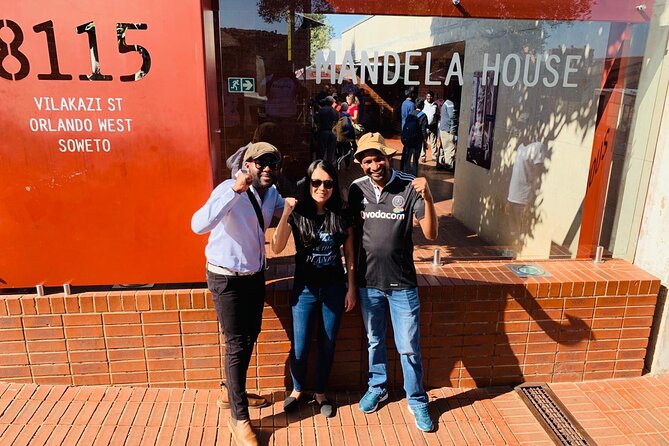
- Mandela House, where public history feels personal
- Hector Pieterson Museum and the June 16 uprising
- Walter Sisulu Square and South African public life
- Regina Mundi, a church that offered shelter
- Vilakazi Street and two Nobel Peace Prize winners
- Soccer landmarks from the 2010 World Cup
- A private guide makes the difference
- Timing, transport, and what is included
- Who will get the most from this tour
- Cancellation and planning advice
- Should you book the Soweto tour?
- FAQ
- Where does the Soweto tour take place?
- How long does the tour last?
- Is this a private tour?
- Are entrance fees included?
- Is lunch included?
- What happens if the tour is canceled because of weather?
Key points to know before booking

- Mandela House and Hector Pieterson Museum anchor the tour: These are the most important stops for understanding Soweto’s role in the struggle against apartheid.
- Vilakazi Street has unusual historical importance: It is known as the only street associated with two Nobel Peace Prize winners, Nelson Mandela and Archbishop Desmond Tutu.
- You travel in a private group: This gives you room to ask questions and adjust the conversation to your interests.
- The tour includes several short visits: Expect roughly 20 to 40 minutes at most stops, so keep the day moving.
- Lunch costs extra: Bring money or ask about the best place to eat during the tour.
- The guide is part of the value: Shaun and Noel are praised for clear communication, local insight, safety, and personal attention.
Why Soweto is worth your time
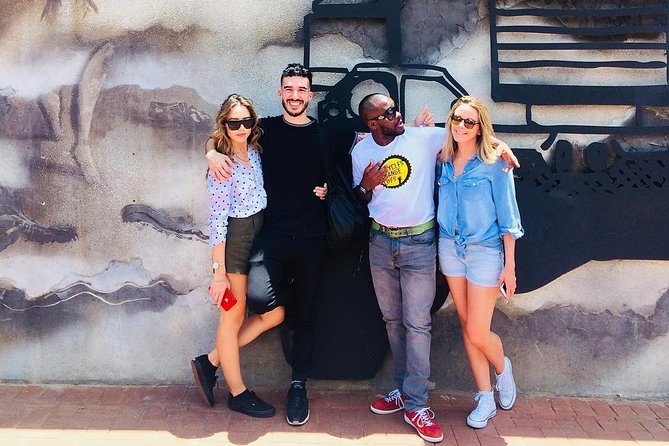
Soweto is much more than a collection of memorials. Its name comes from South Western Townships, and the area has played a central role in South Africa’s political and cultural life. The tour presents Soweto as a place shaped by protest, faith, music, sport, family life, and constant change.
That mix matters. You will not spend the whole outing looking at old buildings or reading plaques. You will move through a living township where historic sites sit alongside shops, homes, restaurants, churches, street art, and modern urban development.
A local guide can also help you connect the dots. A museum may explain what happened, while a guide can explain why a particular street, church, or square still matters today. The strongest feedback about this experience focuses on exactly that personal layer. Shaun is repeatedly praised for explaining the roots of Johannesburg and Soweto, answering questions easily, and shaping the outing around the interests of the group.
The tour is listed in connection with Pretoria, but the main experience takes place in Soweto and Johannesburg. Confirm your pickup location and return arrangements when booking, especially if you are staying outside central Johannesburg.
More Soweto tours:
- Soweto Half Day Tour
★ 5.0 · 231 reviews - Johannesburg and Soweto tour
★ 5.0 · 231 reviews - Johannesburg Full-Day Tour(Soweto/Jo-Burg & Apartheid Museum)
★ 5.0 · 110 reviews
Mandela House, where public history feels personal
The first major stop is Mandela House on Vilakazi Street. This is the house where Nelson Mandela lived with his family and Winnie Mandela during an important period of his Johannesburg life. It is modest in scale, which is part of its impact. You are not entering a grand presidential residence. You are seeing a family home tied to one of the world’s most important political figures.
The visit is scheduled for about 30 minutes, with admission included. That gives you enough time for a focused look, though not necessarily a slow inspection of every exhibit. I would pay attention to the way the house presents Mandela as both a national leader and a husband and father. That human scale helps balance the larger political story.
The guide’s explanation is especially useful here. Without context, a house museum can feel like a quick photo stop. With a local guide, you can ask how Mandela’s personal life, political work, and relationship with Soweto fit together.
If you have a strong interest in Mandela, you may want more time than the schedule allows. Still, as an opening stop, it gives the tour a clear sense of place and purpose.
Hector Pieterson Museum and the June 16 uprising
The Hector Pieterson Museum is the emotional center of the outing. It commemorates the 1976 Soweto uprising, when students protested against the forced use of Afrikaans in education. Hector Pieterson, a 12-year-old boy, became an international symbol after he was killed during the unrest.
The visit lasts about 40 minutes and admission is included. That is the longest scheduled stop, and for good reason. The museum uses photographs, documents, and displays to explain the student uprising and the wider system of apartheid that produced it.
The famous image of Hector Pieterson being carried after he was shot is difficult to see, but the museum does not reduce the event to one photograph. It places the image within the decisions, anger, courage, and loss surrounding June 16. You should allow yourself time to read and think rather than rushing from display to display.
This is also a place where a guide’s tone matters. The subject is painful, and a thoughtful local explanation can help you understand the event without turning it into a distant textbook lesson. The tour’s strongest theme is education, and this museum delivers more of it than any other stop.
Walter Sisulu Square and South African public life
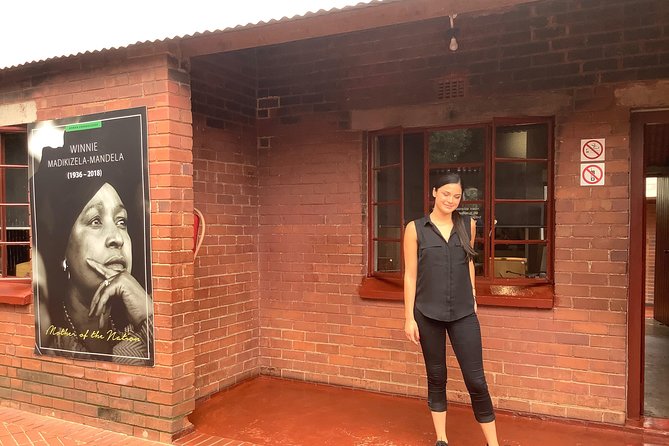
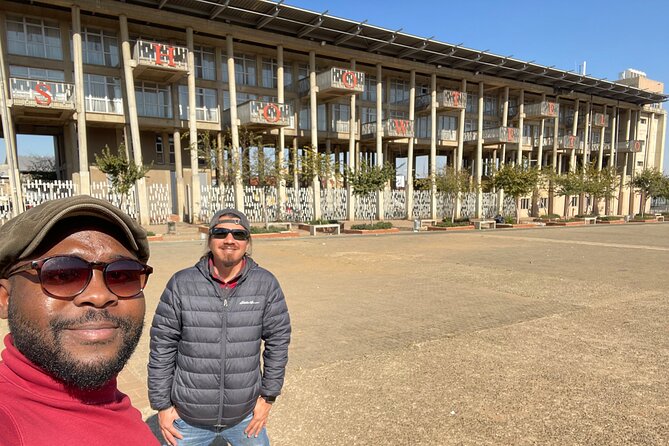
Walter Sisulu Square receives about 20 minutes. It is linked to the Freedom Charter and is presented as a meeting point of South African culture, modern urban life, and political memory.
You will not have a long time here, so think of it as a short orientation stop rather than a full visit. The square gives you a chance to see how a public space can carry both civic meaning and everyday activity. It is also a useful counterpoint to the museums. Instead of focusing only on suffering and protest, the tour shows a place connected with ideas about rights, citizenship, and the future of South Africa.
I like this change of pace. After the intensity of the Hector Pieterson Museum, a public square lets you breathe and look at the area as a functioning part of Soweto. The guide can point out the connection between political ideals and modern community life.
A few more in Pretoria
- Hartbeespoort: 2-Hour Dam Cruise with South African Food
★ 4.4 · 621 reviews - Hartbeespoort: Predator Safari with a Guide
★ 4.8 · 267 reviews - Ultimate Johannesburg Tour
★ 5.0 · 200 reviews - Johannesburg: Pretoria and Cullinan Diamond Mine Tour
★ 4.7 · 165 reviews
Regina Mundi, a church that offered shelter
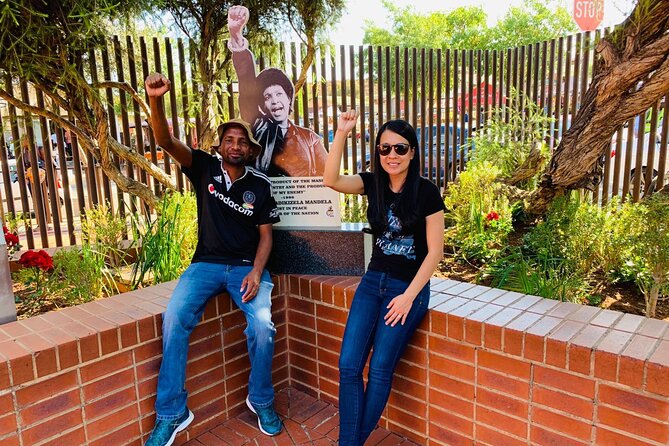
Regina Mundi is identified as the largest Roman Catholic church in South Africa. It also played an important role during apartheid by opening its doors to anti-apartheid groups and providing shelter to activists.
The scheduled visit is about 20 minutes. That is brief, but the church adds an important religious and moral dimension to the tour. Places of worship were not only spiritual centers during apartheid. Some also became meeting places and safe spaces when political activity was restricted.
Look for the signs of how a church can hold public memory. The value here is not only the building itself. It is the story of what happened inside and why people trusted the church at a time when many public institutions could not offer protection.
As with Walter Sisulu Square, the short timing means you should listen closely to the guide. A local explanation can give this stop weight that you might miss on a quick independent visit.
Vilakazi Street and two Nobel Peace Prize winners
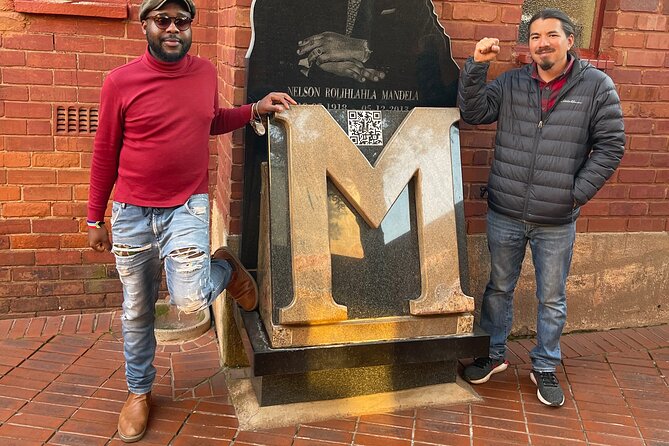
The tour returns to Vilakazi Street for a walk of about 20 minutes. This is the only street commonly identified as the home of two Nobel Peace Prize winners: Nelson Mandela and Archbishop Desmond Tutu.
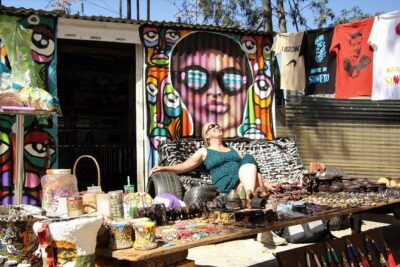
The street has a more commercial feel than the memorial sites. You may find arts and crafts, souvenirs, and opportunities to shop. That makes it a good place to shift from formal history to present-day Soweto culture.
I appreciate this part of the route because it shows that Soweto is not frozen in the past. The street is tied to major events and famous residents, but it is also part of a working community and a visitor economy. You can browse, take photographs, and ask your guide what has changed.
The 20-minute walk is enough to get a feel for the street, but not enough for a long shopping session. If buying crafts matters to you, ask how much free time is available before you begin.
Soccer landmarks from the 2010 World Cup
Two drive-by sights add a sports angle to the route. One was once a cooling station and later became a tourist destination during the 2010 soccer World Cup. The other is the main stadium where matches were hosted during the tournament.
These stops are not described as extended visits, so expect to see them from the vehicle rather than spend time inside. They work as visual reminders of South Africa’s place on the world sporting stage and of the investment and attention brought to the country by the 2010 World Cup.
The drive-by format keeps the tour within its five to six hour window. Still, if you want stadium access or a detailed soccer-focused visit, this tour may feel too brief.
A private guide makes the difference
This is a private activity, so only your group participates. That is a major advantage for a historic tour. You can ask direct questions, pause for clarification, and spend more time on the subjects that matter to you.
The feedback about Shaun is unusually consistent. He is praised for clear communication before and during tours, for helping people feel safe, and for taking photographs along the way. One family specifically valued his explanation of Johannesburg and Soweto, while another described conversation with him as easy and interesting.
Noel is also mentioned as helping make one visit a pleasant encounter, including an outing that featured traditional dancers. That detail may belong to a broader Johannesburg and Soweto program rather than this exact half-day route, so I would not assume a performance is included here. Still, it gives you a useful sense of the company’s wider approach to local culture.
The guide is not simply a driver between attractions. The best use of the tour is to treat the ride itself as part of the experience. Ask about the areas you pass, the changes since apartheid, and how Soweto is represented outside South Africa.
Timing, transport, and what is included
The experience lasts approximately five to six hours and provides an air-conditioned vehicle. Pickup is offered, but the supplied information does not specify every pickup area, so confirm this before paying. A mobile ticket is available, and confirmation is received at booking.
All fees and taxes are included, along with bottled water. Admission is included at Mandela House, Hector Pieterson Museum, Walter Sisulu Square, and Regina Mundi. Vilakazi Street has no admission charge.
Lunch is not included. Since the schedule is fairly full, do not assume that a long restaurant stop is built into the day. Bring funds for food and ask the guide early about the plan. A group discount may also be available, which improves the per-person value for families or friends booking together.
The listed price is $98.28 per person. That is not the cheapest way to see Soweto, but the comparison should include what you are paying for: private transport, a local guide, included entrance fees, bottled water, pickup, and a focused route through several major sites. For a small group that values convenience and personal attention, the price can be reasonable.
The value is weaker if you want to linger at every museum, eat a full lunch, or spend much of the day shopping. This is a highlights tour, not a slow, open-ended exploration.
Who will get the most from this tour
I would recommend it most strongly to first-time visitors who want a clear introduction to Soweto’s political history and cultural identity. It suits families, couples, and small groups who prefer a private vehicle and the freedom to ask questions.
It is also a good fit if you are uneasy about finding these sites alone. One reviewer explained that Shaun took the group to places they would not have visited independently. That is an important benefit. The tour removes much of the guesswork while still giving you contact with real communities and local stories.
History students and visitors interested in apartheid will find the Mandela House and Hector Pieterson Museum especially valuable. People with limited time in Johannesburg will appreciate the efficient route.
You may want a different experience if your main aim is nightlife, food, shopping, or extended time at one museum. You should also be comfortable with emotionally difficult subject matter. The June 16 uprising is presented as a central part of the day, and the story includes violence, injustice, and the deaths of young people.
The tour information says service animals are allowed, the route is near public transportation, and most participants can take part. It also says the experience requires good weather and a minimum number of participants, despite being a private activity, so keep some flexibility in your schedule.
Cancellation and planning advice
Free cancellation is available if you cancel at least 24 hours before the local start time. Cancellations or changes made inside that window are not refunded or accepted.
If poor weather causes the tour to be canceled, you will be offered another date or a full refund. The same applies if the minimum number of participants is not met. I would still confirm the morning pickup time, the exact meeting point, and the lunch plan before the day begins.
Should you book the Soweto tour?
Book it if you want a guided introduction to Soweto’s key political sites without joining a large group. The private format, air-conditioned transport, included admissions, and strong attention to safety and communication make this a practical choice for a first visit.
The tour is especially worthwhile if you want the historical facts explained by someone connected to the place. Shaun’s calm, personal approach is repeatedly praised, and the experience appears to be at its best when you use the drive time to ask questions.
Skip it if you want a leisurely full-day outing, a guaranteed lunch experience, or long visits at each attraction. At five to six hours, the schedule is compact. But for a well-organized introduction to Mandela House, the June 16 uprising, Regina Mundi, Vilakazi Street, and modern Soweto, this tour offers a strong balance of history, local context, and convenience.
FAQ
Where does the Soweto tour take place?
The main stops are in Soweto and Johannesburg, although the experience information lists Pretoria as the location. Confirm your pickup point before booking.
How long does the tour last?
The tour lasts approximately five to six hours.
Is this a private tour?
Yes. Only your group participates in the activity.
Are entrance fees included?
Yes. Admission is included for Mandela House, the Hector Pieterson Museum and Memorial, Walter Sisulu Square, and Regina Mundi. Vilakazi Street is free to visit.
Is lunch included?
No. Lunch is not included in the tour price.
What happens if the tour is canceled because of weather?
You will be offered a different date or a full refund if poor weather causes the experience to be canceled.
Just added in Pretoria
- Cradle of Humankind Tour – Sterkfontein Caves with Maropeng Tour★ 4.5 · 39 reviews
- Elephant Sanctuary Tour from Johannesburg or Pretoria★ 5.0 · 14 reviews
- Full-Day Cradle of Humankind Guided Tour from Johannesburg or Pretoria★ 4.5 · 6 reviews
- Cradle of Humankind Full Day Tour from Pretoria and Johannesburg★ 4.5 · 3 reviews
- Soweto & Apartheid Museum, Cultural Village, Wildlife and Safari★ 5.0 · 3 reviews
- Cradle of Human Kind & Lion & Rhino Park Tour Full day Tour Private★ 5.0 · 8 reviews
- Guided Walking with Lions Bush-walk Tour★ 5.0 · 16 reviews
- Bicycle or Tuk Tuk Soweto Guided Experience★ 5.0 · 7 reviews
Soweto Tours, compared.
Soweto /Johannesburg and Apartheid Museum Guided Full Day Tour
Read our review →

Jo’berg in 1 Day: Soweto, Apartheid Museum & City Tour
Read our review →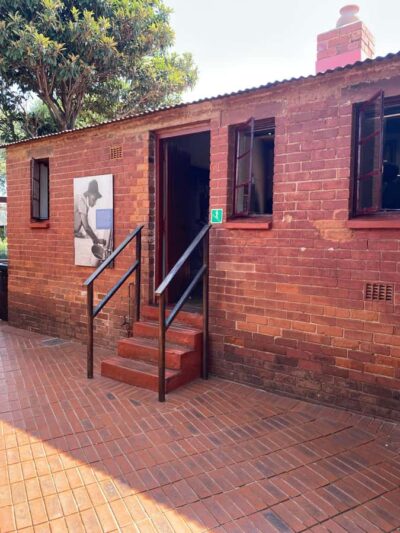
Full-Day Tour with Soweto and Apartheid Museum
Read our review →
Full-Day Soweto, Apartheid Museum and Lunch Tour
Read our review →
Half Guided Day Tour of Soweto And Apartheid Museum
Read our review →Browse the lists this tour appears in