
REVIEW · HISTORICAL TOURS
Stellenbosch: Guided Historical Walking Tour
Stellenbosch rewards a slower first look. I like the oak-shaded avenues and the way the Mill Stream’s water furrows still shape the town’s old streets. I also like the guides’ mix of dates, gossip, architecture, and modern life. The only real drawback is that 90 minutes gives you an introduction, not a full tour of every corner.
At $18 per person, this is excellent value if you want context before exploring the wine country on your own. Guides such as Johan, Marlene, Juliana, and Maureen have been praised for making complicated history clear, friendly, and often funny. Bring comfortable shoes, arrive 15 minutes early at 47 Church Street, and expect an easy walk rather than a strenuous hike.
In This Review
- Key points to know before you go
- Why a walking tour is the right introduction to Stellenbosch
- Starting at 47 Church Street
- Oak avenues and the Mill Stream
- The Cape Dutch buildings around The Braak
- Dorp Street, the town’s oldest residential road
- Fires, ghosts, angels, and local character
- Stellenbosch University and the town today
- How much do you walk, and how hard is it?
- Is $18 good value?
- Who will enjoy this walk most?
- Final verdict: book it for context, not just scenery
- FAQ
- How long does the Stellenbosch walking tour last?
- How much does the tour cost?
- Where does the tour start?
- What language is the tour conducted in?
- Is the walking tour wheelchair accessible?
- What should I bring?
- Can I cancel the booking for a refund?
Key points to know before you go
- Stellenbosch’s oak avenues and water furrows give the walk a strong sense of place from the first few minutes.
- The Braak village green gathers historic buildings on three sides and offers one of the tour’s best architectural views.
- Dorp Street is described as the oldest residential street in South Africa, making it a particularly worthwhile stop.
- The town’s fires and rebuilding add drama to the story. Much of early Stellenbosch was repeatedly threatened by fire.
- Guides tailor the storytelling to questions and interests, with Johan, Marlene, Juliana, and Maureen receiving especially warm praise.
- The 90-minute route is easy and wheelchair accessible, but good shoes still matter on old-town streets.
Why a walking tour is the right introduction to Stellenbosch
Stellenbosch can look simple at first glance: graceful white buildings, oak trees, cafés, university life, and wine-country traffic passing through. A self-guided stroll will show you the scenery, but it may not explain why the streets follow their unusual pattern or how the town grew around the Eerste River.
That is where this tour earns its modest price. You are not just ticking off old buildings. You are learning how a colonial settlement became a university town and a major base for exploring the Cape Winelands.
I especially like the focus on how the town developed. The guide connects the river, the Mill Stream, the village green, the university, local personalities, and major fires into one story. That makes the buildings easier to understand. Instead of seeing a row of attractive façades, you begin to see a town repeatedly shaped by water, agriculture, fire, politics, education, and changing communities.
The tour is also short enough to fit neatly into a day trip. You can take it in the morning, then use the rest of the day for lunch, galleries, wine estates, or further wandering. If Stellenbosch is your base for several nights, it works well near the start of your stay because it gives you useful orientation without taking over your day.
More Walking Tours in Stellenbosch:
- Walking Tour of Stellenbosch
★ 5.0 · 81 reviews - Stellenbosch: Khayamandi Township Walking Tour
★ 4.3 · 5 reviews - From Stellenbosch: Stellenbosch Guided Vineyard Walk
★ 4.4 · 4 reviews
Starting at 47 Church Street
The meeting point is at 47 Church Street in Stellenbosch Central. You should arrive 15 minutes before the start, which gives you time to find the address and meet the guide without rushing.
There is no transport included, so you need to make your own way to the starting point. That is not much of a burden if you are already in central Stellenbosch, but it matters if you are coming from a distant wine estate or another town. Plan your arrival carefully rather than assuming a taxi or transfer is part of the booking.
The guide conducts the tour in English. The pace is intended to be comfortable, and the walk is wheelchair accessible. Still, I would wear shoes with good support. The route passes through an old town rather than a modern pedestrian mall, and comfort becomes more important if you stop often for stories and questions.
The guides appear to be one of the main strengths. Johan is repeatedly praised for his humor, clear explanations, and ability to answer questions. Marlene is described as warm, well paced, and attentive to the group. Juliana has a lively style and has been praised for explaining details fully rather than brushing questions aside. Maureen is remembered for making the town’s early development and repeated fires easy to follow.
The exact personality of your tour will depend on who leads it. That is part of the charm of a locally guided walk, but it also means the experience may vary slightly in tone. The common thread is an emphasis on stories and conversation rather than a dry list of dates.
Oak avenues and the Mill Stream
The first impression of Stellenbosch is visual. Tall oak trees shade many of the streets, giving the center a calm, leafy feel. The tour uses those streets as a starting point for explaining why Stellenbosch is often called the village of the oaks.
The Mill Stream’s water furrows are another detail you might miss without a guide. They run alongside parts of the streets and reflect the town’s early dependence on water management. The furrows are not just decorative features. They help you picture the practical problems faced by an early settlement and the ways water shaped daily life.
I like this part because it turns an attractive stroll into something more specific. You are not simply walking beneath trees. You are seeing how a town’s natural setting affected its layout and growth.
The guide also tells the story of Simon van der Stel, the colonial founder of Stellenbosch. You learn where he set up camp beside the Eerste River and how the river received its name. This gives the tour a clear beginning, linking the present town to the earliest colonial chapter.
That story also needs a thoughtful ear. The tour deals with colonial foundations, Dutch influence, local development, and South Africa’s wider political past. Several comments praise the guides for offering historical and political context beyond the town itself. This is useful, especially if you want more than pretty architecture, but it means the walk is not a purely lighthearted sightseeing circuit.
The Cape Dutch buildings around The Braak
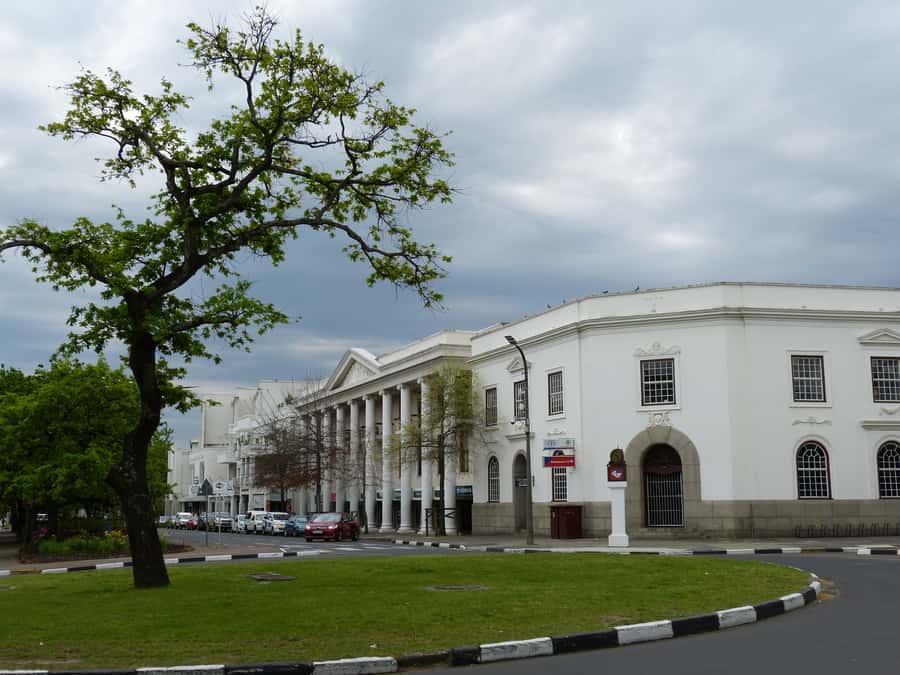
The Braak is the village green and one of the clearest visual centers of the walk. Historic buildings surround it on three sides, creating a compact view of Stellenbosch architecture.
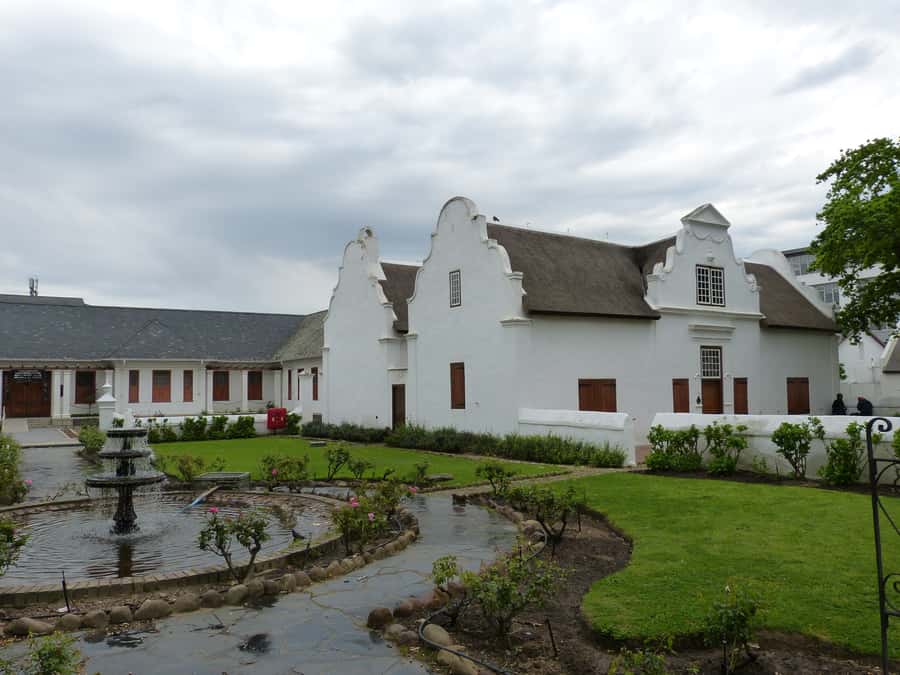
This is where the Cape Dutch style becomes easiest to appreciate as a group rather than as isolated houses. The white façades, carefully shaped gables, and older proportions make more sense when you see them gathered around an open public space.
Your guide helps put the buildings into human context. The tour includes stories about colorful inhabitants across four centuries, so the focus is not limited to architects and dates. The buildings become settings for arguments, ambitions, religious life, business, and ordinary routines.
That human touch is important. I would rather hear why a building mattered to the people who used it than simply memorize its construction date. The strongest comments about this walk point to anecdotes, amusing facts, and stories about people. Johan in particular is praised for explaining local systems and ideas in a way that made the town feel more alive.
The Braak also gives you a good chance to pause and take photographs. Because the buildings sit around the green, you can study the overall harmony of the area. The drawback is that a public square can be affected by traffic, noise, or activity on the day of your visit. The tour remains worthwhile, but do not expect every stop to feel like a silent museum courtyard.
More History Tours in Stellenbosch:
- Stellenbosch: Historical Bike Tour & Wine Tasting
★ 4.9 · 248 reviews - Cape Town: Art, Culture & History Walking Tour
★ 4.9 · 392 reviews - Soweto Township Cultural Tour incl Apartheid Museum and Nelson Mandela House
★ 5.0 · 30 reviews - Cape Town Guided City Cycling Heritage Tour – Private Tour
★ 5.0 · 27 reviews
Dorp Street, the town’s oldest residential road
Dorp Street is one of the tour’s most important stops. It is described as the oldest residential street in South Africa, and its importance becomes clear as you walk through the older part of town.
The appeal here is not one single monument. It is the continuity of the street, its older buildings, and the sense that this was a place where people lived rather than simply a row of official landmarks. The guide explains how Stellenbosch developed along these roads and points out details that can be easy to miss while walking alone.
This is also a good section for understanding the balance between preservation and modern life. Stellenbosch is not frozen in the past. It is a working town with shops, restaurants, students, residents, and visitors, all sharing the old center. The tour helps you see how those layers sit together.
Several guides have been praised for showing details that a casual walk would skip. Juliana, for example, is described as pointing out less obvious features while explaining the town with energy. One private-feeling walk during a quieter season allowed especially detailed questions and discussion. You should not count on having a solo tour, but smaller groups can make the conversation more personal.
Dorp Street is also a useful place to continue exploring after the tour. Once you know what to look for, you can return at your own pace and spend more time with the buildings that caught your attention.
Fires, ghosts, angels, and local character
Stellenbosch’s story is not only one of graceful façades. The town suffered devastating fires in the 18th century, and repeated fires destroyed large parts of the early settlement. This is one of the most memorable themes because it explains why the town’s old buildings are precious and why rebuilding shaped its appearance.
The guide does not present history as a neat, uninterrupted success story. You hear about loss, repair, and the persistence of the community. That gives the architecture more weight. A beautiful old building is also a survivor.
The route includes atmospheric stories connected with the Angel Factory and the graveyard of the Moederkerk. You might hear about an angel, or perhaps a ghost, depending on how the guide tells the tale. These touches add humor and a little mystery without turning the tour into a theatrical ghost walk.
The local morgue is also mentioned in the tour’s storytelling, and Johan has been praised for handling that subject with humor. This gives you a sense of the style to expect: serious history, unusual details, and the occasional dark joke.
I appreciate that mix. A walk packed with dates can become tiring after half an hour. A few odd stories help you remember the larger points. The balance matters, though. If you want a formal architectural lecture, the jokes may feel like a detour. If you want the town to feel human, they are a welcome part of the route.
Stellenbosch University and the town today
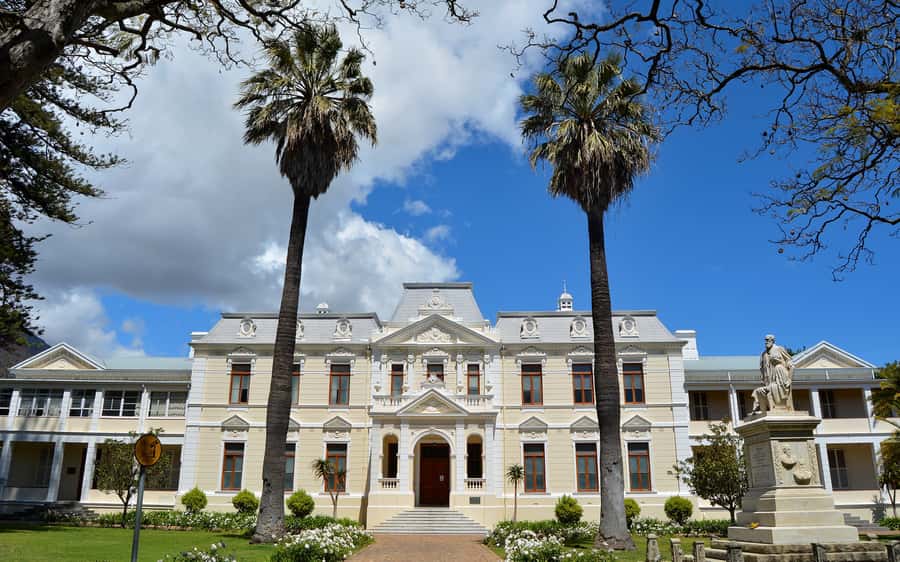
The tour reaches beyond the 17th and 18th centuries. You learn about famous graduates of Stellenbosch University, including prime ministers and sportsmen, and gain a sense of the university’s place in modern town life.
This wider focus improves the tour. Stellenbosch is not merely an old colonial village preserved for photographs. It is also an important university town, and that student presence helps explain its energy, population, and modern identity.
The best guides connect the past with the present. Johan has been praised for discussing modern Stellenbosch as well as its beginnings. Other guides have been commended for explaining the town’s effect on present-day South Africa and for offering a broader view of the country’s history and political situation.
You should expect the conversation to vary according to the group. If you ask questions about architecture, the guide may focus more on buildings. If you ask about language, politics, university life, or local customs, you may receive a broader discussion. The tour seems particularly well suited to curious people who enjoy asking questions rather than simply following a fixed script.
This is one reason I would take the walk early in a Stellenbosch visit. It gives you a framework for later conversations and sightseeing. You may find that a restaurant, university building, or old house means more after you have heard how the town developed.
How much do you walk, and how hard is it?
The activity lasts 90 minutes, or one and a half hours. The route is described as an easy city walk, and several comments praise the comfortable pace and manageable distance.
That makes it suitable for most people who can walk around a town center for an hour and a half. Comfortable shoes are the only item specifically requested, but I would still dress for changing weather and bring water if you prefer to have your own bottle. The tour is outdoors, so conditions can affect your comfort.
Wheelchair access is available, which is a useful practical point. You should still raise any specific mobility questions when booking, since old-town routes can include different surfaces and crowded areas even when an activity is marked accessible.
There are no food, drinks, or personal expenses included. Pets, alcohol, and drugs are not allowed. The tour is a guided walk, not a tasting experience, museum visit, or transport service, so you should plan those extras separately.
Is $18 good value?
At $18 per person, I consider this a strong buy. You receive a professional English-speaking guide and 90 minutes of focused sightseeing in one of South Africa’s most historically important towns.
The value comes from interpretation. You can walk around Stellenbosch for free, but you will not automatically know where Simon van der Stel camped, how the Eerste River got its name, why the water furrows matter, or how the fires changed the settlement. You may also miss the stories connected with the Moederkerk, The Braak, and Dorp Street.
The price is especially fair if you are visiting for only a day. A short guided walk helps you use your limited time well, then leaves you free to choose your own lunch, wine tasting, shopping, or further sightseeing.
It may feel less valuable if you have already taken several tours of Stellenbosch or prefer to explore entirely alone. Even then, the guides’ willingness to answer questions and point out less obvious details can add something beyond a standard stroll.
Flexible booking helps too. You can reserve now and pay later, and cancellation is free up to 24 hours before the activity for a full refund. Those terms are useful when your Western Cape plans depend on weather, transport, or changing wine-country reservations.
Who will enjoy this walk most?
I would recommend it to first-time visitors who want a clear introduction to Stellenbosch before exploring independently. It also suits repeat visitors. One person who had been to town many times still learned new things from Johan, which says a lot about the value of local interpretation.
History fans will find plenty to enjoy, especially if fires, colonial settlement, architecture, religion, and university life interest you. The tour also suits people who like stories more than formal lectures. Guides are praised for humor, warmth, and an easy conversational style.
It is a good choice for couples, families with older children, small groups, and solo visitors. In quieter periods, you might even find yourself in a very small group or with a solo tour, allowing more time for questions.
You may want something else if your main goal is wine tasting, countryside scenery, or a long architectural survey. This experience stays in the town center and focuses on its streets, buildings, people, and past. It is also not a substitute for transport between wine farms.
Final verdict: book it for context, not just scenery
I would book the Stellenbosch Guided Historical Walking Tour, especially near the beginning of a stay. For $18 and 90 minutes, you get a friendly local guide, an easy route through the old center, and useful context for the buildings you might otherwise photograph and forget.
The most highly praised qualities are clear explanations, humor, personal attention, and the guides’ ability to connect old Stellenbosch with the town today. Johan, Marlene, and Juliana are all singled out for different strengths, from lively anecdotes to patient answers and well-paced storytelling.
Skip it only if you have very little time in Stellenbosch or want a wine-focused outing instead. If you can spare an hour and a half, wear comfortable shoes, arrive early at Church Street, and let the town’s oak avenues, fires, river, village green, and old homes tell you why Stellenbosch is more than a pretty stop in the Cape Winelands.
FAQ
How long does the Stellenbosch walking tour last?
The tour lasts 90 minutes, or one and a half hours.
How much does the tour cost?
The price is $18 per person.
Where does the tour start?
The meeting point is 47 Church Street, Stellenbosch Central, Stellenbosch, 7599. You should arrive 15 minutes before the activity begins.
What language is the tour conducted in?
The live tour guide speaks English.
Is the walking tour wheelchair accessible?
Yes, the activity is listed as wheelchair accessible.
What should I bring?
Comfortable shoes are recommended because the experience involves walking through the historic town center.
Can I cancel the booking for a refund?
Yes. You can cancel up to 24 hours in advance for a full refund. You can also reserve now and pay later.
Just added in Stellenbosch
- Tailor made Stellenbosch Winelands Full Day Tour★ 5.0 · 2 reviews
- Stellenbosch wine tour, all inclusive of lunch and tastings.★ 5.0 · 32 reviews
- Stellenbosch: Hop-On Hop-Off Northern Route Wine Tour★ 4.6 · 49 reviews
- E-Bike Stellenbosch Winelands – Full Day Private Tour★ 5.0 · 6 reviews
- Stellenbosch: Stellenbosch E-Bike & Wine Tour (Shared Tour)★ 5.0 · 9 reviews
- Stellenbosch: Khayamandi Township Walking Tour★ 4.3 · 5 reviews
- Stellenbosch Winelands downhill gravity Scooter★ 3.1 · 4 reviews
- Stellenbosch North Guided Wine Safari (Tastings Included)★ 4.9 · 16 reviews
Historical Tours, compared.

Soweto Township Cultural Tour incl Apartheid Museum and Nelson Mandela House
Read our review →
Cape Town Guided City Cycling Heritage Tour – Private Tour
Read our review →
Robben Island Tour; Pickup, Drop-off; Guided Tour Historic Prison
Read our review →


Robben Island and Long Walk To Freedom Historical Full day Tour.
Read our review →Browse the lists this tour appears in