
REVIEW · WORKSHOPS
African Art Workshop
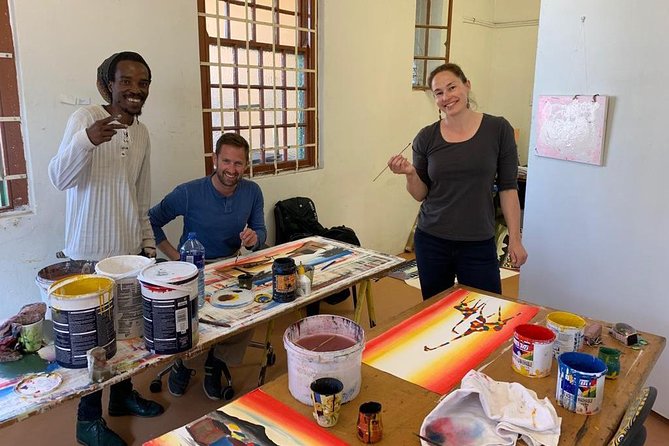
Paint, stories, and a Langa welcome come together here. I like the small group capped at 10 and the patient, hands-on guidance from artist Tozamile Mnapu, known as Toz. I also like that all art supplies are provided, so you can arrive with little more than curiosity. The main consideration is the meeting point in Langa, with no pickup service stated, so you’ll need to plan your own way there.
This is not a quick craft stop squeezed between Cape Town sights. It gives you about three hours to hear an artist’s personal story, learn about African art, watch a painting demonstration, and make something of your own. I see the strongest value in the personal exchange and the fact that you leave with a one-of-a-kind souvenir, not a mass-produced trinket.
In This Review
- Key points at a glance
- Arriving at 20 Bitterhout Street in Langa
- Toz’s welcome and personal story
- Watching a painting take shape
- Choosing a prepared design or a blank material
- Three hours of color, brushes, and patient help
- Leaving with a painting you made yourself
- Is $29.47 a fair price?
- Who will enjoy this workshop most?
- Practical details before you book
- Should you book the African Art Workshop?
- FAQ
- Where does the African Art Workshop take place?
- Where does the activity finish?
- How long does the workshop last?
- How many people can join the workshop?
- Are art supplies included?
- Can beginners take part?
- Can I take my artwork home?
- Is the meeting point near public transportation?
- What is the cancellation policy?
Key points at a glance
- Meet artist Tozamile Mnapu in Langa: Hear about his life, work, and connection to the local community.
- Choose your own starting point: Paint on a prepared design or begin with a blank material.
- Small group, maximum 10 people: You get room to ask questions and receive individual help.
- All equipment is supplied: Brushes, colors, and the needed art materials are provided.
- Learn by watching first: Toz explains how he builds a painting from scratch before you begin.
- Take your painting home: Your finished piece becomes a personal reminder of Cape Town.
Arriving at 20 Bitterhout Street in Langa
The workshop starts at 20 Bitterhout Street, Langa, Cape Town, postal code 7456. This is also where the activity ends, so you return to the same meeting point after painting.
That detail matters. You are not being collected at a central Cape Town hotel, and no transfer is listed. I would treat transport planning as part of your preparation. The activity is near public transportation, but the information provided does not specify a particular route, station, or travel time. Check your map and allow enough time to arrive without rushing into a three-hour creative session.
Langa gives the workshop a setting with more meaning than a generic hotel art room. The artist can connect his work to local life, African art, and the community around him. One part of the visit may include a short look around the township, as well as conversation about local social issues. The exact scope of that introduction can vary, but you should expect the setting itself to be part of the lesson.
This is also a point where respectful behavior matters. You are entering a working neighborhood, not a staged attraction. Listen carefully, follow the artist’s lead, and remember that the visit is built around meeting a local person and supporting his work.
More Workshops in Cape Town
- Cape Town: Malay Cooking Class and Lunch in Bo-Kaap
★ 4.8 · 515 reviews - Cape Town: Cape Malay Cooking Class in Bo-Kaap
★ 4.8 · 120 reviews - Cape Town: Bo-Kapp Walking Tour and Malay Cooking Class
★ 4.7 · 105 reviews
Toz’s welcome and personal story
The session begins in the artist’s studio, where Tozamile Mnapu welcomes you. He introduces African art and shares his own path as an artist before the practical work gets underway.
That opening gives the painting a human context. You are not simply copying a design from a printed sheet. You are hearing how one artist works, what his art means to him, and how creative work connects with his community.
The personal side is one of the workshop’s strongest features. Toz has been praised for his friendly and patient manner, especially with people who have never painted before. That is useful if you feel unsure about your artistic ability. You do not need to arrive with technical skills or a portfolio. The setup is intended to help beginners get started.
The conversation can also extend beyond art. A previous session included discussion about social issues in Cape Town and the United States. That kind of exchange may appeal to you if you like activities that leave room for questions and honest conversation, rather than keeping everyone on a strict script.
Still, you should set your expectations correctly. This is a personal introduction and workshop, not a full academic course in African art. You will get a short lesson and the artist’s own perspective, not an exhaustive survey of every art movement or region on the continent.
Watching a painting take shape
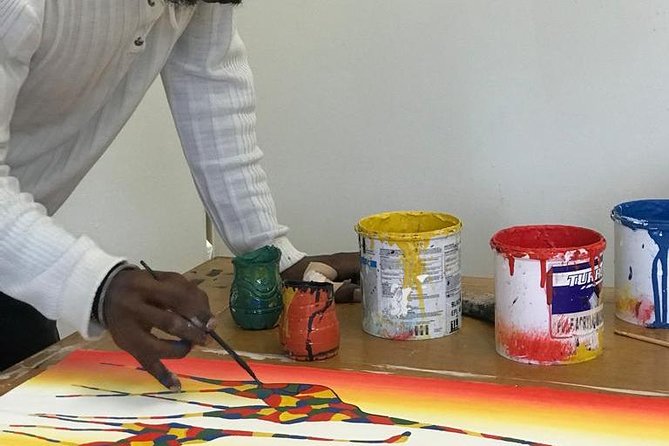
Before you pick up a brush, Toz explains how he creates a painting from scratch. He demonstrates his process and gives you a practical starting point.
This is a smart order for the activity. Watching first lets you see how the artist handles the materials, builds an image, and uses color. You can then try the same general approach without having to guess what to do next.
The word from scratch should be understood in a practical sense. You learn how the artist begins and develops a painting, but you are not promised a long technical course in drawing, composition, or color theory. The focus is on getting involved and producing a finished piece during the three-hour session.
I like that the demonstration comes before the free painting time. It lowers the pressure. If you have not held a brush since school, you can first see the process in action. The artist’s guidance is particularly valuable here because he can correct small problems before they become frustrating ones.
The session also has a social rhythm. You can listen, ask questions, watch other people work, and then return to your own canvas or material. A group of no more than 10 keeps this from feeling like a crowded class, though the amount of one-to-one attention will naturally depend on how many people attend and how much help each person wants.
Choosing a prepared design or a blank material
After the demonstration, you can choose how much structure you want. One option is to paint on a material prepared for you. The other is to start with a blank material and create your own design.
This choice makes the workshop suitable for different skill levels. If you want a clearer path, the prepared material gives you something to work from. You can focus on color, brush control, and the pleasure of painting without having to invent the whole image.
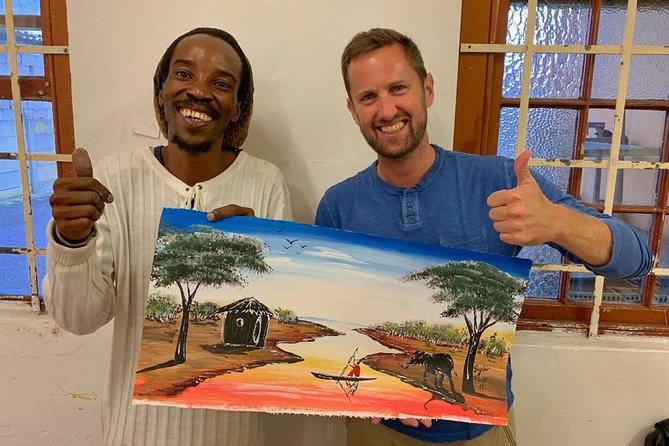
If you already enjoy art, the blank material gives you more freedom. You can respond to the artist’s ideas, create a personal design, or simply experiment with the colors in front of you. The activity does not require everyone to produce the same picture, which makes the final souvenir more personal.
The trade-off is simple. A prepared design may feel less original to someone who wants a fully independent composition. A blank material may feel intimidating if you are a beginner. I would choose based on your comfort level, not on what you think an art workshop participant is supposed to do.
The important point is that you are not locked into a single method. You can decide how much help you want and how much of the final piece should come from your own imagination.
A few more in Cape Town
- Wine Tour: Paarl, Franschhoek & Stellenbosch incl 3 wineries
★ 5.0 · 3,940 reviews - Cape Town: Hop-On Hop-Off Bus Tour with Optional Cruise
★ 4.8 · 3,929 reviews - Cape Town: Cape of Good Hope & Penguins Day Tour with Pickup
★ 4.7 · 3,362 reviews - Zipline Cape Town – From Foot of Table Mountain Reserve
★ 5.0 · 3,179 reviews
Three hours of color, brushes, and patient help
Once you start painting, you can work with a wide range of colors and brushes. The supplies are included, which keeps the experience easy to pack for and easy to book as part of a larger Cape Town trip.
You do not need to buy paint, carry an art kit, or worry about bringing the right brush. That may sound like a small convenience, but it makes a difference when you are traveling. You can arrive ready to work rather than spending part of the day shopping for supplies.
The artist’s guidance is the heart of this section. Toz has been praised for helping people bring out their creativity, including those trying painting for the first time. Expect encouragement and practical tips as you work, with the freedom to make your own decisions.
I would not expect a polished professional painting after three hours. The point is not to match the artist’s skill. It is to understand enough of his process to make a personal piece and enjoy the act of creating it.
The time also gives you a chance to slow down. Cape Town can fill a schedule quickly with museums, viewpoints, beaches, and day trips. Sitting with a brush for several hours offers a different pace. You are doing something with your hands, talking with a local artist, and allowing the final image to develop gradually.
That slower pace may not suit everyone. If you prefer a fast-moving sightseeing tour, three hours at a worktable could feel long. If you enjoy making things or want a break from scheduled sightseeing, the length is an advantage.
Leaving with a painting you made yourself
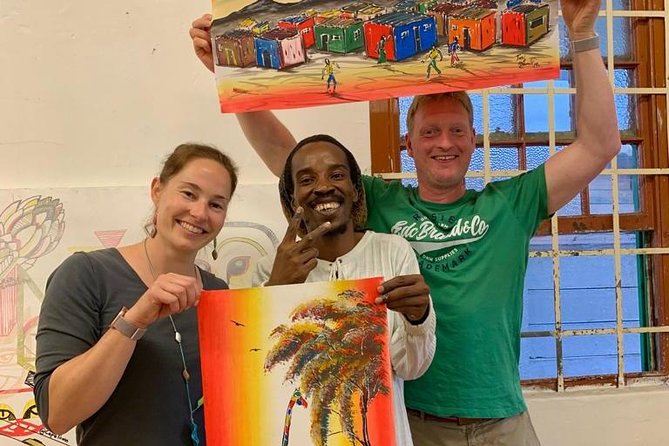
At the end of the workshop, you can go home with your painting. This is the clearest practical benefit of the activity: your souvenir has a story attached to it.
A shop-bought piece can remind you of Cape Town, but your own painting can remind you of a particular afternoon, the artist who helped you, and the choices you made with color and design. It may not look perfect, and that is part of its charm.
Think about how you will carry it for the rest of your trip. The supplied information does not say whether the piece is mounted, framed, rolled, or packaged for transport. If you are flying soon after the workshop, ask the artist how best to protect it. Do not assume it will fit easily into a suitcase.
This is also a direct way to support a local artist and the community program connected with his work. The workshop is not only about making an object. Your booking helps pay for the artist’s time and keeps the exchange centered on local creative work.
Is $29.47 a fair price?
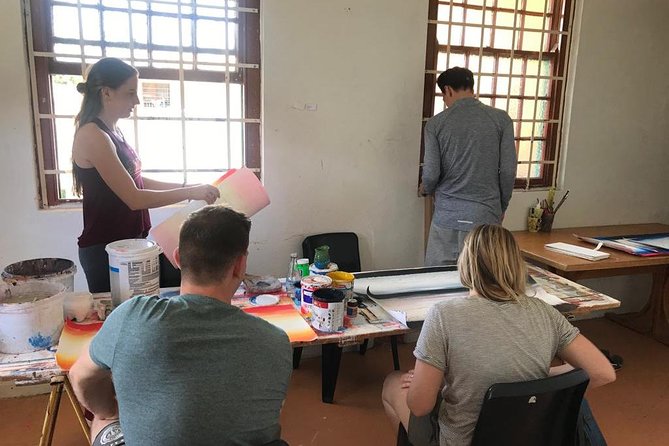
At $29.47 per person, the price is reasonable for a three-hour activity that includes instruction, materials, and a finished painting. You are paying for more than the physical supplies. The cost also covers the artist’s time, demonstration, conversation, and personal attention in a group limited to 10 people.
The value is strongest if you would otherwise spend money on a generic souvenir or a short craft class. Here, you receive an activity and something to take home. The personal story and discussion of Langa add a cultural element that a standard painting session may not provide.
The price is less compelling if you mainly want a sightseeing tour of Cape Town. There is no promise of a long township tour, major landmark visits, or transport between attractions. The central event is painting in the studio.
The booking pattern suggests that people often reserve about 35 days ahead. That is useful when planning a Cape Town itinerary, especially if you want a particular date. The maximum of 10 participants keeps the class small, but it also means spaces are limited. I would reserve ahead rather than count on finding a last-minute opening.
Who will enjoy this workshop most?
I would recommend this activity to:
- First-time painters who want calm, friendly instruction
- People interested in meeting a local artist
- Couples, families, or friends looking for a shared creative activity
- Visitors who want a personal souvenir instead of a shop purchase
- Anyone curious about Langa and local community work
- Art lovers who enjoy discussing social issues as well as technique
It can also suit solo participants. The small group gives you a natural setting for conversation, and the hands-on format avoids the awkwardness of simply watching other people take part.
You may want to skip it if your schedule is already packed and you cannot spare three hours. It is also not the best match if you want advanced studio training, a formal art lecture, or a guided transport-based tour of Cape Town.
Families should note that most participants can take part, but the available information does not give a minimum age or specific child policy. If you are booking for young children, confirm that point before paying.
Practical details before you book
Confirmation arrives at the time of booking, and the experience uses a mobile ticket. Keep the ticket accessible on your phone, and make sure you know the meeting address before setting out.
The activity begins and ends at 20 Bitterhout Street in Langa. It lasts about three hours, and the group can include no more than 10 people. Service animals are allowed, and the activity is near public transportation.
Most people can participate, but the supplied details do not describe the studio’s exact layout, seating, bathroom access, or provisions for particular mobility needs. If you have access requirements, contact the provider before booking rather than relying on general participation guidance.
Cancellation is flexible if you act early. You can receive a full refund by canceling at least 24 hours before the local start time. Cancellations or changes made inside that 24-hour window are not accepted for a refund.
Should you book the African Art Workshop?
I would book this workshop if you want a small, personal activity that connects art with a local Cape Town community. The combination of Toz’s patient instruction, an introduction to his life and work, supplied materials, and a painting to take home gives the $29.47 price solid value.
Go in expecting a creative session, not a major sightseeing tour. Plan your route to Langa, allow the full three hours, and choose the prepared material if you are nervous about starting from a blank surface. If you want a slower afternoon and a souvenir that carries your own fingerprints, this is a thoughtful choice.
FAQ
Where does the African Art Workshop take place?
The workshop starts at 20 Bitterhout Street, Langa, Cape Town, South Africa, postal code 7456.
Where does the activity finish?
It ends back at the same meeting point at 20 Bitterhout Street.
How long does the workshop last?
The activity lasts approximately three hours.
How many people can join the workshop?
The group is limited to a maximum of 10 participants.
Are art supplies included?
Yes. The required art equipment is provided, including a range of colors and brushes for the painting session.
Can beginners take part?
Yes. Most people can participate, and the artist provides demonstrations, tips, and patient guidance. You can also choose to paint on a prepared material instead of starting with a blank one.
Can I take my artwork home?
Yes. You are able to leave with the painting you create during the workshop.
Is the meeting point near public transportation?
Yes. The meeting point is near public transportation, although a specific route is not provided.
What is the cancellation policy?
You can cancel at least 24 hours before the local start time for a full refund. Cancellations or changes made less than 24 hours before the start time are not accepted for a refund.
Just added in Cape Town
- Sunset Safari Big 5 Aquila with Snacks and Wine Tasting★ 5.0 · 12 reviews
- Explore Atlantis Sand Dunes with a 1hour 30mins sandboarding tour★ 5.0 · 5 reviews
- Private Tour to 20 Wine Tasting in Stellenbosch and Franschhoek★ 5.0 · 11 reviews
- Robben Island, Kirstenbosch wine tasting Tour★ 5.0 · 10 reviews
- Photoshoot in Cape Town’s most Gorgeous Locations★ 5.0 · 2 reviews
- 1 Hour Cape Town City Center Photoshoot Experience★ 5.0 · 19 reviews
- Zip Line and Wine from Cape Town★ 5.0 · 14 reviews
- Private Transfer from Cape Town International Airport★ 5.0 · 4 reviews
Workshops, compared.


Private Surf Lesson in Cape Town – Transport & Photos Included
Read our review →
Jeffreys Bay: Private Surfing Lesson for Beginners
Read our review →
Browse the lists this tour appears in