
REVIEW · COOKING CLASSES
Cape Town: Bo-Kapp Walking Tour and Malay Cooking Class
Colourful streets, serious flavour, local stories. This four-hour experience pairs a Bo-Kaap walking tour with a hands-on Cape Malay cooking class in a local home. I like the strong mix of history and food, and I especially like that you do not just watch the cooking: you fold samosas, shape roti, prepare curry, and sit down to eat what you helped make. The main caution is that the cooking area is small, so not everyone can work at the stove at once.
The $68 price is fair for a guided neighbourhood walk, museum admission, a full meal, water, recipes, and several hours with local hosts. I would choose it over a quick photo stop in Bo-Kaap, but you should bring comfortable shoes and allow for a busy afternoon of walking, cooking, and conversation.
In This Review
- Key points to know before booking
- Why this Bo-Kaap experience works
- Walking Bo-Kaap with someone from the community
- The spice shop visit adds real flavour
- Inside the home kitchen with Faldela
- Folding samosas and preparing the first course
- Chicken curry, flaky roti, and sambal
- Koesisters and cardamom tea finish the meal
- What the $68 price really covers
- Timing, meeting point, and practical planning
- Who will enjoy this most
- Should you book the Bo-Kaap cooking class?
- FAQ
- How long does the Bo-Kaap walking tour and cooking class last?
- What language is the tour conducted in?
- What food will I prepare?
- Do I get to eat the food I prepare?
- Is water included?
- Are other drinks included?
- Is the museum entrance included?
- Where is the meeting point?
- What should I bring?
- Can I cancel for a full refund?
Key points to know before booking
- Bo-Kaap beyond the colourful houses: Learn about the area’s Muslim Cape Malay community, old buildings, architecture, first mosque, and local traditions.
- A real home-kitchen lesson: Cook with hosts including Faldela, Gadija, and other local guides, rather than sitting through a purely theatrical demonstration.
- You make several dishes: Expect samosas, chicken curry, roti, sambal or salsa salad, and koesisters, with chili bites included on some sessions.
- The spice lesson is a highlight: A visit to a spice shop adds practical advice about flavours, uses, and claimed health benefits.
- Recipes go home with you: The recipes are sent by email, making the class useful after your Cape Town visit.
- A warm, social finish: You share the meal with your host and fellow participants, with cardamom tea alongside the dessert.
Why this Bo-Kaap experience works
Bo-Kaap is easy to reduce to a row of brightly painted houses and a few quick photographs. That misses the point. The colour is the visual hook, but the neighbourhood becomes far more interesting when you learn about the people, faith, food, and long local connections behind it.
This experience gives you a guide who knows the area personally. Faldela is frequently praised for her humour, warmth, and connection to the community. Other sessions have been led by Gadija, Gandija, or Ilyas, and the guide names can vary, but the local perspective is central to the experience.
I like the order of the day. The walk gives you context before the meal, then the cooking class turns that context into something you can taste and repeat at home. It is a sensible way to spend four hours in Cape Town, especially if you want more than the standard city sights.
More Cooking Classes in Cape Town
- Cape Town: Malay Cooking Class and Lunch in Bo-Kaap
★ 4.8 · 515 reviews - Authentic African Cuisine Cooking Experience
★ 5.0 · 236 reviews - Cape Town: Cape Malay Cooking Class in Bo-Kaap
★ 4.8 · 120 reviews
Walking Bo-Kaap with someone from the community
The walk takes you through cobblestone streets and past some of Bo-Kaap’s oldest buildings. Along the way, your guide explains the area’s culture, traditions, architecture, and Muslim identity.
The first mosque in South Africa is part of the historical discussion. The cultural museum is also included in the activity, with the entrance fee covered. One practical point: one participant said the museum was not visited during their session and suggested allowing separate time for it. If seeing the museum matters to you, confirm how it fits into your particular departure.
The guides bring the streets to life with local detail. You might hear how the colourful houses came to be painted in their familiar yellows, purples, oranges, and other shades. You also get a better sense of the colonial-era architecture and how the neighbourhood has changed while keeping a close community spirit.
Several stops at local art and souvenir shops add another useful layer. You may meet artists and see work being made or sold by people from the area. This feels more meaningful than being led through a generic shopping arcade, though you should not expect a long, formal shopping session.
The walk is not described as strenuous, but Bo-Kaap’s cobblestones make comfortable shoes a sensible choice. The walk also serves a practical purpose: it builds an appetite before the cooking class.
The spice shop visit adds real flavour
The spice stop is one of the more useful parts of the walk. Cape Malay cooking depends on careful combinations of spice, and the guide explains different varieties, how they are used, and their possible health benefits.
Mona offered a particularly practical tip: start recording video when the spices come out. Faldela’s explanations cover many individual spices and ways to use them, and a written recipe cannot capture all those small lessons.
Keep a sensible distinction in mind. Advice about health benefits is part of the guide’s presentation, not a substitute for medical advice. Still, the stop helps you understand why Cape Malay food tastes layered rather than simply hot.
This is also a good place to ask questions. If you cook at home, pay attention to the proportions, the order in which ingredients are added, and the tricks used to build flavour. The lesson is not just a list of ingredients.
Inside the home kitchen with Faldela
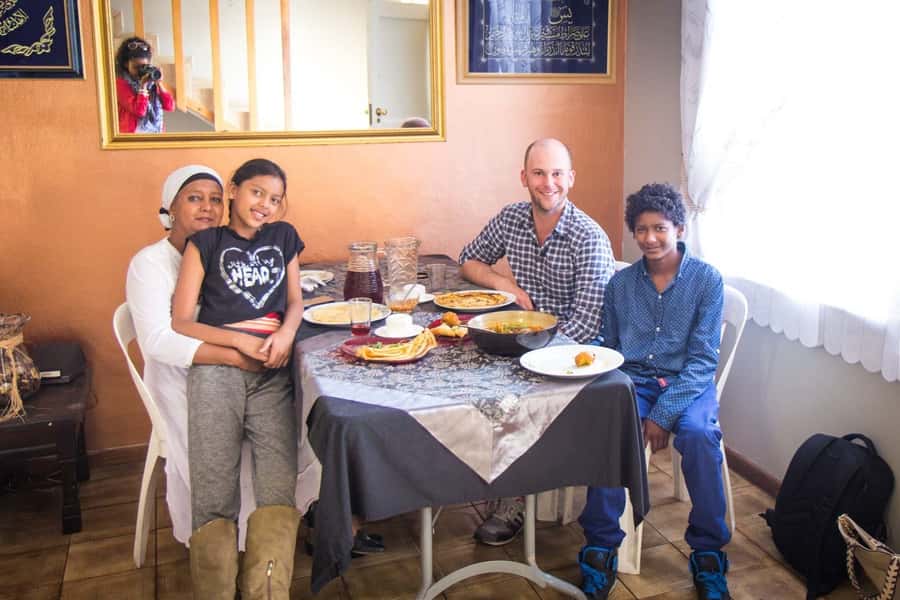
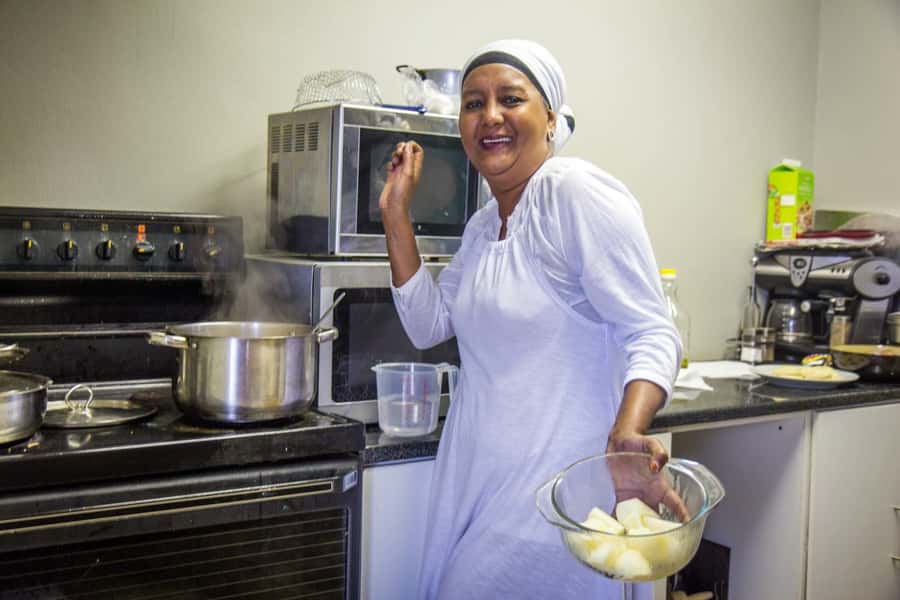
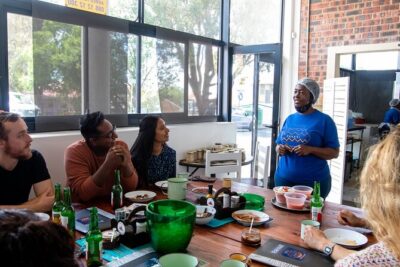
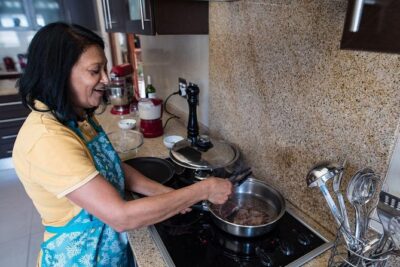
After the walk, you return to the home of your host for the cooking portion. Faldela is the name most often associated with the class, and her teaching style is a major reason the experience receives such strong praise. She is described as funny, welcoming, entertaining, and careful to involve everyone.
The kitchen is compact. One participant noted that it realistically allows only one or two people to work at a time. That is the main weakness to understand before booking. You will take part, but this is not a large professional kitchen where every person has a separate work station.
The upside is that the small setting supports conversation. You can ask questions, watch close-up, and learn the small hand movements that make the dishes work. Faldela also shares stories about the food and its place in Cape Malay culture.
The class is suitable even if you are not much of a cook. One participant specifically advised non-cooks not to be put off, since the teacher guides the process and the final meal is plentiful. You may not perform every step yourself, but you should leave with techniques you can try at home.
More Walking Tours in Cape Town
- Cape Town: Nathi Langa Township Walking Tour
★ 4.9 · 493 reviews - Cape Town: Art, Culture & History Walking Tour
★ 4.9 · 392 reviews - Cape Town: Street Art Walking Tour in Woodstock
★ 4.8 · 293 reviews - Cape Town: Langa Township Walking Tour
★ 4.8 · 272 reviews
Folding samosas and preparing the first course
The cooking begins with samosas, and you help fold them. This is a simple task in theory, but the shape and sealing take a little practice. It is exactly the sort of hands-on job that gives you a better feel for the food than watching someone else do it.
Some sessions also include chili bites. The precise menu may vary slightly, but the central dishes are consistent: samosas, chicken curry, roti, salad, and dessert.
The activity is social rather than competitive. Nobody needs to produce restaurant-perfect pastry. The point is to learn the method, share the work, and enjoy the food at the end.
Chicken curry, flaky roti, and sambal
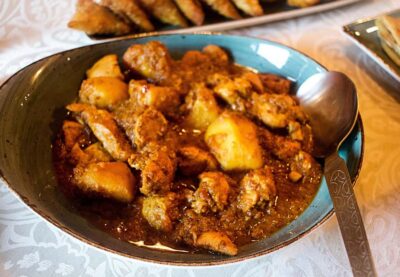
The main course is chicken curry with roti flatbread. You help prepare the curry and learn how the spices are brought together. The meal is described as hearty and plentiful, so this is not a small tasting menu.
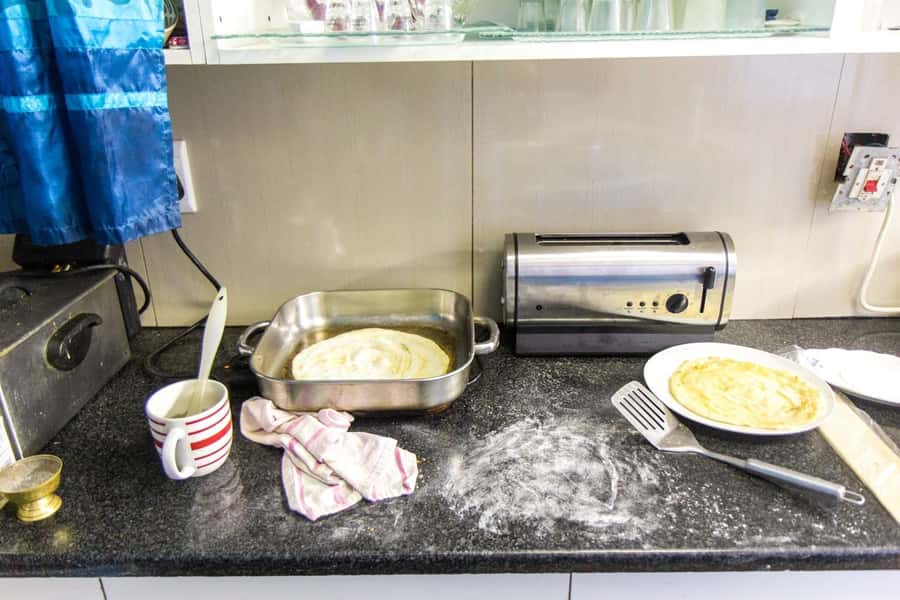
The roti lesson is a star of the class. Several people singled out the chance to make roti from scratch, and one participant celebrated finally learning how to produce flaky roti. You will likely need to pay attention to the folding and shaping technique, since those details affect the texture.
The class also includes sambal, described here as a salsa salad. It gives the meal a fresh contrast to the warm curry and fried items.
Dietary needs have been handled well in at least one session, but the supplied information does not list specific dietary options or a formal policy. If you have allergies or strict dietary requirements, raise them before booking rather than assuming substitutions are guaranteed.
Koesisters and cardamom tea finish the meal
Dessert is traditionally described as koesisters, spicy savoury donuts served with cardamom tea. The combination makes a good ending to a spice-focused meal. The tea also gives everyone a chance to sit, talk, and slow down after the cooking.
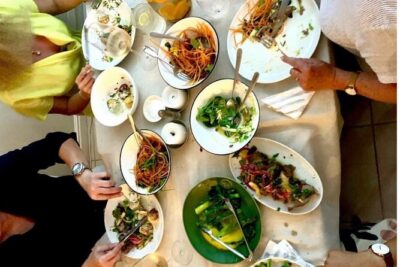
You are not simply handed a plate and sent away. Sharing the meal with the host is one of the best parts of the experience. It creates room for conversation about Cape Town, Bo-Kaap, cooking, and daily life in the community.
The menu provides a full progression: crisp samosas, curry and roti, fresh salad, then sweet-spiced dessert. Food is the centre of the second half, but the social setting matters just as much.
What the $68 price really covers
At $68 per person, this is not the cheapest way to see Bo-Kaap. You can walk the streets independently for little or no cost, and you can eat a meal elsewhere for less.
The comparison changes once you count what is included. You receive a four-hour guided experience, the neighbourhood walk, museum admission, the cooking lesson, the meal you prepare, water, and recipes sent by email. You are also paying for access to a local home and for direct instruction from people connected to the community.
I consider that good value if you want cultural context and a substantial meal in one booking. It is less compelling if you only want photographs of the houses or if you dislike group cooking.
Food and water need careful wording. Water is included, while other food and drinks are listed separately as not included, with alcohol specifically excluded. The prepared meal is clearly part of the activity, so you should not expect to buy lunch on top of the class. Do not count on additional drinks unless confirmed.
Timing, meeting point, and practical planning
The experience lasts four hours, with starting times dependent on availability. You meet your host at a purple house with flower pots on top. That description is the key landmark supplied for the meeting point, so read your booking details carefully before setting out.
The tour is conducted in English. Bring comfortable shoes for the cobblestone walk and allow enough time to move from the street tour into the home cooking session without rushing.
The group can sometimes be larger than a private lesson. One session involved nine people, while another continued even when only one person attended. That suggests the experience can work for both social groups and small bookings, but the exact group size is not stated.
The guides have also made the best of poor weather, including one rainy outing. Still, your comfort will be better with suitable shoes and weather-appropriate clothing.
Free cancellation is available up to 24 hours before the start for a full refund. You can also reserve and pay later, which is useful when you are still arranging your Cape Town schedule.
Who will enjoy this most
I would recommend this for you if you want to understand Bo-Kaap through its people and food. It suits curious first-time visitors, home cooks, food lovers, and anyone who prefers a neighbourhood experience to another viewpoint or bus tour.
It is also a strong choice for people travelling alone. The shared meal and small home setting make conversation easy, and one solo booking went ahead even with no other participants.
Families and mixed-interest groups may like it because the walk, shopping stops, stories, and cooking offer different kinds of activity. But anyone who needs constant hands-on work should know that the compact kitchen limits how many people can cook at once.
The experience also touches on current community and political concerns. One participant felt that a discussion of Palestinian justice was too direct for a cooking class. That is a useful reminder that local hosts may share personal and community views as part of the conversation. Most people will see that as part of meeting real people, but it may not suit anyone looking for a strictly neutral, scripted tour.
Should you book the Bo-Kaap cooking class?
I would book it if you have four free hours in Cape Town and want more than a colourful street photo. The strongest reasons are the local guides, the clear connection between the walk and the food, the generous meal, and the recipes you can use after returning home.
Choose another activity if you want a fast sightseeing stop, a polished cooking school, or a private kitchen with constant personal workspace. The small cooking area is a real limitation, and the museum visit may not happen as part of every session.
For most visitors, though, the mix works. The 4.7 rating from 105 reviews reflects a very consistent experience, with particular praise for Faldela’s humour, hospitality, cooking skill, and command of Bo-Kaap’s story. Come ready to walk, listen, fold pastry, practise roti, and eat well.
FAQ
How long does the Bo-Kaap walking tour and cooking class last?
The experience lasts four hours.
What language is the tour conducted in?
The tour and cooking class are conducted in English.
What food will I prepare?
The menu includes samosas, chicken curry, roti flatbread, sambal or salsa salad, and koesisters. Some sessions also include chili bites.
Do I get to eat the food I prepare?
Yes. You sit down and enjoy the traditional meal after preparing it.
Is water included?
Yes. Water is included in the activity.
Are other drinks included?
Other food and drinks are not included, and alcohol is specifically excluded. Cardamom tea is served with the koesisters.
Is the museum entrance included?
Yes. The museum entrance fee is included, although one participant reported that the museum was not visited during their session.
Where is the meeting point?
You meet your host at a purple house with flower pots on top.
What should I bring?
Bring comfortable shoes for the walk on cobblestone streets.
Can I cancel for a full refund?
Yes. You can cancel up to 24 hours in advance for a full refund. You can also reserve now and pay later.
More Workshops in Cape Town
- Private Surf Lesson
★ 5.0 · 53 reviews - Private Surf Lesson in Cape Town – Transport & Photos Included
★ 5.0 · 50 reviews - Muizenberg Cape Town: Private Surf Lesson
★ 5.0 · 37 reviews - Private Cape Malay Cooking Class in Cape Town with a Local Family
★ 5.0 · 24 reviews
Just added in Cape Town
- Sunset Safari Big 5 Aquila with Snacks and Wine Tasting★ 5.0 · 12 reviews
- Explore Atlantis Sand Dunes with a 1hour 30mins sandboarding tour★ 5.0 · 5 reviews
- Private Tour to 20 Wine Tasting in Stellenbosch and Franschhoek★ 5.0 · 11 reviews
- Robben Island, Kirstenbosch wine tasting Tour★ 5.0 · 10 reviews
- Photoshoot in Cape Town’s most Gorgeous Locations★ 5.0 · 2 reviews
- Zip Line and Wine from Cape Town★ 5.0 · 14 reviews
- Private Transfer from Cape Town International Airport★ 5.0 · 4 reviews
- 1 Hour Cape Town City Center Photoshoot Experience★ 5.0 · 19 reviews
Cooking Classes, compared.
Half-Day Small Group Cooking Experience in Franschhoek
Read our review →
Private Cape Malay Cooking Class in Cape Town with a Local Family
Read our review →
GQ: City Walking Tour & African Cuisine Cooking Class
Read our review →
South African Cooking in Cape Town with Local Chef Richard
Read our review →Browse the lists this tour appears in