

REVIEW · TOWNSHIP TOURS
Cape Town: Nathi Langa Township Walking Tour
See Cape Town from the inside. The Nathi Langa Township Walking Tour takes you through Langa with local guides who know the streets, stories, and residents personally. I like the direct connection with the community, and I like that the tour explains both Langa’s past and present instead of presenting it as a frozen museum. The main consideration is that you will see real hardship, including difficult housing conditions and sharp inequality.
The tour lasts about 150 minutes, though the description gives a range of two to two and a half hours. Nathi’s personal ties to Langa are its strongest asset. Several guides, including Nathi and Zuzie, have lived in the township, and their local relationships help the walk feel more natural. You may hear greetings along the route, meet residents, visit small businesses, and see community projects at close range.
This is not a polished sightseeing circuit. Langa is a living neighborhood, and people’s homes and daily routines are part of the setting. That demands good manners, patience, and an open mind. The tour is well suited to visitors who want historical context and human contact, but less suited to anyone seeking a purely comfortable or picture-perfect afternoon.
In This Review
- Key points to know before you go
- Why Langa adds an important side of Cape Town
- Meeting at Guga S’thebe in Washington Street
- Walking Langa with someone who belongs there
- Langa’s past, explained in plain language
- Meeting residents and seeing ordinary routines
- Food, crafts, and small local businesses
- Safety, comfort, and the question of tourism
- Is the $31 price good value?
- Who will enjoy this walking tour most?
- Book it or choose another Cape Town activity?
- FAQ
- How long does the Nathi Langa Township Walking Tour last?
- Where does the tour meet?
- Is hotel pickup available?
- What languages are offered?
- Is the tour wheelchair accessible?
- Can I cancel or pay later?
Key points to know before you go
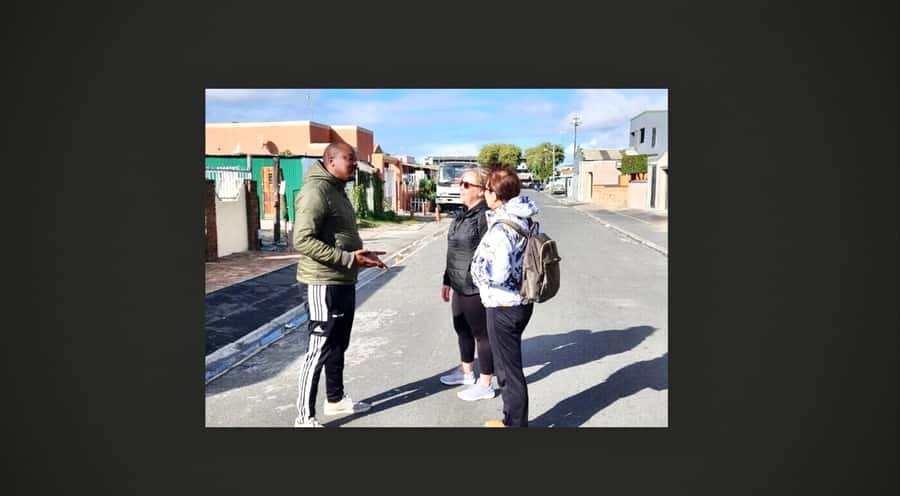
- Local guides lead the way: Nathi and Zuzie explain Langa from personal experience and are well known in the community.
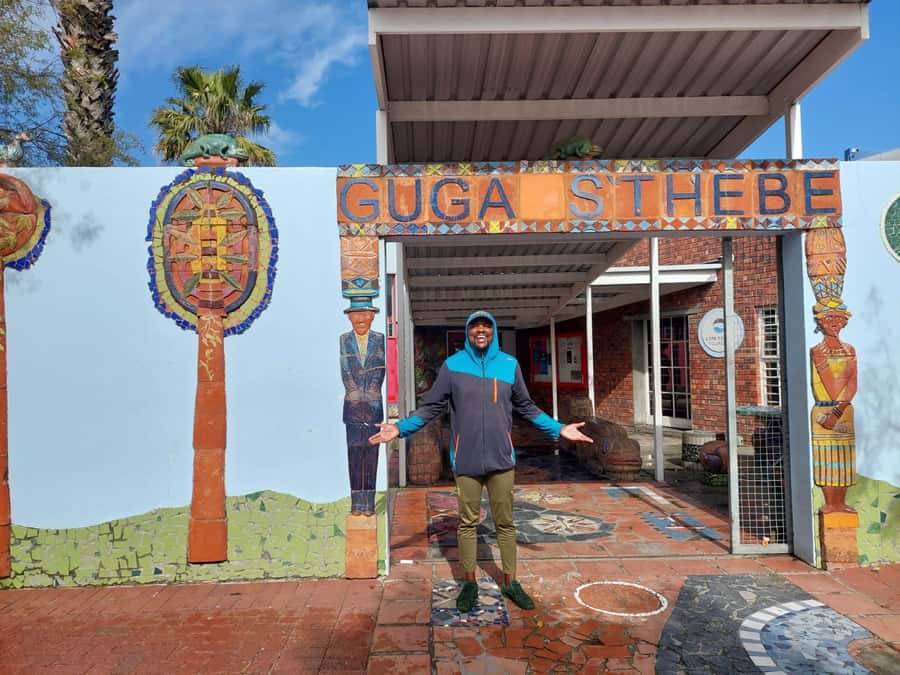
- Guga S’thebe is a major stop: See local artwork, crafts, community projects, and the cultural center’s marketplace.
- History connects to daily life: The tour covers colonial history, apartheid, township origins, housing, work, and current social challenges.
- Expect real interaction: You might meet residents, speak with local artists, visit small businesses, or encounter children playing nearby.
- Food and culture are part of the route: Street food and local eateries may feature, and some departures include drumming or other cultural activities.
- Practical access is flexible: Meet at the Guga S’thebe main entrance 15 minutes early, or ask about pickup from central Cape Town, the Waterfront, and the Atlantic seaboard.
Why Langa adds an important side of Cape Town
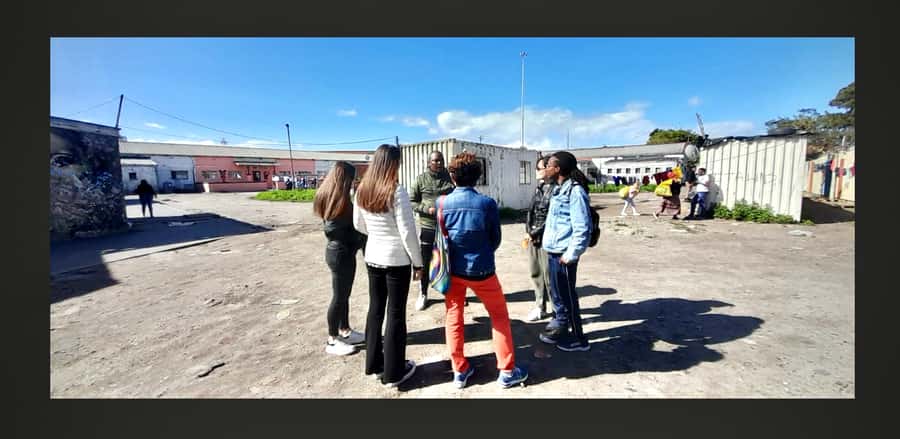
Cape Town is easy to experience through Table Mountain, the V&A Waterfront, beaches, galleries, and fine restaurants. Those places are worth your time, but they do not explain the full city. Langa offers a different view, one shaped by forced segregation, community networks, creativity, and ongoing economic inequality.
The tour uses the streets themselves as a classroom. Instead of only hearing dates and political terms, you can connect that past to housing, public spaces, local businesses, and the way residents organize their lives today. That connection is the real value of the walk.
You should not expect Langa to be presented as either a problem to be solved or an exotic attraction. The strongest part of the experience is its balance. You see hardship, but you also see humor, pride, enterprise, art, and everyday social life.
More Township Tours in Cape Town
- Half-Day Tour Through Cape Town’s Townships
★ 4.8 · 979 reviews - Cape Town: Guided Township Tour with Hotel Pickup
★ 4.4 · 536 reviews - Cape Town: Robben Island Ferry Ticket and Townships Tour
★ 4.5 · 400 reviews
Meeting at Guga S’thebe in Washington Street
The meeting point is the main entrance of Guga S’thebe at 36 Washington Street. Arrive 15 minutes before the start, since the guide needs to gather the group and begin the route on time.
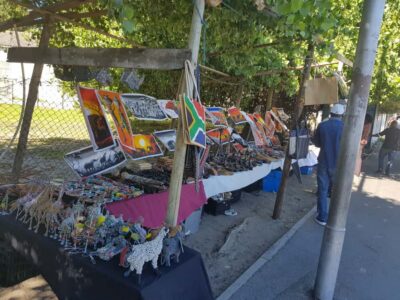
Guga S’thebe is more than a convenient starting point. It is a cultural center and marketplace where local artists and craftspeople display handmade work. Community projects also provide training in crafts and practical skills, including programs aimed at unemployed people and school leavers who may later build their own income.
This opening stop gives you a useful frame for the rest of the visit. You are not simply walking through a neighborhood and looking at it from the outside. You are seeing a place where cultural work, learning, and small-scale enterprise matter.
You may have the chance to browse pottery or other handmade items. Buying is optional, and the stop provides a direct way to support local work if you find something you like. Some tours also include a short djembe drumming activity, which adds a hands-on moment before the longer walk.
Walking Langa with someone who belongs there

The central strength of this tour is the guide. Nathi grew up in Langa and has lived in the community all his life. Zuzie, also referred to as Zuzi or Xuzie, has personal experience of the township and explains its history and present-day life with warmth and humor.
That local connection changes the tone of the walk. Nathi is described as knowing people throughout Langa, and the experience can include frequent greetings with residents. Instead of moving through an anonymous area, you get a sense of social links and neighborhood familiarity.
The exact route may vary, but the walk takes you through streets, markets, residential areas, and cultural landmarks. You may see different types of housing, including a shipping container converted into a home, and parts of the township with very different appearances and living conditions.
This is also where the tour becomes emotionally harder. You can see the gap between Cape Town’s tourist districts and the conditions faced by some Langa residents. The guide’s role is important because he or she can explain what you are seeing without reducing people to a photo opportunity.
Langa’s past, explained in plain language
The historical portion covers South Africa’s colonial past, apartheid, and the origins of townships. It also links national events to Langa itself, which makes the information easier to understand than a detached lecture.
You will hear about how political decisions shaped where people could live and how those decisions still affect opportunity, housing, and income. The tour also looks at recent changes and the work still needed to improve social conditions.
I value this approach because it avoids treating apartheid as a closed chapter. The tour helps you see how history remains present in the physical layout of communities and in the choices available to residents today.
The guides also discuss both advantages and disadvantages of life in Langa. That matters. A place can face serious inequality and still have strong community ties, local pride, and people working hard to create better opportunities. You get a more honest picture when both sides are included.
More Walking Tours in Cape Town
- Cape Town: Art, Culture & History Walking Tour
★ 4.9 · 392 reviews - Cape Town: Street Art Walking Tour in Woodstock
★ 4.8 · 293 reviews - Cape Town: Langa Township Walking Tour
★ 4.8 · 272 reviews - Cape Town: Private Walking Tour with a Local
★ 4.6 · 243 reviews
Meeting residents and seeing ordinary routines
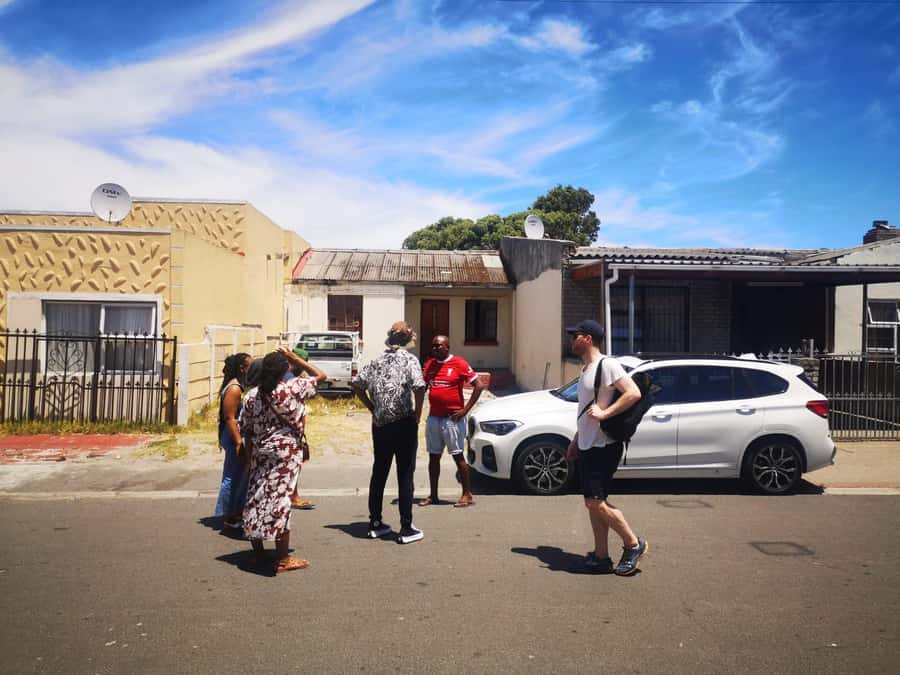
This walking tour is built around contact, not just observation. You may speak with residents, meet local artists, visit a barber, or see children playing football. Some visitors have also encountered a preschool or nursery and shared a short interaction with the children.
Those moments should be approached carefully. Langa is a community and people’s homes, not a museum display. Ask before taking photographs, follow the guide’s lead, and remember that a friendly greeting does not automatically mean someone wants to be filmed or included in your holiday album.
The social atmosphere can feel welcoming, particularly because the guide is recognized by people along the route. Several accounts describe a strong feeling of safety with Nathi or Zuzie, and of locals greeting the guide and accepting the group’s presence.
Still, no guide can promise that every moment will feel identical. Stay with the group, listen to instructions, and keep your attention on the surroundings. The experience works best when you are curious without being intrusive.
Food, crafts, and small local businesses
The tour may include street food and local eateries, giving you a chance to taste something beyond the restaurant menus of the Waterfront. Local cooking is part of the wider picture because it shows how people eat, work, and run small businesses in the neighborhood.
Specific food stops can vary. Dishes mentioned in connection with the experience include chicken feet, and one visitor also visited a local cooking business. If you have allergies, dietary restrictions, or strong food preferences, ask what is available before accepting a sample.
Small purchases can also support local livelihoods. Guga S’thebe’s pottery and crafts are a natural place to shop, while other local businesses may appear during the route. There is no need to buy something to prove that you respect the community, but spending thoughtfully can make the visit more useful to the people you meet.
The tour’s value is not based on how many products you buy or how many photos you take. It comes from understanding how culture and commerce operate at a local level.
Safety, comfort, and the question of tourism

Some people hesitate before visiting a township. That concern is understandable, especially if you do not know the area. The strongest practical reason to book this particular walk is that the guide knows Langa personally and can help you move through the community with context and confidence.
The experience is described as safe, and many participants felt comfortable throughout the walk. Nathi’s local relationships are especially important here. He greets people, understands the area, and can help visitors feel less conspicuous.
That said, safety should not be treated as a guarantee or as a reason to ignore common sense. Stay with the guide and group, follow local guidance, and avoid treating residents as scenery. A township walk involves real neighborhoods, so it deserves the same respect you would show anywhere else.
The ethical question also deserves attention. There is a risk that township tourism can become voyeuristic if it focuses only on poverty. This experience makes a stronger case for itself by including history, cultural work, local enterprise, and personal contact. Guga S’thebe and other community projects give you ways to support local activity without turning hardship into entertainment.
Is the $31 price good value?

At $31 per person, the tour is reasonably priced for a 150-minute guided experience in Cape Town. The fee covers the walking tour and guide, while the main benefit is access to local knowledge and community connections that you would not easily gain by wandering alone.
The value is especially good if you want history explained in context. You are paying for more than a route between sights. You get a local guide, interpretation of Langa’s past and present, access to a cultural center, and the possibility of conversations and encounters that would be difficult to arrange independently.
Allow extra money if you want to buy crafts, make donations, or purchase food. One practical tip is to carry some cash for contributions to the cultural center or a local preschool. These extras are not the price of entry, and you should never feel pressured to spend.
Pickup may be available from hotels in Cape Town’s city center, the Waterfront, and Atlantic seaboard areas including Camps Bay. Contact the provider for details. Otherwise, meet at Guga S’thebe. The tour is offered in English and Xhosa, and it is wheelchair accessible.
Cancellation is flexible: you can cancel up to 24 hours in advance for a full refund, and you can reserve now and pay later. Availability and start times should be checked when booking.
Who will enjoy this walking tour most?
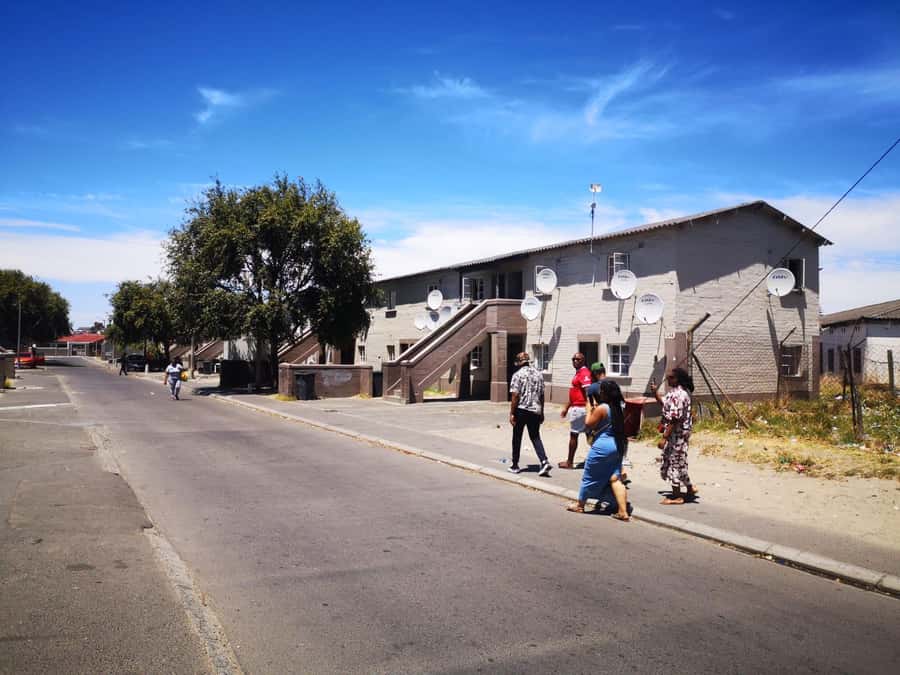
I would recommend it to you if you want to understand Cape Town beyond its postcard attractions. It suits visitors who enjoy walking, asking questions, listening to personal stories, and thinking about the social forces behind a place.
Families can also find plenty to engage with. One guide worked especially well with children, and the tour can include drumming, crafts, football, or friendly interactions with young residents. Parents should prepare children in advance to behave respectfully around homes and people.
The experience may also suit solo visitors. A local guide provides structure and a feeling of connection that can be difficult to create on your own. It is also useful for older visitors, provided the walking pace and route suit their mobility needs.
You may want to skip it if you want a relaxed sightseeing loop with no difficult subjects. The tour can be humbling, and the contrast between Langa and affluent parts of Cape Town is impossible to miss. It asks you to pay attention rather than simply admire the view.
Book it or choose another Cape Town activity?
Book the Nathi Langa Township Walking Tour if you want a grounded, human explanation of South Africa’s past and present. The strongest reasons are the local guides, the community connections, Guga S’thebe, and the honest look at both hardship and hope.
I would not book it expecting a staged cultural show or a neatly packaged attraction. Go ready to walk through a real neighborhood, listen carefully, and treat residents as people rather than subjects.
For $31 and roughly two and a half hours, this is a strong addition to a Cape Town visit. It will not replace Table Mountain or the city’s other major sights, but it can give those sights more meaning by showing you a part of the city that standard sightseeing often leaves out.
FAQ
How long does the Nathi Langa Township Walking Tour last?
The stated duration is 150 minutes. The description also gives a range of two to two and a half hours, so allow about that much time.
Where does the tour meet?
The meeting point is the main entrance of Guga S’thebe at 36 Washington Street in Langa. You should arrive 15 minutes before the tour begins.
Is hotel pickup available?
Pickup is available from hotels in Cape Town city center, the Waterfront, and Atlantic seaboard areas including Camps Bay. Contact the provider for specific pickup details.
What languages are offered?
The tour is offered in English and Xhosa, with a live guide.
Is the tour wheelchair accessible?
Yes. The activity information lists the walking tour as wheelchair accessible.
Can I cancel or pay later?
You can cancel up to 24 hours before the tour for a full refund. You can also reserve your place and pay later, so you do not need to pay at the time of booking.
Just added in Cape Town
- Sunset Safari Big 5 Aquila with Snacks and Wine Tasting★ 5.0 · 12 reviews
- Explore Atlantis Sand Dunes with a 1hour 30mins sandboarding tour★ 5.0 · 5 reviews
- Private Tour to 20 Wine Tasting in Stellenbosch and Franschhoek★ 5.0 · 11 reviews
- Robben Island, Kirstenbosch wine tasting Tour★ 5.0 · 10 reviews
- Photoshoot in Cape Town’s most Gorgeous Locations★ 5.0 · 2 reviews
- Zip Line and Wine from Cape Town★ 5.0 · 14 reviews
- Private Transfer from Cape Town International Airport★ 5.0 · 4 reviews
- 1 Hour Cape Town City Center Photoshoot Experience★ 5.0 · 19 reviews
Township Tours, compared.



Authentic 3–4 Hour Cultural Township Experience
Read our review →
Browse the lists this tour appears in