REVIEW · JOHANNESBURG TOURS
Afternoon Cocktail Masterclass-Johannesburg
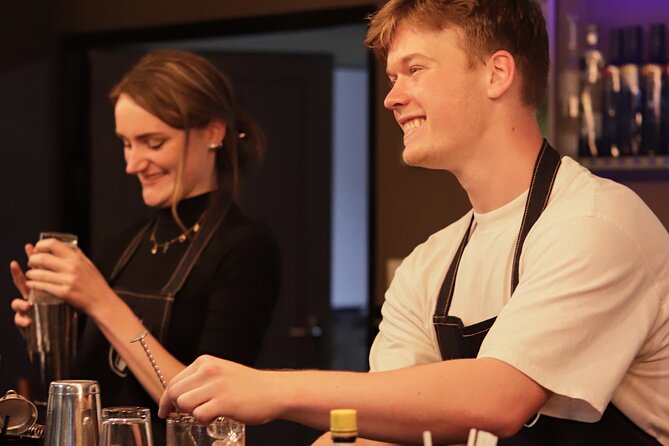
Cocktails make a better classroom. At Shaker BarSchool in Parkhurst, you learn practical mixology from a professional bar trainer, then put each method to work in drinks such as Negronis, margaritas, mojitos, and martinis. I like the small maximum of eight people, which gives the instructor room to correct your technique instead of leaving you to guess. I also like that alcoholic drinks are included, so the class feels like a proper tasting session rather than a demonstration from across the room.
The main drawback is transport: you must make your own way to 28 6th Street, Parkhurst, and back again. At $94 per person, this is not a cheap casual drink, though four hours of teaching, preparation, and tasting makes the price easier to justify for anyone who wants useful skills, not just a quick cocktail.
In This Review
- Key points to know before booking
- Why this Parkhurst class works as an afternoon plan
- Starting at 1:00 pm with the bar basics
- Making five cocktails instead of watching a demo
- From Negronis to Mojitos, the drinks have a story
- What the four-hour schedule means for you
- The small-group setup is the real advantage
- Is $94 a fair price for the cocktail class?
- Who should book this Johannesburg experience?
- Booking, cancellation, and access details
- My booking verdict
- FAQ
- Where does the cocktail masterclass take place?
- What time does the class start?
- How long does the experience last?
- Where does the class finish?
- How many people can join the class?
- Are alcoholic drinks included?
- Which cocktails can I learn to make?
- Which cocktail-making techniques are taught?
- Is transport included?
- Can I cancel for a full refund?
Key points to know before booking
- Five cocktails are made during the class: You can expect a practical session built around several drinks, with instruction from a bar trainer.
- Eight people is the maximum: The small group suits beginners who want hands-on help.
- Techniques go beyond shaking: You will work with stirring, straining, muddling, layering, smashing, and building drinks.
- The class starts at 1:00 pm: It is set up as a long Saturday afternoon activity in Parkhurst.
- Alcoholic beverages are included: Your drinks are part of the $94 price.
- Lungi received special praise: A past class participant singled out Lungi for friendly guidance and a fun five-cocktail session.
Why this Parkhurst class works as an afternoon plan
This is not a bar crawl. You stay at one Johannesburg bar-training school for about four hours and learn how drinks are put together. That gives the class a clear purpose: you are not simply sampling cocktails, you are learning why they taste and feel different.
I like this format for couples and small groups of friends. A Saturday afternoon can easily disappear into an ordinary lunch or a few drinks. Here, you have a shared activity, a bit of instruction, and enough time to practice. The relaxed tone described by the class feedback matters too. The participant who praised the session highlighted the conversation, the staff, and the sense of fun alongside the five cocktails.
The Parkhurst address is useful for planning. Since transport is not included, you need to arrange your own route to 28 6th Street. The venue is near public transportation, but the supplied details do not name a particular route or stop, so check your journey before setting off.
A few more in Johannesburg
- From Johannesburg: Pilanesberg Nature Reserve Game Safari
★ 4.8 · 1,327 reviews - Johannesburg: Hop-On Hop-Off Bus with Optional Soweto Tour
★ 4.6 · 985 reviews - Soweto /Johannesburg and Apartheid Museum Guided Full Day Tour
★ 5.0 · 932 reviews
Starting at 1:00 pm with the bar basics
The class begins at 1:00 pm. The first stage is an introduction to cocktail bartending basics, taught at the bar school by a professional trainer. You should expect the instructor to explain the main preparation methods before you use them.
The techniques listed for the class cover a good range of bar work:
- Shaking
- Stirring
- Straining
- Muddling
- Layering
- Smashing
- Building a drink
These are not just bits of showy bar vocabulary. Each method changes how a cocktail comes together. Shaking is commonly used when ingredients need forceful mixing, while stirring gives a different texture and level of dilution. Muddling releases flavor from ingredients, and straining controls what reaches the glass. Layering focuses on how liquids sit together, while building means assembling the drink directly.
I value this practical spread because it gives you a foundation for making drinks at home. You are not limited to memorizing one recipe. You learn a group of actions that can be used across many recipes.
The small group is especially important here. With no more than eight people, you have a better chance of seeing the demonstration clearly and getting a correction when your grip, timing, or pouring needs work. The class feedback praised the instructor’s guidance, and Lungi was named directly for leading one of the Parkhurst sessions.
Making five cocktails instead of watching a demo
The heart of the afternoon is hands-on preparation. The information supplied for the class indicates that you make and taste five cocktails, while the wider menu of examples includes Collins cocktails, margaritas, daiquiris, caipirinhas, sours, mojitos, martinis, Negronis, and more.
That is a generous range. A Collins introduces a long, refreshing style. A Margarita gives you a familiar balance of spirit, citrus, and sweetness. A Daiquiri teaches a compact classic where small changes in proportions can matter. A Caipirinha brings a different flavor profile and preparation style, while a Mojito adds muddling and fresh ingredients to the lesson.
The Negroni and Martini bring the class into spirit-forward territory. These are useful drinks to study because they depend less on a long list of ingredients and more on balance, dilution, temperature, and technique. Sours also show how citrus and sweetness work with a base spirit.
You should not assume every drink listed in the full range appears in your individual class. The supplied description promises a selection, and the class feedback refers to five cocktails. That is still enough to give the session variety without turning it into a rushed race through recipes.
The tasting element is part of the value. After you prepare a drink, you can judge the result yourself. You will notice how shaking, stirring, straining, or muddling affects the finished glass. That direct comparison is more useful than simply receiving a printed recipe.
From Negronis to Mojitos, the drinks have a story
The class also covers cocktail origins. That small touch adds context to what could otherwise be a technical workshop.
A recipe is easier to remember when you understand where it fits in cocktail culture. You are not only learning to repeat a series of steps. You are hearing why classic drinks became popular and how different styles developed. The exact historical detail is not specified, so I would treat this as a conversational part of the teaching rather than a formal history lesson.
The range of cocktails helps you compare styles. A Martini and a Mojito ask for different handling. A Negroni and a Margarita have very different flavor structures. A Caipirinha and a Daiquiri may both look simple, but the way you prepare and balance them gives each a distinct character.
That variety also helps you decide what to practice after the class. If you prefer short, strong drinks, the Martini or Negroni may become your home project. If you like citrus-led drinks, the Margarita, Daiquiri, or Sour gives you a starting point. If you enjoy fresh, muddled flavors, the Mojito is the obvious choice.
Something quite different:
- Johannesburg Hop-On Hop-Off City Tour with Soweto Option
★ 4.5 · 768 reviews - Full Day Ultimate Pilanesberg National Park Safari from Johannesburg or Pretoria
★ 4.5 · 718 reviews - Half-Day Tour of Soweto Tour
★ 4.5 · 712 reviews - Soweto: Walking Tour with a Local Guide and Lunch
★ 4.9 · 648 reviews
What the four-hour schedule means for you
Four hours is long enough for a proper lesson, but you should plan for a concentrated afternoon rather than a quick stop. The class is built around instruction, preparation, tasting, and conversation.
I see the length as a strength for beginners. You need time to hear a method, try it, make an error, and try again. A shorter class might show you how to shake a drink but leave little space to understand why your result differs from the instructor’s.
The timing also makes this a natural social activity. Starting at 1:00 pm gives you an afternoon plan instead of a late-night commitment. Couples can treat it as a date with something to do between drinks. Friends can share the work and compare results. Someone considering bartending can use the session as a first test of whether the basic techniques feel enjoyable.
There is one practical point to remember: the four hours involve alcoholic beverages. Pace yourself. The class is designed for tasting and learning, not for seeing how many drinks you can finish. Since alcohol is included, the person arranging the trip should think about the journey home before the first shaker is picked up.
The small-group setup is the real advantage
A maximum of eight people changes the feel of the class. You are less likely to be lost in a crowd, and the instructor can spend more time watching each person handle the tools and ingredients.
That matters most during methods such as layering and muddling. A quick demonstration is easy to follow in theory, but hands-on guidance helps you understand pressure, movement, and timing. The same applies to straining and shaking, where small handling choices can affect the result.
The class feedback gives a useful clue about the teaching style. The participant praised Lungi’s direction through five cocktails and described the staff as a major part of the fun. That suggests the social side is not an afterthought. Conversation and staff interaction are part of what makes the afternoon enjoyable.
Still, eight is a maximum, not a promise that every session will have the same number of people. A smaller class could feel more personal, while a full class may feel more social. Either way, the stated limit is reassuring for anyone who dislikes large group activities.
Is $94 a fair price for the cocktail class?
At $94 per person, this is priced as a full activity rather than a single drinking stop. The value comes from the combination of a four-hour duration, professional instruction, several cocktails, and a small group.
I would consider the price fair if you want to learn. You are paying for the trainer’s time, the ingredients, the use of the training space, and the chance to practice several techniques. The included alcoholic beverages also mean you do not need to add a separate tasting bill during the class.
The value is weaker if you only want a couple of drinks in a pleasant setting. In that case, a bar visit may cost less and require less time. This class makes most sense when you care about the method, want recipes to repeat at home, or are testing an interest in bartending.
The average booking lead time is 21 days. That is a useful planning guide, especially if your Johannesburg schedule is tight. I would not leave it until the last afternoon if the date matters to you.
Who should book this Johannesburg experience?
I would recommend it to:
- Couples seeking a shared afternoon activity
- Friends who enjoy food and drink workshops
- Home cooks who like learning through practice
- Beginners curious about bartending
- Anyone who wants a social class capped at eight people
- Cocktail fans interested in classic recipes and their origins
It may not suit you if you do not drink alcohol, want a private class, or prefer a short activity. Transport is also your responsibility, so it is less convenient if you need a fully arranged outing.
The class is suitable for people with no prior cocktail skills. The description is aimed at beginners, and the techniques are taught as part of the session. You do not need to arrive as an experienced bartender to get value from it.
Booking, cancellation, and access details
You receive confirmation when you book, and the ticket is mobile, which keeps the arrival process simple. The start point is 28 6th Street, Parkhurst, Johannesburg, 2193, South Africa, and the class ends back at that same meeting point.
The venue is near public transportation, and service animals are allowed. No transport to or from the bar school is included, so check your route and allow enough time to arrive before the 1:00 pm start.
Free cancellation is available if you cancel at least 24 hours before the local start time. Cancellations or changes made inside that window are not accepted for a refund. The activity also requires a minimum number of people. If that minimum is not met and the class is canceled, you are offered another date or experience, or a full refund.
My booking verdict
Book this if you want to do more than drink cocktails. The strongest reasons are the eight-person limit, the hands-on practice, the five-cocktail format, and the chance to learn several core methods in one afternoon. The friendly teaching style associated with Lungi also adds confidence for first-time participants.
Think twice if $94 feels high for a social drink or if arranging your own transport is a problem. For the right audience, though, this is a useful and sociable Parkhurst activity that sends you home with more than a pleasant afternoon. You leave with recipes, technique, and a better sense of why one cocktail is shaken while another is stirred.
FAQ
Where does the cocktail masterclass take place?
It takes place at Shaker BarSchool at 28 6th Street, Parkhurst, Johannesburg, 2193, South Africa.
What time does the class start?
The class starts at 1:00 pm.
How long does the experience last?
The activity lasts about four hours.
Where does the class finish?
It finishes back at the same meeting point in Parkhurst.
How many people can join the class?
The class has a maximum of eight people.
Are alcoholic drinks included?
Yes. Alcoholic beverages are included in the experience price.
Which cocktails can I learn to make?
The class includes cocktails such as Collins drinks, Margaritas, Daiquiris, Caipirinhas, Sours, Mojitos, Martinis, and Negronis. The full selection can vary, and the class information refers to making five cocktails.
Which cocktail-making techniques are taught?
You learn shaking, stirring, layering, muddling, straining, smashing, and building drinks.
Is transport included?
No. You must arrange your own transport to and from the bar school. The venue is near public transportation.
Can I cancel for a full refund?
Yes, if you cancel at least 24 hours before the experience start time. Cancellations or changes made less than 24 hours in advance are not refunded or accepted.
Just added in Johannesburg
- Johannesburg Culture and food tour★ 4.5 · 3 reviews
- Johannesburg Apartheid Museum and Soweto★ 5.0 · 14 reviews
- Johannesburg Like a Local: Customized Private Tour★ 5.0 · 3 reviews
- Ultimate Johannesburg Soweto Experience with Apartheid Museum★ 5.0 · 13 reviews
- Pretoria, Soweto and Apartheid Museum Guided Day Tour from Johannesburg Private★ 4.0 · 4 reviews
- Johannesburg City Evolution, Arts and Museums Walking Tour★ 5.0 · 8 reviews
- Downtown Johannesburg Tuk tuk Tour with a local lunch★ 4.5 · 12 reviews
- Experience Johannesburg Wine Tour Views and Luxury★ 5.0 · 2 reviews
Johannesburg Tours, compared.

Soweto /Johannesburg and Apartheid Museum Guided Full Day Tour
Read our review →Full Day Ultimate Pilanesberg National Park Safari from Johannesburg or Pretoria
Read our review →

Jo’berg in 1 Day: Soweto, Apartheid Museum & City Tour
Read our review →
Full-Day Tour with Soweto and Apartheid Museum
Read our review →