
REVIEW · SKIP THE LINE
Cape Town: District Six Museum Skip-the-Line Entrance Ticket
A small museum carries a heavy story. I like the personal accounts shared by staff, many of whom were displaced residents, and I like the way photographs, recordings, and testimonials make apartheid-era segregation feel human rather than abstract. The main drawback is its size, so this is better as a focused visit than a full-day attraction.
The ticket costs about $4 per person and covers entrance only. You get skip-the-ticket-line access, but not a guided tour, so the value depends on how much time you give the displays and how openly you speak with the staff. Plan around 30 minutes if you are already nearby, or longer if the subject matters deeply to you.
In This Review
- Key points to know before you go
- Why District Six matters in Cape Town
- Inside the museum, photographs tell the first part
- Recordings and testimonials add a human voice
- The museum is small, and that affects the visit
- A useful stop for understanding apartheid in Cape Town
- What the $4 ticket really gives you
- Plan your opening hours carefully
- Who will value this experience most
- Should you book the District Six Museum ticket?
- FAQ
- Where is the District Six Museum located?
- How much does entrance cost?
- What does the ticket include?
- Is a guided tour included?
- How long is the ticket valid?
- When is the museum open?
- Is the museum open on Sundays?
- Can I cancel my booking?
Key points to know before you go
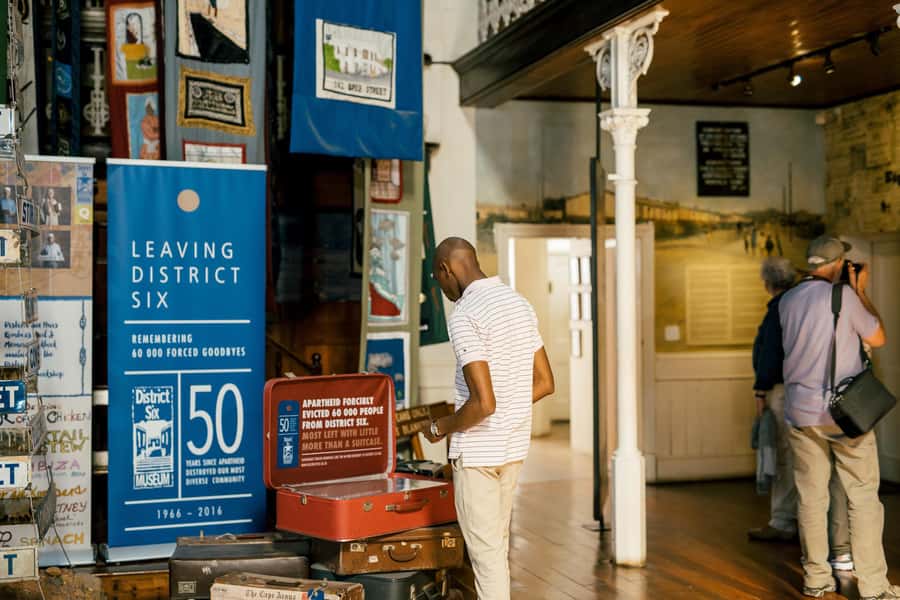
- Personal stories from former residents: Staff members may share intimate memories of life in District Six and its forced removal.
- A clear look at apartheid segregation: The museum explains how a multi-racial Cape Town community was dismantled by government policy.
- Photographs, recordings, and testimonials: The displays use human evidence, not only dates and political terms.
- A short, focused visit: The museum is small, making it easy to fit into a Cape Town sightseeing day.
- Entrance ticket only: The $4 price includes admission, but no guided tour or transport.
- Careful timing matters: It is open Monday to Saturday from 9:00 to 16:00, with last entry at 15:00, and it is closed Sundays.
Why District Six matters in Cape Town
District Six was once a lively, multi-racial part of Cape Town known for musicians, artists, and close community life. Under apartheid, the government forcibly removed residents and dismantled the area.
That basic description can sound tidy on paper. Inside the museum, the subject becomes far more personal. You are not only learning that segregation existed. You are seeing how a political system reached into homes, friendships, work, music, and daily routines.
I find that distinction important. A general apartheid museum can explain laws and government structures. District Six Museum gives you a local story with a specific place at its centre. The result is easier to understand because the human cost is tied to one community.
The museum also helps you see that forced removal was not simply a change of address. It broke up an established social world. The photographs, recordings, and personal testimonials help show what was lost when residents were pushed out.
More Museums in Cape Town
- Museum of Contemporary African Art: Fast-Track Zeitz MOCAA
★ 4.4 · 204 reviews - Cape Town: Private Guided Tour of Cape Town Diamond Museum
★ 4.7 · 156 reviews - ROBBEN ISLAND MUSEUM TOUR, WITH OPTIONAL LAST MINUTE TICKETS
★ 3.4 · 85 reviews
Inside the museum, photographs tell the first part
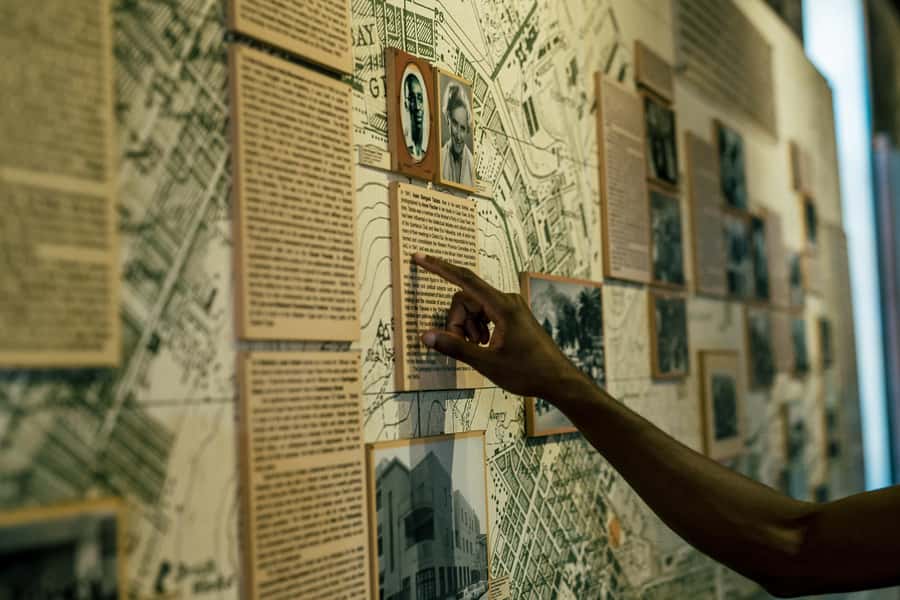
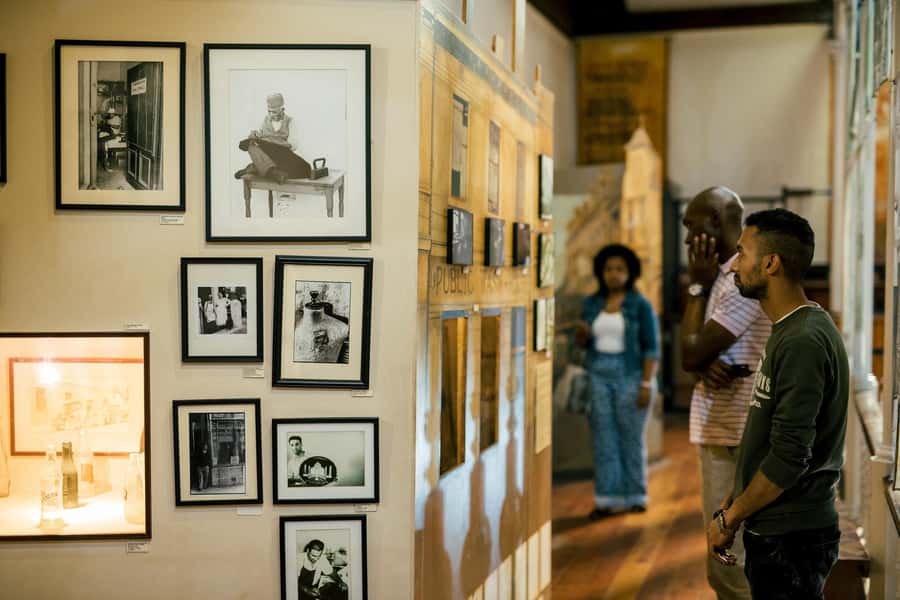
Your visit begins with the museum’s visual record of District Six and its residents. Photographs help establish the character of the former community and give faces to people who might otherwise appear only as statistics.
This is one of the strongest reasons to visit. Written explanations can tell you that racial segregation shaped Cape Town. Images show you the people who lived with the results.
The displays also provide a way to understand the difference between official policy and everyday life. Apartheid separated people by race, but District Six had developed as a place where different communities lived and worked close together. The museum presents that contrast without asking you to treat the area as a simple, perfect version of the past.
I would take time with the photographs rather than rushing through them. The museum is small, and that makes it possible to look carefully. You do not need a full morning to get something from the visit, but a quick glance at the entrance will not do the subject justice.
Recordings and testimonials add a human voice
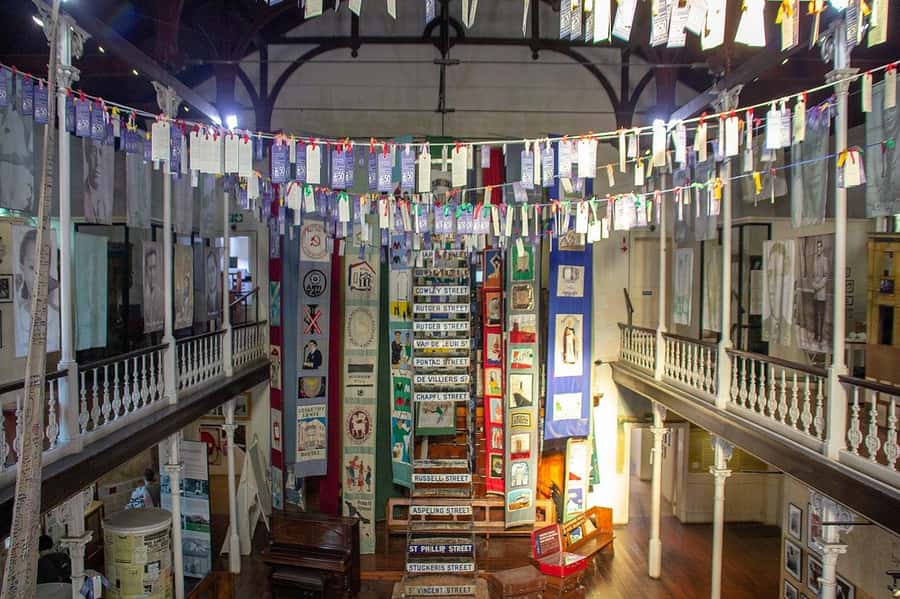
Photographs show who was affected. Recordings and testimonials help you hear how the events touched real lives.
The museum uses these materials to explain the damage caused by the apartheid system. The personal testimony is especially important because it shifts the focus from distant history to memory. You are encouraged to think about what it means to lose a home, a neighbourhood, and the social connections built around it.
Staff members add another layer. Some have personal ties to District Six and were displaced residents themselves. Their stories can make the museum feel less like a silent collection of objects and more like a place where a community is still explaining itself.
This is also where the lack of a formal guided tour becomes less of a problem. The ticket does not include a guide, but the staff may engage with you and share personal knowledge. Ask respectful questions if the opportunity arises. A short conversation can change how you understand the displays.
The experience is not designed as light sightseeing. You should expect serious subject matter and give yourself a little emotional space afterward. A visit here pairs well with a quieter part of your day, rather than being squeezed between several hurried attractions.
The museum is small, and that affects the visit
The museum’s compact size is both a strength and a limitation.
On the positive side, you can visit without giving up an entire day. If you have only a little spare time in central Cape Town, this is a practical cultural stop. Around 30 minutes may be enough for a basic look through the material, especially if you are already in the area.
The limitation is that you should not expect a large museum complex with many rooms, extensive galleries, or a long sequence of exhibitions. The experience is concentrated. If you arrive expecting a major institution that fills several hours, you may feel finished sooner than expected.
I would judge the size by the quality of the subject, not by the number of rooms. A small museum can still deal with a major injustice effectively. Here, the compact setting may even keep the focus on the people and their accounts.
Still, make your choice honestly. If you are far away and have only a short opening in your schedule, the museum may not justify a special trip for everyone. If you are nearby, the low price and short visit make it much easier to recommend.
Something quite different:
- Wine Tour: Paarl, Franschhoek & Stellenbosch incl 3 wineries
★ 5.0 · 3,940 reviews - Cape Town: Hop-On Hop-Off Bus Tour with Optional Cruise
★ 4.8 · 3,929 reviews - Cape Town: Cape of Good Hope & Penguins Day Tour with Pickup
★ 4.7 · 3,362 reviews - Zipline Cape Town – From Foot of Table Mountain Reserve
★ 5.0 · 3,179 reviews
A useful stop for understanding apartheid in Cape Town
Many visitors arrive in Cape Town knowing that apartheid shaped South Africa, but not knowing how that system changed particular neighbourhoods. District Six Museum fills in that local picture.
The museum shows the impact of racial segregation on a community that had included musicians, artists, and people from different backgrounds. Its story is not only about government orders. It is about a place with its own identity, and what happened when officials decided that identity no longer fit the rules of apartheid.
I appreciate that the museum makes the consequences understandable without requiring you to arrive as a history specialist. The photographs and testimony provide a clear entry point. You can learn the basic story during a short visit, then leave with questions that may stay with you as you see Cape Town elsewhere.
The subject also has present-day weight. A powerful reflection connected with the experience is that legal rules can change while social separation continues in other forms. The museum does not make that question comfortable, which is part of its value.
Give yourself time to think after you leave. You may notice Cape Town differently, especially when considering who had access to neighbourhoods, homes, and opportunities under apartheid.
What the $4 ticket really gives you
At about $4 per person, this is one of the less expensive cultural activities in Cape Town. The fee includes entrance, and the skip-the-ticket-line feature can save a little time at the door.
The price is especially good if you are already visiting the area. You get access to photographs, recordings, testimonials, and the possibility of speaking with staff who have a direct connection to District Six. That combination gives the ticket more value than a simple pass through a room of labels.
There are limits. The ticket does not include a guided tour, so you should not book it expecting a scheduled expert-led walk through the museum. Staff interaction may provide valuable context, but the information supplied for this visit does not promise a private guide or a fixed tour format.
For that reason, I see this as an inexpensive independent museum visit with a chance for personal conversation. It is not a packaged sightseeing tour. You are paying for entry into a place of memory and for the material presented there.
The reserve-now-and-pay-later option may help if your Cape Town schedule is still changing. You can also cancel up to 24 hours in advance for a full refund, which reduces the risk of booking too early.
Plan your opening hours carefully
The museum is open Monday through Saturday from 9:00 to 16:00. Last entry is at 15:00, and the museum is closed on Sundays.
That last-entry rule matters. Do not arrive at 15:00 expecting a full visit. You may be allowed in at the cutoff, but the available time will be limited, so arrive earlier if you want to examine the material and speak with staff.
Morning or early afternoon is the safest choice. A visit around lunchtime can work if you are nearby, but leave enough room for the museum’s closing time. Since the museum is small, you do not need to build an entire day around it.
The meeting point is the District Six Museum itself. Transport is not included, so you arrange your own way there. The ticket information does not specify transport services, parking, or accessibility details, so check those points directly if they affect your plans.
Who will value this experience most
I recommend District Six Museum to you if you want to understand Cape Town through the lives of its residents, not only through major landmarks. It suits visitors who are willing to spend a quiet half hour or more with difficult material.
It is also a good choice for anyone studying apartheid, visiting Cape Town with older children, or looking for a meaningful museum that does not require a long time commitment. The personal stories can help younger visitors grasp how political decisions affect families and communities.
You may be less satisfied if you want a large museum with many exhibits or a formal guided tour included in the ticket. The small size and self-guided format are important to accept before booking.
I would also avoid treating this as a quick box to tick. You can technically pass through in 30 minutes, but the experience works best when you slow down, read carefully, and listen if staff begin sharing their own connections to District Six.
Should you book the District Six Museum ticket?
Book it if you are interested in Cape Town’s apartheid history, want a short but serious cultural stop, or are already close to the museum. At $4, the financial risk is low, and the personal stories give the visit value beyond its modest size.
Skip it if you are expecting a large attraction, a long itinerary, or a guided tour included with admission. For most people, I would schedule 30 to 60 minutes, arrive well before the 15:00 last entry, and keep the rest of the day flexible afterward.
This is a small museum with a large subject. Its strength is not spectacle. It is the direct connection between a specific Cape Town community and the people who lost their homes there.
FAQ
Where is the District Six Museum located?
The meeting point is the District Six Museum in Cape Town, in South Africa’s Western Cape.
How much does entrance cost?
The listed price is $4 per person.
What does the ticket include?
The ticket includes entrance fees to the District Six Museum and skip-the-ticket-line access.
Is a guided tour included?
No. A guided tour is not included. Staff members may share personal stories and information, but the ticket itself covers admission only.
How long is the ticket valid?
The ticket is valid for one day from first activation.
When is the museum open?
The museum is open Monday through Saturday from 9:00 to 16:00. Last entry is at 15:00.
Is the museum open on Sundays?
No. The museum is closed on Sundays.
Can I cancel my booking?
Yes. You can cancel up to 24 hours in advance for a full refund. You can also reserve now and pay later, according to the booking conditions.
Just added in Cape Town
- Sunset Safari Big 5 Aquila with Snacks and Wine Tasting★ 5.0 · 12 reviews
- Explore Atlantis Sand Dunes with a 1hour 30mins sandboarding tour★ 5.0 · 5 reviews
- Private Tour to 20 Wine Tasting in Stellenbosch and Franschhoek★ 5.0 · 11 reviews
- Robben Island, Kirstenbosch wine tasting Tour★ 5.0 · 10 reviews
- Photoshoot in Cape Town’s most Gorgeous Locations★ 5.0 · 2 reviews
- Zip Line and Wine from Cape Town★ 5.0 · 14 reviews
- Private Transfer from Cape Town International Airport★ 5.0 · 4 reviews
- 1 Hour Cape Town City Center Photoshoot Experience★ 5.0 · 19 reviews
Skip the Line, compared.

Skip the Line: Highgate Ostrich Farm Tour Ticket
Read our review →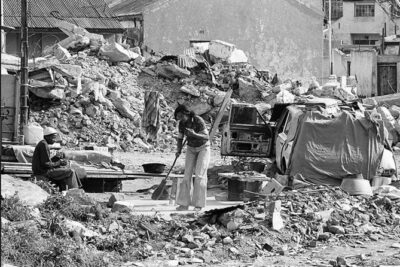
Skip the Line: District Six Museum Admission Ticket
Read our review →

Skip the Line: South African Jewish Museum Admission Ticket
Read our review →Browse the lists this tour appears in