
REVIEW · STREET ART
Colours of Johannesburg: A Graffiti & Street Art Tour
Johannesburg wears its stories on walls. I like this tour because it connects graffiti and street art to the city’s changing neighborhoods, and because guide Ayanda brings local insight rather than simply pointing at colorful paint. The three-hour-and-30-minute route also covers three distinct inner-city areas, with transport between them included.
I especially like the stop at a local graffiti supply store, where you can see the culture beyond the walls and buy locally designed merchandise. The tour’s other strength is its human side: Ayanda grew up around these areas, knows many artists, and adds useful context about Johannesburg and South Africa. The main consideration is that it is offered in English only, and the optional graffiti artist appearance is never guaranteed.
In This Review
- Key points to know before booking
- Why Johannesburg’s walls make a fine city introduction
- Meeting at Skinner Café on Juta Street
- Braamfontein: murals and a neighborhood in transition
- The local graffiti store: supplies, shirts, and a closer look
- Newtown: Johannesburg’s arts and culture district
- Maboneng: murals, tags, and the final city view
- What Ayanda brings to the walk
- How the transport changes the pace
- Is the $43 price fair?
- Who will enjoy this Johannesburg street art tour?
- Should you book Colours of Johannesburg?
- FAQ
- Where does the tour start?
- Where does the tour finish?
- How long does the tour last?
- Which areas does the tour visit?
- Is transport included?
- Is the tour offered in languages other than English?
- Is a graffiti artist guaranteed to join?
- Is the local graffiti store always open?
- What should I bring?
Key points to know before booking
- Three neighborhoods in 210 minutes: Walk through Braamfontein, Newtown, and Maboneng, with transport between areas during the tour.
- Graffiti is not street art: You learn how the two forms differ, and how they overlap in Johannesburg.
- Ayanda adds local context: His personal connection to the city helps explain the people, places, and stories behind the work.
- The graffiti store is a worthwhile extra: Browse local merchandise, art supplies, and an exhibition room when it is open.
- A strong choice for first-time Johannesburg visitors: The route links public art with the city’s urban life and recent development.
- Bring water and good shoes: This is a walking tour, with several outdoor stops and time on city pavements.
Why Johannesburg’s walls make a fine city introduction
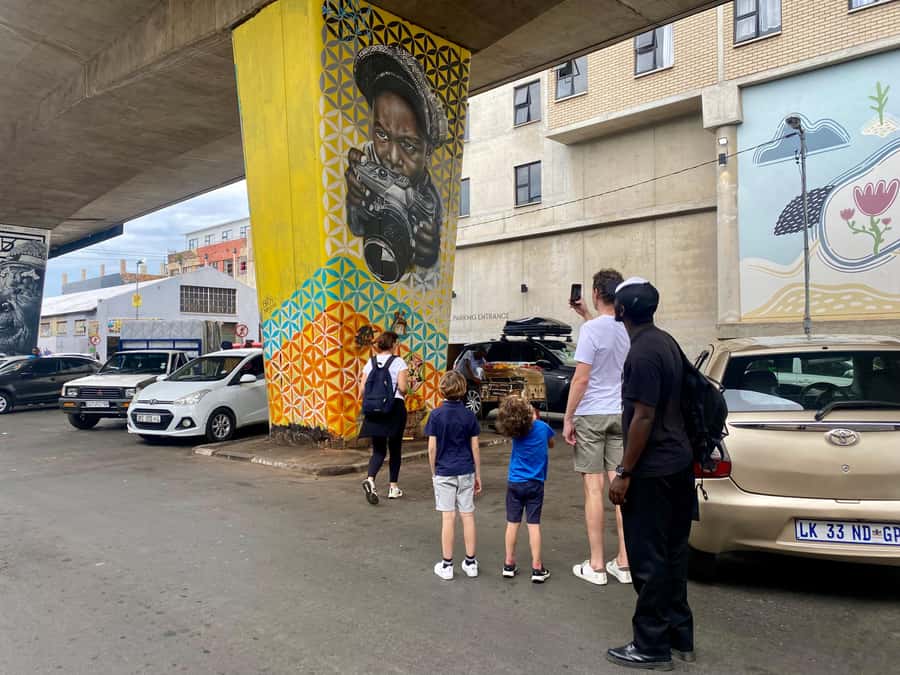
Johannesburg can be hard to read at street level. Its districts change quickly, and a wall covered in paint can look like decoration, advertising, protest, or private signature, sometimes all at once.
This tour gives you a way to read those walls. You learn the difference between graffiti, which is often tied to writing names and developing a personal style, and street art, which more often takes the form of planned murals or public images. The guide also explains the relationship between them, rather than treating them as completely separate worlds.
That distinction matters. A large mural may be easy to photograph, but a small tag can also carry meaning for people who understand the local scene. You get an introduction to the artists and graffiti writers whose marks appear across Johannesburg, along with a clearer idea of how public art affects a neighborhood.
The tour is also about urban change. Braamfontein and Maboneng have both used art as part of their identity and development, while Newtown has long been tied to the inner city’s arts and culture scene. You are not just looking at painted walls. You are seeing how artists respond to streets, buildings, businesses, politics, and daily life.
A few more in Johannesburg
- From Johannesburg: Pilanesberg Nature Reserve Game Safari
★ 4.8 · 1,327 reviews - Johannesburg: Hop-On Hop-Off Bus with Optional Soweto Tour
★ 4.6 · 985 reviews - Soweto /Johannesburg and Apartheid Museum Guided Full Day Tour
★ 5.0 · 932 reviews
Meeting at Skinner Café on Juta Street
The tour begins inside Skinner Café at 70 Juta Street. Look for the green café on the corner, with large see-through windows and a small outdoor seating area facing Juta Street.
A short safety briefing takes place at a local restaurant and lasts about 15 minutes. This is a useful start for a walking route through several inner-city neighborhoods. You can settle in, meet the guide, and understand how the afternoon will work before setting off.
Wear shoes you can walk in comfortably. Bring water, since the tour includes outdoor walks and photo stops. Hotel pickup and drop-off are not included, although you can contact the provider if you need to arrange it.
Braamfontein: murals and a neighborhood in transition
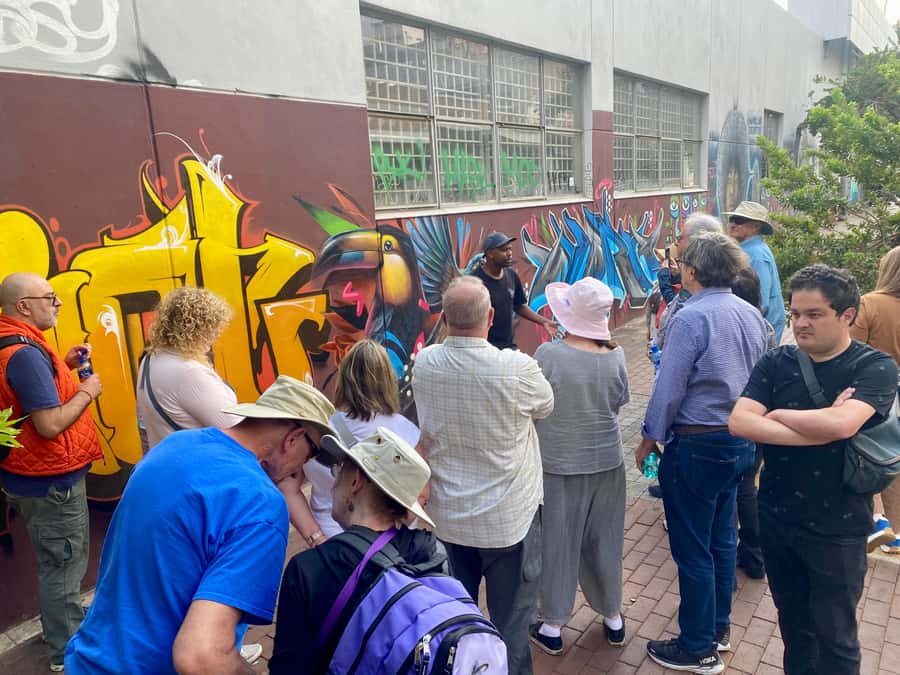
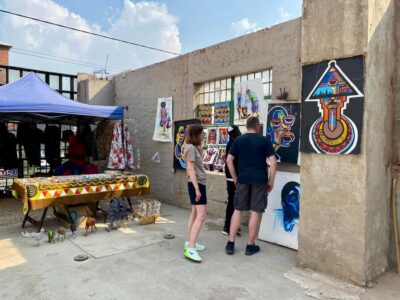
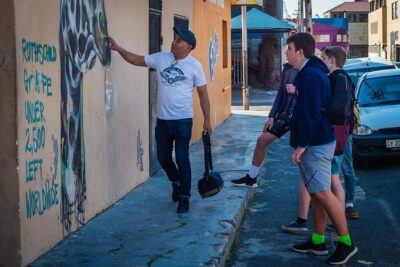
The first main stop is Braamfontein, where you spend about an hour walking and looking at large and small murals spread across the precinct.
This is a good place to begin because the art is easy to see, but the guide adds the needed context. Since 2003, street art has played a part in Braamfontein’s development and public identity. Ayanda explains how art has helped shape the way people see the area, and how the neighborhood’s walls became part of its changing character.
I like the mix of scale here. You may move from a broad mural that fills a wall to a smaller mark that demands a closer look. The route is not just a parade of the prettiest paintings. It includes tags and work by different artists, allowing you to compare styles and intentions.
This is also where the tour’s educational side becomes clear. You learn to notice lettering, placement, color, symbols, and the difference between a commissioned artwork and a mark made primarily for recognition within a graffiti scene.
Do not expect every stop to be a perfect photo location. Some works may be partly obscured, weathered, or surrounded by ordinary city activity. That is part of the point. Street art changes with its setting, and the tour treats the city as a living place rather than a gallery with clean white walls.
The local graffiti store: supplies, shirts, and a closer look
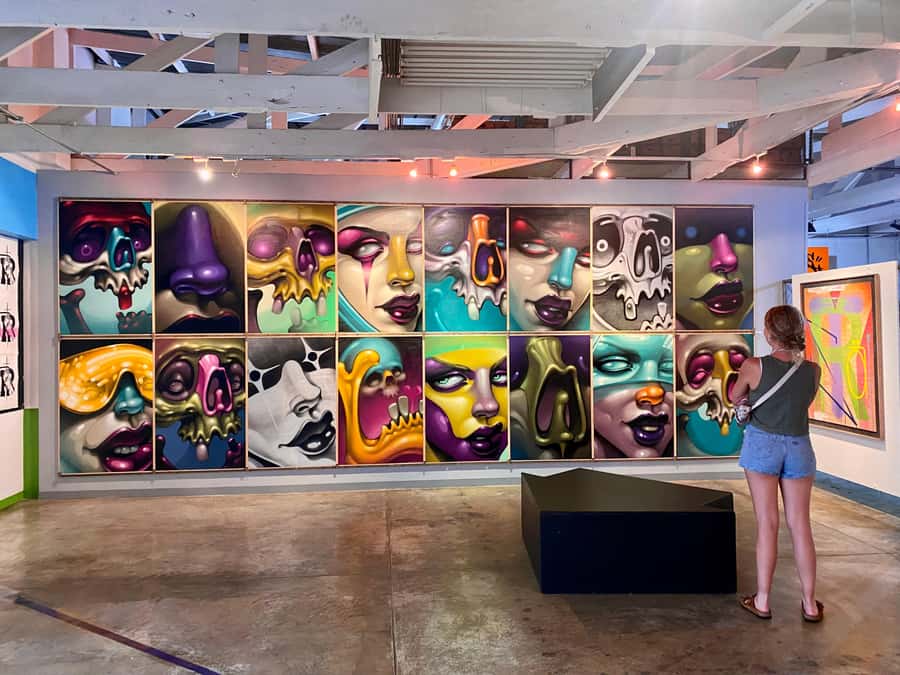
A short stop of about 15 minutes takes you to a local graffiti store. It is described as a secret stop, but it is more useful to think of it as a chance to see how the art is made and supported.
When open, the store supplies local artists with their materials. You may also find merchandise designed by Johannesburg graffiti artists, and an exhibition room when work is on display. That makes this stop more than a shopping break. It connects the finished walls with the people, tools, and creative economy behind them.
If you want a small souvenir with a real local connection, this is likely your best opportunity on the route. One visitor bought a locally designed T-shirt and later received compliments on it during a safari trip in Africa. Merchandise is not guaranteed, so treat it as an opportunity rather than a promised purchase.
The store closes during the festive period from December 24 through January 20. It can also be closed at other times, so keep your expectations flexible. The tour continues even if this stop is unavailable.
Something quite different:
- Johannesburg Hop-On Hop-Off City Tour with Soweto Option
★ 4.5 · 768 reviews - Full Day Ultimate Pilanesberg National Park Safari from Johannesburg or Pretoria
★ 4.5 · 718 reviews - Half-Day Tour of Soweto Tour
★ 4.5 · 712 reviews - Soweto: Walking Tour with a Local Guide and Lunch
★ 4.9 · 648 reviews
Newtown: Johannesburg’s arts and culture district
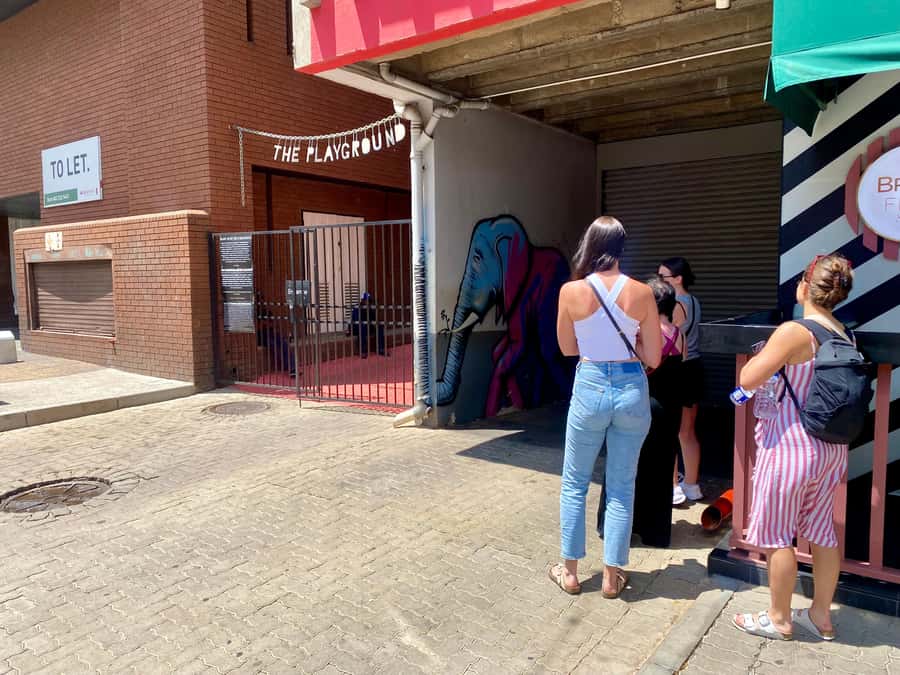
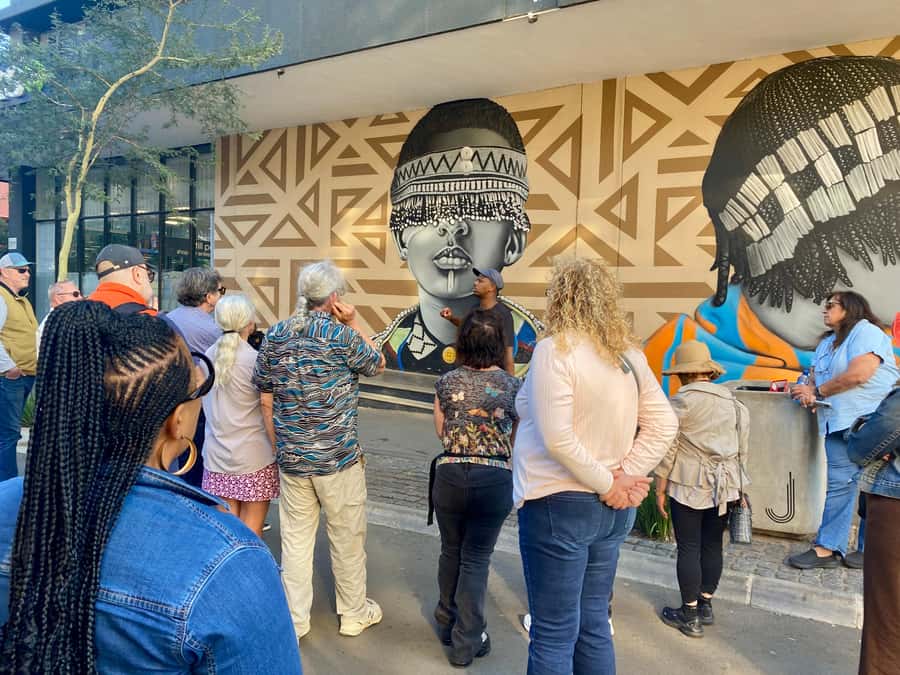
From Braamfontein, you continue to Newtown for about 45 minutes of walking, sightseeing, and photography.
Newtown’s importance comes from its long connection to arts and culture in the inner city. Its story reaches back to 1886, and the area has also been linked with underground movements and independent creative activity. In this setting, graffiti feels less like an isolated attraction and more like part of a longer artistic tradition.
This is said to be one of the best areas in Johannesburg for graffiti. The guide helps you spot work by significant local writers and artists, including tags that you could easily pass without understanding. A good guide makes a major difference here. Without context, Newtown’s walls can become a blur of names and colors. With context, you start to see recurring signatures, different approaches, and links between artists.
The Newtown section is a photo stop, but I would not treat it as a photography tour alone. The most useful part is the explanation of how the art fits into the district. You may get strong images, but you also gain a better sense of why this part of Johannesburg matters to the city’s creative life.
Maboneng: murals, tags, and the final city view
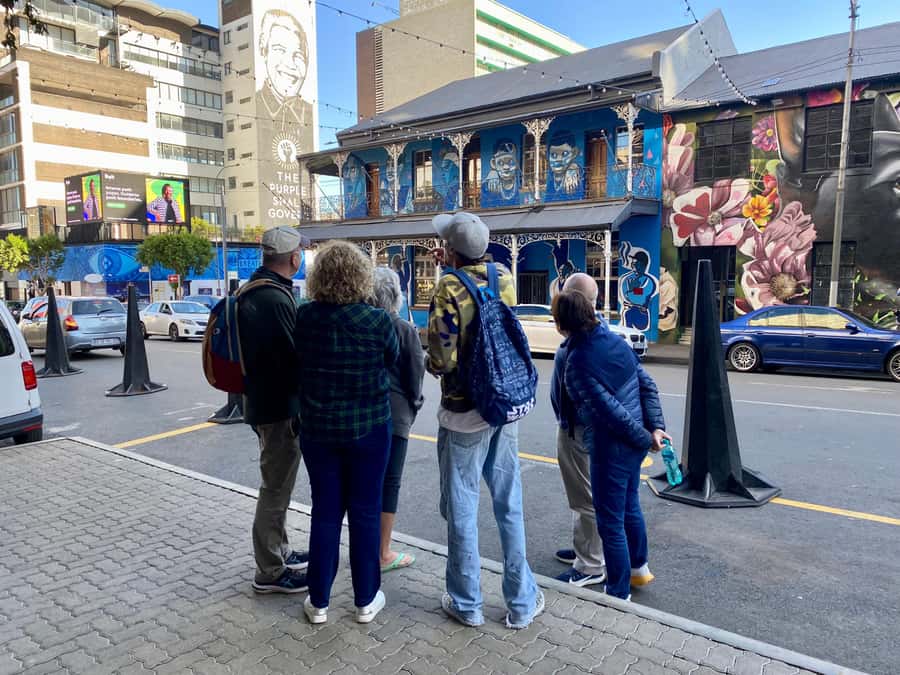
The tour ends in the Maboneng Precinct, with about 45 minutes of guided walking, sightseeing, shopping, and an aerial view before finishing at Home of the Bean.
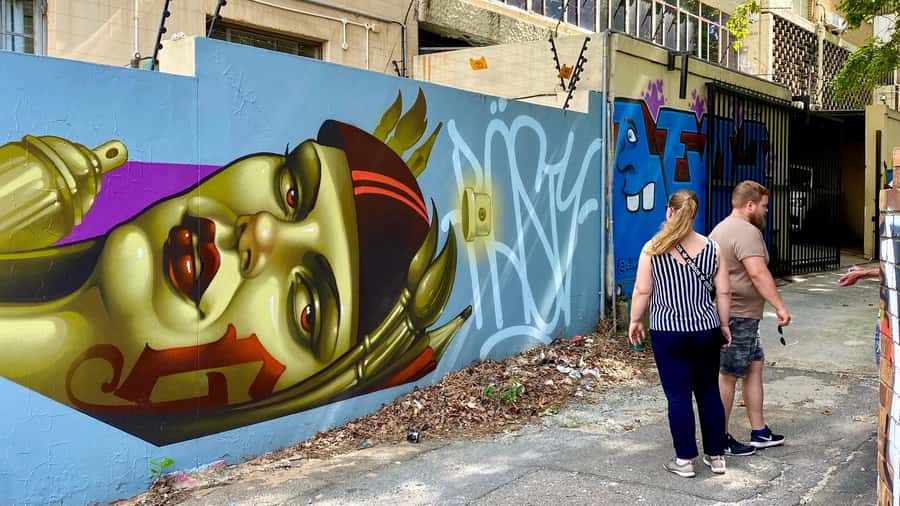
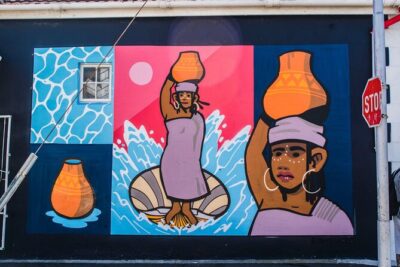
Maboneng offers a different visual rhythm from Newtown. Its walls include detailed murals by international artists as well as recognizable tags by local graffiti writers. That contrast is one of the strongest features of the final stop. You can compare planned, large-scale public art with the quicker marks of writers who have developed their own visual signatures.
The area is a useful final chapter because it shows how public art can help define a district. Maboneng is known for its creative atmosphere, and the walls contribute to that identity. The guide links the art to the wider street culture of the inner city, helping you understand why one block can feel different from the next.
The finish at Home of the Bean gives the route a clear endpoint. You are not returned to the original meeting point, so plan the rest of your afternoon from Maboneng. The tour includes transport between neighborhoods, but hotel return is not part of the standard arrangement.
What Ayanda brings to the walk
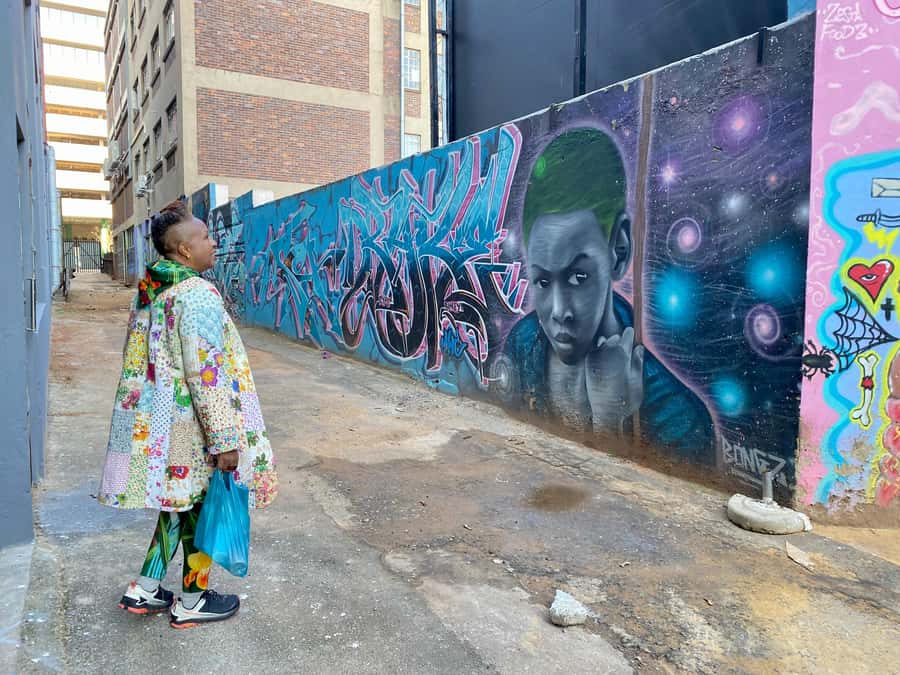
The guide is central to this experience. Ayanda is described as the founder of the tour company, and he grew up in the areas covered by the route. He also knows many of the artists, which gives his explanations a personal quality.
His role goes beyond naming painters or identifying tags. He places street art within Johannesburg’s complicated past and present, and he can answer questions about the city beyond the narrow subject of graffiti. That wider knowledge is particularly useful if this is your first visit to Johannesburg and you want more than a set of attractive photo stops.
The strongest praise focuses on his passion, friendliness, and ability to explain the background of murals and graffiti. One person who had done similar tours in other countries found this route unusually broad, because it covered three districts and included South African context as well as art.
There is also a chance that a graffiti artist may join the tour. This happens only if an artist is available and willing to participate on your date. It is a pleasant possibility, not a feature you should count on when deciding to book.
How the transport changes the pace
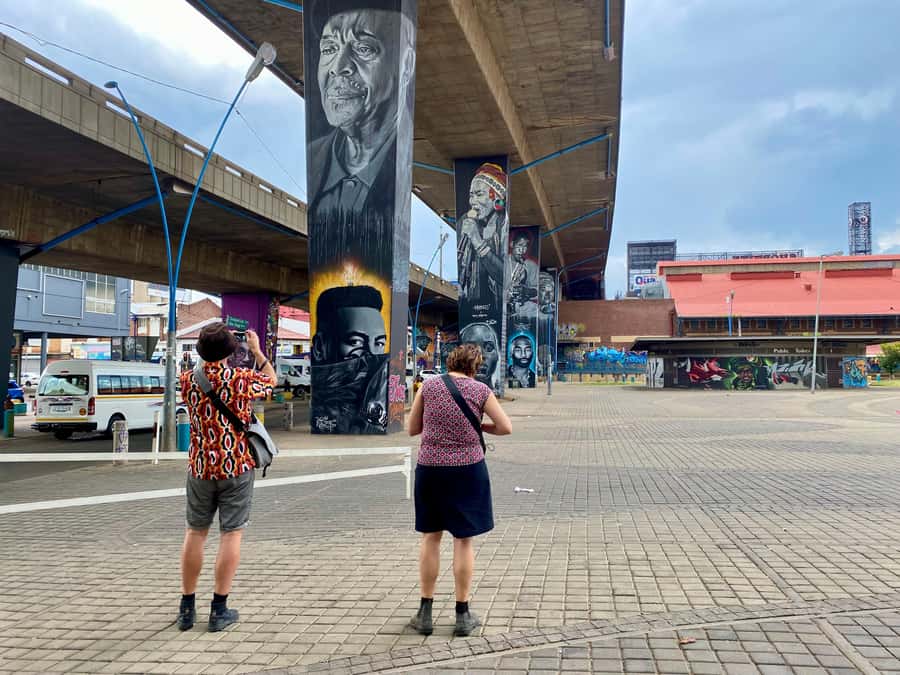
The route covers three areas, so transport between neighborhoods is included during the tour. This matters because walking the entire distance would take far longer and would leave less time for the art itself.
The structure gives you three separate walking sections, each with its own character. Braamfontein receives the longest look, Newtown gets a focused art and culture visit, and Maboneng provides the final collection of murals and tags.
The pace should suit you if you enjoy walking but do not want an all-day outing. The advertised duration is 210 minutes, or three hours and 30 minutes. One person reported that the guide spent four hours with the group, but you should plan around the stated 210-minute duration rather than expect an extension.
Because transport is part of the route, you avoid spending most of the afternoon navigating between districts. That also lets the guide use the available time for explanation, photographs, and conversation.
Is the $43 price fair?
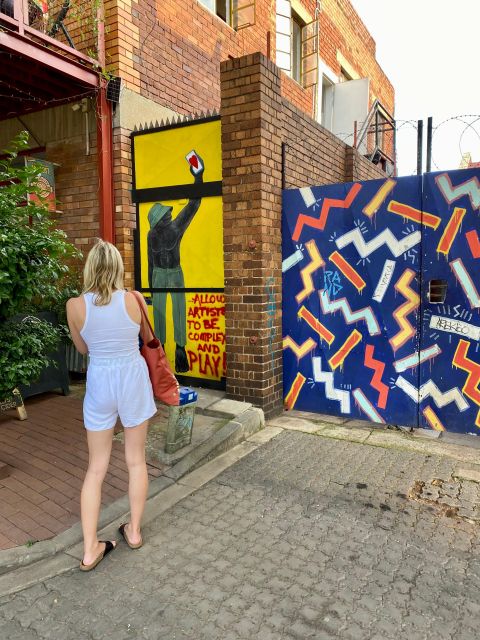
At $43 per person, this is not simply a wall-watching walk. The price includes a live English-speaking guide, transport between neighborhoods, and access to three important street-art areas in one outing.
The value comes from the interpretation. You can see murals for free on your own, but you would likely miss the difference between a tag and a commissioned piece, overlook the work of less famous artists, and have little sense of how Braamfontein, Newtown, and Maboneng connect to Johannesburg’s cultural life.
The graffiti store adds another useful layer when open. You may browse local art, find a shirt or other merchandise, and see an exhibition room if one is operating at the time. Since the store is not guaranteed to be open, the tour’s value should rest on the guiding and neighborhood coverage, not on shopping.
This price makes the most sense for you if you want context, conversation, and a carefully linked route. It is less compelling if you only want quick photographs or if you prefer to explore at your own pace without a set schedule.
Free cancellation up to 24 hours before the tour and the option to reserve now and pay later give you some flexibility. The activity is conducted in English only, so you should be comfortable following a fairly detailed explanation in that language.
Who will enjoy this Johannesburg street art tour?
I would choose this tour if you want to understand Johannesburg through its public art. It suits first-time visitors who want an organized introduction to Braamfontein, Newtown, and Maboneng, as well as repeat visitors looking for a more specific creative angle.
It is particularly good for:
- People who want the stories behind murals, not just photographs
- Visitors interested in South African culture and recent urban development
- Anyone curious about the difference between graffiti writing and street art
- Shoppers who like locally designed clothing and art merchandise
- Small groups or solo visitors who enjoy asking questions during a guided walk
- Art fans who want to spot work by local artists and international muralists
You may want to skip it if you dislike walking, need a tour in a language other than English, or want a guaranteed meeting with a graffiti artist. The store may also be closed, especially during the December 24 to January 20 festive closure.
Should you book Colours of Johannesburg?
Yes, if public art is your doorway into a city. The route is long enough to show variety but short enough to fit comfortably into a Johannesburg afternoon, and the included transport keeps the three-neighborhood format practical.
Book it for Ayanda’s local perspective, the clear explanation of graffiti culture, and the chance to see how Braamfontein, Newtown, and Maboneng use art in different ways. Bring water, wear comfortable shoes, and treat the artist visit and graffiti-store stop as possible extras rather than guarantees.
If you want a safe, structured way to see inner-city street art while learning about Johannesburg’s urban life, the $43 fee is a fair exchange for the time and context you receive.
FAQ
Where does the tour start?
It starts inside Skinner Café at 70 Juta Street. The café is green, has large see-through windows, and sits on the corner with a small outdoor seating area on Juta Street.
Where does the tour finish?
The tour finishes at Home of the Bean in the Maboneng Precinct.
How long does the tour last?
The scheduled duration is 210 minutes, or three hours and 30 minutes.
Which areas does the tour visit?
The route covers Braamfontein, Newtown, and Maboneng.
Is transport included?
Yes. Transport between neighborhoods during the tour is included. Hotel pickup and drop-off are not included.
Is the tour offered in languages other than English?
No. The tour is offered in English only.
Is a graffiti artist guaranteed to join?
No. A graffiti artist may join if they are available, but there is no guarantee for any scheduled date.
Is the local graffiti store always open?
No. The store is visited when open. It is closed during the festive period from December 24 through January 20.
What should I bring?
Bring comfortable shoes and water.
Just added in Johannesburg
- Pretoria Capital City Tour Experience★ 5.0 · 24 reviews
- 4 Day Kruger National Park Tour★ 5.0 · 30 reviews
- Johannesburg e-scooter experience★ 5.0 · 38 reviews
- Johannesburg Street Art & Museum Walking or E-scooter Tour★ 4.5 · 10 reviews
- Big 5 Safari Experience at Pilanesberg National Park★ 5.0 · 16 reviews
- Drakensberg Mountains. Tugela Gorge and Amphitheater Hike★ 5.0 · 7 reviews
- Apartheid Museum Tour from Johannesburg★ 4.5 · 14 reviews
- Arrival Private Transfer: Tambo Airport JNB to Johannesburg in Business Car★ 4.0 · 5 reviews
Street Art, compared.
Johannesburg Street Art & Museum Walking or E-scooter Tour
Read our review →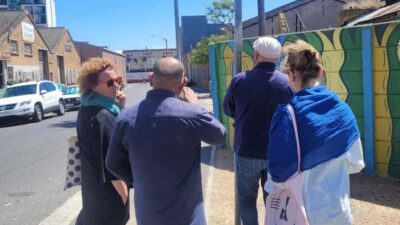
Browse the lists this tour appears in