
REVIEW · STREET ART
Johannesburg: Street Art and Culture in Maboneng!
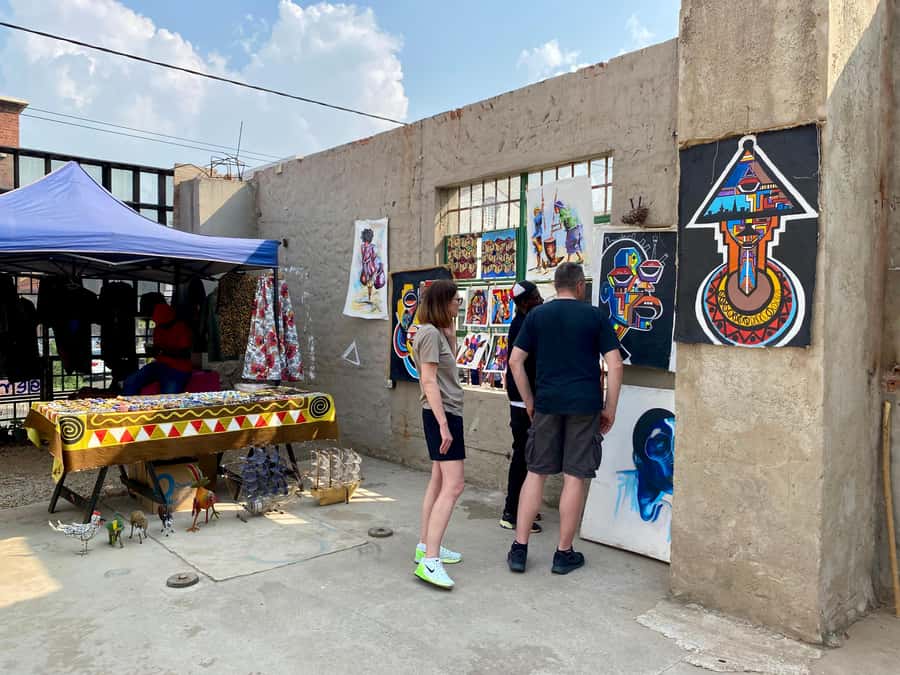
Street art tells Johannesburg’s story in paint. This two-hour walk through Maboneng connects striking murals by local and international artists with the area’s industrial past, creative present, and uncertain future. I like the way the tour goes beyond photo stops, and I especially like the personal feel brought by guides such as Ayanda, who has lived through much of Maboneng’s change.
I also appreciate the sensible starting point at Home of the Bean, where you can get a coffee and settle in before walking. The main consideration is that this is an urban neighborhood tour, not a polished theme-park outing. You will be walking on city streets among artists, informal traders, residents, shops, and bars, so you should bring common sense and stay alert.
In This Review
- Why this Maboneng walk is worth your time
- Starting with coffee at Home of the Bean
- Maboneng’s past, from industry to creativity
- Reading murals by ESPO Powers, DBongz, and others
- Maboneng Arts Village and the creative economy
- The Hideout Bar and anti-apartheid stories
- Walking the route and reaching the viewpoint
- Safety, group feel, and local contact
- What the $40 price really covers
- Who should book this Maboneng experience?
- Practical tips before you go
- Should you book the Maboneng Street Art and Culture Tour?
- FAQ
- Where does the tour begin?
- Should I wait outside the coffee shop?
- How long does the experience last?
- Is coffee included in the price?
- What language is the tour offered in?
- Is the tour wheelchair accessible?
- Can I buy art or goods during the walk?
- Who might guide the tour?
- Can I cancel the booking?
Why this Maboneng walk is worth your time
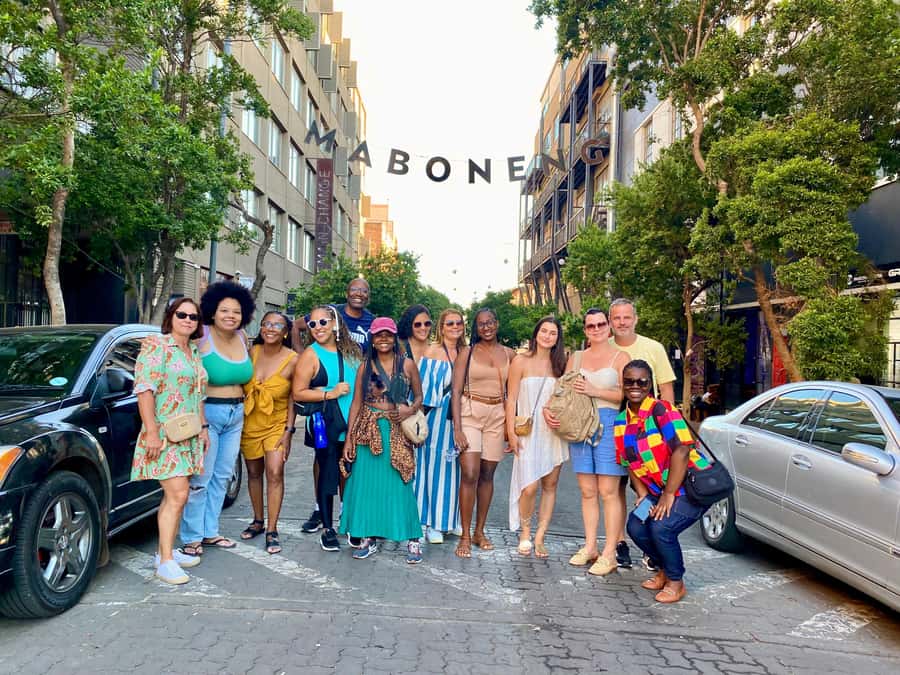
- Art with a story: See work by artists such as ESPO Powers and DBongz, while learning what particular murals mean and how they fit into Johannesburg’s social story.
- A neighborhood in transition: Maboneng changed from an old industrial district into a fashionable creative quarter beginning in 2009. The tour explains both the promise and the complications of that redevelopment.
- A local guide’s point of view: Ayanda is praised for knowing the district from personal experience, while Bonny, Kaiser, and Michael have also led highly regarded tours.
- More than murals: Art galleries, curio and gift shops, restaurants, informal traders, and creative workspaces show how people use Maboneng today.
- A memorable historical stop: The Hideout Bar at Curiocity Backpackers is linked by local accounts to Mandela and other anti-apartheid activists.
- A practical two-hour introduction: The route gives you a useful first look at inner-city Johannesburg without taking up half your day.
Starting with coffee at Home of the Bean
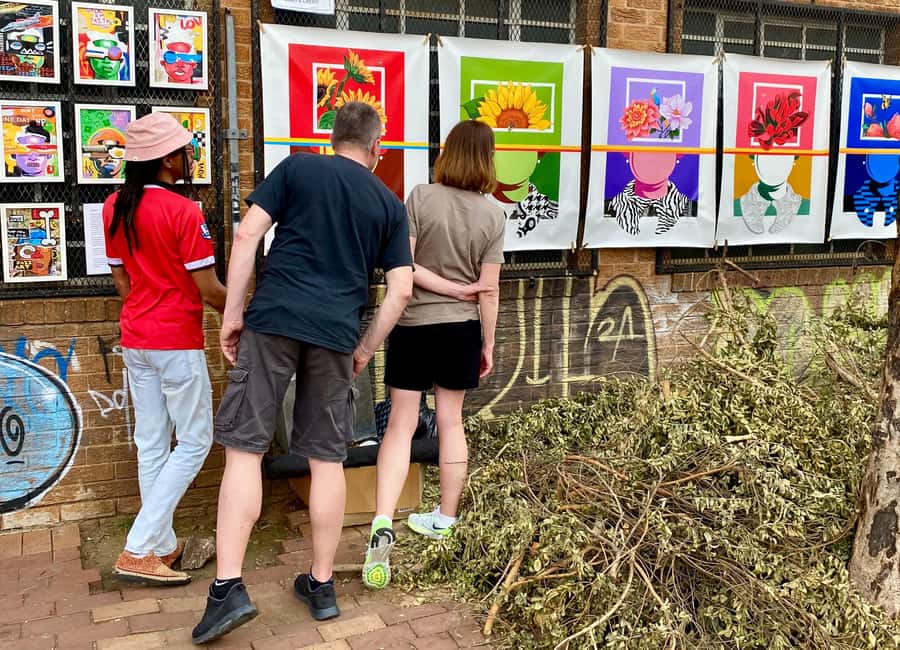
The tour begins at Home of the Bean, at the corner of Fox and Berea Streets under the bridge. From the outside, the building has an old industrial look, so do not mistake the meeting point for a vacant warehouse or walk past it while searching for something grander.
You should wait inside the coffee shop if you arrive early. The coffee is not included in the $40 price, but it is a useful way to get settled, meet your guide, and have a drink before heading into the streets.
The opening safety briefing takes about 15 minutes. That time matters in Johannesburg. Your guide can explain how the walk will work, what to watch for, and how to move comfortably through a busy inner-city district.
The operator uses WhatsApp or messages around 30 minutes before the start, including for changes or arrival questions. Keep your phone available and contact the emergency line if you need help finding the café.
A few more in Johannesburg
- From Johannesburg: Pilanesberg Nature Reserve Game Safari
★ 4.8 · 1,327 reviews - Johannesburg: Hop-On Hop-Off Bus with Optional Soweto Tour
★ 4.6 · 985 reviews - Soweto /Johannesburg and Apartheid Museum Guided Full Day Tour
★ 5.0 · 932 reviews
Maboneng’s past, from industry to creativity
Before the murals and restaurants, this part of Johannesburg was tied closely to the city’s industrial and mining economy. Old warehouses and industrial buildings still help define the district’s appearance, even as galleries, cafés, shops, and creative spaces have moved in.
Maboneng means Place of Light. The name fits the district’s artistic identity, but the tour does not treat redevelopment as a simple feel-good story. You hear how the area evolved from 2009 onward, how private investment helped fund the change, and what the vision was for a different kind of inner-city life.
That context is one of the tour’s strongest features. You are not simply told that a building is fashionable now. You learn how its earlier use, its location, and the wider changes in Johannesburg helped shape the neighborhood you see today.
The redevelopment also raises practical questions about gentrification and who gets to benefit from a newly fashionable district. The tour is useful because it connects the glossy side of Maboneng with the people who live and work there. It presents the area as a place still changing, not a finished success story.
Reading murals by ESPO Powers, DBongz, and others
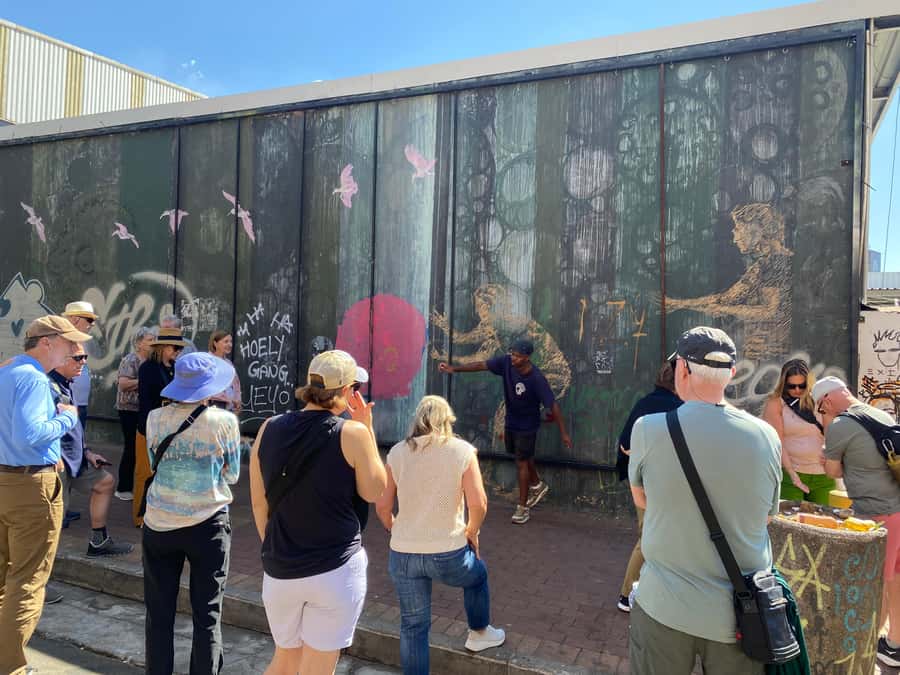
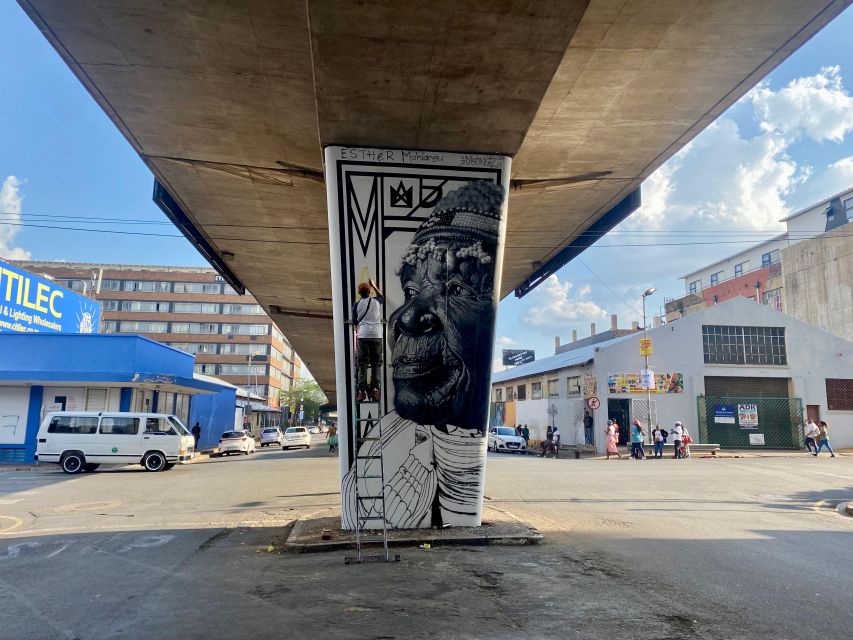
Street art is the main attraction, but the guide is what gives it value. On your own, you might notice a large wall, snap a photograph, and keep walking. With a guide, you learn about the artist, the subject, and the ideas behind the work.
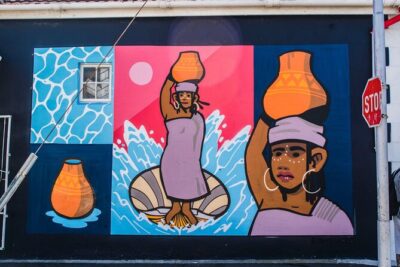
The tour includes pieces by international and South African artists, including ESPO Powers and DBongz. The art gives you several ways to think about Johannesburg: its people, its political past, its creative energy, and the tension between public expression and commercial redevelopment.
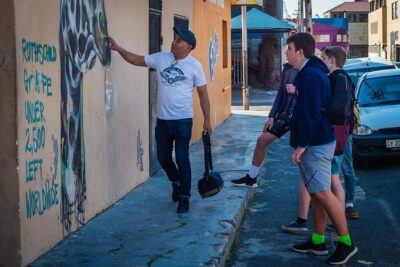
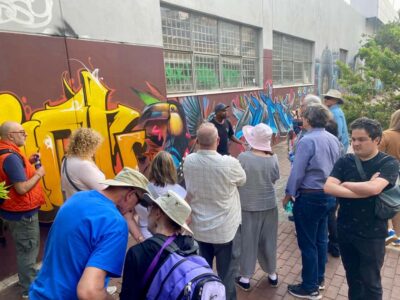
You should expect a walking conversation rather than a formal gallery lecture. The guide points out murals across the precinct and explains selected works in place. That approach keeps the art connected to the pavement, buildings, businesses, and people around it.
Ayanda receives particularly strong praise for explaining both the art and the wider city. His background as a local resident gives the walk a personal angle. He has been described as passionate, articulate, friendly, and willing to answer questions, with a good sense of humor. That makes a difference when the subject moves from paint on a wall to difficult questions about South Africa.
The tour is not limited to one style of street art. You will see different approaches to scale, color, subject, and public space. Some pieces may appeal to you more than others, but the guide helps you understand why each selected work matters.
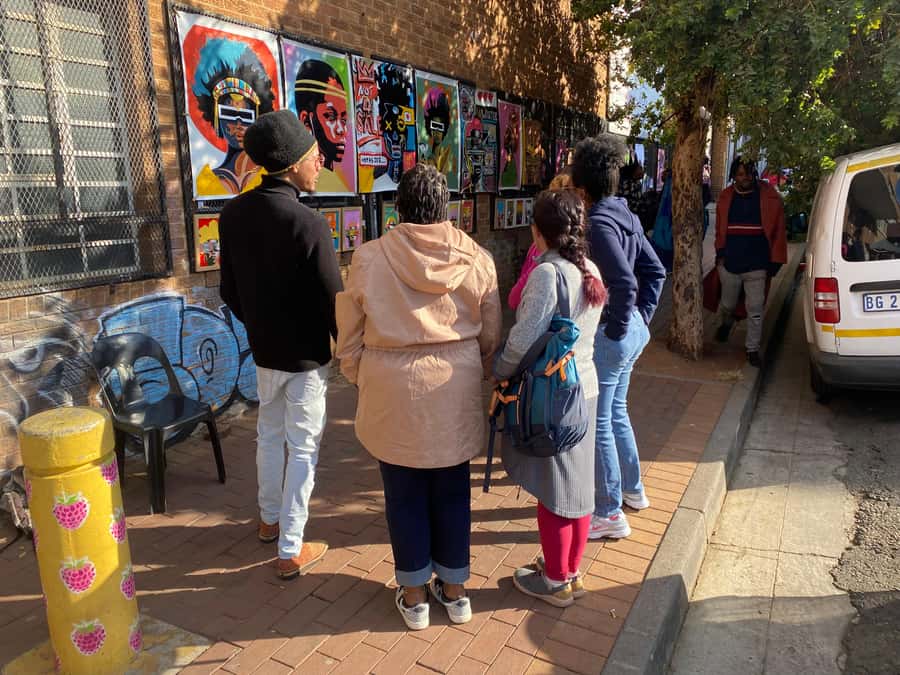
Bring a phone or camera if you enjoy urban photography. Also bring some cash or a card if you might buy work from street artists or informal traders. Purchases are not included, and the tour gives you opportunities to support local sellers directly.
Maboneng Arts Village and the creative economy
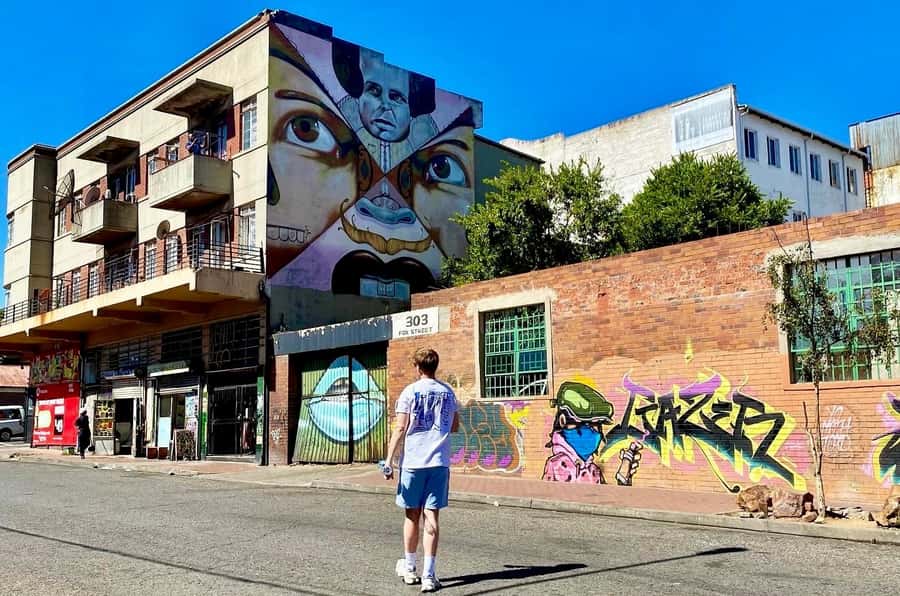
Maboneng Arts Village is one of the stops that shows how the neighborhood’s artistic identity works on a practical level. It is a space where artists and creatives can sell their work, not just display it on a wall.
That difference is important. The murals show public art, while the village shows how artists can earn money, meet customers, and become part of the district’s economy. You get a better sense of the people behind Maboneng’s creative image.
The area also includes galleries, curio and gift stores, restaurants, and other places connected to arts and culture. The tour does not simply rush past them. It uses these spaces to explain the mix of local residents, business owners, artists, and visitors who shape the precinct.
You may want to leave time after the tour to return to a shop or restaurant that catches your attention. Since the guided walk lasts only two hours, it gives you an introduction rather than a long browsing session.
Something quite different:
- Johannesburg Hop-On Hop-Off City Tour with Soweto Option
★ 4.5 · 768 reviews - Full Day Ultimate Pilanesberg National Park Safari from Johannesburg or Pretoria
★ 4.5 · 718 reviews - Half-Day Tour of Soweto Tour
★ 4.5 · 712 reviews - Soweto: Walking Tour with a Local Guide and Lunch
★ 4.9 · 648 reviews
The Hideout Bar and anti-apartheid stories
The visit to the Hideout Bar at Curiocity Backpackers adds a different layer to the tour. The place is linked by local accounts to Mandela and other anti-apartheid activists who allegedly used it as a hideout.
The word allegedly matters. This is a historical association, not a promise that you are entering a fully documented museum site. Still, the stop helps show how ordinary urban spaces can carry political memories. A bar or backpacker venue can have a past that is far more serious than its current purpose suggests.
This part of the tour works best when you listen for the relationship between place and history. The guide can explain how anti-apartheid activity, city life, and informal networks overlapped in Johannesburg. It is a short visit, but it breaks up the mural walk and gives the route a human scale.
Walking the route and reaching the viewpoint
The planned route divides the two hours into several short sections. After the safety briefing, you spend about 30 minutes sightseeing and walking through Maboneng, then stop for around 15 minutes at the Hideout Bar.
A second 30-minute section returns to the streets and creative spaces. After that comes a 15-minute walk toward a viewpoint, with scenic views along the way. The final 15 minutes are spent sightseeing before you walk back to Home of the Bean.
This pacing is helpful if you want variety. You are not standing in front of one mural for an hour, and you are not being marched from stop to stop without time to ask questions. The route alternates between street art, cultural spaces, historical discussion, and city views.
The viewpoint gives you a chance to see Maboneng in relation to the rest of Johannesburg. It is not presented as a separate major attraction, but it helps you understand the district’s position within the inner city.
Expect an urban walk rather than a nature outing. The tour is wheelchair accessible, but you may still want to ask the operator about current street conditions if you have particular mobility needs. The supplied information confirms accessibility, though it does not describe the exact pavement or route surface.
Safety, group feel, and local contact
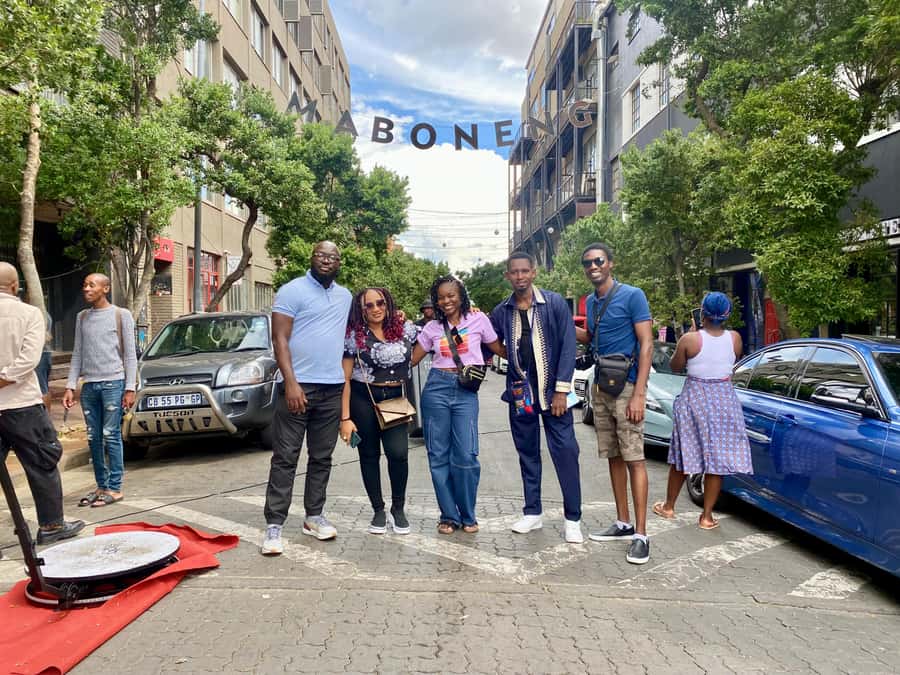
Safety is a sensible concern for anyone visiting inner-city Johannesburg. Several accounts describe feeling safe throughout the walk, and one person specifically appreciated being guided through streets they would not have visited alone. Another guide helped arrange parking near the meeting point when asked.
That does not mean you should switch off your common sense. Keep valuables secure, follow the guide’s advice, and stay with the group. Maboneng is a lived-in neighborhood with informal traders and ordinary street activity, not a controlled attraction.
The personal connection is a major advantage. People greet Ayanda in the street, and he is described as someone who knows the area and its community well. That kind of local recognition can make a walk feel more grounded than a standard sightseeing circuit.
Group size is not fixed in the supplied information. One account describes a friendly group of two to four people, but you should not assume every departure will be that small. If a personal conversation matters to you, ask about the expected group size before booking.
The tour is offered in English only. The guide is expected to explain clearly and make room for questions, but you should choose another experience if you need a different tour language.
What the $40 price really covers
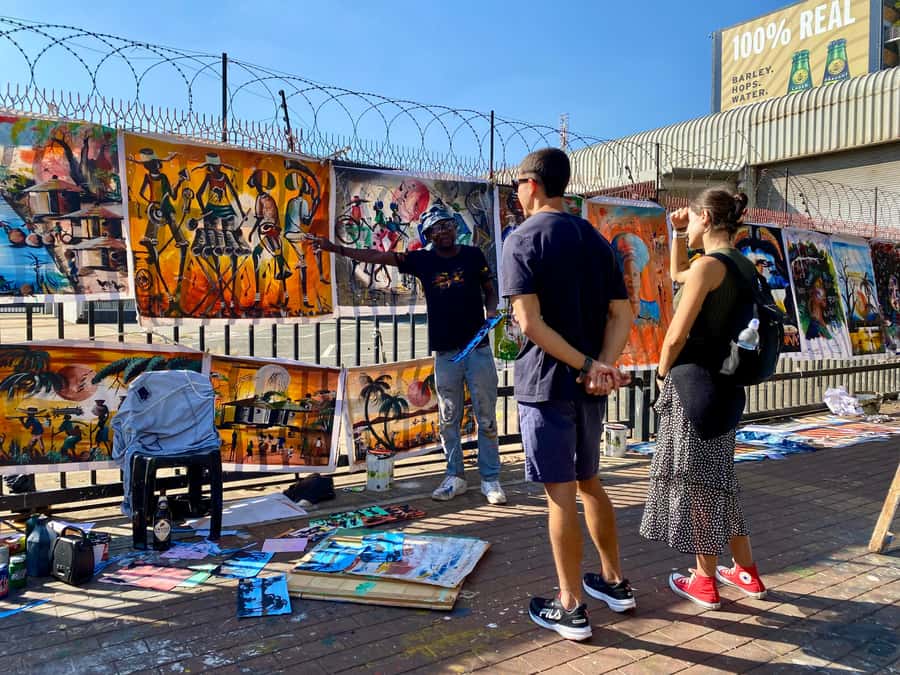
At $40 per person, this is not the cheapest way to look at street art. You can walk through parts of Maboneng independently and see some murals without paying an admission fee.
The value comes from interpretation and access to context. Your fee covers a live guide, entry to all sites visited, the safety briefing, and a carefully arranged route through places you might otherwise pass without understanding. It also saves you the work of researching artists, redevelopment, apartheid-era stories, and the district’s changing identity.
Food and drinks are extra. The coffee at Home of the Bean, anything you buy from artists or traders, and meals at local restaurants all come from your own pocket. That is easy to manage, but you should know the advertised price is not an all-inclusive day out.
I think the price is fair if this is your first time in Johannesburg and you want more than photographs. It is especially good value for visitors who care about contemporary art, urban change, South African culture, or meeting a guide with direct ties to the area.
It is less compelling if you already know Maboneng well or prefer to wander without commentary. The tour’s main product is the guide’s explanation, not entry to a major museum or a long list of formal attractions.
Who should book this Maboneng experience?
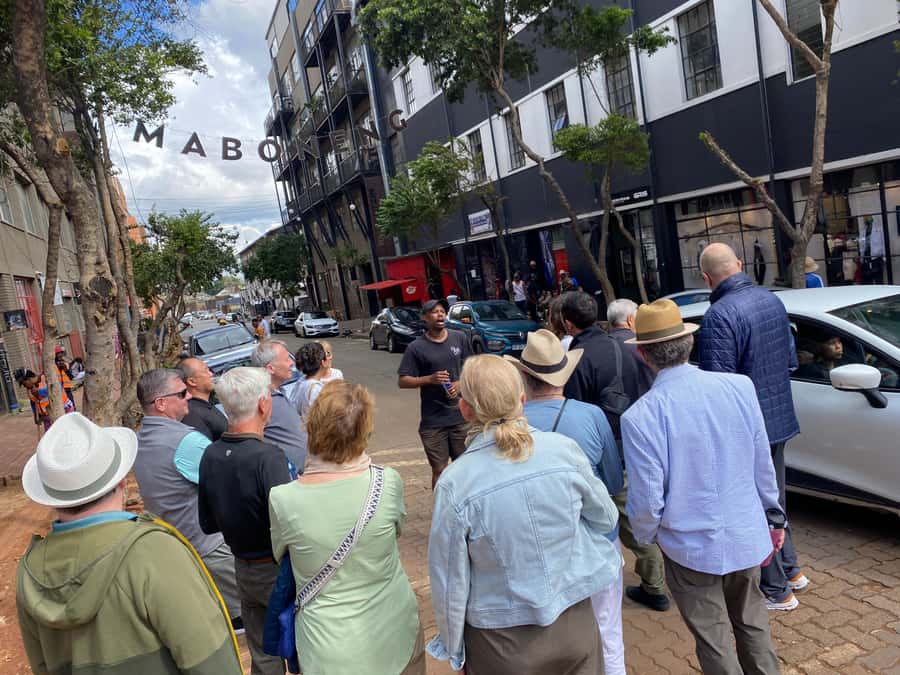
I would choose this tour for a first visit to Johannesburg, especially if you want an introduction to the inner city that feels current rather than purely historical. It suits solo visitors, couples, small groups, students, and anyone who prefers learning through conversation.
Art lovers will get the most from the walk, but you do not need a background in graffiti. The guide explains the selected artists and murals in plain terms, while also connecting them to the city and country.
It can work well for a short Johannesburg stopover. One person completed the tour before heading to the airport, and the two-hour schedule leaves room for other plans. Still, allow extra time for reaching the meeting point and do not book it so tightly that a small delay causes stress.
The tour can also suit different age groups. The route is not framed as nightlife or a young-person-only activity. It combines art, politics, architecture, shopping, and local life, so each person can take something different from it.
Practical tips before you go
- Wear comfortable shoes. The experience involves repeated walks through the precinct, with stops for explanation and sightseeing.
- Arrive early and wait inside Home of the Bean.
- Keep your phone available for WhatsApp updates about 30 minutes before the start.
- Bring cash or a card for art, crafts, drinks, or food.
- Ask questions. The guides are praised for answering them and explaining the wider Johannesburg context.
- Stay with the group and use ordinary city awareness.
- Remember that the tour is in English only.
- If you want a quieter, more personal experience, ask about group size before reserving.
- Leave time after the walk if you might want to shop or eat in Maboneng.
Should you book the Maboneng Street Art and Culture Tour?
Yes, if you want to understand what you are looking at. The murals are the hook, but the real payoff is the link between public art, industrial buildings, anti-apartheid stories, redevelopment, and present-day community life.
I would book it early in a Johannesburg stay. The walk can help you get your bearings and give you better ideas for where to return later. Ayanda is an especially strong guide when available, though Bonny, Kaiser, and Michael have also been praised for their friendly approach.
Skip it if you want a private vehicle tour, a formal museum experience, or a completely unstructured wander. For $40 and two hours, though, it offers a useful, thoughtful introduction to one of Johannesburg’s most talked-about districts, with enough local detail to keep it from feeling like a quick photo stop.
FAQ
Where does the tour begin?
It begins at Home of the Bean coffee shop at the corner of Fox and Berea Streets, under the bridge.
Should I wait outside the coffee shop?
No. If you arrive before the start time, wait inside Home of the Bean.
How long does the experience last?
The tour lasts two hours.
Is coffee included in the price?
No. Food and drinks are at your own expense, including anything purchased at the starting café.
What language is the tour offered in?
The tour is offered in English only.
Is the tour wheelchair accessible?
Yes, the experience is listed as wheelchair accessible.
Can I buy art or goods during the walk?
Yes. Street artists and informal traders are present along the route. Bring cash or a card if you may want to purchase something.
Who might guide the tour?
Guides named in the available information include Ayanda, Bonny, Kaiser, and Michael. Ayanda is especially associated with local knowledge of Maboneng and its art scene.
Can I cancel the booking?
You can cancel up to 24 hours before the tour for a full refund. Reserve now and pay later is also available.
Just added in Johannesburg
- Pretoria Capital City Tour Experience★ 5.0 · 24 reviews
- 4 Day Kruger National Park Tour★ 5.0 · 30 reviews
- Johannesburg e-scooter experience★ 5.0 · 38 reviews
- Johannesburg Street Art & Museum Walking or E-scooter Tour★ 4.5 · 10 reviews
- Big 5 Safari Experience at Pilanesberg National Park★ 5.0 · 16 reviews
- Drakensberg Mountains. Tugela Gorge and Amphitheater Hike★ 5.0 · 7 reviews
- Apartheid Museum Tour from Johannesburg★ 4.5 · 14 reviews
- Arrival Private Transfer: Tambo Airport JNB to Johannesburg in Business Car★ 4.0 · 5 reviews
Street Art, compared.
Colours of Johannesburg: A Graffiti & Street Art Tour
Read our review →
Johannesburg Street Art & Museum Walking or E-scooter Tour
Read our review →
Browse the lists this tour appears in