
REVIEW · CULTURAL VILLAGE TOURS
Cradle of Humankind and Lesedi Cultural Village
Ancient bones meet African culture. This half-day outing pairs the Cradle of Humankind with the colorful homes, dances, and cooking of Lesedi Cultural Village. I like the sharp contrast between fossil evidence and living tradition, and I like that hotel pickup, transport, entry tickets, and bottled water are included. The main catch is that lunch or dinner costs extra, and language support may not always match what you booked.
The trip lasts about 6 to 6.5 hours, with roughly two hours at the main attractions and a fair amount of driving. I also recommend confirming your guide’s language before departure. Two Portuguese-speaking customers received an English-speaking guide, including one named Louis, so this matters if you are not comfortable touring in English.
In This Review
- Key points to know before booking
- Why this combination works so well
- Leaving Johannesburg for the Cradle of Humankind
- At the Cradle of Humankind, 3.8 billion years of context
- The 35-minute transfer to Lesedi Cultural Village
- Homes, traditions, and the story told through design
- The dance show and African meal at Nyama Choma
- Is $218 good value for this half-day outing?
- The guide can make or break the day
- Practical comfort and accessibility advice
- Who should book this experience?
- Should you book the Cradle of Humankind and Lesedi?
- FAQ
- How long does the Cradle of Humankind and Lesedi Cultural Village tour last?
- Where does the tour start?
- What languages are available?
- Are lunch and dinner included?
- How much time is spent at each attraction?
- Is the tour suitable for people with mobility issues?
Key points to know before booking
- Two very different attractions in one day: Start with early human fossils and stone tools, then move to music, dance, food, and traditional homes.
- Fire changed human life: Swartkrans is linked with a collection of about 270 burned bones, evidence connected to the use of fire more than one million years ago.
- Five cultural traditions appear at Lesedi: Learn about the Ndebele, Zulu, Basotho, Xhosa, and Pedi peoples.
- The day is transport-heavy: Expect about 65 minutes from Johannesburg to the Cradle, 35 minutes between sites, and another 65 minutes back.
- Food is not included: Lesedi’s Nyama Choma restaurant offers African cuisine, but your meal is an additional expense.
- Best for curious first-time visitors: This works well if you want archaeology and culture in one outing rather than a full day at only one site.
Why this combination works so well
Johannesburg can feel like a large, modern starting point, but the places around it tell a much older story. The Cradle of Humankind takes you back millions of years, while Lesedi Cultural Village focuses on human identity as it has been expressed through homes, clothing, food, music, and dance.
That contrast gives the day its shape. At the Cradle, you think about how early people lived and adapted. At Lesedi, you see how communities built traditions that still have meaning today. The subjects are very different, but together they create a useful introduction to South Africa.
I especially like the change of pace. Fossils and stone tools require attention and imagination. Lesedi is more social and theatrical, with dancing and a meal setting. If you booked only one of these stops, you would miss half the appeal of the day.
The tradeoff is time. You do not get a long, unhurried visit at either attraction. The advertised schedule allows about one hour at the Cradle of Humankind and about two hours at Lesedi, with close to three hours spent in transfers. That makes this a practical sampler, not a slow study tour.
More cultural village visits:
- Lesedi Cultural Village and Cradle of Humankind Tour
★ 5.0 · 48 reviews - Lesedi Cultural Village Tour
★ 5.0 · 46 reviews - Lesedi Cultural Village
★ 5.0 · 45 reviews
Leaving Johannesburg for the Cradle of Humankind
Your driver and guide pick you up at your hotel or guesthouse reception in Johannesburg. The first transfer takes about 65 minutes, so this is not a quick city outing. Bring water, wear comfortable shoes, and prepare for a day with several periods of sitting in the vehicle.
The transport is a real benefit if you are staying in Johannesburg and do not want to arrange separate rides to sites outside the city. It also keeps the day simple: one pickup, two major stops, and a return to the same general starting point.
The exact feel of the drive depends on traffic and your departure time. The schedule says 6 to 6.5 hours, but road conditions can affect how much time you have at each stop. I would avoid planning a tight evening reservation immediately afterward.
Your guide is expected to provide commentary during the trip and at the attractions. English, French, Portuguese, German, and Afrikaans are listed as available languages. Still, the language issue deserves attention. If you specifically need Portuguese, confirm it directly before setting off. The experience can remain worthwhile in English, but it is not the same as receiving explanations in your chosen language.
At the Cradle of Humankind, 3.8 billion years of context
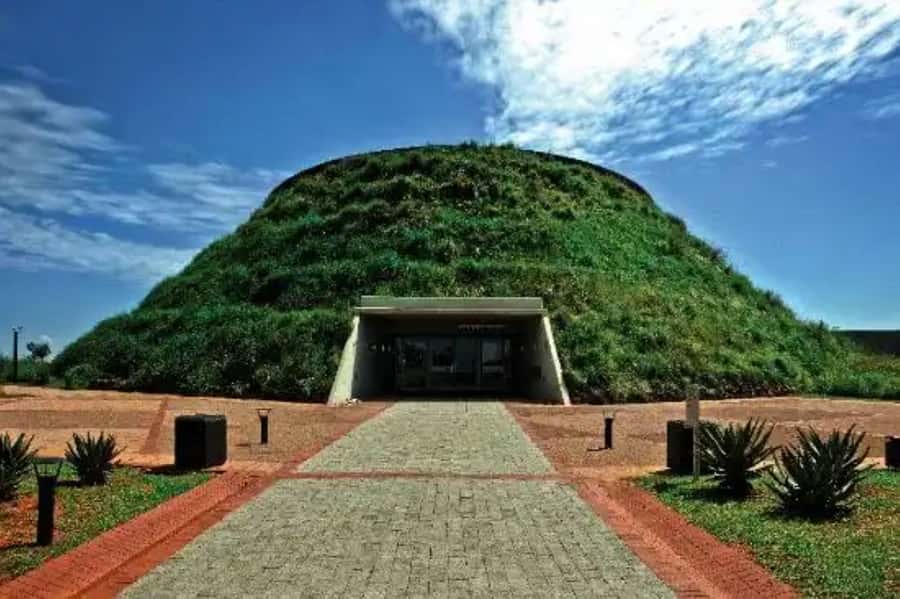
The Cradle of Humankind is presented as a place connected with the early story of life and the development of humanity. Its scientific importance comes from the archaeological and fossil evidence found in the area, including remains dating back roughly two million years.
The visit lasts about an hour and may include a guided tour, walking, sightseeing, a photo stop, and some time to look around on your own. That hour is short, so listen closely when the guide explains what you are seeing. The value is not only in looking at an old fossil. It is in understanding how a small bone, tool, or burned fragment can reveal behavior from a time before written records.
One of the most interesting details is the collection of about 270 burned bones associated with Swartkrans. These remains help show how early ancestors learned to control fire more than one million years ago. Fire was not just useful for warmth. It was an early technological step that changed food preparation, protection, and daily life.
The stone tools are just as important. Tools dating back about two million years show that early humans were making and using objects with a purpose. You may not find the tools visually dramatic, but their meaning is enormous. A simple stone with signs of deliberate work can tell you that someone planned ahead, selected a material, and passed on a method.
That is the best way to approach this stop: do not expect a traditional museum packed with large objects. Expect a place where small physical clues carry a huge amount of information. The guide’s explanation helps turn those clues into a story.
The Cradle is also a good stop for families and anyone interested in science, archaeology, or human origins. Younger children may find the abstract timeline difficult, especially during a short visit, but the subject becomes easier to grasp when you compare two million years with ordinary human history.
I would keep your expectations measured. The information provided describes fossils, tools, fire evidence, walking, and sightseeing, but it does not promise a particular cave tour or a long underground visit. Ask your guide what portion of the Cradle you will see that day.
The 35-minute transfer to Lesedi Cultural Village
After the Cradle, you drive about 35 minutes to Lesedi Cultural Village. This is a useful transition because the second attraction changes from scientific evidence to culture expressed through people and performance.
The drive is shorter than the Johannesburg transfer, but the day has already been underway for some time. Keep your shoes comfortable and carry only what you need. The schedule includes walking, a dance show, food, photo stops, and a guided visit, so you will be moving between different parts of the experience.
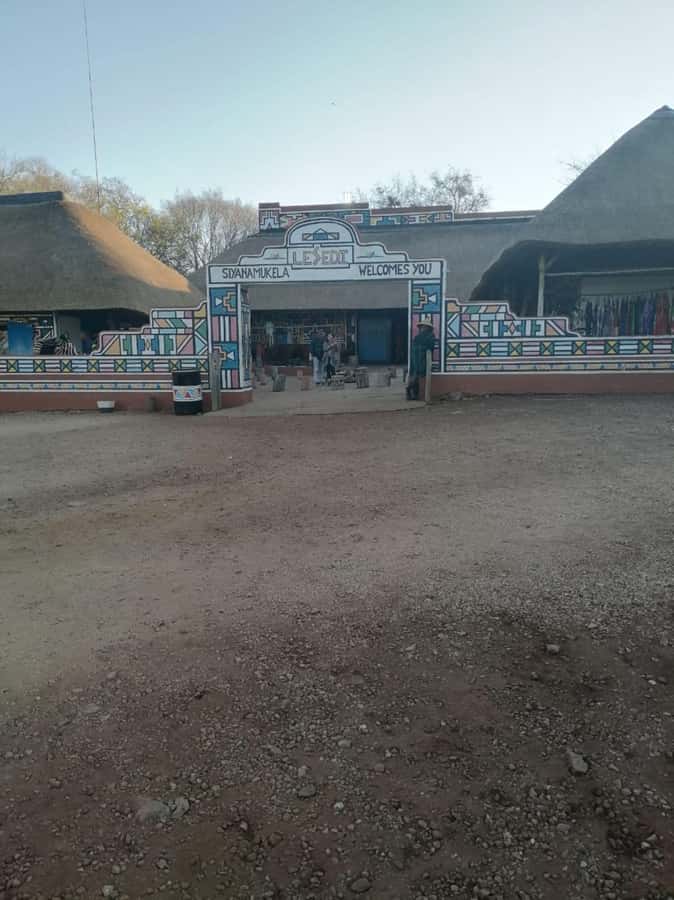
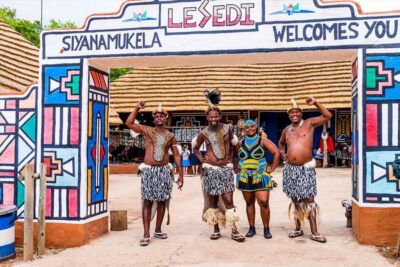
Lesedi is designed around the traditions of five Southern African peoples: the Ndebele, Zulu, Basotho, Xhosa, and Pedi. The village setting gives you a way to compare domestic life, design, clothing, music, and dance across these cultures.
A useful caution: a cultural village presentation is selective by nature. It offers an organized introduction, not every detail of modern life in these communities. I see that as a strength for a first visit, as long as you treat the performances as an entry point rather than a complete picture.
A few more in Johannesburg
- From Johannesburg: Pilanesberg Nature Reserve Game Safari
★ 4.8 · 1,327 reviews - Johannesburg: Hop-On Hop-Off Bus with Optional Soweto Tour
★ 4.6 · 985 reviews - Soweto /Johannesburg and Apartheid Museum Guided Full Day Tour
★ 5.0 · 932 reviews - Johannesburg Hop-On Hop-Off City Tour with Soweto Option
★ 4.5 · 768 reviews
Homes, traditions, and the story told through design
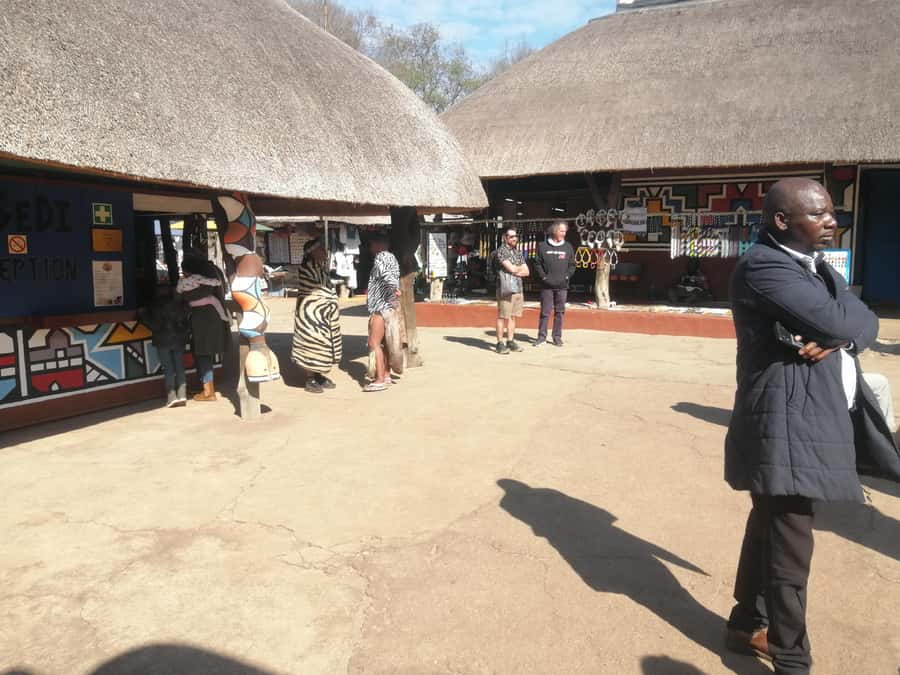
One of Lesedi’s strongest features is the chance to see traditional homes connected with different groups. The homes help make cultural differences visible. Instead of hearing only a list of names, you can connect each tradition with physical spaces, decorative choices, and household customs.
The Ndebele are particularly associated with bold painted design, while the Zulu, Basotho, Xhosa, and Pedi traditions each have their own cultural markers. The supplied information does not provide a detailed room-by-room description, so the precise presentation can vary. Your guide should explain what you are looking at and place each home within its cultural setting.
I like this part because it slows the subject down. Food, homes, and dance are not just entertainment. They show what a community values and how it presents itself. Pay attention to the small details your guide points out, and ask questions if you want more context.
The experience is also described as a homestay-style encounter, although overnight accommodation is not included in the tour. Do not book this expecting to sleep at Lesedi. The visit is a short cultural program with a meal option and performances.
The dance show and African meal at Nyama Choma
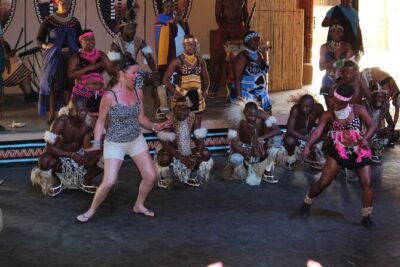
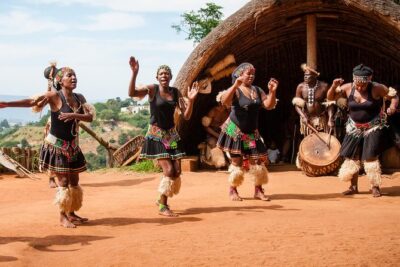
Lesedi’s energy comes from its traditional dance show. Dancing gives the afternoon a clear sense of occasion and helps connect music with community life. You are not simply reading about the Ndebele, Zulu, Basotho, Xhosa, and Pedi. You are seeing a public performance built around movement and sound.
The show may be the most memorable part for you, especially if the Cradle’s scientific material feels quiet and academic. It is also one of the places where your guide and the village presentation matter most. A few explanations about the meaning of a dance can make it much more than a colorful display.
Food is another major part of the Lesedi experience. Nyama Choma restaurant serves African cuisine, and the program includes references to lunch, dinner, dessert, and traditional food. However, your booking includes entry, transport, and bottled water, not lunch or dinner. Budget for the meal separately.
That distinction is important because the price is not a fully all-inclusive day. You receive the major admission tickets and transport, which are often the awkward parts to organize independently. You still need to pay for food and make your own accommodation arrangements in Johannesburg.
The meal is worth considering because it completes the cultural visit. Eating traditional dishes gives you another way to connect with the setting, but nobody should assume it is covered by the $218 price. Ask your guide how the meal works and what payment is accepted when you arrive.
Is $218 good value for this half-day outing?
At $218 per person, this is not a budget sightseeing trip. The price makes the most sense if you value door-to-door transport, a guide, and combined admission to both attractions.
Driving to the Cradle and Lesedi independently could reduce the headline cost, especially if you are sharing a car. But you would need to arrange transport, navigate between sites, manage entry, and coordinate timing. This tour removes much of that work and gives you one organized day outside Johannesburg.
The value is strongest for first-time visitors who want broad context. You get early human archaeology in the morning and Southern African cultural traditions later. That range would be difficult to reproduce as easily with separate bookings.
The value is weaker if you want an in-depth archaeological visit or a long cultural program. The Cradle gets about one hour, and Lesedi gets about two hours, so both stops are introductions. You are paying for convenience and variety, not exhaustive time at either location.
The lack of included food also affects the final cost. Add lunch or dinner to your budget, along with any personal purchases. Bottled water is included, which is helpful, but it does not cover the main meal.
The guide can make or break the day
A friendly, active guide can connect the two parts of this experience. Sharon, from Australia, described a guide who was friendly, informative, and willing to go beyond the standard plan. That outing even included an additional stop at Lion Park before Lesedi Village, showing that the day may have some flexibility when timing allows.
Do not count on the Lion Park stop, though. It is not part of the stated route, so treat it as a possible extra rather than a promised feature. Traffic, opening times, and the day’s schedule can affect whether anything additional is possible.
The language matter is more serious. Portuguese is listed among the available languages, but two Portuguese-speaking customers had difficulty because their guide did not speak Portuguese. One specifically identified the guide as Louis. If language is central to your enjoyment, confirm the assigned guide before departure and have a backup plan for receiving explanations in English if needed.
The overall rating is 4.2 from four recorded ratings, which suggests a generally positive experience but also a small sample. The most consistent praise is for the attractions themselves and for a guide who is attentive and flexible. The main criticism concerns promised language service and confusion over an entrance payment.
That payment issue should not happen. Entry tickets are included, so you should not be asked to pay the Lesedi entrance fee again. Keep your booking confirmation available and clarify the matter calmly with the operator if a problem arises.
Practical comfort and accessibility advice

Wear comfortable shoes. The day includes walking at both sites, and the supplied information specifically recommends practical footwear.
The activity is marked wheelchair accessible, but it is also listed as unsuitable for people with mobility impairments and people with back problems. That is a contradiction you should take seriously. If you use a wheelchair, have limited mobility, or suffer from back pain, contact Ntsibantu Tours and Transfers before booking and ask for precise information about the vehicle, walking surfaces, entrances, and seating.
The long transfers may also matter if your back is sensitive. You spend about 65 minutes going out and another 65 minutes returning, in addition to the 35-minute ride between attractions.
This is not a physically intense day, but it is not entirely stationary either. You should be comfortable getting in and out of transport and walking during guided visits.
The tour offers free cancellation up to 24 hours before departure and a reserve-now, pay-later option. Those terms are useful if your Johannesburg schedule is still changing, but check the exact starting time when you choose a date. Starting times vary by availability.
Who should book this experience?
I would choose this tour if you are staying in Johannesburg and want an organized introduction to two important nearby attractions. It suits curious adults, families with an interest in archaeology, and people who want culture presented through food and dance as well as explanation.
It is also a good fit if you prefer not to rent a car or arrange several separate transfers. Hotel or guesthouse pickup makes the day easier, and bottled water removes one small errand.
I would hesitate if you have back problems, serious mobility limits, or very little patience for driving. I would also hesitate if your main goal is a full archaeological study or a long, quiet cultural visit. The schedule covers a lot, but it moves at a brisk pace.
Finally, be careful if you are booking because of the advertised Portuguese, French, German, or Afrikaans guide. Confirm the language in advance. A language mismatch can change a useful tour into a frustrating one.
Should you book the Cradle of Humankind and Lesedi?
Book it if you want variety, transport, and a clear first look at Gauteng’s archaeology and culture in one day. The Cradle’s fossil evidence and fire discoveries give you a powerful sense of human time, while Lesedi adds homes, dance, and African cuisine.
At $218, the tour is best judged as a convenience package rather than a cheap outing. The included tickets and hotel transfers help justify the cost, but your meal is extra and the time at each site is limited.
Before paying, confirm three things: your guide’s language, the exact inclusions for Lesedi, and the accessibility arrangements. If those details are settled, this is a lively and useful day beyond Johannesburg, with enough substance to appeal to curious minds and enough performance to keep the schedule from becoming a fossil itself.
FAQ
How long does the Cradle of Humankind and Lesedi Cultural Village tour last?
The experience lasts about 6 to 6.5 hours, including transportation from Johannesburg and the return journey.
Where does the tour start?
Pickup is provided at your hotel or guesthouse reception in Johannesburg by the professional driver and guide.
What languages are available?
The tour lists English, French, Portuguese, German, and Afrikaans. If you need a specific language, confirm it before departure because Portuguese-speaking customers were assigned an English-speaking guide.
Are lunch and dinner included?
No. Transport, entry tickets, and bottled water are included, but lunch and dinner are not. Lesedi Cultural Village has the Nyama Choma restaurant, where African cuisine is available at an additional cost.
How much time is spent at each attraction?
The Cradle of Humankind visit is scheduled for about one hour. Lesedi Cultural Village is scheduled for about two hours, with activities including guided touring, walking, a traditional dance show, and time for food.
Is the tour suitable for people with mobility issues?
The activity is marked wheelchair accessible but is also listed as unsuitable for people with mobility impairments and back problems. Contact Ntsibantu Tours and Transfers before booking to confirm whether the current vehicle and route meet your needs.
Just added in Johannesburg
- Soweto half day Tour★ 5.0 · 54 reviews
- Hiking In the Magaliesberg,Wildlife hike an hour fromJohannesburg★ 5.0 · 11 reviews
- Full-Day Cradle of Human Kind and caves private★ 4.5 · 10 reviews
- Full-Day Apartheid Museum and Soweto Tour★ 5.0 · 10 reviews
- Full day Soweto & Apartheid Museum Tour★ 5.0 · 3 reviews
- Pilanesberg National Park Safari in Open Vehicle from Johannesburg★ 5.0 · 6 reviews
- Full-Day Soweto Apartheid Museum & Johannesburg Tour★ 5.0 · 4 reviews
- Weekend in Johannesburg★ 5.0 · 2 reviews
Cultural Village Tours, compared.
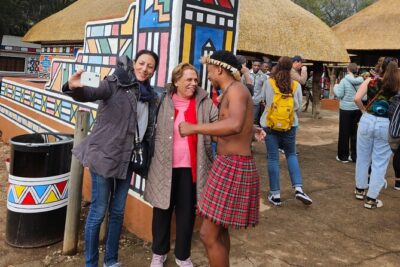
Lesedi Cultural Village and Cradle of Humankind Tour
Read our review →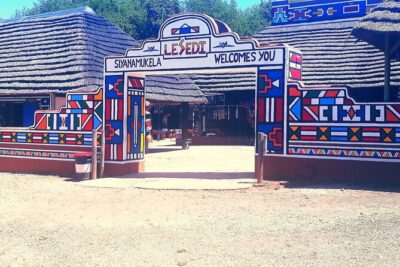
Durban City & PheZulu Cultural Village Day Tour from Durban
Read our review →
Phezulu Cultural Village & Reptile Park Day Tour from Durban
Read our review →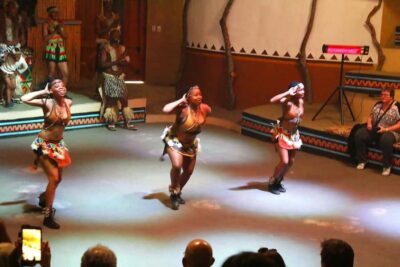
Browse the lists this tour appears in