
REVIEW · JOHANNESBURG TOURS
Cultural Experience Just Outside Johannesburg
Culture arrives with drums, food, and painted walls. I like the five cultural traditions brought together here, and I like that transport, guiding, entrance, and lunch are included. The possible drawback is the $174 price, which feels high if you want only a quick cultural show.
This six-hour outing near Johannesburg gives you a structured introduction to the Ndebele, Pedi, Xhosa, Basotho, and Zulu peoples. Jason, one of the guides, earned special praise for answering questions during the drive and continuing the conversation about South African history on the way back.
In This Review
- Key Points at a Glance
- Why This Cultural Village Is Worth Your Time
- Starting With the Ndebele Welcome
- Four Homesteads, Four Different Cultural Windows
- Drums, Stories, and Traditional Dance
- Nyama Choma and the African Buffet
- The Arts and Crafts Market
- Pickup From Johannesburg, Sandton, Rosebank, or Pretoria
- Is $174 a Fair Price?
- Who Will Enjoy This Most?
- Should You Book This Cultural Experience?
- FAQ
- Where is the cultural village located?
- How long does the experience last?
- Which cultural traditions are presented?
- Is lunch included?
- What food is served at the buffet?
- Where can pickup and drop-off take place?
- Is the tour conducted in English?
Key Points at a Glance
- Five traditions in one visit: Explore Ndebele, Zulu, Basotho, Xhosa, and Pedi homesteads rather than seeing only one cultural display.
- A lively welcome: Singing, drumming, stories, and traditional dancing give the visit a strong performance element.
- A useful introduction: The Ndebele section includes a multimedia presentation about the history and origins of South Africa’s modern rainbow nation.
- A full African buffet: Nyama Choma serves dishes from across Africa, including meat choices such as ostrich and crocodile.
- Simple city pickup: Transport is available from hotels in Rosebank, Sandton, Johannesburg, and Pretoria.
- Room for souvenirs: An arts and crafts market visit is included, but purchases are extra.
Why This Cultural Village Is Worth Your Time
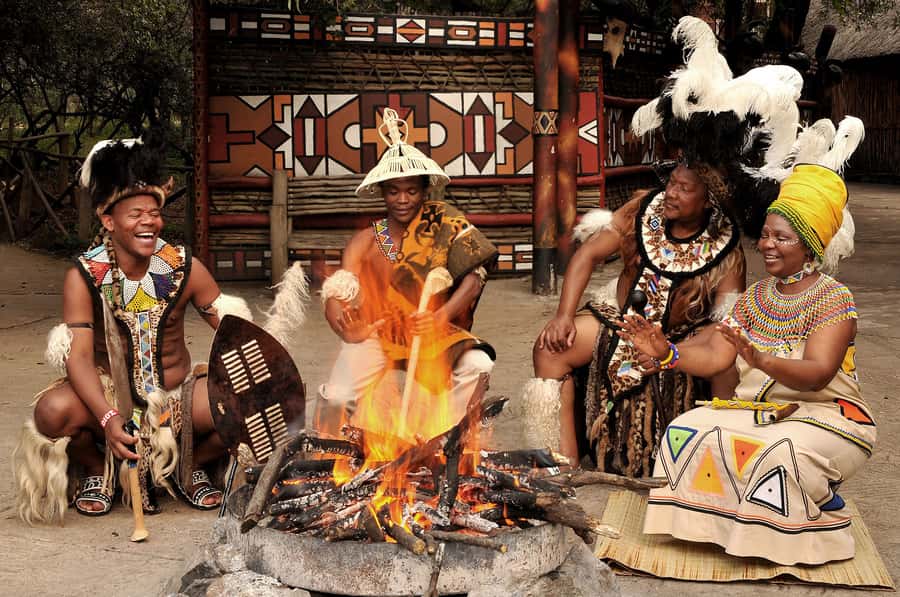
South Africa can feel hard to understand in a single city visit. Its cultures are not one single block, and this experience makes that point clearly by presenting five different traditions in one setting.
I like the format because it gives you a starting map. You see how building styles differ, hear stories about customs, watch dances, and share food in the same half-day outing. It is not a substitute for spending time in rural communities or meeting people in their homes, but it is a practical introduction for a first visit to Gauteng.
The village sits near Johannesburg in the Cradle of Humankind area. That makes it easy to combine with a city stay, especially if you want a cultural activity without arranging several separate trips. The day lasts six hours in total, with about three hours set aside for the village activities, lunch, sightseeing, and market visit. The rest of the time allows for hotel pickup and return transport.
The experience is also designed to be accessible to first-time visitors. You do not need prior knowledge of South African history to follow the presentation or guided tour. The English-speaking guide helps connect the displays to the wider story of the country.
A few more in Johannesburg
- From Johannesburg: Pilanesberg Nature Reserve Game Safari
★ 4.8 · 1,327 reviews - Johannesburg: Hop-On Hop-Off Bus with Optional Soweto Tour
★ 4.6 · 985 reviews - Soweto /Johannesburg and Apartheid Museum Guided Full Day Tour
★ 5.0 · 932 reviews
Starting With the Ndebele Welcome
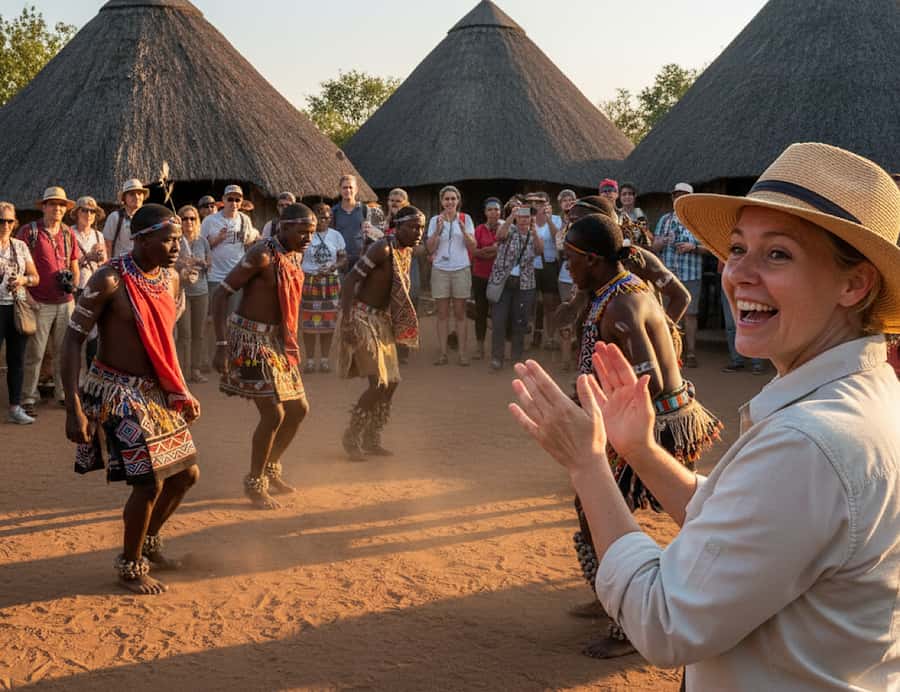
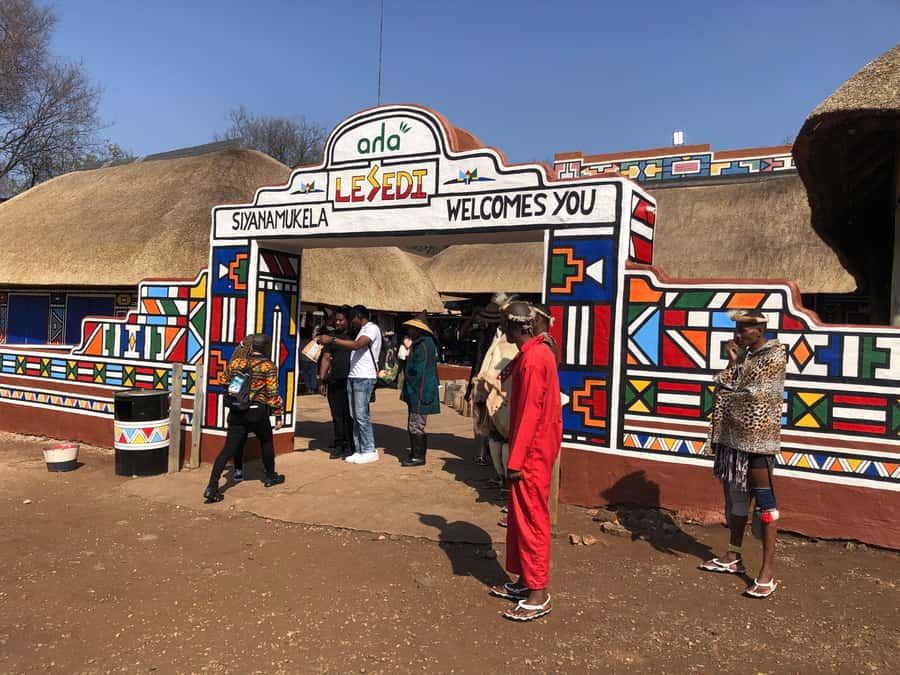
Your arrival begins with singing and dancing. It is an immediate shift from ordinary sightseeing, and it sets the tone for the rest of the visit. This is not a quiet museum entrance. The village uses performance, sound, and movement to make the introduction memorable.
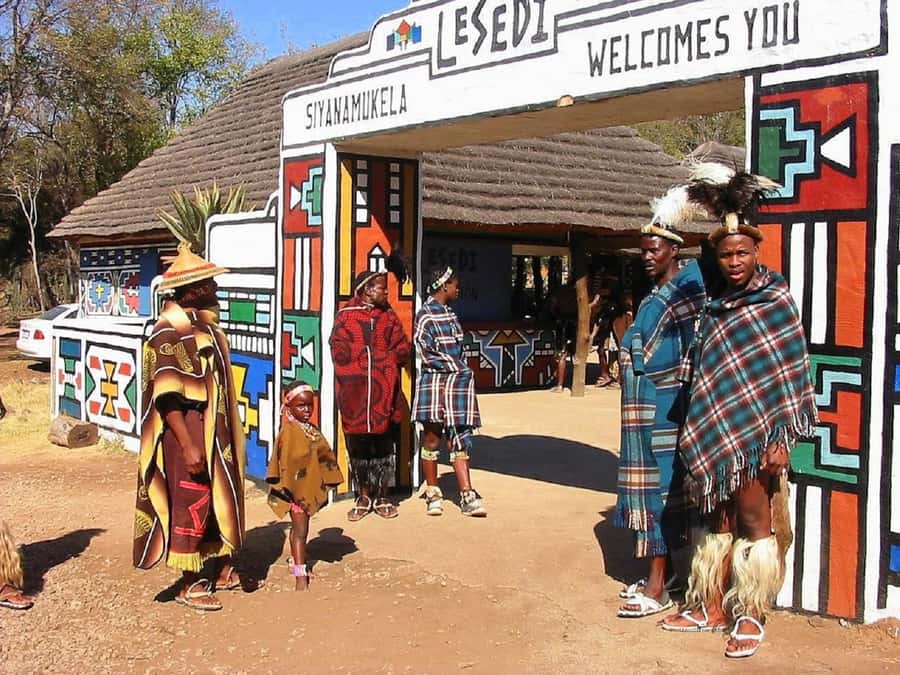
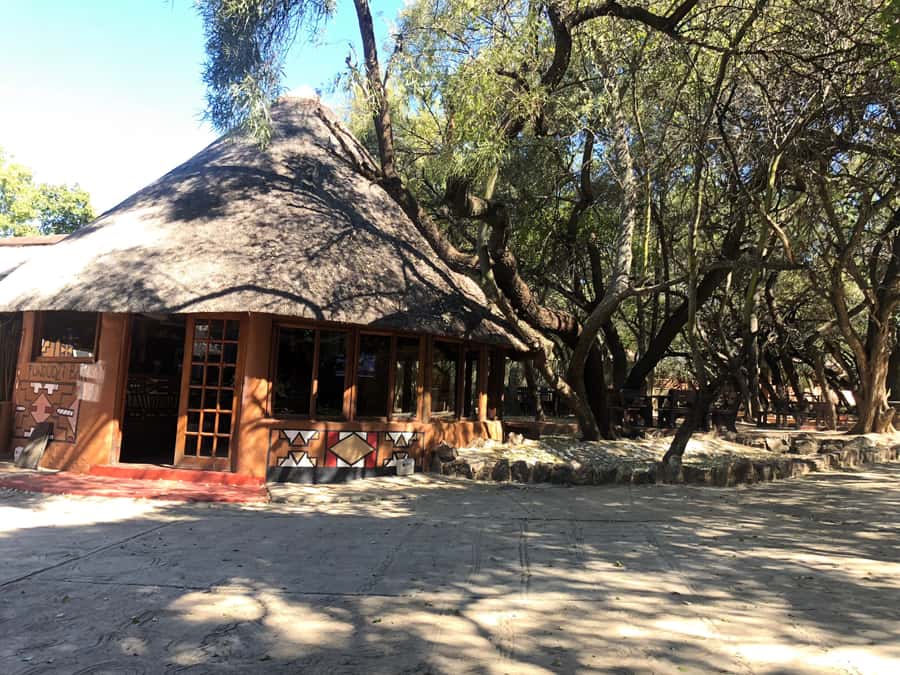
The first stop is the Ndebele village. Here, the experience begins with an introduction to the cultural program, followed by a multimedia presentation about the history and origins of today’s South Africa.
That opening matters. Without it, a tour of traditional homes can become a quick look at colorful walls and unusual roofs. The presentation gives you a basic reason for what you are seeing. It frames South Africa as a country shaped by many communities and traditions rather than a place with one simple cultural identity.
The Ndebele section is also where you begin seeing the different building styles that form one of the tour’s main themes. You can compare the construction and decoration here with the homesteads visited later. The visual contrast helps you remember the differences better than a lecture alone.
Still, keep your expectations in check. The village presents cultural traditions in a planned setting, so the experience has a clear visitor-friendly structure. It is educational and entertaining, but it is not the same as wandering through a working village without a set program.
Four Homesteads, Four Different Cultural Windows
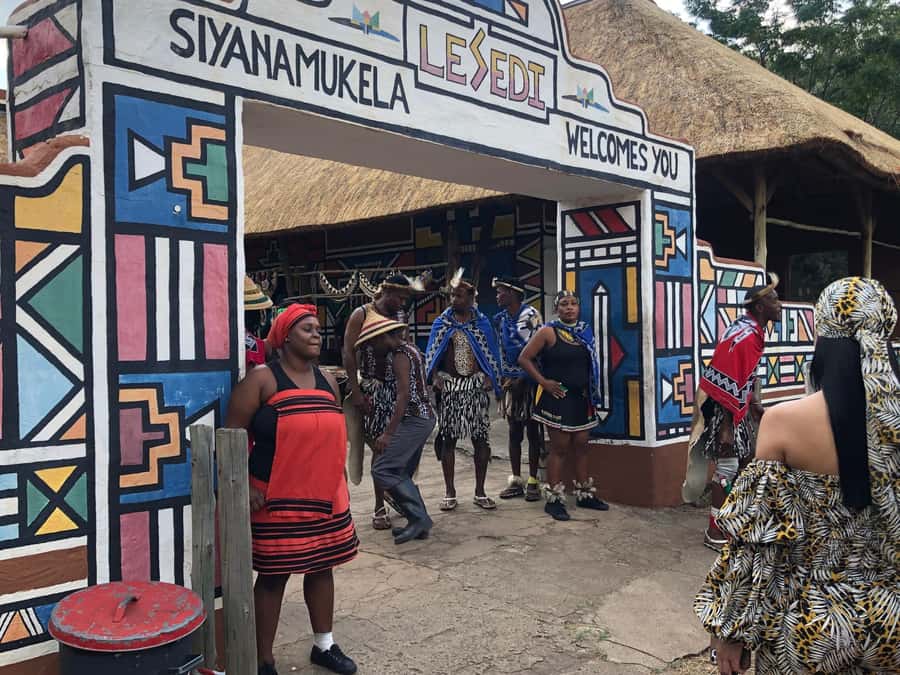
After the Ndebele introduction, a guide leads you through four more ethnic homesteads: Zulu, Basotho, Xhosa, and Pedi. The purpose is comparison. You move from one setting to another and see how homes, customs, stories, and visual details vary.
The Zulu section gives you one part of the country’s wide cultural picture. The Basotho homestead adds another style and another set of traditions. The Xhosa and Pedi sections complete the route, giving you five communities in all when combined with Ndebele.
I find this approach useful for visitors with limited time. A single village cannot explain every part of South Africa, but it can show you that the country’s cultural identity is made from distinct pieces. The guided format also gives you a chance to ask questions instead of trying to work out the meaning of each building alone.
The quality of the visit depends partly on how much you engage with the guide. Pay attention to the explanations, ask about the homesteads, and compare what you see from one section to the next. The buildings are the backdrop, but the interpretation is what turns them into something more useful.
The schedule includes sightseeing and a guided tour, but the supplied details do not give a precise minute-by-minute timetable for each homestead. Expect the visit to move at a planned pace. If you want long, unhurried photography sessions at every building, this may feel brisk.
Drums, Stories, and Traditional Dance
The performance side of the experience is a major reason to book it. You can feel the beat of drums, listen to stories, and watch traditional dances. The dancing is presented as part of the cultural program, not as a separate evening show detached from the village tour.
There is also an opportunity to take part in drumming. That small detail changes the mood. You are not simply sitting in an audience while performers work around you. You may find the drumming more memorable than the formal presentation because it gives you a physical connection to the rhythm.
The dances are entertaining, but they also need to be viewed in context. This is a cultural performance prepared for visitors, so it is polished and organized. I would treat it as an introduction to traditional music and movement, not as a complete picture of how dance functions in every community today.
Stories add another layer. The program uses spoken explanation alongside music and buildings, which helps keep the visit from becoming a collection of photo stops. If you are visiting with children or with family members who do not enjoy long historical talks, the changing format should help hold their attention.
Bring your camera if you want photographs, but remember that the point of the visit is more than collecting images of dancers and painted homes. Listen first, then take pictures when appropriate.
Something quite different:
- Johannesburg Hop-On Hop-Off City Tour with Soweto Option
★ 4.5 · 768 reviews - Full Day Ultimate Pilanesberg National Park Safari from Johannesburg or Pretoria
★ 4.5 · 718 reviews - Half-Day Tour of Soweto Tour
★ 4.5 · 712 reviews - Soweto: Walking Tour with a Local Guide and Lunch
★ 4.9 · 648 reviews
Nyama Choma and the African Buffet
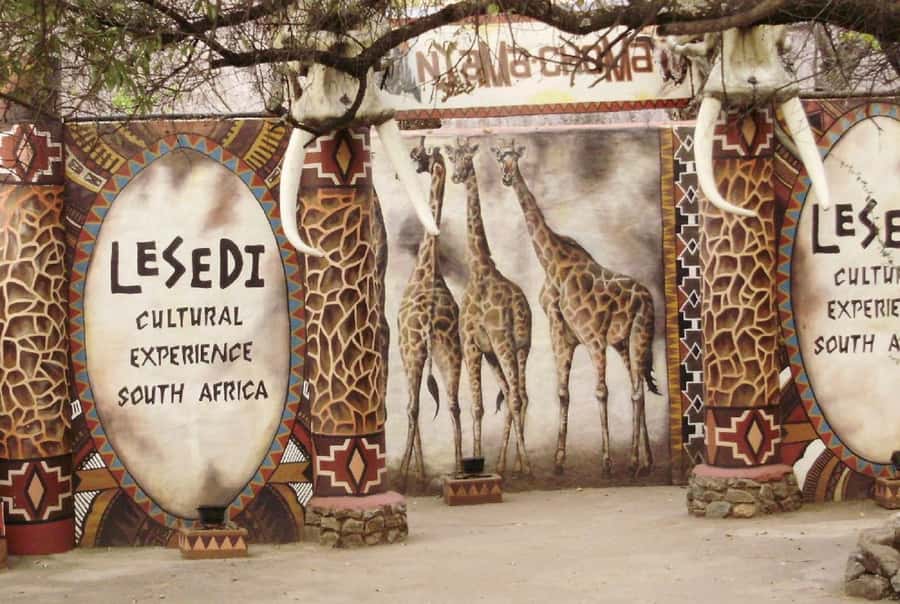
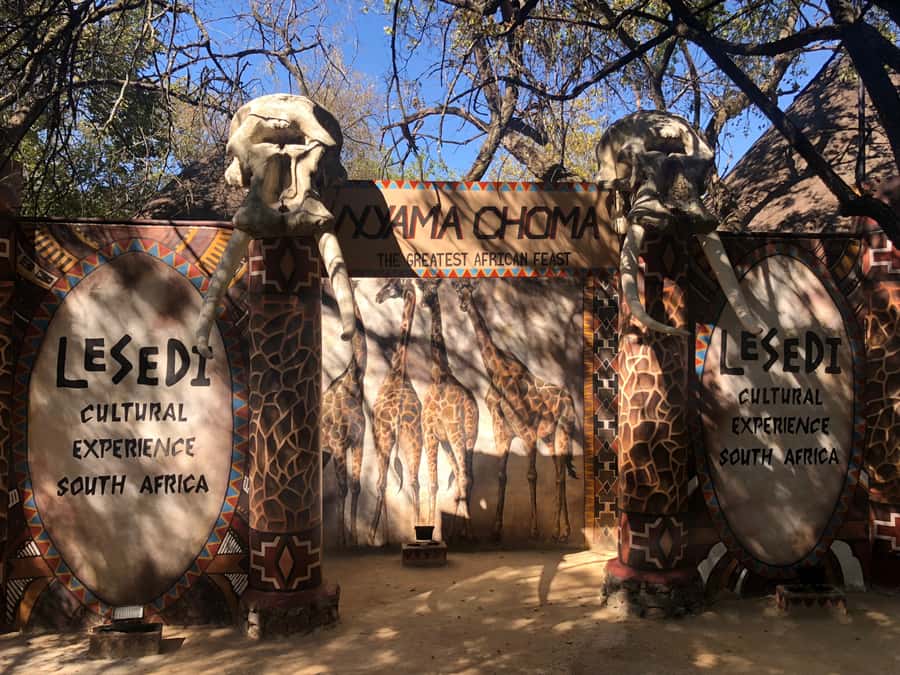
After the cultural activities, lunch is served at Nyama Choma Restaurant. The name refers to the Great African Feast, and the meal is built around a pan-African buffet rather than one narrow regional menu.
The restaurant seats 160 people and occupies three tiers. Its setting and decor are designed to continue the cultural theme of the day. You can expect a range of African dishes, with meat delicacies that may include ostrich and crocodile.
That food selection gives the lunch a sense of adventure. Ostrich is unusual for many visitors, and crocodile is an even bigger conversation starter. The buffet format also helps if your group has mixed tastes, since you can choose from several dishes rather than committing to one unfamiliar plate.
The meal is included in the price, which is important when judging value. A cultural attraction, transport, entrance fee, guide, and buffet can add up quickly when booked separately. The $174 cost is not a budget outing, but the included lunch makes it easier to understand what you are paying for.
I would not book this solely for the food. The meal is one part of a larger cultural program, and the menu details can vary. If you dislike trying unfamiliar dishes, you may find the buffet less exciting. If you enjoy tasting local and pan-African food, it adds real appeal.
The restaurant is described as offering warm, traditional service, but the most useful practical point is that lunch is already built into the day. You do not need to stop and organize a separate meal while moving between activities.
The Arts and Crafts Market
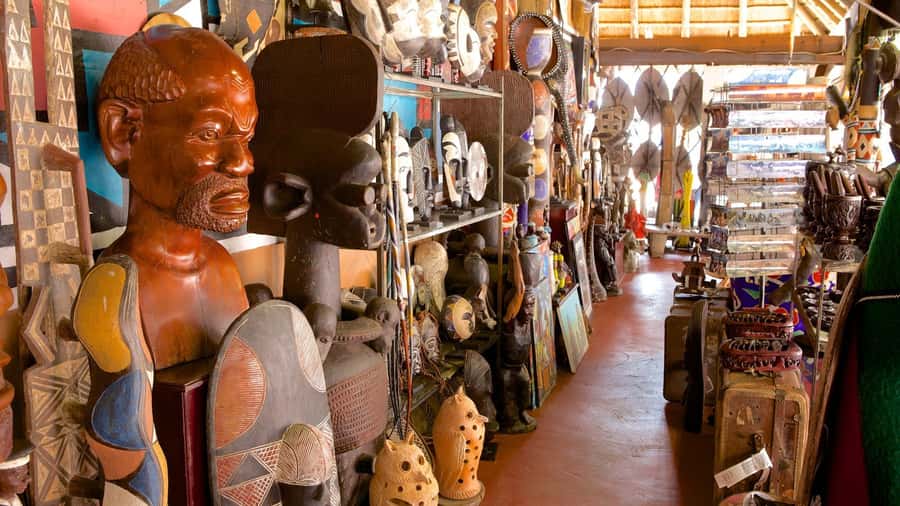
The schedule includes a visit to an arts and crafts market. This gives you time to browse souvenirs after the guided cultural program and lunch.
Curios are not included, so set aside extra money if you want to buy something. The market may be useful for finding a physical reminder of the experience, but you should treat shopping as optional. You are paying for the cultural visit and meal, not for a souvenir package.
This stop can also be a good place to slow down after the more active drumming and dancing. Still, shopping time is rarely the main reason to choose a cultural village. I would give it attention only after you have enjoyed the guided tour, stories, and food.
Pickup From Johannesburg, Sandton, Rosebank, or Pretoria
Transport is one of the stronger practical features. Pickup and return are available from hotels in Johannesburg, Rosebank, Sandton, and Pretoria. That saves you from arranging a separate taxi or rental car for a half-day trip outside the city.
The total duration is six hours. Since the village activities, lunch, sightseeing, and market visit account for about three hours, the remaining time is used for transport and the wider schedule. Your exact day will depend on your pickup location and the starting time available when you book.
The drive can also become part of the experience. Jason, a guide praised in the supplied feedback, answered questions on the way to Lesedi Cultural Heritage Centre and continued discussing South African history during the return trip. That is the kind of guide interaction that adds value without changing the formal itinerary.
The guide language is English. If you want to ask detailed questions, do so during the drive and between activities. A good question can turn a standard transfer into a useful orientation to the country.
Pickup is included, but confirm that your hotel falls within one of the named areas when checking availability. The available pickup points are Rosebank, Sandton, Johannesburg, and Pretoria, with return options to Johannesburg, Rosebank, Pretoria, and Sandton.
Is $174 a Fair Price?
At $174 per person, this is not a casual low-cost attraction. The price makes more sense if you value convenience and a complete half-day package.
You receive hotel transport, entrance, a guided cultural village tour, the dance and cultural activities, and a buffet lunch. You also have an English-speaking guide and return transport. If you had to arrange transport, admission, and food separately, the convenience would carry a clear value.
The cost is harder to justify if you are mainly interested in taking a few photographs or watching a short dance show. You are paying for a structured introduction to five traditions, not just for entertainment.
I also like that the schedule combines learning with food and performance. Long cultural explanations can become tiring, but the day changes pace several times. You move from multimedia history to buildings, then stories, dancing, drumming, lunch, and shopping.
The experience has a 4.5 rating from two recorded ratings, including one verified booking. That is a positive signal, but it is a small sample, so I would not treat the number as a guarantee. The most useful detail is the specific praise for Jason’s politeness, helpfulness, and ability to answer questions throughout the day.
Who Will Enjoy This Most?
I would recommend this experience to first-time visitors who want a broad introduction to South African cultures near Johannesburg. It suits you if you like having transport, meals, and activities organized in one booking.
Families may appreciate the mix of music, dancing, stories, food, and visual displays. The activity changes often enough to keep the day moving. It can also work well for visitors who have only a short stay in Gauteng and want more than a city-center sightseeing route.
Food-focused visitors will enjoy the chance to try African dishes, including unusual meat options such as ostrich and crocodile. The buffet also makes the meal less stressful for a group with different preferences.
I would be more cautious if you want a quiet, independent visit or a long, academic discussion of one community. The tour covers five traditions in one outing, so it gives you breadth rather than extended study of a single culture.
It is also worth remembering that a cultural village is a presentation. It can introduce traditions clearly, but it cannot represent every person within the Ndebele, Pedi, Xhosa, Basotho, or Zulu communities. Go ready to learn, while keeping a sensible distinction between a visitor experience and everyday life.
Should You Book This Cultural Experience?
Book it if you want a convenient, well-rounded cultural introduction outside Johannesburg. The strongest reasons are the five homesteads, live drumming and dancing, included buffet lunch, and hotel transport from the main Gauteng pickup areas.
The value improves if you are especially interested in food and guided interpretation. Jason’s attentive approach, including answering questions during both transfers, is another encouraging detail to look for when your guide is assigned.
Skip it if $174 feels too steep for a planned cultural show, or if you prefer spending a full day in one community rather than comparing several traditions in a few hours. For most first-time visitors based in Johannesburg, though, this is a practical way to add culture, music, stories, and African food to a city itinerary without complicated planning.
FAQ
Where is the cultural village located?
It is near Johannesburg in the Cradle of Humankind area of Gauteng, South Africa.
How long does the experience last?
The full experience lasts six hours. About three hours are allocated to lunch, the guided tour, sightseeing, the arts and crafts market, and the traditional dance show.
Which cultural traditions are presented?
The experience presents the Ndebele, Pedi, Xhosa, Basotho, and Zulu peoples.
Is lunch included?
Yes. A buffet-style lunch at Nyama Choma Restaurant is included in the price.
What food is served at the buffet?
The restaurant serves pan-African dishes and meat delicacies that can include ostrich and crocodile.
Where can pickup and drop-off take place?
Pickup is available from hotels in Rosebank, Sandton, Johannesburg, and Pretoria. Return options include Johannesburg, Rosebank, Pretoria, and Sandton.
Is the tour conducted in English?
Yes. The live tour guide language is English.
Just added in Johannesburg
- Soweto half day Tour★ 5.0 · 54 reviews
- Hiking In the Magaliesberg,Wildlife hike an hour fromJohannesburg★ 5.0 · 11 reviews
- Full-Day Apartheid Museum and Soweto Tour★ 5.0 · 10 reviews
- Full-Day Cradle of Human Kind and caves private★ 4.5 · 10 reviews
- Full day Soweto & Apartheid Museum Tour★ 5.0 · 3 reviews
- Pilanesberg National Park Safari in Open Vehicle from Johannesburg★ 5.0 · 6 reviews
- Full-Day Soweto Apartheid Museum & Johannesburg Tour★ 5.0 · 4 reviews
- Weekend in Johannesburg★ 5.0 · 2 reviews
Johannesburg Tours, compared.

Soweto /Johannesburg and Apartheid Museum Guided Full Day Tour
Read our review →Full Day Ultimate Pilanesberg National Park Safari from Johannesburg or Pretoria
Read our review →
Jo’berg in 1 Day: Soweto, Apartheid Museum & City Tour
Read our review →
Full-Day Tour with Soweto and Apartheid Museum
Read our review →
Browse the lists this tour appears in