
REVIEW · WHALE WATCHING
Durban: Durban: Whale and Dolphin Watching Boat Tour
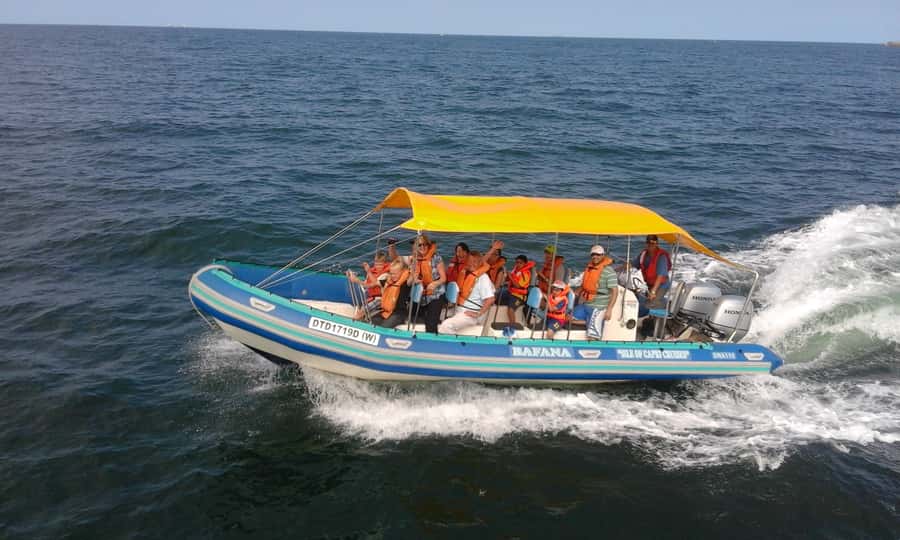
Whales turn a short boat ride into a story. This two-hour trip takes you from Wilson’s Wharf into the Indian Ocean, where humpback whales may breach, slap their tails, or travel with calves. I like the small 11-passenger boat and the chance to see dolphins, birds, fish, and other marine life in the same outing. The main drawback is simple: wildlife follows its own schedule, and summer is better for dolphins than whales.
I also like the guides’ strong personal touch. Skipper Bennie has earned special praise for his enthusiasm, patience, and skill at positioning the boat without crowding the animals. Calm weather can make a big difference, so treat the sea conditions as part of the deal, not a minor footnote.
In This Review
- Key points at a glance
- Setting out from Wilson’s Wharf
- Two hours toward the Mozambican Current
- Humpbacks from May through November
- Dolphins and the summer alternative
- The guide can make or break the outing
- What the boat ride feels like
- Is $102 a fair price?
- Who should book this Durban cruise?
- Should you book it?
- FAQ
- How long is the Durban whale and dolphin boat tour?
- Where does the tour meet?
- When is the best time to see humpback whales?
- Can I see dolphins all year?
- What animals might I see besides whales and dolphins?
- Is the tour suitable for people with mobility impairments?
- What should I bring?
- Can I swim with the whales or dolphins?
Key points at a glance
- Best whale season: Humpbacks pass Durban from May through November, with the strongest chance during the winter and spring months.
- Small boat setting: The usual vessel carries 11 passengers, giving you a close-to-the-water view and a better chance of hearing whales breathe when the sea is calm.
- Wildlife beyond whales: Dolphins can appear all year, while turtles, seabirds, fish, manta rays, orcas, and sharks are possible sightings.
- Guide quality matters: Skipper Bennie is praised for his lively commentary, animal knowledge, and respectful approach around whales.
- Weather shapes the trip: Light wind and small swells make viewing easier and the ride more comfortable.
- Bring your own basics: Food and drinks are not included, so pack water, sunscreen, a hat, and weather-ready clothing.
Setting out from Wilson’s Wharf
Your outing begins at the Isle of Capri Cruises office at Wilson’s Wharf Marina in Durban. The office is next to the Casadena Spur end of the complex, and you need to present your ticket there 30 minutes before departure. That early arrival matters because the boat schedule can shift with weather, passenger numbers, and vessel maintenance.
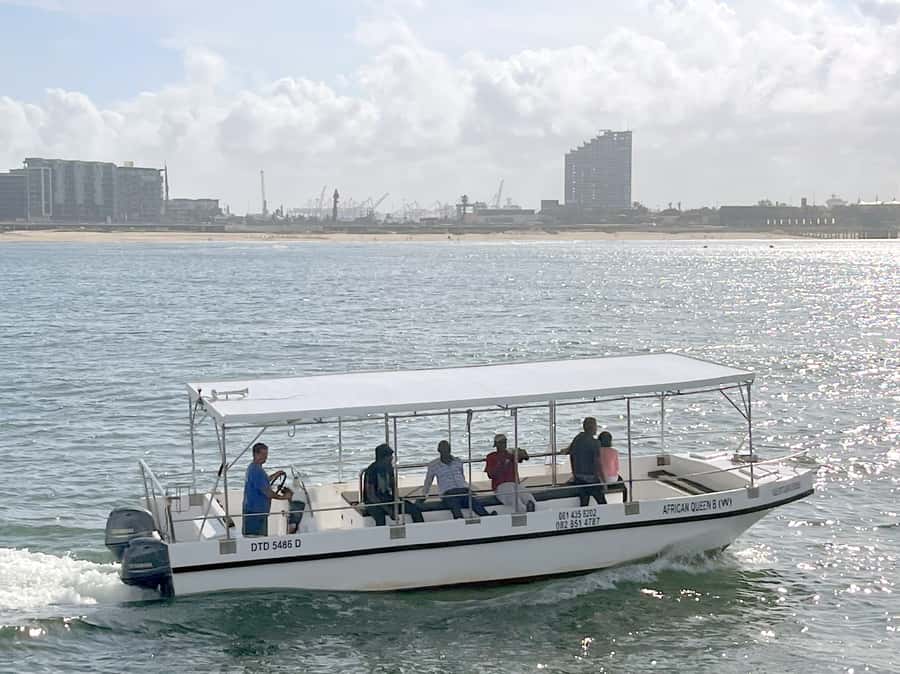
The marina is the practical starting point rather than part of the wildlife experience. You check in, meet the guide, and receive the final instructions before walking to the boat. The operator uses a pool of available vessels, so you may not board the exact boat pictured or expected. That sounds less tidy than a fixed-boat operation, but the reason is practical: several vessels help cover changing sea conditions and busy periods.
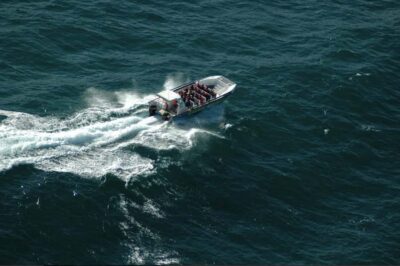
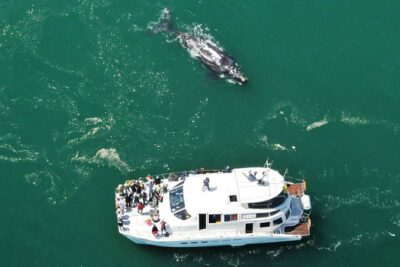
The standard boat carries 11 passengers. Two boats can also leave at overlapping times, which means the group arrangement may vary on your date. A small boat usually gives you a more direct view than a large sightseeing vessel, though it also means you feel the ocean’s movement more clearly.
The boat is registered with the South African Safety Authority as a suitable whale and dolphin watching vessel and has held one of Durban’s limited whale-watching permits since 2012. Those details matter because the trip is not simply a fast ride offshore. It operates within the local rules for approaching and observing marine animals.
More Boat Trips in Durban
- Durban: 30-Minute Harbor Boat Cruise
★ 4.7 · 665 reviews - Durban: 1-Hour Boat Cruise from Wilson’s Wharf
★ 4.7 · 496 reviews - Durban Point Waterfront: Luxury Canal Boat Cruise
★ 4.4 · 298 reviews
Two hours toward the Mozambican Current
Once underway, you travel out into open water toward the Mozambican Current. The skipper and crew sit behind the forward-facing passenger seats, giving you a clear view ahead. There is no fixed attraction or guaranteed wildlife stop. Instead, the crew searches the water and responds to what appears.
That makes the trip feel more like a real wildlife outing than a sightseeing cruise with a set script. You may spend time scanning the horizon, then suddenly hear a call to watch a particular patch of water. Whales surface briefly, so keeping your eyes moving is part of the fun.
The two-hour duration is well judged for a boat trip of this type. It gives the crew time to move beyond the shoreline, while keeping the outing short enough to fit into a day of sightseeing in Durban. It also limits the exposure to ocean motion compared with a much longer cruise, although you should still be comfortable on a moving boat before booking.
The route depends on weather and sea conditions. Wind and swell affect comfort, visibility, and the crew’s ability to reach productive waters. A September outing in calm conditions gave one passenger the rare pleasure of hearing whales breathe. Another visitor offered the clearest practical tip: choose a windless day with small swells if you can.
You cannot control the weather, of course. Still, checking the forecast before you go can help you decide whether to keep the booking or use the free cancellation option, which is available up to 24 hours in advance.
Humpbacks from May through November
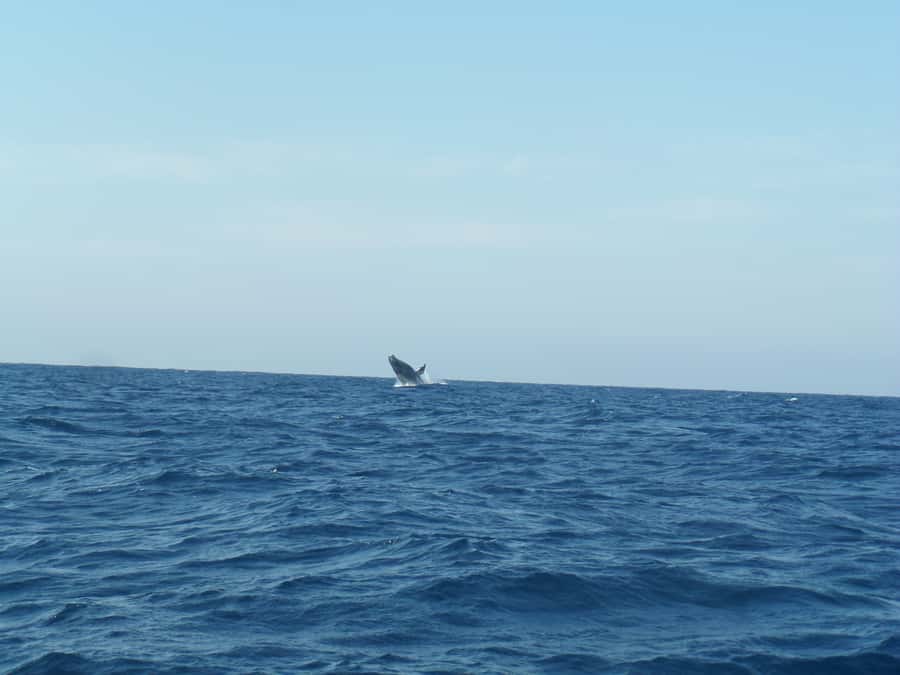
Humpback whales pass Durban from May to November as they move from the Southern Ocean toward warmer tropical waters for mating and giving birth. The winter months, especially June through August, offer the core whale-watching season, while September, October, and November can still produce excellent sightings.
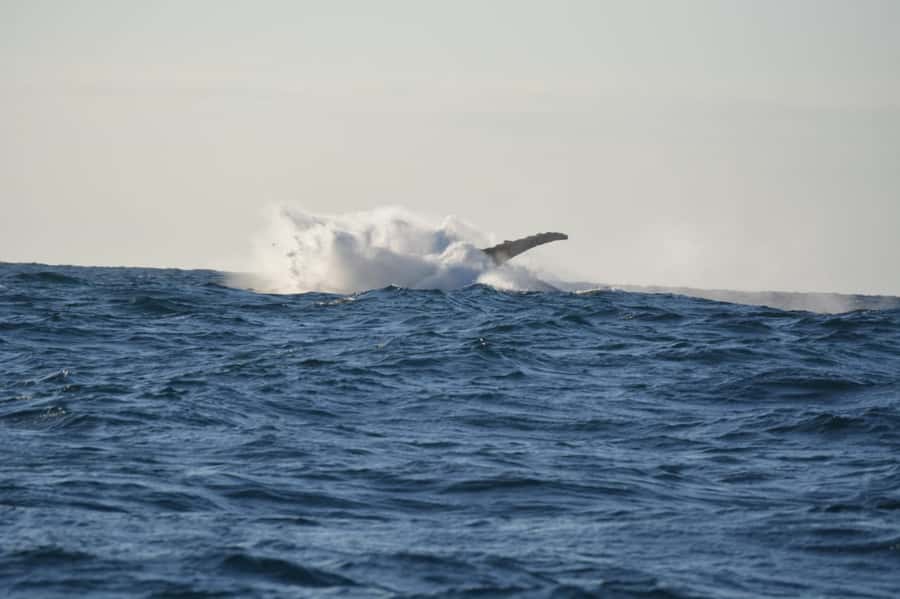
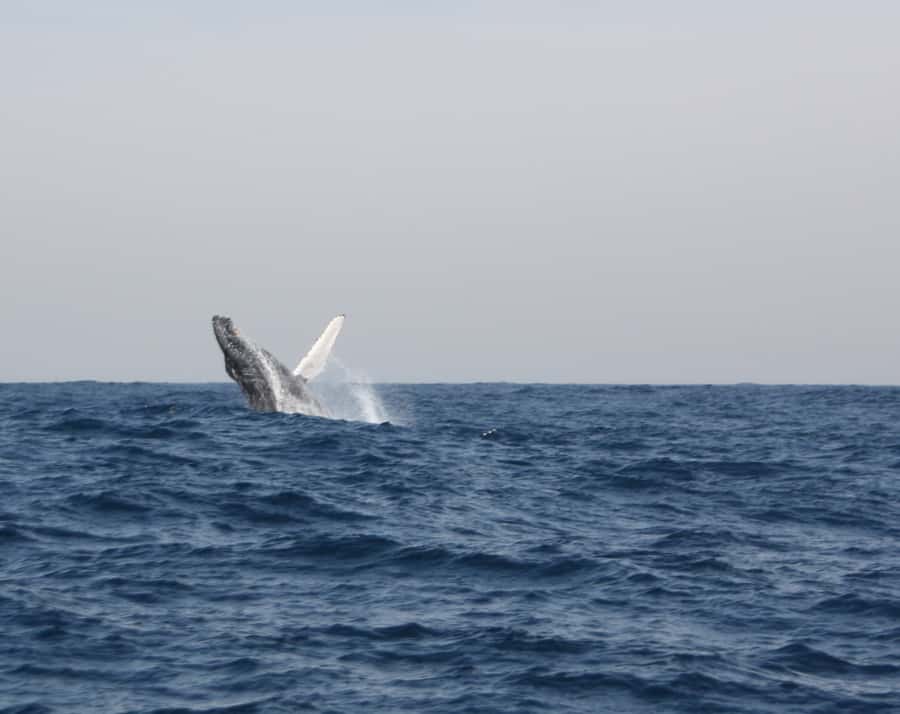
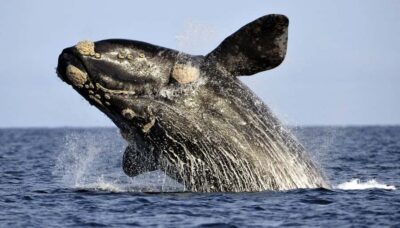
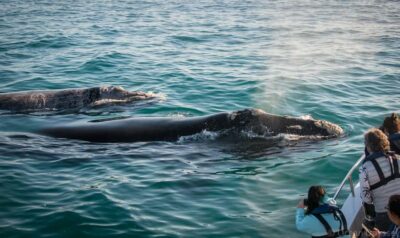
These whales can reach about 15 meters in length and weigh around 30 tons. Seeing that size in open water gives you a useful sense of scale that no aquarium or museum can match. The animal may appear as a dark back, a rising tail, or a sudden wall of water when it breaches.
You might see a whale traveling steadily, surfacing to breathe, or lifting its tail before sinking out of sight. If conditions and luck line up, you could watch a mother and calf together, a calf playing near an adult, or a full breach followed by several tail slaps.
The strongest recorded outings in the supplied feedback came late in the migration season. One October trip found seven whales, with three animals staying near the boat for about an hour and offering repeated breaches and tail slaps. That is not a promise for your departure, but it shows why November should not be dismissed as too late.
Another September trip produced six whales, including a mother and baby and male and female pairs. The guide went farther offshore after the first search near the coast, which led to the best sightings. This is an important detail: a quiet start does not always mean a quiet trip.
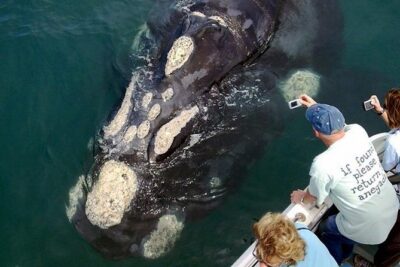
The guide’s approach also matters. The boat is operated to give you a good viewing position while respecting the animals’ behavior and space. That balance is better than a rushed chase. The best whale encounters are not simply about getting close. They are about watching natural behavior without turning the animals into a performance.
Dolphins and the summer alternative
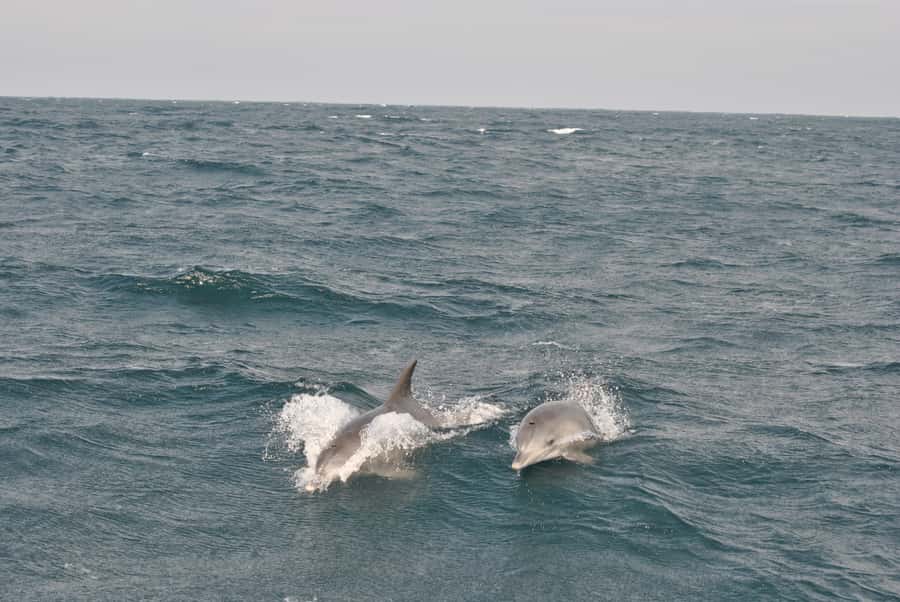
Dolphins are the more dependable year-round possibility. They may appear riding the swells, moving in groups, or playing near the boat. During the warmer summer months, humpback whales migrate elsewhere, so the trip becomes primarily a dolphin-watching outing with other marine life in the mix.
That seasonal difference should guide your expectations. If your main goal is humpback whales, book from June through November, with May as an early-season possibility. If you are visiting in summer, you are not booking a failed whale tour. You are booking a different open-ocean wildlife trip, focused on dolphins, fish, birds, and any other sightings that develop.
Dolphins do not need to appear on every departure either. One otherwise excellent whale trip produced no dolphins, while another saw many dolphins and a performing whale near the end. Nature does not read the timetable.
The wider list of possible sightings includes turtles feeding near the surface, seabirds, fish, manta rays, orcas, and sharks. Some of these encounters are occasional rather than expected. The mention of killer sharks may sound dramatic, but it should not be treated as a promise or the main purpose of the trip.
More Whale Watching Trips in Durban:
- Hermanus: Boat Based Whale Watching Experience
★ 4.4 · 1,180 reviews - Hermanus: Whale and Dolphin Watching Boat Trip
★ 4.6 · 807 reviews - Whale, Dolphin & Penguin Island Cruise
★ 5.0 · 687 reviews - From Cape Town: Hermanus Whale Watching Boat Trip
★ 4.4 · 378 reviews
The guide can make or break the outing
The guide is one of the strongest parts of this experience. Commentary covers whale behavior, life cycles, and physical characteristics, giving you more than a quick look at a passing animal. The supplied information lists English and Afrikaans as tour languages, while the inclusions also identify English and Zulu guide service.
Skipper Bennie receives particular praise. He took one early morning trip out even though only one booking had been made for that time slot. When the group was small, he started earlier and stayed out a little longer, creating more viewing time. That kind of flexibility depends on the day’s operation, so do not count on it, but it shows the value of an engaged skipper.
His enthusiasm also comes through in the way he works. On one trip, he tried to give the best possible viewing position while keeping a respectful distance from the whales. He also shared videos afterward, a thoughtful extra for anyone whose own camera missed a breach.
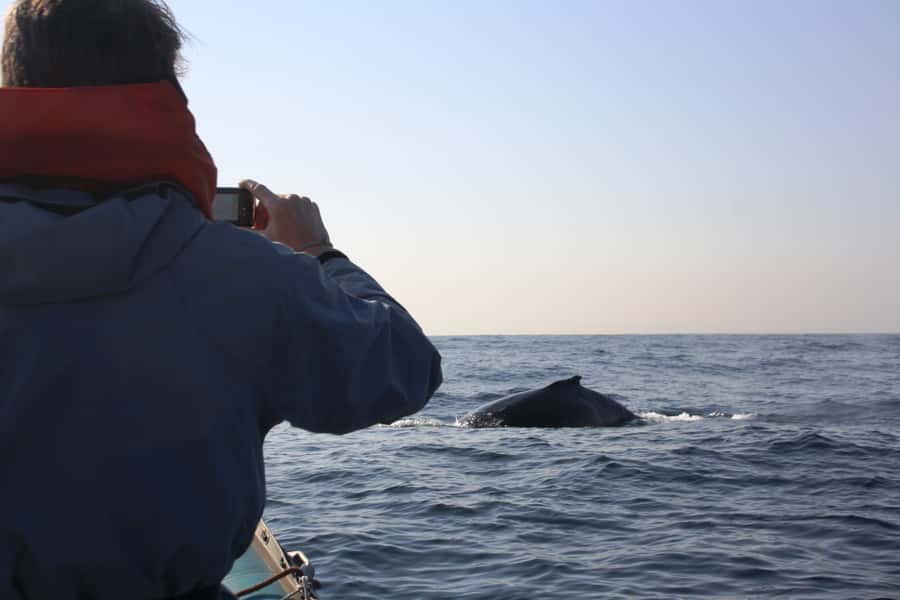
You should still bring your camera. A phone or small camera can capture the broad ocean scene, but a whale’s breach happens quickly and at a distance. Keep watching with your eyes instead of spending the entire trip behind a screen. The guide’s calls and gestures may be more useful than constant filming.
What the boat ride feels like
This is open-ocean sailing, not a gentle harbor cruise. The boat’s small size helps you feel close to the water, but it also makes wind and swell more noticeable. People with back problems, mobility impairments, or pregnancy should not book this activity. It is also not wheelchair-friendly and is not recommended for toddlers, with parents responsible for that decision.
Wear comfortable clothes and bring a scarf, hat, sunscreen, and water. Weather-appropriate layers are wise because the conditions on the water can feel different from those at the marina. Food and drinks are not included, so eat beforehand or carry what you need, within the operator’s rules.
Swimming is not permitted, and this is strictly a viewing experience. You do not enter the water or swim with the animals. That protects both you and the wildlife, while keeping the tour focused on observation from the boat.
Because the route is weather-dependent, the ride can vary from smooth and easy to more active. Calm seas improve both comfort and the chance of hearing whales surface. If you are prone to motion sickness, the boat’s movement is worth considering before you pay.
Is $102 a fair price?
At $102 per person, this is not the cheapest way to spend two hours in Durban. The price becomes easier to justify if you value a small group, an approved whale-watching vessel, a qualified guide, and the chance to see large marine animals in their natural environment.
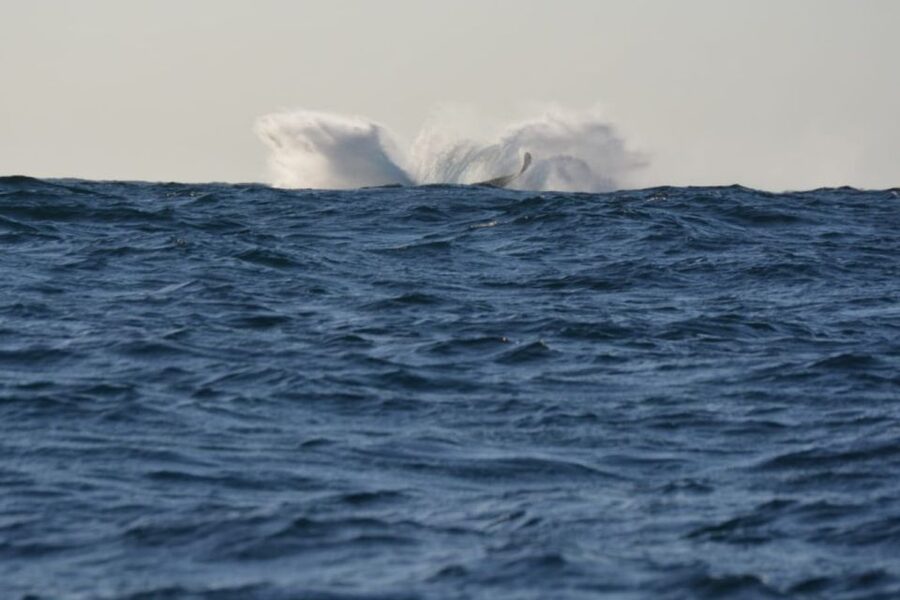
The strongest value comes when the crew finds whales and you get extended behavior, such as breaches, tail slaps, or time with a mother and calf. A trip that produces several whales can become one of the memorable highlights of a South African visit. A quiet sea with only distant sightings will feel less satisfying at the same price.
You are paying for the search as well as the sighting. No operator can guarantee whales, dolphins, or any other animal. The seasonal information gives you a sensible way to improve your odds, but it does not remove the natural uncertainty.
The two-hour length also helps with value. You are not committing an entire day, and you can combine the boat ride with other Durban plans. Just remember to allow extra time around the 30-minute check-in and the possibility of changing departure arrangements.
Who should book this Durban cruise?
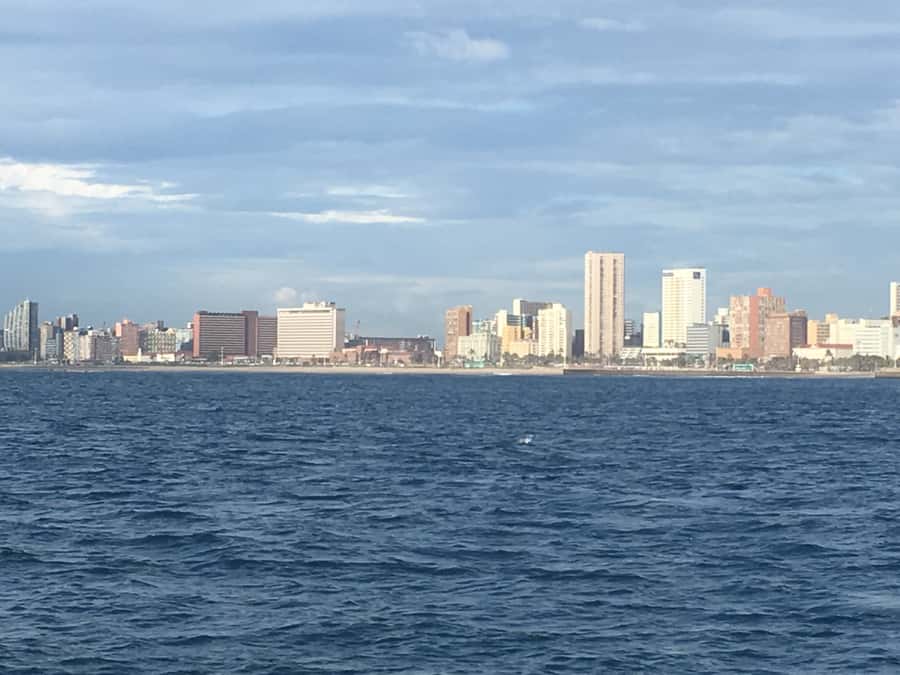
I would recommend this trip if you care about seeing whales in the wild and can accept a little uncertainty. It suits adults, photographers, wildlife fans, and anyone who prefers a small boat to a large group cruise.
It is especially appealing from June through November. October can still be excellent, as the late-season sightings show, while summer visitors should book with dolphins and general marine life as the main goal.
I would hesitate if you need a guaranteed attraction, dislike boat motion, or have a physical condition affected by open-ocean travel. You should also think twice if your schedule cannot handle weather changes, since the route depends on sea conditions.
Should you book it?
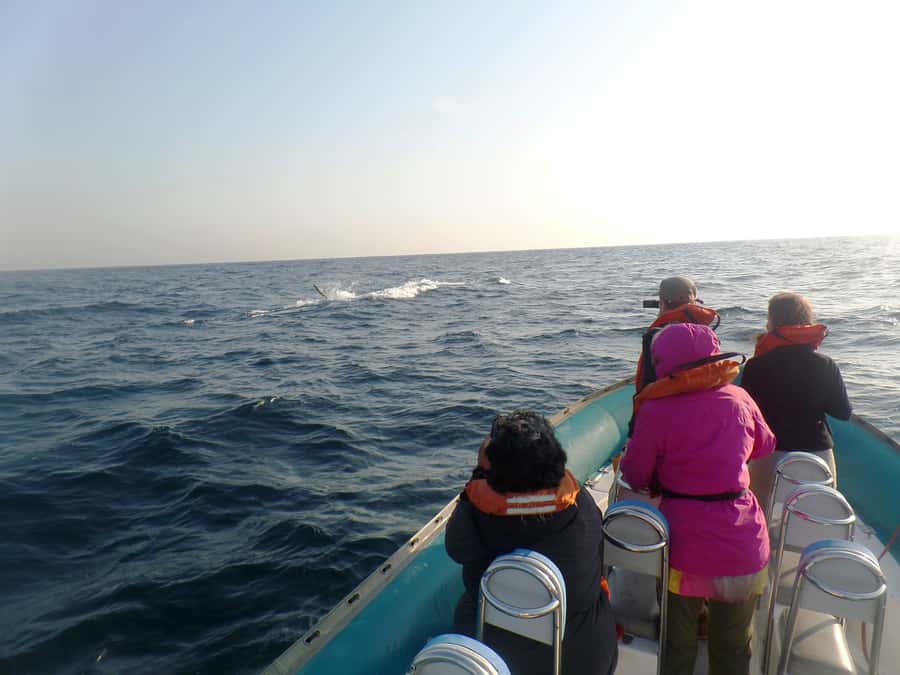
Book this tour if humpback whales are high on your Durban wish list and you are willing to let the ocean set the pace. The small boat, limited permit, and guide-led approach offer a more personal outing than a standard harbor ride.
For the best chance of a special day, aim for the whale season, check for light wind and small swells, arrive 30 minutes early, and bring layers, water, sunscreen, and a camera. If you visit in summer, book it as dolphin watching rather than whale watching. With those expectations in place, $102 can buy two memorable hours on the Indian Ocean.
FAQ
How long is the Durban whale and dolphin boat tour?
The cruise lasts two hours. Departure times vary, so check availability when choosing your date.
Where does the tour meet?
You meet at the Isle of Capri Cruises office at Wilson’s Wharf Marina, next to the Casadena Spur end of the complex. Present your ticket at the office or kiosk 30 minutes before departure.
When is the best time to see humpback whales?
Humpback whales pass Durban from May through November. The main winter whale-watching period runs from June through August, but sightings can continue into October and November.
Can I see dolphins all year?
Dolphins can be seen throughout the year, although sightings are never guaranteed. During summer, when humpback whales migrate elsewhere, the outing focuses on dolphins and other marine life.
What animals might I see besides whales and dolphins?
Possible sightings include turtles, fish, birds, manta rays, orcas, and sharks. The exact wildlife depends on the day, season, and sea conditions.
Is the tour suitable for people with mobility impairments?
No. The activity is not wheelchair-friendly and is not suitable for people with mobility impairments. It is also not recommended for pregnant women or people with back problems.
What should I bring?
Bring a hat, camera, sunscreen, water, comfortable clothes, a scarf, and clothing suited to the weather. Food and drinks are not included.
Can I swim with the whales or dolphins?
No. Swimming with the animals is not permitted. The experience is for viewing marine life from the boat.
Just added in Durban
- Zulu Cultural Experience – Tour to the village of iSithumba and PheZulu★ 5.0 · 4 reviews
- Zululand 5 Day Private Safari from Durban★ 5.0 · 4 reviews
- Zulu Oracle & Herbalist Experience Day Tour★ 5.0 · 2 reviews
- Valley of a Thousand Hills – Durban★ 5.0 · 3 reviews
- Drakensberg, Nelson Mandela Capture S & Howick Falls – 2 Day Tour from Durban★ 5.0 · 3 reviews
- Garden Route Durban to Cape Town via Addo National Park – 7 Days★ 5.0 · 15 reviews
- Durban: Go on Safari at 2 Game Reserves (Hluhluwe-Imfolozi) Pro Zeiss Binoculars★ 5.0 · 2 reviews
- Hluhluwe Imfolozi Game Reserve & Phezulu Safari Park from Durban★ 5.0 · 4 reviews
Whale Watching, compared.
Browse the lists this tour appears in