

REVIEW · APARTHEID MUSEUM TOURS
Full-Day Apartheid Museum and Soweto Tour
History here is never far away. This nearly eight-hour Johannesburg tour links the Apartheid Museum with Soweto, Mandela House, and the Hector Pieterson Museum, giving you a clear path from apartheid’s creation to the birth of democratic South Africa in 1994. I especially like the strong historical focus and the chance to see Soweto beyond a quick drive-by. The main consideration is the long, serious nature of the day, with little room for a light sightseeing pace.
The small group, capped at 12 people, should make the outing more personal than a large coach trip. I also like that the guide may adjust the conversation to your questions. One guide praised in the feedback is KG, also called Kilogram, who is known for humor, clear explanations, and careful answers when he does not immediately know something.
In This Review
- Key points to know before booking
- Why this Johannesburg tour works as an introduction
- Two hours inside the Apartheid Museum
- Three hours to understand Soweto
- Mandela House and the personal scale of history
- The Hector Pieterson Museum and Memorial
- KG’s guide style and the small-group setup
- Price, transport, and what the $86.72 covers
- Who should book this experience
- Should you book the Apartheid Museum and Soweto tour?
- FAQ
- How long does the tour last?
- Where does the tour begin?
- What sites are included in the itinerary?
- Is admission included?
- Is lunch included?
- How many people can join the tour?
- Can I cancel for a full refund?
Key points to know before booking
- A full day of South African history: The schedule lasts about 7 hours and 55 minutes, connecting Johannesburg’s origins, apartheid, resistance, and democracy.
- The Apartheid Museum anchors the day: About two hours are set aside, with admission included.
- Soweto gets real time: You spend roughly three hours learning about township life, social conditions, and local history.
- Mandela House remains in its original state: The 40-minute visit gives you a direct connection to Nelson Mandela’s family life in Soweto.
- The Hector Pieterson Museum explains a turning point: The 45-minute stop honors students killed during the 1976 protest over the forced use of Afrikaans.
- Small-group transport keeps things manageable: Pickup is offered from Sandton in an air-conditioned vehicle, with the group limited to 12.
Why this Johannesburg tour works as an introduction
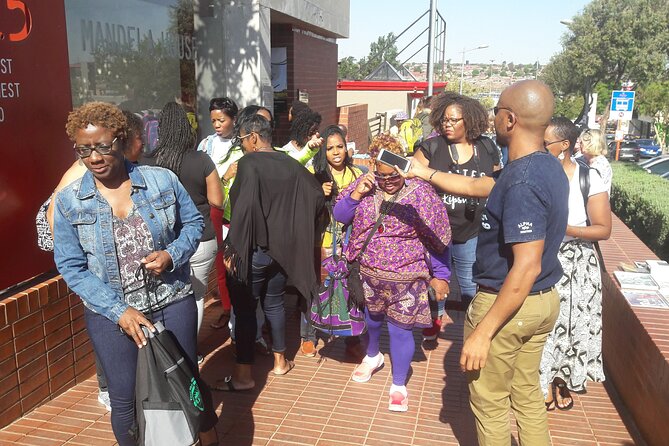
Johannesburg can be difficult to understand if you see only its modern center, shopping districts, and high-rise business areas. This tour gives you a historical frame for the city and the country, then connects that story to real places in Soweto.
The route begins with apartheid as a political and social system, then moves into the townships where its effects shaped daily life. From there, Mandela House and the Hector Pieterson Museum put human faces and specific events onto a subject that can otherwise feel abstract.
I like this structure because it avoids treating Soweto as a simple photo stop. You get time to consider how townships were formed, how people lived under unequal laws, and how resistance developed. The final message is not that the past has disappeared, but that South Africa reached democracy in 1994 without the catastrophic civil war many feared.
That is a lot to cover in one day. You should expect a serious educational outing rather than a relaxed city tour with a few historical notes. If you want Johannesburg’s history explained in one connected experience, the pace makes sense. If you prefer unstructured wandering, almost eight hours may feel demanding.
More Museums in Johannesburg
- Soweto /Johannesburg and Apartheid Museum Guided Full Day Tour
★ 5.0 · 932 reviews - Jo’berg in 1 Day: Soweto, Apartheid Museum & City Tour
★ 4.8 · 524 reviews - Johannesburg: Full-Day Tour with Soweto and Apartheid Museum
★ 4.8 · 478 reviews
Two hours inside the Apartheid Museum
The Apartheid Museum is the strongest foundation for the day. You have about two hours inside, and the entrance is included in the tour price.
The museum explains how apartheid took hold, how racial separation was enforced, and what happened during the years when the system controlled nearly every part of life. The focus is not limited to political leaders. You are asked to consider the damage done to ordinary people and the wider effect on South African society.
This opening stop matters because it gives you the facts needed to understand the rest of the route. When you later visit Soweto, the township is not presented as an isolated place. You can connect its social conditions to the laws, removals, restrictions, and unequal standards that shaped it.
Two hours is useful, but it is not enough to examine every part of a major museum at a slow pace. I would treat the visit as a guided foundation rather than a final word on apartheid. Keep your attention on the major sequence: the establishment of the system, its worst abuses, resistance to it, the process that ended it, and the difficult work of building a new South Africa.
The museum is also where the day takes its heaviest emotional turn. The material concerns atrocities committed during apartheid, so you should be prepared for a sober morning. The value is in facing that history directly, not softening it into a handful of famous names and dates.
Three hours to understand Soweto
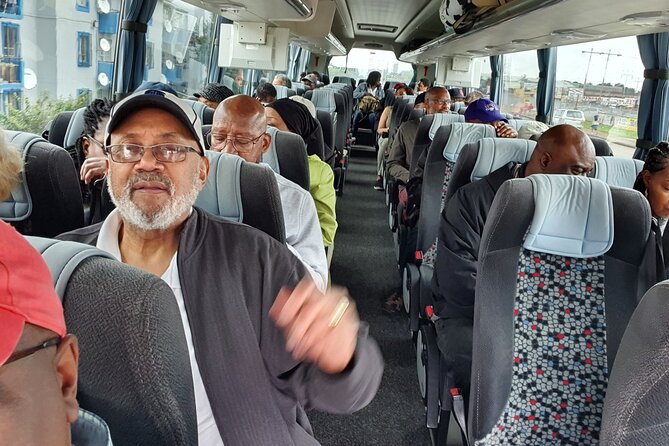
The afternoon is largely devoted to Soweto, with about three hours allocated to the township and its history. That is one of the tour’s best features because it gives you time to move beyond a quick look from a vehicle window.
Soweto is presented through its origins, social standards, and the experiences of people who lived under apartheid’s unequal system. The exact balance between driving, commentary, and time at particular places is not specified, so you should expect the guide to shape the afternoon around the group and the day’s conditions.
I appreciate the chance to consider township life as more than a symbol of hardship. The tour’s purpose is to explain how these communities developed and how they functioned socially, while also showing the pressures created by apartheid. That wider view helps you avoid a shallow before-and-after story.
This part can also be the most personal. A well-informed guide can explain what the broad historical terms meant in everyday life, and KG’s feedback suggests that his style includes humor alongside concise, relevant information. His ability to research an answer when a question catches him off guard is useful on a subject with many details and competing interpretations.
You should approach Soweto respectfully. It is a lived-in community, not an open-air museum. Listen carefully, avoid treating people or homes as scenery, and allow the guide to explain where photography is appropriate. The supplied details do not promise a particular meal, walking route, or meeting with residents, so do not book this expecting a staged local performance.
Mandela House and the personal scale of history
The 40-minute visit to Mandela House provides a change of scale. After learning about laws, institutions, and national conflict, you see the home where Nelson Mandela lived with his family in Soweto.
The house has not been altered and remains in its original state, according to the tour information. That detail gives the stop its appeal. You are not simply looking at a monument built to honor Mandela. You are seeing the domestic setting connected to an important period of his life.
Forty minutes is enough for a focused visit, but it is not an extended museum session. Keep your expectations practical: this is one stop within a packed day, not a separate half-day tour of Mandela’s life.
You may also have the chance to buy food in the area around the house. Lunch is not included in the $86.72 price, but the tour offers options after the museum, ranging from local restaurants to a meal in Soweto. Since no fixed restaurant or menu is specified, bring a flexible attitude and confirm the lunch plan with the guide.
I like having lunch choices connected to the route rather than being sent back to a generic hotel district. Still, budget extra for food. The tour price covers the air-conditioned vehicle and Apartheid Museum entrance, while lunch costs more.
More Soweto tours:
- Johannesburg: Hop-On Hop-Off Bus with Optional Soweto Tour
★ 4.6 · 985 reviews - Johannesburg Hop-On Hop-Off City Tour with Soweto Option
★ 4.5 · 768 reviews - Half-Day Tour of Soweto Tour
★ 4.5 · 712 reviews - Soweto: Walking Tour with a Local Guide and Lunch
★ 4.9 · 648 reviews
The Hector Pieterson Museum and Memorial
The 45-minute stop at the Hector Pieterson Museum and Memorial focuses on the students who were shot and killed by apartheid police during protests against the forced use of Afrikaans.
This is a particularly important stop because it shows how education policy became a flashpoint for much wider resistance. The issue was not simply which language appeared in a classroom. It represented the authority of an oppressive system and the demand for dignity and control over daily life.
The memorial honors the young people who lost their lives. The visit adds a specific event to the broader account you receive at the Apartheid Museum, helping you understand how protest, state violence, and public anger pushed South Africa toward a larger reckoning.
Forty-five minutes requires concentration. You will not have time for a leisurely visit to every display, so listen closely to the explanation and use the stop to connect the events to what you learned earlier in the day. The subject is painful, but the historical value is considerable.
KG’s guide style and the small-group setup
The guide can make or break a history tour, and KG receives especially strong praise for his approach. He is described as funny, well-informed about Johannesburg, and able to present material in a concise, relevant way. One unusual strength is his willingness to research an answer rather than pretend to know everything.
That matters here. Apartheid and South African history involve political, social, and personal questions, and you may want to ask about details not covered in the main presentation. A guide who welcomes questions can turn a standard route into a more useful conversation.
The group maximum is 12 people. That is small enough to avoid the feel of a packed coach and should make it easier to hear the guide and ask questions. The group size is not a guarantee that you will have a private tour, though. One booking resulted in a solo outing, but you should regard that as a possibility rather than something promised.
A small group also helps with timing. You are less likely to spend long periods waiting for large numbers of people to board or gather. On a day with four substantial stops, that can preserve valuable minutes.
Price, transport, and what the $86.72 covers
At $86.72 per person, this is not the cheapest way to see Johannesburg. The value comes from combining transportation, a nearly eight-hour schedule, a guide, and several major historical sites in one booking.
The air-conditioned vehicle is important in practical terms. You are moving between Sandton, the museum, and Soweto over a full day, so having organized transport is easier than trying to arrange each section independently. Pickup is offered from Sandton, and the tour ends back at the meeting point.
The included Apartheid Museum entrance improves the value. The itinerary also identifies admission as included for Mandela House and the Hector Pieterson Museum, so confirm the exact inclusions when booking if the final price matters closely to your budget. Lunch is not covered.
The tour is booked an average of 34 days ahead, which suggests that planning early is sensible, especially if you have fixed Johannesburg dates. You receive confirmation at booking, and free cancellation is available until 24 hours before the start time. If you cancel later, the payment is not refunded, and changes made inside that window are not accepted.
The experience requires a minimum number of participants. If that minimum is not reached and the operator cancels, you are offered another date or experience, or a full refund.
Who should book this experience

I would recommend this tour to you if you want context before exploring Johannesburg on your own. It suits first-time visitors, people with one free day in the city, and anyone who wants Soweto explained within the wider story of South Africa.
It is also a good choice for visitors who prefer a guide-led day. The schedule is organized, transportation is provided, and the small group should leave room for questions. South Africans can find value here too. One participant who grew up in South Africa said the outing showed places they had never seen and taught them things they did not know.
You may want a different plan if your priority is shopping, food, nightlife, or a gentle scenic outing. The day is history-heavy, emotionally serious, and tightly structured. You should also be comfortable with an itinerary that includes difficult material about state violence and loss.
Most people can participate, and service animals are allowed. The tour is near public transportation, but the stated starting point is Sandton and the activity returns there, so check that this location fits your accommodation plans.
Should you book the Apartheid Museum and Soweto tour?
Book it if you want one efficient day that explains Johannesburg through apartheid, resistance, Soweto, Mandela, and the move to democracy. The strongest reasons are the well-connected itinerary, the small group, and the chance to spend real time in Soweto rather than simply passing through.
The $86.72 price is reasonable if you value a guide, transport, and included admissions. Add money for lunch, and allow yourself time to process the subject matter. I would book early, especially since the experience is often reserved more than a month ahead.
Skip it only if you want a light sightseeing day or prefer to explore each site independently. For a first serious introduction to Johannesburg and South Africa’s recent past, this is a thoughtful and well-focused choice.
FAQ
How long does the tour last?
The tour lasts approximately 7 hours and 55 minutes.
Where does the tour begin?
Pickup is offered from Sandton, South Africa. The activity ends back at the meeting point.
What sites are included in the itinerary?
The tour visits the Apartheid Museum, Soweto, Mandela House, and the Hector Pieterson Museum and Memorial.
Is admission included?
Admission to the Apartheid Museum is included. The itinerary also states that admission is included for Mandela House and the Hector Pieterson Museum and Memorial.
Is lunch included?
No. Lunch is not included in the tour price, but local restaurant options and the possibility of eating in Soweto are offered after the Apartheid Museum visit.
How many people can join the tour?
The tour has a maximum group size of 12 people.
Can I cancel for a full refund?
Yes. You can cancel at least 24 hours before the experience start time for a full refund. Cancellations or changes made less than 24 hours before the start time are not accepted for a refund.
More Apartheid Museum Tours
- Full-Day Soweto, Apartheid Museum and Lunch Tour
★ 5.0 · 410 reviews - Half Guided Day Tour of Soweto And Apartheid Museum
★ 5.0 · 356 reviews - Ultimate Johannesburg Soweto Experience with Apartheid Museum
★ 5.0 · 313 reviews - Soweto: Hop-On Hop-Off Bus, City Tour and Apartheid Museum
★ 4.5 · 250 reviews
Just added in Johannesburg
- Soweto half day Tour★ 5.0 · 54 reviews
- Hiking In the Magaliesberg,Wildlife hike an hour fromJohannesburg★ 5.0 · 11 reviews
- Full-Day Cradle of Human Kind and caves private★ 4.5 · 10 reviews
- Full day Soweto & Apartheid Museum Tour★ 5.0 · 3 reviews
- Pilanesberg National Park Safari in Open Vehicle from Johannesburg★ 5.0 · 6 reviews
- Full-Day Soweto Apartheid Museum & Johannesburg Tour★ 5.0 · 4 reviews
- Weekend in Johannesburg★ 5.0 · 2 reviews
- Exclusive Safari Flight★ 5.0 · 16 reviews
Apartheid Museum Tours, compared.

Soweto /Johannesburg and Apartheid Museum Guided Full Day Tour
Read our review →
Jo’berg in 1 Day: Soweto, Apartheid Museum & City Tour
Read our review →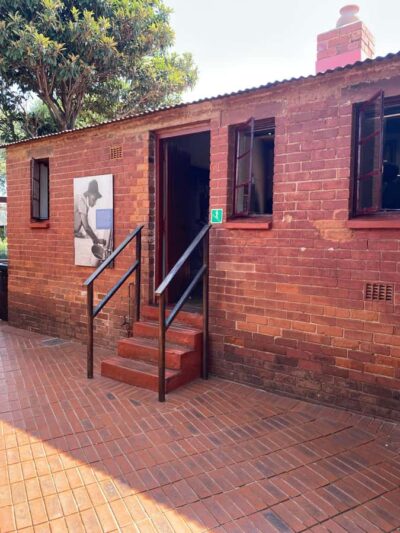
Full-Day Tour with Soweto and Apartheid Museum
Read our review →
Full-Day Soweto, Apartheid Museum and Lunch Tour
Read our review →
Half Guided Day Tour of Soweto And Apartheid Museum
Read our review →
Ultimate Johannesburg Soweto Experience with Apartheid Museum
Read our review →
Hop-On Hop-Off Bus, City Tour and Apartheid Museum
Read our review →
Johannesburg and Soweto Apartheid Full Day Tour w/Lunch
Read our review →Browse the lists this tour appears in