
REVIEW · CITY TOURS
Johannesburg City Walking Excursion
Johannesburg rewards curious walkers. This guided route connects Braamfontein, Newtown, Gandhi Square, and Maboneng, giving you a useful look at the city’s past and present rather than a quick drive past its landmarks. I like the focus on local stories and the chance to see Joburg’s street art, galleries, courts, markets, and working districts in one outing.
I also like that the tour includes a local lunch and transportation during the experience, which adds value to the $40 price. The main consideration is safety and reliability: a local guide is especially important on this route, and one very poor report described a no-show, so I would confirm the meeting details before setting out.
In This Review
- Key points to know before walking
- Starting in Braamfontein at Wing Republic
- Braamfontein to Newtown and the Nelson Mandela Bridge
- Newtown’s theatre, square, and music culture
- Workers Compound and the laws behind labor migration
- Ferreira Market, Chancellor’s House, and the courtroom story
- Main Street, Gandhi Square, and Johannesburg’s industry
- Carlton Centre and African art at ABSA Gallery
- Maboneng, street art, and the final coffee stop
- What the $40 price covers
- Safety, comfort, and the practical details
- Who will enjoy this Johannesburg walk?
- Should you book the Johannesburg City Walking Excursion?
- FAQ
- Where does the Johannesburg City Walking Excursion start?
- Where does the tour end?
- What locations are included on the walking route?
- Is lunch included?
- Is transportation included?
- Are entry tickets included?
- Is the tour suitable for wheelchair users?
Key points to know before walking
- The route crosses several central districts: You walk from Braamfontein through Newtown, Ferreira Market, Gandhi Square, Carlton Centre, and Maboneng.
- The focus is history with present-day context: Expect discussion of immigration laws, labor, apartheid-era conflict, law, business, music, and art.
- Nelson Mandela and OR Tambo feature prominently: You visit Chancellor’s House, where they worked as attorneys.
- Street art is part of the experience: Maboneng provides the final look at Johannesburg’s current art scene and local artists.
- A local lunch is included: That helps the $40 cost feel more reasonable, especially since transport during the tour is also included.
- You need to be comfortable walking: The route is not suitable for wheelchair users, and comfortable shoes are essential.
Starting in Braamfontein at Wing Republic
The outing begins at Wing Republic, identified by a restaurant with a beautiful black and white artwork painted on it. That visual clue matters, because the meeting instructions are less exact than a formal street address. I would arrive early, keep the guide’s contact details handy, and make sure you can identify the artwork before the group sets off.
The opening briefing gives you an overview of the route and an introduction to Johannesburg’s story. This is useful because Joburg can feel like a collection of separate districts unless someone explains how the parts connect.
Johannesburg’s development has been tied to mining, labor, migration, politics, and economic power. The guide’s job is not simply to point out buildings, but to explain why the city has been central to so many of South Africa’s conflicts and how those pressures helped shape a diverse modern country.
The walk begins in Braamfontein and heads toward Newtown. You should expect an urban walk rather than a polished sightseeing circuit. That is part of the appeal, but it also means you need sensible clothing, sun protection, and awareness of your surroundings.
More Walking Tours in Johannesburg
- Soweto: Walking Tour with a Local Guide and Lunch
★ 4.9 · 648 reviews - Soweto Walking Tour with Lunch
★ 5.0 · 288 reviews - Johannesburg: Local Food Tasting Guided Walking Tour
★ 4.7 · 192 reviews
Braamfontein to Newtown and the Nelson Mandela Bridge
The first major stretch connects Braamfontein with Newtown, including a view of the famous Nelson Mandela Bridge. The bridge is more than a photo stop. It gives you a strong visual marker between parts of central Johannesburg and links the sightseeing experience to Mandela’s place in the national story.
A local guide adds value here because a bridge alone does not explain a city. You get the chance to ask how different districts function today, how the center has changed, and why some areas carry such political and cultural weight.
This portion is also a good test of your walking stamina. The route covers several neighborhoods and stops, so wear shoes that can handle a full day on pavement. A hat, sunglasses, biodegradable sunscreen, water, and a power bank all make practical sense. The tour goes ahead in poor weather, so pack a light jacket and be prepared for changing conditions.
Newtown’s theatre, square, and music culture
In Newtown, the route visits the Market Theatre and Mary Fitzgerald Square. These stops shift the emphasis from political history to culture, especially South African music and art.
The Market Theatre is an important place to discuss how artists have responded to the country’s political pressures. Mary Fitzgerald Square adds a public space to that story. Together, they help show that Johannesburg’s history is not only found in government buildings and courtrooms. It also lives in performance, protest, music, and public gathering.
I like this part of the route because it gives the walk some emotional range. You are not only hearing about hardship or conflict. You are also seeing how artists have helped people express identity and challenge authority.
Do not expect a long indoor museum visit here. Entry tickets are not included, so the experience appears to focus mainly on seeing the locations and hearing the guide’s explanation. If you want formal access to any paid attraction, you would need to budget separately.
Workers Compound and the laws behind labor migration
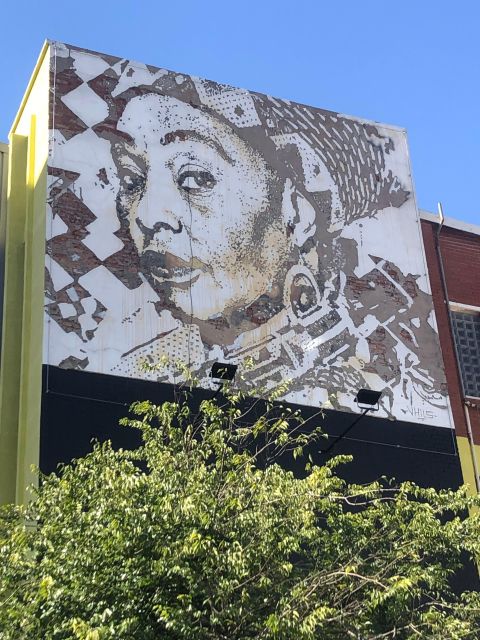
The walk continues to the Workers Compound, followed by an explanation of South Africa’s Labourers Immigration Laws. This is one of the most important educational sections of the route.
Johannesburg’s mining economy depended on labor, and laws controlling the movement and residence of workers affected families, communities, and the growth of the city. Seeing the Workers Compound while hearing about those rules helps turn a complicated subject into something connected to a real place.
This stop may feel more serious than the street art and bridge views, but that is precisely its value. You are given a chance to understand how economic systems and government laws shaped everyday life for South Africans.
The route also includes a visit to the Science Discovery Centre. The information provided does not specify what exhibits you will see or whether an entry fee applies, so I would treat this as a planned stop rather than assume a full museum visit is included. Since entry tickets are excluded, ask your guide about any admission before paying.
Something quite different:
- From Johannesburg: Pilanesberg Nature Reserve Game Safari
★ 4.8 · 1,327 reviews - Johannesburg: Hop-On Hop-Off Bus with Optional Soweto Tour
★ 4.6 · 985 reviews - Soweto /Johannesburg and Apartheid Museum Guided Full Day Tour
★ 5.0 · 932 reviews - Johannesburg Hop-On Hop-Off City Tour with Soweto Option
★ 4.5 · 768 reviews
Ferreira Market, Chancellor’s House, and the courtroom story
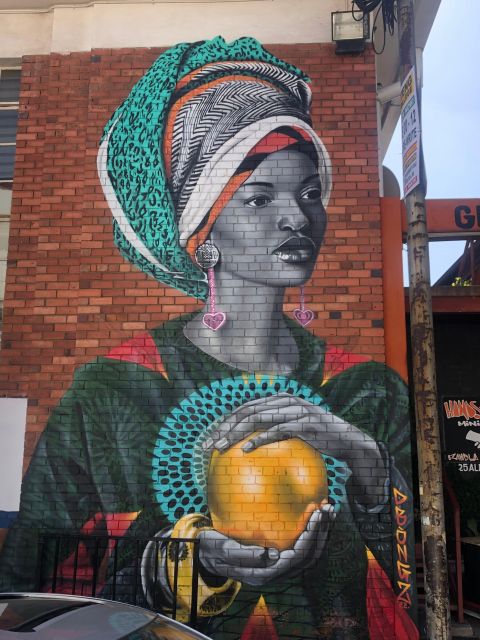
Next comes Ferreira Market and Chancellor’s House. The market adds another layer to the city, showing Johannesburg as a place of trade and daily work rather than only a collection of historic sites.
Chancellor’s House is one of the strongest stops for anyone interested in Nelson Mandela and Oliver Reginald Tambo. The two men worked there as attorneys, and the visit gives you a more grounded view of Mandela’s life before he became the globally known political figure.
I value this kind of stop because it places major historical figures in an ordinary professional setting. Instead of seeing only statues or official memorials, you connect their story to a workplace and to the legal struggles of the period.
The route also passes the magistrate court. That fits naturally with the discussion of law, rights, and the unequal systems that shaped South Africa. Your guide can help connect the courthouse to the people and communities discussed earlier at the Workers Compound.
Main Street, Gandhi Square, and Johannesburg’s industry
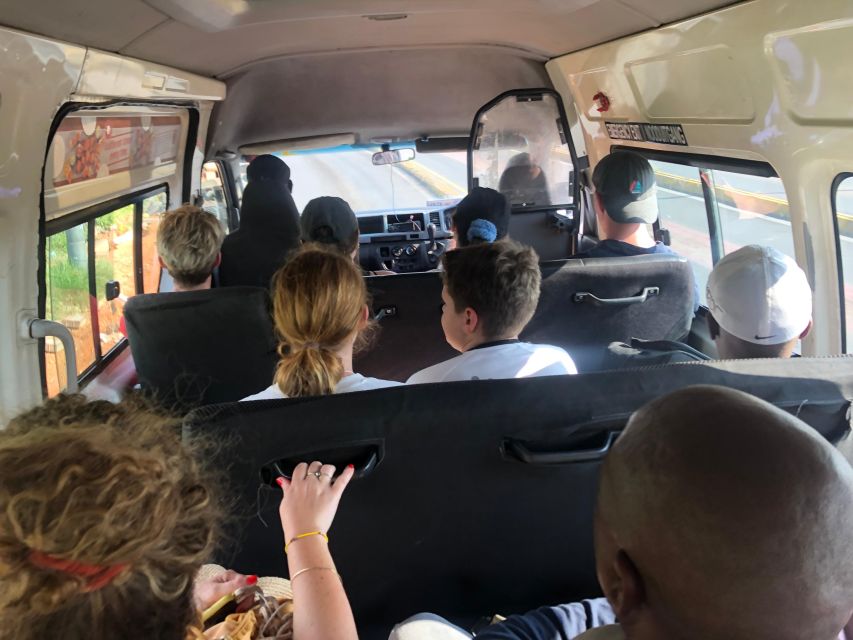
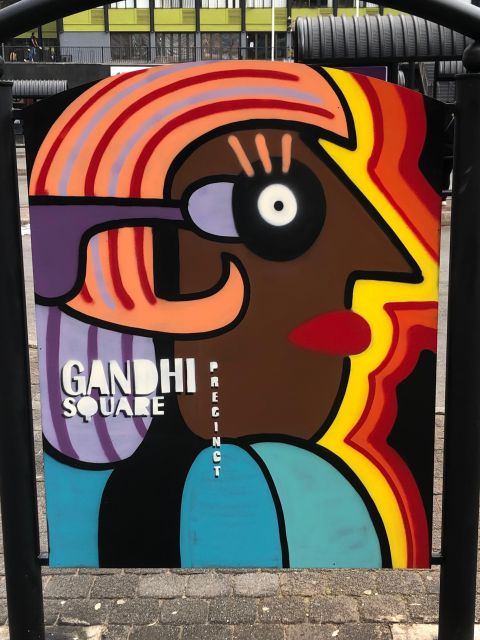
From there, you walk along Main Street to Gandhi Square. The square is named after Mahatma Gandhi, whose time in South Africa is an important part of the country’s political story.
The guide also explains South Africa’s biggest industry. The supplied details do not identify the industry by name, but the subject is clearly tied to Johannesburg’s economic development and the forces that helped build the city. This is a useful moment to connect the city’s historical conflicts to its financial strength.
Main Street should appeal to you if you like seeing how history, commerce, and everyday city life share the same streets. It is not a staged historic district. You are walking through an active central area, which makes the experience more direct, though perhaps less tidy than a conventional tourist route.
Carlton Centre and African art at ABSA Gallery
The itinerary then reaches the Carlton Centre, described as the fifth tallest building in Africa. It gives the walk a strong architectural and city-view element, while also showing the scale of Johannesburg’s business district.
The tour includes the ABSA Gallery, where works by artists from across Africa are exhibited. This is one of the best transitions in the outing. You move from a conversation about industry and economic power into a space focused on creative work from the continent.
The gallery visit also reinforces a central theme of the day: Johannesburg is not defined by one period or one group of people. The city’s identity has been shaped by labor, business, politics, migration, law, music, and visual art.
Keep in mind that entry tickets are not included. The details do not say if the gallery visit requires payment on the day, so you should ask before the tour begins. If you are watching your budget closely, carry enough for possible admissions as well as personal purchases.
Maboneng, street art, and the final coffee stop
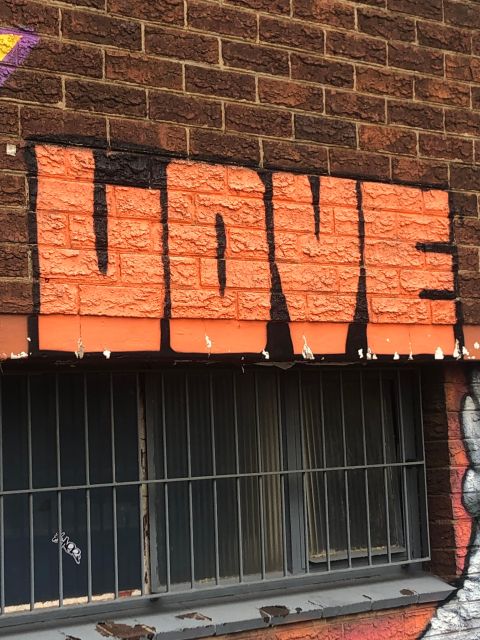
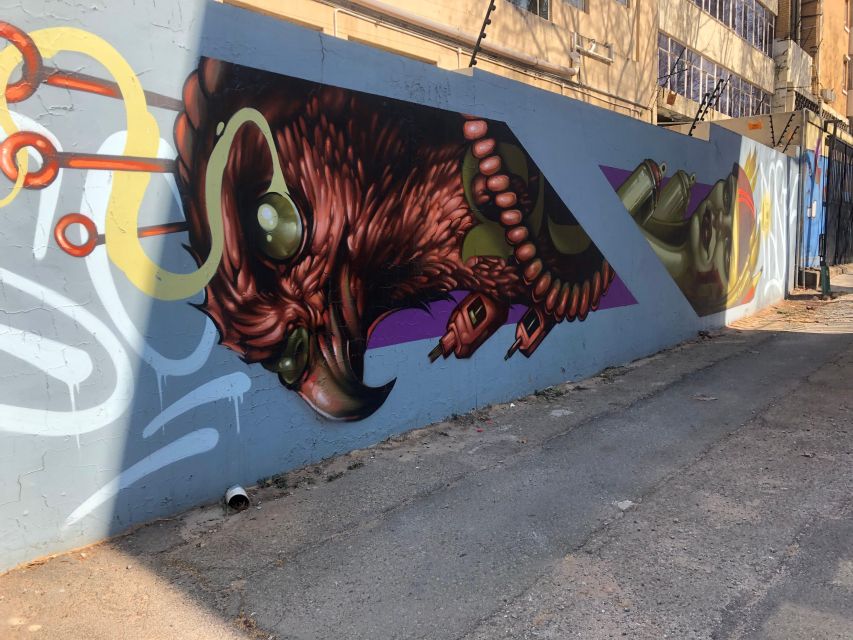
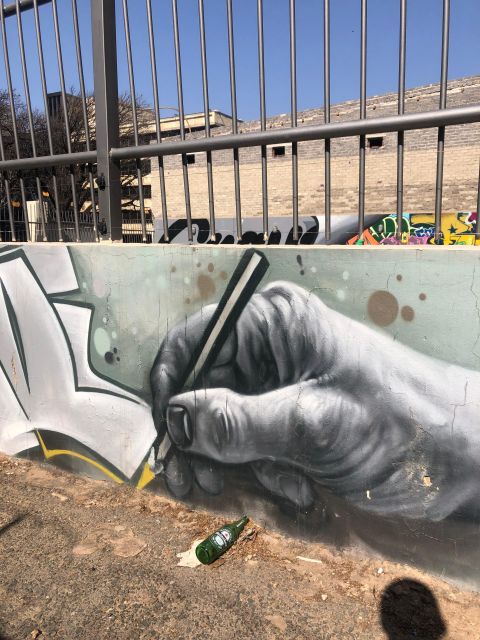
The final location is Maboneng, described as Johannesburg’s art world. Here, you see local artists and their work, including the street art that forms one of the tour’s main highlights.
This is likely to be the most visually immediate part of the day. Painted walls and public art give you plenty to look at, but the guide’s explanation is what makes the stop more useful. You can learn how artists contribute to the character of the neighborhood and how public art can make difficult city stories easier to approach.
I especially like that the route ends in Maboneng rather than returning to a large attraction. It leaves you with a sense of current Johannesburg, not only its past.
The tour ends at Home of the Bean, a coffee shop where getting an Uber is easy. That is a practical finish. You are not left trying to find a remote pickup point after a long walk, and you can continue exploring or return to your accommodation from a recognizable place.
What the $40 price covers

At $40 per person, this is priced as a guided city experience rather than a simple walking tour. You receive a local guide, a local lunch, and transportation during the tour. Those inclusions help justify the cost, especially because the route covers several districts and is built around interpretation rather than just exterior sightseeing.
Entry tickets are not included, and hotel pickup and drop-off are also excluded. You need to reach the starting point yourself and keep extra money available for any paid admissions. The exact duration is not provided, but the number of stops suggests you should plan for a substantial walking outing rather than a quick two-hour stroll.
The value depends heavily on what you want. If you want a private vehicle and a short list of major landmarks, this may feel too active. If you want context, local guidance, and a route through parts of central Johannesburg that you might not visit alone, $40 is a fair price.
Safety, comfort, and the practical details
This is not a tour for wheelchair users, and you should be comfortable walking between districts. Comfortable shoes and clothes are essential, while a jacket is sensible because the tour runs regardless of weather.
Bring a camera, sunglasses, a sun hat or other hat, biodegradable sunscreen, hand sanitizer or tissues, and a power bank. Weapons and sharp objects are not allowed, smoking indoors is prohibited, and littering and nudity are not permitted.
The tour is offered in English. You can reserve now and pay later, which is useful if your plans are still shifting. Cancellation is allowed up to 24 hours before the experience for a full refund.
Safety is one reason I would choose a guided walk here instead of trying to reproduce the route alone. The description specifically presents the guide as someone who takes you safely through the city, and a strong guide can make the difference between a rewarding urban lesson and an uncomfortable day.
Still, I would take one extra step before leaving: confirm that the tour is operating and that the meeting point is clear. The overall score is 4.3 out of 5 from 12 ratings, with several very positive comments about the guide and the educational value, but one report described a complete no-show. That is not enough to dismiss the experience, but it is enough to make confirmation wise.
Who will enjoy this Johannesburg walk?
I would recommend this outing to you if you want to understand Johannesburg through its streets, laws, workplaces, artists, and political figures. It suits adults and older children who can manage a long walk and who enjoy listening to a guide explain difficult subjects.
It is particularly useful on a first visit because it introduces several central districts in one day. You also get practical orientation for returning to places such as Newtown or Maboneng on your own.
You may want something else if you dislike urban walking, need step-free access, or prefer a tour built around major indoor attractions. The city’s difficult history is not softened, so this is better for someone ready to listen and think as well as take photographs.
Guide quality matters greatly. Tebogo received especially warm praise for explaining Johannesburg clearly and making the experience worthwhile. Other positive comments describe the guide as excellent and the tour as a safe way to see parts of the city that participants would not have visited alone.
Should you book the Johannesburg City Walking Excursion?
Book it if you want a guided introduction to central Johannesburg that mixes political history, labor, law, industry, music, galleries, and street art. The local lunch and included transportation add real value to the $40 price, while the route gives you a fuller picture than a quick landmark stop.
I would book with three conditions: confirm the meeting point, verify that the tour is running, and prepare for a long walk in all weather. If those points work for you, this is a thoughtful way to see the City of Gold with a local voice and a useful sense of how its past continues to shape daily life.
FAQ
Where does the Johannesburg City Walking Excursion start?
The tour starts at Wing Republic. The meeting point is described as a restaurant with a beautiful black and white artwork painted on it.
Where does the tour end?
The tour ends at Home of the Bean in Maboneng, where it is easy to get an Uber. The activity does not include hotel drop-off.
What locations are included on the walking route?
The route includes Braamfontein, Newtown, Nelson Mandela Bridge, Market Theatre, Mary Fitzgerald Square, the Workers Compound, Science Discovery Centre, Ferreira Market, Chancellor’s House, the magistrate court, Main Street, Gandhi Square, Carlton Centre, ABSA Gallery, and Maboneng.
Is lunch included?
Yes. A local lunch is included in the tour price.
Is transportation included?
Transportation during the tour is included. Hotel pickup and drop-off are not included.
Are entry tickets included?
No. Entry tickets are excluded, so you may need to pay separately for admission to any location that charges a fee.
Is the tour suitable for wheelchair users?
No. The experience is listed as unsuitable for wheelchair users and involves walking between several city districts.
Just added in Johannesburg
- Pretoria Capital City Tour Experience★ 5.0 · 24 reviews
- 4 Day Kruger National Park Tour★ 5.0 · 30 reviews
- Johannesburg e-scooter experience★ 5.0 · 38 reviews
- Johannesburg Street Art & Museum Walking or E-scooter Tour★ 4.5 · 10 reviews
- Big 5 Safari Experience at Pilanesberg National Park★ 5.0 · 16 reviews
- Drakensberg Mountains. Tugela Gorge and Amphitheater Hike★ 5.0 · 7 reviews
- Apartheid Museum Tour from Johannesburg★ 4.5 · 14 reviews
- Arrival Private Transfer: Tambo Airport JNB to Johannesburg in Business Car★ 4.0 · 5 reviews
City Tours, compared.
Cape Town Hop-On Hop-Off City Tour with Optional Cruise
Read our review →
Jo’berg in 1 Day: Soweto, Apartheid Museum & City Tour
Read our review →
Cape Town City Pass: Save Over 50% on 80+ Top Attractions
Read our review →
Hop-On Hop-Off Bus, City Tour and Apartheid Museum
Read our review →

From Sun City: Pilanesberg National Park 3-Hour Game Drive
Read our review →
Browse the lists this tour appears in