
REVIEW · SOWETO TOURS
Johannesburg & Soweto (Half-day Tour)
Soweto tells South Africa’s story street by street. This five-hour private tour links Soweto with central Johannesburg, giving you a useful first look at the City of Gold without requiring a full day. I like the focus on important places such as Freedom Square, Regina Mundi Church, and the Hector Pieterson Museum. I also like having hotel pickup and a live guide who can speak English, Zulu, Sesotho, or Xhosa.
The main drawback is the amount of time spent in the vehicle. One past participant found the outing interesting but felt it was mostly a drive with only a few short stops. You should book this as a guided introduction to Johannesburg and Soweto, not as a long walking tour of the township.
In This Review
- Key points to know before booking
- Why this five-hour route matters
- Starting at Chris Hani Baragwanath Hospital
- Freedom Square and the 1955 Freedom Charter
- Regina Mundi Church, the People’s Parliament
- Hector Pieterson Museum and the 1976 student protests
- Vilakazi Street and two Nobel Peace Laureates
- The Johannesburg drive and time in the vehicle
- What the private format adds
- Price, timing, and practical value
- Who will get the most from this tour?
- Should you book the Johannesburg and Soweto tour?
- FAQ
- How long does the Johannesburg and Soweto tour last?
- What places are included in Soweto?
- Will I see Nelson Mandela’s and Desmond Tutu’s homes?
- Is food included in the tour price?
- Is hotel pickup included?
- Is this a private tour?
- What languages can the guide speak?
- Can I cancel the booking for a refund?
Key points to know before booking
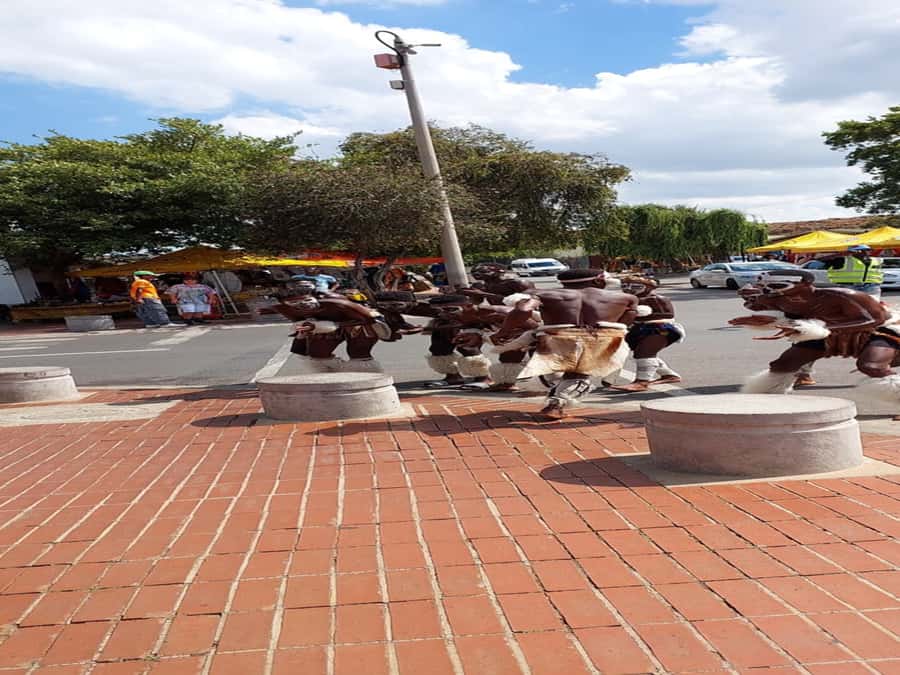
- Soweto comes first: The route begins with major places tied to South Africa’s political struggle, then continues through Johannesburg.
- Hector Pieterson Museum adds essential context: The museum explains the 1976 student protests and why Soweto became a global symbol of resistance.
- Vilakazi Street connects two Nobel Peace Laureates: You see the former homes of Nelson Mandela and Desmond Tutu on the same street.
- This is a private five-hour outing: Your group has a dedicated guide rather than joining a large coach party.
- The guide makes a major difference: Emanuel received strong praise for his passion, personal understanding of South African history, and ability to answer questions.
- Plan to pay separately for lunch: Food and drinks are not included, though you can ask the guide for a local restaurant or food stop.
Why this five-hour route matters

Johannesburg can feel hard to read at first. Its districts are spread out, its history is tied to rapid economic change, and its most important stories are not always obvious from the road. This tour helps connect the places you see with the events that shaped modern South Africa.
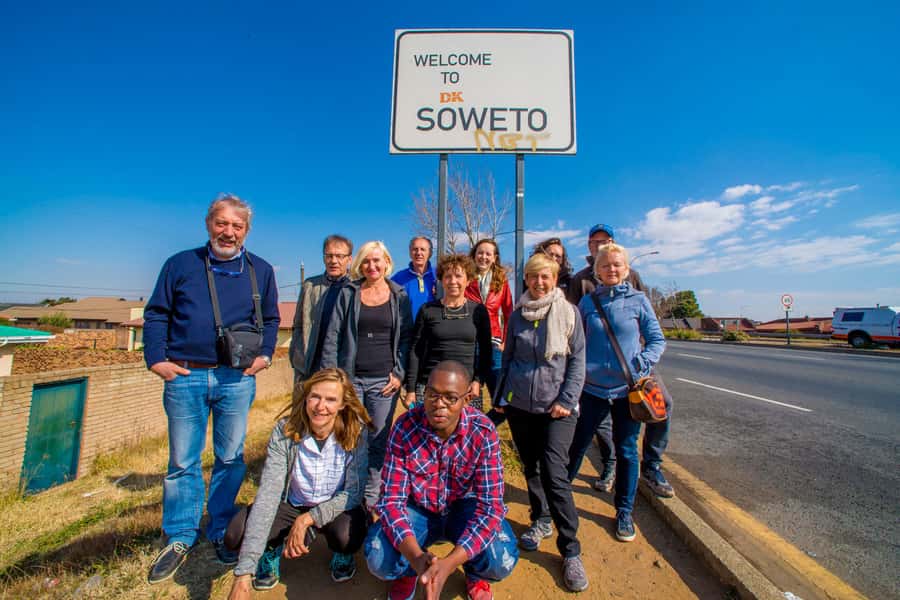
You begin in Soweto, south of central Johannesburg, before moving toward downtown. That order works well because Soweto provides the political and social background first. Later, the city drive gives you a broader sense of how Johannesburg developed around gold mining, industry, migration, and the end of apartheid.
You will not get a full study of either city in five hours. That is not the point. I see this as a useful orientation tour, especially if you have limited time or want a guide to explain the places that would be difficult to understand on your own.
The private format is valuable here. You can ask why a stop matters, request more detail about a particular period, or ask for a food suggestion without holding up a large group. The guide’s language options also make this more personal. English, Zulu, Sesotho, and Xhosa are available.
More Soweto tours:
- Johannesburg: Hop-On Hop-Off Bus with Optional Soweto Tour
★ 4.6 · 985 reviews - Soweto /Johannesburg and Apartheid Museum Guided Full Day Tour
★ 5.0 · 932 reviews - Johannesburg Hop-On Hop-Off City Tour with Soweto Option
★ 4.5 · 768 reviews
Starting at Chris Hani Baragwanath Hospital
One of the first landmarks is Chris Hani Baragwanath Hospital, described as the biggest hospital in the Southern Hemisphere. It is a striking reminder of Soweto’s size and the scale of services needed by the surrounding population.
This is primarily a sightseeing stop rather than a medical visit. You should expect to view and discuss the hospital as part of the route, not tour its working facilities. Its importance comes from what it represents: Soweto is not simply a collection of historic sites. It is a large living community with schools, churches, homes, businesses, and public institutions.
This stop can help correct the narrow image some people have of Soweto. The tour is not limited to protest history or famous names. You also see the everyday framework of the area, including a major hospital that serves a huge population.
Freedom Square and the 1955 Freedom Charter
The next major stop is Freedom Square, where the Freedom Charter was adopted in 1955. This document called for a democratic South Africa in which all people would have political rights and equal treatment.
The square is important because it connects an open public gathering place with a major political statement. Your guide can explain how the charter became part of the struggle against apartheid and how its ideas continued to influence South African politics.
I would pay close attention here rather than treating the stop as a quick photo break. The value is in the story behind the location. Without that context, a square can look like just another urban stop. With the explanation, it becomes a place tied to a national vision for the country.
The guide’s role matters especially at this point. Emanuel, who led some of the tours, was praised for speaking with personal passion about South Africa and answering questions about how the country changed. That kind of conversation is more useful than a short list of dates.
Regina Mundi Church, the People’s Parliament

Regina Mundi Church is known as the People’s Parliament because it offered a place where political meetings and discussions could take place during the struggle years. The tour uses the church to explain how religious buildings became important spaces for community organization and political expression.
This stop gives the itinerary a different tone from Freedom Square. The square represents a public political gathering. Regina Mundi shows how ordinary institutions could become places of protection, debate, and resistance when formal political space was heavily restricted.
You should expect a visit focused on historical explanation rather than a long religious tour. The church is included because of its role in South Africa’s political story. Listen for the connection between faith, community life, and the anti-apartheid movement.
For me, this is one of the strongest parts of the route because it adds human scale. Political change is not only made in government offices. It also grows in churches, homes, streets, and community meetings.
A few more in Johannesburg
- From Johannesburg: Pilanesberg Nature Reserve Game Safari
★ 4.8 · 1,327 reviews - Full Day Ultimate Pilanesberg National Park Safari from Johannesburg or Pretoria
★ 4.5 · 718 reviews - Half-Day Tour of Soweto Tour
★ 4.5 · 712 reviews - Soweto: Walking Tour with a Local Guide and Lunch
★ 4.9 · 648 reviews
Hector Pieterson Museum and the 1976 student protests
The Hector Pieterson Museum covers the 1976 student protests, a turning point in South African politics. The uprising began when students opposed the use of Afrikaans as a language of instruction, but the events quickly became part of a wider revolt against apartheid education and government control.
The museum is named after Hector Pieterson, a young student whose death became a powerful symbol of the protests. The famous photograph of his body being carried after he was shot helped bring international attention to the violence in Soweto.
This is likely to be the most emotionally difficult stop. The subject is serious, and the museum asks you to think about the experiences of young people who challenged an unjust system. Give yourself time to take in the material instead of rushing through it.
The museum also helps explain why Soweto matters beyond its local setting. The 1976 protests changed how the outside world viewed apartheid and helped push South Africa’s political conflict into a new phase. If you want historical substance from this tour, this is the stop that provides it.
The tour includes the museum, but the precise amount of time inside is not specified. Since the total outing lasts five hours and includes several drives and stops, you should not assume you will have an entire afternoon here. If the museum is your main reason for booking, ask the operator or guide about the planned visit time.
Vilakazi Street and two Nobel Peace Laureates
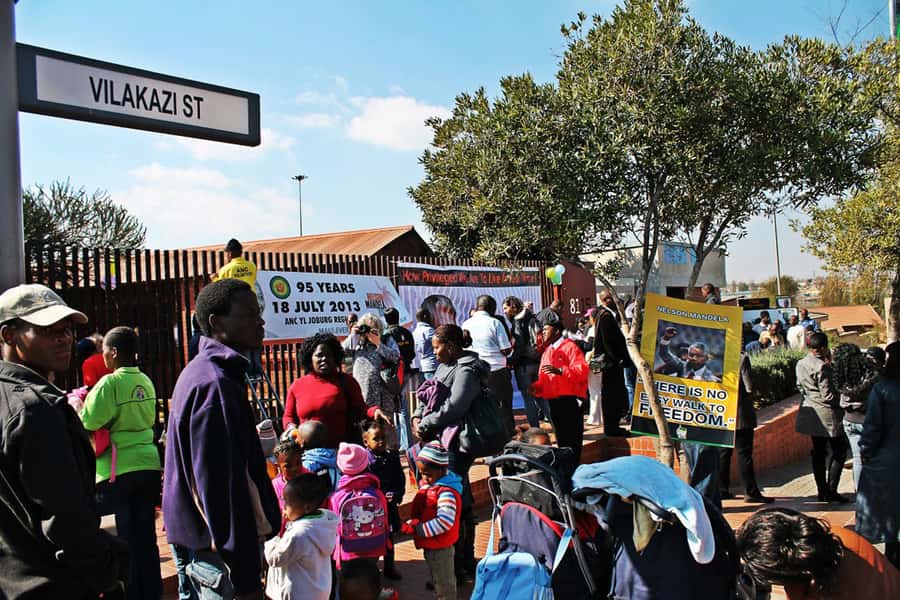
The route continues to Vilakazi Street, where you can see the former homes of Nelson Mandela and Desmond Tutu. Having the homes of two Nobel Peace Laureates on the same street makes this one of the most memorable parts of the tour.
The significance is not only that famous people lived there. The street links two major figures who represented different parts of South Africa’s long road toward democracy. Mandela became the country’s first Black president, while Tutu was a leading church figure and outspoken opponent of apartheid.
The tour describes Vilakazi Street as a place of cultural life, so this is a good point to look beyond the famous houses. You might find shops, food, and local activity nearby, though the supplied details do not promise a particular performance, market, or meal.
Ask your guide for a local cuisine recommendation if you are hungry. Food is not included, and any stop to eat will be at your own cost. This is worth planning for because a half-day tour can run across a normal meal period.
The Johannesburg drive and time in the vehicle
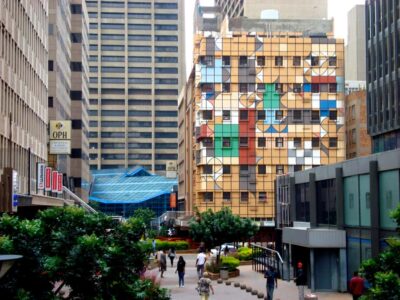
After the Soweto stops, the tour continues toward downtown Johannesburg. The route is designed to show major points of interest from the south through the city center, giving you a broad view rather than concentrating on one small district.
The driving time has two sides. It lets you cover more ground than a walking tour and gives your guide room to explain how Johannesburg has changed. You may also see parts of the city that you would not reach during a short visit focused only on museums.
On the other hand, you will spend a fair amount of the five hours in the car. One participant described the experience as a city and Soweto drive with some small stops, saying a more detailed visit to Soweto would have been preferable. That is a fair warning.
I would book this if you want a structured first look and prefer not to arrange transport between distant areas. If you want long walks, extended museum time, or close contact with daily neighborhood life, you may find the pace too quick.
What the private format adds
A private group can make this tour feel more flexible than a standard coach outing. You are not following a fixed lecture for dozens of people, and you can ask questions as the route develops.
That matters in Johannesburg because the same place can raise different questions for different people. You might want to focus on apartheid-era politics, church history, architecture, local food, or the city’s economic changes. A guide who can respond to your interests can make the route more useful.
The strongest feedback centered on the guide. Emanuel was described as passionate, experienced, and able to answer questions about South Africa. Another participant said Emmanuel was attentive and showed lesser-known parts of Johannesburg and Soweto.
There is also a clear service warning. One booking involved a one-hour wait for pickup, along with poor communication before the guide arrived. That appears to have been a serious exception, but you should still confirm your pickup details and be ready in the hotel lobby 15 minutes before the scheduled time.
Price, timing, and practical value
At $112 per person, this is not the cheapest way to see Johannesburg. The price makes more sense if you value private transport, hotel pickup and drop-off, a dedicated guide, and a route that combines Soweto with central Johannesburg in one half-day.
For a solo visitor, the cost may feel high. For a small private group, the convenience can be easier to justify, especially if you do not want to work out transport between Soweto’s spread-out sites. The tour also removes the need to plan the sequence yourself.
The five-hour duration is long enough to cover the main points but short enough to fit beside another activity. Keep your expectations realistic. You are getting a guided overview, not an exhaustive study of Soweto.
Pickup is included from your hotel, and drop-off takes place at the agreed point after the tour. The experience operates rain or shine, so dress for the forecast and do not assume poor weather will cancel it. It is wheelchair accessible, which may help some visitors, though the exact vehicle and site arrangements should be confirmed before booking.
Free cancellation is available up to 24 hours before the start time, and you can reserve now while paying later. Those terms help if your Johannesburg plans are still shifting.
Who will get the most from this tour?
I think this tour suits you best if:
- You have only one day or half a day for Johannesburg.
- You want the major Soweto history explained by a local guide.
- You prefer private transport over figuring out several separate rides.
- You want to see Vilakazi Street, Regina Mundi, Freedom Square, and Hector Pieterson Museum in one route.
- You enjoy asking questions and learning through conversation.
- You want a first introduction before returning to one area on your own.
You may want a different experience if you hope to spend most of the day walking through Soweto or sitting for long visits at each site. The route covers a lot, but the tradeoff is shorter stops and substantial time in the vehicle.
The tour is also a good fit for visitors who want cultural and political context without committing to a full-day program. Its strongest moments come when the guide links a landmark to the people and events behind it.
Should you book the Johannesburg and Soweto tour?
Book it if you want a private, history-focused introduction to Soweto and Johannesburg, with hotel transport and a guide who can explain South Africa in several local languages. The route covers places that matter, and Emanuel’s praised approach shows how much a strong guide can add.
Do not book it expecting a slow, detailed township walk. The itinerary moves by vehicle, and one-hour pickup delays have occurred, so confirm the arrangements and keep some flexibility in your schedule.
At $112, the value depends on what you need. For a small group seeking convenience and context, it is a sensible way to cover major sites in five hours. For a visitor who wants extended local interaction, a longer and more walking-based outing may be the better choice.
FAQ
How long does the Johannesburg and Soweto tour last?
The tour lasts five hours.
What places are included in Soweto?
The route includes Chris Hani Baragwanath Hospital, Freedom Square, Regina Mundi Church, Hector Pieterson Museum, and Vilakazi Street.
Will I see Nelson Mandela’s and Desmond Tutu’s homes?
Yes. The tour includes sightseeing at the homes of Nelson Mandela and Desmond Tutu on Vilakazi Street.
Is food included in the tour price?
No. Food and drinks are not included. You can ask the guide for a local cuisine recommendation and stop to buy food at your own cost.
Is hotel pickup included?
Yes. Hotel pickup and drop-off are included. You should wait in the hotel lobby 15 minutes before your scheduled pickup time.
Is this a private tour?
Yes. The experience is offered for a private group.
What languages can the guide speak?
The available tour languages are English, Zulu, Sesotho, and Xhosa.
Can I cancel the booking for a refund?
Yes. You can cancel up to 24 hours in advance for a full refund. You can also reserve now and pay later.
Just added in Johannesburg
- Johannesburg e-scooter experience★ 5.0 · 38 reviews
- Pretoria Capital City Tour Experience★ 5.0 · 24 reviews
- 4 Day Kruger National Park Tour★ 5.0 · 30 reviews
- Johannesburg Street Art & Museum Walking or E-scooter Tour★ 4.5 · 10 reviews
- Big 5 Safari Experience at Pilanesberg National Park★ 5.0 · 16 reviews
- Drakensberg Mountains. Tugela Gorge and Amphitheater Hike★ 5.0 · 7 reviews
- Apartheid Museum Tour from Johannesburg★ 4.5 · 14 reviews
- Arrival Private Transfer: Tambo Airport JNB to Johannesburg in Business Car★ 4.0 · 5 reviews
Soweto Tours, compared.

Soweto /Johannesburg and Apartheid Museum Guided Full Day Tour
Read our review →

Jo’berg in 1 Day: Soweto, Apartheid Museum & City Tour
Read our review →
Full-Day Tour with Soweto and Apartheid Museum
Read our review →
Full-Day Soweto, Apartheid Museum and Lunch Tour
Read our review →
Half Guided Day Tour of Soweto And Apartheid Museum
Read our review →Browse the lists this tour appears in