
REVIEW · SOWETO TOURS
Johannesburg Soweto Highlights Tour
Soweto tells South Africa’s story in bold strokes. This private Johannesburg tour packs major landmarks into a flexible route, from FNB Stadium and Orlando Towers to the homes and memorials linked with Nelson Mandela, Desmond Tutu, and the 1976 student uprising. I like the hotel or train-station pickup and the comfort of an air-conditioned vehicle. I also like having a private guide for your own group, which gives you a better chance to ask direct questions and adjust the pace.
The main caution is that the advertised route is ambitious for a tour lasting roughly one to five hours. Admission costs are not all covered, and the quality of the commentary may depend heavily on your guide. One particularly praised guide was Lesiba, who helped reschedule a late arrival and handled hotel confusion with patience. Another guest found the information too thin and several planned sights were missed, so it is worth confirming your priorities before setting off.
In This Review
- Key points to know before you book
- Why a private Soweto tour can work so well
- FNB Stadium and the public face of modern Soweto
- Diepkloof Park and the layers of Soweto housing
- Chris Hani Baragwanath Hospital
- Orlando Towers, from cooling plant to Soweto icon
- Vilakazi Street and Mandela House
- Hector Pieterson Museum and the events of June 16, 1976
- Constitution Hill and Johannesburg’s move toward democracy
- Braamfontein, Newtown, and Johannesburg’s city center
- Mandela and Tambo, plus a preserved gold mine
- Guides, timing, and what to confirm
- Who should book this Johannesburg experience?
- Should you book the Soweto Highlights Tour?
- FAQ
- How much does the Johannesburg Soweto Highlights Tour cost?
- How long does the tour last?
- Is hotel pickup available?
- Is this a private tour?
- Is transportation air-conditioned?
- Is lunch included?
- Are entrance fees included?
Key points to know before you book
- Private sightseeing in an air-conditioned vehicle: Your party travels alone, with bottled water, private transport, and pickup from a preferred location.
- A strong Soweto history route: FNB Stadium, Vilakazi Street, Mandela House, Orlando Towers, Diepkloof Park, and the Hector Pieterson Museum are the main sights.
- Mandela and Tutu connections: Vilakazi Street is famous for being home to two Nobel Peace Prize laureates.
- Important extra costs: Entrance to Mandela House is included, but the Hector Pieterson Museum and Constitution Hill are not.
- A route that can extend beyond Soweto: Braamfontein, the Nelson Mandela Bridge, Newtown, Turbine Hall, Mandela and Tambo’s former law offices, and Ferreira’s mine stope may also be included.
- A good fit for a short Johannesburg stay: Pickup and a private vehicle make this useful when you want to cover ground without planning several separate outings.
Why a private Soweto tour can work so well
Soweto is not one single attraction. It is a large urban area made up of neighborhoods, major public sites, memorials, homes, stadiums, and streets that carry political meaning. Seeing the key places in a single outing is much easier with a vehicle than by trying to connect them yourself.
I like the private format here because Soweto rewards questions. You may want to ask how a place changed after apartheid, how Mandela’s family used a particular home, or why a former industrial site matters today. With only your own group in the vehicle, those questions do not have to compete with a large busload of people.
The air-conditioning matters, too. Johannesburg can be warm, and some parts of the route involve sitting in the car between stops. Bottled water and private transportation are included, along with taxes and other listed fees. Lunch is not included, so plan to eat before or after the tour unless your guide helps arrange a break.
The advertised price is $113.32 per person. That is a fair amount for a private outing if you are traveling as a small group and want pickup, transport, and a guide in one package. For one person, the cost feels high. For a family or group splitting the vehicle, the value improves, especially if the tour prevents you from paying for several separate rides.
More Soweto tours:
- Johannesburg: Hop-On Hop-Off Bus with Optional Soweto Tour
★ 4.6 · 985 reviews - Soweto /Johannesburg and Apartheid Museum Guided Full Day Tour
★ 5.0 · 932 reviews - Johannesburg Hop-On Hop-Off City Tour with Soweto Option
★ 4.5 · 768 reviews
FNB Stadium and the public face of modern Soweto
The first stop is often FNB Stadium, also known as Soccer City. Its rounded design earned it the nickname Calabash, or African Pot, and the stadium was rebuilt for about R3.3 billion before the 2010 FIFA World Cup.
The stadium hosted the World Cup opening and closing ceremonies and the final. It also carries political meaning. Nelson Mandela gave his first speech there after his release from prison in 1990, after serving 27 years.
You will usually have about 20 minutes here, with no admission fee listed. That is enough for a look at the exterior and an explanation of why the stadium matters. It is not enough for a stadium tour or a long visit inside, so set your expectations accordingly. The value of this stop is the combination of design, sport, and political memory, not a detailed stadium visit.
Diepkloof Park and the layers of Soweto housing
Diepkloof Park, also called DK by some residents, offers a different view of Soweto. The area is known locally as Rich Man’s Acre because its plots are larger and were intended for more affluent Black residents.
Diepkloof Extensions was built for middle and upper-income Black professionals, including people employed by the state and private companies. The government housing scheme offered full loans for both the plot and the structure, which gives your guide a useful opening to explain how housing policy shaped the area.
The stop is listed at about 20 minutes and is free. Do not expect a conventional attraction with a ticket booth. You are looking at a living neighborhood, so the quality of the explanation matters. This is one of the places where a strong guide can add real value by connecting streets and homes to the wider social history of Soweto.
Chris Hani Baragwanath Hospital
The route may also pass Chris Hani Baragwanath Hospital, one of the world’s largest hospitals. It occupies about 173 acres and has approximately 3,200 beds, 6,760 staff members, and 429 buildings.
The figures are startling. Around 70 percent of admissions are emergencies, with accident, emergency, and ambulance services handling more than 350 patients a day. The hospital also treats large numbers of maternity and eye-care patients.
This is a brief orientation stop rather than a hospital visit. You will not be touring medical wards, and the information is best understood from the vehicle or a short roadside explanation. It gives you a sense of the scale of public services in Johannesburg and the demands placed on them.
A few more in Johannesburg
- From Johannesburg: Pilanesberg Nature Reserve Game Safari
★ 4.8 · 1,327 reviews - Full Day Ultimate Pilanesberg National Park Safari from Johannesburg or Pretoria
★ 4.5 · 718 reviews - Half-Day Tour of Soweto Tour
★ 4.5 · 712 reviews - Soweto: Walking Tour with a Local Guide and Lunch
★ 4.9 · 648 reviews
Orlando Towers, from cooling plant to Soweto icon
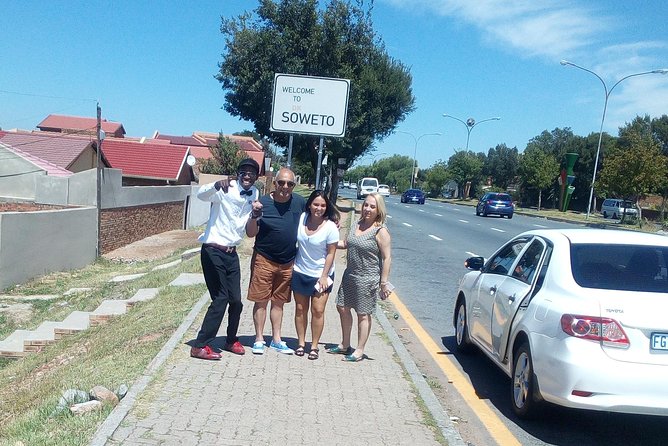
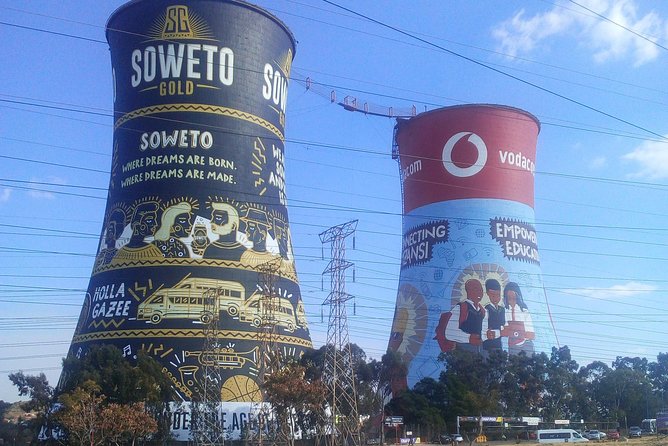
Orlando Towers are among the easiest Soweto landmarks to recognize. The two cooling towers were built in 1951 to support the Orlando power station’s cooling system. Their original industrial purpose has long since been replaced by a very different public image.
One tower functions as an advertising surface, while the other carries what is described as the largest mural painting in South Africa. The towers are also used for bungee jumping, BASE jumping, and a bungee swing from a platform between them. You may recognize the location from an episode of The Amazing Race.
The stop lasts about 20 minutes and has no admission fee listed. It is a good photo stop and a useful reminder that old industrial structures can take on new lives. If you are hoping to jump, do not assume that this sightseeing tour includes an activity booking. The information provided only confirms that these activities take place at the towers.
Vilakazi Street and Mandela House

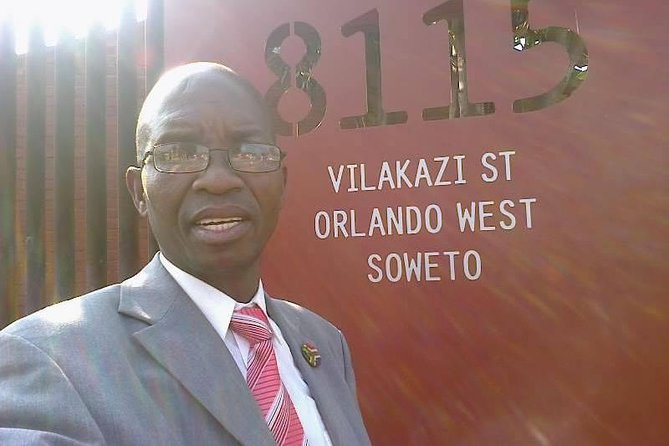
Vilakazi Street is the emotional center of the Soweto route. It is famous for being the only street associated with two Nobel Peace Prize laureates: Nelson Mandela and Archbishop Emeritus Desmond Tutu.
The street is named after Benedict Wallet Vilakazi, a Zulu writer and educator. His name gives the area a cultural connection beyond its political fame. Here, the route shifts from broad city history to the personal stories of people who lived in ordinary houses while shaping a nation.
Mandela House, on the corner of Vilakazi and Ngakane streets, was home to Nelson Mandela and his family from 1946 into the 1990s. He lived there with his first wife, Evelyn Ntoko Mase, and later with Winnie Madikizela-Mandela.
Mandela did not spend most of his time in the house once his political work forced him underground. After his release from prison in 1990, he returned for only 11 days before moving to a larger and more secure home. Winnie Madikizela-Mandela and their daughters remained connected to the house for longer.
About 30 minutes is allocated to Mandela House, and admission is included. This is one of the strongest parts of the tour because you get a tangible place linked to Mandela’s family life, not just a distant monument. I would pay close attention to the time here, since the visit can feel rushed if the route includes every optional stop listed.
Hector Pieterson Museum and the events of June 16, 1976
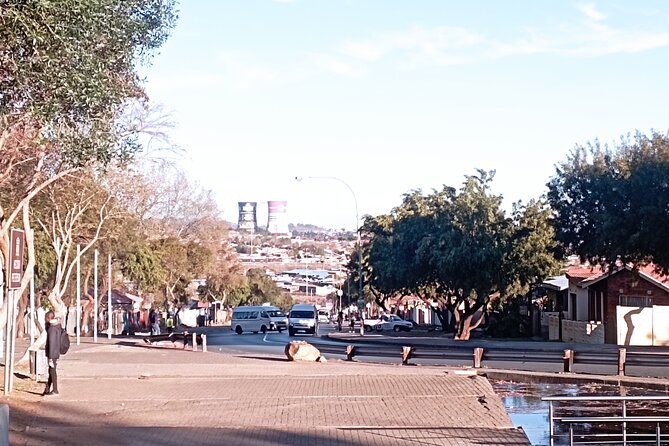
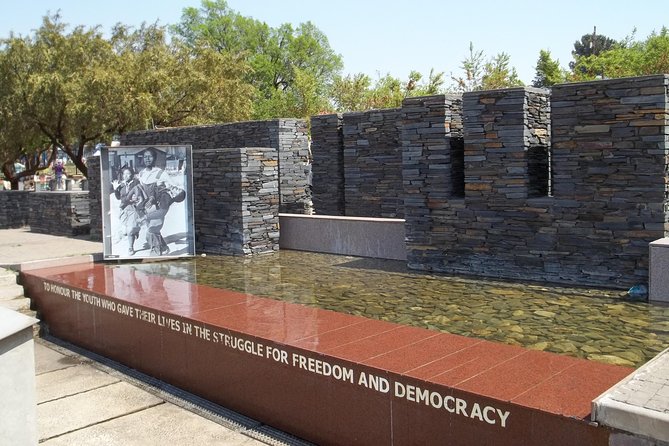
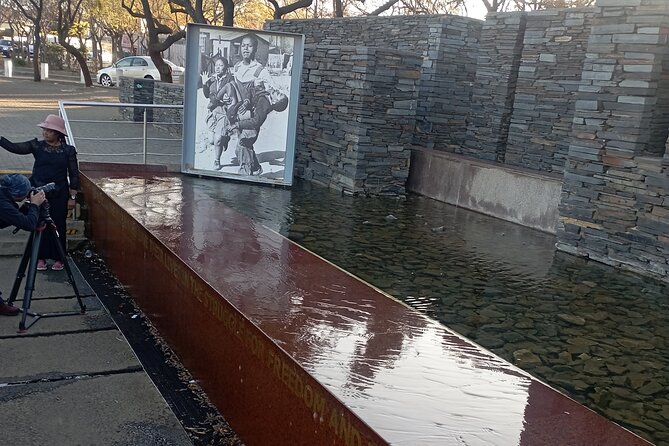
The Hector Pieterson Museum and Memorial explains one of the most important turning points in South Africa’s fight against apartheid. On June 16, 1976, Soweto high school students marched against the compulsory use of Afrikaans in Black secondary schools.
The students planned to gather at Orlando Stadium before going to the regional offices of the Department of Bantu Education. Their signs called for an end to Afrikaans instruction and for political freedom. They also sang Nkosi Sikelel’ iAfrika, a hymn that later became part of South Africa’s national anthem.
The museum is listed for about 45 minutes, but admission is not included. This is important when judging the price. You should be prepared to pay the entrance fee separately, and you may want to ask your guide how much time is available inside.
I consider this an essential stop for understanding Soweto. The museum is not simply another landmark on a driving circuit. It gives human weight to the 1976 uprising and helps you connect the neighborhood’s streets with the students who changed the country’s political direction.
Constitution Hill and Johannesburg’s move toward democracy
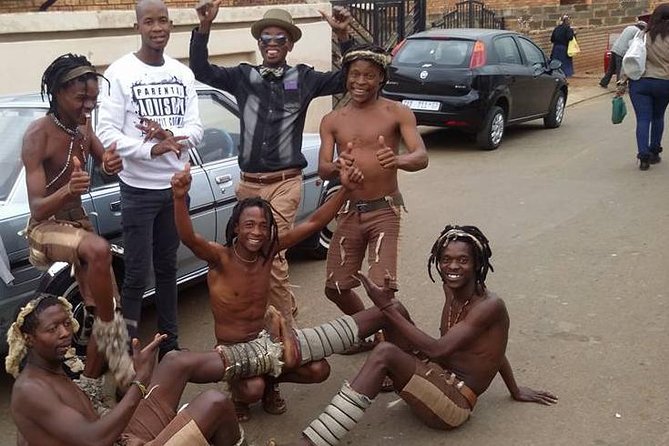
Constitution Hill is outside Soweto, but it adds a major chapter to the day. The site was once a prison and military fort. Today it is home to South Africa’s Constitutional Court, which protects the rights of citizens in the democratic era.
A 30-minute visit is listed, with admission not included. That short time may allow only an introduction rather than a full exploration of the former prison complex and court. If Constitution Hill is a priority for you, confirm the schedule before booking, especially since the tour may last as little as one hour.
The site works well beside the Soweto stops because it connects personal stories of political struggle with the institutions created after apartheid. It also makes clear that Johannesburg’s story is not confined to one neighborhood.
Braamfontein, Newtown, and Johannesburg’s city center
The extended route can include Braamfontein, a neighborhood known for public art, murals, and creative spaces. The stop is listed at around 20 minutes and is free.
You may also see the Nelson Mandela Bridge. At 284 metres long, it crosses 42 working railway lines and connects Braamfontein and northern Johannesburg with Newtown and the central business district. Its name reflects Mandela’s role in guiding South Africa across the apartheid divide.
Newtown adds an industrial and educational side to the route. Sci-Bono is a science center focused on mathematics, science, and technology education. Turbine Hall, built between 1927 and 1934 as one of Johannesburg’s major steam-driven power stations, is now part of the city’s arts and culture area.
These short driving stops broaden the day beyond Soweto. The drawback is time. Every extra city-center sight can reduce the minutes available at Mandela House, the museum, or Vilakazi Street. I would ask the operator to confirm whether you want the route centered on Soweto or extended into Johannesburg.
Mandela and Tambo, plus a preserved gold mine
The route may finish with a few downtown landmarks tied to law and mining. Mandela and Tambo was South Africa’s first Black-owned law firm. Its modest offices were used by Nelson Mandela and Oliver Tambo in the early 1950s, during a period when the National Party was tightening apartheid law.
Ferreira’s mine stope is preserved beneath the Standard Bank headquarters. The old mine entrance was found during construction in the 1980s and is named for Ignatius Phillip Ferreira, an early gold prospector whose name is also attached to a Johannesburg district.
These stops may be brief, with about 10 minutes listed for the Mandela and Tambo site. They are most useful if you want to understand how Johannesburg grew from gold mining and how legal work became part of the anti-apartheid struggle. They are less satisfying if you want long visits inside museums or buildings.
Guides, timing, and what to confirm
The overall rating is 4.8 from 13 ratings, with 92 percent recommending the experience. That is encouraging, but the small number of ratings means you should keep your expectations realistic.
Lesiba received especially warm praise for helping with a delayed arrival and sorting out a hotel mix-up before rescheduling the tour. That kind of practical help matters in Johannesburg, where a missed pickup can disrupt a tightly planned day.
At the same time, one poor experience described a good vehicle and driver but weak explanations and several missed points. Another guest enjoyed the guide and the interesting information but did not see Regina Mundi Church, which had been expected as part of the program. Regina Mundi is not included in the detailed route above, so confirm in advance if you want it.
Before the vehicle arrives, ask three direct questions:
- How long will the tour last on your chosen day?
- Which of the listed stops will definitely be visited?
- Which admission fees should you bring money for?
The answers will help you avoid paying for a private tour while receiving only a shortened drive past the major sights.
Who should book this Johannesburg experience?
I would choose this tour if you have limited time, want private pickup, and prefer a driver-guide to handle the distances between Soweto and central Johannesburg. It suits families, couples, and small groups that value flexibility and do not want to share a large vehicle.
It is also useful early in a Johannesburg stay because the route gives you a broad orientation. You can then decide if you want to return for a longer museum visit or spend more time in one neighborhood.
I would be more cautious if your main goal is detailed museum study. The route includes many stops, and some are only 10 or 20 minutes. Since two major admissions are extra, you should make sure the operator allows enough time inside the places you care about most.
Should you book the Soweto Highlights Tour?
Book it if you want a private, convenient introduction to Soweto and Johannesburg’s major political landmarks, especially Mandela House, Vilakazi Street, FNB Stadium, Orlando Towers, and the Hector Pieterson Museum.
Ask for a clear stop-by-stop plan before paying. If you receive a strong guide, the tour can connect ordinary streets, famous names, and major events in a way that is hard to achieve alone. If the schedule is vague, the short duration may leave you seeing more from the vehicle window than you hoped.
Free cancellation is available up to 24 hours before the start time. Within 24 hours, you receive no refund, and changes are not accepted.
FAQ
How much does the Johannesburg Soweto Highlights Tour cost?
The listed price is $113.32 per person.
How long does the tour last?
The experience is advertised as lasting approximately one to five hours. The exact length may depend on the route and stops selected.
Is hotel pickup available?
Yes. Pickup is offered from a preferred location, such as a hotel or train station.
Is this a private tour?
Yes. Only your group participates, and private transportation is provided.
Is transportation air-conditioned?
Yes. The tour includes an air-conditioned vehicle and bottled water.
Is lunch included?
No. Lunch is not included in the tour price.
Are entrance fees included?
Admission to Mandela House is included. Admission to the Hector Pieterson Museum and Constitution Hill is not included.
Just added in Johannesburg
- Sun City Day Tour From Johannesburg★ 4.5 · 6 reviews
- Half-Day Walking Tour in Soweto★ 5.0 · 38 reviews
- Soweto Township Tours★ 4.5 · 6 reviews
- Historical and Cultural Interactive Experience of Soweto★ 5.0 · 7 reviews
- Soweto and Lunch Tour★ 5.0 · 2 reviews
- Soweto and Johannesburg & Apartheid Museum★ 5.0 · 44 reviews
- Full-Day Soweto Apartheid Museum and Lunch★ 5.0 · 16 reviews
- Soweto & Johannesburg And Apartheid Museum Private★ 5.0 · 9 reviews
Soweto Tours, compared.

Soweto /Johannesburg and Apartheid Museum Guided Full Day Tour
Read our review →

Jo’berg in 1 Day: Soweto, Apartheid Museum & City Tour
Read our review →
Full-Day Tour with Soweto and Apartheid Museum
Read our review →
Full-Day Soweto, Apartheid Museum and Lunch Tour
Read our review →
Half Guided Day Tour of Soweto And Apartheid Museum
Read our review →Browse the lists this tour appears in