
REVIEW · SOWETO TOURS
Johannesburg: Soweto Tour by Tuk Tuk
Soweto opens up from the back of a tuk-tuk. This 150-minute ride covers far more ground than a walking tour, with stops at Mandela House, Orlando Towers, Regina Mundi Church, and neighborhoods beyond the usual tourist route. I especially like the small group of up to five and the chance to hear local stories from guides such as Mulalo and Thabo. The main consideration is that this is a brisk tour, so major stops receive about 30 minutes rather than a long, unhurried visit.
I also like the simple local lunch, a Kota sandwich, included in the price. The tuk-tuk can reach parts of Soweto that are awkward to cover on foot or by bicycle, including an informal settlement and Orlando East. If you want a museum-by-museum experience or a quiet private visit at every stop, the schedule may feel tight.
In This Review
- What makes this Soweto tuk-tuk tour worth considering
- Starting in Orlando West, where Soweto’s story takes shape
- Hector Pieterson Museum and the Soweto uprising
- Vilakazi Street, Mandela House, and a powerful address
- Orlando East and the view beyond the postcard
- Orlando Towers, a giant landmark with a local angle
- Informal settlement visit and the question of respectful tourism
- Regina Mundi Catholic Church and the role of faith
- Ending with a Kota instead of a standard tourist lunch
- Is $59 good value for 150 minutes?
- Timing, group size, and practical planning
- Who will enjoy this tour most?
- Should you book the Soweto tuk-tuk tour?
- FAQ
- Where does the Soweto tuk-tuk tour start?
- How long does the tour last?
- What language is the tour conducted in?
- How many people can join the tour?
- Is food included?
- Which major places does the tour visit?
- Does the tour visit an informal settlement?
- Is a gratuity expected at the informal settlement?
- Can I cancel for a full refund?
What makes this Soweto tuk-tuk tour worth considering

- A local view beyond Vilakazi Street: See Orlando East, an informal settlement, a former women’s hostel, and other residential areas as well as the famous landmarks.
- A compact ride with real range: In 150 minutes, the tuk-tuk links several parts of Soweto that would be difficult to reach on foot.
- Guides with personal ties to the area: Mulalo and Thabo are praised for explaining Soweto’s past, present, and local neighborhoods in a warm, direct way.
- Key apartheid-era sites: Visit Hector Pieterson Museum, Mandela House, Desmond Tutu’s former home area, and Regina Mundi Catholic Church.
- Food included: Finish with a Kota, a famous local sandwich, rather than ending with only photographs and facts.
- A small-group format: With no more than five participants, it is easier to ask questions and adjust the pace than on a large coach tour.
Starting in Orlando West, where Soweto’s story takes shape

The meeting point is One Day Africa at the corner of Rampa and Moema Street in Orlando West. That location puts you close to one of Soweto’s best-known visitor areas, but the tour quickly reaches beyond the polished parts that many short visits see.
Your English-speaking guide is also the tuk-tuk driver. That matters here. You are not simply being carried from one landmark to the next while a guide repeats a script. The guides named by participants, especially Mulalo and Thabo, are praised for answering questions, pausing for photographs, and explaining how different parts of Soweto connect.
The opening discussion covers the township’s establishment from 1886 and places Soweto within the larger story of Johannesburg and South Africa. I would use this first section to ask how the area has changed, which neighborhoods are oldest, and how the guide’s own family connects to Soweto. Several visitors found that personal perspective gave the tour more meaning than a list of dates.
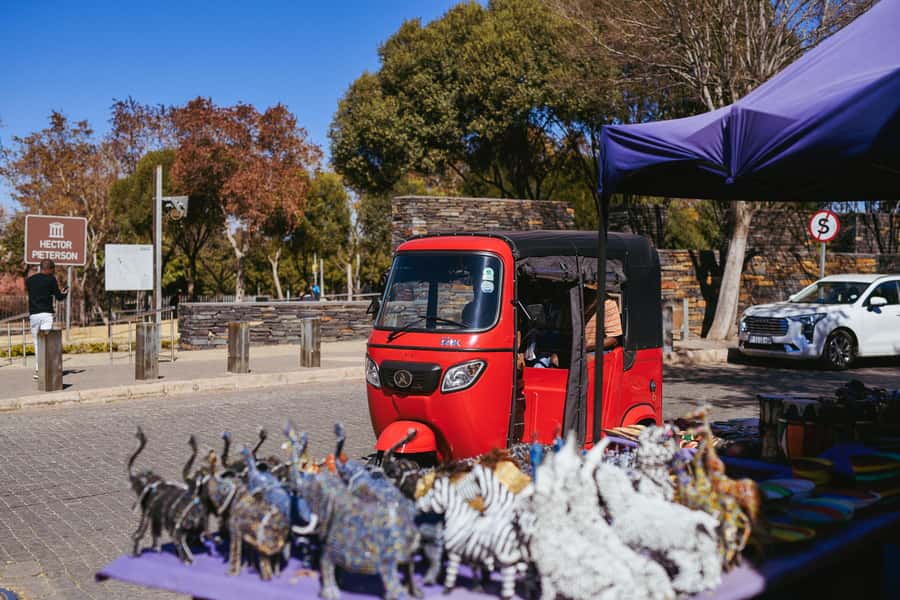
The tuk-tuk itself is a practical choice. You get open-air views, a closer look at daily life, and a way to cover a large area without spending the whole visit walking. It can also be more comfortable for families or anyone who would struggle with several hours on foot. The trade-off is exposure to weather and road noise, so bring sun protection and dress for the conditions.
More Soweto tours:
- Johannesburg: Hop-On Hop-Off Bus with Optional Soweto Tour
★ 4.6 · 985 reviews - Soweto /Johannesburg and Apartheid Museum Guided Full Day Tour
★ 5.0 · 932 reviews - Johannesburg Hop-On Hop-Off City Tour with Soweto Option
★ 4.5 · 768 reviews
Hector Pieterson Museum and the Soweto uprising
The first major stop is Hector Pieterson Museum, with about 30 minutes for a guided visit. The museum marks the 1976 Soweto uprising, one of the turning points in the fight against apartheid.
This is not a decorative photo stop. It gives the tour’s political history a clear center. The name Hector Pieterson is linked to the image of a schoolboy carried after being shot during the uprising, a photograph that became known around the world. Your guide can help connect the museum’s displays with the streets and communities you see later.
Thirty minutes is enough for an introduction, especially if you have limited time in Johannesburg, but it is not a full museum study. If you want to read every panel and spend a long time with the exhibits, you may wish to return separately. On this tour, the museum works best as a focused lesson before you continue through Soweto itself.
The sequence is well judged. You first learn about the forces that shaped the community, then see the streets, homes, churches, and public places where that history unfolded. I find that approach more useful than visiting historic sites as isolated attractions.
Vilakazi Street, Mandela House, and a powerful address
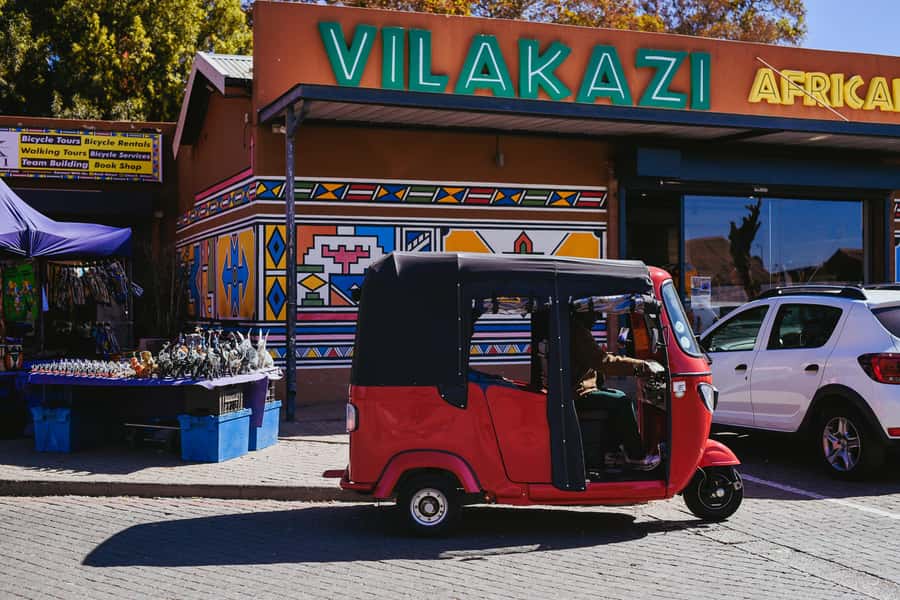
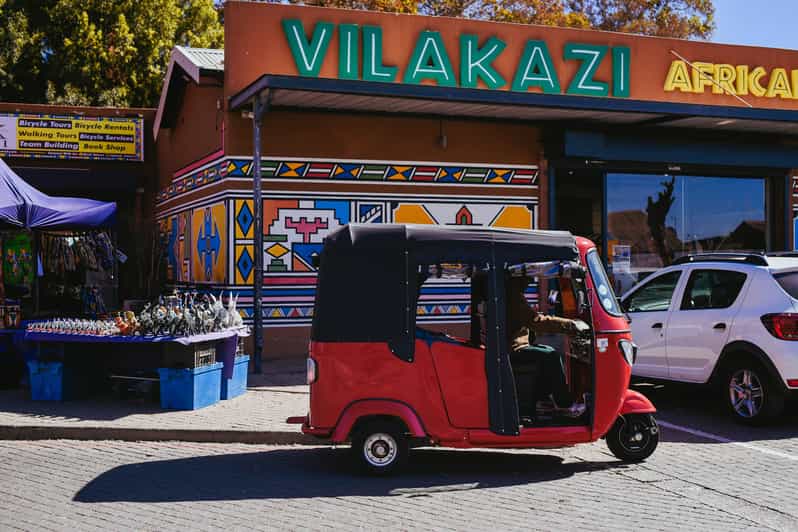
Vilakazi Street is one of Soweto’s most famous addresses. It is associated with both Nelson Mandela and Archbishop Desmond Tutu, two figures who helped shape South Africa’s democratic story. The tour allows about 30 minutes here, including a guided look at the street and its historic homes.
Mandela’s House receives its own visit and photo stop, also listed at about 30 minutes. The schedule gives you time to understand why the house matters and to take photographs, but admission details should be checked when booking if you want a full interior visit. One account describes the Mandela House visit as optional, so do not assume every museum entry is included in the $59 price.
Vilakazi Street can feel more visitor-focused than other parts of the route. That is not a flaw, but it is useful to know. You will find the most recognizable names and the easiest place to connect Soweto with international history. The stronger part of this tour is that it does not stop here.
Use your time to ask about the contribution of Mandela, Tutu, and local residents to apartheid’s downfall. The guide can also place the street in the context of ordinary homes and working neighborhoods rather than presenting it as a shrine detached from modern Soweto.
Orlando East and the view beyond the postcard
The tuk-tuk then heads to Orlando East, described as the site of Soweto’s first formal houses. This stop lasts about 10 minutes, so expect a short explanation and a photo opportunity rather than a long walk.
That brief pause is still important. Orlando East helps you see that Soweto is not one uniform place. Its neighborhoods developed at different times and under different conditions. The contrast between formal housing, established streets, and informal areas gives you a better sense of the township’s size and variety.
The vehicle is especially useful here. You can move between areas without spending the morning on transport or trying to navigate unfamiliar streets on your own. The route is not only about famous names. It is about seeing how communities sit alongside one another and how Soweto extends well beyond Vilakazi Street.
A few more in Johannesburg
- From Johannesburg: Pilanesberg Nature Reserve Game Safari
★ 4.8 · 1,327 reviews - Full Day Ultimate Pilanesberg National Park Safari from Johannesburg or Pretoria
★ 4.5 · 718 reviews - Half-Day Tour of Soweto Tour
★ 4.5 · 712 reviews - Soweto: Walking Tour with a Local Guide and Lunch
★ 4.9 · 648 reviews
Orlando Towers, a giant landmark with a local angle
The Orlando Towers are one of Soweto’s most recognizable sights. Their painted concrete structures are easy to spot and make a strong photograph, and the tour allows roughly 20 minutes for a visit, explanation, and photo stop.
I would not expect a long activity session at the towers. This is a sightseeing stop, not a separate adventure outing. The value comes from seeing a major Soweto landmark while your guide explains where it fits in the area and why it has become such a familiar symbol.
The tuk-tuk also gives you a good chance to ask for a pause if you want a photograph. Several visitors valued the guides’ willingness to stop when they needed a picture or video. Still, the overall timing remains fixed, so keep the camera ready rather than assuming you can linger.
Informal settlement visit and the question of respectful tourism

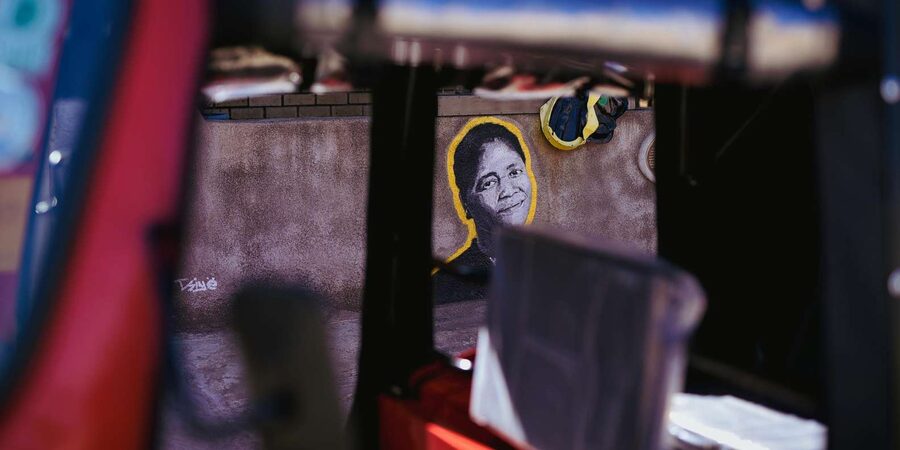
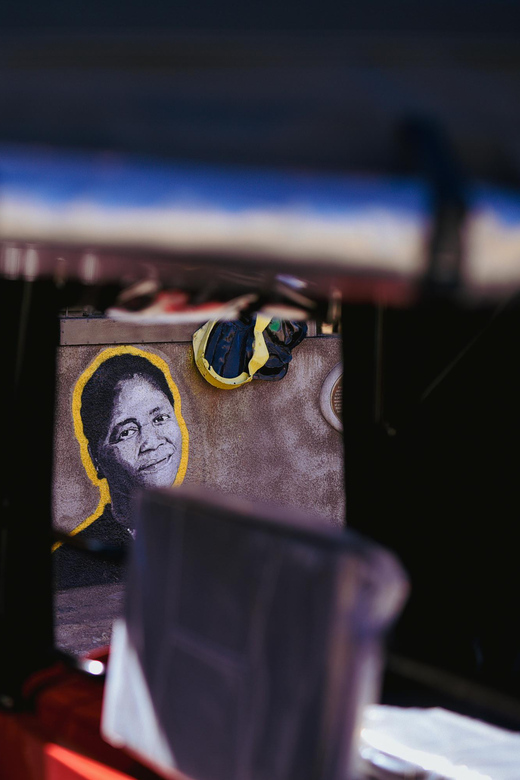
One of the most revealing parts of the experience is the visit to an informal settlement with a local guide. The route may also include a former women’s hostel and the family home of anti-apartheid activist Mama Lilian Ngoyi.
These stops move the tour away from famous political figures and toward the lives of people who shaped Soweto through organizing, work, family, and endurance. You get a chance to see challenges that are often left out of a polished city tour, while also hearing about the pride and strength of local communities.
This part requires good manners. Ask before taking photographs of people or private homes, listen rather than treating the area as a display, and follow your guide’s instructions. A gratuity of R20 to R50, or more if you choose, is welcomed during or after the informal settlement visit. It is not presented as a compulsory fee.
Some visitors may find this section emotionally difficult. That is part of its value, but it also means you should not book this tour expecting only light sightseeing. The guide’s role is important here, since local context can prevent the visit from becoming a quick look at hardship without explanation.
Regina Mundi Catholic Church and the role of faith
Regina Mundi Catholic Church receives about 30 minutes, including a guided visit and photo stop. The church is closely tied to the anti-apartheid struggle and is one of the tour’s most important historical places.
Religious buildings can sometimes feel like secondary stops on city tours. Here, the church helps explain how community spaces supported people during political conflict. Your guide can connect the building to Soweto’s wider resistance story and to the people who gathered, organized, and sought refuge there.
The half-hour slot should give you time to look around and ask questions. As with the museum, it is enough for a meaningful introduction but not an exhaustive architectural or religious study. The appeal is the connection between the church, local residents, and the national struggle.
Ending with a Kota instead of a standard tourist lunch

Food and drinks are included, with a Kota sandwich served toward the end of the experience. A Kota is a well-known local sandwich, often made with a hollowed-out quarter loaf filled with substantial ingredients.
This small detail adds a lot. You are not only looking at Soweto through historic sites and street scenes. You also get a taste of a popular everyday food, and several people singled out the sandwich as a satisfying finish.
The tour information does not specify the exact fillings or whether dietary substitutions are available. If you have allergies or strict dietary needs, ask the operator before booking. For most people, the Kota is a pleasant way to finish a busy route and gives you something more memorable than a generic café stop.
Is $59 good value for 150 minutes?
At $59 per person, this is not the cheapest way to see a single Soweto landmark. The value comes from the amount packed into two and a half hours: transport, an English-speaking local guide and driver, food and drinks, several historic sites, residential neighborhoods, and access to areas that are difficult to cover independently.
A small group of up to five also changes the calculation. You have more room to ask questions and a better chance of adjusting a photo stop or discussing a subject that interests you. That is a stronger deal than paying for a large vehicle that follows a fixed route with little conversation.
The tour is particularly good value if you are staying in Johannesburg for a short time and want an overview rather than separate visits to every site. It can also work well for families, since the tuk-tuk reduces the walking load. One family specifically found it useful for children who would not manage several hours on foot.
The price is less attractive if you already plan to spend a full day in Soweto, visit the museums at length, and arrange your own local transport. In that case, the 30-minute museum and landmark visits may feel too short. You are paying for breadth, local interpretation, and convenience, not long stays at one attraction.
Timing, group size, and practical planning
The full experience lasts 150 minutes, but the route is active. You will move between stops, climb in and out of the tuk-tuk, listen to explanations, and make several short visits. Wear comfortable shoes even though this is not a walking tour.
The small group limit is five participants. That is helpful for conversation, especially if you want to ask about the uprising, family life, township development, or the guide’s own neighborhood. If you are traveling alone, the format may also feel more personal than a large bus excursion.
The tour runs in English. The meeting point is in Orlando West, not central Johannesburg, so allow time to reach Soweto. One visitor specifically found it straightforward to use Uber to and from the starting point, but you should confirm the pickup plan and timing for your own booking.
Cancellation is free up to 24 hours before the start for a full refund, and you can reserve now while paying later. Check available starting times because the duration and meeting point make a late arrival especially inconvenient.
Who will enjoy this tour most?
I would recommend it to you if you want to see both the famous Soweto names and ordinary residential areas. It suits first-time visitors to Johannesburg, families who prefer riding to long walks, and people who want a local guide’s explanation rather than a self-guided photo circuit.
It is also a good fit if you care about South African political history but want to connect that history with present-day neighborhoods. The combination of Hector Pieterson Museum, Regina Mundi, Mandela House, Orlando East, and an informal settlement gives you several angles on the community.
I would think twice if you dislike open-air vehicles, need a slow pace, or want to spend hours inside museums. The tuk-tuk is part of the charm, but it also means road noise, weather exposure, and a compact seating arrangement. Anyone seeking a luxury vehicle or a private car with lots of storage should choose another format.
The strongest guides appear to be a major reason the tour works. Mulalo is repeatedly praised for his local perspective, friendly manner, and ability to explain the area beyond the tourist zone. Thabo is also described as patient, personable, and able to answer questions clearly. Guide quality can vary on any day, but the local connection is central to this experience.
Should you book the Soweto tuk-tuk tour?
Book it if you want a fast, personal introduction to Soweto with serious history, local neighborhoods, and a good bit of riding. The route reaches far beyond Vilakazi Street, and the Kota lunch gives the outing a welcome local finish.
Skip it if your priority is a slow museum visit or a full day focused on one site. For most first visits to Johannesburg, though, the combination of a small group, local guide, historic landmarks, informal settlement context, and easy transport makes $59 a fair price for the time and range.
FAQ
Where does the Soweto tuk-tuk tour start?
The meeting point is One Day Africa at the corner of Rampa and Moema Street in Orlando West, Soweto.
How long does the tour last?
The tour lasts 150 minutes, or two and a half hours.
What language is the tour conducted in?
The live tour guide speaks English.
How many people can join the tour?
The group is limited to five participants.
Is food included?
Yes. Food and drinks are included, with a local Kota sandwich served during the experience.
Which major places does the tour visit?
The route includes Hector Pieterson Museum, Vilakazi Street, Mandela’s House, Orlando East, Soweto Towers, and Regina Mundi Catholic Church.
Does the tour visit an informal settlement?
Typically, yes. The informal settlement visit is conducted with a local guide.
Is a gratuity expected at the informal settlement?
You may offer a gratuity of R20 to R50, or more, at your discretion during or after the visit.
Can I cancel for a full refund?
Yes. You can cancel up to 24 hours in advance for a full refund. You can also reserve now and pay later.
Just added in Johannesburg
- Pretoria Capital City Tour Experience★ 5.0 · 24 reviews
- 4 Day Kruger National Park Tour★ 5.0 · 30 reviews
- Johannesburg e-scooter experience★ 5.0 · 38 reviews
- Johannesburg Street Art & Museum Walking or E-scooter Tour★ 4.5 · 10 reviews
- Big 5 Safari Experience at Pilanesberg National Park★ 5.0 · 16 reviews
- Drakensberg Mountains. Tugela Gorge and Amphitheater Hike★ 5.0 · 7 reviews
- Apartheid Museum Tour from Johannesburg★ 4.5 · 14 reviews
- Arrival Private Transfer: Tambo Airport JNB to Johannesburg in Business Car★ 4.0 · 5 reviews
Soweto Tours, compared.
Soweto /Johannesburg and Apartheid Museum Guided Full Day Tour
Read our review →

Jo’berg in 1 Day: Soweto, Apartheid Museum & City Tour
Read our review →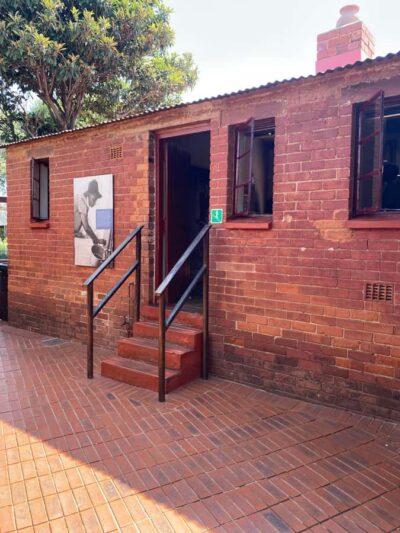
Full-Day Tour with Soweto and Apartheid Museum
Read our review →
Full-Day Soweto, Apartheid Museum and Lunch Tour
Read our review →
Half Guided Day Tour of Soweto And Apartheid Museum
Read our review →Browse the lists this tour appears in