
REVIEW · JOHANNESBURG TOURS
Johannesburg: The Evolution of Maboneng (Place of Light)
Maboneng changes as you walk. I like this tour for its street-art focus and its clear look at how local enterprise has reshaped part of inner-city Johannesburg. I also like the mix of old and new: heritage buildings, shipping-container housing, art spaces, a traditional healers’ market, and a giant second-hand bookstore all appear in one short outing.
The main drawback is value. At $42 per person, this is not a cheap walk, and the route may feel more like a guided stroll than a full tour. The market visit may not always happen, and one guide reportedly finished early, so your experience can depend quite a bit on the guide and the day’s timing.
In This Review
- Key points about the Maboneng walk
- Why Maboneng makes a good first Johannesburg walk
- Starting at Curiocity Backpackers on Fox Street
- The Cosmopolitan and Johannesburg’s older streets
- Shipping containers and the Drive-lines development
- Murals, Nelson Makamo, and art in public space
- Arts On Main and the Center For The Less Good Idea
- Kwa Mai-Mai Traditional Healers’ Market
- The Collectors Treasure and second-hand browsing
- Rooftop views and the possible sundowner finish
- Is $42 a fair price for two hours?
- Who should book this Maboneng tour?
- Should you book The Evolution of Maboneng?
- FAQ
- How long is The Evolution of Maboneng tour?
- Where does the tour start?
- Where does the tour end?
- What language is the tour offered in?
- What does the price include?
- What should I bring?
- Is the tour suitable for people with limited mobility?
- Is the tour suitable for pregnant women?
- Can I cancel for a refund?
Key points about the Maboneng walk
- Maboneng means place of light: The name reflects the district’s attempt to bring fresh energy, enterprise, and art to Johannesburg’s eastern inner city.
- Murals are central to the story: You see public art by local and international artists, including work connected with Nelson Makamo.
- The route mixes past and present: The 1899 Cosmopolitan building appears alongside Drive-lines, a newer project using old shipping containers for housing.
- Kwa Mai-Mai adds a traditional side: This long-established healers’ market sells medicines, clothing, and other items linked with local customs.
- Arts On Main connects place and creativity: The precinct is associated with William Kentridge and the Center For The Less Good Idea.
- The tour ends where it starts: Meet at Curiocity Backpackers on Fox Street, then return there after roughly two hours.
Why Maboneng makes a good first Johannesburg walk
Maboneng, a seSotho word meaning place of light, is one of Johannesburg’s most talked-about creative districts. Its story is not simply about pretty walls and fashionable cafés. It is about urban regeneration, private development, small business, public art, and the difficult question of who gets to benefit when an inner-city area changes quickly.
That makes this a useful first tour if you want context rather than a checklist of sights. Your guide explains the history and heritage of Johannesburg’s first suburbs while showing you the physical signs of change. You are not just looking at a mural. You are seeing how walls, buildings, studios, markets, and new housing projects can alter the feel of a neighborhood.
I especially like the way the route places older Johannesburg beside newer ideas. A restored heritage building may appear within minutes of a modern creative venue. That contrast gives the walk its purpose.
Still, keep your expectations realistic. This is a two-hour English-language walk, not a full survey of Johannesburg. You will not see every part of Maboneng, and the itinerary can shift if time runs short. One account described the tour ending about 20 minutes early, while other feedback praised the guide for spending generous time on local history and art.
A few more in Johannesburg
- From Johannesburg: Pilanesberg Nature Reserve Game Safari
★ 4.8 · 1,327 reviews - Johannesburg: Hop-On Hop-Off Bus with Optional Soweto Tour
★ 4.6 · 985 reviews - Soweto /Johannesburg and Apartheid Museum Guided Full Day Tour
★ 5.0 · 932 reviews
Starting at Curiocity Backpackers on Fox Street
The meeting point is Curiocity Backpackers, at 302 Fox Street in Jeppestown. This gives the tour a practical start inside the district rather than at a distant transport stop. You meet the guide there, receive an introduction to the area, and set off on foot.
That starting point also tells you something about Maboneng. Curiocity is not just a neutral meeting place. It is part of the district’s travel and creative scene, so the walk begins in a setting linked to the area’s new identity.
Wear comfortable shoes. Two hours on foot may sound easy, but the route includes several stops and street sections, and the tour is not recommended for people with limited mobility. Pregnant women and people with mobility impairments are also listed as unsuitable for this activity.
The provider gives the tour in English. If you need a different language, this is not the right choice based on the information available.
The Cosmopolitan and Johannesburg’s older streets
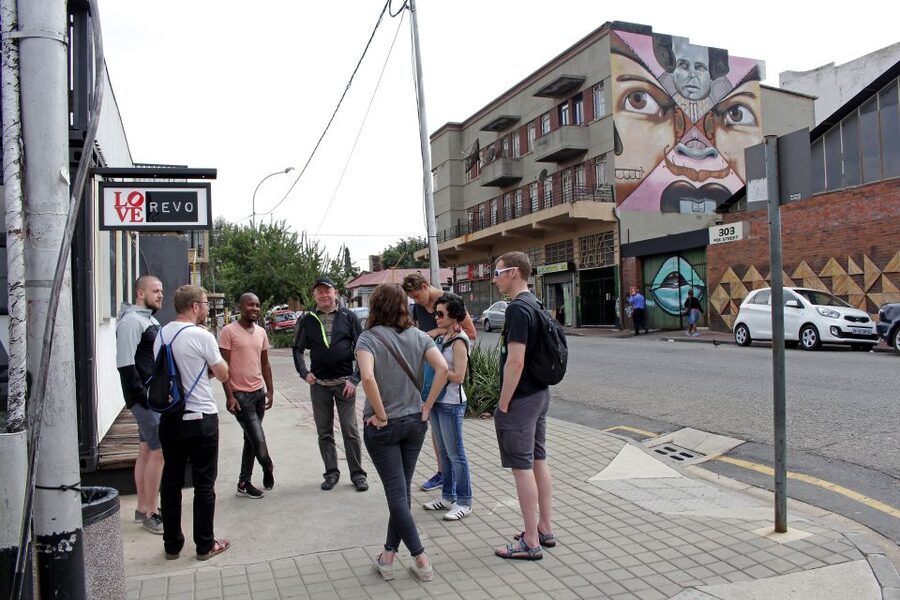
One of the early highlights is the Cosmopolitan, an elegant heritage building with a long past. It was built in 1899 and opened as a hotel and bar in 1902. Your guide uses it to help explain the city’s early suburbs and the lives that once moved through these streets.
This stop works best when you let the building carry some of the story. A grand old structure can tell you about ambition, trade, nightlife, and changing fortunes without needing a museum display. The guide’s explanation adds the missing context.
The Cosmopolitan also sets up the central theme of the walk. Maboneng is not an entirely new creation. It is a district built over older layers of Johannesburg, with new businesses and art projects occupying streets and buildings that have already seen many different uses.
Do not expect a long interior visit or a formal architectural tour. The attraction here is the outside view and the story attached to it. The value comes from understanding how the building fits into the wider district.
Shipping containers and the Drive-lines development
The route continues to Drive-lines, a newer urban development that uses upcycled shipping containers as affordable housing. This is one of the tour’s more useful stops because it turns a broad idea, creative regeneration, into something you can see at street level.
The project raises questions as well as admiration. Reusing containers is inventive, but urban renewal is never only about design. It also involves housing, ownership, affordability, access, and the people who already live in a district. A good guide can help you consider those issues rather than presenting the development as a simple success story.
This stop gives the tour a practical edge. You are not only looking at studios and murals. You are seeing an attempt to use limited urban space in a different way.
The walk is especially appealing if you enjoy cities as works in progress. Maboneng is described as ever-evolving, and Drive-lines shows why. The district is still being shaped, and not every change will feel equally comfortable or complete.
Something quite different:
- Johannesburg Hop-On Hop-Off City Tour with Soweto Option
★ 4.5 · 768 reviews - Full Day Ultimate Pilanesberg National Park Safari from Johannesburg or Pretoria
★ 4.5 · 718 reviews - Half-Day Tour of Soweto Tour
★ 4.5 · 712 reviews - Soweto: Walking Tour with a Local Guide and Lunch
★ 4.9 · 648 reviews
Murals, Nelson Makamo, and art in public space
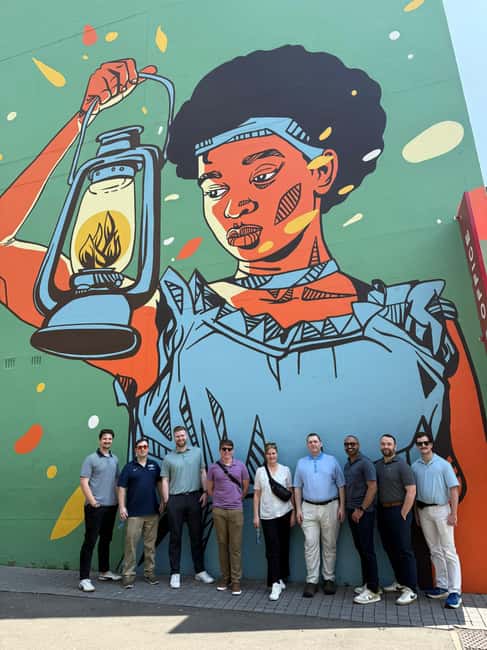
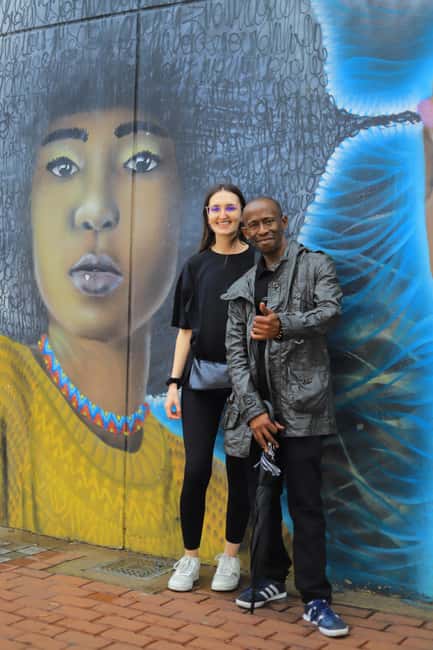
Public art is the strongest thread running through the experience. You will see murals by local and international artists, including work linked with Nelson Makamo. The tour describes parts of Maboneng as an open-air museum, where ordinary walls become places for attention and discussion.
That language may sound grand, but the basic idea is sound. Street art helps you read a neighborhood differently. Blank walls can divide or discourage people, while large public images can give a street a shared point of interest. The guide explains how art can break down those barriers, at least symbolically.
The Mandela mural is another named stop. The reference to the leader-boxer points to Nelson Mandela’s well-known boxing background and his continuing presence in South African public culture. You will not simply be shown a portrait and hurried onward. The point is to connect the mural with the way public images shape memory.
I would give this section time. Look closely at color, scale, placement, and the buildings around each piece. The art is not displayed in a quiet gallery, so the surroundings are part of what you are seeing.
The quality of interpretation may vary. Some feedback praised guides for making the murals and neighborhood history come alive. Another person felt the guide was distracted by a phone and did not stay fully engaged. That is worth keeping in mind because the art speaks for itself, but the guide determines how much you learn from it.
Arts On Main and the Center For The Less Good Idea
Arts On Main adds a more formal cultural stop to the street-art portion of the walk. It is associated with William Kentridge, one of South Africa’s best-known artists, and with his foundation, the Center For The Less Good Idea.
The name of the center points toward experimentation and unfinished thinking. That makes it a fitting part of a district built around repurposed buildings, new businesses, and changing creative projects.
You should see this stop as an introduction rather than a full art visit. The tour lasts two hours and includes several locations, so there may not be time for a long gallery stay. The benefit is seeing how a former industrial or inner-city setting can support studios, exhibitions, and cultural work.
This is one reason I would recommend the tour to people who want more than a standard sightseeing loop. You get a sense of how art functions here as part of the neighborhood, not just as something behind a ticket desk.
Kwa Mai-Mai Traditional Healers’ Market
Kwa Mai-Mai is described as one of the oldest traditional healers’ markets in Johannesburg. The route may take you among sangomas, traditional medicines, and traditional clothing, offering a side of the city that feels very different from the polished creative venues.
This is potentially the most distinctive stop. Art districts can begin to resemble one another, but a traditional healers’ market brings local custom, belief, commerce, and everyday practice into the picture. It helps prevent Maboneng from being reduced to murals and rooftop views.
You should approach the market with respect. This is not simply a colorful shopping stop for photographs. The objects and remedies are tied to cultural practices, and the people working there deserve the same courtesy you would show in any place of worship, trade, or healing.
There is an important qualification. The market visit may not happen on every tour. One person specifically found that the market was skipped, despite expecting it from the advertised route. If this stop is your main reason for booking, ask at the start if the current schedule includes it.
The Collectors Treasure and second-hand browsing
The Collectors Treasure is described as the largest second-hand bookstore in the southern hemisphere. Even if you are not a serious book collector, this stop adds character to the tour.
A second-hand bookstore gives you a different way to understand a city. The shelves can reflect old interests, discarded collections, local reading habits, and the movement of books through different hands. It is also a welcome change of pace after walking through streets covered in large-scale art.
As with Arts On Main, the time available may be short. You may get a chance to browse, but you should not assume you will have a long shopping session. If you love books, plan to return independently if the shop is open and you want more time.
The bookstore also strengthens the tour’s theme of reuse. Maboneng’s creative identity is not only about new development. It includes old buildings, second-hand objects, repurposed materials, and cultural work that gives existing spaces another life.
Rooftop views and the possible sundowner finish
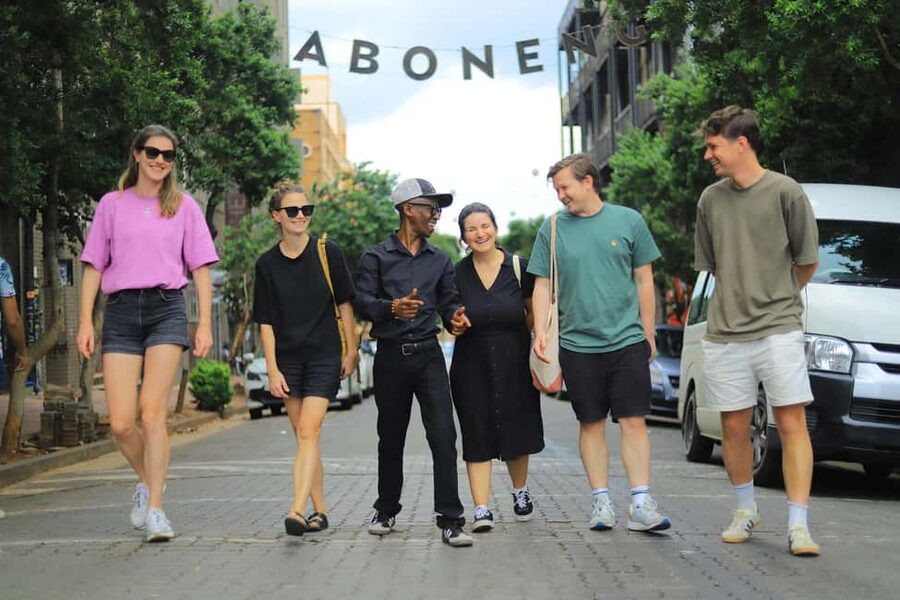
If time allows, the tour may finish with a sundowner overlooking the Johannesburg skyline. This is an appealing way to close a walking route because it lets you see the city from above after studying its streets at ground level.
The phrase if time allows matters. It is not a guaranteed final stop, and you should not book this tour solely for a sunset drink or a rooftop visit. One particularly positive account praised access to rooftop views, so the ending can add real pleasure when the schedule permits.
A skyline view also helps you place Maboneng within Johannesburg. After hearing about the city’s older suburbs, new housing, public art, and creative venues, you get a broader view of the inner city.
Because the walk ends back at Curiocity Backpackers, you are not left at a separate final location. That makes the route easier to plan, although you should still allow extra time if you want to linger after the official finish.
Is $42 a fair price for two hours?
The price is $42 per person for a two-hour guided walking tour. That is reasonable only if you place a high value on local interpretation, access to selected venues, and a focused introduction to Maboneng.
It is less attractive if you are judging the cost by the number of formal attractions entered. Much of the experience takes place outdoors, and one person felt the fee was too high because it was primarily a walk. That criticism is fair.
I would see the price this way:
- You are paying for a guide who can connect separate sights into one story.
- You are paying for a structured route in an area you may not feel ready to explore alone.
- You may receive access to rooftop views or cultural venues, depending on timing.
- You are not paying for a long museum visit, transport, meals, or a full-day city tour.
The strongest accounts praised guides such as Tsepho, also spelled Tsehpo in one account, and Eko for explaining Maboneng’s origins, history, and creative changes. One person also appreciated clear updates from Curiocity when unexpected timing problems arose.
Because guide quality affects the value so much, I would book this if you want conversation and context. If you prefer to walk independently, take photographs, and stop wherever you like, $42 may feel steep.
Who should book this Maboneng tour?
I would recommend it to first-time visitors to Johannesburg who want a short introduction to the inner city and prefer to begin with a local guide. It also suits people interested in street art, architecture, social change, and independent cultural spaces.
It is a good match if you enjoy walking and asking questions. The tour gives you several ways into Maboneng: heritage, housing, public art, traditional healing, books, and city views.
I would think twice if you have limited mobility, are pregnant, or dislike walking on city streets. I would also hesitate if your main goal is a guaranteed market visit, a long gallery session, or a fixed rooftop sunset. Those elements may depend on time and the guide.
Bring comfortable shoes and clothing suited to the weather. Littering is not allowed, which should hardly need saying, but it is worth respecting in a district that is trying to improve its public spaces.
Should you book The Evolution of Maboneng?
Book it if you want a compact, guided introduction to a complicated neighborhood. The best version of this tour gives you a useful story about how entrepreneurship and art reshape a city, while still showing the older buildings and traditions that came before.
Before paying, I would confirm that the market is planned for your departure and ask how much time is expected at Arts On Main and the bookstore. That small check can prevent disappointment.
The tour earns its price when Tsepho, Eko, or another engaged guide turns the walk into a conversation about Johannesburg. It feels less worthwhile when stops are rushed or the route ends early. For a first look at Maboneng, I would book it with flexible expectations, comfortable shoes, and an understanding that the neighborhood itself is the main attraction.
FAQ
How long is The Evolution of Maboneng tour?
The guided walking tour lasts two hours.
Where does the tour start?
It starts at Curiocity Backpackers, 302 Fox Street, Jeppestown, Johannesburg, 2043, South Africa.
Where does the tour end?
The activity ends back at the meeting point at Curiocity Backpackers.
What language is the tour offered in?
The tour is offered in English.
What does the price include?
The $42 price includes the two-hour guided walking tour.
What should I bring?
Bring comfortable shoes and clothing suitable for the weather.
Is the tour suitable for people with limited mobility?
No. The tour is not recommended for people with limited mobility or mobility impairments.
Is the tour suitable for pregnant women?
No. Pregnant women are listed as unsuitable for this activity.
Can I cancel for a refund?
You can cancel up to 24 hours in advance for a full refund. The tour also offers a reserve-and-pay-later option.
Just added in Johannesburg
- Soweto half day Tour★ 5.0 · 54 reviews
- Hiking In the Magaliesberg,Wildlife hike an hour fromJohannesburg★ 5.0 · 11 reviews
- Full-Day Cradle of Human Kind and caves private★ 4.5 · 10 reviews
- Full-Day Apartheid Museum and Soweto Tour★ 5.0 · 10 reviews
- Full day Soweto & Apartheid Museum Tour★ 5.0 · 3 reviews
- Pilanesberg National Park Safari in Open Vehicle from Johannesburg★ 5.0 · 6 reviews
- Full-Day Soweto Apartheid Museum & Johannesburg Tour★ 5.0 · 4 reviews
- Exclusive Safari Flight★ 5.0 · 16 reviews
Johannesburg Tours, compared.


Soweto /Johannesburg and Apartheid Museum Guided Full Day Tour
Read our review →Full Day Ultimate Pilanesberg National Park Safari from Johannesburg or Pretoria
Read our review →

Jo’berg in 1 Day: Soweto, Apartheid Museum & City Tour
Read our review →
Full-Day Tour with Soweto and Apartheid Museum
Read our review →
Browse the lists this tour appears in