
REVIEW · WORKSHOPS
Koeksister and Samoosa Class by the Malay Cook Up
Taste Bo-Kaap through two beloved snacks. The Malay Cook Up’s two-hour class brings you into a home kitchen to make samoosas and koesisters, two foods closely tied to Cape Malay cooking. I like the friendly, informal setting and the chance to sit down afterward with the host over what you have prepared. I also like the sweet-and-savoury pairing, since it gives you a wider taste of local food than a single-dish lesson.
The main point to check before booking is how hands-on the samoosa work will be. One participant found that the pastry was store-bought and the fillings were prepared in advance, while the koesister section offered more active cooking. If making pastry from raw ingredients is your main goal, clarify that point first.
In This Review
- Key points to know before booking
- Why these two snacks matter in Bo-Kaap
- Arriving in a Bo-Kaap home kitchen
- The samoosa lesson: crisp pastry and savoury filling
- The koesister lesson brings more kitchen action
- Sitting down to eat what you prepared
- What the $23 price includes
- Who will enjoy this class most
- Practical details that affect your decision
- How this compares with a standard food tour
- Should you book the Malay Cook Up class?
- FAQ
- How long does the koesister and samoosa class last?
- Where does the cooking class take place?
- What foods will I learn to make?
- Is tasting included?
- Are ingredients and equipment provided?
- What languages are offered?
- Is the samoosa pastry made from scratch?
- How much does the class cost?
- Can I cancel or pay later?
Key points to know before booking
- Two classic Cape Malay foods: You make a savoury samoosa and a sweet-spicy koesister in one two-hour session.
- Home-kitchen setting: The class takes place in Bo-Kaap, giving the food a personal setting rather than a formal cooking school feel.
- Warm host interaction: The strongest praise centres on the welcoming atmosphere, relaxed teaching, and easy conversation.
- Hands-on level may vary: Koesister preparation appears more interactive, while the samoosa pastry and filling may be prepared ahead of time.
- Good value at $23: Ingredients, equipment, tasting, and local history are included, making the price reasonable for a short cultural food experience.
- Flexible booking: You can reserve without paying immediately and cancel up to 24 hours ahead for a full refund.
Why these two snacks matter in Bo-Kaap
Samoosas and koesisters are not random cooking-class choices. They are closely linked with the earliest inhabitants of Bo-Kaap and remain part of everyday South African food culture across communities and religions.
That gives this class more weight than a simple recipe demonstration. You are learning foods that carry family, religious, and neighbourhood connections. The recipes also show two sides of Cape Malay cooking. The samoosa is savoury, crisp, and built around pastry and filling. The koesister is sweet, spiced, and shaped like a doughnut.
I like that the class puts both on the same table. You get contrast without needing a long meal or a full-day food tour. The result is a compact introduction to Cape Malay flavours, with enough time to ask questions and eat what you make.
The local history shared during the class helps explain why these foods matter. Do not expect a formal lecture. The experience is presented as a kitchen session led by an accomplished Cape Malay cook, so the cultural context is likely to come through conversation and the cooking itself.
More Workshops in Cape Town
- Cape Town: Malay Cooking Class and Lunch in Bo-Kaap
★ 4.8 · 515 reviews - Cape Town: Cape Malay Cooking Class in Bo-Kaap
★ 4.8 · 120 reviews - Cape Town: Bo-Kapp Walking Tour and Malay Cooking Class
★ 4.7 · 105 reviews
Arriving in a Bo-Kaap home kitchen
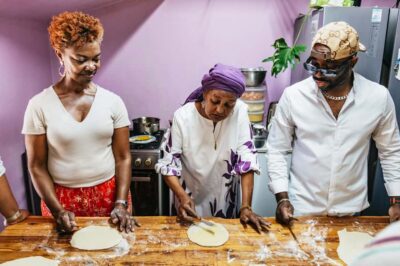
The setting is part of the appeal. Instead of working in a commercial training room, you cook in a home kitchen in Bo-Kaap. That creates a more personal tone, and several people particularly appreciated feeling welcome and comfortable in the host’s home.
You should expect an informal experience rather than a polished restaurant production. That can be a strength if you want friendly conversation, local food, and a relaxed pace. It may be less suitable if you prefer a highly structured class with professional workstations and every ingredient measured in front of you.
The host speaks English and Afrikaans. That makes the class accessible to English-speaking visitors while also placing it in the language setting of the Western Cape.
The information provided does not specify the class size, transport arrangements, or exact meeting point. You should confirm those details when booking, especially if you need help finding the home kitchen in Bo-Kaap.
The samoosa lesson: crisp pastry and savoury filling
The samoosa section introduces one of the best-known savoury snacks in South African cooking. The basic idea is familiar: a filling enclosed in pastry and folded into a triangle. The appeal is in the balance between a crisp outer shell and a strongly seasoned centre.
The class is described as teaching the samoosa from scratch, but you should read that promise with care. A participant reported using store-bought pastry and working with fillings that had already been prepared. That meant less time handling raw ingredients, smelling the spices, and learning how the filling comes together.
This is the clearest limitation of the class. If you have taken cooking lessons mainly to learn dough-making, the samoosa section may not go far enough. Even a partial pastry lesson would help you understand the texture, rolling, and folding process. If that matters to you, ask whether homemade dough will be included on your date.
There is still value in the assembly and folding work. You can learn the shape, see how the pastry is handled, and understand the practical steps needed before cooking. For a first taste of the dish, that may be enough.
The prepared filling also keeps the two-hour schedule manageable. Samosa pastry can take time, and a full filling lesson could make the class longer or leave less time for the koesister. The tradeoff is simple: you get a wider two-snack lesson, but perhaps not a complete from-scratch pastry course.
The koesister lesson brings more kitchen action
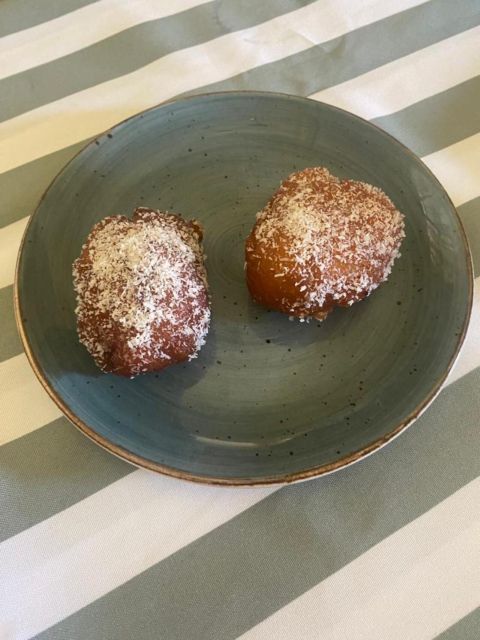
The koesister is the sweeter half of the class. It is described as a traditional sweet-spicy doughnut, and this part appears to provide more direct participation than the samoosa section.
That difference matters. A good cooking lesson lets you work with texture, shape, and aroma, not just watch finished components come together. The koesister section seems to offer more of that contact, which is why it may be the stronger part of the class for people seeking hands-on cooking.
The spice profile also gives you a taste that is distinct from a standard doughnut. It is sweet, but not plain. The combination reflects the Cape Malay preference for using spice in both savoury and sweet foods.
The finished koesisters were praised as especially tasty. You will have the chance to eat them alongside the samoosas at the end, so the class finishes with a proper comparison between the two preparations.
If you enjoy learning through touch and repetition, pay close attention during this portion. You may also want to ask about the spice balance and how the koesister differs from other South African sweet pastries. The available information does not list the exact ingredients, so avoid assuming a particular recipe before the class.
A few more in Cape Town
- Wine Tour: Paarl, Franschhoek & Stellenbosch incl 3 wineries
★ 5.0 · 3,940 reviews - Cape Town: Hop-On Hop-Off Bus Tour with Optional Cruise
★ 4.8 · 3,929 reviews - Cape Town: Cape of Good Hope & Penguins Day Tour with Pickup
★ 4.7 · 3,362 reviews - Zipline Cape Town – From Foot of Table Mountain Reserve
★ 5.0 · 3,179 reviews
Sitting down to eat what you prepared
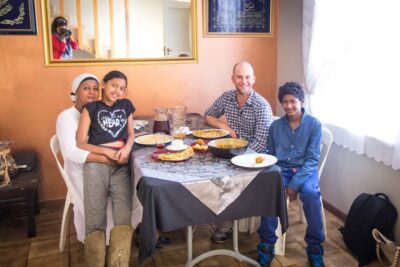
At the end of the two hours, you sit with the host and taste the snacks. This final meal is more than a quick sample. It gives you time to talk, compare the two foods, and ask follow-up questions while the cooking is still fresh in your mind.
I like this part because it changes the class from a demonstration into a shared food experience. The conversation is one of the most praised elements, with descriptions of the atmosphere as informal, relaxed, and welcoming. That makes the class a good choice if you want contact with a local cook rather than a lesson that ends the moment the food leaves the pan.
You should also keep your expectations realistic. The tasting is limited to the samoosas and koesisters you prepare. This is not presented as a full Cape Malay lunch or a broad food sampling tour.
The class can still leave you with something useful beyond the visit. One participant enjoyed it enough to buy the ingredients later and repeat the recipes at home with friends. That is a good sign for anyone who wants food skills they can use after returning home.
What the $23 price includes
At $23 per person, this is a reasonably priced two-hour cultural activity. Your fee covers the class, all equipment, ingredients, tasting, and local history. You do not need to bring cooking tools or shop for supplies before arriving.
The value depends on what you want from the word class. If you want two complete recipes made entirely from raw ingredients, the price may feel less attractive because the samoosa pastry and filling may be prepared ahead of time.
If you want a short introduction to Cape Malay food in a home setting, the calculation looks better. You receive instruction, local conversation, two foods, and a sit-down tasting for less than the cost of many guided food activities. The class also avoids the expense and time of a longer cooking day.
I would judge the price as good for a relaxed cultural encounter, with one important condition: do not book it solely for advanced pastry instruction. Book it for the combination of food, place, host interaction, and a taste of local cooking traditions.
Who will enjoy this class most
This experience should suit you if you like food as a way to understand a place. It works well for couples, families, friends, and solo visitors who enjoy conversation and do not need a formal classroom.
It is also a strong choice for anyone who wants a manageable activity. Two hours is long enough to feel worthwhile but short enough to fit around other plans in the Western Cape.
The class may suit beginner cooks especially well. You receive guidance step by step, and the focus stays on two recognisable snacks rather than a long menu. You do not need advanced kitchen skills to appreciate the food or follow along.
Families and groups should note the informal home setting. One person described it as a fun outing for family and friends, while another felt comfortable and welcomed in the home. That suggests a sociable mood, though the exact group size is not provided.
This may not be the best pick for you if your main aim is professional cooking technique. The pre-prepared samoosa elements could leave you wanting more detail. It is also not the right activity if you expect alcohol, since alcohol and drugs are not allowed.
Practical details that affect your decision
The class lasts two hours and includes tasting. Equipment and ingredients are supplied, so you can arrive ready to cook rather than carrying kitchen supplies.
English and Afrikaans are available. The setting is in Bo-Kaap, in the Western Cape, but the provided details do not state the exact address or transport options. Check the meeting instructions before setting out.
You can reserve your place and pay later, which helps if your schedule is still changing. Cancellation is allowed up to 24 hours in advance for a full refund. Those terms make it easier to fit the class into a flexible Cape Town plan.
The experience has an overall rating of 4.8 from nine reviews, with strong praise for interaction, taste, and hospitality. One lower rating focused on the lack of homemade samoosa pastry rather than on the host or the koesisters. That distinction is useful: the main concern is the level of kitchen participation, not the welcome or the flavour.
How this compares with a standard food tour
A food tour usually moves you through several stops and lets you sample food made by other people. This class keeps you in one home kitchen and gives you a closer look at how two snacks are prepared.
That means less variety but more personal contact. You will not cover a long list of dishes, yet you can talk directly with the cook and eat food connected to Bo-Kaap’s Cape Malay community.
The class also gives you a chance to repeat the recipes at home. A food tour may teach you what a dish tastes like. This experience can show you enough of the process to help you make it again, especially with the koesister.
The choice comes down to your priorities. Pick a food tour if you want broad tasting. Pick this class if you want a slower, more intimate kitchen activity with two specific foods at its centre.
Should you book the Malay Cook Up class?
Book it if you want a friendly two-hour introduction to Cape Malay cooking, a home-kitchen setting, and the chance to eat your own samoosas and koesisters. The host interaction, local context, and sweet-and-savoury format give the class real appeal at $23.
Before paying, ask one direct question: will the samoosa pastry and filling be made during the session, or will they be prepared ahead of time? If the answer is store-bought pastry and ready-made filling, decide if folding and tasting still meet your goals.
For most casual food lovers, families, and curious first-time visitors, this looks like good value. For serious bakers seeking a full pastry lesson, choose it only if the hands-on details are confirmed.
FAQ
How long does the koesister and samoosa class last?
The class lasts two hours, including the tasting at the end.
Where does the cooking class take place?
It takes place in a home kitchen in Bo-Kaap, in the Western Cape, South Africa.
What foods will I learn to make?
You will learn about making samoosas, which are pastry triangles, and koesisters, which are traditional sweet-spicy doughnuts.
Is tasting included?
Yes. You sit down with the host at the end of the class to enjoy the snacks you prepared.
Are ingredients and equipment provided?
Yes. All equipment and ingredients are included.
What languages are offered?
The class is offered in English and Afrikaans.
Is the samoosa pastry made from scratch?
The class is described as teaching the samoosa from scratch, but one participant reported that store-bought pastry and prepared fillings were used. Ask the provider to confirm the exact format before booking.
How much does the class cost?
The listed price is $23 per person.
Can I cancel or pay later?
Yes. You can reserve and pay later, and you can cancel up to 24 hours in advance for a full refund. Alcohol and drugs are not allowed.
Just added in Cape Town
- Sunset Safari Big 5 Aquila with Snacks and Wine Tasting★ 5.0 · 12 reviews
- Explore Atlantis Sand Dunes with a 1hour 30mins sandboarding tour★ 5.0 · 5 reviews
- Private Tour to 20 Wine Tasting in Stellenbosch and Franschhoek★ 5.0 · 11 reviews
- Photoshoot in Cape Town’s most Gorgeous Locations★ 5.0 · 2 reviews
- Robben Island, Kirstenbosch wine tasting Tour★ 5.0 · 10 reviews
- Zip Line and Wine from Cape Town★ 5.0 · 14 reviews
- Private Transfer from Cape Town International Airport★ 5.0 · 4 reviews
- 1 Hour Cape Town City Center Photoshoot Experience★ 5.0 · 19 reviews
Workshops, compared.


Private Surf Lesson in Cape Town – Transport & Photos Included
Read our review →
Jeffreys Bay: Private Surfing Lesson for Beginners
Read our review →

Browse the lists this tour appears in