
REVIEW · CULTURAL VILLAGE TOURS
Lesedi Cultural Village
Culture comes alive through music, movement, and food. Lesedi Cultural Village gives you a compact introduction to five South African traditions, with guided visits to homesteads representing the Zulu, Xhosa, Pedi, Basotho, and Ndebele peoples. It is near Johannesburg, inside the Cradle of Humankind World Heritage Site, and fits neatly into a half-day.
I especially like the traditional dance performances and the chance to compare the customs and homes of several cultural groups in one place. I also like that the outing includes a buffet of South African dishes, rather than stopping at displays and explanations alone. The main consideration is the short four-hour format: you get a broad introduction, but not the time for an in-depth study of any one culture.
In This Review
- Key points to know before booking
- Why Lesedi works well as a Johannesburg half-day
- Five homesteads, five cultural perspectives
- Traditional dance gives the visit its pulse
- The buffet adds a useful taste of South Africa
- What the four-hour itinerary feels like
- The ride can add context, especially with Victor
- Is $143.68 a fair price?
- Who will enjoy Lesedi most?
- Booking, timing, and cancellation advice
- Should you book Lesedi Cultural Village?
- FAQ
- Where is Lesedi Cultural Village located?
- How long does the experience last?
- What cultures are represented at Lesedi Cultural Village?
- Is admission to Lesedi Cultural Village included?
- Is pickup available?
- Is food included?
- Does the tour include traditional music and dancing?
- How large is the tour group?
- Can I use a mobile ticket?
- What is the cancellation policy?
Key points to know before booking
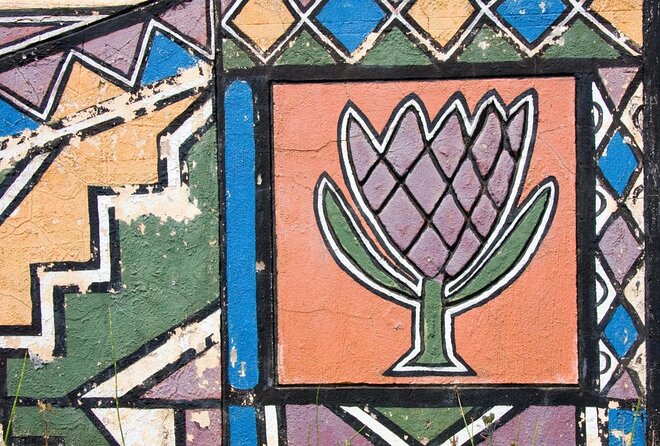
- Five cultural traditions in one visit: Learn about Zulu, Xhosa, Pedi, Basotho, and Ndebele customs through guided presentations and traditional homesteads.
- Dance and music are central: Performances add energy and help show how music and movement connect with cultural identity.
- A traditional buffet is included: Expect South African dishes made with recipes described as passed down through generations.
- Small group size: The experience allows a maximum of nine people, which can make the outing easier to manage than a large coach tour.
- Pickup is offered: Transport can simplify the trip from Johannesburg, though the exact pickup details should be checked when booking.
- Flexible cancellation: You can receive a full refund if you cancel at least 24 hours before the start time.
Why Lesedi works well as a Johannesburg half-day
Johannesburg can feel like a difficult city to understand from a short visit. You may see modern shopping districts, busy roads, museums, and historic sites, yet still want a clearer sense of the many peoples and traditions that shape South Africa.
Lesedi Cultural Village offers a straightforward answer. Instead of asking you to travel across the country to meet five cultural traditions separately, it brings representative homesteads together in one setting. That makes the experience useful early in a Johannesburg stay, especially if you want cultural context before visiting other parts of South Africa.
The format is also easy to fit into a busy schedule. The full outing lasts about four hours, so you do not need to give up an entire day. Pickup is offered, and the attraction is near public transportation, giving you more than one way to approach the visit.
I would think of Lesedi as an introduction rather than a final word on South African culture. It gives you names, customs, visual details, food, music, and performance. You will still need to visit museums, communities, or other parts of the country for a longer and more personal look at each tradition.
More cultural village visits:
- Lesedi Cultural Village and Cradle of Humankind Tour
★ 5.0 · 48 reviews - Lesedi Cultural Village Tour
★ 5.0 · 46 reviews - Lesedi Cultural Village
★ 5.0 · 45 reviews
Five homesteads, five cultural perspectives
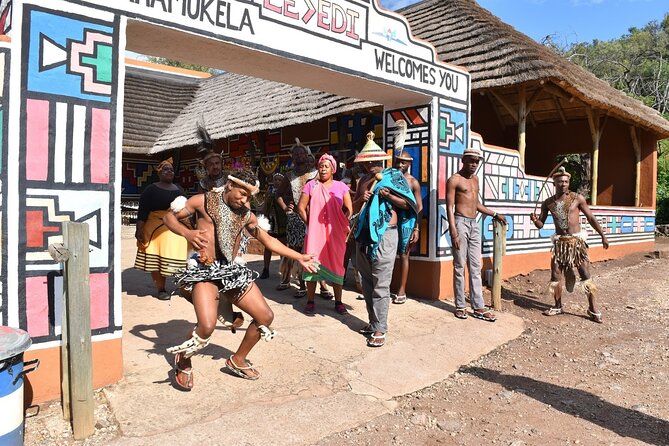
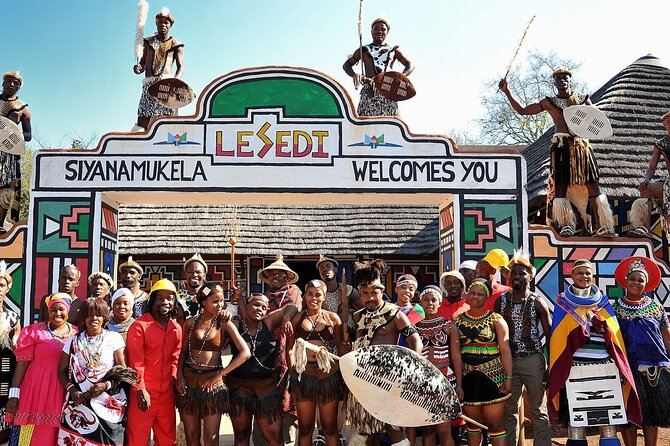
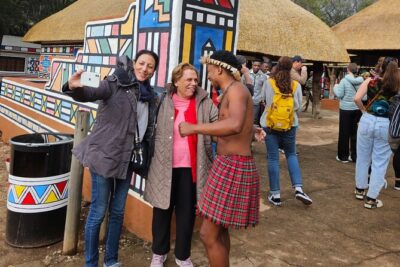
The main attraction is the guided cultural tour through traditional homesteads representing the Zulu, Xhosa, Pedi, Basotho, and Ndebele peoples. Each group has its own customs, rituals, and ways of life, and the value lies in seeing those differences side by side.
The setting helps make the information easier to remember. Rather than hearing a long lecture in a plain room, you move through spaces connected to domestic life and community customs. The traditional huts, art, music, and guided explanations give you several ways to take in the information.
The Zulu, Xhosa, Pedi, Basotho, and Ndebele traditions are not presented as one blended South African culture. That comparison is important. It encourages you to notice that South Africa contains many identities, languages, customs, and social practices.
You should pay attention to the explanations of rituals and daily life. A detail that seems small, such as the design of a home or the way a custom is explained, can help you understand that cultural traditions are lived systems, not just costumes or decorations.
At the same time, a staged cultural village has limits. The experience is designed for visitors, so the presentations are organized and easy to follow. That makes Lesedi accessible, but it also means you are seeing a prepared interpretation of culture rather than dropping into an ordinary residential community.
For many people, that tradeoff is worthwhile. You get a clear introduction without needing specialist background or a long journey. Just keep your expectations sensible. Lesedi is a cultural presentation with educational value, not a substitute for direct community life.
Traditional dance gives the visit its pulse
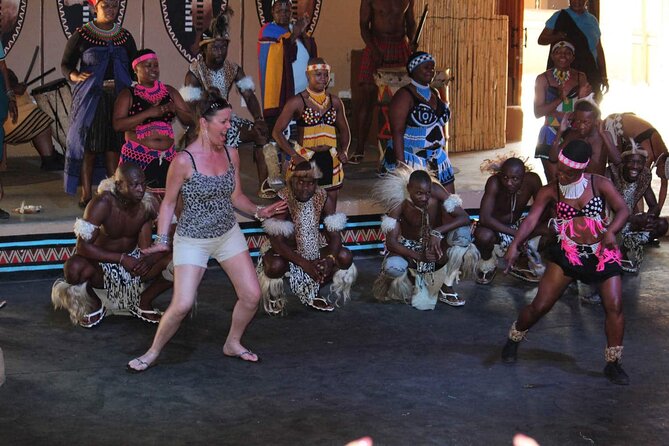
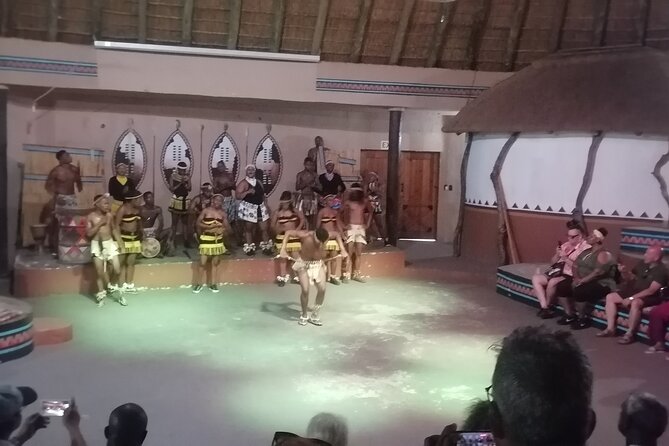
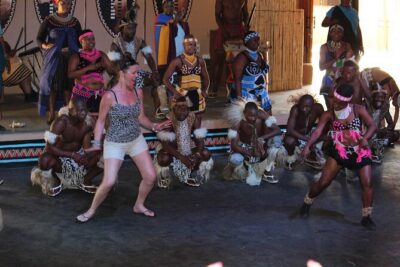
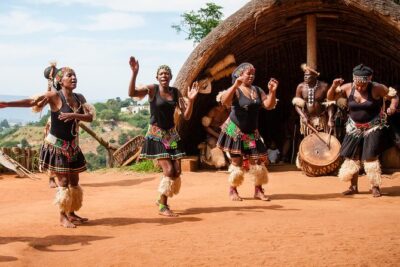
The dance performances are one of the strongest reasons to choose this experience. Traditional music and dance turn the visit from a sequence of explanations into something you can feel as well as hear.
The performances are described as energetic and accompanied by African music. That combination gives the program a strong sense of occasion, while also offering a window into how performance can carry cultural meaning.
I like this part because it gives the information a human shape. Written facts about rituals and customs can blur together after a while. Music, rhythm, movement, and coordinated performance are easier to remember.
You should also think of the dance as more than entertainment. It is presented as part of the cultural heritage of the groups represented at Lesedi. Watch for the way the performance connects with the earlier explanations about customs and community life.
The exact balance between guided presentations and performance may vary, since the supplied details do not provide a minute-by-minute schedule. Still, the dance element is clearly a major part of the experience. If you enjoy live cultural performances, this will likely be the most memorable section of the visit.
One practical point: performances can be visually exciting, but they should not be treated as the only reason to go. If you are interested in South African culture, listen to the explanations before and after the dancing. The context is what helps you understand what you are seeing.
The buffet adds a useful taste of South Africa
Food is often where a cultural visit becomes most personal. Lesedi includes a buffet of traditional South African dishes prepared with recipes passed down through generations.
The meal usually includes a range of meats, vegetables, and side dishes. That variety matters because it gives you more than one flavor or texture to remember. You can sample several parts of a meal instead of committing to a single unfamiliar dish.
I also like the way the meal rounds out the visit. You have already seen homes, heard explanations, and watched music and dance. Sitting down to food gives the experience a calmer close and connects culture with everyday life.
The information provided does not list the exact dishes or specify options for particular dietary needs. If you have allergies, follow a special diet, or need clear ingredient information, ask Motleys Tours and Travel before booking or before the meal begins.
Do not expect the buffet to turn the outing into a full food tour. The meal is one part of a wider cultural program. Its value comes from placing food alongside homes, customs, music, and dance.
A few more in Johannesburg
- From Johannesburg: Pilanesberg Nature Reserve Game Safari
★ 4.8 · 1,327 reviews - Johannesburg: Hop-On Hop-Off Bus with Optional Soweto Tour
★ 4.6 · 985 reviews - Soweto /Johannesburg and Apartheid Museum Guided Full Day Tour
★ 5.0 · 932 reviews - Johannesburg Hop-On Hop-Off City Tour with Soweto Option
★ 4.5 · 768 reviews
What the four-hour itinerary feels like
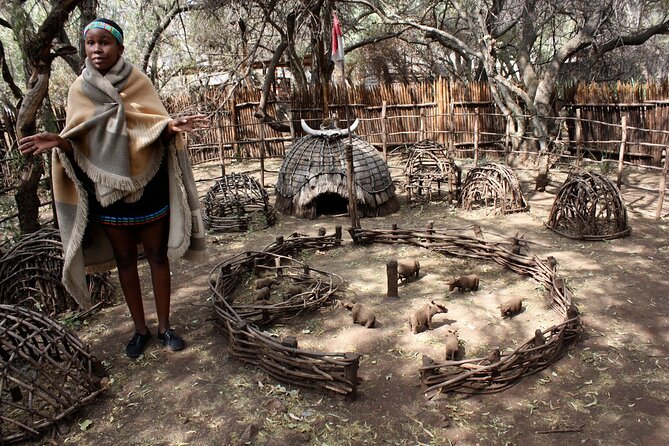
The visit centers on Lesedi Cultural Village itself, with admission included. Since there is one main stop, you avoid the stop-and-start rhythm of a city sightseeing tour that visits several unrelated attractions.
A typical visit begins with the cultural village and its guided presentations. You move through the traditional homesteads representing the five groups, learning about their ways of life, customs, and rituals.
The village also includes art and interactive elements. The supplied details do not spell out every activity, so you should not expect a fixed list of hands-on demonstrations. Still, the setting is intended to give you more than a passive look at buildings.
The music and dance performance forms another major part of the program. It gives the four-hour visit a change of pace and offers a direct, lively expression of the cultural traditions being introduced.
The traditional buffet completes the experience. Taken together, the itinerary covers architecture, social customs, performance, and food. That is a sensible mix for a short cultural outing.
The drawback is depth. Five cultural traditions in four hours means the explanations must move along. If you want long conversations, detailed anthropology, or extended time with one community, you may find the pace too broad.
The ride can add context, especially with Victor
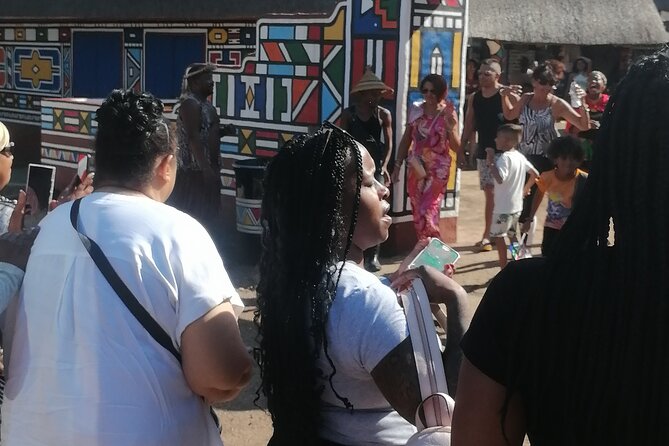
Pickup is offered, and the maximum group size is nine people. Those two details can make a real difference.
A small group usually feels more manageable than a large bus party. You may have an easier time hearing the guide, asking a question, and keeping track of the schedule. The maximum of nine does not guarantee a private tour, but it does keep the advertised group compact.
One especially helpful detail comes from the experience with Victor, the guide praised for explaining South African history during the ride to Lesedi. He was described as friendly, polite, insightful, and well-informed, and his commentary reportedly made the journey part of the learning experience rather than dead travel time.
That is worth considering when you book. A guide who provides context before arrival can help you understand the village once you get there. If Victor is assigned to your tour, you may benefit from that added introduction, though guide availability is not guaranteed by the information provided.
The exact pickup locations and timing are not listed here. Confirm those details with Motleys Tours and Travel. Pickup can save you the effort of arranging a separate route, but you should still know where and when to meet.
The attraction is near public transportation, which gives independent visitors another option. Since the outing lasts about four hours, transport planning matters. A poorly timed connection can eat into a short cultural visit.
Is $143.68 a fair price?
The listed cost is $143.68 per person. That is not a bargain-priced attraction ticket, so the value depends on what you need included.
You are paying for a guided cultural program, admission, performances, a traditional buffet, and the convenience of an organized outing. Pickup is offered, and the small group limit can add value if transport and personal attention matter to you.
The price makes more sense for a first-time visit to Johannesburg when you want several cultural introductions in one half-day. It is also useful if you would otherwise need to arrange transport, research several cultural sites, and find a separate meal.
The value is less clear if you only want to see traditional dance or eat South African food. Lesedi is designed as a combined experience, so you should use the guided homesteads and cultural explanations to justify the cost.
Group discounts may be available, which could improve the price for families or parties booking together. Ask for the current terms before paying, since the supplied information does not state the discount amount or eligibility rules.
The average booking point is 99 days before the visit. That suggests you should plan ahead if your dates are fixed, especially if you want a particular day or pickup arrangement. It does not mean you cannot find a later booking, only that advance planning is common for this experience.
Who will enjoy Lesedi most?
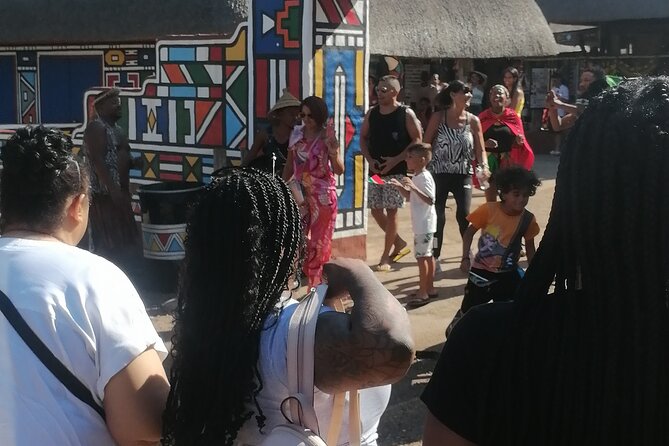
I would recommend Lesedi to you if you want a clear, organized introduction to several South African cultures without spending days on separate visits.
It suits first-time visitors to Johannesburg, families, small groups, and anyone who enjoys learning through a mix of explanation, performance, and food. The short duration also works well if you have a busy itinerary or only one free half-day.
The experience may be especially useful for people who prefer a guide to provide context. Victor’s reported commentary on the ride shows how much the transport portion can add when the guide explains South Africa along the way.
You may want something else if you prefer unstructured travel, long independent exploration, or direct contact with people in ordinary neighborhood settings. Lesedi is organized and visitor-focused. That is its strength and also its limit.
People with specific food requirements should ask about the buffet before booking. The available details confirm a range of traditional dishes, but they do not confirm vegetarian, vegan, halal, kosher, allergy-safe, or other special options.
Most people can participate, according to the supplied participation information. If you have a particular mobility or health concern, contact the provider before booking rather than relying on the general statement.
Booking, timing, and cancellation advice
Motleys Tours and Travel provides the experience. Confirmation is received at the time of booking, and a mobile ticket is offered, which means you should keep your booking details easy to access on your phone.
You can cancel for a full refund up to 24 hours before the experience start time. Cancellations made less than 24 hours before the start are not refunded, and changes inside that same window are not accepted.
The cut-off follows local time. If you are booking from another country, check the local start time carefully so you do not miscalculate the deadline.
The experience is listed as having free cancellation, but that benefit depends on meeting the 24-hour rule. I would avoid waiting until the last evening if your plans are uncertain.
Should you book Lesedi Cultural Village?
Book it if you want five cultural introductions, live music and dance, and a traditional meal in one organized four-hour outing from Johannesburg.
I like the balance of learning and entertainment. The homesteads give the visit structure, the performances keep it lively, and the buffet gives you a final connection to South African daily life. A group capped at nine and a guide such as Victor can make the outing feel more personal than a large bus excursion.
Skip it if you want a long, slow study of one community or an entirely independent experience. At $143.68 per person, you should take advantage of every part of the program, including the explanations, rather than treating it as only a dance show.
For a first cultural orientation near Johannesburg, Lesedi is a practical choice. It gives you useful context, memorable performances, and a taste of several traditions without taking over your whole day.
FAQ
Where is Lesedi Cultural Village located?
Lesedi Cultural Village is in South Africa, near Johannesburg, within the Cradle of Humankind World Heritage Site.
How long does the experience last?
The experience lasts approximately four hours.
What cultures are represented at Lesedi Cultural Village?
The village represents Zulu, Xhosa, Pedi, Basotho, and Ndebele cultures.
Is admission to Lesedi Cultural Village included?
Yes, the admission ticket is included.
Is pickup available?
Yes, pickup is offered. The supplied information does not specify the exact pickup locations or times, so confirm those details when booking.
Is food included?
Yes, the experience includes a buffet of traditional South African dishes.
Does the tour include traditional music and dancing?
Yes, the program includes traditional dance performances accompanied by African music.
How large is the tour group?
The maximum group size is nine people.
Can I use a mobile ticket?
Yes, a mobile ticket is offered.
What is the cancellation policy?
You can cancel for a full refund at least 24 hours before the experience start time. Cancellations or changes made less than 24 hours before the start are not accepted and are not refunded.
Just added in Johannesburg
- Pilanesberg Wildlife Safari★ 5.0 · 4 reviews
- Pilanesberg National Park Tour★ 5.0 · 17 reviews
- Pilanesberg and Sun City Tour★ 5.0 · 24 reviews
- Full day Pilanesberg Safari Tour★ 5.0 · 14 reviews
- Pilanesberg Nature Reserve & Safari Park Lion Private★ 4.0 · 4 reviews
- Bush Babies & Monkey Sanctuary and Elephants walk Private★ 5.0 · 12 reviews
- Discover the Pilanesberg with a personalized full day safari★ 5.0 · 20 reviews
- 2 Days Pilanesberg National Park Luxury Safari★ 5.0 · 4 reviews
Cultural Village Tours, compared.
Lesedi Cultural Village and Cradle of Humankind Tour
Read our review →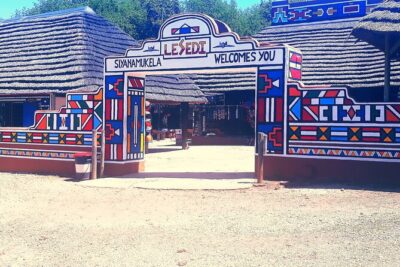

Durban City & PheZulu Cultural Village Day Tour from Durban
Read our review →
Phezulu Cultural Village & Reptile Park Day Tour from Durban
Read our review →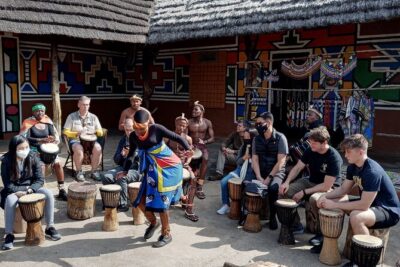
Lesedi Cultural Village & cradle of Humankind Guided Tour
Read our review →Browse the lists this tour appears in