
REVIEW · ROBBEN ISLAND TOURS
Nelson Mandela’s Robben Island Prison Museum Cape Town City Tour + Ferry Tickets
History feels different when you can walk through it. This full-day Cape Town outing links Robben Island with major city sights, giving you a clear introduction to Nelson Mandela’s imprisonment, apartheid-era forced removals, Cape Malay culture, and the city’s colonial past. I like the included ferry ticket and the air-conditioned transport between far-flung stops. I also like the small maximum group of eight, which should make questions and timing easier.
The main drawback is the packed schedule. Robben Island alone takes about four hours, then you continue through Bo-Kaap, the Company’s Garden, the Castle of Good Hope, and the District Six Museum. At $171.49 per person, this is not a cheap city tour, so its value depends on how much you want handled for you in one day.
In This Review
- Key points before you book
- Why combine Robben Island with Cape Town’s city sights?
- Robben Island: the emotional center of the day
- Bo-Kaap: colorful streets with a serious past
- The Company’s Garden: Cape Town’s early supply station
- Castle of Good Hope: colonial power in stone
- District Six Museum: remembering forced removals
- How the transport and timing work
- What the $171.49 price really buys
- What the strongest praise focuses on
- Who should book this Cape Town day tour?
- Should you book it?
- FAQ
- How long does the tour last?
- What time does the tour start?
- Where does the tour start?
- Is hotel pickup available?
- Is the Robben Island ferry included?
- How long is the Robben Island portion?
- Is lunch included?
- Which Cape Town attractions are visited?
- Is admission to the museums included?
- How many people can join the tour?
- Can I cancel for a refund?
Key points before you book
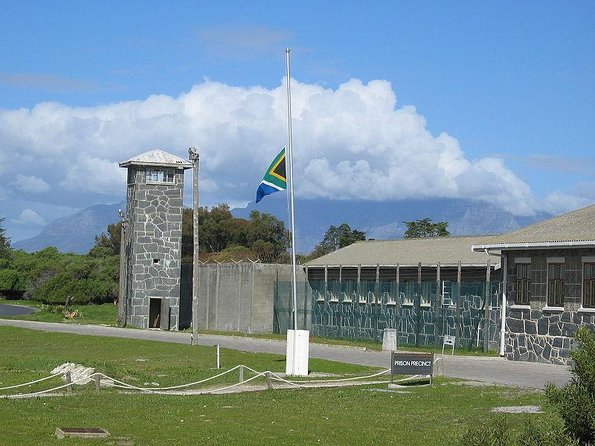
- Robben Island takes the morning spotlight: The ferry, island visit, and return crossing use about four hours, so allow plenty of energy for the most serious part of the day.
- The tour covers five important Cape Town sites: You visit Bo-Kaap, the Company’s Garden, the Castle of Good Hope, and District Six after Robben Island.
- Pickup removes a major Cape Town nuisance: Hotel pickup and drop-off are offered, with air-conditioned transport between sites.
- The island tour carries emotional weight: The prison tour is led by a former prison warder or former prisoner, when available through the island program.
- The group is capped at eight people: That is a useful middle ground between a private tour and a large coach outing.
- Book well ahead: This experience is booked about 82 days in advance on average, which is a strong hint not to leave Robben Island until the last day of your trip.
Why combine Robben Island with Cape Town’s city sights?
Cape Town’s major historical sites are spread across different parts of the city. Robben Island sits offshore, Bo-Kaap is near the central city, the Castle is farther inland, and District Six has its own story and museum. Doing them independently can mean separate bookings, ferry planning, taxis, and long waits.
This tour gives you one long historical thread. You begin with the prison that held Nelson Mandela for 18 of his 27 years in prison, then move into the city where colonial rule, slavery, segregation, and forced removals shaped everyday life.
I like that the day is not limited to one famous figure. Mandela is the central draw, but the rest of the route gives you a broader view of Cape Town. Bo-Kaap presents Cape Malay culture and architecture. The Company’s Garden explains why the settlement mattered to ships sailing around southern Africa. The Castle reflects Dutch military power. District Six confronts the damage caused by apartheid.
You should still set your expectations correctly. This is an overview, not a slow study of each site. The listed stops are generally about one hour each after the four-hour Robben Island visit. If you want a very detailed museum experience, you may prefer to return to one or two of these places on another day.
More Museums in Cape Town
- Museum of Contemporary African Art: Fast-Track Zeitz MOCAA
★ 4.4 · 204 reviews - Cape Town: Private Guided Tour of Cape Town Diamond Museum
★ 4.7 · 156 reviews - ROBBEN ISLAND MUSEUM TOUR, WITH OPTIONAL LAST MINUTE TICKETS
★ 3.4 · 85 reviews
Robben Island: the emotional center of the day
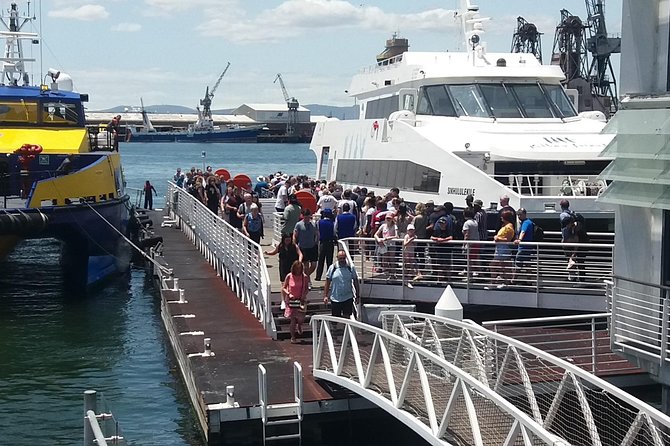
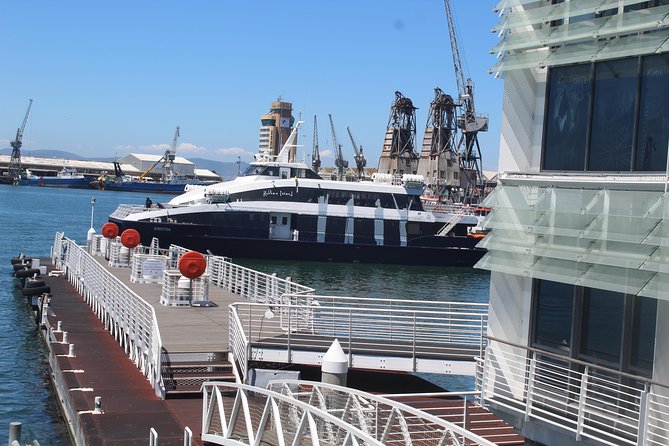
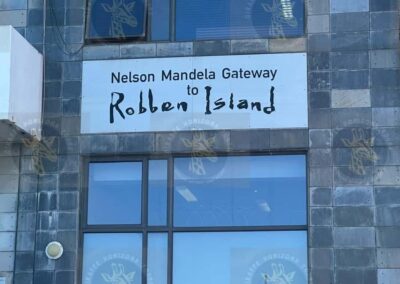
After pickup, you travel to the Nelson Mandela Gateway at the V&A Waterfront and board the ferry to Robben Island. The crossing gives you time to see Cape Town from the water, but the purpose of the trip quickly becomes clear once you reach the island.
Robben Island served at different times as a leper colony, a place of banishment and isolation, and a prison. Under apartheid, it became a powerful symbol of political repression. Nelson Mandela spent 18 years there, and his cell is one of the most important places you will see during the day.
The island visit includes the return boat ticket and admission. The historical tour is conducted by either a former prison warder or a former prisoner. That detail matters. The prison is not just a display of objects behind glass. The interpretation comes from people connected to the institution and its past.
Expect this part of the day to be sobering. The experience is valuable because it puts physical space around a story you may already know from books, films, or school. You see the setting where prisoners were confined and learn about the conditions imposed on political prisoners.
The crossing, processing, island tour, and return take about four hours. Ferry operations and weather can affect the rhythm of the day, so keep your schedule flexible. This is also why booking well in advance makes sense. The tour is booked around 82 days ahead on average, and Robben Island ferry places are a key part of the package.
A useful practical point: lunch is not included. You return to the Waterfront and have lunch before the afternoon city visits. Bring money for food and drinks, and do not expect the $171.49 price to cover your meal.
Bo-Kaap: colorful streets with a serious past
After lunch, the route continues to Bo-Kaap, the neighborhood historically known as the Cape Malay Quarter. Its brightly colored houses and cobblestoned streets make it one of Cape Town’s most photographed areas, but the colors are only the surface of the story.
Bo-Kaap is associated with a predominantly Muslim community and with people whose ancestors were brought from Malaysia, Indonesia, and other parts of Africa. The name refers to the upper part of Cape Town. A guide can help you connect the architecture to the community and history behind it.
You have about an hour here. That is enough for an introduction and some photographs, but not necessarily enough for a long, unhurried neighborhood visit. I would listen closely rather than treating Bo-Kaap as a quick photo stop. The value is in understanding who lived here and why the area matters.
The stop is also a useful change in mood after Robben Island. You move from a prison site to a living part of the city, yet the two places are connected by Cape Town’s long story of displacement, control, and cultural survival.
The Company’s Garden: Cape Town’s early supply station
The Company’s Garden began in the 1650s under the Dutch East India Company. Its first purpose was practical: grow vegetables, fruit, and other supplies for ships traveling around the southern tip of Africa.
After months at sea, crews needed fresh produce and water. The garden served as a refreshment station for ships heading toward the East. That simple purpose explains much about early Cape Town. The settlement was not merely a local outpost. It was built to support a major sea route.
Today, the garden is also a park and heritage site in the center of Cape Town. You can expect a mix of open space, memorials, statues, and monuments. The stop lasts about an hour and does not require an admission fee.
I like this part of the route because it adds practical context to the city’s origins. The garden tells you why Cape Town grew where it did and how European trade shaped the region. It is less emotionally intense than Robben Island or District Six, but it helps fill in the earlier chapters of the city’s history.
As with Bo-Kaap, an hour gives you a useful introduction rather than a complete visit. If you enjoy gardens, art, or the city’s memorials, you may want to return independently for more time.
More Robben Island tours:
- Cape Town: Robben Island Ferry Ticket and Guided Prison Tour
★ 4.1 · 1,792 reviews - Cape Town: Robben Island Ferry Tour with 1-Way Hotel Pickup
★ 4.2 · 1,380 reviews - Cape Town: Robben Island Ferry Ticket and Townships Tour
★ 4.5 · 400 reviews - Cape Town: Robben Island Ferry with Prison Ticket and Tour
★ 4.0 · 324 reviews
Castle of Good Hope: colonial power in stone
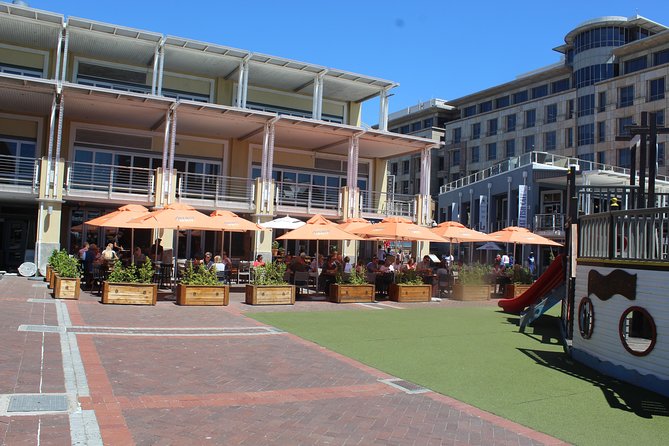
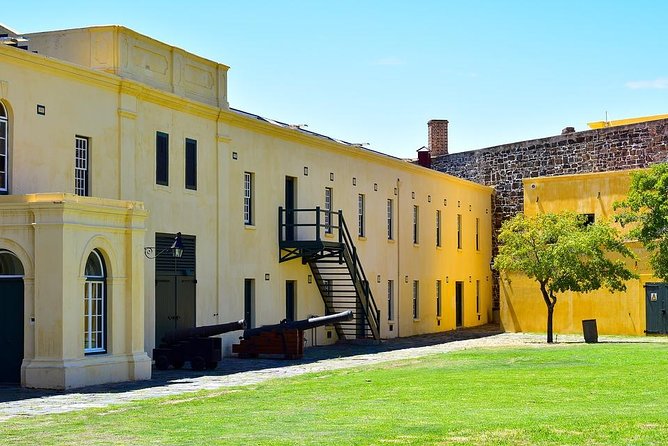
The Castle of Good Hope is the oldest standing colonial building in South Africa. The Dutch built it between 1666 and 1679, and it became a center of civilian, political, religious, and military life at the Cape.
The structure is also one of the best-preserved examples of 17th-century Dutch East India Company architecture. That makes it important as a building, but its value is not only architectural. The Castle represents the authority of the colonial government and the military system that controlled the settlement.
Admission is included. The site contains the William Fehr Collection, a permanent ceramic exhibition called FIRED, and a military museum. With about an hour scheduled, you will need to choose what deserves your attention.
This stop works best if you are interested in how Cape Town developed under Dutch rule. It also provides a useful counterpoint to District Six. At the Castle, you see the institutions of power. At District Six, you confront what happened to ordinary residents when government policy forced them from their homes.
The Castle is imposing, but it can feel more formal and less immediately personal than the prison or District Six Museum. That is not a weakness. It simply serves a different purpose in the day.
District Six Museum: remembering forced removals
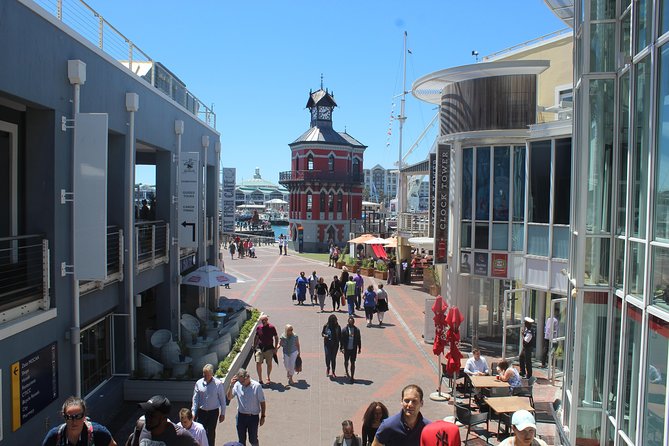
The District Six Museum focuses on one of apartheid’s most painful policies. District Six was once a multicultural inner-city residential area. In 1966, the apartheid government declared it a white area, and forced removals began in 1968. About 60,000 residents were removed.
The museum was established in 1994 as a memorial to those people. The visit is described as emotional, and you should expect difficult subject matter. District Six is not an abstract political story. It is about homes, neighbors, families, and a community broken apart by government order.
This stop is especially valuable because it widens the day beyond Robben Island. Mandela’s imprisonment is central to South Africa’s history, but apartheid also shaped where people could live, work, worship, and raise families. District Six helps you understand that daily reality.
You receive admission to the museum, and the guide accompanies you. The scheduled time is about one hour. That is enough to grasp the central story, though you may want more time if museum displays and personal accounts matter to you.
I would not schedule a demanding evening after this tour. The day moves quickly, but the final museum visit may stay with you. It is the kind of place where a short visit can still have a lasting effect.
How the transport and timing work
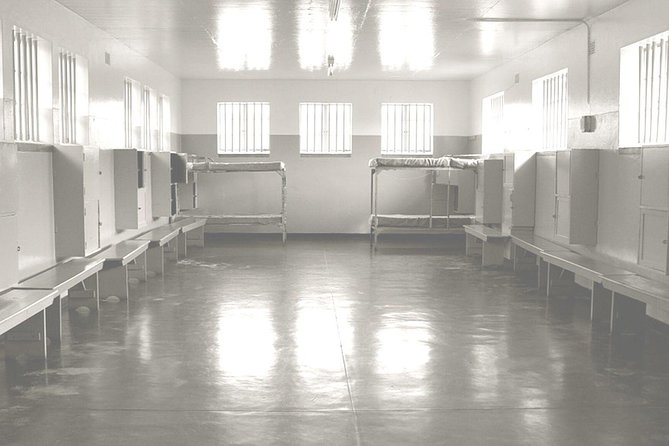
The advertised duration is about eight hours, beginning at 8:30 a.m. The meeting information lists The Silo Hotel at Silo Square in the V&A Waterfront, while hotel pickup and drop-off are also offered. Confirm your exact pickup arrangement before the day begins, especially if you are staying outside the central hotel area.
The air-conditioned vehicle is useful in Cape Town. You are not simply walking between nearby attractions, and the route includes the Waterfront, central Cape Town, Bo-Kaap, the Castle, and District Six. Having transport arranged saves you from working out several short taxi rides or public transport connections.
The group size is limited to eight people. That should make the day more personal than a full coach tour, and it gives you a better chance to ask about the sites. The experience is also listed as suitable for most participants, with service animals allowed and public transportation nearby.
The schedule is full. Robben Island takes around four hours, lunch is not included, and the city stops follow afterward. Wear practical shoes, carry water, and keep your attention on the clock. Bottled water is included, but drinks beyond that and lunch are your responsibility.
The package includes entry to the Diamond Museum, yet no separate Diamond Museum stop is described in the route. Ask the operator how that admission is used on your date. The clearly listed main visits are Robben Island, Bo-Kaap, the Company’s Garden, the Castle of Good Hope, and District Six Museum.
What the $171.49 price really buys
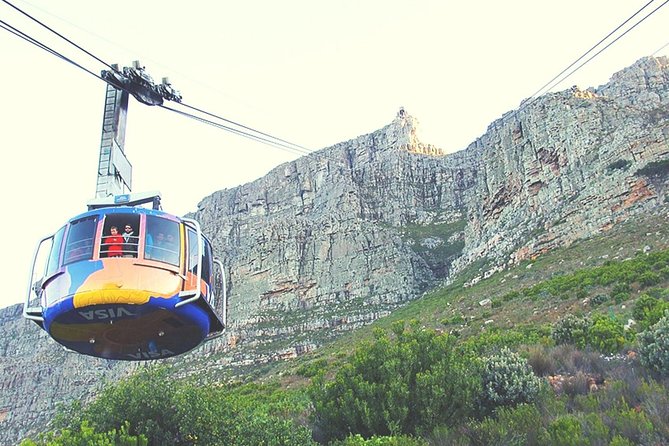
At $171.49 per person, the price is high compared with a basic Cape Town sightseeing drive. You are paying for more than transport, though. The package includes hotel pickup and drop-off, the return Robben Island ferry, admission to Robben Island, District Six Museum, and the Castle of Good Hope, plus an air-conditioned vehicle and bottled water.
The strongest value comes from coordination. Robben Island is the difficult piece to arrange, and missing the ferry would damage the whole day. Having a tour company manage the transfer to the Waterfront and the ferry timing can be worth paying for, especially during a short Cape Town stay.
The small group also adds value. You are not paying for a fully private outing, but a maximum of eight people is more manageable than a large bus. The guide can explain how the sites connect rather than simply dropping you at each entrance.
The price makes less sense if you want to linger. Five historical sites in one day means short visits, and lunch is extra. If you already have a car, enjoy arranging tickets, or plan several days in Cape Town, you might save money by visiting some places separately.
One service issue deserves mention. A booking error once led to guests not being met at the pickup point. The owner, Remmy, answered the call and worked to fix the problem. That does not erase the inconvenience, so I would confirm your pickup details shortly before departure. On the positive side, Remmy is repeatedly praised for careful communication and personal attention, and Kuda is also identified as a driver who provided strong support on one private outing.
What the strongest praise focuses on
The most consistent praise centers on care, timing, and the emotional power of Robben Island. Remmy is singled out for answering questions before departure and helping people feel secure about the arrangements. One account also credits him with getting the group processed at the docks on time.
The island itself earns the strongest emotional response. Entering the cell associated with Mandela’s 18-year imprisonment can be heartbreaking and profound. The ferry views add a lighter visual moment, but the prison visit is the part you are likely to remember.
The service recovery is also worth noting. When a pickup mistake occurred, the owner responded quickly and calmed the situation. That is not a reason to ignore the risk of a booking error, but it suggests the company takes problems seriously when they arise.
The overall rating is 5 from seven reviews. That is a small sample, so I would treat it as encouraging rather than final proof. The praise is specific enough to matter: timely dock assistance, strong personal care, good local explanations, and a memorable Robben Island visit.
Who should book this Cape Town day tour?
I would choose this experience if you have only one full day for Cape Town history and want the major pieces arranged in advance. It suits first-time visitors who want a guided introduction rather than a day spent comparing ferry schedules, museum hours, and taxi routes.
It also suits anyone who wants Robben Island but prefers door-to-door support. The ferry is the essential booking, and the small group plus air-conditioned transport keeps the rest of the day simple.
Families and mixed-age groups may find the arrangement useful because most of the movement is handled for you. The tour is listed as suitable for most participants, though the full day and serious subject matter may not suit very young children.
I would think twice if you dislike tight schedules or want long museum visits. A slower plan could focus on Robben Island in one outing, then give Bo-Kaap, District Six, and the Castle their own time later.
Should you book it?
Book this tour if historical context, convenience, and Robben Island access matter more to you than saving money. The route gives you a strong first look at Cape Town’s colonial past, cultural communities, and apartheid history in one demanding but worthwhile day.
Skip it if you already have transport and several days to explore at your own pace. You will pay less flexibility for the convenience of a coordinated package.
My practical advice is to reserve early, confirm the pickup location, plan for lunch separately, and keep the evening free. The day’s best feature is its range: you move from Mandela’s prison cell to the streets of Bo-Kaap, the Company’s Garden, the Castle, and District Six. That is a lot of Cape Town history in eight hours, but it gives you a clear sense of how the city’s past still shapes its present.
FAQ
How long does the tour last?
The experience lasts about eight hours.
What time does the tour start?
The listed start time is 8:30 a.m.
Where does the tour start?
The meeting point is listed as The Silo Hotel at Silo Square in the Victoria & Alfred Waterfront, Cape Town.
Is hotel pickup available?
Yes. Hotel pickup and drop-off after the tour are offered.
Is the Robben Island ferry included?
Yes. The price includes a return ferry ticket from the Nelson Mandela Gateway at the Clock Tower in the V&A Waterfront.
How long is the Robben Island portion?
The Robben Island visit takes about four hours, including the island experience and ferry arrangements.
Is lunch included?
No. Lunch and drinks are not included.
Which Cape Town attractions are visited?
The route includes Robben Island Museum, Bo-Kaap, the Company’s Garden, the Castle of Good Hope, and District Six Museum.
Is admission to the museums included?
Admission to Robben Island, District Six Museum, and the Castle of Good Hope is included. The package also lists admission to a Diamond Museum, though no separate stop is detailed in the route.
How many people can join the tour?
The experience has a maximum group size of eight people.
Can I cancel for a refund?
You can cancel at least 24 hours before the start time for a full refund. Cancellations or changes made within 24 hours are not refunded or accepted. If poor weather or an insufficient number of bookings causes cancellation, you will be offered another date or experience, or a full refund.
More Nelson Mandela Sites
- Robben Island Nelson Mandela’s Prison Museum and Table Mountain Plus All Tickets
★ 4.5 · 13 reviews - Robben Island, Bokaap, Mandela Glasses. tickets conf 8am next day
★ 5.0 · 11 reviews - Robben Island Nelson Mandela’s Prison Museum + Township Tour incl Ferry Tickets
★ 5.0 · 9 reviews - Table Mountain & Mandela Freedom Full Day Tour
★ 5.0 · 5 reviews
Just added in Cape Town
- Sunset Safari Big 5 Aquila with Snacks and Wine Tasting★ 5.0 · 12 reviews
- Private Tour to 20 Wine Tasting in Stellenbosch and Franschhoek★ 5.0 · 11 reviews
- Explore Atlantis Sand Dunes with a 1hour 30mins sandboarding tour★ 5.0 · 5 reviews
- Robben Island, Kirstenbosch wine tasting Tour★ 5.0 · 10 reviews
- Photoshoot in Cape Town’s most Gorgeous Locations★ 5.0 · 2 reviews
- Zip Line and Wine from Cape Town★ 5.0 · 14 reviews
- Private Transfer from Cape Town International Airport★ 5.0 · 4 reviews
- 1 Hour Cape Town City Center Photoshoot Experience★ 5.0 · 19 reviews
Robben Island Tours, compared.

Robben Island Ferry Ticket and Guided Prison Tour
Read our review →
Robben Island Ferry Tour with 1-Way Hotel Pickup
Read our review →
Robben Island Ferry with Prison Ticket and Tour
Read our review →

Robben Island Tour including Pick Up & Drop Off from Cape Town
Read our review →
Robben Island Ferry Ticket and Guided Prison Tour
Read our review →
Robben Island Experience: Pre-Booked Ticket & Return Transfers
Read our review →Browse the lists this tour appears in