
REVIEW · APARTHEID MUSEUM TOURS
Private Tour of Johannesburg, Soweto and Apartheid Museum
History here is personal. This eight-hour private tour connects Johannesburg’s gold-mining center, Constitution Hill, the Apartheid Museum, and Soweto in one well-planned day. I like the private vehicle and hotel pickup, which keep the day simple, and I like the strong Spanish-language guiding from Irma and Daniela. The main drawback is that lunch is not included, and several stops are fairly short.
The tour gives you useful context before you reach Soweto, rather than treating it as a quick photo stop. You will see FNB Stadium from outside, walk along Vilakazi Street, and visit Mandela House. If you want a flexible introduction to Johannesburg’s political past, this is a strong choice, though visitors wanting long museum visits may find the schedule brisk.
In This Review
- Key points to know before booking
- Why this Johannesburg tour works well in one day
- Starting with Mandela Square and Johannesburg’s changing suburbs
- Constitution Hill and the prison that became a court
- Ninety minutes at the Apartheid Museum
- FNB Stadium and the public memory of Mandela
- Walking Vilakazi Street in Soweto
- Mandela House and the personal side of history
- What the $131.53 price gives you
- The guides: Spanish explanations and personal attention
- Who should book this experience?
- Should you book the Johannesburg and Soweto tour?
- FAQ
- What time does the tour start?
- How long does the tour last?
- Is hotel pickup available?
- Is this a private tour?
- What language does the guide speak?
- Is lunch included?
- Are entrance fees included?
- Can I cancel for a full refund?
Key points to know before booking
- Private eight-hour outing: Your group travels together in an air-conditioned vehicle with private transportation and hotel pickup.
- Spanish-language guiding: Irma and Daniela receive especially warm praise for clear explanations, professionalism, and personal attention.
- Constitution Hill and the Constitutional Court: A former prison and military fort now linked to South Africa’s democratic ideals.
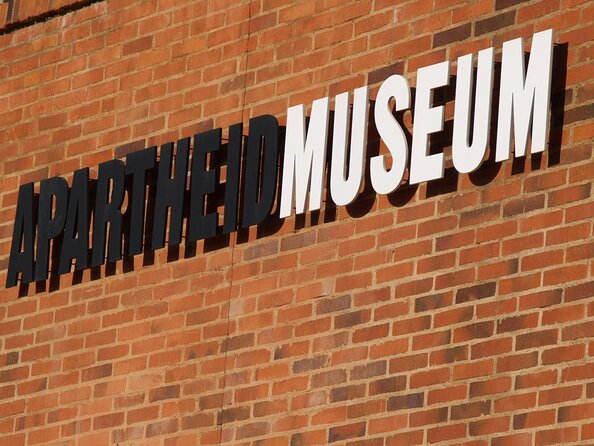
- Apartheid Museum visit: You get about 90 minutes in the country’s leading museum on apartheid.
- Soweto’s most important addresses: The route includes FNB Stadium, Vilakazi Street, and Mandela House.
- Lunch is extra: You will have time for lunch on Vilakazi Street, but the meal is not part of the price.
Why this Johannesburg tour works well in one day
Johannesburg can feel difficult to read at first. Its districts are spread out, its past is complicated, and the most important places are not all close together. This tour solves much of that problem by linking the city center with Soweto and placing both within a clear historical story.
You start at about 9:00 a.m. with hotel pickup. From there, the guide takes you through selected suburbs before reaching central Johannesburg. The day then moves from the city’s gold-mining origins to the prison system of apartheid, the democratic movement, and the life of Nelson Mandela.
I like this order because each stop adds something different. The city center explains why Johannesburg grew. Constitution Hill shows how state power operated. The Apartheid Museum provides the larger national story. Soweto then brings that story back to streets, homes, schools, protests, and individual lives.
The private format matters here. You are not tied to a large group or a fixed conversation. If you have questions about Mandela, the 1976 Soweto uprising, or changes in Johannesburg, you can ask as you go. Past praise for Irma and Daniela centers on exactly this kind of explanation and personal care.
More Museums in Johannesburg
- Soweto /Johannesburg and Apartheid Museum Guided Full Day Tour
★ 5.0 · 932 reviews - Jo’berg in 1 Day: Soweto, Apartheid Museum & City Tour
★ 4.8 · 524 reviews - Johannesburg: Full-Day Tour with Soweto and Apartheid Museum
★ 4.8 · 478 reviews
Starting with Mandela Square and Johannesburg’s changing suburbs

Nelson Mandela Square is a brief opening stop, with about 20 minutes for a photo beside the well-known statue of Mandela. Admission is free, so this portion does not add a ticket cost, but its real value is symbolic rather than historical depth.
The square sits in Sandton, one of Johannesburg’s major financial areas. It offers a polished introduction to modern South Africa, with restaurants, shops, and office buildings nearby. That setting contrasts sharply with the former prison sites and township streets later in the day.
The route also passes through some of Johannesburg’s more fashionable suburbs, including an area associated with Nelson Mandela. You will then head toward central Johannesburg, where gold discoveries helped create the city.
The tour includes a drive past the Top of Africa, described as the tallest building in South Africa and on the African continent. The schedule does not include an interior visit, so think of this as a moving city overview rather than a skyscraper attraction.
That contrast is one of the day’s useful features. Johannesburg is not one single experience. Wealthy suburbs, a financial center, old mining districts, constitutional institutions, and Soweto all form part of the same city. A guide can help you understand those sharp changes instead of leaving you to interpret them from a car window.
Constitution Hill and the prison that became a court
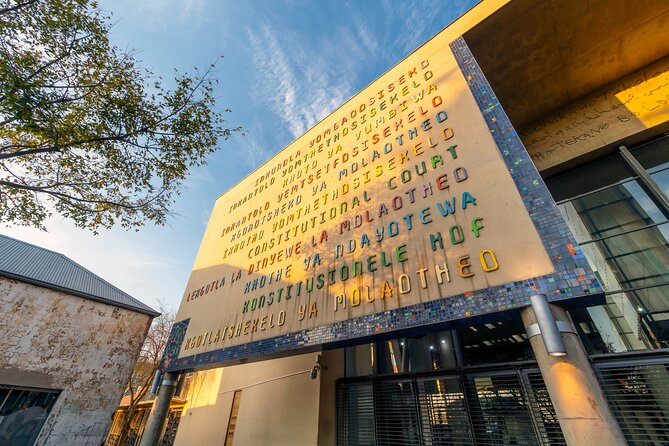
Constitution Hill receives about one hour, with admission included. This is one of the most meaningful stops because the site joins South Africa’s painful past with its present legal system.
The complex began as a prison and military fort. Gandhi and Mandela were imprisoned at the site, and the former prison bricks are part of the setting around the Constitutional Court. The tour explains how a place linked to political confinement now houses the court responsible for protecting citizens’ rights.
You will see the Constitutional Court building, whose design is described as unique. Its importance is not only architectural. The building represents a deliberate change in national direction, from coercive government to a legal system based on rights and democracy.
An hour is enough for a guided introduction, but it may not satisfy you if you want to read every display or take your time with the court’s design. This is a recurring feature of the day: the guide provides the framework, while the schedule gives you a focused look rather than unlimited time.
I would pay close attention to the transition between the old prison and the court. It helps explain why Constitution Hill is more than an ordinary museum. You are not simply looking at objects from the past. You are seeing how a former site of punishment was given a new public purpose.
Ninety minutes at the Apartheid Museum
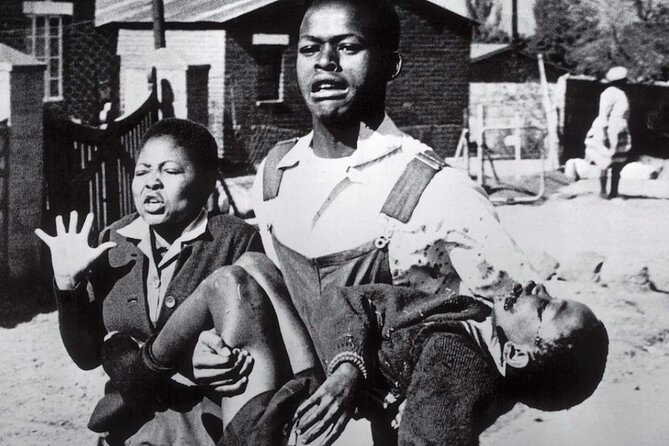
The Apartheid Museum is the longest single museum visit, with about 90 minutes and admission included. It opened in 2001 and focuses on the rise and fall of apartheid, the system of racial separation that shaped South Africa for decades.
The museum is known for presenting apartheid through personal and national stories. Its walls and displays address destruction, brutality, resistance, and the long fight for democracy. The tour description calls it the Essence of the Nation, and that is a useful way to understand its role in the day. Constitution Hill gives you one powerful site. The Apartheid Museum gives you the national picture.
Ninety minutes is a practical amount of time for an overview, especially when the tour also includes Soweto. Still, the subject matter is heavy, and you may want longer if you prefer to read every panel. The guide’s explanations can help you focus on the main ideas, but you should expect an emotionally serious visit rather than a light museum stop.
The museum also gives you a better foundation for Soweto. Without that context, Vilakazi Street and the 1976 protests can seem like isolated points on a sightseeing route. After the museum, you can better understand why Soweto became central to the struggle for freedom and why Mandela’s home carries such weight.
More Soweto tours:
- Johannesburg: Hop-On Hop-Off Bus with Optional Soweto Tour
★ 4.6 · 985 reviews - Johannesburg Hop-On Hop-Off City Tour with Soweto Option
★ 4.5 · 768 reviews - Half-Day Tour of Soweto Tour
★ 4.5 · 712 reviews - Soweto: Walking Tour with a Local Guide and Lunch
★ 4.9 · 648 reviews
FNB Stadium and the public memory of Mandela
The tour pauses at FNB Stadium for about 15 minutes. Admission is not included because the stop is an exterior photo opportunity, not a stadium tour.
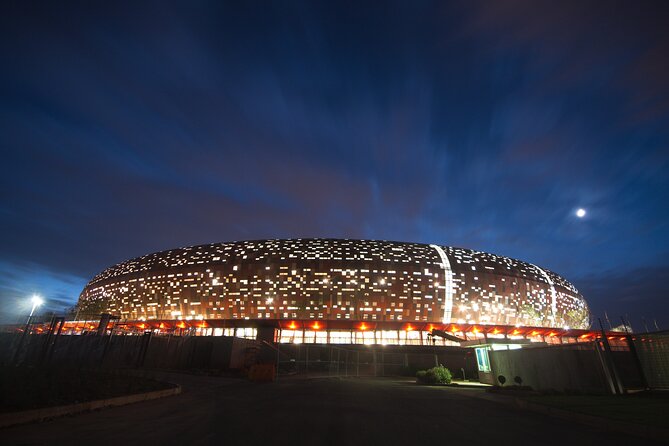
Known as the Gourd because of its shape, FNB Stadium was built for the 2010 FIFA World Cup. With a capacity of 94,736, it became the largest stadium in Africa. It hosted the 2010 final between the Netherlands and Spain, but its political significance is just as important.
Nelson Mandela gave his first speech in Johannesburg after leaving prison in 1990 at this stadium. That detail changes the way you see the building. It was not only designed for football. It also became a place where South Africa publicly marked a new chapter.
The short stop is enough to take photographs and hear the story. If you hope to enter the stadium or see its interior, this tour will not provide that. The value comes from the location and the guide’s explanation, not from a stadium visit itself.
Walking Vilakazi Street in Soweto
Vilakazi Street is the point where the day becomes more intimate. You will spend about an hour walking along the street, with time to look at craft stalls and have lunch at your own expense.
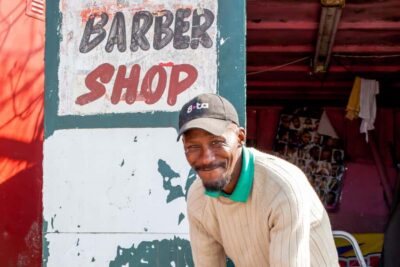
The street is famous because two Nobel Peace Prize winners once lived there: Nelson Mandela and Desmond Tutu. That gives Vilakazi Street a rare place in world history, but it is not only a ceremonial address. The street is also part of everyday Soweto, with local businesses, homes, stalls, and people moving through their day.
The walking portion helps balance the many vehicle-based sections. From inside a car, you can observe Soweto. On foot, you get a closer sense of the area and can spend money locally at craft stalls. The tour also connects the street to the events of 1976, when student protests in Soweto became a major turning point in the fight against apartheid.
You should budget for lunch here because it is not included in the $131.53 tour price. The supplied details do not name a specific restaurant or set menu, so your meal choice may depend on what is available during the visit.
One practical point: Vilakazi Street is both a historical site and an active neighborhood. You are not entering a preserved film set. Keep an open mind about the mix of tourism, local life, memorials, and commerce. That combination is part of what makes the stop useful.
Mandela House and the personal side of history
Mandela House is a short visit of about 20 minutes, with admission included. It is the house where Nelson Mandela and his family lived, and it sits on Vilakazi Street near the former home of Desmond Tutu.
The house gives the national story a domestic scale. After hearing about prison, protests, courts, and political leadership, you see the place connected with Mandela’s family life. The visit is brief, so you will not have time for an exhaustive museum study, but it offers a direct link to one of South Africa’s most important figures.
I would treat this as the emotional anchor of the Soweto portion. The Apartheid Museum explains the system. Mandela House shows the human being who lived through it. The contrast makes the day more memorable than a route made up only of monuments and large institutions.
Because the visit lasts about 20 minutes, listen closely to the guide and use the available time well. If Mandela is the main reason you are interested in this tour, you may wish the house visit were longer. The benefit is that it appears within a wider route rather than replacing the rest of Soweto.
What the $131.53 price gives you
At $131.53 per person, this is not the cheapest way to see Johannesburg, but the private format gives the price real value for a small group. You are paying for an air-conditioned vehicle, private transportation, hotel pickup, a guide in Spanish, museum admissions, and a full day of connected sightseeing.
The included admissions cover Constitution Hill, the Apartheid Museum, and Mandela House. That helps because these are the core paid stops, not optional extras added at the last moment. All fees and taxes are also included.
Lunch is the main additional expense named in the tour details. FNB Stadium is an exterior stop, so no stadium admission is part of the package. Nelson Mandela Square and Vilakazi Street are free to enter, though you may spend money on food or crafts.
For two or more people, the private arrangement may compare well with arranging separate taxis, museum tickets, and a guide. It also removes the burden of working out how to connect central Johannesburg with Soweto in one day. Group discounts are offered, though the exact reduction is not specified.
The tour is booked, on average, six days ahead. That suggests you should not leave it until the last morning if you have a fixed Johannesburg schedule. Free cancellation is available when you cancel at least 24 hours before the 9:00 a.m. start, while later cancellations are not refunded. Poor weather can also lead to a new date or a full refund.
The guides: Spanish explanations and personal attention
The guide language is Spanish, which makes this tour particularly useful if you prefer to discuss complex history in Spanish. Irma receives repeated praise for careful planning, strong historical explanations, and attention to individual needs. Daniela is also described as professional, engaging, and able to answer questions clearly.
One notable point is that the company has adapted excursions to fit limited time in Johannesburg. That suggests the operation may be willing to work around a visitor’s schedule, although you should confirm any special timing before booking.
The strongest praise concerns the guides rather than the vehicle or the sightseeing checklist. The guides explain how Johannesburg has changed, connect different periods of the city’s past, and help you understand why each place matters. That is important on a route where a short stop can otherwise feel like a quick photograph and a name to remember.
The exact guide for your date is not guaranteed in the details provided. If having Irma or Daniela matters to you, ask the operator before confirming.
Who should book this experience?
I would recommend this tour to first-time visitors who want a serious introduction to Johannesburg without handling transport between scattered sites. It is also a good fit for Spanish-speaking couples, families, and small groups who want to ask questions as they go.
The route suits anyone interested in Mandela, apartheid, South Africa’s democratic transition, or the connection between national events and local communities. The private vehicle also helps if you prefer a more controlled day than a large coach excursion.
You may want another option if you dislike museums, find difficult historical subjects overwhelming, or want to spend half a day in one place. The Apartheid Museum and Constitution Hill deserve attention, and the schedule keeps moving. You should also consider the lunch cost and the fact that FNB Stadium is viewed only from outside.
Most people can participate, and confirmation is provided when you book. The tour requires good weather, so keep the cancellation terms in mind when planning around a tight itinerary.
Should you book the Johannesburg and Soweto tour?
Book it if you want a well-organized private introduction to Johannesburg’s most important political and historical sites, especially with Spanish guiding. The combination of Constitution Hill, the Apartheid Museum, Vilakazi Street, and Mandela House gives you both national context and personal places.
The best reason to choose it is the guiding. Irma and Daniela are praised for professionalism, clear explanations, punctuality, and adapting to visitors’ needs. The main tradeoff is time: you see many important places, but no single museum or neighborhood receives a leisurely exploration.
For a first day in Johannesburg, that is a fair bargain at $131.53 per person, especially when admissions and transport are included. Add lunch, confirm the guide language and pickup details, and book several days ahead if your dates are fixed.
FAQ
What time does the tour start?
The tour starts at 9:00 a.m.
How long does the tour last?
The experience lasts approximately eight hours.
Is hotel pickup available?
Yes. Pickup is offered from your hotel.
Is this a private tour?
Yes. Only your group participates in the private activity.
What language does the guide speak?
The included guide service is in Spanish.
Is lunch included?
No. Lunch is excluded, although time is provided for lunch on Vilakazi Street.
Are entrance fees included?
Admission is included for Constitution Hill, the Apartheid Museum, and Mandela House. Nelson Mandela Square and Vilakazi Street are free. The FNB Stadium stop is an exterior photo stop, and stadium admission is not included.
Can I cancel for a full refund?
Yes, if you cancel at least 24 hours before the experience start time. Cancellations made less than 24 hours in advance are not refunded. If poor weather causes the operator to cancel, you will be offered another date or a full refund.
More Apartheid Museum Tours
- Full-Day Soweto, Apartheid Museum and Lunch Tour
★ 5.0 · 410 reviews - Half Guided Day Tour of Soweto And Apartheid Museum
★ 5.0 · 356 reviews - Ultimate Johannesburg Soweto Experience with Apartheid Museum
★ 5.0 · 313 reviews - Soweto: Hop-On Hop-Off Bus, City Tour and Apartheid Museum
★ 4.5 · 250 reviews
Just added in Johannesburg
- Rhino & Lion Nature Reserve & Wonder Caves★ 5.0 · 2 reviews
- O R Tambo Airport Transfers: Sandton, Rosebank and Melrose★ 5.0 · 9 reviews
- Private 5-Hour Lion Park Tour from Johannesburg or Pretoria★ 5.0 · 20 reviews
- Safari Experience at Rhino & Lion Park★ 3.5 · 5 reviews
- Johannesburg Private Shuttle Service★ 5.0 · 27 reviews
- Private Half Day Authentic Soweto Tour from Johannesburg or Pretoria★ 5.0 · 31 reviews
- Private Shuttle from Johannesburg to Pilanesberg★ 4.5 · 14 reviews
- Private Full Day Soweto and Johannesburg Tour from Johannesburg or Pretoria★ 5.0 · 55 reviews
Apartheid Museum Tours, compared.
Soweto /Johannesburg and Apartheid Museum Guided Full Day Tour
Read our review →
Jo’berg in 1 Day: Soweto, Apartheid Museum & City Tour
Read our review →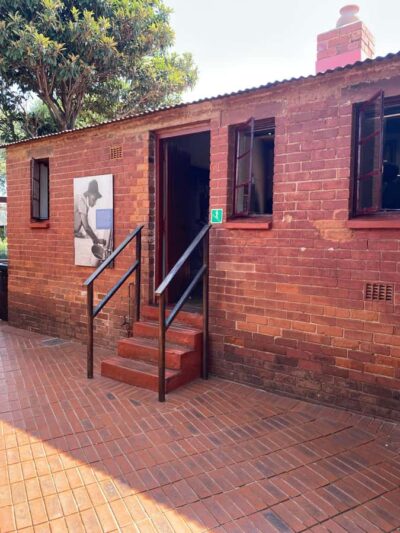
Full-Day Tour with Soweto and Apartheid Museum
Read our review →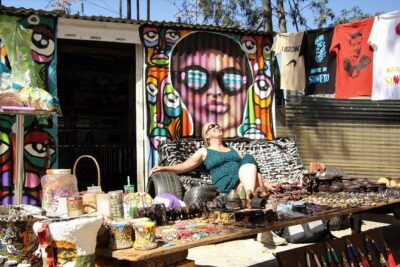
Full-Day Soweto, Apartheid Museum and Lunch Tour
Read our review →
Half Guided Day Tour of Soweto And Apartheid Museum
Read our review →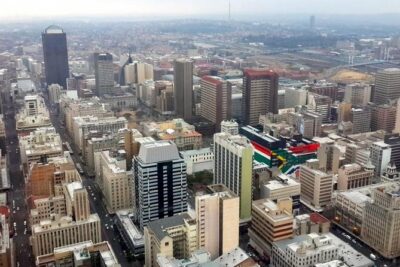
Ultimate Johannesburg Soweto Experience with Apartheid Museum
Read our review →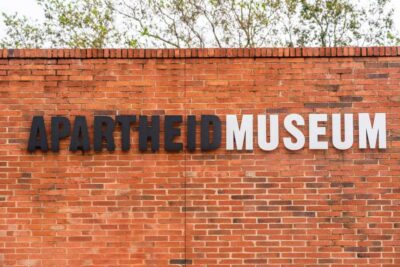
Hop-On Hop-Off Bus, City Tour and Apartheid Museum
Read our review →
Johannesburg and Soweto Apartheid Full Day Tour w/Lunch
Read our review →Browse the lists this tour appears in