
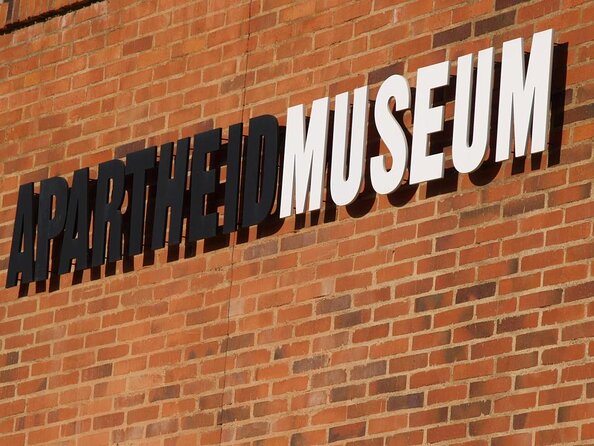
REVIEW · APARTHEID MUSEUM TOURS
Soweto and Johannesburg & Apartheid Museum
History comes alive on Johannesburg’s streets. This tour connects the Apartheid Museum with Soweto’s landmarks, city neighborhoods, and personal stories, giving you a useful overview without spending hours planning taxis and museum visits yourself. I especially like the included pickup and the chance to see both central Johannesburg and Soweto in one day.
I also like the small group limit of 15 people and the flexible pace reported by several people who booked it. Guides such as Joseph, Simba, Jeff, and Gilroi have been praised for explaining both South Africa’s past and present. The main drawback is that lunch is not included, Mandela House charges an additional admission fee, and the six to eight hour route can feel full if you want a long visit at every museum.
In This Review
- Key points to know before booking
- Why this Johannesburg tour works well
- Starting in central Johannesburg and Hillbrow
- Reading Johannesburg through its suburbs
- Vilakazi Street and the Mandela connection
- The Hector Pieterson Museum and the 1976 uprising
- Two hours at the Apartheid Museum
- A brief look inside a traditional medicine shop
- What the guides add to the experience
- Pickup, airport layovers, and the daily schedule
- Price, pace, and what you really receive
- Who should book this Soweto tour?
- Should you book it?
- FAQ
- How long does the Soweto and Johannesburg tour last?
- What is included in the tour price?
- Is admission to Mandela House included?
- Is lunch included?
- Does the tour offer pickup?
- Can I take this tour during a long airport layover?
- What is the maximum group size?
- What museums does the tour visit?
- What is the cancellation policy?
Key points to know before booking

- The Apartheid Museum anchors the day: Admission is included, and you should allow serious time for its powerful displays.
- Soweto is more than a photo stop: You visit Vilakazi Street, Mandela House, the Hector Pieterson Museum and Memorial, and nearby neighborhoods.
- Joseph receives repeated praise: He is described as careful, patient, friendly, and especially good at explaining Johannesburg’s history.
- Pickup makes a big difference: Hotel and airport pickup have been used successfully, including by people on long layovers.
- Expect a driving tour with selected walks: You see Hillbrow, downtown Johannesburg, Soweto suburbs, taxi areas, and historic sites from the vehicle.
- Budget for Mandela House and lunch: Both are outside the advertised tour price, while water and parking are included.
Why this Johannesburg tour works well

At $73.62 per person, this is not the cheapest way to see a museum and a neighborhood. It can be good value if you want transportation, a guide, parking, and several major sites handled in one outing.
Johannesburg is spread out, and the route covers central districts, Hillbrow, Soweto, and the Apartheid Museum. Doing all of this by taxi would take planning, time, and some care. Here, you can watch the city change through the car windows while your guide explains what you are seeing.
The tour usually lasts six to eight hours. That is long enough to make the distance worthwhile, but you should not expect a quick city highlights ride. The subject is serious, and the museum visits need attention rather than a hurried walk-through.
The group can have up to 15 people, though one person ended up with a private experience when nobody else joined that departure. You should not count on that, but a small group gives the guide more room to answer questions and adjust the pace.
More Museums in Johannesburg
- Soweto /Johannesburg and Apartheid Museum Guided Full Day Tour
★ 5.0 · 932 reviews - Jo’berg in 1 Day: Soweto, Apartheid Museum & City Tour
★ 4.8 · 524 reviews - Johannesburg: Full-Day Tour with Soweto and Apartheid Museum
★ 4.8 · 478 reviews
Starting in central Johannesburg and Hillbrow
The city drive gives you a first look at Johannesburg beyond the familiar tourist image. The route includes downtown Johannesburg, Hillbrow, and a drive past Constitution Hill.
Hillbrow is an inner-city residential district known for high population density, unemployment, and poverty. Seeing it from the vehicle gives you useful context, though this part is mainly a narrated drive rather than a long walking visit.
Constitution Hill is a former prison complex that now includes South Africa’s Constitutional Court and a museum. The route normally passes by it, but one guide arranged a visit there when another museum was closed. That flexibility is useful, though you should understand that a drive past Constitution Hill is not the same as a full visit.
The city portion also helps explain the separation between neighborhoods. You see how Johannesburg’s districts differ in housing, income, and daily life. This is one of the tour’s strengths: it places the museums in a living city rather than treating Apartheid as a finished chapter.
Reading Johannesburg through its suburbs

The drive continues through several Johannesburg suburbs and into Soweto. You may see upmarket areas, matchbox houses, Baragwanath Hospital, and a major taxi rank.
The matchbox houses are a particularly important detail. These small homes reflect the housing policies and social divisions created under Apartheid. Seeing them beside more affluent suburbs makes inequality easier to understand than a museum label alone can do.
The taxi rank and taxi culture show another side of everyday Johannesburg. Minibus taxis are central to city life for many people, and the rank is part of the city’s working rhythm. This is not a staged cultural display. It is a brief view of how residents move around and how neighborhoods connect.
You also pass the former homes of Winnie Mandela and Archbishop Desmond Tutu. The guide may explain the people associated with these places and the events that shaped Soweto. Since these are drive-by sights, do not expect lengthy interior visits.
This section is best for you if you want social and historical context. It is less satisfying if you want a slow photo tour with time to stop at every street corner.
Vilakazi Street and the Mandela connection
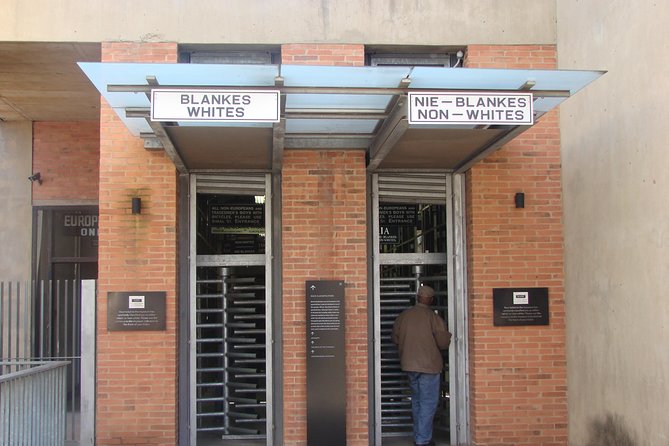
Vilakazi Street is one of the main stops in Soweto. It is famous for having been home to Nelson Mandela and Archbishop Desmond Tutu, two Nobel Peace Prize winners.
The street carries unusual historical weight because these two figures lived here at different times. You get about 30 minutes in the area, with the option to visit Mandela House. The house was Nelson Mandela’s home from 1946 to 1962 and is now focused on preserving the Mandela family legacy.
Mandela House admission is not included, so check the current fee when planning your budget. The tour information allows 30 minutes for the stop, which may be enough for a focused visit but may feel short if you want to read every display carefully.
I would treat Vilakazi Street as a place for both history and reflection. It is not only about Mandela’s name. Your guide can connect the house, the street, and the wider Soweto story, helping you see why this small area became so important.
The area has also become a popular stop, so the experience may feel more visitor-oriented than other parts of Soweto. That is not a reason to skip it. Just balance the famous address with the neighborhood drives and museums.
More Soweto tours:
- Johannesburg: Hop-On Hop-Off Bus with Optional Soweto Tour
★ 4.6 · 985 reviews - Johannesburg Hop-On Hop-Off City Tour with Soweto Option
★ 4.5 · 768 reviews - Half-Day Tour of Soweto Tour
★ 4.5 · 712 reviews - Soweto: Walking Tour with a Local Guide and Lunch
★ 4.9 · 648 reviews
The Hector Pieterson Museum and the 1976 uprising
The Hector Pieterson Museum and Memorial is one of the most important stops of the day. Admission is included, and the visit usually lasts about 30 minutes.
The museum commemorates the role of students in the 1976 Soweto uprisings. Hector Pieterson became a symbol of that student resistance after being killed during the protests. The memorial and museum preserve the memory of those events and the young people involved.
Thirty minutes gives you an introduction, but you may want more time if the displays draw you in. The schedule combines several major places, so the guide has to keep the day moving. Listen closely to the explanation before entering, then use your time inside for the parts that matter most to you.
This stop gives the tour its emotional center. The Apartheid Museum provides a broad account of the system and its collapse, while the Hector Pieterson Museum brings the 1976 uprising down to the level of students, families, schools, and streets.
Two hours at the Apartheid Museum
The Apartheid Museum is the tour’s largest planned stop, with about two hours and admission included. That time makes it possible to see a meaningful portion of the museum without treating it as a rushed checklist item.
You should expect difficult material. The museum explains the legal and social structure of Apartheid, the resistance it produced, and the political changes that brought the system to an end. It is not a light attraction, but it is one of the most useful places in Johannesburg for understanding the country.
One person who usually does not care for museums still considered this visit a highlight and felt it was essential for understanding South Africa and its people. That is a useful clue about the museum’s approach. It is not simply a room of old objects. It asks you to connect government policy with daily life and human cost.
The two-hour allocation is a strong feature, though your actual time can depend on traffic, group size, and the rest of the route. If the museum is your top priority, tell the guide early. You may need to accept shorter stops elsewhere.
The museum also gives you a framework for the rest of the day. After seeing the displays, the matchbox houses, former homes, schools, taxi areas, and Soweto streets carry more meaning.
A brief look inside a traditional medicine shop
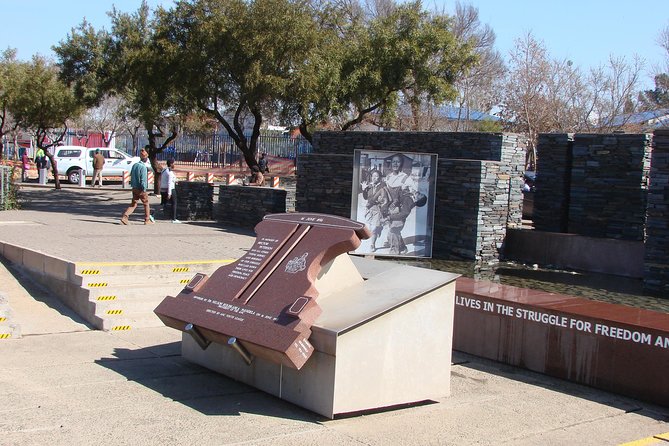
The KwaZulu Muti stop lasts about 15 minutes and is free. Muti refers to traditional herbal and homeopathic remedies, and the shop sells dried herbs and other treatments.
This is a short cultural stop, not a full lecture or extended shopping visit. You might find it interesting as a glimpse into African healing traditions and the types of remedies sold locally.
Keep your expectations modest. Fifteen minutes is enough to look around and ask a few questions, but not enough for a detailed study of traditional medicine. It is one of the lighter moments in a day otherwise focused on prison history, protest, inequality, and political change.
What the guides add to the experience
The guide may shape your day more than any individual stop. Joseph is especially well regarded for his care, patience, driving, and ability to explain how historical events still affect Johannesburg. Several people found that he went beyond a standard route and answered questions in a thoughtful way.
Simba has also been praised for his local perspective and unusually broad command of Johannesburg’s history. Jeff and Gilroi have been described as courteous and helpful, with Gilroi receiving specific praise for clear communication, timely pickup, a suitable pace, and time for lunch.
You should not assume which guide you will receive. Still, the pattern is encouraging: this tour depends heavily on a local guide who can explain what you are seeing instead of merely naming the next stop.
The best approach is to ask questions. Ask how Apartheid shaped housing, transport, education, and work. Ask what has changed and what has not. A good guide can turn the driving sections into the most revealing part of the day.
Pickup, airport layovers, and the daily schedule
Pickup is offered, and the tour has worked well for people with limited time in Johannesburg. One person used a long airport layover, was collected at the airport, saw the Apartheid Museum and Mandela House, and was returned afterward.
Another person appreciated being picked up and dropped off at the airport with luggage kept in the vehicle during the visits. This can make the tour a practical choice for a same-day connection, but you should leave a generous margin before your flight. A six to eight hour tour plus airport procedures is not a plan for a tight connection.
The listed operating hours are 9:00 a.m. to 5:00 p.m., Monday through Sunday. Confirmation is provided at booking, and the tour is available near public transportation, though the included pickup is the more useful feature for most people.
The departure and ending time may have some flexibility. One booking allowed the participants to arrange start and finish times to fit a flight schedule. Confirm your preferred timing before you rely on that option, since flexibility can depend on the day and the route.
Water and parking are included. Lunch is not, so carry money or ask whether the route can include a local restaurant. One guide made time for a tasty lunch, but that should not be treated as guaranteed.
Price, pace, and what you really receive
The price includes more than admission to one museum. You are paying for a full day of transport between spread-out places, parking, water, a guide, and entry to the Apartheid Museum and Hector Pieterson Museum.
Mandela House is extra, and lunch is extra. Those costs are small compared with the tour price, but they matter when you are comparing packages. A tour that appears cheaper may not include the same museums or pickup.
The strongest value comes when you have only one day in Johannesburg or do not want to organize the city yourself. The tour puts the main Apartheid-related sites into one route and gives you an informed explanation along the way.
The weaker value comes if you prefer to spend an entire morning in one museum or explore Soweto slowly on foot. This is a broad introduction, not a deep single-site visit.
The pace has worked for beginners, seasoned sightseers, and people with different mobility levels, according to the information available. Still, the day includes vehicle time, museum walking, and several transitions. Tell the operator about your needs when booking rather than assuming the schedule can be changed on the day.
Who should book this Soweto tour?
I would choose this experience if you are visiting Johannesburg for the first time and want the main Apartheid sites explained in context. It also suits you if you are staying near the airport, have a long layover, or want pickup instead of arranging several taxis.
It is a particularly good fit for history-focused visitors, couples, small groups, and people who prefer a guide to handle the route. The maximum group size of 15 keeps it more personal than a large coach outing.
Families with older children may find the day useful, but the subject matter is serious. You should be ready for difficult stories and images connected with state violence and student protest.
I would be less likely to choose it if you want nightlife, food tastings, or a relaxed neighborhood stroll. The focus is Apartheid, the struggle against it, and the continuing effects visible in Johannesburg and Soweto.
Cancellation is free if you cancel at least 24 hours before the start time. Inside that window, the payment is not refunded, and changes are not accepted.
Should you book it?
Book this tour if you want history, transport, and local explanation in one day. The Apartheid Museum and Hector Pieterson Museum provide the core, while Soweto’s streets, Vilakazi Street, matchbox houses, taxi areas, and former homes give the story a human setting.
Before booking, confirm the pickup point, the expected guide, the time available at the Apartheid Museum, and the extra cost of Mandela House. If your schedule is tight, especially around a flight, ask for a clear start and finish time.
For a first visit to Johannesburg, I think the combination is worthwhile. You will not see every corner of the city, but you will leave with a far better sense of how Apartheid shaped Johannesburg and why its effects still matter.
FAQ
How long does the Soweto and Johannesburg tour last?
The experience lasts approximately six to eight hours.
What is included in the tour price?
Parking fees, water, admission to the Apartheid Museum, and admission to the Hector Pieterson Museum and Memorial are included.
Is admission to Mandela House included?
No. Admission to Mandela House is not included in the tour price.
Is lunch included?
No. Lunch is not included.
Does the tour offer pickup?
Yes. Pickup is offered, and the experience has been used for hotel and airport pickups.
Can I take this tour during a long airport layover?
The tour has been used successfully by people with long layovers, including airport pickup and return. You should confirm the timing and allow plenty of time before your flight.
What is the maximum group size?
The tour can have a maximum of 15 people.
What museums does the tour visit?
The route includes the Apartheid Museum and the Hector Pieterson Museum and Memorial. It also visits or passes sites connected with Soweto, including Mandela House and Vilakazi Street.
What is the cancellation policy?
You can cancel for a full refund up to 24 hours before the experience starts. Cancellations or changes made less than 24 hours before the start time are not accepted for a refund.
More Apartheid Museum Tours
- Full-Day Soweto, Apartheid Museum and Lunch Tour
★ 5.0 · 410 reviews - Half Guided Day Tour of Soweto And Apartheid Museum
★ 5.0 · 356 reviews - Ultimate Johannesburg Soweto Experience with Apartheid Museum
★ 5.0 · 313 reviews - Soweto: Hop-On Hop-Off Bus, City Tour and Apartheid Museum
★ 4.5 · 250 reviews
Just added in Johannesburg
- Sun City Day Tour From Johannesburg★ 4.5 · 6 reviews
- Half-Day Walking Tour in Soweto★ 5.0 · 38 reviews
- Soweto Township Tours★ 4.5 · 6 reviews
- Historical and Cultural Interactive Experience of Soweto★ 5.0 · 7 reviews
- Soweto and Lunch Tour★ 5.0 · 2 reviews
- Full-Day Soweto Apartheid Museum and Lunch★ 5.0 · 16 reviews
- Soweto & Johannesburg And Apartheid Museum Private★ 5.0 · 9 reviews
- Full Day Soweto & Johannesburg City Tour★ 4.5 · 2 reviews
Apartheid Museum Tours, compared.

Soweto /Johannesburg and Apartheid Museum Guided Full Day Tour
Read our review →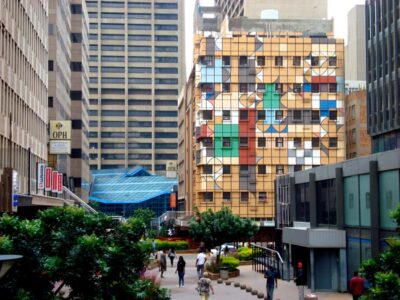
Jo’berg in 1 Day: Soweto, Apartheid Museum & City Tour
Read our review →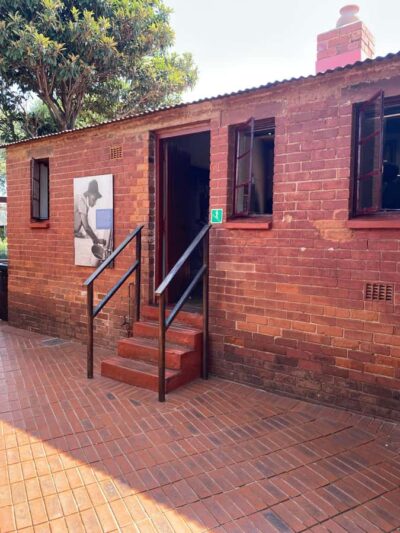
Full-Day Tour with Soweto and Apartheid Museum
Read our review →
Full-Day Soweto, Apartheid Museum and Lunch Tour
Read our review →
Half Guided Day Tour of Soweto And Apartheid Museum
Read our review →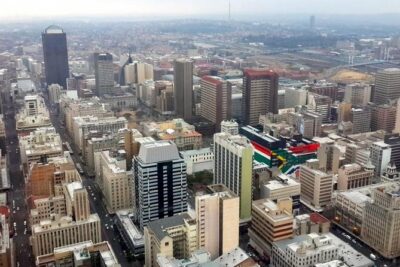
Ultimate Johannesburg Soweto Experience with Apartheid Museum
Read our review →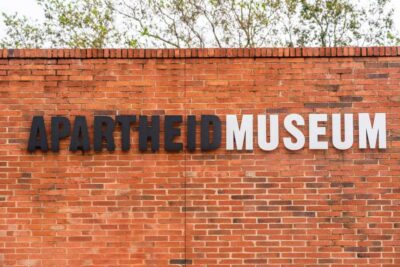
Hop-On Hop-Off Bus, City Tour and Apartheid Museum
Read our review →
Johannesburg and Soweto Apartheid Full Day Tour w/Lunch
Read our review →Browse the lists this tour appears in