
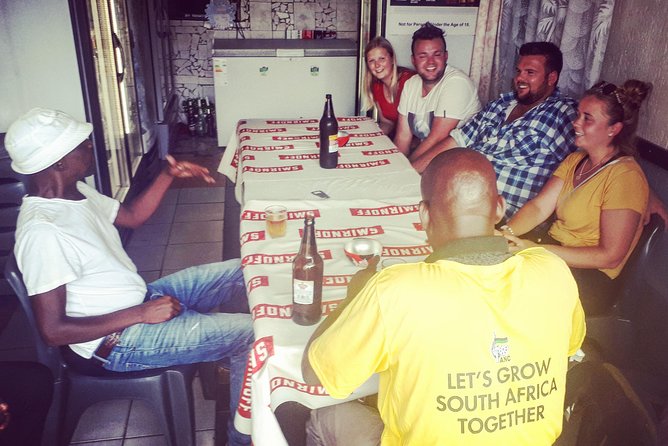
REVIEW · SOWETO TOURS
SOWETO: Ethical, bespoke, authentic, community driven small group
Soweto tells Johannesburg’s story up close. This six-to-seven-hour small-group tour combines major landmarks with local streets, community connections, and a traditional lunch. I like the personal touch from guides such as Gilda and Gabriel, plus the chance to hear Hector Pieterson’s story from Mlungisi. The main consideration is cost: at $103.52 per person, lunch and extra drinks are not included.
You’ll travel in an air-conditioned vehicle, with a maximum of 15 people, so you can move around Soweto without wrestling with taxis or trying to fit every major stop into one rushed morning. I also like that the tour pays its local guides and supports community projects, though you should budget extra for optional tips to performers, dancers, and local guides.
In This Review
- Key points to know before booking
- Why this Soweto tour feels different
- Getting from Rosebank to Soweto
- The Soweto Towers and their giant murals
- Vilakazi Street and Mandela House
- Hector Pieterson Museum and the June 16 story
- Kliptown, street art, and everyday Soweto
- FNB Stadium and Walter Sisulu Square
- Coffee, greetings, and a traditional lunch
- What the ethical claim means in practice
- Is $103.52 good value?
- Who should book this experience?
- Should you book the Soweto small-group tour?
- FAQ
- How long does the Soweto tour last?
- Where does the tour begin?
- Where does the tour end?
- Is transport from Johannesburg included?
- What is the maximum group size?
- Is admission to Mandela House included?
- Is lunch included?
- Is any alcoholic drink included?
- Can I cancel for a full refund?
Key points to know before booking

- Local connections matter: Gilda’s relationships in Soweto shape the day, bringing you beyond the best-known sights.
- History comes alive at Hector Pieterson Museum: Mlungisi gives a personal account of June 16 and the events that changed South Africa.
- Mandela House admission is included: You can visit Nelson Mandela’s former home without paying another entrance fee.
- Kliptown adds a different view: Street art, local residents, and the Freedom Charter story broaden the tour beyond famous names.
- Lunch is a separate expense: The group eats at Sakhumzi Restaurant, but the meal is not included in the tour price.
- The group stays fairly small: With no more than 15 people, the day should feel more flexible than a large coach excursion.
Why this Soweto tour feels different

Soweto is not a single attraction. It is a large township area with famous political landmarks, ordinary residential streets, businesses, public art, and communities shaped by South Africa’s difficult past and changing present.
That is why I like the design of this tour. You get the famous names, including Nelson Mandela, Hector Pieterson, Walter Sisulu Square, and FNB Stadium. But you also spend time in Kliptown, walk through Orlando, stop for coffee, and meet people connected to the area.
The tour is described as ethical, bespoke, authentic, and community driven. Those words only matter if the day puts them into practice. Here, the strongest evidence is the local network built by Gilda and the use of guides who know Soweto personally. Gabriel, for example, is described as being born and raised in Soweto. Mlungisi shares the story of Hector Pieterson in an emotional and engaging way.
That personal connection can change how you understand the area. Instead of seeing Soweto only through a bus window, you get explanations tied to specific streets, families, events, and community projects.
You should still keep your expectations realistic. A six-to-seven-hour tour cannot explain every part of Soweto. Some stops are brief, including 10 minutes at FNB Stadium and only five minutes at Walter Sisulu Square. The day is broad rather than slow and scholarly.
More Soweto tours:
- Johannesburg: Hop-On Hop-Off Bus with Optional Soweto Tour
★ 4.6 · 985 reviews - Soweto /Johannesburg and Apartheid Museum Guided Full Day Tour
★ 5.0 · 932 reviews - Johannesburg Hop-On Hop-Off City Tour with Soweto Option
★ 4.5 · 768 reviews
Getting from Rosebank to Soweto
The tour begins at the Holiday Inn Johannesburg, Rosebank, at The Zone on Oxford Road. Round-trip transport from Johannesburg is included, and the vehicle is air-conditioned. That is a practical advantage in a city where getting between Johannesburg and Soweto on your own can take planning.
The route includes several stops, so you are not spending the entire day on foot. You will get out for museums, streets, community areas, coffee, and lunch, then return to the vehicle for the next part of the day.
The group limit is 15 people. That is small enough for a guide to answer questions and adjust the conversation to your interests, but it is not a private tour. If you want a completely personal itinerary, this is not the right format. If you want company without a full-size coach, it is a sensible middle ground.
The listed operating time is 9:30 a.m. to 4 p.m., Monday through Sunday, and the experience ends back at the starting point. Confirmation is provided at booking. Service animals are allowed, and the activity is near public transportation.
The Soweto Towers and their giant murals
The Soweto Towers are an easy way to begin seeing the area’s modern character. Their large murals are described as the biggest in Africa, making them a striking visual stop even if you do not take part in the optional bungee jump.
You have about 30 minutes here, with admission included. That gives you time to take in the towers, hear why they matter locally, and take photographs.
The bungee jump is an option, not a requirement. If you are interested, clarify the arrangements and cost before committing, since the supplied tour details only mention the jump as something you can do from the top. For most people, the murals and the view will be enough.
Vilakazi Street and Mandela House
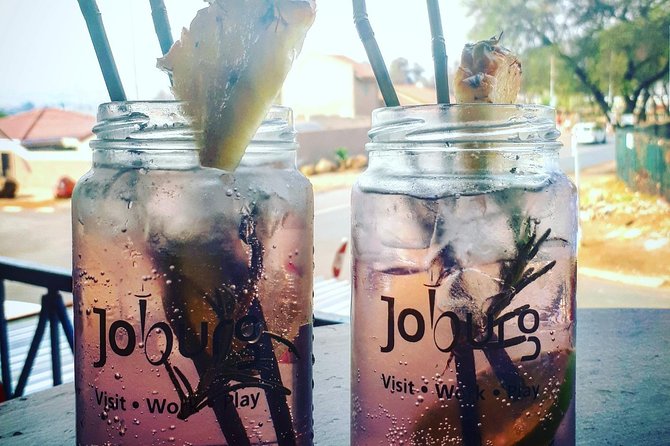
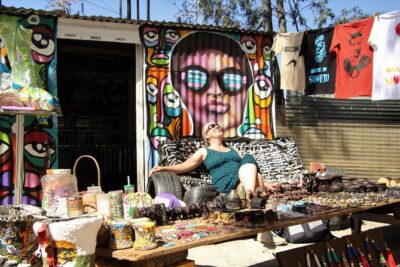
Vilakazi Street is one of Soweto’s best-known addresses. It is famous for having been home to two Nobel Peace Prize winners, Nelson Mandela and Desmond Tutu. The street also has stalls where you can browse local crafts and goods.
The itinerary includes 30 minutes on Vilakazi Street and another 30 minutes at Mandela House. That split works well. First, you get a sense of the street as a living place, then you enter the small museum connected to Mandela’s Soweto home.
Mandela House admission is included, which improves the value of the tour. The museum is not a vast complex. Its appeal is the direct connection to Mandela’s life and the chance to see the place as a modest home rather than only thinking of him through grand political events.
Do not expect a long museum visit. Thirty minutes is enough for an introduction, but you may want more time if you read every display carefully. The guide’s explanation helps you connect the house to Soweto’s wider political story.
A glass of traditional beer is also included during the day. Additional beer, lunch, coffee, tea, and other drinks cost extra.
A few more in Johannesburg
- From Johannesburg: Pilanesberg Nature Reserve Game Safari
★ 4.8 · 1,327 reviews - Full Day Ultimate Pilanesberg National Park Safari from Johannesburg or Pretoria
★ 4.5 · 718 reviews - Half-Day Tour of Soweto Tour
★ 4.5 · 712 reviews - Soweto: Walking Tour with a Local Guide and Lunch
★ 4.9 · 648 reviews
Hector Pieterson Museum and the June 16 story
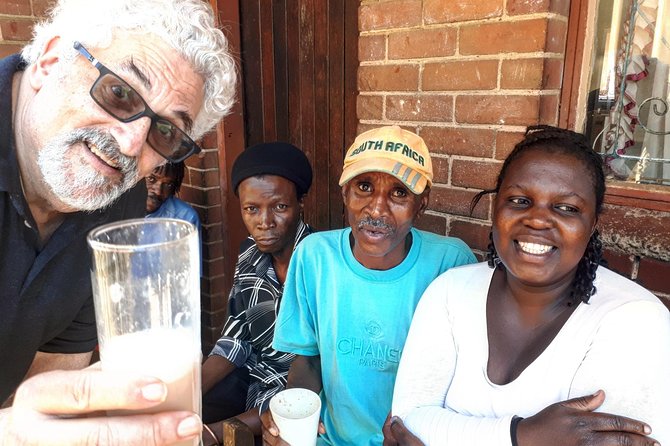
The Hector Pieterson Museum and Memorial is likely to be one of the most serious parts of the day. It commemorates Hector Pieterson, whose death became a symbol of the 1976 Soweto uprising.
Mlungisi leads this part of the experience and explains Hector’s story and June 16 in a personal way. That matters because museum labels can give you dates and facts, but a local guide can help you understand how those events are remembered.
The museum visit is listed at around 30 minutes, with no separate admission charge. Afterward, the group takes a short walk with Mlungisi through Orlando toward Vilakazi Street.
This portion may feel emotional. That is not a flaw, but you should be ready for a direct account of injustice, protest, and loss. The tour does not treat Soweto as a simple sightseeing stop. It asks you to look at the country’s past honestly while also seeing the community as more than its history.
Kliptown, street art, and everyday Soweto

Kliptown gives the tour a wider frame. You spend about an hour in this historic area, seeing street art and meeting friendly local residents with a local guide.
This is one of the places where the tour moves beyond the standard route. The focus is not just on a famous building. It is on how people live, work, create, and maintain a sense of community.
Accounts of the experience describe visits with local families and conversations in residential areas. Since the exact encounters can change, you should treat this as a possibility rather than a guaranteed home visit. The important point is that the tour has established local relationships and can show parts of Soweto that a large group might pass by.
You should be respectful here. Ask before taking photographs, listen when someone shares a story, and remember that a neighborhood is not a stage built for visitors. The community focus works best when you take part with curiosity rather than treating local life as a spectacle.
FNB Stadium and Walter Sisulu Square
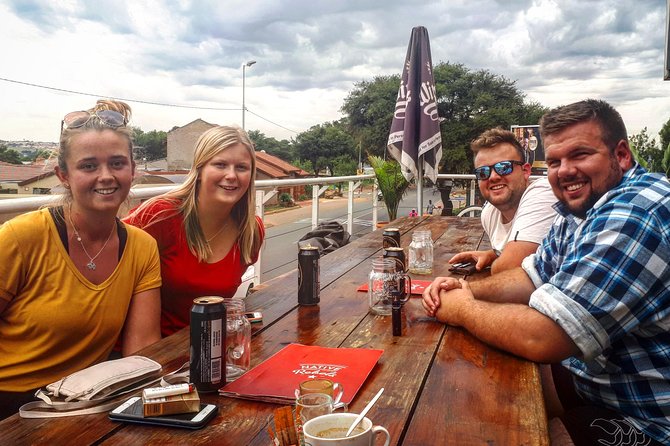
FNB Stadium receives a short 10-minute stop. It is an important sports venue and a recognizable part of Johannesburg’s public identity. The brief visit is enough for an introduction and perhaps a photograph, but it is not a stadium tour.
Walter Sisulu Square gets about five minutes. The square is linked to the Freedom Charter, an important document in the struggle against apartheid and in the political vision that shaped modern South Africa.
Five minutes is a very quick stop, so the guide’s explanation is essential. Think of this as a visual marker and a short lesson, not a full visit. If political history is your main interest, you may wish the schedule allowed more time here.
Still, the inclusion of both sites helps show that Soweto is connected to sport, political organizing, public gathering spaces, and daily life. The day is not limited to Mandela-related locations.
Coffee, greetings, and a traditional lunch
At Vilakazi Espresso, you get about 30 minutes for an introduction to local cultures, greetings, and history over coffee. Coffee and tea are not included, so bring a little extra money if you want a drink.
This stop gives the schedule a useful pause. After museums and walking, sitting down can help you absorb what you have seen. It also creates room for questions and informal conversation with the guide.
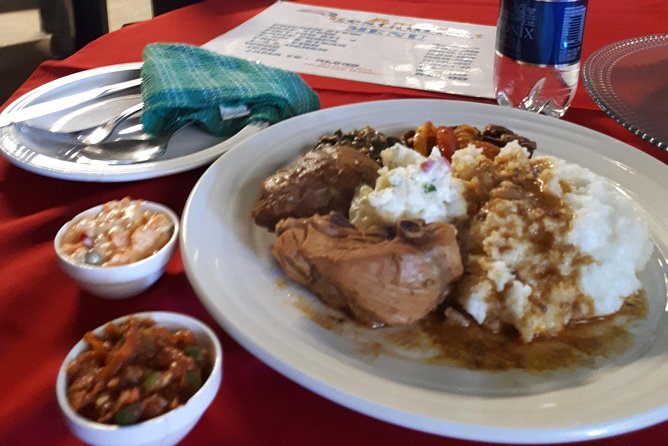
Lunch is scheduled for one hour at Sakhumzi Restaurant, described as a top place to eat in Soweto. The meal itself is not included, so the $103.52 price does not cover your food or any additional drinks.
That extra cost is worth noting when you compare tours. The included transport, Mandela House entry, bottled water, traditional beer, and several guides cover a fair amount, but you should not arrive assuming the price includes a full lunch. Ask about the available meal choices and prices on the day if you need to manage a strict budget.
A sit-down meal also adds something that a packed sightseeing schedule often lacks. You get time to talk with the people in your group, ask about dishes, and consider the contrast between formal historical sites and ordinary social life.
What the ethical claim means in practice
The strongest community feature is not simply the presence of local guides. The operator says all guides used on the tour are paid by Eenblond TOURS. That is important because informal encounters can create awkward questions about who benefits from tourism.
Optional tips to local performers, dancers, and guides are not included. One account raised concern that people encountered during the day might ask for tips. The operator clarified that local guides are paid and that it prefers to support community initiatives through nonprofit organizations rather than hand money out during the tour.
For you, the practical lesson is simple: bring small cash if you want to tip, but do not assume every person you meet is unpaid. You can also ask the guide how community support works and choose to contribute to a project that fits your interests after the tour.
This approach will appeal to you if you want your spending to connect with local work. It may feel less comfortable if you prefer a tightly controlled sightseeing route with no spontaneous conversations.
Is $103.52 good value?
At $103.52 per person, this is not the cheapest way to see Soweto. The value depends on what you want from the day.
You are paying for round-trip transport from Rosebank, an air-conditioned vehicle, a small group of up to 15 people, several guides, bottled water, a glass of traditional beer, and entry to Mandela House. You also get a full day rather than a quick half-day circuit.
The time matters. One of the tour’s clearest strengths is that it does not try to squeeze Soweto into a few hours. The route includes museums, famous streets, Kliptown, food, coffee, sport, and political history. You get a broader picture of the area.
The price is less attractive if you only want Mandela House, Vilakazi Street, and a quick photograph at the towers. You could find a shorter sightseeing option for less. It is more defensible if you value local context, transport, and a guide who can introduce you to different parts of the community.
With 51 ratings recorded at five out of five and a 100 percent recommendation rate, the satisfaction record is unusually strong. Still, the details suggest the best fit is for someone who wants an active, social, history-focused day, not a passive bus ride.
Who should book this experience?
I would recommend it to you if you:
- Want to understand Soweto beyond its famous names
- Prefer a small group to a large coach
- Value local guides and community relationships
- Want transport from Johannesburg included
- Are comfortable with emotional historical subjects
- Enjoy mixing museums with street scenes, food, and conversation
- Can pay separately for lunch and drinks beyond the included beer and water
Families may appreciate the vehicle and clear route, though the emotional subject matter at Hector Pieterson Museum requires some thought for younger children. Most people can participate, and service animals are allowed according to the tour information.
You may want another option if you need a private itinerary, dislike walking between nearby stops, want a long museum visit, or prefer every meal and drink included in the advertised price.
Free cancellation is available if you cancel at least 24 hours before the start time. Changes or cancellations inside that window are not accepted for a refund. The tour also depends on good weather and a minimum number of participants. If the operator cancels for either reason, you are offered another date or experience, or a full refund.
Should you book the Soweto small-group tour?
Book it if you want Soweto explained by people connected to the community, not reduced to a few postcard stops. The combination of Mandela House, Hector Pieterson Museum, Kliptown, Vilakazi Street, local guides, and a traditional lunch gives you a fuller day than a standard highlights tour.
I especially like the presence of Gilda, Gabriel, and Mlungisi in the experience. Their roles bring different kinds of insight: personal knowledge of Soweto, strong local relationships, and a moving account of June 16.
The main cautions are the price, the separate lunch cost, the optional tipping, and the quick timing at some sites. If you accept those limits, this is a thoughtful choice for seeing Soweto with respect and context.
FAQ
How long does the Soweto tour last?
The experience lasts approximately six to seven hours. The listed operating time is from 9:30 a.m. to 4 p.m.
Where does the tour begin?
It begins at the Holiday Inn Johannesburg, Rosebank by IHG, at The Zone on Oxford Road, Rosebank, Johannesburg.
Where does the tour end?
The tour ends back at the starting meeting point.
Is transport from Johannesburg included?
Yes. Round-trip transport in an air-conditioned vehicle is included.
What is the maximum group size?
The tour has a maximum of 15 participants.
Is admission to Mandela House included?
Yes. The entrance fee to Mandela House is included in the tour price.
Is lunch included?
No. Lunch at Sakhumzi Restaurant is not included. Coffee, tea, and additional beer or other drinks are also excluded.
Is any alcoholic drink included?
Yes. A glass of traditional beer is included. Additional alcoholic drinks are not included.
Can I cancel for a full refund?
Yes, if you cancel at least 24 hours before the experience start time. Cancellations made less than 24 hours in advance are not refunded.
Just added in Johannesburg
- Pretoria Capital City Tour Experience★ 5.0 · 24 reviews
- 4 Day Kruger National Park Tour★ 5.0 · 30 reviews
- Johannesburg e-scooter experience★ 5.0 · 38 reviews
- Johannesburg Street Art & Museum Walking or E-scooter Tour★ 4.5 · 10 reviews
- Big 5 Safari Experience at Pilanesberg National Park★ 5.0 · 16 reviews
- Apartheid Museum Tour from Johannesburg★ 4.5 · 14 reviews
- Arrival Private Transfer: Tambo Airport JNB to Johannesburg in Business Car★ 4.0 · 5 reviews
- Drakensberg Mountains. Tugela Gorge and Amphitheater Hike★ 5.0 · 7 reviews
Soweto Tours, compared.
Soweto /Johannesburg and Apartheid Museum Guided Full Day Tour
Read our review →

Jo’berg in 1 Day: Soweto, Apartheid Museum & City Tour
Read our review →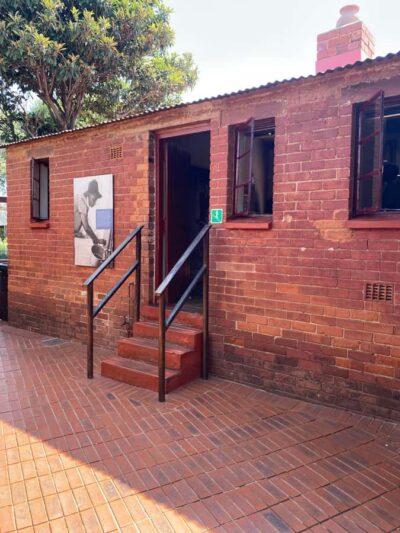
Full-Day Tour with Soweto and Apartheid Museum
Read our review →
Full-Day Soweto, Apartheid Museum and Lunch Tour
Read our review →
Half Guided Day Tour of Soweto And Apartheid Museum
Read our review →Browse the lists this tour appears in