

REVIEW · SOWETO TOURS
Soweto: Hector Pieterson Memorial, to Orlando Towers Tour
History comes alive on Soweto’s streets. This four-hour tour links the Hector Pieterson Memorial, Vilakazi Street, Nelson Mandela’s former home, Orlando East, and the Orlando Towers with a young local guide. I like the serious historical grounding at the start, and I like that the day moves beyond museums into local food, a minibus taxi ride, and a neighborhood tavern.
The strongest guides appear to be Tebogo and Dumisani, both praised for clear storytelling, patience, and an easy way with questions. The main consideration is physical: you walk about 5 kilometers, use local transport, and spend much of the tour outdoors, so this is not a good fit for wheelchair users or anyone wanting a quiet, vehicle-based sightseeing trip.
In This Review
- Key points to know before booking
- Why this four-hour Soweto tour works
- Starting at the Hector Pieterson Memorial
- Moema Street and the everyday shape of Soweto
- Vilakazi Street and two major South African leaders
- Lunch in the form of a kota
- A local bar and Tolokazi beer
- Riding a minibus taxi to Orlando East
- Orlando East and the story of formal housing
- Finishing beneath the Orlando Towers
- Walking, timing, and what to bring
- The guides make the difference
- Is $34 good value?
- Who should book this Soweto experience?
- Should you book the Hector Pieterson Memorial to Orlando Towers tour?
- FAQ
- How long does the Soweto tour last?
- Where does the tour begin?
- Where does the tour finish?
- Is lunch included?
- Is the minibus taxi ride included?
- Are entrance tickets and drinks included?
- How much walking is involved?
- Is the tour suitable for wheelchair users?
Key points to know before booking

- The Hector Pieterson Memorial begins the tour with the 1976 Soweto Uprising, one of the key events in the fight against Apartheid.
- Vilakazi Street connects two Nobel Peace Prize figures, Nelson Mandela and Archbishop Desmond Tutu, in the same famous neighborhood.
- A kota and local beer tasting add everyday Soweto culture, not just formal historical sights.
- The minibus taxi ride to Orlando East is part of the experience, giving you a short taste of ordinary local transport.
- You walk roughly 5 kilometers, with stops along the way, so comfortable shoes matter.
- The $34 price includes lunch and the minibus taxi ride, but entrance tickets, drinks, and hotel transfers cost extra.
Why this four-hour Soweto tour works

Soweto is not one single type of place. It includes formal brick housing, middle-class streets, informal settlements, historic sites, local businesses, and public landmarks known around the world. This tour tries to show several of those sides in a short period.
That mix is the main reason I find the experience appealing. You get a clear account of Apartheid and the struggle against it, then see how that past still shapes daily life. The tour also leaves room for ordinary pleasures: a township burger called a kota, a local beer, a walk down Vilakazi Street, and a ride in a minibus taxi.
The guide matters greatly here. A good guide can explain why a site matters without turning the whole morning into a lecture. Feedback about Tebogo and Dumisani points to guides who keep the pace friendly, answer questions, explain the next step clearly, and know the area as home rather than as a backdrop.
The advertised price is $34 per person, which is fair for four hours of guiding, lunch, and the minibus taxi ride. You should still budget for entry tickets and drinks. Hotel pickup and drop-off are not included, so you need to reach the meeting point yourself and arrange your way back from the Orlando Towers.
More Soweto tours:
- Johannesburg: Hop-On Hop-Off Bus with Optional Soweto Tour
★ 4.6 · 985 reviews - Soweto /Johannesburg and Apartheid Museum Guided Full Day Tour
★ 5.0 · 932 reviews - Johannesburg Hop-On Hop-Off City Tour with Soweto Option
★ 4.5 · 768 reviews
Starting at the Hector Pieterson Memorial
The tour begins near K & K Soweto Bakery, Coffee Shop, beside the Hector Pieterson Museum and Memorial. Look for Vilakazi Espresso, with its name in bold. The meeting spot is on the right side of the coffee shop.
The first hour focuses on the 1976 Soweto Uprising. This is the right place to begin because the memorial gives the rest of the tour a serious frame. You learn about the schoolchildren who protested the Apartheid government’s language policy and about the violence that followed.
Hector Pieterson became a symbol after being shot during the uprising. The famous photograph of his body being carried away helped show the world what was happening in Soweto. The guide also brings attention to people such as Antoinette Sithole, whose courage during the protest is part of the story.
I like that the tour does not treat the memorial as a quick photo stop. You have about an hour for a guided visit, which gives the guide time to explain the event and connect it to the wider struggle for freedom. It also helps you understand why young people played such an important role in challenging Apartheid.
This section can feel heavy, and it should. Wear comfortable clothes and shoes from the beginning, since the morning quickly shifts between indoor stops, sidewalks, and longer walks.
Moema Street and the everyday shape of Soweto

After the memorial, you spend about 15 minutes on Moema Street with the guide. The stop is brief, but it helps move the experience from national history to the physical reality of the neighborhood.
The value here is in asking questions. You can learn how Soweto has changed after Apartheid and how different parts of the township are organized. The tour specifically aims to discuss the three broad living classes found in Soweto, including middle-class areas and informal settlements.
An optional visit to an informal settlement may be available. If you choose it, you see an area that gives a sense of Soweto’s earlier housing conditions and the lower end of its current social divisions. This is not a sightseeing spectacle, so approach it with respect and listen to the guide’s explanation rather than treating it as a photo opportunity.
The exact experience may depend on the day and the group, but the basic point is important: Soweto is socially and physically varied. A tour that only visits famous political sites would miss that.
Vilakazi Street and two major South African leaders

Vilakazi Street is one of the best-known addresses in Soweto. It is famous for being associated with both Nelson Mandela and Archbishop Desmond Tutu, two major figures in South Africa’s move toward democracy.
You have about 20 minutes to walk and look around before spending roughly 30 minutes at Mandela’s House. The house visit is self-guided, which gives you more freedom than a formal guided museum visit. You can take your time with the displays and consider the modest setting connected to Mandela’s early political life.
Entry tickets are not included, so check the cost before you arrive if the house visit is important to you. The tour still brings you to the street and explains its importance, but the ticketed house visit is an extra expense.
The nearby former home of Archbishop Desmond Tutu adds another layer. Tutu’s role went beyond religion. He became one of the best-known moral voices against Apartheid and later chaired the Truth and Reconciliation Commission. The guide shares background on what made him so important, giving you a useful comparison between two leaders who lived on the same street.
I especially like this part because the history is tied to ordinary homes and a real neighborhood. It is easier to understand the scale of these figures when you see the streets where they lived, rather than meeting them only through large national monuments.
A few more in Johannesburg
- From Johannesburg: Pilanesberg Nature Reserve Game Safari
★ 4.8 · 1,327 reviews - Full Day Ultimate Pilanesberg National Park Safari from Johannesburg or Pretoria
★ 4.5 · 718 reviews - Half-Day Tour of Soweto Tour
★ 4.5 · 712 reviews - Soweto: Walking Tour with a Local Guide and Lunch
★ 4.9 · 648 reviews
Lunch in the form of a kota
The lunch stop lasts about 40 minutes and takes place on Vilakazi Street. The featured local food is the kota, sometimes called a township burger. It is a filling sandwich-style meal with a range of ingredients, and it is a useful introduction to casual Soweto food culture.
Lunch is included in the tour price, which improves the overall value. You are not just paying for a guide and a sequence of monuments. You get a local meal and a chance to pause, talk, and ask questions after the more serious morning stops.
The food may be simple rather than polished, and that is part of its appeal. If you prefer formal restaurants or have a restricted diet, ask the operator what is available before booking. The supplied information confirms the kota and mentions local cuisine, but it does not promise a set menu or specific alternatives.
A local bar and Tolokazi beer

Next comes a short walk and a visit to a local bar, with about 15 minutes set aside for beer. The experience includes a chance to taste Tolokazi, a local beer associated with the tour.
This is a small stop, but it gives you a look at social life in Soweto that a museum cannot provide. The idea is not simply to drink. It is to spend a little time in a local setting, meet people, and understand how neighborhood life continues after the formal historical sites close for the day.
Drinks are not included, so bring money if you want to take part. Alcohol and drugs are not allowed during the tour beyond the organized beer tasting, and smoking is not allowed in the vehicle. If you do not drink, you can still use the stop to chat with the guide and observe the setting.
The short timing means this is a taste, not a brewery tour. I would not book the experience mainly for beer. It works better as one part of a broader day that combines food, transport, history, and local interaction.
Riding a minibus taxi to Orlando East

One of the most distinctive parts of the tour is the minibus taxi ride. After the local bar, you spend about 10 minutes in transport before reaching Orlando East.
Minibus taxis are a common form of transport in South Africa. Riding one with a guide gives you a small, controlled introduction to how people move around Soweto. It also breaks up the walking and keeps the tour from feeling like a long chain of museum visits.
The ride is short, and you should not expect a full public transport lesson. Its value is practical and cultural: you are using a normal local service rather than traveling everywhere in a private tourist vehicle.
This is also why the tour needs some flexibility. Local transport can feel less predictable than a private car, and the experience is not designed for wheelchair users. If you have mobility concerns, the 5-kilometer walking distance and minibus taxi section are important reasons to choose another outing.
Orlando East and the story of formal housing

Orlando East receives about 15 minutes of guided attention. The area is known as the first part of Soweto to receive brick houses as a formal settlement.
That detail helps explain how Soweto developed. The township was shaped by Apartheid-era housing and labor policies, and its neighborhoods did not all grow in the same way. Seeing Orlando East after hearing about informal settlements and different living classes gives the tour a more useful sense of the area’s structure.
The guide’s local perspective is particularly valuable here. A map can show where Orlando East is, but it cannot explain how residents view the area or how its past connects with life today. The tour’s stated focus includes young people and post-Apartheid life, so use this stop to ask direct questions about change, opportunity, housing, and daily routines.
Because the stop is short, do not expect every issue to be covered in detail. Think of it as a focused piece of the larger story.
Finishing beneath the Orlando Towers

The final stop is the Orlando Towers, one of Soweto’s most recognizable landmarks. The tour ends there after about 15 minutes of sightseeing.
The towers are former cooling structures transformed into a bold public landmark. The bright artwork and dramatic shape make them easy to recognize, but their value on this tour comes from what they represent today: a place associated with energy, recreation, and modern Soweto, rather than only with the painful chapters of the past.
The tour finishes at SOWETO TOWERS, so plan your onward transport in advance. Hotel drop-off is not included. Since the day ends in a public area, you may want to arrange a pickup or confirm your next connection before setting out.
The final stop also gives the morning a useful change in mood. You begin with the deaths and protests of 1976, then move through homes, food, local transport, and neighborhood life before ending at a modern symbol of Soweto. That arc is one of the tour’s strongest features.
Walking, timing, and what to bring
Four hours sounds easy until you note the total distance. You walk about 5 kilometers, with stops along the route. Bring comfortable shoes, a hat, biodegradable sunscreen, and light, comfortable clothing.
A charged smartphone and power bank are sensible. You may also want hand sanitizer or tissues, especially after using public transport or eating on the go. These are small preparations, but they make the day more comfortable.
The tour is conducted in English with a live guide. The pacing appears carefully balanced, with enough structure to keep the group moving and enough time for questions and conversation. Still, the number of stops means you should expect a full morning rather than a slow, leisurely walk.
Weather can affect the experience. One guide, Dumisani, was praised for patiently waiting with umbrellas during heavy rain and cold conditions, but you should not rely on perfect weather or supplied shelter. Check the forecast and dress accordingly.
The guides make the difference
The most strongly praised part of this experience is the guiding. Tebogo is described as passionate, open to questions, and well informed about both Soweto and South African history. He also helped people feel safe throughout the tour.
Dumisani receives similar praise for clear explanations, warm manners, good local knowledge, and a strong sense of timing. He reportedly explained the next steps carefully and kept the day from feeling rushed, even though it included many different stops.
That matters because Soweto’s history can easily be reduced to a few famous names and photographs. A skilled guide adds the connections: how Apartheid affected housing, why the 1976 uprising mattered, how major leaders shaped the national story, and what life looks like for young people now.
I would ask questions throughout the tour. This is not a silent sightseeing route. The guide’s ability to explain, compare, and add personal views is one of the main reasons to book it.
Is $34 good value?
At $34, the tour offers a solid amount for a half-day outing. You receive four hours with an English-speaking guide, lunch, and the minibus taxi ride. The itinerary also covers several major Soweto sights and includes local food and beer tasting.
The price is less attractive if you only want a ticketed visit to Mandela’s House or a quick look at the towers. Entry tickets are extra, drinks are extra, and you must arrange your own transport to and from the meeting points.
For someone who wants context and local contact, the value is better. You are paying for the guide’s interpretation and the way the stops connect, not simply for admission to a museum.
Free cancellation up to 24 hours before the start and a reserve-now, pay-later option make it easier to fit into a changing Johannesburg schedule.
Who should book this Soweto experience?
I would recommend it to first-time visitors who want an introduction to Soweto that combines political history with present-day life. It suits curious adults, older children who can manage the walking, and anyone who prefers a local guide to a private vehicle tour with little interaction.
It is also a good choice if you want to support a locally guided experience and are comfortable using public transport, eating simple local food, and walking through different parts of a township.
I would think twice if you use a wheelchair, dislike walking, need a tightly controlled schedule, or want a luxury sightseeing experience. The tour is active, outdoors-oriented, and social. It asks you to pay attention, ask questions, and accept a little ordinary neighborhood unpredictability.
Should you book the Hector Pieterson Memorial to Orlando Towers tour?
Book it if you want the history of Soweto explained alongside its food, streets, transport, and current communities. The strongest reasons are the serious opening at the Hector Pieterson Memorial, the rare link between Mandela’s and Tutu’s former homes, the kota lunch, and the local minibus taxi ride.
The main caution is simple: this is a walking tour with a 5-kilometer route and extra costs for entry tickets and drinks. For most able-bodied visitors who want a thoughtful half-day in Soweto, $34 is a sensible price, especially with lunch included. The guide can make or break the experience, and the strong feedback for Tebogo and Dumisani is a reassuring sign.
FAQ
How long does the Soweto tour last?
The tour lasts four hours. Starting times vary, so you need to check availability when booking.
Where does the tour begin?
It begins at K & K Soweto Bakery, Coffee Shop, near the Hector Pieterson Museum and Memorial. The meeting point is on the right-hand side of Vilakazi Espresso, which has its name in bold.
Where does the tour finish?
The tour finishes at the Orlando Towers, also called SOWETO TOWERS.
Is lunch included?
Yes. Lunch is included, with local food such as a kota featured during the tour.
Is the minibus taxi ride included?
Yes. The minibus taxi ride around Soweto is included in the price.
Are entrance tickets and drinks included?
No. Entry tickets and drinks are not included. Hotel pickup and drop-off are also not included.
How much walking is involved?
You walk about 5 kilometers, or 3.1 miles, with stops along the way. Comfortable shoes are recommended.
Is the tour suitable for wheelchair users?
No. The tour is not suitable for wheelchair users because it includes significant walking and a minibus taxi ride.
Just added in Johannesburg
- Soweto Tuk-Tuk Food & Beer Tour★ 5.0 · 9 reviews
- Soweto Tour; Mandela House; Vilakazi Street; Market Culture★ 5.0 · 6 reviews
- Soweto Township Tour★ 4.4 · 4 reviews
- Soweto & Johannesburg and Apartheid Museum★ 4.7 · 41 reviews
- Private Soweto,Mandela House,Apartheid Museum,Constitution★ 4.6 · 15 reviews
- SOWETO Half day Tour★ 5.0 · 2 reviews
- Soweto: Sip & Paint Walking Tour & Take Home a Canvas★ 4.8 · 7 reviews
- Soweto and Apartheid Museum day Tour★ 4.2 · 3 reviews
Soweto Tours, compared.

Soweto /Johannesburg and Apartheid Museum Guided Full Day Tour
Read our review →

Jo’berg in 1 Day: Soweto, Apartheid Museum & City Tour
Read our review →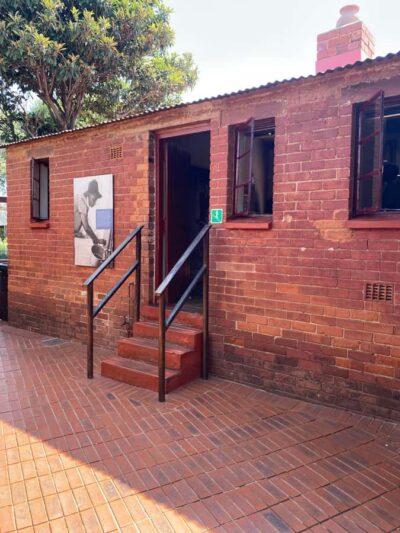
Full-Day Tour with Soweto and Apartheid Museum
Read our review →

Full-Day Soweto, Apartheid Museum and Lunch Tour
Read our review →
Half Guided Day Tour of Soweto And Apartheid Museum
Read our review →Browse the lists this tour appears in