
REVIEW · BO-KAAP TOURS
Bo-Kaap: Walk with a local
Color tells only half the story. This one-hour walk through Cape Town’s Bo-Kaap pairs the famous painted houses with personal stories from a local guide whose family roots reach back to the people brought here under Dutch rule. I like the small-group feel, with no more than 20 people, and I like that the walk goes beyond photographs to explain Islam, slavery, food, and daily life in the neighborhood. The main drawback is its short length: you get a strong introduction, but not a long, leisurely exploration.
The tour costs $25.31 per person and includes a cup of rooibos tea or coffee plus a local snack. That makes the price reasonable, especially if your guide, such as Ilyas, Rafiq, Siddiq, or Sadiq, adds the personal connections that have made this experience so well regarded. Bring good shoes, though, since Bo-Kaap has hills, uneven cobblestones, and some walking.
In This Review
- Key points to know before you book
- Why Bo-Kaap deserves more than a photo stop
- Meeting at 71 Wale Street
- Walking the colorful Bo-Kaap streets
- Auwal Mosque and the story of Islam in the Cape
- Atlas Trading Company and Cape Malay spice
- Rooibos, coffee, and a local sweet
- What the local guide adds
- Safety, pace, and practical comfort
- Is $25.31 a fair price?
- Who will enjoy this Bo-Kaap walk?
- My advice before booking
- Should you book it?
- FAQ
- How long does the Bo-Kaap walk last?
- Where does the tour start?
- Where does the tour end?
- What is included in the price?
- Does the tour visit Auwal Mosque?
- Does the tour visit Atlas Trading Company?
- How many people can join the tour?
- Is the tour suitable for most people?
- What is the cancellation policy?
Key points to know before you book
- Local family stories make the colorful streets meaningful: Guides who grew up in Bo-Kaap explain the neighborhood from lived experience, not just from dates and plaques.
- Auwal Mosque adds religious context: The visit connects Bo-Kaap with the early development of Islam in South Africa.
- Atlas Trading Company brings the food history to life: The strong aromas of Cape Malay spices show how cooking became an expression of identity and freedom.
- A homemade koe’sister may be the sweetest moment: Some walks include a stop at a guide’s aunt’s home for a freshly made local treat.
- The hour moves at a useful pace: You see major sights without giving up half a day, though the schedule leaves little room for lingering.
- The walk begins and ends at 71 Wale Street: Public transport is nearby, and mobile tickets make arrival simple.
Why Bo-Kaap deserves more than a photo stop
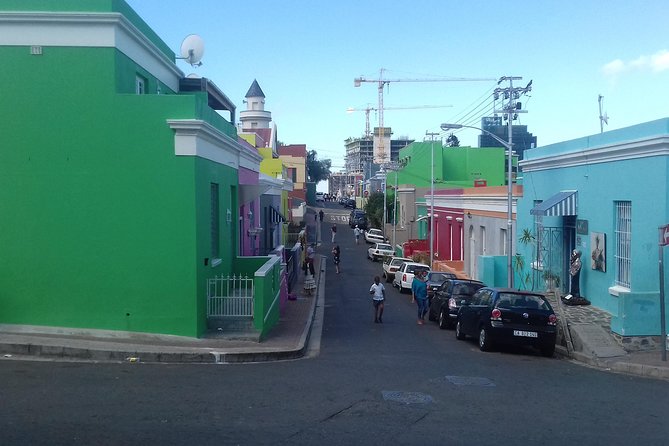
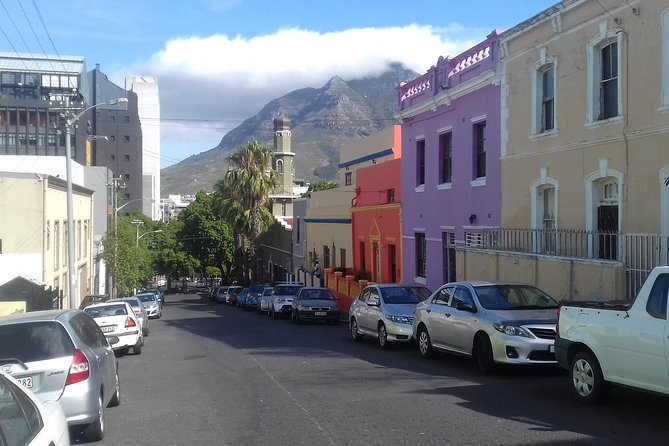
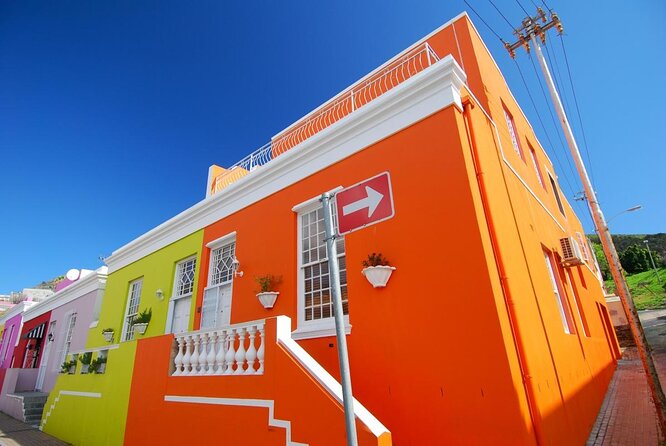
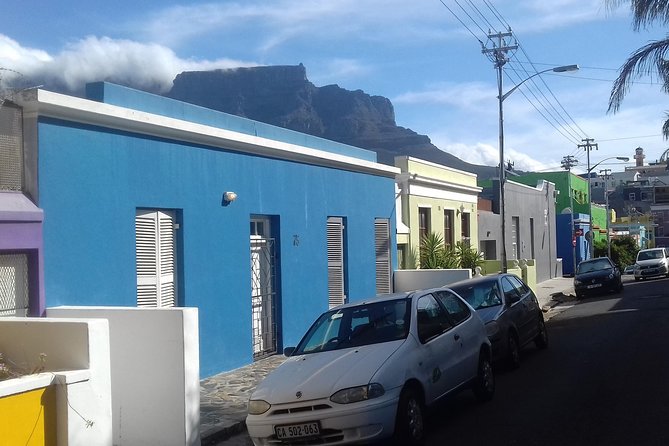
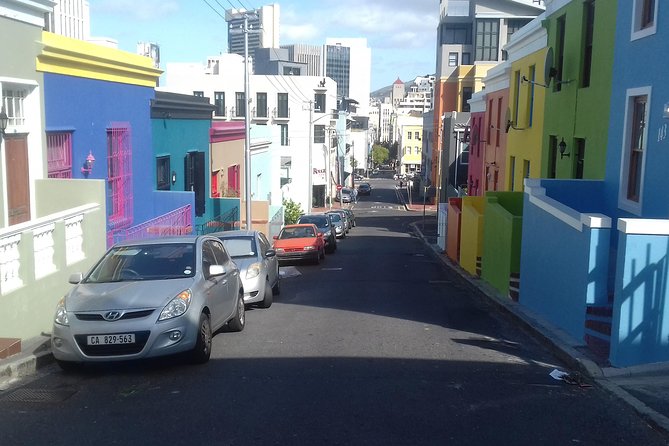
Bo-Kaap is easy to recognize. Its rows of pink, blue, green, yellow, and orange houses climb the lower slopes of Signal Hill, making it one of South Africa’s most photographed streetscapes.
But the color is only the entry point. The area is also known as the Malay Quarter and as the birthplace of Islam in the Cape. Enslaved people, artisans, and political exiles were brought here from parts of Africa, India, Sri Lanka, Indonesia, Malaysia, and elsewhere. Their presence shaped the neighborhood’s faith, food, language, and family life.
That background changes the way you look at the houses. You are not simply walking through a pretty district. You are seeing a community shaped by forced migration, religious life, family ties, and efforts to protect its identity.
I would choose this tour if you want context without spending several hours in a museum. The guide’s connection to the neighborhood gives the walk a human scale. You may hear about relatives, friends, community gardens, historic buildings, and current concerns for Bo-Kaap’s future.
More Walking Tours in Cape Town
- Cape Town: Nathi Langa Township Walking Tour
★ 4.9 · 493 reviews - Cape Town: Art, Culture & History Walking Tour
★ 4.9 · 392 reviews - Cape Town: Street Art Walking Tour in Woodstock
★ 4.8 · 293 reviews
Meeting at 71 Wale Street
The tour starts at 71 Wale Street in Schotsche Kloof, Cape Town. The same location serves as the finish point, so you do not need to arrange a second pickup or figure out where the walk ends.
The opening introduction takes about 15 minutes. This is where the guide sets out the story of Cape Town and Bo-Kaap, giving you a framework for the streets ahead. That beginning matters because the neighborhood can look like a collection of colorful facades if you arrive without background.
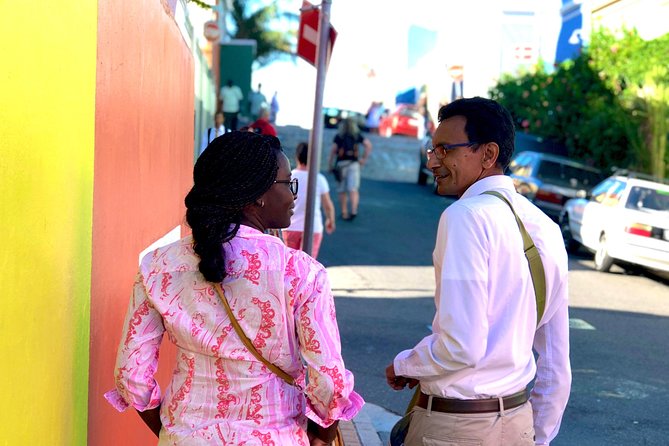
Your guide may be Ilyas, Eliyas, Rafiq, Rafik, Siddiq, Sedick, or another local guide connected with the experience. Several of these guides are described as born and raised in Bo-Kaap or still living there. That local link is central to the experience, since the walk often includes greetings with people the guide knows.
The group can include up to 20 people. That is not a private tour, but it is small enough for questions and conversation. The strongest experiences described by participants involved guides stopping to greet neighbors, introduce community members, or explain places that a large sightseeing group might pass without noticing.
Walking the colorful Bo-Kaap streets
The main neighborhood walk takes about 20 minutes in the stated plan, though the full experience lasts around an hour. Expect a gentle but real walk through streets at the foot of Signal Hill, with some slopes and uneven surfaces.
The route is designed for photographs, but your guide should help you see beyond the best-known picture spots. Some guides take groups through quieter sections and back streets, not only the most photographed stretch. That gives you a better sense of Bo-Kaap as a lived-in neighborhood rather than an outdoor photo set.
This is also where personal stories carry the most weight. A guide such as Rafiq or Siddiq may explain the area’s past while also discussing daily life and worries about the future. You might hear about long-standing families, historic buildings, community spaces, and the need to protect Bo-Kaap’s culture.
I appreciate that balance. The walk does not treat the neighborhood as frozen in time. It presents a place with a past, but also with residents who live there now. You should remain respectful when taking photographs, since these are homes and working streets, not a theme park.
The pace appears manageable, with time for questions and picture stops. Still, wear solid walking shoes. The hills are not described as severe, but the cobblestones and changes in elevation can be awkward, especially if you are wearing smooth-soled shoes.
Auwal Mosque and the story of Islam in the Cape
A visit to Auwal Mosque is one of the most important parts of the walk. It is described as one of the oldest mosques in South Africa, giving Bo-Kaap a clear place in the country’s religious story.
The mosque helps explain why the area is sometimes called the birthplace of Islam in the Cape. The history of the neighborhood is closely linked with people brought to the Cape from different parts of Africa and Asia, including those who practiced Islam.
For you, this stop adds substance to the colorful streets. Instead of treating Cape Malay culture as only a food tradition, the tour connects it with belief, community, and historical pressure. Your guide can also answer questions in a way that makes the subject feel connected to the neighborhood around you.
The supplied details do not specify how long you spend inside Auwal Mosque or whether every scheduled visit includes the same interior access. Treat it as a key stop, but follow the guide’s instructions about appropriate behavior and access.
More Bo-Kaap walks:
- Cape Town: Malay Cooking Class and Lunch in Bo-Kaap
★ 4.8 · 515 reviews - Cape Town Walking Tour: Bo-Kaap & City Highlights
★ 4.8 · 161 reviews - Cape Town: Cape Malay Cooking Class in Bo-Kaap
★ 4.8 · 120 reviews - 1 Hour Cape Town Bo Kaap Photoshoot Experience
★ 5.0 · 61 reviews
Atlas Trading Company and Cape Malay spice
The stop at Atlas Trading Company lasts about 10 minutes and uses your senses well. You smell the spices associated with Cape Malay cooking, rather than simply hearing a list of ingredients.
That is useful because food tells part of Bo-Kaap’s story. The spices are linked with the cooking of enslaved people, who used food and flavor as an expression of freedom in their masters’ kitchens. A short stop at a spice shop turns an abstract historical point into something immediate.
You may not buy anything, and shopping is not the main purpose of this experience. The value is in understanding how cooking helped preserve and express culture. If you are interested in Cape Malay food, this stop can also help you recognize the aromas and ingredients that appear in local dishes.
The visit may come near the end of the walk, leaving you with time to shop at Atlas after the formal tour. Do not count on a long tasting session, however. The experience includes a snack and a drink, but the spice-shop stop is brief.
Rooibos, coffee, and a local sweet
A cup of rooibos tea or coffee and a snack are included. That is a small detail, but it makes a one-hour walking tour more comfortable, particularly in warm weather or after arriving from another part of Cape Town.
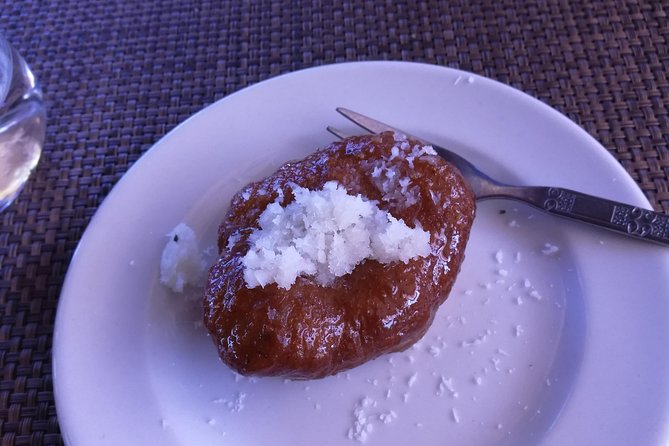
The most memorable snack described in the supplied material is a koe’sister, a Cape Malay sweet that can be served fresh from a local home. One account describes a visit to Ilyas’s aunt, where the group received just-baked koe’sisters. Other walks include a homemade treat in the home of a lifelong resident.
That home visit appears to depend on the guide and the day, so I would regard it as a possible bonus rather than a guaranteed feature. The confirmed inclusion is a snack and a hot drink. If you do receive a homemade koe’sister, it gives the tour a warm personal finish and connects food with family life.
The snack also helps separate this walk from a standard architecture tour. You are not only looking at houses and listening to facts. You may meet people connected to the guide and get a small taste of the neighborhood’s home cooking.
What the local guide adds
The guide is the reason to book this experience rather than simply walk through Bo-Kaap on your own. A map can show you Wale Street, the colorful houses, Atlas Trading Company, and Auwal Mosque. It cannot easily explain what the area means to a family that has lived there for generations.
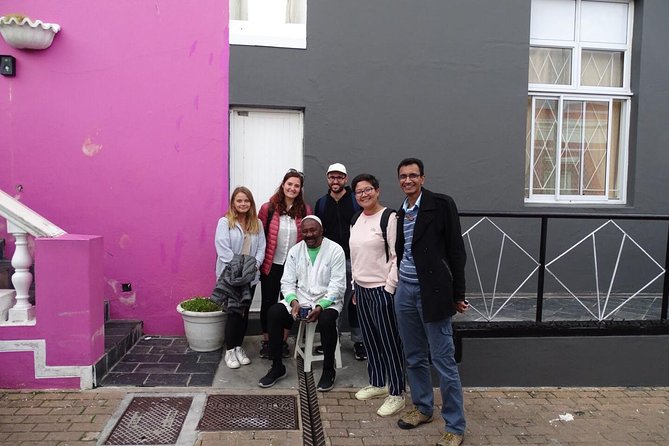
Ilyas is repeatedly praised for his love of Bo-Kaap, his family connection, and his ability to answer questions. Rafiq and Rafik are described as warm, professional, and closely tied to the community. Siddiq and Sedick are praised for explaining both the past and the current state of the neighborhood.
The wording used to describe the guides points to a consistent strength: personal storytelling. You may hear about an aunt’s home, a friend in the community, a garden, historic buildings, or concerns about preservation. These details make the area easier to understand and remember.
Guide quality can vary from one departure to another, as it does on any tour with several guides. Still, the local-resident format gives the experience a clear advantage. The guide is not performing a generic city script. He is walking streets that are part of his own life.
Safety, pace, and practical comfort
The walk is described as safe by several participants, including a solo female participant. You should still use ordinary city awareness. One account mentions encountering someone panhandling, so this is not a sealed attraction with controlled access.
Bo-Kaap is near public transportation, and the starting point is easy to identify at 71 Wale Street. If you prefer a car service, the fixed start and finish point keeps the arrangement simple. The tour does not include transportation during the walk.
Plan for the weather. The experience requires good conditions and may be canceled if poor weather affects the route. In that case, you can be offered another date or a full refund. One October walk was cool and overcast, so a light jacket is sensible even when Cape Town’s forecast looks mild.
Carry water, despite the included tea or coffee. The tour specifically highlights staying hydrated, and a cup of rooibos or coffee is not a replacement for your own water bottle. Comfortable shoes matter more than stylish ones here.
The tour is suitable for most people, but the provided information does not promise step-free access or describe accommodations for mobility limitations. If uneven cobblestones and slopes are a concern, ask before booking.
Is $25.31 a fair price?
At $25.31 per person, this is a fair price for a one-hour guided walk if you value local interpretation. You are paying for a guide, a small-group setting, a drink, a snack, and access to stories that are difficult to get from a self-guided stroll.
The price is less compelling if your only aim is to photograph colorful houses. You can see the main streets without paying for a tour. The added value comes from the historical explanation, the mosque, the spice stop, and the chance of meeting people connected with the guide.
The 4.9 rating from 131 ratings and a 98 percent recommendation rate suggest strong satisfaction with the format. The praise is especially consistent around the guides’ warmth, local roots, storytelling, and ability to show quieter parts of Bo-Kaap.
The walk also uses your time well. An hour fits neatly into a Cape Town sightseeing day, before or after other City Bowl activities. The tradeoff is that you will not cover every corner or explore the neighborhood at a slow, wandering pace.
Who will enjoy this Bo-Kaap walk?
I would recommend it to first-time Cape Town visitors who want a clear introduction to Bo-Kaap. It suits people who enjoy culture, food, photography, local stories, and short walking tours with a human touch.
It is also a good choice for anyone who might otherwise reduce Bo-Kaap to colorful houses. The guide helps you understand why the neighborhood matters and why preservation is an active concern.
Solo visitors may appreciate the small group and local escort. Families and older participants can take part if they are comfortable with hills and uneven paving, though the physical demands should be considered before booking.
This is less suitable if you want a long food tour, extensive mosque access, or a private itinerary built around your own interests. The walk is short and structured. Its strength is focused storytelling, not a large number of stops.
My advice before booking
Book at least a few weeks ahead if your schedule is fixed. The experience is booked about 21 days in advance on average, which suggests that popular dates can fill before your trip.
Choose a morning departure if that fits your plans. A morning walk can leave the rest of your day open, and one solo participant specifically preferred the morning arrangement. Confirm the meeting details, arrive with your mobile ticket ready, and allow enough time to reach 71 Wale Street.
Ask questions during the walk. The format is built around conversation, and the local guide is one of the main reasons to attend. Bring a camera, but also give your attention to the stories and ask before photographing residents or private homes.
Free cancellation is available up to 24 hours before the start time for a full refund. Changes or cancellations inside that window are not accepted, and the experience can also be canceled if the weather is poor or the minimum group size is not reached.
Should you book it?
Yes, if you want the story behind Bo-Kaap. For $25.31, you get a compact walk with a local guide, a visit connected with Auwal Mosque, a spice-shop stop, and refreshments. The strongest part is the personal connection, especially when a guide such as Ilyas, Rafiq, or Siddiq brings you into the life of the neighborhood.
Skip it only if you want to explore entirely on your own or need a fully accessible route with no hills or uneven paving. For most visitors with an hour to spare, this is a thoughtful and good-value way to see Bo-Kaap as a real community, not just a colorful backdrop.
FAQ
How long does the Bo-Kaap walk last?
The experience lasts approximately one hour.
Where does the tour start?
It starts at 71 Wale Street, Schotsche Kloof, Cape Town, 8001, South Africa.
Where does the tour end?
The walk ends back at the meeting point on 71 Wale Street.
What is included in the price?
A cup of rooibos tea or coffee and a snack are included.
Does the tour visit Auwal Mosque?
Yes. Auwal Mosque is included as a key stop and is described as one of the oldest mosques in South Africa.
Does the tour visit Atlas Trading Company?
Yes. The walk includes a stop at Atlas Trading Company to smell spices used in Cape Malay cooking.
How many people can join the tour?
The maximum group size is 20 people.
Is the tour suitable for most people?
Yes. Most people can participate, but the walk includes hills, uneven cobblestones, and changes in elevation.
What is the cancellation policy?
You can cancel up to 24 hours before the experience starts for a full refund. Cancellations or changes made less than 24 hours before the start time are not accepted, and poor weather or an insufficient minimum group may lead to a rescheduled tour or full refund.
Just added in Cape Town
- Sunset Safari Big 5 Aquila with Snacks and Wine Tasting★ 5.0 · 12 reviews
- Private Tour to 20 Wine Tasting in Stellenbosch and Franschhoek★ 5.0 · 11 reviews
- Explore Atlantis Sand Dunes with a 1hour 30mins sandboarding tour★ 5.0 · 5 reviews
- Robben Island, Kirstenbosch wine tasting Tour★ 5.0 · 10 reviews
- Photoshoot in Cape Town’s most Gorgeous Locations★ 5.0 · 2 reviews
- Zip Line and Wine from Cape Town★ 5.0 · 14 reviews
- Private Transfer from Cape Town International Airport★ 5.0 · 4 reviews
- 1 Hour Cape Town City Center Photoshoot Experience★ 5.0 · 19 reviews
Bo-Kaap Tours, compared.

Cape Town Walking Tour: Bo-Kaap & City Highlights
Read our review →



Cape Town Township Tour Including Langa Township and Bo-Kaap
Read our review →

Full-Day Kirstenbosch, Bo-Kaap, and Penguins Tour
Read our review →Browse the lists this tour appears in