
REVIEW · TOWNSHIP TOURS
Cape Town Township Half Day Shared Tour with BBQ Lunch
History lives around the corner. This five-hour outing takes you beyond Cape Town’s postcard sights and into Langa and Gugulethu, where a resident guide connects apartheid-era history with daily life today. I like the short walking tour, which keeps the visit focused and manageable, and I like that your time and money support local guides, youth training, and small township businesses. The main consideration is that some stops can be emotionally difficult, and the shared format may feel less personal than a private visit.
You’ll also get an included braai lunch, bottled water, hotel pickup, and transport between the townships. Drinks and gratuities cost extra, and the lunch details deserve a quick check because the experience is described both as a stop at Mzoli and as lunch at Teez African Restaurant.
In This Review
- Key points at a glance
- Why this township tour matters
- From your hotel to Langa by 9 am
- Langa and the story behind its name
- Guga S’thebe and the value of local work
- A shebeen, umqombothi, and township social life
- Women-led businesses, hostels, and daily life
- Langa Market, traditional medicine, and the library
- Gugulethu, or Gugs, after Langa
- What the braai adds to the morning
- Price, timing, and practical value at $71.50
- Who will get the most from this visit
- My final take: should you book it?
- FAQ
- How long does the Cape Town township tour last?
- What time does pickup begin?
- Which townships does the tour visit?
- Is transportation included?
- Is the walking tour difficult?
- Is lunch included?
- Are drinks included?
- Can I cancel for a full refund?
Key points at a glance
- Langa begins with local history: Learn how apartheid forced Black residents from places such as District Six into townships.
- Guga S’thebe supports local youth: This nonprofit center gives the visit a practical focus, not just a historical one.
- You can taste umqombothi: A stop at a shebeen introduces you to locally made beer and township social life.
- The walking section is short: You cover less than a kilometre, making the tour manageable for most people.
- Gugulethu adds a second viewpoint: Known locally as Gugs, it was created in 1960 after Langa became overcrowded.
- Braai is part of the price: Food is included, but drinks and tips are not.
Why this township tour matters
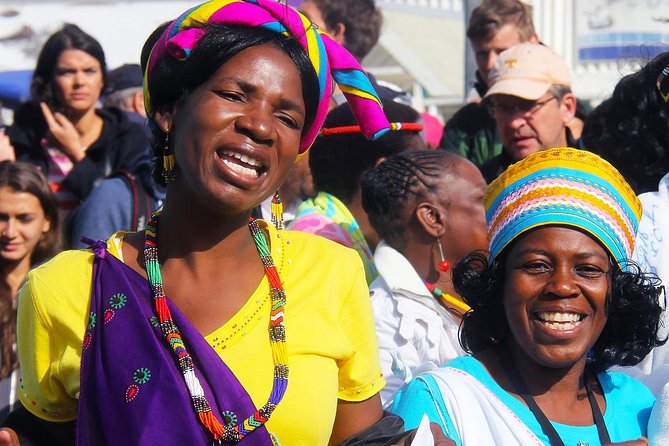
Many Cape Town outings focus on Table Mountain, the Cape Peninsula, or the old city center. This one takes you to communities shaped by forced removal, overcrowding, government planning, and local enterprise.
That makes it a useful choice if you want more than scenic photographs. You’ll hear how townships were formed and then see places connected to ordinary life: taverns, markets, hostels, small businesses, a library, and community projects.
I appreciate that the tour does not present township life as a museum display. A local resident leads the walking portion, and the stops include working businesses and community organizations. At the same time, you should arrive with respect. This is someone’s home, not a stage set. Listen carefully, ask polite questions, and avoid treating difficult stories as entertainment.
The experience lasts about five hours, including hotel transfers. That makes it a practical half-day addition to a busy Cape Town schedule. Pickup is offered from Cape Town hotels and guest houses, generally between 8:00 and 9:00 in the morning, with return around 2:00 pm.
More Township Tours in Cape Town
- Half-Day Tour Through Cape Town’s Townships
★ 4.8 · 979 reviews - Cape Town: Guided Township Tour with Hotel Pickup
★ 4.4 · 536 reviews - Cape Town: Nathi Langa Township Walking Tour
★ 4.9 · 493 reviews
From your hotel to Langa by 9 am

The day starts with pickup from your Cape Town accommodation. The drive to Langa takes about 20 minutes, depending on your pickup point and traffic.
Transport, fuel, the shared guide and driver, and bottled water are included. That matters because Langa and Gugulethu are not places you need to reach by figuring out several public transport connections on your own.
The tour is shared, and the stated maximum is 100 people. That is a large possible group for a walking visit, although the experience description also refers to a small group during the Langa walk. Group size may therefore vary by departure.
If personal attention is important to you, ask about the expected group size before booking. A smaller group will make conversations with your resident guide easier. A larger group may feel less intimate, especially at the shebeen, market, and community stops.
Langa and the story behind its name
Langa is one of Cape Town’s oldest townships. Its name means Sun in Xhosa and is linked to Langalibalele, a local chief who was jailed in the 19th century after resisting the local government.
Your driver introduces you to a resident township guide in Langa. That change of guide is one of the strongest parts of the outing. The driver handles the broader transfer, while someone from the community leads you through the walking portion.
The guide explains how apartheid policy shaped Cape Town’s townships. Black South Africans were evicted from homes in areas such as District Six and moved into planned township communities. Langa’s story is therefore tied to the wider system of segregation, not just to one neighborhood.
I find this context important because the streets and buildings make more sense once you know why people were placed there. You are not simply looking at old hostels or municipal facilities. You are seeing the results of laws that controlled where people could live, work, and move.
The walking distance is less than a kilometre, or about half a mile. That is enough to see several key sites without turning the morning into a strenuous hike.
Guga S’thebe and the value of local work
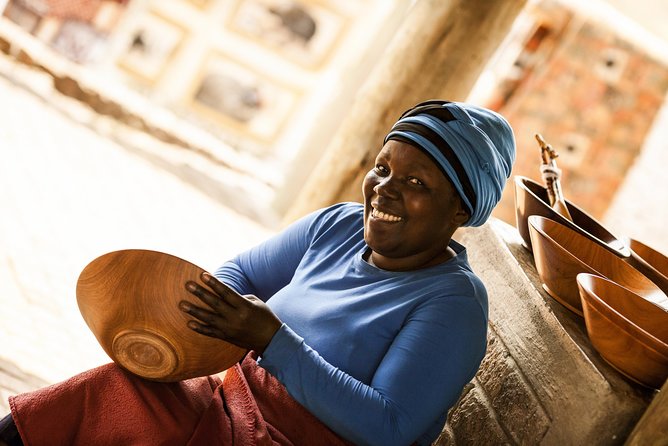
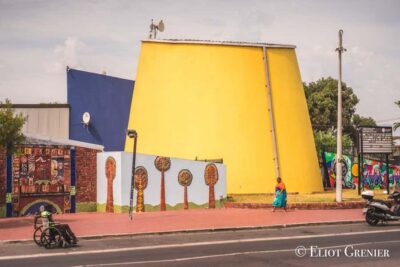
The walk begins at Guga S’thebe, a tourist information center and nonprofit facility where local organizations teach skills to young people.
This stop gives you a useful counterweight to the difficult history. You see a place focused on training and opportunity rather than only on past injustice. It also helps direct your spending toward a local project.
I would pay attention here to how the center fits into the neighborhood. The value is not only in hearing that youth receive training. It is in seeing a community space that tries to build practical skills and support future livelihoods.
The tour then visits a former detention center used during apartheid. This may be one of the most sobering moments of the morning. The space connects political history to the people who lived through it.
Expect the tone to shift. The experience has uplifting parts, but it also deals with heartbreak, confinement, and forced removal. If you prefer a light sightseeing morning, this may feel heavy. If you want a clear introduction to Cape Town’s recent history, it is an important stop.
Something quite different:
- Wine Tour: Paarl, Franschhoek & Stellenbosch incl 3 wineries
★ 5.0 · 3,940 reviews - Cape Town: Hop-On Hop-Off Bus Tour with Optional Cruise
★ 4.8 · 3,929 reviews - Cape Town: Cape of Good Hope & Penguins Day Tour with Pickup
★ 4.7 · 3,362 reviews - Zipline Cape Town – From Foot of Table Mountain Reserve
★ 5.0 · 3,179 reviews
A shebeen, umqombothi, and township social life
A shebeen is a local tavern, and the Langa visit includes a stop where you can raise a glass of umqombothi with residents and learn how the beer is made.
This is a small detail with real value. Food and drink can open a door to everyday culture in a way that a formal lecture cannot. You are not only hearing about local customs. You get a chance to share a drink and ask questions in a social setting.
You’ll also see the nearby municipal beer hall, built in 1945. The two stops help explain the role of beer in township life, both as a local product and as part of municipal planning during the apartheid period.
Drinks are not included in the tour price, so bring money if you want to sample the beer or order something else. The experience includes bottled water on the vehicle, but not beverages with lunch.
A practical note: drink responsibly and follow your guide’s lead. The point is to connect respectfully, not to turn the stop into a drinking session.
Women-led businesses, hostels, and daily life

The walking tour continues to women who run small businesses selling barbecued meat to local residents. This is where the word braai becomes more than a menu item.
These businesses show how township residents create income through food, service, and local demand. They also make the visit feel grounded in present-day life rather than frozen in the apartheid era.
You then see several hostels connected to government efforts to improve township living conditions. The word hostel can sound simple, but the buildings carry a difficult history. They reflect the way workers were housed and managed under apartheid, as well as later attempts to improve living conditions.
This part is best approached with patience. You may see construction, older facilities, and newer development side by side. The tour does not promise a polished version of township life, and that is part of its usefulness. You get a more honest look at uneven progress.
Langa Market, traditional medicine, and the library
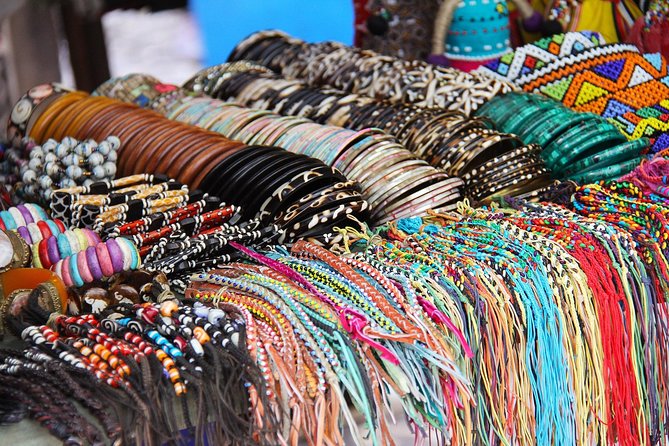
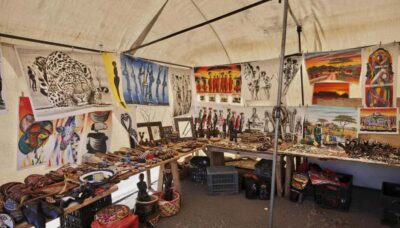
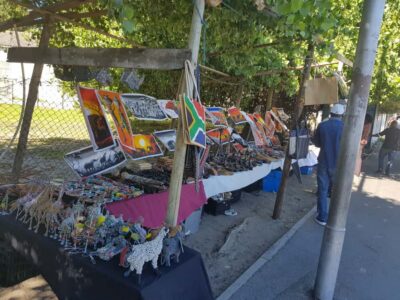
The Langa Market introduces another side of community life. You meet a traditional doctor and see the public library.
The traditional doctor stop offers a look at Xhosa cultural practice. The guide can help explain the role of traditional medicine and how it fits within local life. You should treat this as a cultural introduction, not a medical consultation.
The public library may seem like a modest stop, but it is a meaningful one. Libraries represent access to education, information, and quiet study. Along with Guga S’thebe, it gives the tour a broader focus on what communities use to improve opportunity.
I like this mix of stops because no single place is asked to explain the whole township. You see history, business, culture, government housing, and public services within a compact walking route.
Gugulethu, or Gugs, after Langa

After roughly two hours in Langa, you return to the vehicle and drive to Gugulethu. Locals call it Gugs, and the name comes from the Xhosa phrase igugu lethu, meaning our pride.
Gugulethu was established in 1960 because Langa had become overcrowded. That fact gives the second half of the outing a clear connection to the first. You are not visiting two unrelated neighborhoods. You are seeing communities shaped by the same pressures of segregation and population control.
The Gugulethu portion is more vehicle-based, with stops at local points of interest before lunch. That makes it less physically demanding than the Langa walk, but it also means you may spend less time on foot and have fewer long conversations in one place.
The food stop is described as an included braai lunch at Teez African Restaurant, while the broader tour details also identify Mzoli as the township meat place. Since the names do not fully match, I would confirm the exact lunch venue when booking or at pickup.
The important point is clear: food is included, drinks are extra. You get the chance to eat and drink with local people, but you pay separately for beverages.
What the braai adds to the morning
A braai is a South African barbecue, and it gives the tour a relaxed ending after the serious historical material.
The meal has been singled out as delicious in the available feedback, which fits the nature of the stop: grilled meat, local company, and a chance to talk outside the formal walking route. Food is supplied, but you should budget for drinks and an optional tip.
I would not book this tour only for lunch. The meal is a welcome part of the day, but the real value comes from the combination of history, local guiding, cultural stops, and community businesses.
Lunch also gives you a chance to process what you have seen. The morning includes detention, forced removal, and difficult living conditions. Sharing a meal afterward helps the visit end with people and present-day life, not only with the painful parts of the past.
Price, timing, and practical value at $71.50
At $71.50 per person, the tour is not the cheapest way to fill a Cape Town morning. It is also not simply a ride through the townships. The price covers shared transport, fuel, pickup and drop-off, a driver-guide, a resident guide, bottled water, and braai food.
That package offers fair value if you want structure and local interpretation. You avoid arranging transport between Langa and Gugulethu, and you have a guide to explain sensitive history and cultural details.
The value is weaker if you want a long, flexible walking visit or a private conversation with one guide. The shared format and possible maximum of 100 people mean you should not expect the pace or attention of a custom private tour.
The full day runs from morning pickup to about 2:00 pm. That leaves your afternoon free for another Cape Town activity, though you may prefer a quiet break after the emotional weight of the subject.
Free cancellation is available if you cancel at least 24 hours before the start time. Changes or cancellations inside that window are not accepted for a refund.
Who will get the most from this visit
I would recommend this outing to you if you want:
- A guided introduction to Langa and Gugulethu
- Local context for apartheid and forced removals
- A short walking route rather than a full-day hike
- A chance to support community projects and small businesses
- A shared meal with a cultural focus
- Hotel pickup and return in Cape Town
It suits first-time visitors who want to understand more of South Africa than the major sights can show. It also works well if your schedule is tight and you want a half-day activity.
You may want another option if you dislike group tours, prefer a private guide, or find stories of apartheid-era detention and displacement too difficult. The tour is not presented as carefree sightseeing. Go ready to listen.
One guide associated with the provider, Corné Smit, has been praised for giving detailed insight on Cape Town outings, but guide assignments can vary. The key feature here is the resident township guide, not a guaranteed individual guide name.
My final take: should you book it?
Book this tour if you want a respectful, structured introduction to township life and history, with transport and food handled for you. The strongest features are the local resident guide, the short but varied Langa walk, the Guga S’thebe youth project, and the chance to share a braai after seeing both the difficult past and the work being done today.
Before paying, confirm the expected group size and the lunch venue. Also set aside money for drinks and a tip.
I would skip it only if you want a purely scenic Cape Town day or a private, unhurried experience. For everyone else, this is a worthwhile half-day that asks you to pay attention, not just take pictures.
FAQ
How long does the Cape Town township tour last?
The experience lasts approximately five hours. Pickup is in the morning, and drop-off at your Cape Town accommodation is around 2:00 pm.
What time does pickup begin?
Pickup takes place between 8:00 and 9:00 am from Cape Town area hotels or guest houses. The stated start time is 9:00 am.
Which townships does the tour visit?
The tour visits Langa and Gugulethu, which locals also call Gugs.
Is transportation included?
Yes. Shared transportation, the guide and driver, fuel, hotel pickup and drop-off, and bottled water on the vehicle are included.
Is the walking tour difficult?
The Langa walking portion is less than one kilometre, or about half a mile. Most people can participate, and you should dress appropriately for the weather.
Is lunch included?
Yes. BBQ, or braai, food is included. Drinks are not included. The lunch location is identified as Teez African Restaurant in the detailed schedule, while another description names Mzoli, so confirm the venue before departure.
Are drinks included?
No. Drinks are not included in the tour price. Bottled water is provided on the vehicle.
Can I cancel for a full refund?
Yes, if you cancel at least 24 hours before the experience start time. Cancellations or changes made less than 24 hours in advance are not accepted for a refund.
More Lunch Experiences in Cape Town
- From Cape Town: Big Five Game Reserve with Lunch
★ 4.6 · 2,409 reviews - Wine Tour to Stellenbosch & Franschhoek with Tastings & Lunch
★ 5.0 · 828 reviews - Cape Town: Malay Cooking Class and Lunch in Bo-Kaap
★ 4.8 · 515 reviews - Stellenbosch & Franschhoek 20 Wine Tasting + Lunch Shared Tour
★ 4.5 · 290 reviews
Just added in Cape Town
- Sunset Safari Big 5 Aquila with Snacks and Wine Tasting★ 5.0 · 12 reviews
- Explore Atlantis Sand Dunes with a 1hour 30mins sandboarding tour★ 5.0 · 5 reviews
- Private Tour to 20 Wine Tasting in Stellenbosch and Franschhoek★ 5.0 · 11 reviews
- Robben Island, Kirstenbosch wine tasting Tour★ 5.0 · 10 reviews
- Photoshoot in Cape Town’s most Gorgeous Locations★ 5.0 · 2 reviews
- Zip Line and Wine from Cape Town★ 5.0 · 14 reviews
- Private Transfer from Cape Town International Airport★ 5.0 · 4 reviews
- 1 Hour Cape Town City Center Photoshoot Experience★ 5.0 · 19 reviews
Township Tours, compared.

Authentic 3–4 Hour Cultural Township Experience
Read our review →Browse the lists this tour appears in