
REVIEW · TOWNSHIP TOURS
Cape Town: TOWNSHIP TOUR EXPERIENCE
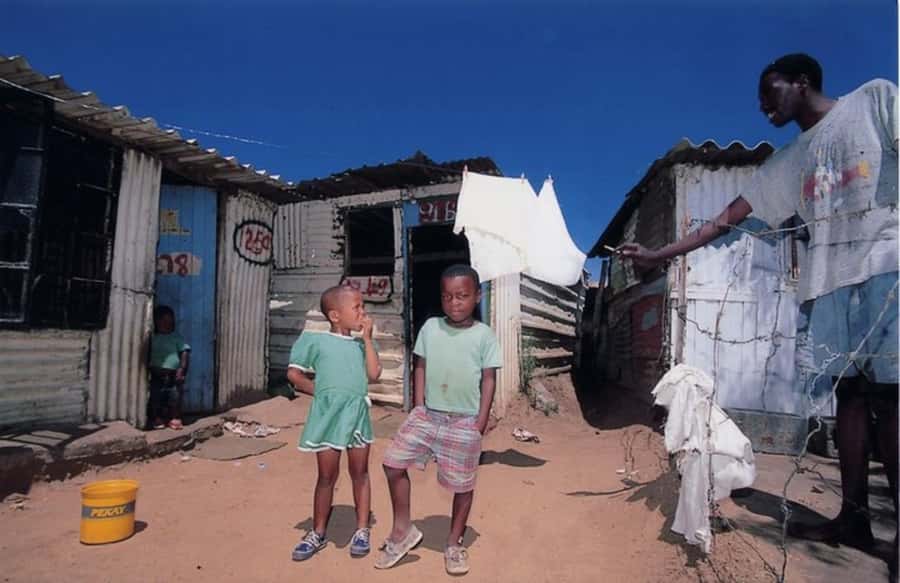
History lives in people, not just museums. This four-hour Cape Town township tour takes you into Langa and Bonteheuwel, two communities close to the city center, where local stories bring apartheid-era history into clear focus. I like the direct contact with residents and the chance to see art, music, and crafts in the places where they are made. I also like that transport and bottled water are included, keeping the outing simple.
The main consideration is that this is not a polished sightseeing trip. You should expect walking, difficult stories, and a close look at hardship as well as creativity. The tour costs $74 per person, which is fair if you value a guide-led history lesson and local contact, though it may feel high if you want only scenic views or a quick drive past the townships.
In This Review
- Key Details Before You Go
- Why Langa Gives This Tour Its Heart
- Bonteheuwel and the Human Cost of Forced Removal
- Meeting People Beyond the History Lesson
- Art, Music, and Crafts Change the Tone
- What the Four-Hour Route Feels Like
- Is $74 a Fair Price?
- Walking, Clothing, and Practical Comfort
- Who Should Book This Experience?
- How to Approach a Township Tour Respectfully
- Booking and Cancellation Basics
- Should You Book the Cape Town Township Tour?
- FAQ
- How long is the Cape Town township tour?
- What townships does the tour visit?
- What language is the tour conducted in?
- Where is the meeting point?
- Is transportation included?
- Is food included?
- What should I bring?
- Who should not take this tour?
Key Details Before You Go
- Langa began developing in 1927, after the Spanish Flu exposed the poor conditions faced by Black people living near the highway.
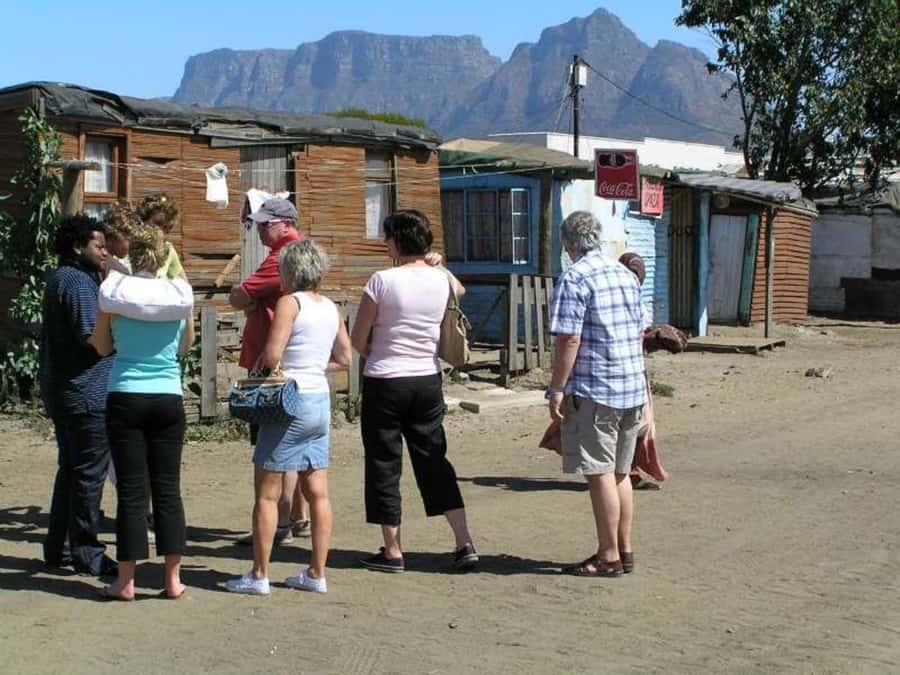
- Bonteheuwel was created through forced removals, housing people displaced from District Six and Claremont under the Group Areas Act.
- Local stories are central, with opportunities to hear about struggle, hope, work, and daily life directly from people in the communities.
- Art, music, and crafts add a creative side to a tour that could otherwise feel heavy and purely historical.
- Transport, an English-speaking guide, and bottled water are included, with pickup available from city-center and Waterfront hotels.
- Comfortable shoes matter, since the experience includes walking and asks you to meet the communities on their own terms.
Why Langa Gives This Tour Its Heart
Langa is one of South Africa’s oldest townships. Its early development in 1927 was tied to a public health crisis. After the first wave of the Spanish Flu, the poor conditions of Black people living roughly near the highway became impossible for authorities to ignore. The settlement that followed was shaped by segregation, inadequate housing, and strict control.
That beginning matters because Langa was never simply a residential suburb. During apartheid, it became a major center of political resistance. Important events in the Cape unfolded here, and the community played a role in the long fight against racial rule.
On the tour, I would pay close attention to how your guide connects those larger events to ordinary lives. A timeline in a museum can tell you when apartheid laws were passed. A local account can help you understand what those laws meant for a family, a street, or a workplace.
The tour description does not promise a fixed list of buildings or monuments in Langa. That is worth knowing. The value lies less in checking off sights and more in hearing the meaning behind the places you pass, meet, and visit.
More Township Tours in Cape Town
- Half-Day Tour Through Cape Town’s Townships
★ 4.8 · 979 reviews - Cape Town: Guided Township Tour with Hotel Pickup
★ 4.4 · 536 reviews - Cape Town: Nathi Langa Township Walking Tour
★ 4.9 · 493 reviews
Bonteheuwel and the Human Cost of Forced Removal
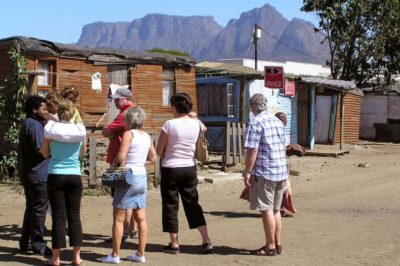
Bonteheuwel sits next to Langa and has a different racial and political history. It is a Colored community, established to house people forcibly removed from District Six and Claremont between 1949 and 1960 under the Group Areas Act.
The housing was made up of simple matchbox houses with tin roofs. That phrase says a great deal in very few words. These homes were built as part of a system that moved families away from established neighborhoods, separating people by race and breaking up long-standing communities.
I find this section especially useful for visitors who know District Six mainly as a former neighborhood in central Cape Town. The story does not end with the removal. People had to build new lives in places they had not chosen, often with limited space and limited resources.
As you pass through Bonteheuwel, avoid treating the homes as scenery. The important point is not how the buildings look from a vehicle. It is why the community exists, who was sent there, and how residents made a home under unfair conditions.
Meeting People Beyond the History Lesson
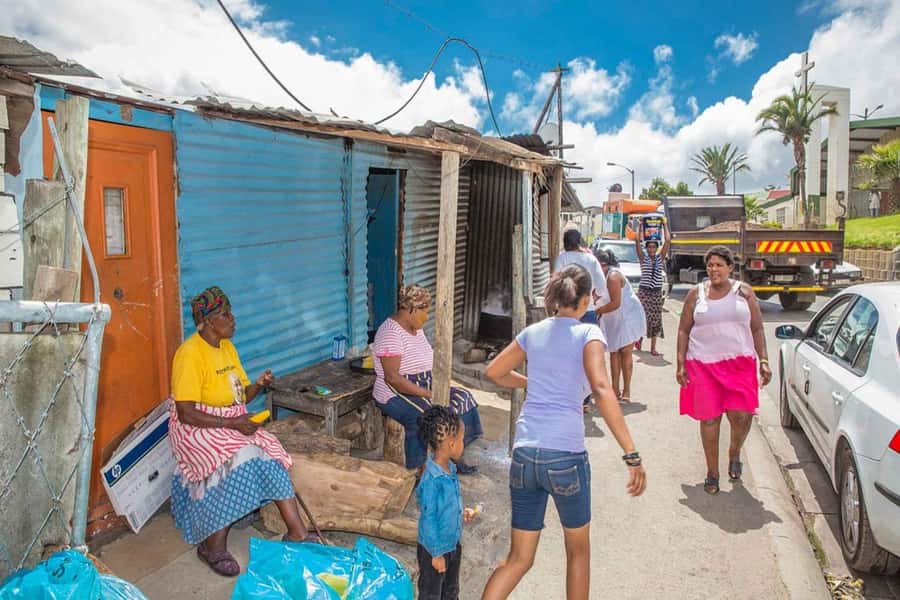
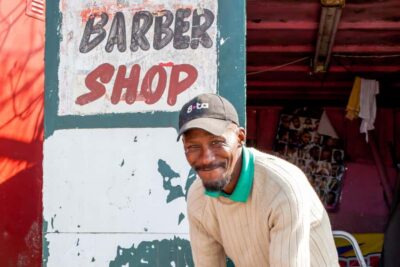
The tour is designed to introduce you to people who live in the townships. You may hear stories of hardship, persistence, hopes, and daily challenges. The exact encounters can vary, so you should not expect a scripted performance or a guaranteed set of individual speakers.
That uncertainty can be a strength. It leaves room for a more natural exchange, provided you approach it with respect. You are not entering a museum display. You are visiting living communities where people work, raise families, create art, and go about ordinary routines.
The best approach is simple:
- Listen more than you speak.
- Ask questions politely.
- Do not photograph people without permission.
- Follow the guide’s advice about where to walk and when to stop.
- Remember that poverty is not the whole story of township life.
The tour specifically asks you to be culturally sensitive and prepared for an experience that may bring you closer to local daily life. That does not mean pretending to know what life is like in someone else’s shoes. It means arriving with care, patience, and an open mind.
Art, Music, and Crafts Change the Tone
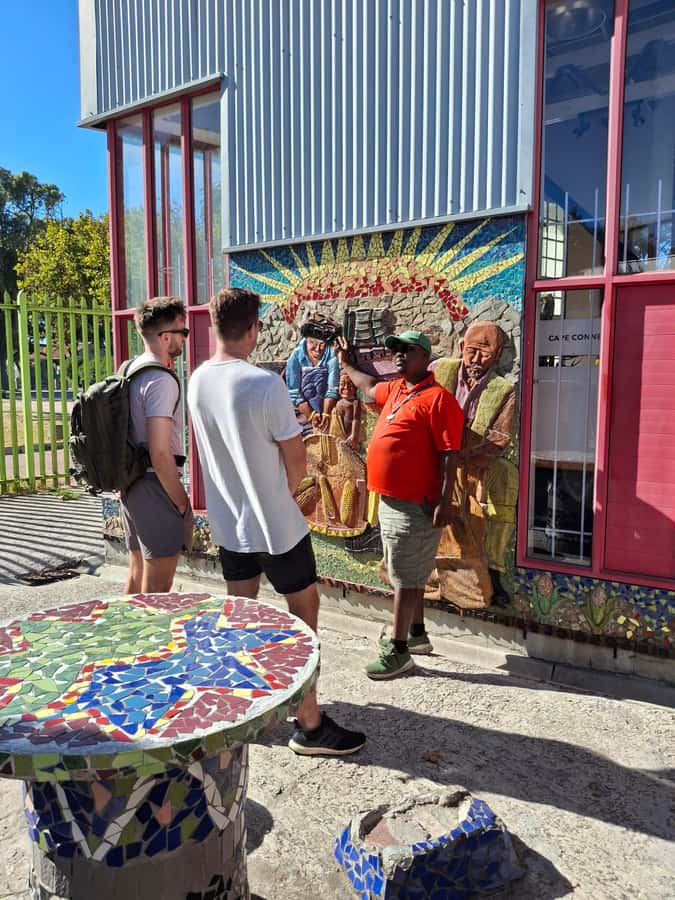
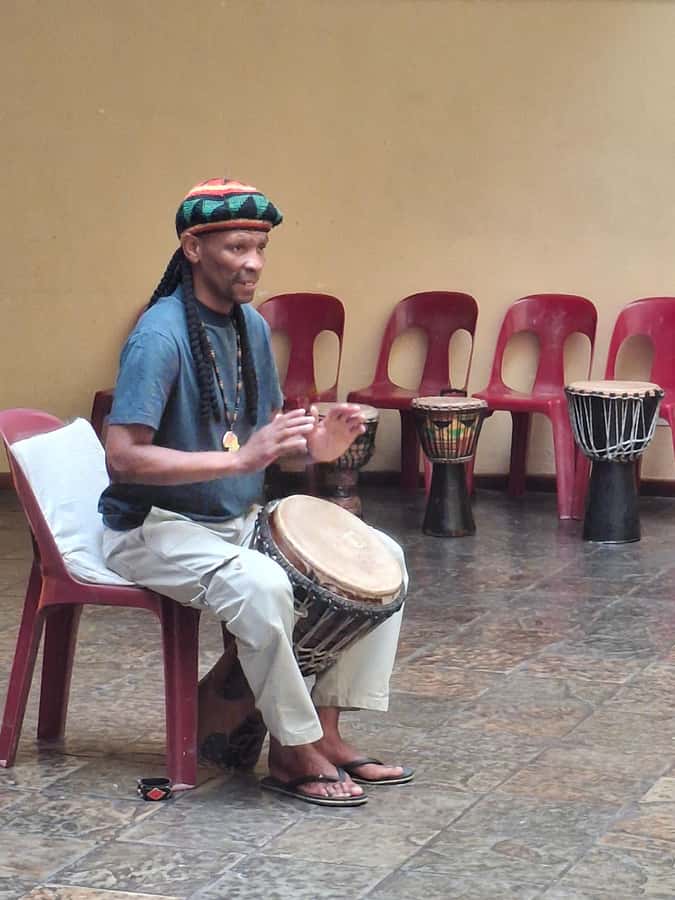
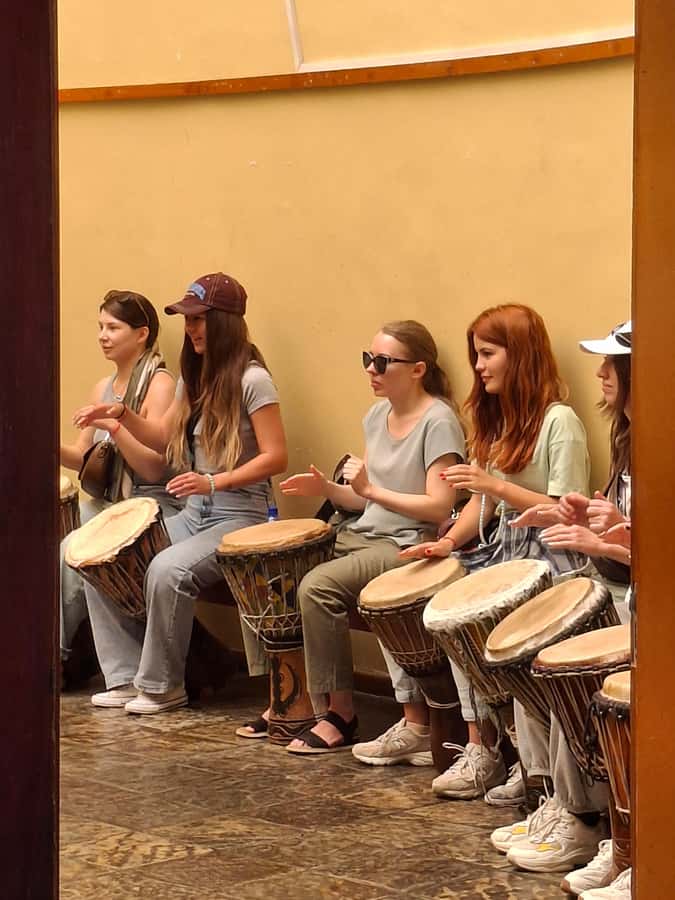
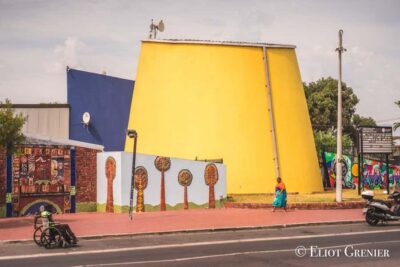
The townships are presented not only through political history, but also through their creative work. You may see art, hear music, and encounter local crafts. These details help prevent the tour from becoming a one-note account of suffering.
I like this balance. Apartheid and forced removals are painful subjects, and they deserve serious treatment. But communities are not frozen in the period when the worst laws were in force. Creative work shows how people express identity, earn money, tell stories, and shape their own image.
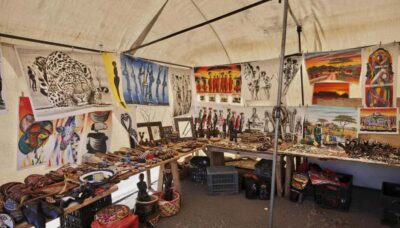
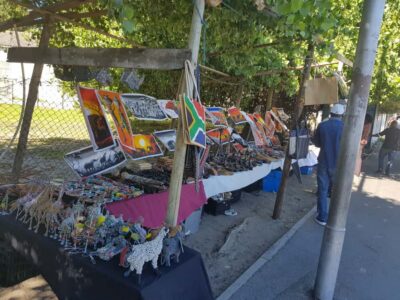
Purchases are not included in the price, and any crafts or other personal items cost extra. That gives you the option to buy something directly, but you should not feel pressured to spend more. If you do make a purchase, ask about the maker and the work. A small conversation can make the item more meaningful than a quick souvenir stop.
Do not expect a large market or a long shopping session based on the information available. The focus remains on culture and community, with art and crafts forming part of the wider visit.
Something quite different:
- Wine Tour: Paarl, Franschhoek & Stellenbosch incl 3 wineries
★ 5.0 · 3,940 reviews - Cape Town: Hop-On Hop-Off Bus Tour with Optional Cruise
★ 4.8 · 3,929 reviews - Cape Town: Cape of Good Hope & Penguins Day Tour with Pickup
★ 4.7 · 3,362 reviews - Zipline Cape Town – From Foot of Table Mountain Reserve
★ 5.0 · 3,179 reviews
What the Four-Hour Route Feels Like
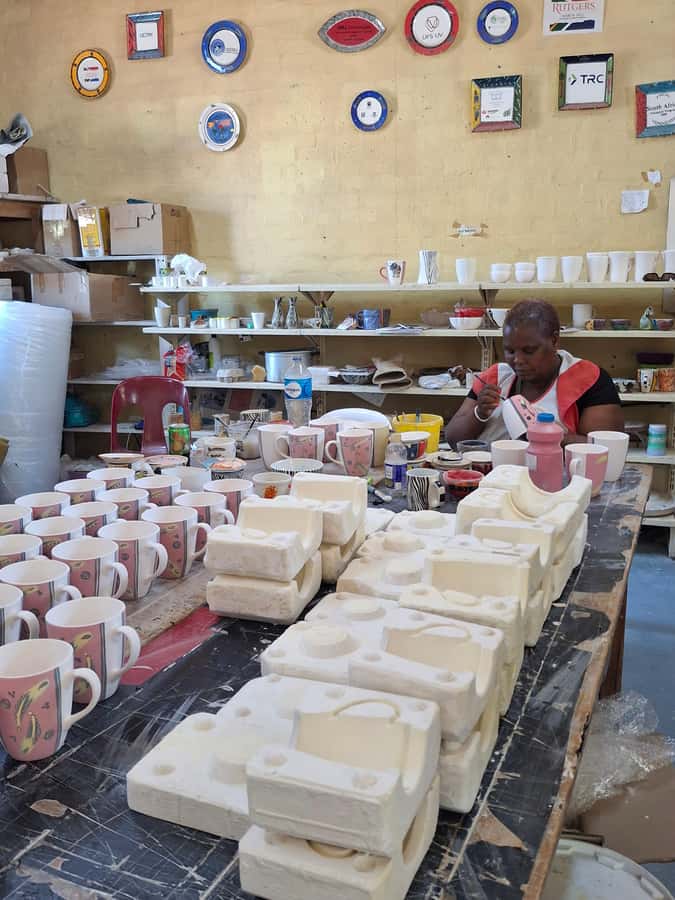
The tour lasts four hours, including transport from the city center or Waterfront area. That is long enough to provide context and spend time in the communities without taking up an entire day in Cape Town.
The likely flow is straightforward:
- Pickup or meeting in central Cape Town
You can meet in the foyer of the Cullinan Hotel on Cullinan Street in the lower city center. Pickup is available from a tour hotel if it is around the city center or Waterfront.
- Travel toward the townships
Your English-speaking guide provides the background that helps you understand what you are seeing. Bottled water is included, which is useful on a warm day.
- Explore Langa
Expect the focus to be on the township’s origins, its role during apartheid, and the lives of people who live there now. Walking is part of the experience.
- Continue to Bonteheuwel
Here, the story turns toward forced removals, the Group Areas Act, and the simple housing built for displaced communities.
- Meet locals and see creative work
The tour includes contact with local people and exposure to art, music, and crafts. The exact order may change.
- Return to Cape Town
The outing ends after roughly four hours, with transportation back to the city or your eligible hotel area.
The schedule is not presented with exact departure times. You need to check availability for the starting time you want. Since the outing combines driving, walking, conversation, and history, it is sensible not to schedule a tight airport transfer or important appointment immediately afterward.
Is $74 a Fair Price?
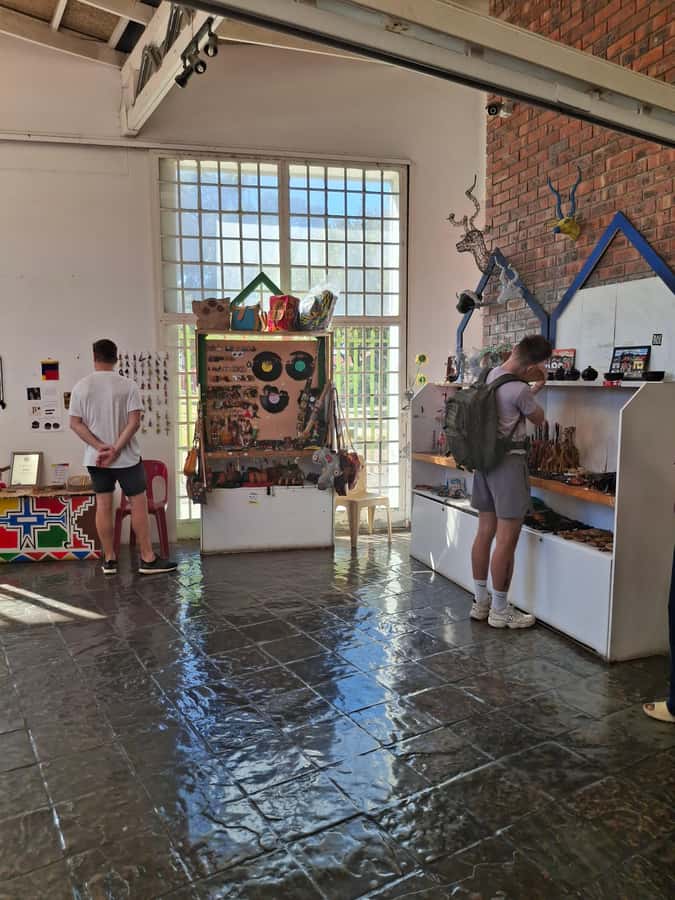
At $74 per person, this is not the cheapest way to spend four hours in Cape Town. But price alone does not tell you much here. You are paying for transportation, an English-speaking guide, bottled water, and access to a structured cultural experience that would be difficult to arrange responsibly on your own.
The value is strongest if you want interpretation. Langa and Bonteheuwel are not simply places to photograph from a passing car. Without context, you could miss why they were established, how apartheid shaped them, and why the communities still matter.
The price is less attractive if you are hoping for a meal, extensive shopping, or a large number of formal attractions. Lunch and other beverages are not included. Personal purchases are also extra, so carry only what you plan to spend.
The current score is 5 out of 5 from two ratings. A verified German booking dated April 2, 2025, praised the insight into people’s lives. That praise points to the tour’s strongest feature: the human connection, not a long list of sights.
Walking, Clothing, and Practical Comfort
Bring comfortable shoes. The tour includes walking, and the organizers describe it as an experience that asks you to walk in the shoes of local residents. That wording should be taken as a request for empathy, not as a promise that you will literally follow a resident’s daily routine.
A hat and sunscreen are useful in Cape Town’s strong sun. Bring a camera if you want one, but use it thoughtfully. People and homes are not props. Always follow the guide’s instructions before taking photographs.
Bottled water is included, but the recommended information also tells you to bring water. I would do both if you expect warm conditions or prefer to have extra with you. Lunch and beverages beyond the included water are not part of the tour, so eat before departure or plan accordingly.
Smoking, alcohol, and drugs are not allowed. The rules are basic, but they matter more on a community visit than on an ordinary sightseeing bus. You want to arrive calm, respectful, and ready to listen.
Who Should Book This Experience?
This tour suits you if you:
- Want a clearer understanding of apartheid’s effect on Cape Town communities.
- Prefer meeting people and hearing stories to visiting only formal attractions.
- Are comfortable with serious subjects and visible economic hardship.
- Enjoy guided cultural visits with a strong educational purpose.
- Can walk comfortably and manage a four-hour outing.
- Want to see creative work alongside difficult history.
It may not suit you if you need wheelchair access, since the experience is listed as unsuitable for wheelchair users. It is also not recommended for people with back problems or pregnant women.
Families should think about the age and maturity of their children. The available information does not give a minimum age, but the subject matter includes forced removal, apartheid, poverty, and political resistance. Younger children may find the material difficult to process.
How to Approach a Township Tour Respectfully
A township tour can be valuable, but it can also feel uncomfortable if you treat it as poverty sightseeing. Your attitude makes a real difference.
Try to see the communities as places where people live full lives, not as evidence of a political system alone. Pay attention to homes, creative work, conversations, and signs of community life. Ask questions that invite explanation rather than questions that demand a dramatic story.
It is also fine to feel unsettled. The history is difficult, and the conditions described are serious. You do not need to turn every moment into a cheerful photo opportunity. Listen, think, and let the experience remain complicated.
The tour’s small number of ratings means there is limited public evidence about guide style, group size, exact stops, and how much time is spent at each location. Keep your expectations flexible. The strongest promise is the subject and structure, not a precise performance.
Booking and Cancellation Basics
You can cancel up to 24 hours before the activity for a full refund. The reserve-now-and-pay-later option lets you hold a place without paying immediately, which is useful while arranging a Cape Town schedule.
The meeting point is the foyer of the Cullinan Hotel on Cullinan Street in the lower city center. If your hotel is in the city center or Waterfront area, pickup may be available. Confirm the pickup details and starting time when you book, since the four-hour duration does not specify one universal departure time.
The experience is offered in English with a live guide. There is no ticket line to worry about, though that feature matters less here than it would at a major monument.
Should You Book the Cape Town Township Tour?
Book it if you want Cape Town history explained through Langa and Bonteheuwel rather than confined to a museum label. The local stories, discussion of forced removals, and creative work give the four hours real purpose.
I would skip it if you want a relaxed scenic tour, a food-focused outing, or a fully predictable itinerary. This is a serious cultural visit, and it requires walking, attention, and respect.
For the right visitor, $74 is a reasonable price for transport, guidance, and a fuller understanding of the people and events that shaped Cape Town. Go with comfortable shoes, a thoughtful attitude, and enough time afterward to reflect.
FAQ
How long is the Cape Town township tour?
The tour lasts four hours.
What townships does the tour visit?
The experience focuses on Langa and Bonteheuwel, both within about 15 kilometers of Cape Town’s city center.
What language is the tour conducted in?
The live tour guide speaks English.
Where is the meeting point?
The meeting point is in the foyer of the Cullinan Hotel on Cullinan Street in Cape Town’s lower city center. Pickup may be available from hotels around the city center or Waterfront.
Is transportation included?
Yes. Transportation to and from the experience is included.
Is food included?
No. Lunch and beverages are not included. Bottled water is provided.
What should I bring?
Bring comfortable shoes, a hat, a camera if desired, sunscreen, and water.
Who should not take this tour?
The experience is not suitable for pregnant women, people with back problems, or wheelchair users.
Just added in Cape Town
- Sunset Safari Big 5 Aquila with Snacks and Wine Tasting★ 5.0 · 12 reviews
- Private Tour to 20 Wine Tasting in Stellenbosch and Franschhoek★ 5.0 · 11 reviews
- Explore Atlantis Sand Dunes with a 1hour 30mins sandboarding tour★ 5.0 · 5 reviews
- Robben Island, Kirstenbosch wine tasting Tour★ 5.0 · 10 reviews
- Photoshoot in Cape Town’s most Gorgeous Locations★ 5.0 · 2 reviews
- Zip Line and Wine from Cape Town★ 5.0 · 14 reviews
- Private Transfer from Cape Town International Airport★ 5.0 · 4 reviews
- 1 Hour Cape Town City Center Photoshoot Experience★ 5.0 · 19 reviews
Township Tours, compared.

Authentic 3–4 Hour Cultural Township Experience
Read our review →Browse the lists this tour appears in