
REVIEW · TOWNSHIP TOURS
Half-Day Small-Group Township Tour South Africa from Cape Town
History becomes clearer on foot. This four-hour Cape Town tour connects District Six and Langa with everyday community life, local stories, and apartheid’s lasting effects. I like the small group size, capped at 12 people, and the chance to hear guides such as Sam, Wilson, and Luyolo explain the area through personal experience. The visit to a preschool, local pub, and traditional healer adds human detail that a museum alone cannot provide.
I also like the practical setup: hotel pickup and drop-off, an air-conditioned minivan, several departure times, and a price of about $39.68 per person. The main consideration is that some stops may not operate every day. The preschool and healer visit can be unavailable, especially in winter, and the optional Robben Island trip depends on ticket supply and weather.
In This Review
- Key points to know before booking
- Why this tour matters in Cape Town
- Starting from the V&A Waterfront
- District Six and the forced-removal story
- Walking through Langa with local context
- The preschool visit and meeting local children
- Visiting a shebeen and traditional healer
- Adding Robben Island to the same outing
- What the guides add to the experience
- Is the $39.68 price good value?
- Who should book this Cape Town township tour?
- Should you book it?
- FAQ
- How long does the township tour last?
- Where does the tour start and finish?
- Is hotel pickup included?
- How many people can join the tour?
- Is Robben Island included?
- Are food and drinks included?
- What should I bring or wear?
Key points to know before booking
- Langa brings apartheid’s legacy into daily view: You walk through a township while your guide explains how forced removals shaped Cape Town.
- Personal guides make the difference: Sam, Wilson, Luyolo, and other local guides are praised for clear explanations and firsthand stories.
- The preschool visit can be powerful: Children are often the most memorable part, though the school may be closed during some periods.
- You can add Robben Island: The island visit covers Nelson Mandela’s prison years and adds another major chapter to South African history.
- The group stays small: With no more than 12 people, you get more room to ask questions than on a large coach tour.
- Wear walking shoes and bring sun protection: The tour includes walking outdoors, and one traveler specifically warned that the sun can be intense.
Why this tour matters in Cape Town

Cape Town can be easy to admire without fully understanding. You see the harbor, mountains, beaches, and polished central districts. But apartheid did not leave the city evenly arranged. Its laws moved people, separated communities, and reshaped the center.
This tour gives you a way to see those effects at human scale. Rather than only hearing dates and political names, you move through neighborhoods and hear how the past still affects housing, education, work, and opportunity.
The tour is centered on District Six and Langa. The exact order may vary, but the purpose is consistent: explain how the Group Areas policy divided Cape Town and forced people from their homes, particularly during the removals of the 1960s.
I think that context is the strongest reason to book. A township visit should not be treated as a sightseeing spectacle. It works best when you arrive ready to listen, ask respectful questions, and understand that the area is a lived-in community, not a museum set.
More Township Tours in Cape Town
- Half-Day Tour Through Cape Town’s Townships
★ 4.8 · 979 reviews - Cape Town: Guided Township Tour with Hotel Pickup
★ 4.4 · 536 reviews - Cape Town: Nathi Langa Township Walking Tour
★ 4.9 · 493 reviews
Starting from the V&A Waterfront
The listed meeting point is 9 Dock Road at the Victoria and Alfred Waterfront. Hotel pickup and drop-off are included, so confirm the pickup details when you book rather than assuming you must make your own way to the waterfront.
Transport is provided in a private, air-conditioned minivan. That matters in Cape Town, where a comfortable vehicle makes the morning easier, especially if you are combining this outing with other sightseeing.
The group limit is 12 people, although some descriptions refer to a maximum of 15. I would plan on a small group, but confirm the final number at booking. Either way, this is much more personal than a full-size bus excursion.
The tour lasts about four hours. That is enough time for a substantial introduction without taking your entire day. You can still fit in another Cape Town activity afterward, though the Robben Island option may make the day longer or involve a separate transition near the ferry.
District Six and the forced-removal story
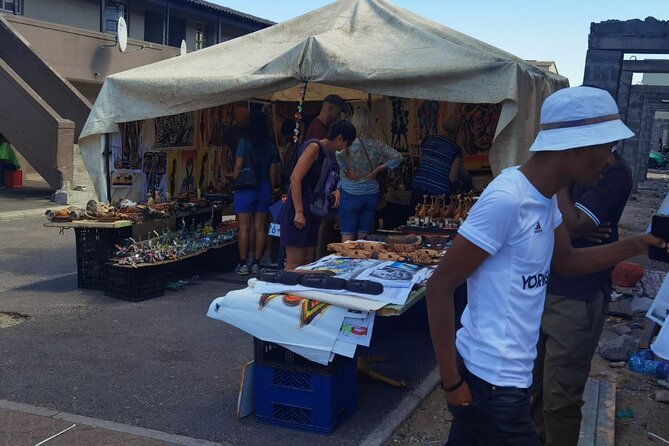
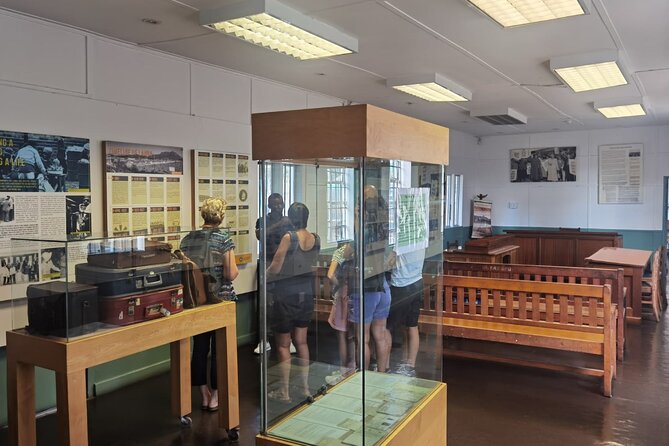
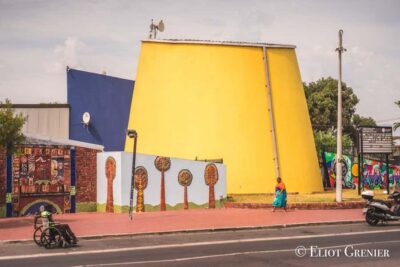
District Six is the historical anchor for understanding what happened to Cape Town’s residents under apartheid. The museum honors people who were forcibly removed from the area in the 1960s, when the Group Areas policy divided urban districts according to race.
Your guide explains how those removals changed the character of the city center. The important point is not simply that people were moved. Families lost homes, businesses, neighbors, and established connections to central Cape Town.
I value this stop because it gives the township visit a clear foundation. Without that background, walking through Langa could leave you with impressions but little understanding of why these communities developed where they did.
The District Six portion also helps you avoid a common mistake: viewing present-day inequality as an isolated modern problem. The guide connects current conditions to decisions made decades ago, including colonial restrictions and apartheid-era planning.
Allow yourself time to listen. This is not a quick photo stop. The most useful part is the explanation of cause and effect, especially if you have not previously studied South African history.
Walking through Langa with local context
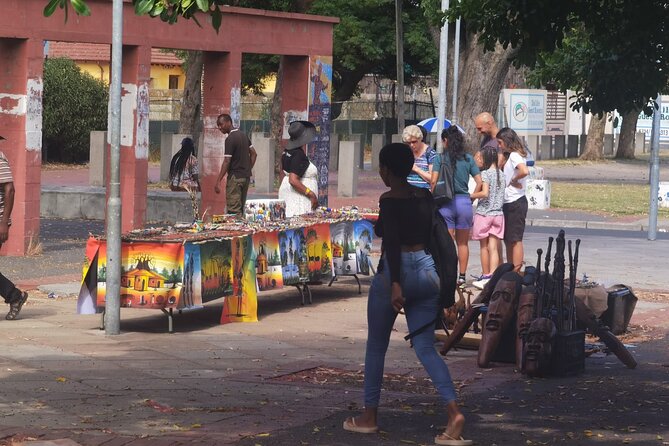
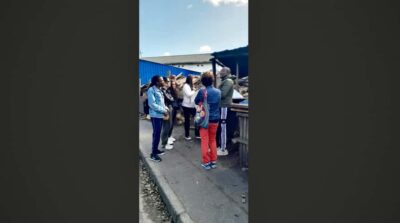
Langa is where the tour becomes more immediate. You walk through the township with a guide who explains both its difficulties and its achievements. Wilson, for example, has been praised for sharing personal experiences while leading an extensive and safe walk through the area. Sam is also singled out for answering questions and making complicated subjects easier to understand.
The walk gives you a closer look at community life than you get from a vehicle window. You are introduced to different parts of Cape Town and exposed to several local cultures. The emphasis is not only on poverty. You also hear about the people, relationships, resilience, and everyday routines that make up the neighborhood.
That balance is important. Some areas may have difficult conditions, and the tour does not pretend otherwise. At the same time, the people you meet are not reduced to hardship. Several accounts describe residents as welcoming and friendly, with children eager to greet the group.
You should remain aware of your role. Walk quietly, follow your guide’s instructions, and ask before taking photographs. Treat the community as you would any neighborhood at home. The point is to learn, not to collect dramatic images.
The walking section can be physically moderate. Comfortable shoes are specifically recommended, and the tour requires a reasonable level of fitness. One visitor found the sun very strong, so bring a hat and use sunscreen, particularly on a clear morning.
Something quite different:
- Wine Tour: Paarl, Franschhoek & Stellenbosch incl 3 wineries
★ 5.0 · 3,940 reviews - Cape Town: Hop-On Hop-Off Bus Tour with Optional Cruise
★ 4.8 · 3,929 reviews - Cape Town: Cape of Good Hope & Penguins Day Tour with Pickup
★ 4.7 · 3,362 reviews - Zipline Cape Town – From Foot of Table Mountain Reserve
★ 5.0 · 3,179 reviews
The preschool visit and meeting local children
A local preschool is one of the tour’s most memorable possible stops. The children often become the emotional center of the morning. Families with young children have found this part especially engaging, and children in the group may enjoy meeting pupils at the school.
You may see the warmth of a genuine community welcome. Some accounts describe children running out to hug visitors, which can be touching, but it is still wise to follow the guide’s lead. Young children should be accompanied by an adult, and all contact should remain respectful and appropriate.
The preschool is not guaranteed to be open. One particularly useful warning is that it was closed during winter on one visit, along with the traditional healer stop. That means you should not book this outing solely for the school. Think of it as one possible part of a wider cultural and historical walk.
If you want to bring small gifts, ask the operator what is appropriate before arriving. Several people wished they had known how many children would be present. A simple, organized approach is better than handing out random items, which can create awkwardness or unequal treatment.
The greatest value here is not a staged performance. It is the chance to understand one part of local daily life and consider how education, childhood, and opportunity fit into the broader story of inequality.
Visiting a shebeen and traditional healer
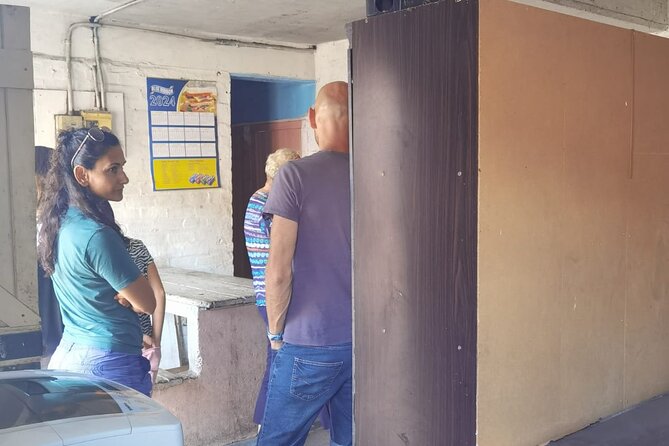
The itinerary includes a local shebeen, meaning a neighborhood pub, and a meeting with a traditional healer. These stops offer a look at community traditions beyond the political history.
The shebeen can help you understand how social life takes place within the township. It is not merely a place to stop for a drink. It represents one setting where people gather, talk, and maintain community connections. Food and drinks are not included unless specifically stated, and lunch is not included, so do not expect a meal as part of the $39.68 price.
The traditional healer visit offers a different window into local beliefs and practice. It can be one of the more distinctive parts of the morning, but it is also subject to availability. The fact that one visit could not include the healer shows why you should regard this as a planned possibility, not a firm guarantee.
Keep an open mind, but do not expect a theatrical demonstration. Listen to the explanation and ask polite questions. The value comes from learning how traditional practices fit into community life, not from treating them as curiosities.
Adding Robben Island to the same outing
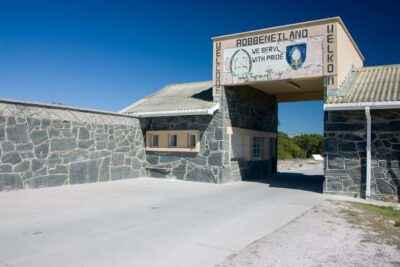
You can upgrade the experience with Robben Island. The island has a long history reaching back roughly 500 years, but most visitors connect it with Nelson Mandela, who spent much of his imprisonment there.
This option adds a major national story to the local township story. District Six and Langa help explain forced removals and continuing inequality. Robben Island shows the political struggle against apartheid and the imprisonment of one of its best-known opponents.
The combination can be meaningful. One part of the day focuses on how policy affected ordinary families. The other focuses on resistance, imprisonment, and the road toward democracy.
There are practical limits. Robben Island tickets are subject to availability and weather, so the upgrade cannot always be guaranteed. Some departures may bring you near the boat after the township portion, but confirm the exact arrangement before you book.
If Robben Island is a top priority, I would not assume that adding it to this tour is the safest way to secure a visit. Check ticket availability first. If it is confirmed, the pairing makes strong historical sense. If it is not, the township portion remains worthwhile on its own.
What the guides add to the experience
The guide is the key to this tour. A township walk without context could feel uncomfortable or superficial. A good guide turns it into a thoughtful conversation about place, memory, and current life.
The strongest accounts praise guides by name. Sam is described as patient, accommodating, and willing to answer questions, even after a late booking and a change to the pickup location. Wilson is praised for explaining township history and sharing personal experience. Luyolo is remembered as an especially engaging guide, with some people wishing they had met him earlier in their trip.
You may have one guide and a driver, or two guides during parts of the visit. The included driver-guide and private minivan make the tour easier to manage, while the walking portion gives you direct access to the neighborhood.
Expect the quality of the morning to depend partly on who leads your group. That is true of almost every history tour, but it matters more here because the subject is sensitive and complex. The positive experiences point to guides who explain rather than lecture, and who connect national events to local life.
Is the $39.68 price good value?
At about $39.68 per person, the tour is fairly priced for a four-hour private minivan outing with hotel pickup, a small group, and a local guide. You are paying for transport and interpretation, not just a drive past township streets.
The value is strongest if you want historical context and personal conversation. It is less compelling if you expect a polished attraction with a fixed schedule at every stop. The preschool and healer visit may not be available, and food is not included.
The optional Robben Island trip should be viewed as a separate value decision. It adds a powerful historical site, but ticket availability and weather affect the plan. Make sure you know exactly what is included in the upgrade and where the township portion ends.
The tour is also a good use of a half-day in Cape Town. You get a serious introduction without committing to a full-day excursion. For first-time visitors, it can provide background that makes later visits to museums and historic sites more meaningful.
Who should book this Cape Town township tour?
I would recommend it to you if you want more than postcard views and are willing to approach a difficult subject with care. It suits first-time visitors, history-minded couples, families with older children, and anyone trying to understand how apartheid still shapes the city.
It is especially useful if you have not visited a township before. The guide can help you move beyond assumptions and see both the challenges and the strengths of the community.
Families should note that children must be accompanied by an adult. The walking and outdoor conditions may also be tiring for very young children, particularly in strong sun.
You may want another type of tour if you dislike walking, have limited mobility, or prefer a tightly controlled sightseeing schedule. The activity requires moderate fitness, and some planned stops can change.
There is also one serious practical warning. A single account describes the operator failing to arrive and not communicating after payment. That is not consistent with the many positive experiences, but I would still reconfirm pickup details before the morning of the tour and keep the provider’s contact information available.
Free cancellation is available if you cancel at least 24 hours before the start time. Changes made inside that window are not accepted, and poor weather can lead to a new date or a full refund.
Should you book it?
Yes, if you want a direct and affordable introduction to Cape Town’s apartheid history. The strongest parts are the small group, the local guides, the walk through Langa, and the connection between District Six, forced removals, and present-day inequality.
Book with realistic expectations. The preschool, shebeen, and traditional healer are valuable possibilities, not guaranteed performances. Wear walking shoes, bring a hat, and confirm pickup and any Robben Island plans in advance.
For about $40, this is one of the better ways to spend a half-day learning how Cape Town’s past remains visible in its communities today.
FAQ
How long does the township tour last?
The tour lasts approximately four hours.
Where does the tour start and finish?
The listed meeting point is 9 Dock Road at the Victoria and Alfred Waterfront in Cape Town. The activity ends back at the meeting point.
Is hotel pickup included?
Yes. Hotel pickup and drop-off are included.
How many people can join the tour?
The stated maximum is 12 people. Some tour information refers to a small group of fewer than 15 people.
Is Robben Island included?
Robben Island is available as an upgrade option. Its ticket depends on availability and weather conditions.
Are food and drinks included?
No. Food and drinks are not included unless specifically stated, and lunch is not included.
What should I bring or wear?
Comfortable walking shoes are recommended. You should also consider bringing a hat and sun protection because part of the tour takes place outdoors.
Just added in Cape Town
- Sunset Safari Big 5 Aquila with Snacks and Wine Tasting★ 5.0 · 12 reviews
- Explore Atlantis Sand Dunes with a 1hour 30mins sandboarding tour★ 5.0 · 5 reviews
- Private Tour to 20 Wine Tasting in Stellenbosch and Franschhoek★ 5.0 · 11 reviews
- Robben Island, Kirstenbosch wine tasting Tour★ 5.0 · 10 reviews
- Photoshoot in Cape Town’s most Gorgeous Locations★ 5.0 · 2 reviews
- Zip Line and Wine from Cape Town★ 5.0 · 14 reviews
- Private Transfer from Cape Town International Airport★ 5.0 · 4 reviews
- 1 Hour Cape Town City Center Photoshoot Experience★ 5.0 · 19 reviews
Township Tours, compared.

Authentic 3–4 Hour Cultural Township Experience
Read our review →Browse the lists this tour appears in