
REVIEW · COOKING CLASSES
Cape Malay/Creole Cooking Class and Local Shopping in Salt River
Salt River tells its story through food. This Cape Town experience pairs a local spice-shop visit with a hands-on Cape Malay and Creole cooking class, so you get more than a meal and more than a city walk. I like the mix of street art, neighborhood shopping, and food history. I also like that you can cook the whole meal or take a lighter role.
The main consideration is the physical side. You walk through Salt River for about 50 minutes, and the experience asks for a strong level of fitness. The tour also has only two published reviews, so the five-star rating is encouraging but based on a small sample.
In This Review
- Key points at a glance
- Why this Salt River food tour feels different
- Meeting Nadia at Fargo Trading
- Salt River streets, shops, and public art
- Rolling rotis and preparing sambal
- Cape Malay food as family and community history
- What the $74.12 price includes
- Timing, transport, and the one-way finish
- Who should book this Cape Town cooking class?
- Should you book it?
- FAQ
- How long does the Cape Malay cooking experience last?
- What time does the tour start?
- Where does the experience begin?
- Where does the experience end?
- How many people can join the experience?
- Do I need cooking experience?
- What food will I prepare?
- Is the experience near public transportation?
- Can I cancel for a refund?
Key points at a glance

- Start at Fargo Trading: Begin at one of Cape Town’s oldest and most underrated spice shops at 3 Malta Road.
- Walk through Salt River: Shop for ingredients while seeing street art linked to the Salt River Heritage Society and the International Public Art Festival.
- Cook Cape Malay food from scratch: Roll traditional rotis, prepare Onion and Tomato Sambal, and take part at the level that suits your time and energy.
- Learn the story behind the food: The class explores the spice and slave trades in South Africa and the social identity of the Cape Muslim community.
- Eat a three-course meal: Welcome drinks and snacks come before a shared Cape Malay and Creole meal with home cooks.
- Keep the group small: The maximum is 10 people, which should make it easier to ask questions and take part.
Why this Salt River food tour feels different
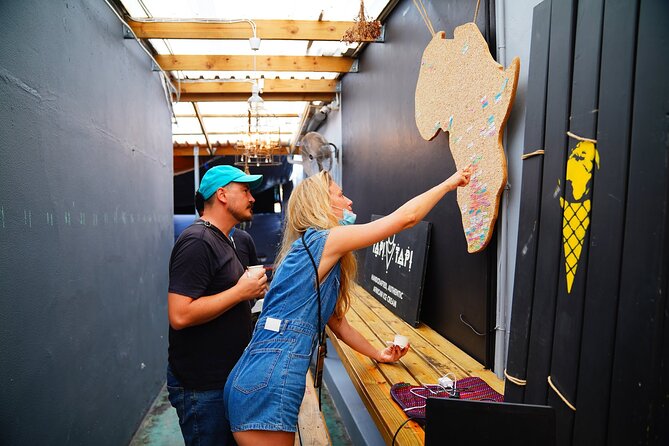
Cape Town has plenty of food activities, but this one begins before anyone turns on the stove. You first walk through Salt River, buy ingredients at local businesses, and look at public art. That gives the cooking a sense of place.
I especially like the order of the experience. The food is not presented as a detached recipe. You see where the ingredients are bought, hear about the people who sell them, and then use them in a meal. For anyone interested in how food carries memory and identity, that connection matters.
The experience focuses on Cape Malay and Creole culinary culture. The Cape Muslim community is described as one of the most diverse Creole communities in the world, and the class uses food to explain its social and cultural identity. You also learn about the spice and slave trades in South Africa, subjects that give the dishes a much larger context.
This is not just a class for confident cooks. No previous cooking ability is required. You can prepare everything from scratch, or let the local cooks guide you through the parts you want to try.
More Cooking Classes in Cape Town
- Cape Town: Malay Cooking Class and Lunch in Bo-Kaap
★ 4.8 · 515 reviews - Authentic African Cuisine Cooking Experience
★ 5.0 · 236 reviews - Cape Town: Cape Malay Cooking Class in Bo-Kaap
★ 4.8 · 120 reviews
Meeting Nadia at Fargo Trading
The experience starts at 11 a.m. outside Fargo Trading, at Comalta House, 3 Malta Road, Salt River. Fargo Trading is more than a practical meeting point. It sets the tone for the day as a spice shop with a long connection to Cape Town and a reputation for being underappreciated.
The opening stop is listed at about 10 minutes. That is enough time to begin exploring the shop and understand why spices matter so much to Cape Malay cooking. You should not expect a full market tour here, but the short visit gives the walk a clear purpose.
The published feedback specifically praises Nadia, who is described as lovely and interesting. That personal touch seems important to this experience. It is built around conversation, local knowledge, and an introduction to a part of Cape Town that many people skip.
Because the class has a maximum of 10 people, you are not being moved through the neighborhood in a large group. A small party also works better for cooking, where too many hands can quickly turn a kitchen into a traffic problem.
Salt River streets, shops, and public art
After Fargo Trading, you continue through Salt River to collect ingredients. The walk takes about 50 minutes, although the total time includes transfers between parts of the experience. This is a neighborhood stroll, not a long sightseeing march, but you should still wear comfortable shoes.
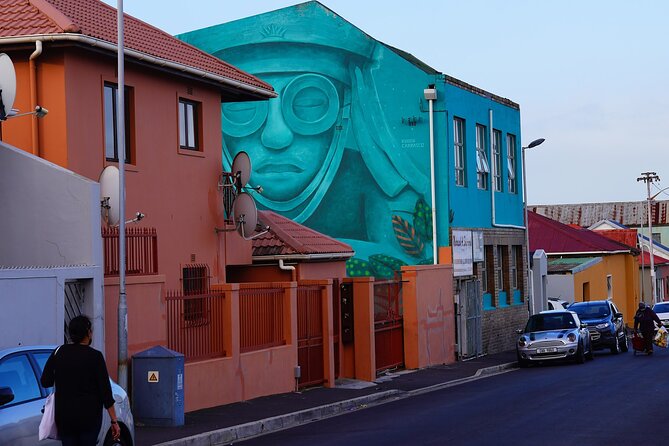
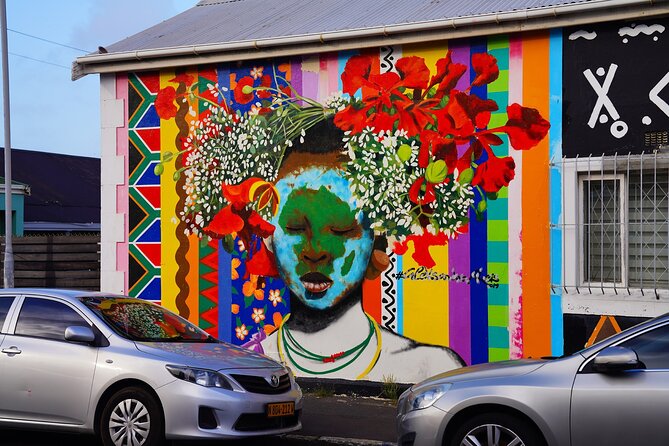
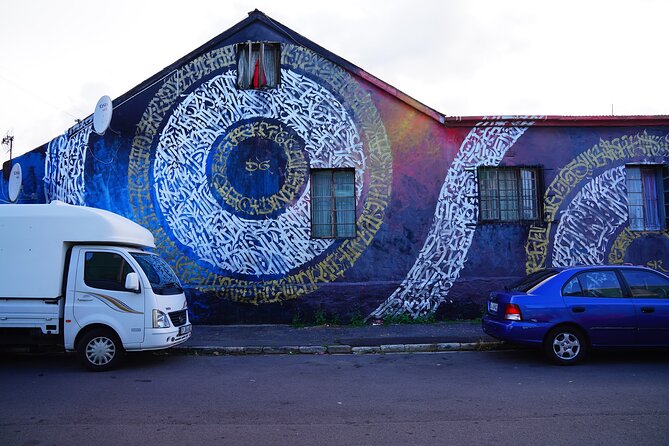
The streets provide a different view of Cape Town. Along the way, you see street art connected with the Salt River Heritage Society and the International Public Art Festival. The artwork adds color and visual interest, but the tour also uses it to talk about the area itself.
You learn about African immigrant communities that run local grocery shops. You also hear about Cape Malay and Creole food vendors. That makes the shopping stop more useful than simply picking up ingredients from a supermarket. The places where food is sold become part of the story.
I like this part because it gives you something to do between the history and the meal. You are not standing still while someone delivers a long talk. You move through the area, look around, and shop for the food you will later eat.
The drawback is that the tour does require you to be comfortable walking through a city neighborhood. The information states that you should have a strong physical fitness level. If you have limited mobility or prefer a seated food activity, this may not be the right choice.
The meeting and ending points are different. You begin in Salt River and finish at 33B Ormskirk Street in Woodstock, so plan for a one-way experience rather than a return to the starting point.
Rolling rotis and preparing sambal
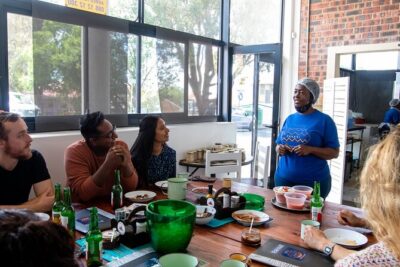
The cooking portion takes about two hours. By default, you roll traditional rotis and prepare Onion and Tomato Sambal. These are useful assignments because they involve direct, practical work rather than simply watching a demonstration.
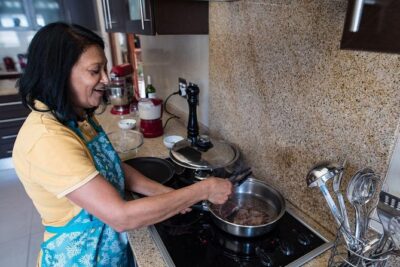
You can also cook the full meal from scratch. That option suits people who want a real kitchen session and are happy to spend much of the afternoon working with the food. If your time or energy is limited, the local cooks can guide you through key parts instead.
That flexible approach is one of the strongest features here. Some cooking classes assume everyone wants to perform every step. This one recognizes that people arrive with different skills and different levels of interest. You can be active without feeling pressured to prove anything.
You also receive welcome drinks and snacks before the three-course meal. The food is not a quick plate handed over at the end. The point is to make and share a meal, with the preparation serving as a way to talk about heritage.
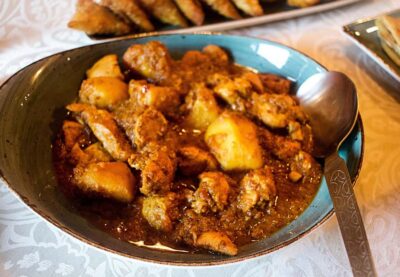
The exact dishes in the three-course menu are not specified, apart from the rotis and Onion and Tomato Sambal. That gives the experience some mystery, but it also means you should not book it expecting a particular main course or dessert.
More Workshops in Cape Town
- Cape Town: Bo-Kapp Walking Tour and Malay Cooking Class
★ 4.7 · 105 reviews - Private Surf Lesson
★ 5.0 · 53 reviews - Private Surf Lesson in Cape Town – Transport & Photos Included
★ 5.0 · 50 reviews - Muizenberg Cape Town: Private Surf Lesson
★ 5.0 · 37 reviews
Cape Malay food as family and community history
The best reason to book this activity is the link between cooking and identity. Cape Malay food is not treated as a list of spices or a set of exotic recipes. You learn how food relates to the Cape Muslim community and to the wider Creole experience.
The class also addresses the spice and slave trades in South Africa. That subject may be uncomfortable, but it is necessary context. It helps explain why certain ingredients, methods, and food traditions became part of Cape Town’s culture.
You then eat with home cooks from Salt River and Woodstock who are known in their communities for cooking and baking. The meal is therefore also a social exchange. You are not just learning from a professional instructor in a formal studio. You are sharing food with people connected to the neighborhood.
I find that approach more meaningful than a class built only around polished presentation. The value is in the people, the setting, and the explanation behind the food. If you are interested in local culture, the cooking gives you a direct way to engage with it.
Still, you should keep your expectations sensible. A three to four-hour experience can introduce you to a culinary tradition, but it cannot cover every part of Cape Malay history or cooking. Think of it as a focused introduction with a meal, not a full course in the subject.
What the $74.12 price includes
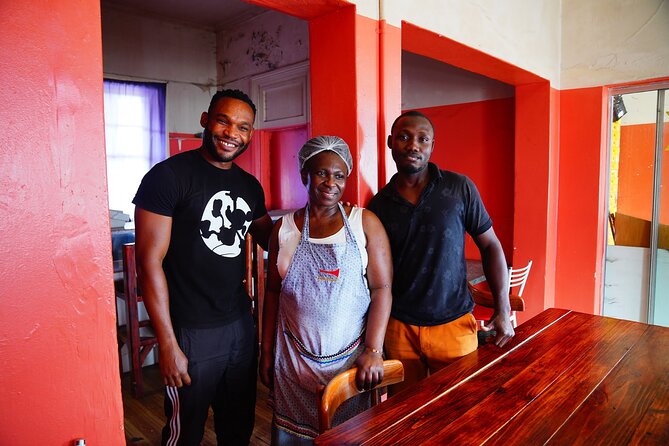
At $74.12 per person, this is not the cheapest way to eat in Cape Town. It is also not simply a restaurant meal. The price covers roughly three to four hours of activity, a guided neighborhood walk, ingredient shopping, a cooking class, welcome drinks and snacks, and a three-course meal.
The better question is how much time you want to spend with the food. If you only want to taste Cape Malay dishes, a restaurant may offer better value. If you want to understand the ingredients, prepare parts of the meal, and connect the food with Salt River, the price is easier to justify.
The maximum group size of 10 also helps. A small class usually gives you more access to the people leading it and more room to work. The value depends on how much you participate. Someone who rolls the rotis, helps prepare the sambal, asks questions, and joins the conversation will get more from the price than someone who treats it as a meal with a short activity attached.
The experience is booked, on average, 26 days ahead. That suggests you should not leave it until the last moment if the timing matters to you. Confirmation arrives when you book, and the ticket is mobile, so there is no need to print anything.
Timing, transport, and the one-way finish
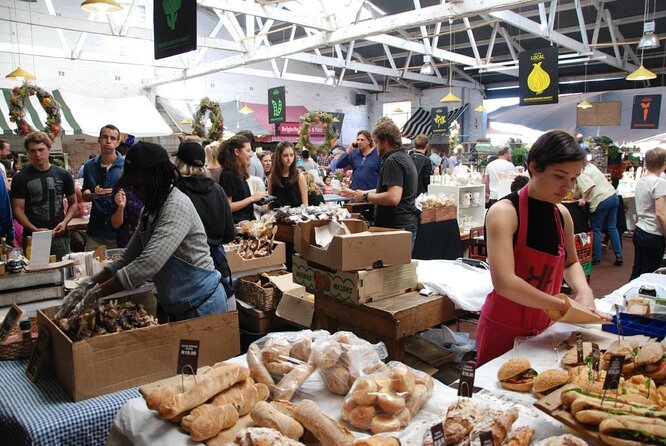
The tour begins at 11 a.m. and ends at the home kitchen on Ormskirk Street in Woodstock. The ending address has safe street parking and works well for an Uber pickup, which is useful after eating and cooking.
The experience is near public transport, but the provided details do not specify a particular bus or train route. If you are using public transport, check the route to Fargo Trading before setting out. For the return, the Woodstock address is clearly given for pickup.
Because you move from Salt River toward Woodstock, this is best treated as a planned half-day outing. Do not schedule a faraway attraction immediately after it without allowing extra time. The stated duration is approximate, and the remaining time includes transfers between the stops.
Good weather is required. If poor weather cancels the experience, you can choose another date or receive a full refund. The same choice applies if the minimum number of people is not reached.
For cancellations, you can receive a full refund if you cancel at least 24 hours before the start time. Changes or cancellations made inside that window are not accepted for a refund.
Who should book this Cape Town cooking class?
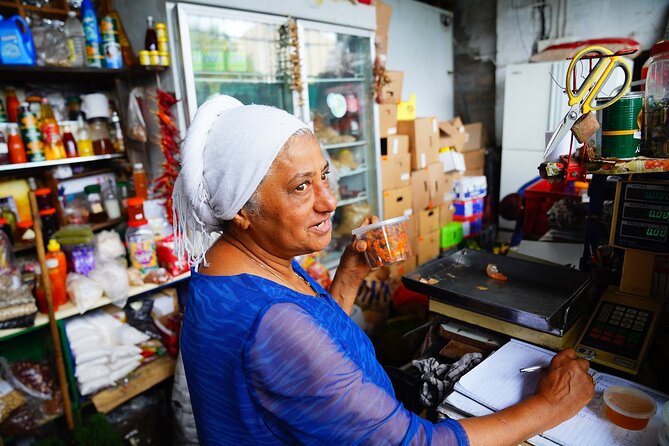
I would recommend this to you if food is one of the main ways you understand a place. It is also a strong pick if you enjoy street art, neighborhood walks, and social history more than standard sightseeing.
The experience suits:
- People who want a small-group activity with a maximum of 10 participants
- Food lovers interested in Cape Malay and Creole cooking
- Visitors who enjoy learning by preparing food, not only tasting it
- History lovers who want context about the spice and slave trades in South Africa
- People looking for a less typical way to see Salt River
- Anyone comfortable with walking and a flexible cooking session
You may want to skip it if you need a fixed menu, dislike group cooking, or want a short, polished demonstration. It is also not ideal if walking for about 50 minutes requires more effort than you would like.
The published feedback is limited to two reviews, but both the five-star rating and the specific praise for Nadia point toward a warm, personal experience. One comment highlights the chance to explore a different part of Cape Town and appreciate its street art. That is a useful clue about the activity’s character: it is strongest when you want the neighborhood as much as the food.
Should you book it?
Book this Salt River cooking class if you want your Cape Town meal to come with a story, a walk, and some work in the kitchen. I especially like the combination of Fargo Trading, local shops, public art, traditional rotis, Onion and Tomato Sambal, and a shared three-course meal.
At $74.12, the value rests on participation rather than quantity. You are paying for time with local home cooks, cultural explanation, ingredient shopping, and a meal prepared together. If that sounds better than simply sitting down to eat, this is a worthwhile choice.
If you need a fully accessible or highly predictable activity, think carefully about the walking, the fitness requirement, the changing meeting and end points, and the flexible menu. For food and history lovers who want an off-the-beaten-path part of Cape Town, this is one of the more personal options available.
FAQ
How long does the Cape Malay cooking experience last?
The experience lasts approximately three to four hours. The cooking portion takes about two hours, while the walk and transfers use the remaining time.
What time does the tour start?
The experience starts at 11 a.m.
Where does the experience begin?
It begins at Fargo Trading at Comalta House, 3 Malta Road, Salt River, Cape Town, 7925, South Africa.
Where does the experience end?
It ends at 33B Ormskirk Street, Woodstock, Cape Town, 7915, South Africa.
How many people can join the experience?
The maximum group size is 10 people.
Do I need cooking experience?
No. The experience requires no prior cooking knowledge.
What food will I prepare?
By default, you will roll traditional rotis and prepare Onion and Tomato Sambal. You may also cook more of the meal from scratch, depending on your time and energy.
Is the experience near public transportation?
Yes. The meeting area is near public transportation. The supplied details do not identify a specific route.
Can I cancel for a refund?
Yes. You can cancel at least 24 hours before the start time for a full refund. Poor weather or failure to reach the minimum number of people may also result in another date or a full refund.
More Shopping Tours in Cape Town
- Steam Train to Elgin Railway Market
★ 5.0 · 375 reviews - Soweto Tour; Mandela House; Vilakazi Street; Market Culture
★ 5.0 · 6 reviews
Just added in Cape Town
- Table Mountain and Cape of Good Hope Tour★ 5.0 · 10 reviews
- Halfday township tour★ 5.0 · 10 reviews
- Township Tour by Lwafika Tours and Transfers in Cape Town★ 5.0 · 13 reviews
- Half-Day Township Tour from Cape Town★ 4.5 · 20 reviews
- African Township And Cultural Tour – Langa from Cape Town Half Day★ 5.0 · 4 reviews
- Stellenbosch Small Group Wine Tasting Tour From Cape Town★ 3.5 · 6 reviews
- Half Day Stellenbosch Winelands Private Tour from Cape Town★ 4.5 · 7 reviews
- Cape Town Khayelitsha Township Tour★ 5.0 · 27 reviews
Cooking Classes, compared.
Half-Day Small Group Cooking Experience in Franschhoek
Read our review →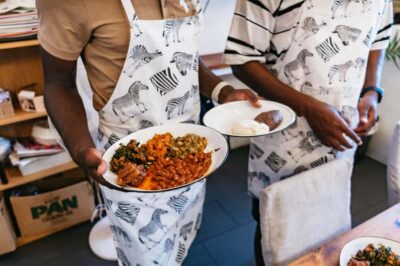
Private Cape Malay Cooking Class in Cape Town with a Local Family
Read our review →
GQ: City Walking Tour & African Cuisine Cooking Class
Read our review →Browse the lists this tour appears in