
REVIEW · WALKING TOURS
Durban: Local Markets and Culture Guided Walking Tour
Durban is best read at street level. This 330-minute tour moves from a city viewpoint into Warwick markets, Indian trading areas, African stalls, and the traditional medicine market. I like the honest look at everyday Durban and the chance to ride local minibus taxis with guide Johnny, who knows the city and its people well. The main drawback is the pace: about 8,000 steps, outdoor market walking, and shared transport can feel tiring or uncomfortable in bad weather.
I also like the simple finish: a plate of bunny chow on the North Beach promenade. The price of $68 covers the guide, local transport, walking tour, and lunch, which is fair for a half-day experience with this much access. Still, you should bring cash for shopping and drinks, and you should not expect a polished sightseeing bus or a quiet, carefully timed day.
In This Review
- Key points to know before you book
- Starting in Morningside and looking over Durban
- Riding Durban’s minibus taxis
- Warwick markets: Durban’s working heart
- The traditional medicine market
- Victoria Street Market and the Indian influence
- Walking through central Durban
- Bunny chow at North Beach
- Why Johnny matters so much
- Is $68 good value?
- Who should book this Durban tour?
- Should you book it?
- FAQ
- Where does the Durban markets tour begin?
- How long does the tour last?
- What transport is used?
- Which markets are included?
- Is lunch included?
- What should I bring?
- Is the tour suitable for wheelchair users?
Key points to know before you book
- Johnny is the heart of the experience: He has guided this kind of Durban visit for more than 14 years and is widely known in the markets.
- The market route is unusually local: You visit early morning, Indian, African, and traditional medicine markets rather than only the familiar tourist stops.
- You ride real minibus taxis: The two transport legs take about 15 minutes each and show you how locals move around the city.
- Expect about 8,000 steps: The walking is slow, but the day involves many market lanes, city streets, and time on your feet.
- Lunch is Durban’s bunny chow: The tour ends at North Beach with bread filled with meat, while drinks and personal purchases cost extra.
- This is a culture tour, not just a shopping trip: Johnny explains Durban’s politics, food, traditions, social divisions, and many local communities as you go.
Starting in Morningside and looking over Durban
The tour begins inside Tekweni Backpackers at 169 Ninth Avenue, just off Florida Road in Morningside. If you drive, safe parking is available at the meeting point. From there, the group starts with an introduction to Durban’s past and present before heading toward the market district.
A viewpoint and photo stop give you a useful first look at Durban. This is a smart way to begin because the markets make more sense once you have some sense of the city around them. Johnny uses the opening discussion to explain local history, politics, food, customs, and the different communities that shape Durban.
The guide is a major part of the value here. Johnny is not simply reading dates from a script. He has lived in Durban, has watched the markets change over many years, and is familiar with people working in the area. That local connection matters once you leave the main roads.
More Walking Tours in Durban:
- Culture Walking Tour of Durban
★ 5.0 · 110 reviews - Durban: City Sightseeing and Walking Tour
★ 4.6 · 98 reviews - Durban: Top 10 City Sights and Walking Tour
★ 4.1 · 69 reviews
Riding Durban’s minibus taxis
One of the tour’s most memorable details is also one of its least familiar: local minibus transport, often called combis. The first ride lasts about 15 minutes, with another ride of roughly the same length later in the day.
You are not being placed behind glass in a sightseeing vehicle. You are using the transport system that many Durban residents use every day. Johnny explains how it works, which makes the experience far less confusing than trying to work it out alone.
This part may push you a little outside your usual travel habits. That is part of the point, but it is also where you should be realistic. Shared minibus taxis are not designed for comfort, privacy, or leisurely sightseeing. On a rainy day, waiting for local transport can be frustrating, so an umbrella or light rain layer would be sensible even though it is not listed among the required items.
For me, the combi ride adds real value because it connects the markets to ordinary city life. You are not only looking at Durban. You are getting around in a local way.
Warwick markets: Durban’s working heart
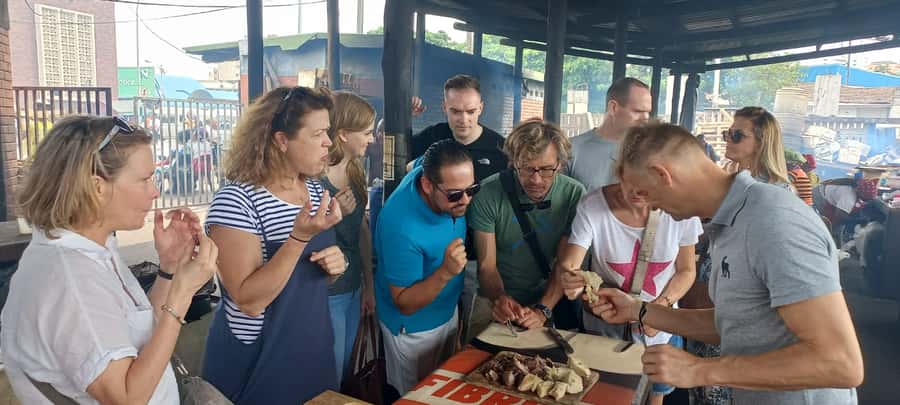
The main walking section takes place around the Markets of Warwick. This is the most substantial part of the day, and it is where the tour earns its unusual character.
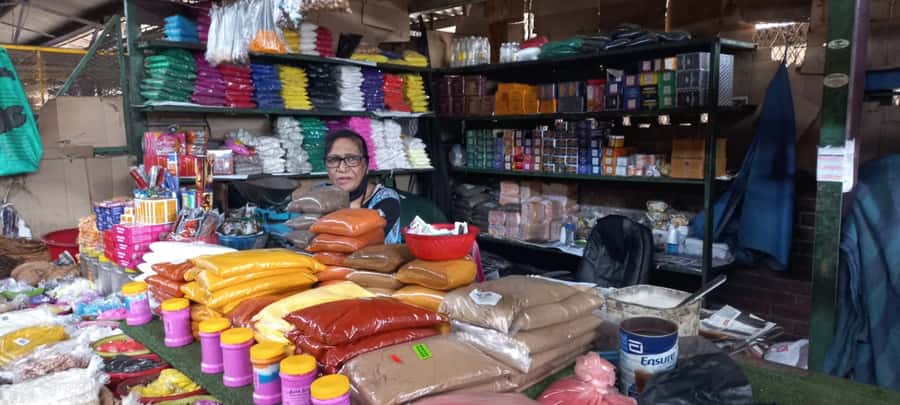
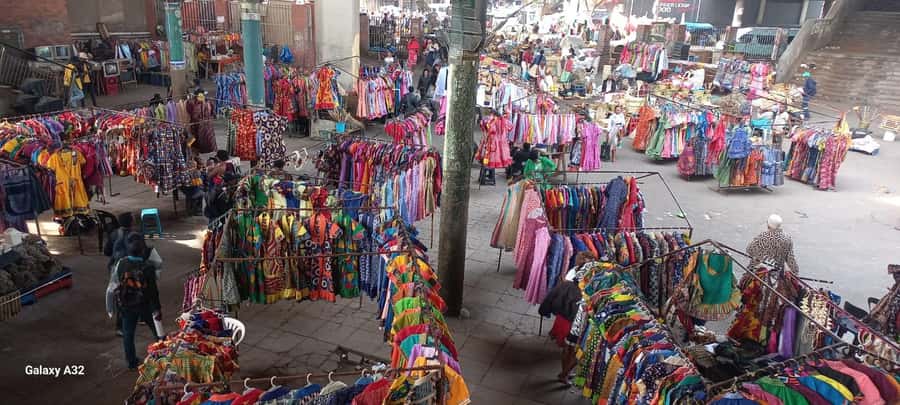
The route can include the early morning market, bridge market, Indian markets, African medicine market, African market, and Victoria Street Market. Each area has a different feel and purpose. You might find food, spices, household goods, clothing, cultural items, and small souvenirs. The selection changes, so you should come ready to look rather than expecting a fixed shopping list.
Johnny helps you understand what you are seeing. He can point out sensible buys and help you judge where to shop. One useful tip is to save some spice and souvenir shopping for this part of Durban. Prices can be much lower than in tourist-focused shops, and you may find more everyday goods alongside the keepsakes.
Bring a larger bag if you think you will shop. Personal purchases are not included, and it is easy to buy more than planned when spices, local items, and market goods are available in one morning. Cash is specifically recommended, so do not rely only on a bank card.
The markets are also a place to pay attention to how people make a living. The day offers a direct look at the gap between wealthier parts of South Africa and the many people working hard to get by. That can be uncomfortable, but it gives the tour more substance than a simple parade of colorful stalls.
The traditional medicine market

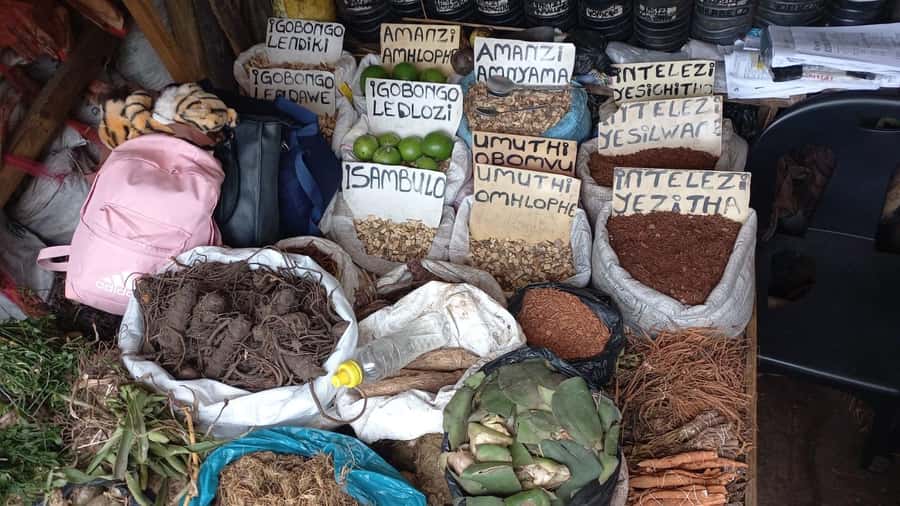
The African medicine, or Muti, market is one of the tour’s most distinctive stops. Traditional healers sell powders, oils, herbs, and products made from various animal sources, with claimed medicinal uses rooted in local traditions.
This is a place for careful observation and respectful questions. It may not suit every visitor, especially if you are uneasy around unfamiliar medical customs or animal products. Johnny’s guidance is important here because he can explain the cultural setting instead of leaving you to make quick assumptions.
You should not treat the market as a place to buy medical remedies without proper advice. The value is in learning how traditional healing fits into local life and seeing a side of Durban most independent visitors would likely miss.
Photography also needs good judgment. Johnny’s relationships with stallholders help create a more comfortable atmosphere, but you should still ask before taking pictures of people or products. A guide can open doors, not remove the need for courtesy.
A few more in Durban
- Durban: 30-Minute Harbor Boat Cruise
★ 4.7 · 665 reviews - Durban: 1-Hour Boat Cruise from Wilson’s Wharf
★ 4.7 · 496 reviews - Durban Point Waterfront: Luxury Canal Boat Cruise
★ 4.4 · 298 reviews - Durban: Pontoon Boat Harbor Cruise
★ 4.4 · 182 reviews
Victoria Street Market and the Indian influence
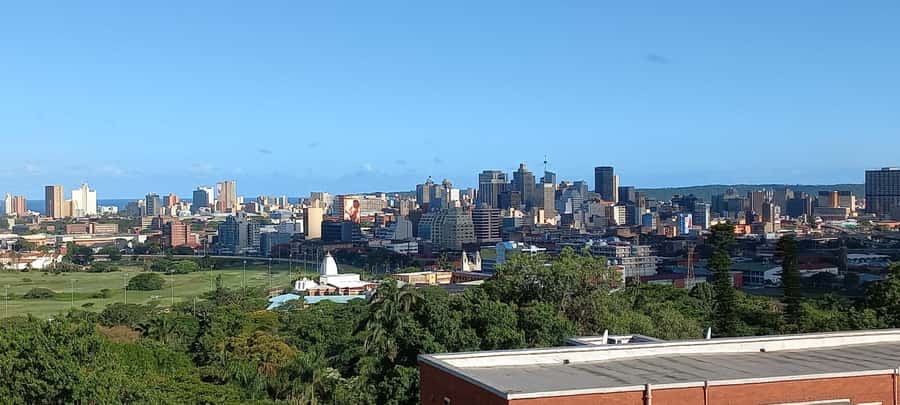
Victoria Street Market adds another layer to the city’s story. Durban’s market culture reflects several communities, including strong Indian influences, and this stop helps show how food, trade, spices, and daily commerce overlap.
The tour does not treat culture as a museum display. You walk through active markets where people are buying and selling. That makes the experience less tidy than a formal exhibit, but it also makes it more useful. You can see how traditions continue through food, trade, medicine, and family businesses.
I would plan to do most of your shopping here and in the other Warwick markets, rather than waiting until the beachfront. The tour is especially useful for anyone who wants local spices or small gifts at prices that may be more modest than those in tourist areas. Keep your purchases together and stay aware of your belongings, as you would in any busy market.
Walking through central Durban
After the markets, the tour continues through the city on foot and by local transport. The walking pace is described as slow, but the total distance adds up to around 8,000 steps.
That makes comfortable shoes essential. You will also want water, sunscreen, sunglasses, a sun hat, and light, comfortable clothing. Durban can be warm, and the market portion includes plenty of time outdoors.
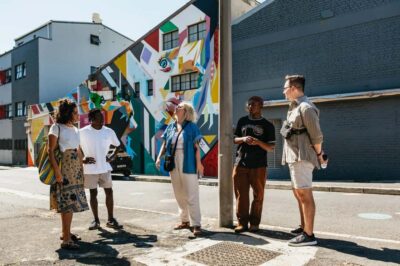
The city walk gives Johnny room to connect what you saw in the stalls with wider questions about Durban and South Africa. He discusses local culture and traditions, and he answers questions rather than rushing you from one photo stop to the next. This is a strong choice if you enjoy conversation and want context around what you are seeing.
It is less suitable if you want a tightly controlled schedule. One detailed account described a day that stretched closer to eight hours because of rain, extra food, and added stops. The stated duration is 330 minutes, or about five and a half hours, but the day can flex depending on conditions and what the group wants to explore. Keep later plans loose.
Bunny chow at North Beach
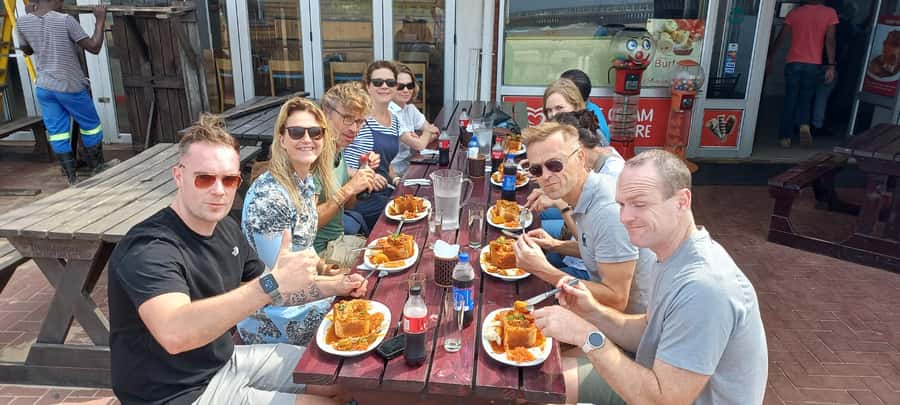
The tour ends at North Beach, where lunch is served on the beach promenade. The meal is bunny chow, a Durban specialty made by hollowing out bread and filling it with meat.
This is a fitting ending because it links the day’s market experience with one of the city’s best-known foods. The meal is included in the $68 price, but beverages are not, so carry extra money if you want something to drink.
Do not expect a formal food tasting with several courses. Bunny chow is hearty, casual, and practical. It is also a good chance to sit down after the walking and minibus rides. Some accounts describe the lunch as delicious, while another mentioned two meals during a longer day, so the exact rhythm may depend on the group and the guide.
The beach setting gives the final hour a change of pace. You finish beside the Indian Ocean rather than back at the markets, which makes the tour feel like a full crossing of the city, from inland trade and transport to the North Beach promenade.
Why Johnny matters so much

The strongest reason to choose this experience is Johnny. His style is passionate, humorous, and personal. He explains Durban through lived experience, not just through famous dates and landmarks.
He is also described as being well known and respected in the markets. That helps you feel more at ease in places where you might otherwise worry about being an outsider. People recognize him, and he can introduce you to the market environment in a way that feels more natural.
The tour is still not a private bubble. You remain responsible for respectful behavior, sensible spending, and looking after yourself. But having a guide who understands the people, transport, and market customs makes a real difference, especially for a first visit to Durban.
Johnny also seems to welcome questions. If you are curious about politics, cultural traditions, food, inequality, or how the city has changed, this is the kind of tour where you should ask. You will get more from it if you treat the day as a conversation rather than a checklist.
Is $68 good value?
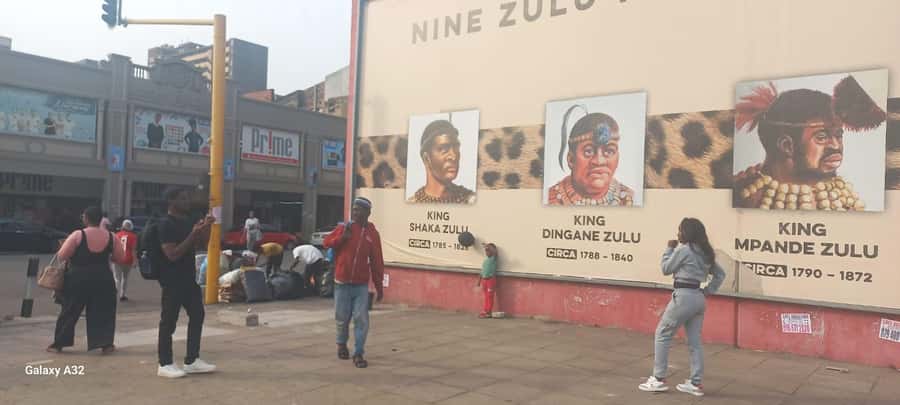
At $68 per person, the price is reasonable if you want more than a standard city walk. It covers an English-speaking guide, the walking tour, two local transport legs, and lunch. You are paying for access, interpretation, and practical help in places that can be difficult to understand on your own.
The value is strongest for first-time visitors who would not feel comfortable finding the markets or using combis independently. You also save the cost of arranging separate transport and lunch, though you still need money for drinks and shopping.
The price may feel less attractive if you mainly want landmarks, photographs, or a short stroll. Much of the time is spent walking through working markets, listening, and looking closely. This is not a luxury outing, and the transport is local rather than private.
The high rating of 4.9 from 89 ratings fits the experience’s main strengths: Johnny, the market access, the honest cultural background, and the unusual transport. You should book for those things, not for polished comfort.
Who should book this Durban tour?
I would choose this tour if you want to see a less packaged side of Durban and are willing to walk, ask questions, and accept some disorder. It suits curious adults, solo visitors, couples, and anyone interested in food, local trade, history, and South African cultures.
It is also a good fit for people who want practical shopping advice. Save room in your luggage, bring cash, and consider doing your spice and souvenir buying here.
I would think twice if you have limited mobility, dislike shared transport, need a strict end time, or want a gentle sightseeing day. The tour is not suitable for wheelchair users, and the walking and market surfaces may be hard for anyone who struggles to stay on their feet.
Free cancellation is available up to 24 hours before the tour, and you can reserve now while paying later. That gives you some flexibility, but the most important preparation is physical: comfortable shoes, water, sun protection, and an open mind.
Should you book it?
Book this Durban walking tour if your idea of a good day includes real markets, local transport, frank conversation, and a meal that belongs to the city. Johnny’s personal connection gives the experience its strongest edge, and the combination of Warwick markets, the Muti market, Victoria Street Market, and North Beach is hard to reproduce alone.
Skip it if you want air-conditioned transport, a predictable timetable, or a quick overview of major sights. For everyone else, this is one of the more useful ways to understand Durban beyond its beachfront. You will walk a lot, see some confronting things, and likely come home with spices, stories, and a better sense of how the city works.
FAQ
Where does the Durban markets tour begin?
Meet inside Tekweni Backpackers at 169 Ninth Avenue, just off Florida Road in Morningside. Safe parking is available if you arrive by car.
How long does the tour last?
The stated duration is 330 minutes, or about five and a half hours. The practical guidance describes it as a four to five-hour tour, though the day may run longer depending on weather, stops, and group preferences.
What transport is used?
The tour uses local minibus taxis, also called combis. The two listed transport sections take about 15 minutes each.
Which markets are included?
The route can include the early morning market, bridge market, Indian markets, African medicine market, African market, and Victoria Street Market. The tour spends the morning walking through the Markets of Warwick area.
Is lunch included?
Yes. Lunch at North Beach is included and features bunny chow, a traditional meal of bread filled with meat. Drinks are not included.
What should I bring?
Bring comfortable shoes, sunglasses, a sun hat, sunscreen, water, comfortable clothing, and cash for personal purchases and drinks.
Is the tour suitable for wheelchair users?
No. The experience is not suitable for wheelchair users. It also lists people over 95 as unsuitable for the tour.
Just added in Durban
- Zulu Cultural Experience – Tour to the village of iSithumba and PheZulu★ 5.0 · 4 reviews
- Zululand 5 Day Private Safari from Durban★ 5.0 · 4 reviews
- Valley of a Thousand Hills – Durban★ 5.0 · 3 reviews
- Zulu Oracle & Herbalist Experience Day Tour★ 5.0 · 2 reviews
- Drakensberg, Nelson Mandela Capture S & Howick Falls – 2 Day Tour from Durban★ 5.0 · 3 reviews
- Garden Route Durban to Cape Town via Addo National Park – 7 Days★ 5.0 · 15 reviews
- Durban: Go on Safari at 2 Game Reserves (Hluhluwe-Imfolozi) Pro Zeiss Binoculars★ 5.0 · 2 reviews
- Hluhluwe Imfolozi Game Reserve & Phezulu Safari Park from Durban★ 5.0 · 4 reviews
Walking Tours, compared.




Browse the lists this tour appears in