

REVIEW · SOWETO TOURS
Explore Soweto 8 Hour Tour with Lunch and Museum Visit
Soweto tells South Africa’s story at street level. This eight-hour Johannesburg outing links historic Soweto landmarks with the Apartheid Museum, lunch, and a small-group ride, giving you a clear first look at the city’s past and present. I like the thoughtful mix of serious history and everyday culture, and I like that lunch at Sakhumzi includes traditional dishes rather than a forgettable tourist meal. The main drawback is the pace: with several major sites packed into one day, some stops may feel brief, especially if you prefer to linger in museums.
The tour is priced at $114.03 per person and is limited to 10 people, which helps keep the outing more personal than a large coach trip. Guide Thabang Msiza has earned particular praise for his smooth driving, clear explanations, and ability to shape the day around the main sights. Since the tour is often reserved about 140 days ahead, early booking makes sense during busy periods.
In This Review
- Key points to know before you book
- Why this eight-hour route works
- FNB Stadium and the public face of South Africa
- Soweto beyond a quick sightseeing stop
- Hector Pieterson Museum and the events of June 16, 1976
- Mandela House on Vilakazi Street
- Lunch at Sakhumzi Restaurant
- Two hours at the Apartheid Museum
- What the guide and vehicle add
- Is $114.03 a fair price?
- Who should choose this Soweto tour?
- Should you book it?
- FAQ
- How long does the tour last?
- What time does the tour begin?
- Is pickup available?
- How many people can join the tour?
- Is lunch included?
- What food is served at lunch?
- Are museum admission fees included?
- Is FNB Stadium admission included?
- Is transportation air-conditioned?
- Is alcohol included?
- Can I cancel for a full refund?
Key points to know before you book
- Eight hours cover both Soweto and Johannesburg’s Apartheid Museum, making this a strong first-day orientation to the city’s modern history.
- FNB Stadium gives the day a sporting and national focus, with its calabash-like design and links to the 2010 FIFA World Cup.
- Hector Pieterson Museum provides the most emotionally difficult stop, centered on the 1976 Soweto Uprising and the schoolchildren who resisted apartheid education rules.
- Vilakazi Street combines history with local life, placing Mandela House and Sakhumzi Restaurant close together.
- Lunch is included at Sakhumzi, with pap, chakalaka, grilled meats, and vegetarian choices served in a traditional South African setting.
- A maximum of 10 people and air-conditioned transport make the long day easier, though the itinerary still asks you to keep moving.
Why this eight-hour route works
I see this tour as a useful introduction to Johannesburg because it does not treat Soweto as a quick photo stop. You get time in the township, visits to major political sites, a meal on Vilakazi Street, and a longer museum visit that helps connect the places you have seen.
The route also moves from broad national symbols to personal stories. FNB Stadium represents sport and public celebration. Soweto brings you into the communities at the center of the anti-apartheid struggle. Mandela House makes history personal, while Hector Pieterson Museum shows the human cost of protest. The Apartheid Museum then widens the view again.
That structure gives the day a clear thread. You are not simply ticking off disconnected attractions.
The small group matters, too. With no more than 10 people, you have a better chance of hearing the guide and asking questions than you would on a large bus. The included WiFi and bottled water are useful touches on an eight-hour outing, while the air-conditioned vehicle offers a welcome break between stops.
More Museums in Johannesburg
- Soweto /Johannesburg and Apartheid Museum Guided Full Day Tour
★ 5.0 · 932 reviews - Jo’berg in 1 Day: Soweto, Apartheid Museum & City Tour
★ 4.8 · 524 reviews - Johannesburg: Full-Day Tour with Soweto and Apartheid Museum
★ 4.8 · 478 reviews
FNB Stadium and the public face of South Africa
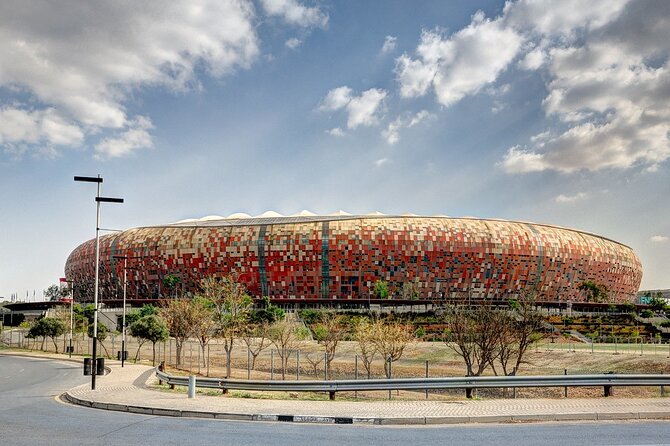
The day includes a stop at FNB Stadium, also called Soccer City. It is Africa’s largest stadium and one of Johannesburg’s best-known modern buildings.
The calabash-inspired exterior is meant to recall an African cooking pot. That shape gives the stadium more meaning than a standard sports arena, and it helps explain why the building became such a strong symbol during the 2010 FIFA World Cup.
The stadium hosted the tournament’s opening and closing ceremonies. It also carries political importance. Nelson Mandela gave his first speech in Johannesburg after his release there, linking the site to the country’s move toward democracy.
Music fans may also recognize it as a major concert venue for performers such as Beyoncé and U2. I like this early stop because it sets up an important idea: South African history is not confined to museums. It has unfolded in sports grounds, streets, homes, and public gathering places.
Do not expect the stadium stop to provide a full stadium tour unless that is specifically confirmed before booking. The supplied details describe a visit to the site and its significance, not access to every interior area. If you are mainly coming for football, ask about the exact viewing arrangements.
Soweto beyond a quick sightseeing stop
Soweto means South Western Townships, but the name carries far more weight than its abbreviation suggests. The area became a major center of resistance to apartheid and remains closely linked with South African political memory.
The tour allows about four hours for the Soweto portion, although the listed attractions within that period include several separate visits. This is where the guide can add the most value. The strongest experiences are not only the buildings themselves, but the connections between them.
Vilakazi Street is the best-known example. It is famous as the only street in the world associated with two Nobel Prize winners, Nelson Mandela and Desmond Tutu. Mandela House is located here, and Sakhumzi Restaurant is nearby, so you can see major historical sites while also spending time in a functioning local area.
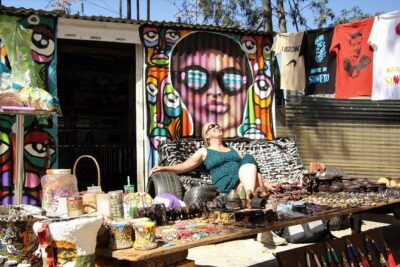
I appreciate that this part of the day includes both remembrance and ordinary life. You are not asked to view Soweto only through the lens of struggle. The meal, music, and street setting offer a glimpse of the area as a living community rather than a frozen history lesson.
At the same time, keep your expectations measured. A guided drive and selected stops cannot explain every part of Soweto in four hours. The tour gives you a meaningful introduction, not a complete portrait of the township.
Hector Pieterson Museum and the events of June 16, 1976
This is likely to be the most sobering stop. The museum and memorial honor Hector Pieterson, a 12-year-old boy killed during the Soweto Uprising on June 16, 1976.
The uprising began when students protested the forced use of Afrikaans as the language of instruction in schools. The death of Hector, captured in a famous photograph as another student carried him while his sister ran beside them, brought international attention to the violence of apartheid.
The museum presents the event through photographs, films, exhibits, and personal accounts. Its purpose is not to offer a light museum visit. You should allow yourself time to absorb what you see, even though the scheduled stop is about 30 minutes.
That half-hour is a practical limitation. It may be enough for a focused introduction, but not for reading every display at length. If this subject is central to your interest in South Africa, you may want to return independently for more time.
Still, the stop has real value within this route. The events of 1976 help explain why Soweto became such a powerful international symbol of resistance. The museum also keeps the story grounded in the lives of schoolchildren, families, and communities, rather than reducing apartheid to dates and political slogans.
More Soweto tours:
- Johannesburg: Hop-On Hop-Off Bus with Optional Soweto Tour
★ 4.6 · 985 reviews - Johannesburg Hop-On Hop-Off City Tour with Soweto Option
★ 4.5 · 768 reviews - Half-Day Tour of Soweto Tour
★ 4.5 · 712 reviews - Soweto: Walking Tour with a Local Guide and Lunch
★ 4.9 · 648 reviews
Mandela House on Vilakazi Street
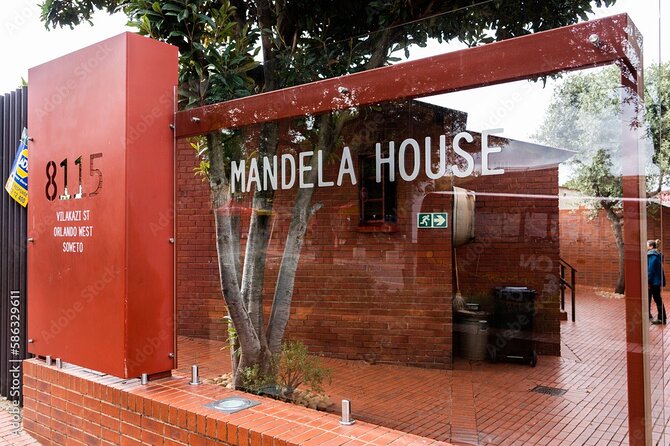
Mandela House offers a more intimate look at Nelson Mandela. This modest former home was where Mandela lived with his family before his imprisonment in 1962.
The museum includes original furnishings, photographs, and personal items. Compared with the scale of the Apartheid Museum, the house feels more personal and domestic. I like the contrast. It reminds you that Mandela’s public role began within a family home, with all the ordinary pressures that such a setting suggests.
The visit also adds balance to the day. You learn about Mandela not only as South Africa’s first democratically elected president, but as a lawyer, activist, husband, father, and man forced to sacrifice normal family life for the struggle against apartheid.
The supplied schedule does not give a separate duration for Mandela House, so the time available may depend on the group and the guide’s pacing. That is worth noting if you like to examine every room carefully. The attraction is compact, but the story attached to it is large.
Vilakazi Street itself is part of the appeal. With Mandela House and the nearby Sakhumzi Restaurant, this is one of the easiest places on the route to connect historical memory with present-day Soweto.
Lunch at Sakhumzi Restaurant
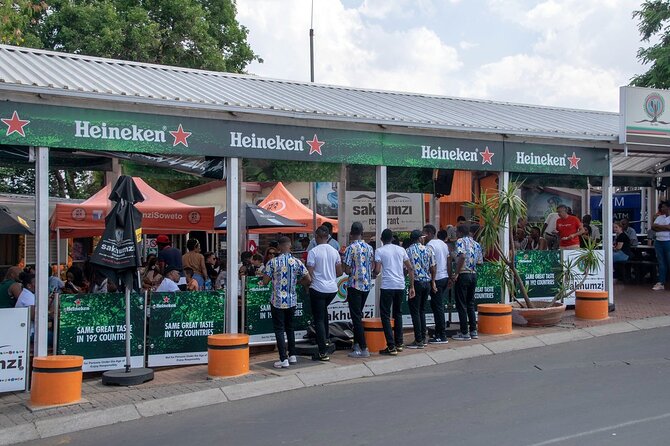
Lunch is not an afterthought here. Sakhumzi Restaurant serves a buffet-style meal built around South African food, including pap, chakalaka, grilled meats, and vegetarian dishes.
Pap is a maize-based staple, while chakalaka is a spicy vegetable relish. Together with the grilled meat and other buffet choices, they give you a chance to try familiar local flavors in a straightforward setting. Vegetarian options are available, which makes the included meal more useful for mixed groups.
The scheduled lunch lasts about an hour. That is enough time to eat without turning the meal into a rushed sandwich break. The restaurant is on Vilakazi Street, close to Mandela House, so the location adds to the sense of place.
Local music may accompany the meal, depending on the atmosphere that day. That detail matters because the restaurant experience is part of the cultural side of the tour, not just a practical pause.
Alcohol is not included, so budget separately if you want drinks beyond the provided meal and bottled water. Also remember that buffet offerings can vary. Pap, chakalaka, grilled meat, and vegetarian choices are specified, but no fixed menu is promised.
Two hours at the Apartheid Museum
The Apartheid Museum is the longest museum stop, with about two hours scheduled. That is appropriate because the subject is broad and the exhibits require attention.
The museum explains racial classification, segregation, resistance movements, and the road toward democracy. Photographs, films, personal accounts, and interactive displays help show how apartheid affected daily life, not just government policy.
The museum’s design also supports the subject. Its architecture uses symbolic elements to shape the visit, though the emotional force comes mainly from the material inside: the rules imposed on people, the resistance that followed, and the sacrifices made by activists and families.
I would plan to use this time carefully. Two hours can provide a strong overview, but you may still need to choose which displays matter most to you. If you read every panel in detail, the visit may feel tight. If you focus on the main exhibits and listen to the guide’s framing, the allotted time should give you a solid understanding of apartheid and the transition to democracy.
This stop works best after Soweto. You have already seen places connected to Mandela and Hector Pieterson, so the museum can place those individual stories within the larger national picture.
What the guide and vehicle add
Guide quality can shape this tour more than any single attraction. The strongest praise for the experience has centered on Thabang Msiza, who is described as clear in his explanations, smooth behind the wheel, and good at arranging the day around the main sights.
That combination matters. Johannesburg and Soweto are not places where you want to spend the whole day figuring out directions, parking, or the order of stops. A guide who knows where to begin can protect your limited time.
The air-conditioned vehicle is another practical advantage. Eight hours is a long day, and the vehicle gives you a comfortable place to rest between museums and neighborhood stops. WiFi on board and bottled water are included.
The group limit of 10 is smaller than a standard sightseeing coach, but this is not necessarily a private tour. If you want a fully private schedule, confirm that before paying. Group discounts are available, though the details of those discounts are not specified.
Pickup is offered, with a 9:00 a.m. start time. The exact pickup arrangements should be confirmed at booking, since the provided information does not name a single universal meeting address.
Is $114.03 a fair price?
At $114.03 per person, this is not the cheapest way to see Johannesburg. The price makes more sense when you count what is bundled into the day: transport in an air-conditioned vehicle, WiFi, bottled water, lunch, and admission to the Hector Pieterson Museum, Mandela House, Sakhumzi Restaurant, and Apartheid Museum as specified.
You are also paying for planning and interpretation. Reaching Soweto, fitting in the stadium, visiting two museums, stopping for lunch, and returning within eight hours would be awkward without organized transport.
The value is strongest for a first visit, especially if you want the major history sites without arranging several separate rides. It is less attractive if you already know Johannesburg well, have your own transport, or prefer spending an entire morning in one museum.
The 140-day average advance booking figure suggests strong demand. I would not treat that as a reason to book blindly, but it is a useful warning for fixed-date trips. The cancellation terms are fair: you can receive a full refund if you cancel at least 24 hours before the start time. Changes or cancellations inside that window are not accepted for a refund.
Who should choose this Soweto tour?
I would recommend it to first-time visitors who want historical context, a local meal, and the convenience of a planned route. It also suits couples, families with older children, and small groups who want more background than a simple city drive provides.
It is a good match if you want to see both the political story and the daily cultural side of Soweto. The route includes serious material, but lunch and FNB Stadium keep the day from becoming one long museum visit.
I would hesitate if you dislike tightly planned days or need a great deal of time at each exhibit. The Hector Pieterson Museum receives only 30 minutes, and the day includes several major stops. People with a single narrow interest, such as stadium architecture or apartheid-era museum research, may prefer a focused visit.
Should you book it?
Book this tour if you want one organized day that connects FNB Stadium, Soweto, Mandela House, Hector Pieterson Museum, a traditional lunch, and the Apartheid Museum. The best reasons to choose it are the small group size, included admissions and meal, comfortable transport, and the strong guiding reported for Thabang Msiza.
Skip it if you prefer to set your own pace or already have transport and a detailed Johannesburg plan. For most first-time visitors, though, the route offers a sensible and valuable introduction to Soweto and the city’s path from apartheid to democracy.
FAQ
How long does the tour last?
The tour lasts approximately eight hours.
What time does the tour begin?
The listed start time is 9:00 a.m.
Is pickup available?
Yes, pickup is offered. The specific pickup location is not provided, so confirm the details when booking.
How many people can join the tour?
The maximum group size is 10 travelers.
Is lunch included?
Yes, lunch at Sakhumzi Restaurant is included.
What food is served at lunch?
The buffet may include pap, chakalaka, grilled meats, and vegetarian options.
Are museum admission fees included?
Admission to the Hector Pieterson Museum and Memorial, Mandela House, and Apartheid Museum is included as specified.
Is FNB Stadium admission included?
The tour includes a stop at FNB Stadium, but the provided information does not specify a separate stadium admission ticket.
Is transportation air-conditioned?
Yes, transportation is provided in an air-conditioned vehicle.
Is alcohol included?
No. Alcoholic beverages are not included.
Can I cancel for a full refund?
Yes, cancellation at least 24 hours before the experience start time qualifies for a full refund. Cancellations or changes made less than 24 hours before the start time are not accepted for a refund.
More Lunch Experiences in Johannesburg
- Full-Day Soweto, Apartheid Museum and Lunch Tour
★ 5.0 · 410 reviews - Soweto: Guided Bicycle Tour with Lunch
★ 4.9 · 292 reviews - Soweto Walking Tour with Lunch
★ 5.0 · 288 reviews - Johannesburg and Soweto Apartheid Full Day Tour w/Lunch
★ 4.9 · 219 reviews
Just added in Johannesburg
- Private Soweto Tour 5 hours approximately from Johannesburg or Pretoria.★ 4.5 · 9 reviews
- bicycle tour soweto★ 4.5 · 20 reviews
- Full-day Johannesburg Bike Or Walking tour – With Transport★ 5.0 · 10 reviews
- Taste of Africa★ 5.0 · 9 reviews
- Two day Kruger National Park Safari from Johannesburg★ 5.0 · 19 reviews
- Pilanesberg National Park Safari, BIG 5 Full Day★ 5.0 · 4 reviews
- Sun City Day Tour From Johannesburg★ 4.5 · 6 reviews
- Half-Day Walking Tour in Soweto★ 5.0 · 38 reviews
Soweto Tours, compared.
Soweto /Johannesburg and Apartheid Museum Guided Full Day Tour
Read our review →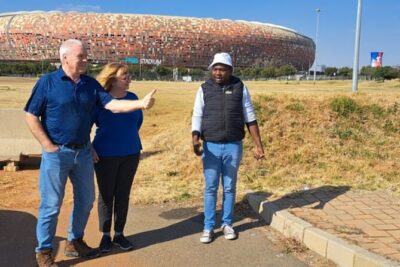

Jo’berg in 1 Day: Soweto, Apartheid Museum & City Tour
Read our review →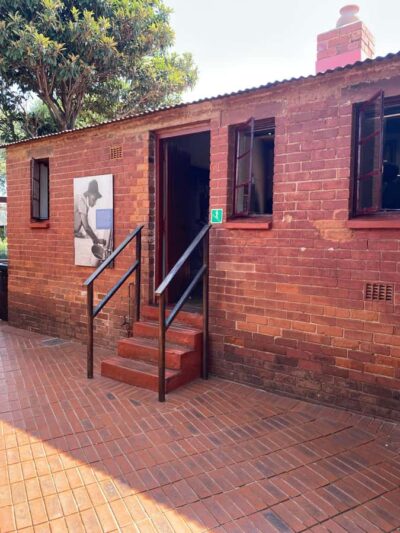
Full-Day Tour with Soweto and Apartheid Museum
Read our review →
Full-Day Soweto, Apartheid Museum and Lunch Tour
Read our review →
Half Guided Day Tour of Soweto And Apartheid Museum
Read our review →Browse the lists this tour appears in