
REVIEW · WALKING TOURS
Johannesburg: Architectural Walking Tour
Buildings tell the story. This two-hour Johannesburg walk uses architecture to explain how the city grew from a gold rush settlement into a modern urban center. I like its unusual focus on design and changing building uses, and I like that it connects grand offices and public squares with everyday city life. The main consideration is that it is a walking tour in central Johannesburg, so it is not suitable for people with mobility impairments.
Guide Mo brings a strong architectural background to the route and can adjust his explanations to your questions and interests. One recent booking took about two and a half hours instead of two, which may please curious architecture fans but matters if you have a tight schedule. The tour costs $25 per person, a fair price if you want context rather than a quick look at façades.
In This Review
- Key points to know before you go
- Why an architecture walk works so well in Johannesburg
- Meeting at 100 Carr Street and the Market Theatre
- Mary Fitzgerald Square and Newtown’s creative side
- Library Gardens and the city’s starting point
- Turbine Hall and the force of mining
- Anglo American and Marshalltown’s mining offices
- Gandhi Square and the daily city
- Carlton Centre and the closed Top of Africa
- What the $25 price includes
- Timing, walking effort, and who should book
- The guide makes the difference
- Should you book this Johannesburg walk?
- FAQ
- Where does the tour start?
- How long does the tour last?
- What language is the tour in?
- What places are visited?
- Does the tour enter buildings?
- Can I visit the Top of Africa?
- Where does the tour finish?
- Is the tour suitable for people with mobility impairments?
- Can I cancel and receive a refund?
Key points to know before you go
- Architecture is the main lens: You follow Johannesburg’s growth through styles, building design, original purposes, and later changes.
- The route begins in Newtown: Mary Fitzgerald Square and the Market Theatre introduce a district known for art and creativity.
- Market Street is central to the story: Albertina Sisulu Street, formerly Market Street, is presented as the starting point of the city.
- Mining shaped the city center: Turbine Hall and the Anglo American offices help explain the power of Johannesburg’s mining era.
- The finish involves Carlton Centre: The Top of Africa is currently closed, so the tour ends at the bottom of the building.
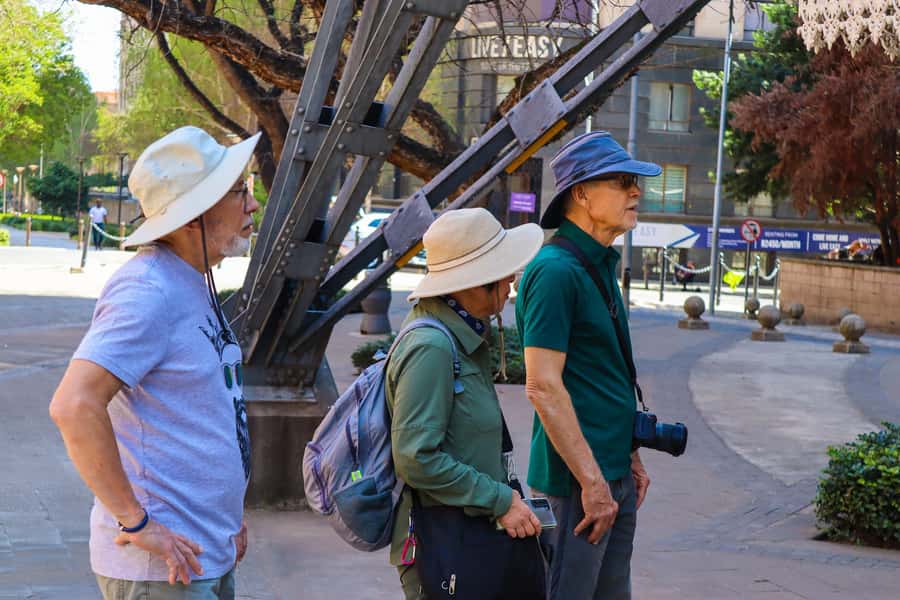
- Mo is a major strength: He can answer detailed questions about architectural style, design, urban growth, and changing uses.
Why an architecture walk works so well in Johannesburg
Johannesburg can be difficult to read at street level. Its center contains public squares, former mining offices, cultural buildings, commercial towers, and streets that have changed names and purposes. A standard sightseeing walk might point these out one by one. This tour tries to connect them.
That is the useful part. You are not only looking at whether a building is attractive. You are considering why it was built, what role it played, and how its use changed as Johannesburg changed. Architecture becomes a record of gold, business, politics, culture, and ordinary city life.
I especially like this approach for anyone who has already seen Johannesburg’s major attractions and wants a clearer picture of the central districts. It also suits visitors who enjoy asking questions. Guide Mo has been praised for explaining buildings through style and design while also discussing their changing uses. That gives the walk more substance than a list of dates.
The tour is interactive, informative, and intended to stay enjoyable rather than academic. You should expect to walk, look closely, listen, and ask questions. The route is short enough to fit into a morning or afternoon, though the actual pace can stretch beyond two hours if the group has many questions.
More Walking Tours in Johannesburg
- Soweto: Walking Tour with a Local Guide and Lunch
★ 4.9 · 648 reviews - Soweto Walking Tour with Lunch
★ 5.0 · 288 reviews - Johannesburg: Local Food Tasting Guided Walking Tour
★ 4.7 · 192 reviews
Meeting at 100 Carr Street and the Market Theatre
The stated starting point is 100 Carr Street, at the door of McDonald’s. That is a practical place to meet, but check the exact starting time and location details before setting out. The experience is led in English, and the guide is live rather than prerecorded.
The Market Theatre is one of the first stops, with about five minutes set aside for guided sightseeing. Its place on the route matters because the walk begins by connecting the city’s built form with its cultural life. You get an early sense that Johannesburg is not being presented only as a mining or business center.
The stop is brief, so do not expect a full theater visit or a long performance-history talk unless the guide has time to expand on it. The value comes from seeing how this part of Newtown fits into the wider story of the city.
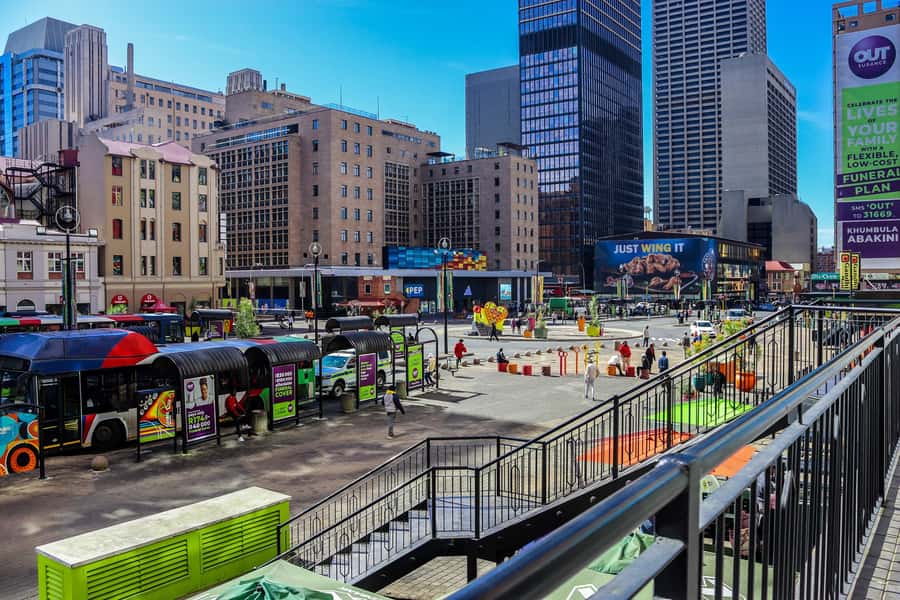
From there, the route moves to Mary Fitzgerald Square. Plan on about ten minutes here. The square is in Newtown, an area associated with art and creativity, and it provides an open public space from which to consider the surrounding buildings.
A square is more than an empty patch between streets. It shows how people gather, move through the city, and use public space. That makes Mary Fitzgerald Square a good early stop for a tour concerned with everyday urban life. You can expect the guide to use the setting to explain the district rather than simply point out a building and move on.
Mary Fitzgerald Square and Newtown’s creative side
This is where the tour’s social angle becomes clearer. You are not only studying isolated structures. You are looking at a district and considering how its character is shaped by the buildings and public spaces around it.
I like that the tour starts here instead of rushing directly toward the tallest tower. The sequence gives you a sense of place before the walk turns toward the commercial and mining center. It also helps explain why architecture is useful in Johannesburg: buildings are tied to work, culture, movement, and changing public life.
The short stop means you will not receive a full walking tour of Newtown. If you want extended time inside cultural venues or a detailed art-focused visit, this experience may feel too focused on the overall city story. For a two-hour route, however, the square works as a clear opening chapter.
The route then takes you toward Albertina Sisulu Street, formerly known as Market Street. The name change is an important detail because streets, like buildings, carry layers of city history. Here, the guide presents Market Street as the place where the city began.
Library Gardens and the city’s starting point
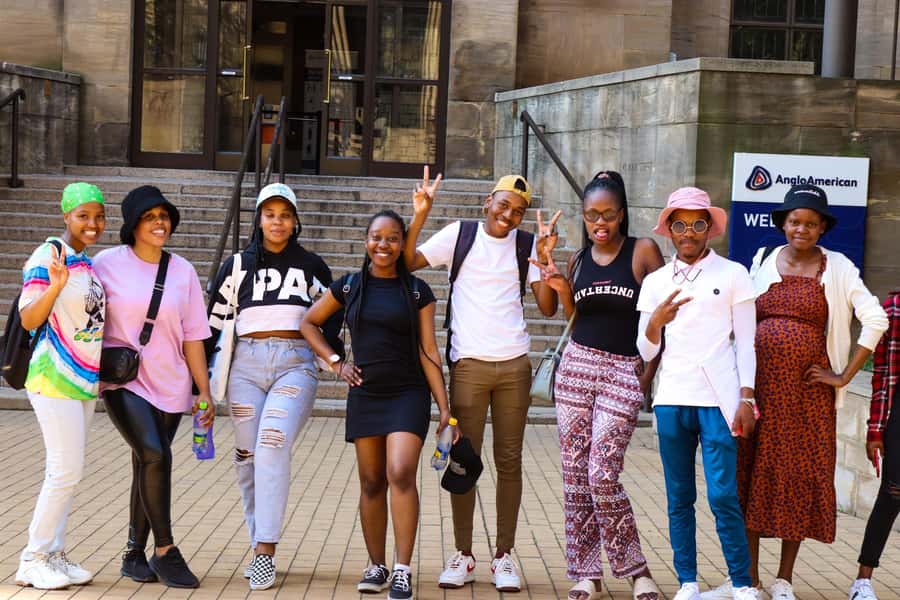
At the Library Gardens, the tour pauses to explain the beginnings of Johannesburg and show how the area has changed over time. This is one of the most important stops because it turns a broad historical idea into a physical location.
Rather than hearing only that Johannesburg grew from gold, you are shown a space connected to that origin story. The guide builds a picture of the city from its streets and structures, helping you understand how an early settlement became a much larger center.
The emphasis on change is particularly useful. A building or street can survive while its surroundings, purpose, and public meaning shift. Looking at those changes helps you avoid seeing central Johannesburg as a collection of old façades. You begin to notice how the city has been rebuilt, renamed, repurposed, and reinterpreted.
This stop is also a good point for questions. If you want to ask about the order in which the city developed, the relationship between gold and construction, or why particular buildings mattered, this is likely one of the best moments to do it. Mo has been praised for responding fully to questions and personal interests, so curious participants should get more from the walk than people who simply follow along quietly.
Something quite different:
- From Johannesburg: Pilanesberg Nature Reserve Game Safari
★ 4.8 · 1,327 reviews - Johannesburg: Hop-On Hop-Off Bus with Optional Soweto Tour
★ 4.6 · 985 reviews - Soweto /Johannesburg and Apartheid Museum Guided Full Day Tour
★ 5.0 · 932 reviews - Johannesburg Hop-On Hop-Off City Tour with Soweto Option
★ 4.5 · 768 reviews
Turbine Hall and the force of mining
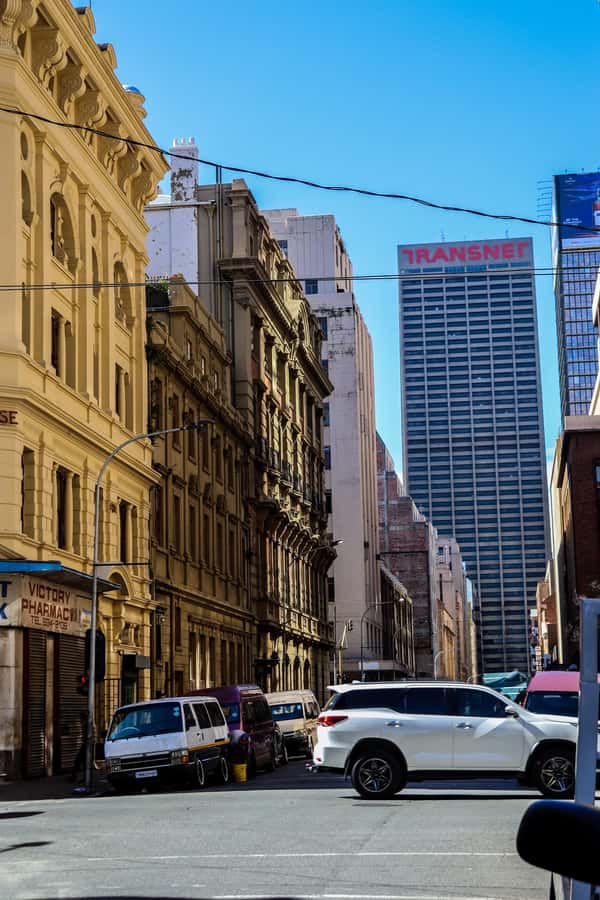
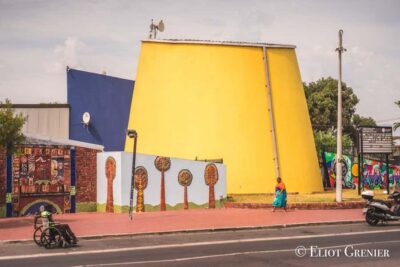
Turbine Hall receives about five minutes of sightseeing. The short timing suggests that this is an exterior stop or a concise architectural explanation, although entry is included for buildings visited during the experience.
The building matters because it links architecture to the mining economy that shaped Johannesburg. A structure associated with industrial power can help you picture the practical systems behind the city’s wealth. This is a different kind of architectural story from a theater or public square. It points toward machinery, production, and the infrastructure needed to support a mining center.
You may find that the stop is more valuable after the earlier explanation at Library Gardens. On its own, a building can be hard to place. After hearing how the city began and expanded, Turbine Hall becomes part of a sequence: origin, growth, industry, and the institutions that benefited from it.
The five-minute visit is also a reminder that this is a survey walk, not a series of long building tours. You will see several important places, but the guide must keep the route moving. If you want to study architectural details at length, bring your own notes and use the walk to decide which sites deserve a separate visit.
Anglo American and Marshalltown’s mining offices
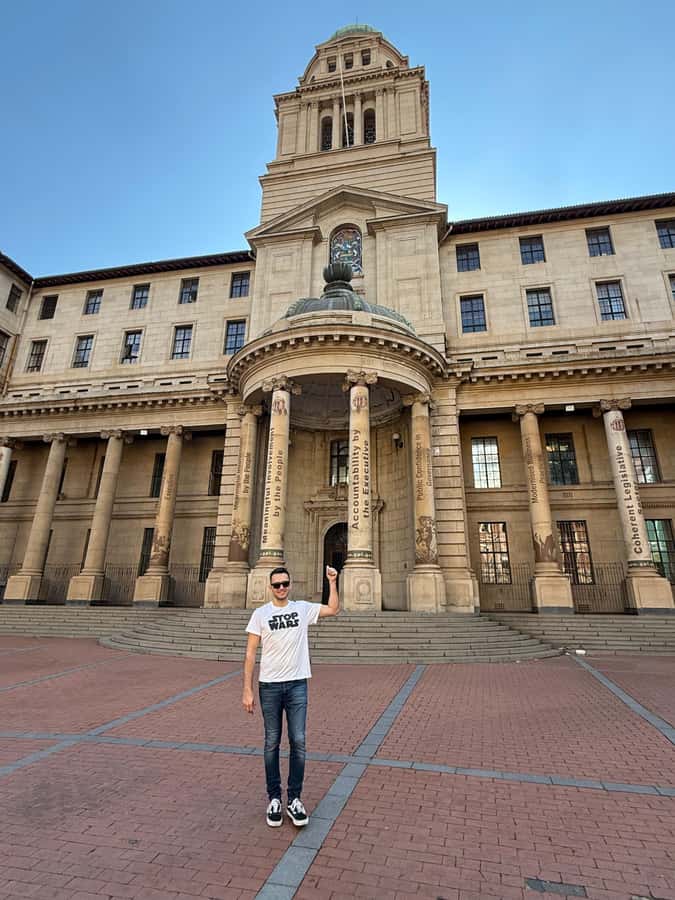
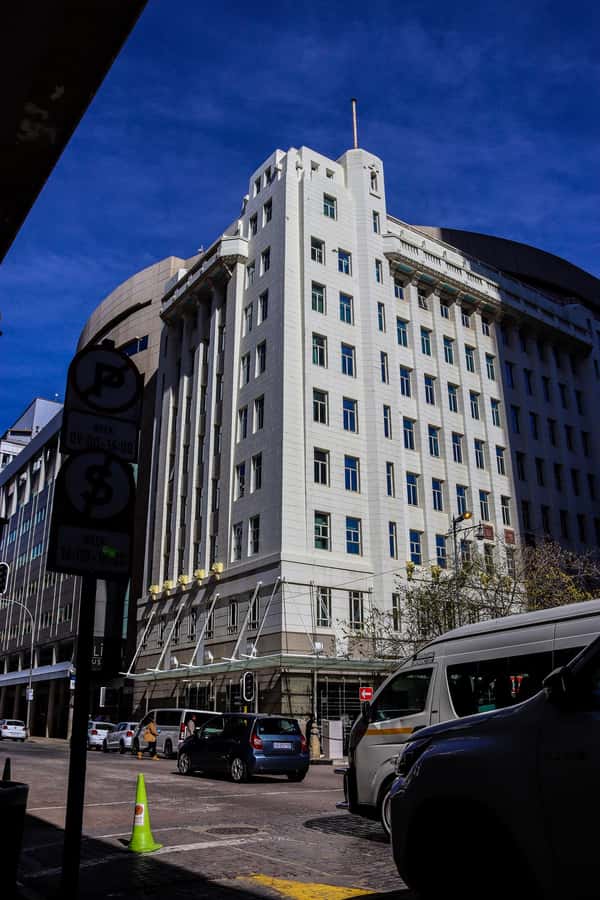
The route continues to the Anglo American offices in the Marshalltown district, with about ten minutes for sightseeing. These mining offices hold an important place in the city’s story because they represent the corporate side of Johannesburg’s development.
This is where the walk can add useful balance. Gold did not shape the city only through mines and machinery. It also produced offices, management structures, financial power, and an urban center designed for large organizations. The architecture of business can tell you as much about the city as industrial buildings can.
I like the way this stop broadens the idea of mining. You are encouraged to look at the relationship between economic power and the city’s physical form. Large offices are not simply workplaces. They show how companies wanted to present themselves and how central Johannesburg was organized around business.
The stop lasts around ten minutes, enough for a focused explanation but not an exhaustive study. Mo’s architectural background is most useful here because he can discuss style and design while keeping the building tied to its changing purpose. That combination is the core strength of this experience.
Gandhi Square and the daily city
Gandhi Square is another ten-minute sightseeing stop. The square gives the tour a chance to move from corporate offices and mining power back to a public setting used by people going about their daily business.
This is an important part of the route for anyone who wants more than monumental architecture. Public squares show how the city works at human scale. They can reveal movement, commerce, transport, gathering, and the contrast between formal city planning and ordinary routines.
The tour’s focus on local life is strongest when it treats these spaces as active parts of Johannesburg rather than background scenery. You are asked to consider how people use the city, not just how architects designed it.
There is a small practical issue here: the supplied route information names Gandhi Square as both a stop and the finish point, while the main description also places the ending at Carlton Centre. The clearest reading is that the tour visits Gandhi Square, continues to Carlton Centre, and concludes back at or near Gandhi Square after the Carlton Centre discussion. Confirm the exact end point with the guide when you meet, especially if you need to leave promptly.
Carlton Centre and the closed Top of Africa
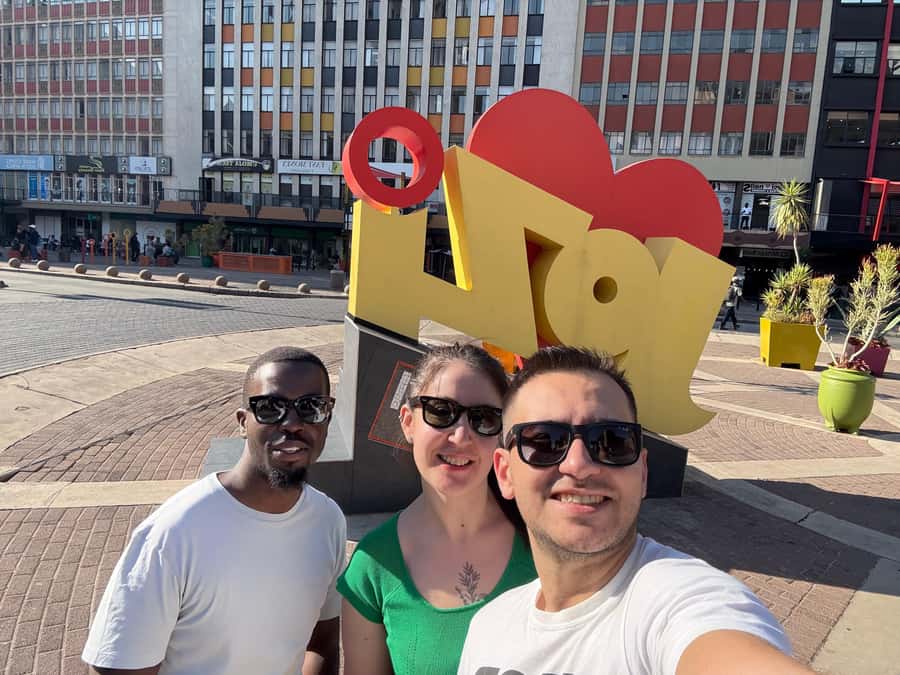
The final major stop is Carlton Centre, where about ten minutes are set aside for sightseeing. The building was once home to the Top of Africa, a viewing point that was the highest point in Africa until recently.
The key practical fact is that the Top of Africa is currently closed. You should not book this walk expecting to go upstairs for a city panorama. The tour ends at the bottom of Carlton Centre instead, using the building as an architectural and historical endpoint.
Even without access to the viewing point, Carlton Centre gives the walk a strong finish. It represents Johannesburg’s later push upward, after the earlier chapters of streets, squares, mining facilities, and offices. The route therefore moves from the city’s beginnings to one of its most recognizable vertical landmarks.
The closure does reduce the experience slightly if the tower was your main reason for booking. On the other hand, the tour is not sold only as a viewpoint visit. Its purpose is to explain the city through buildings, and Carlton Centre still works as a final reference point for that story.
What the $25 price includes
At $25 per person, this is a reasonably priced guided city walk, especially if you value explanation. Entry to buildings visited is included, which is useful because even a small admission fee can change the value of a short tour.
The strongest return on your money is access to a guide who can interpret what you are seeing. Without that context, you might pass the Market Theatre, Turbine Hall, Anglo American offices, and Carlton Centre without understanding how they connect. The fee pays for the route design and the live commentary as much as it pays for access.
The price is less compelling if you want a long indoor tour, extensive time at each building, or a visit to the Top of Africa. The viewing point is closed, and several stops receive only five or ten minutes. You are paying for a brisk architectural overview rather than a detailed examination of every site.
The ability to reserve now and pay later makes planning easier, and cancellation is free up to 24 hours before the start for a full refund. Those terms are useful if your Johannesburg schedule is still shifting, but the main value remains the guide’s interpretation.
Timing, walking effort, and who should book
The advertised duration is two hours. One detailed booking took about two and a half hours, so I would leave a little extra time, particularly if you enjoy questions and discussion.
You should wear comfortable shoes and be ready to walk between stops. The activity is specifically not suitable for people with mobility impairments. It is also listed as unsuitable for people over 95 years old. No special fitness level is given, so you should use your own judgment, but the route is clearly not a seated sightseeing experience.
I would recommend it most strongly to:
- Architecture and design fans
- Visitors interested in Johannesburg’s urban development
- People who prefer a focused city walk to a broad sightseeing bus tour
- Return visitors who want a new way to understand central Johannesburg
- Curious participants who enjoy asking a guide detailed questions
It may be less suitable if you want shopping, food, nightlife, or long visits inside attractions. It is also not the best match if your main goal is a high city view, since the Top of Africa is closed.
The guide makes the difference
The experience depends heavily on the person leading it. Here, Mo is the named guide associated with the route, and his architectural expertise is a real advantage.
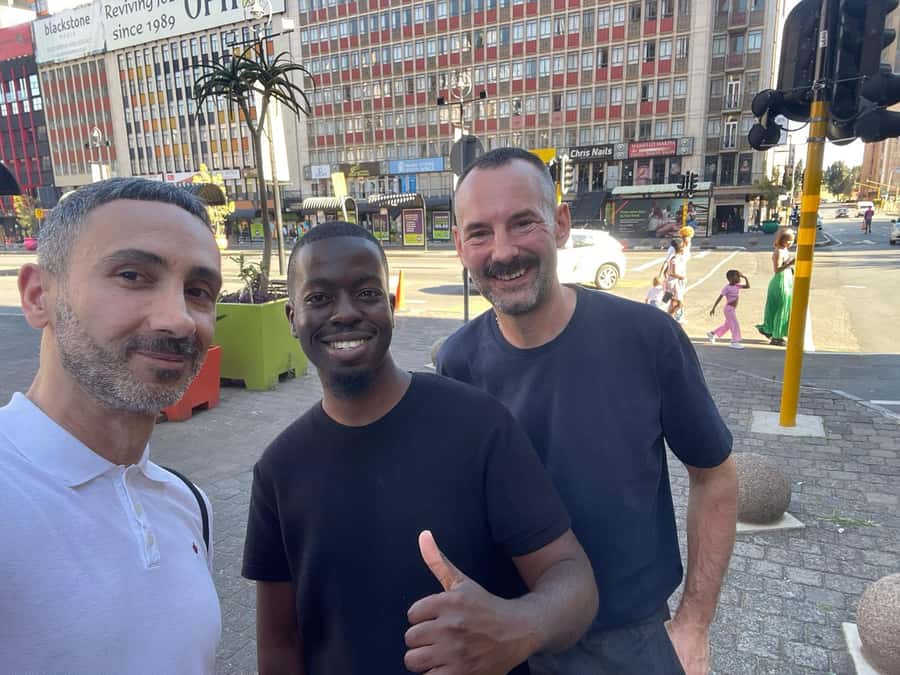
His strength is not simply knowing building names. He can explain architectural history, style, design, and changing uses, then respond to questions and personal preferences. That matters because a building walk can become dry if it turns into a string of dates and technical terms.
The best way to get value from Mo is to arrive with a few questions. You might ask how Johannesburg’s mining wealth affected its office architecture, how the central districts changed over time, or why a building’s original use matters today. The tour is designed to be interactive, so active participation should make it more rewarding.
The experience has received a top rating from two completed bookings, including one detailed assessment that praised Mo’s expertise and the way the two-and-a-half-hour walk passed quickly. That is a small sample, so I would not treat the rating as a guarantee. Still, the praise points to a clear strength: thoughtful guiding rather than passive sightseeing.
Should you book this Johannesburg walk?
Book it if you want to understand Johannesburg by reading its buildings. The $25 fee is good value for a compact, English-language tour led by Mo, especially if you care about architectural style, city growth, and the changing purpose of major buildings.
Go with realistic expectations. You will walk, several stops are brief, and the Top of Africa is closed. You will not get the tower view, and you should confirm the precise finish point because Gandhi Square and Carlton Centre both appear in the route description.
I would choose this tour over a generic city stroll if you want a sharper sense of how Johannesburg developed. If you prefer viewpoints, long indoor visits, or a relaxed seated activity, skip it. For an architecture-minded visitor with two hours and good walking ability, it offers a thoughtful way to see the old center through more than its surface.
FAQ
Where does the tour start?
The meeting point is at the door of McDonald’s at 100 Carr Street.
How long does the tour last?
The stated duration is two hours. You should allow extra time, since one completed booking lasted about two and a half hours.
What language is the tour in?
The live guided tour is conducted in English.
What places are visited?
The route includes the Market Theatre, Mary Fitzgerald Square, Turbine Hall, Anglo American, Gandhi Square, and Carlton Centre.
Does the tour enter buildings?
Entry to any buildings visited during the experience is included.
Can I visit the Top of Africa?
No. The Top of Africa is currently closed, so the tour ends at the bottom of Carlton Centre.
Where does the tour finish?
The route description places the final major stop at Carlton Centre and also lists Gandhi Square as the finish point. Confirm the exact ending location with the guide at the start.
Is the tour suitable for people with mobility impairments?
No. The activity is listed as unsuitable for people with mobility impairments.
Can I cancel and receive a refund?
Yes. You can cancel up to 24 hours in advance for a full refund. You can also reserve now and pay later.
Just added in Johannesburg
- Pretoria Capital City Tour Experience★ 5.0 · 24 reviews
- 4 Day Kruger National Park Tour★ 5.0 · 30 reviews
- Johannesburg e-scooter experience★ 5.0 · 38 reviews
- Johannesburg Street Art & Museum Walking or E-scooter Tour★ 4.5 · 10 reviews
- Big 5 Safari Experience at Pilanesberg National Park★ 5.0 · 16 reviews
- Drakensberg Mountains. Tugela Gorge and Amphitheater Hike★ 5.0 · 7 reviews
- Apartheid Museum Tour from Johannesburg★ 4.5 · 14 reviews
- Arrival Private Transfer: Tambo Airport JNB to Johannesburg in Business Car★ 4.0 · 5 reviews
Walking Tours, compared.



Browse the lists this tour appears in